Essay from Jaylan Salah Salman on the film Blade Runner

In the Eyes of the Outsider

Los Angeles Blues: Blade Runner
As far as loneliness, I feel Los Angeles and its layout, having to drive everywhere – it is a lonely place. It’s an isolated city in that respect because you’re driving to places alone listening to the radio. – Jason Schwartzman

There’s something peculiarly magical about LA in the eyes of those who have never been to the States, and who only know about it from behind screens, lusty voyeurs of the big city, watching in awe as the filthy rich housewives of Beverly Hills endlessly bicker about mindless chatter, or the gangs stroll around in glamourous cars, pimps and hoes in the backseats of limos. In my eyes, however, I never loved LA. I felt it was a cold, fake city, a manufactured replica of what fine art should be. Films like “Nocturnal Animals” heightened the feeling. Films like Michael Mann’s “Heat” implemented the thought in my head, this is not a city for the mediocre, it is neither merciful nor generous, it does not have the comforting silent-killer type of the South or the elegance and cultural significance of New York, even with the latter’s higher crime rate.

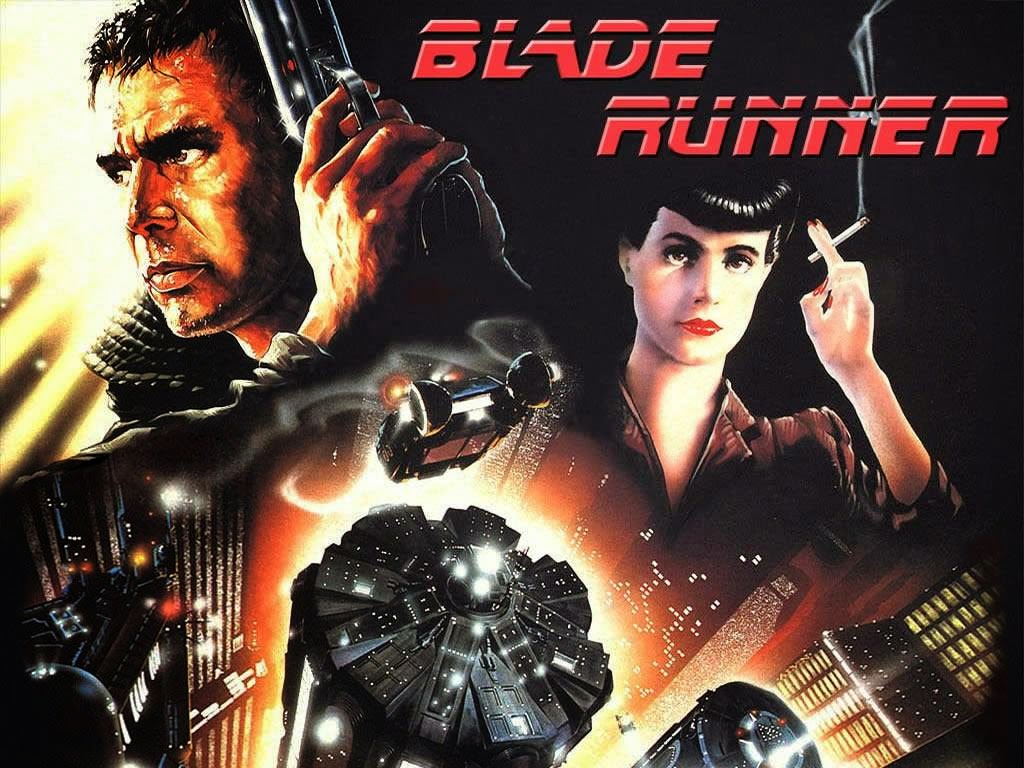
It wasn’t until I watched Ridley Scott’s neo-noir masterpiece “Blade Runner” that I realized, I know exactly how Los Angeles looks. I can envision walking in this city feeling more alienated than my writer-self usually experiences. This city is cold, heartless, replicants are scattered all over it but they do not show their replicant-side. Au contraire, they mimic the normalcy that they desperately tried to escape by inhabiting the city in the first place, and they carry themselves around with an air of confidence that both scares and intrigues.

Los Angeles is the source of the light for the moth; a city as vast and dreamy as one could imagine. Sinful and lustful without basing its core and aesthetics purely on lust; it promises angels when it fact, a demon lurks in every corner, whether a failed job, a failed love story, a robbery gone too far, or a grisly crime masquerading as homicide.

For Scott’s 1982 “Blade Runner” I was definitely not a target audience, Sci-fi being the least interesting genre on my PH scale. It was a bet with a fellow cinephile that the one who watches the most respected films on critics’ lists will get an Ace or something that landed “Blade Runner” in my lap. I was not immediately taken, until Vangelis’s music score “Blade Runner Blues” played, with a slow-mo scene showing a woman in her undies killed at the hands of the main male protagonist. The scene, unnerving and sexist as it was, created a séance in which one would disappear. Blues music being a part of the bargain, I fell in love with the movie, later collecting a few of my favorite shots; Rachael staring into the camera while asking Deckard if he ever retired a human before, J.F. Sebastian and his creepy yet intimate collection of toys, Roy’s monologue at the end. Strangely enough, every character seemed like a symbol of what the modern LA would look like as opposed to the cyberpunk, futuristic, retrofit exteriors with matte paintings and miniature work.

In Ridley Scott’s 2019 Los Angeles, people were doomed. Being stuck in this futuristic city, whether on top in the isolated skyscrapers, or being forced to walk down the underbelly of the city, you had no choice but to exist as you are. There would be no air of familiarity or actual contact, even when it happens, Deckard –the main protagonist- forces himself on Rachael, making it seem as if almost nothing real comes out of the city drenched in rain and decay; high-tech style.

Los Angeles scared me. I knew from the moment I saw the replicant’s –Zhora- barely clothed, teary-eyed corpse that this city had no mercy for women, or for underdogs. After all, Roy died, the hero saved the day and forced himself on the only woman who was not killed at the end of the day, probably because she was obedient enough to deserve sparing her life. Los Angeles always looked sunny in the films that glorified the City of Lights, and in films like “Heat”; Los Angeles is a city where people become reciprocal versions of each other. There is a Yin to the Yang, a cop to the rogue, and both get along easier than with their respective clans, In “500 Days of Summer” Love is lost and never found on the sidewalks of the city. Nothing about LA offers promise, if somewhat false and rhetoric. “Blade Runner” is no exception to a series of films that only manage to make the city less approachable, less dreamy-like, more like fantastic versions of an actual city that does not smell hostile and too grand for the newcomers’ ambition.

In multiple ways, “Blade Runner” seems like the ultimate escape for the avenger in every viewer; dark, poetic, grim and desperately pleasing, it leaves a bitter taste in the mouth even if it uses an iconic macho American hero –such as Harrison Ford- to create a regular tale that squashes the underdogs and celebrate the All-American hero. Ford (or Rick Deckard) is aided by a city that has no sympathy for losers and only celebrates success, even if on the expense of its architectural thrive.

The array of characters in the “Blade Runner” verse, highlight the cycle of alienation in which subversive people who live in Los Angeles constantly move. Freaks, those haunted by past crimes, those who hide secrets or carry them around, those who prey on the meek and the marginal only to hide their own vulnerability, on the other hand, the rich and the famous are facing the same sense of isolation up in their skyscrapers, only for inter and intra cultural clashes to become as vivid and ephemeral presence in the way replicant vs. replicant hunter collide on the rainy, foggy streets where the overpopulated slums are crowded with people who are always on the move.

Blade Runner – The Sexism

In a city like Los Angeles, you probably would not imagine that sexism exists. Women are at their best, manicured, botox-ed, injectable filler-spewn lips aside. You watch reality shows; “The Real Housewives of Beverly Hills”, “Vander Pump Rules”, to name a few and you realize, these women are becoming rich, pampered versions of who they ought to be. They are being judged by sexism as badly as a woman in an African or Arab country, who would be judged based on her clothing, as much as they would be judged by who aged faster, whose lips are more luscious.

It’s not just that the idea of a Love Theme, saxophone music played smoothly over a woman forced to accept a man’s sexual advances, but the idea that notions of beauty, sexuality, aging, womanhood and liberation are messed up in the city of angels only throw a shade to its power over people confined to it. Women are all sultry and beautiful, awaiting the interaction with men probably not ready enough to satisfy them.

Blade Runner – The Diversity

Los Angeles is one of the most diverse cities in the world. But in “Blade Runner” still it is unsold as that. In my mind, the diversity which Los Angeles possesses is merely a background through which the white, privileged, plastic-surgery obsessed, fake art scene goers thrive. The underlying populated slums work only as fuel for the survival of the upper class. Two vivid examples include two of the central female characters; who happen to be replicants. Strangely –rather unsurprisingly- every significant female character in this movie happens to be a replicant; Pris the pleasure model and Zhora the exotic dancer are the most notable examples since they rebel to the cause of their manufacture and thus get punished for it. Both are killed at the hands of the alpha male protagonist Deckard. The only female replicant whose life is spared is Rachael, who submits to Deckard’s nonconsensual sexual advances.

Submission is the key to survival in Los Angeles, replicants who go astray are “retired”, in other words they are killed for daring to ask for equality, or to think of a different future where they are not treated as creatures designed to live the life they are told they were born to walk, and a role they were born to fulfill. Their price for being alive. In a city where you dare to dream whatever you please, “Blade Runner” shows you the grim truth, you are nothing but what you are told you are, even in the city of lights.

Blade Runner – The City

Los Angeles is a constellation of plastic – Norman Mailer

In the city of angels, life and death could be an expose of what lies beneath the road to stardom. Marilyn Monroe once described it as a freeing place, a city where you can be anybody you want. But the structure of the city is not even that inviting for a brave new world. It’s either condos and pool parties or scrapes of art scenes and Oakwood. These dreamers flock to the city in pilgrimage of becoming the next diva or Hollywood sensation. They dream of getting rich fast or shedding off their old, loser skin. Only to be mostly crushed by the gigantic city that has seen, swallowed, gurgled and regurgitated thousands of similar aspiring creatures. In “Blade Runner”, the idea of a city that can collectively rejoice in the company of everyone does not sound like a reality, but more of a requiem of a dream someone else has dared to imagine. High-tech architecture, neon signs, and a social hierarchy that divides people racially and –dare I say- gender and sexual-orientation-wise, only enhance the fact that a city of lights only casts the polarizing beams on those who deserve it. The underdogs who dare to dream are punished mercilessly, or forced to flee with their dominant partners who happen to be White, male, and part of the elite.

At the end, “Blade Runner” is an unflinching as the city he is selling. It perfectly portrays how the glamour of the city hides an underbelly of people barely existing who will all be lost like “tears in rain”. The shock that LA has always given me is how insignificant the individual struggle is if not lived under the spotlight. How many residents of the apartment complex will go back to where they came from; their dreams crushed, their brief encounters with the city lost forever, not worthy of a mention, an Oscar nod or a Hollywood star on the Walk of Fame? Los Angeles is indeed the city of dreams, it treats people who pass by with an Eye of God perspective, only those who dare to wander are lost. But that’s not even a certainty.

Author Jaylan Salah


Poems from Mahbub

Mahbub, a Bangladeshi author and English teacher

The Victim of  Erosion

Dreams are floating on the river

Cries are pouring in the rain

It is the erosion of the river

Takes away the heart of the people

Transferred from this place to other

A place to the unknown

This is the land of rivers

All goes dry in the summer season

Have been filled with silt and sand

Go full to the brim in the rainy season

Water spread around

Devours the ground

Losing the land and property

Lament for lying in open sky

Not to find any food and shelter

Years after years this going on as usual

We are the only silent visitors

No step to remove the disaster

O dear, come and see the condition

How people pass their time in such miserable condition?

The sky calls to mingle with

Try to fly away with the wind

But they are to remain at the place

As the stagnant water

No way to pray for

Nor way to die for

No way to run for

Ah! What shows the life here?

Always cry out in silence.


The Days Gone By

I can reside on the glorious past

Those moments are not only the moments

Shows the light in my heart

It was the rainy season

The silence of time sweeps on the water

I caught the fishes from the ponds with the fishing lines

Oh how glittering blazed the light in my eyes

Rushed to my mother

How tasty cooked or dried!

I arranged the team at afternoon

Playing football, cricket or badminton

Came back home at the evening and took my bath

How fresh it was my mind and body

How sound the sleep slept!

Now sometimes my heart beats so high

Like to reside on the moments

So sweet, so blissful the days gone by.


Give Me

Give me a glass of water

I’ll quench my thirst

Give me a hand or heart

I’ll cross the bar

Give me an eye for love

I’ll find the way to run

Give me a chance to watch the world

I’ll feel fresh and it will remove all the darkness

Give me the way you don’t mean

I’ll find the right track

Give me a voice soothing or loving

I’ll sleep and find you in my sweet dream

Give me a shade to rest in

I’ll gain the power to live in the green

Give me your dictation

I’ll fill up my blank page

And try to follow them for future

Sound me the mew

I can be conscious to move

Show me the water you flow around

I’ll surely die on the vast world where

The creators will compose so many stories or novels

We’ll quench our thirst for ever.


Death

Death is the cloth spinning to infinity

Over the body it rounds the white piece

Removes the darkness

Death is the vortex of systematic race

Death is not the destruction

A condition to take rest

A nice farewell

We came from the unknown

We leave for the same

I want to be naked to my soul

I want to find my peace to the goal

O lord, deaths are waiting so hungrily

Through me out

Don’t cry for me, dear

We are at the same station to get into

We see ourselves in the middle of swirling wind

A certain place

I do have my belief

Our Almighty will turn us back

Getting together we must lead a peaceful happy life.


The Connection Tower

Facing the sky to the revolving world

You are always busy to connect us

You make the whole world together

O Tower, you catch the voice floating in the air

I am here

You are there

Not at all

We always abide by very near and dear

As lying in the same bed reflecting the image

Both paying loving eyes face to face

We all united one

O dear, you are so near my loving figure

We take our breath sighing together

Stand together, sit by, lie before the same mirror

Folding the physique, imagine the practical

Draw the virtues

Not hundred and thousand miles away from each other

We all walk hand in hand, lie in the same bed

Wake up in the morning under the same sky

O Tower, you soar to the sky

Bound our breast connecting all.


Chapainawabganj, Bangladesh

02/07/2018

Essay by Chimezie Ihekuna

DECEPTION 4

Chimezie Ihekuna

As men, we ought to give into sexual advances to women, whether married or not

If the statement is put this way: As women, we ought to give into sexual advances from men, whether married or not, the male folk will unequivocally have problems with it. Ironically, in loose terms, men generally tend to key into this deceptive assertion.  Hence, one of the reasons for male chauvinists treat their spouses less than second fiddles and simultaneously gratify their sexual thirst with other women, irrespective of relationship status. They fail to recognize that the women they “cheating on” have rights to take part in what they seem to derive pleasure from. Without a doubt, the statement “equal rights” irritates them!

Granted, men are moved by what they see and women are moved by what they hear. However, self-control cannot be excused for giving into sexual offers. Some men claim that the reason they give into sexual advance from women is due to the response of “the manhood” to sex-tuning offers from women and assert that the ‘seat of womanhood’ cannot be noticed and hence, women should not ‘enjoy’ such a right as they do. What an alibi!

The statement has two interpretations, that is, “As married men we ought to give into sexual advances from women”. And “As bachelors, we ought to give into sexual advances from women”. Therefore, we will consider them. 

“As married men, we ought to give into sexual advance from women”

If you on advocate of this statement, do you believe in the efficacies of marital vows you swore on the altar? Do you know that from the moment you took those vows, you are entitled to sexually submit yourself only to your wife? Are you aware of the fact that marriage is a life-long test of your fidelity? Also, can you remember how sincerely passionate you were about committing yourself (Sexually) to your wife? Have you forgotten that marriage is an institution where sexual, physical, emotional, spiritual and other important requirements are needed for its longevity? If you think that as a married man, you could give into sexual gratification outside your marital convenience, then where have you placed self-control? Apart from that, how would you react if your wife says:  “As a married woman, I ought to give into sexual advances from my male admirers”?

It is a generally sorry-case for men who get married without having the necessary knowledge of staying married. Ill-equipped with the necessary skills of managing one’s sexuality, they stumble into the institution, apparently believing their youthful exuberant tendencies will come to a halt but the reverse is the case. No wonder most exuberance – driven men cannot be sexually committed to their wives – they fail to really put to a full stop their care-free sex lives of their youth days.

In a way, this statement has made married men believe that there is practically no consequence. What a shallow thinking! If nothing, think about the guilt you will live with for a very long period of time. Of course, thanks to your judge, your conscience!

In all, if you really want to confirm how deceptive the assertion is, try self-control. 

“As an unmarried man, I ought to give into sexual advance from women”

Because you do not have a spouse doesn’t permit you to have “unlimited” sexual pleasures. Some bachelors would say ‘we are for the fun of having sex, since we are unmarried.

By observation, however, they would want to settle down and commit themselves to their (would-be) wives in future. Unfortunately, they fail to build the entirety of their personality; sexually (exercising self-control) and goal-oriented. Instead, they gallivant in the name of youthful exuberance to seek for sexual gratification.


Elizabeth Hughes’ Book Periscope

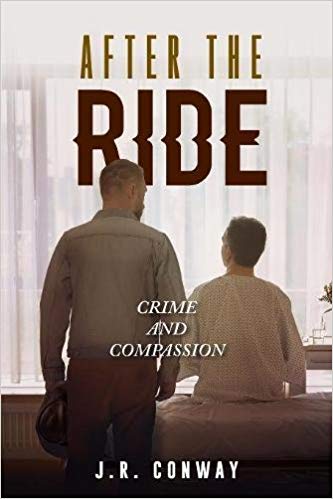
After The Ride by J.R. Conway
After the Ride is the sequel to Greyhound Therapy and picks up right where the other ends in a very smooth way. In After the Ride we are introduced to Kenneth Boutros who has PTSD and was placed on the Greyhound bus to Sweetwater County to live at his uncle’s ranch. When he arrives he finds out that his uncle had died and another relative paid the back taxes and bought the ranch and does not want Kenneth there. The sheriff finds out the reason is a major chop shop operation. The reader will be taken on a thrilling read that will keep him/her riveted to the very end. This would be perfect for older teen to adult. I found it to be a very exciting read and absolutely loved it.
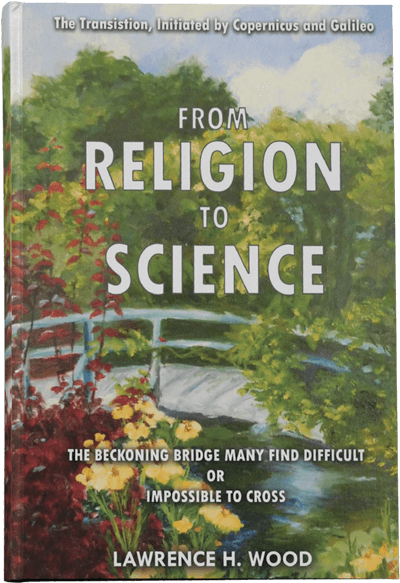
From Religion to Science by Lawrence H. Wood
This book brings the subjects of religion and science together, from the conception of science as a worldview and how it differs from the basic fundamentals of the Christian religion. A lot of scientists are atheists and can’t conceive of any of what the Bible says as truth. This book is very interesting in that it states how life evolved from one single organism, according to the scientific explanation. This book also gets into the study of the tectonic plates and the movement that causes earthquakes. This book is filled with many scientific facts and explanations. It is perfect for someone into the sciences or just starting them. I, myself, found it very fascinating.
The Future of Nigeria by Michael Owhoko
The Future of Nigeria is an updated version of the original book. It has been updated to include new data on the economics and political forces on the people of Nigeria. Instead of moving forward as a country, Nigeria is lacking in progress. The author goes on to say that Nigeria is encouraging relapse instead of moving forward. The current federation in Nigeria is not working so that the country can progress. If Nigeria does not move forward it could collapse as a nation. The leaders must listen to the people if they want to see any improvement. This is the perfect book for readers who are interested in reading books about other nations.
Bitter-Sweet Sugar by Nowrang Persaud
Nowrang Persaud grew up in poverty in Colonial British Guyana surrounded by his very loving extended family. This is his autobiography, starting from when he was young and living in poverty through his adulthood and how he worked hard to climb out of poverty. He has great respect and love for his mother who worked hard as a weeder on the estate to take care of all of the children and husband. When his father became a driver, they were able to move into an independent house. They finally had floors and a bathroom in their home. This is the story of how Nowrang worked hard and persevered to become a teacher and work for the UN and other very important jobs. This is a very uplifting and interesting story of his life. He overcame so many hardships with hard work and pure determination. I found it very interesting and can honestly highly recommend it.
The Lumpa Rupper by Tina Heinrich
The Lumpa Rupper is an extremely cute children’s book. It is about a Dachshund named Fee Bee but also called Fee Fee who is very mischievous. The illustrations are bright and children will be excited to look at them. They will love the story and will want to have this read to them over and over. I absolutely loved this and very highly recommend it.
The Adventures of Flopsy and Flathead
This is also another cute book by Tina Heinrich. The illustrations in this one were drawn by her son when he was 10 years old. It is the true story of their hen house and the two chickens that made it and hatched. Little children will absolutely love the drawings and the story itself. I also found this one very delightful and highly recommend it.

Christopher Bernard reviews The Eifman Ballet of St. Petersburg’s production of The Pygmalion Effect

Russian poster for Boris Eifman’s ballet “The Pygmalion Effect”

DID I MENTION THAT I LOVED IT?


The Pygmalion Effect

Eifman Ballet of Saint Petersburg

Zellerbach Hall

Berkeley, California


A review by Christopher Bernard


Sometimes all I want to do in a review is say “I loved it, I loved it, I loved it” two or three hundred times (enough to fill a couple of pages and one or two smartphone screens), and call it a day. Who wants to analyze something you’ve just fallen in love with, especially a fairy tale straight out of “My Fair Lady,” with a Russian twist, a nod to Ernst Lubitsch, and a Viennese soundtrack? I just want to daydream, go over it in memory, laugh out loud again at the jokes, the galloping music, the inspired moves, the tender sentiments, the big heartedness of it all.


For example, the mysterious opening where a young woman lies curled up on the ground, asleep and abandoned outside a wealthy house, where she is tormented by erotic dreams of a man being worshipped by women, none of whom is herself. And the dream goes on, segueing into what we will learn is a long flashback. Beginning with:


A street suddenly packed with a score or so skittering demimonde types dancing their hearts out, a poor workhorse of a father (danced by a vigorous Dmitry Fisher) putting his daughter, dressed up in drag-prince costume military togs, to work collecting customers for his carriage service. The daughter is a tomboy gamine named Gala (the ravishingly graceful, lithe and witty Lyubov Andreyevna) with the tatterdemalion charm of an Artful Dodger who invents the dance’s insouciant heroine out of thin air and the champagne effervescence of a Strauss polka.


Or the Ballroom Contest, watched by an enthralled Gala, where sequins-draped ladies and their sharply attired consorts ravish the stage, trying to out dance each other with an athletic, competitive joyfulness until one of the couples, Leon (a commanding Oleg Gabyshev) and his partner Tea (an Amazonian sex goddess who rules the stage whenever she is on it, Alma Petrovskaya), at the point of achieving supreme perfection, slips and collapses, mortifyingly, across the stage.


Or the organized chaos when Leon, on his way home, is mugged by some of Gala’s lowlife confreres, and Gala, still in her boy togs, and showing her street chops to smartly punishing effect, saves the overwhelmed dancer, who, thinking her a good fellow to have in a pinch, takes her home for a post-pugilist celebration.


When lo! he discovers he is a she! Much is made of the attendant confusion. Leon, of course, takes her under his wing. The father finds out and sees an easy way to cadge some rubles via his little girl, and Gala falls ever deeper into an infatuation with the fellow she saved, and Leon, for a laugh, brings the graceless, galumphing, spectacularly over-dressed hobbledehoy to his dance class, where he conceives a bizarre plan to turn this bundle of grotesquerie and unconscious charm into a prize-winning dancer. He bets on it against the scoffing Coach (a properly sneering Igor Subbotin) and proceeds to prove his point.


Though not before nearly conceding defeat as he tries to mold this feckless ne’er-do-well into something half civilized, with not even an iota of success. At which point he gets a brain wave: fit her up with an all-body robotic armature, cap her with a neon helmet, and set her off with a remote control, a la “Die Puppe” (“The Doll,” Lubitsche’s famous silent film from the 1920s), and let his fingers do her dancing.


Which is just the final push Gala needs to get it, clicking into the dazzling dancer we in the audience have known all along she is, but only now the rest of the ballroom dancing crowd is forced to admit, as she and Leon dance off with the top prize of them all.


But what is this? Leon, our Henry Higgins, the aim and goal now of little Gala’s heart, now that he has won his bet, casts her off. What is she to him? A successfully made point. With the arrogance of the “creator,” he leaves her to her venal father, her mugger class, her gutter.


But she has been poisoned by her success. She can’t return to her old life. She is no longer that, she no longer can do that. She curls up on a street bench, lost between worlds, rejecting what she once was, dreaming futilely of what she might have had and what she might have been. We are back at the beginning. Leon visits her in her dreams. She does not realize he is the cause of her misery as much as of her peak of joy. She has become a prisoner of her love.


Boris Eifman choreographed this supremely charming ballet (which is being given its U.S. premiere in these performances through Cal Performances), and shows that there is still a place for a dance of pure pleasure. I suspect that all, or at least most, of his company, the Eifman Ballet of St. Petersburg, appears, and a more vigorous, graceful, and irresistibly happy group of dancers it would be hard to imagine. (One of the heady joys for an American is seeing this example of the Russian style of ballet dancing at its best: sharp, exuberantly athletic, and romantic, all at the same time. One gets an idea where Balanchine came from.)


The brilliant sets were by Zinovy Margolin, the deliciously louche costumes by Olga Shaishmelashvili. The effortlessly engaging music was, for the most part, by Johann Strauss, Jr., with a few numbers by Josef and Eduard from the same, copiously composing family, and a handsomely judged concluding contrast from tender, truthful, unsentimental Mozart.


_____


Christopher Bernard is co-editor and poetry editor of Caveat Lector. He writes on dance, drama, and art for Synchronized Chaos. His most recent book is the poetry collection Chien Lunatique.

His novel Meditations on Love and Catastrophe at The Liars’ Café will be out later this year.

Synchronized Chaos June 2019: Humans In Context

Welcome, readers, to June’s issue of Synchronized Chaos Magazine! This month, while we’re very small individuals on a planetary or interstellar scale, we are still part of and connected to the larger universe.

Margarita Serafimova’s poetic speakers join themselves to nature and the sky. Mahbub’s pieces cover love lost and found, and point to the speaker’s deep, abiding connection with poetry.

Michael Robinson contributes a story of finding authentic love and human connection in an unusual place. 

Olga Spiegel brings us abstract, surreal art with humanesque figures drifting through vast landscapes.

Elizabeth Hughes’ Book Periscope column reviews I Saw Leaves Last Night by Lisa Musall, Precious Treasures from the Grandie River by Wilton Broome, and Greyhound Therapy by J.R. Conway. Each of these stories points to a deeper reality: changing seasons, the migration of native Caribbean people after independence from colonial rule, and cities giving bus tickets to the mentally ill and those who commit petty crimes so they move elsewhere rather than providing treatment locally. 

Sometimes the relationship between ourselves and the broader context of the world around us can come with tension.

Christopher Bernard reviews Songs of the Goat’s production of Songs of Lear at UC Berkeley’s Zellerbach Hall, a musical exploration of a play where a family struggles painfully because of the discrepancies between how family members act in public and how they treat each other behind closed doors.

Vijay Nair lambastes corrupt and oppressive governmental systems, while Yusuf Baba Mohamed urges us not to abandon the dream of freedom on many levels.

Bethany Pope’s poetry probes incomplete connections between the self and the world. We see Western travelers who bring packaged food with them to China, unwilling to fully experience the new country. And a speaker who looks deeply into her inner world, exploring, yet resisting the chasm within.

Meanwhile, Henry Bladon wonders if everything has to have a deep meaning. Maybe sometimes a dream is just a dream?

Ordinary life can serve as a starting point for observations.

Kahlil Crawford traces the change and death of his local surf town, while D.S. Maolalai appreciates the day-to-day, writing of lazy afternoons with gentle humor. 

Isaac Adjei Boateng presents upbeat, rhapsodic odes to rain, local community radio, and the weather, along with encouragement to be peaceful and thankful.

Daniel De Culla sends us a short fable inspired by a mural, which seems to encourage us to stay aware of the true motives of those around us.

Jaylan Salah analyzes the appeal of Supernatural character Dean Winchester, played by Jensen Ackles. He’s rendered as simultaneously sexy and modest/conservative in the popular show, a male character sexualized for female/LGBT viewers.

Denis Emorine mourns his late mother through a long poetic cycle in French and English, while J. J. Campbell bonds with his ill Mom over a shared sense of dark humor. 

John Grochalski writes of the little indignities of life: hangovers, flatulence, aging.

Connecting with the larger world outside ourselves can inspire personal transformation.

Magdalena Garcia’s The Madness inside My Head, here reviewed by Cristina Deptula, presents a narrator who overcomes domestic violence and celebrates authentic love and sensuality along with her heritage.

In Michael Robinson’s short piece, we see how human connection and faith can change lives.

Loretta Siegel’s poem about celebrating Easter at Mt. Tamalpais, a scenic landmark off the California coast, ties in with the theme of personal and seasonal, as well as spiritual, resurrection.

A few contributions show us people who consider the impact of their actions on the world around them.

Chimezie Ihekuna, also known as Mr. Ben, sends in the third chapter of his views on wise sexual behavior, looking deeper into whether the ‘good’ girls are destined to end up with the ‘bad’ boys (and vice versa).

Finally, Brian Rihlmann’s pieces explore memory and legacy. The speakers want to leave something behind, are intending to create a certain kind of future.


Essay from Chimezie Ihekuna (Mr. Ben)

About Mr. Ben: 

Though based in Lagos, Nigeria, Mr. Ben (Chimezie Ihekuna) is an internationally published and represented author, speaker, poet, writer and voice-over artiste. He enjoys reading edifying books, traveling and meeting people. Following the words of the great Greek philosopher, Socrates, who said ‘Employ your time by improving with other men’s writings so that you can gain easily what others labored hard for’, Mr. Ben, as he is fondly called, is poised to impact humanity in all spheres of life and human recognition. With his knowledge zenith, he is willing to disseminate valued and ageless information to all interested persons, groups and organizations-what he toiled to gain over the years.

Mr. Ben has a new book out, Maya Initiate 39: The Long Walk to Destiny.

It’s a novel about a young woman who makes it out of gang and criminal life to become a successful business leader. It’s available to order through publisher Penit Publications here. 

Deception 3

The “bad” girls get or end up marrying the “good” guys (vice versa).

Chimezie Ihekuna

Apparently, this is becoming an en vogue statement in utterances of many youths today. A question that should come to us is: “what results will the combination of colours white and black give”?

The term’s ‘bad’ as used in ‘bad’ girls and ‘good’ guys as used in ‘good’ guys will have to be looked into ‘bad’ as seen by the society is an a adjective describing certain actions which are not morally acceptable and possess more demerits than merits. On the other hand, the term ‘good’ refers to description of actions which are acceptable by the society and possess more merits than demerits. Therefore, the ‘good’ guys ore those who are morally upright and possess qualities that are encouraging the reverse is the case in the recognition of ‘bad’ girls.

There is a need to digress a bit. Some people say that ‘bad’ girls make good wives than ‘good’ girls; ‘bad’ guys make good husbands than ‘good’ guys. Tell me, how possible is it?

A ‘bad’ guy who had lived an age of fruitless youthful exuberance, a middle age of insecurity and doubt and if particularly not careful, will live an old age of regrets will suddenly make a good husband! ? It takes special grace and sheer determination to turn a new leaf.

We are looking at two deception-defined statements: The ‘bad’ girls get or end up marrying the ‘good’ guys and the ‘good’ girls get or end up marrying the ‘good’ guys”.


The “Bad” Girls Get Or End Up Marrying The “Good” Guys

Sometimes, it is fascinating to juxtapose these statements “like begets like” and “The ‘bad’ girls get or end up marrying the ‘good’ guys”. What a contradiction but they are used to address the same issue. What an irony!

Tell me, can an armed robber agree to go on a mission with a philanthropist? Can a mad man dance naked with a mentally alright man?

Most people end up marrying their type for instance, a club girl will likely end up having intimate relationship or even marrying a club guy.

Tentatively, it is observed that ‘bad’ girls do keep the company of ‘good’ guys, even marry them. Typically, it is like the motorist who observes a water logged express – way that is realistically a free path-way. Yet, people are of this “mirage” view. Only if they can motor a little closer, probably this view could have been realistically approached. How?

The following give the realistically approached observation made to the observed mirage, the statement “The ‘bad’ or end up marrying the ‘good’ guys”. Before the observation can be recognized, we must consider the apparent reasons this statement is fast becoming a household name.

Precisely, what would make ‘bad’ girl, after engaging not only failed relationships, slept with quite a number of men and done other defying acts in the past but also exhibited infidelity involve herself in a relatively steady relationship?. Three major reasons are involved (At this point, I stand to be corrected)

(1)  She is not physically attractive or appealing to her “made clients”, boyfriend, as bed mates owing to the emergence of younger and sexually appealing ladies.

(2)  Age is not on her side: Her biological clock is ticking against her “get involved in a relationship, even if it means pretending!”

(3)  She really wants to have children of her own (on inferred consequence of (2).

The realistically approached observations are:

(1)  The so-called “good” guys were once ‘bad’ but had turned a new leaf. Therefore, they anticipate the so-called ‘bad’ girls to do the same, whether married or not.

(2)  At same point in their lives, perhaps, their growing years, the ‘good’, though wanted to express a level of youth exuberance, were demised such “opportunity”. They did appreciate ladies who were wild and very flamboyant but were given the iron-hand discipline. Hence, the so-called ‘good’ description. Although this is not usually the case realistically, it speaks out a possibility as to the apparently observed statement. In a relationship or marriage, a ‘good’ guy with such a background may be with the so-called ‘bad lady.

(3)           Quite alright, the ‘good’ guy could be indeed very good in thoughts and intentions and end up being in a serious relationship with or even ending up marrying his selected ‘bad’ girls. If she eventually becomes a “bad girl-turned-good”, as the saying goes, you reap what you sow, there is a likelihood that if married, the ‘good’ guy could turn bad, which is, flirting and doing other unpleasant things that defy matrimony. We hear of some cases where husbands who were of good behaviour from the days of their youth suddenly becoming a torn in the flesh of their wives” were once “bad”, they decided to give up such a never-prospective lifestyle! Interestingly the good-turned-bad guys claim love their wives. Then, why the imbalance.

(4)           Some :good” guys who are proudly principled get married to or involve themselves in serious relationships with the so-called ;bad girls are faithful and keen to stand by their once-upon-a time ‘bad’ girls (wives or fiancés) through thick and thin. However, if you believe in the natural law of karma, do you think the ‘evils’ committed by the then “bad” girl won’t replicate themselves in the lives of their growing children? The answer is up to you!

(5)           Like a magnetic force field, “bad” girls, if they persist in their attitude, realistically change the  attracted “good” guys to their taste whether married or not just as invitation of members into a group takes place, so is the attitude of the so-called ‘bad’ girls influencing the character of the ‘good’ guys, initiating them not a complete world of ‘bad recognition”

(6)           Can a ‘bad’ girl who had lived a age of goalless youthful exuberance, middle age of doubt and insecurity and if not willing to change will live an old age of regrets suddenly becomes a (good) wife, let alone a caring mother? Next, we move to the second statement:


The “Good” girls end up marrying or getting the “Bad” guys

We seldom hear of hardened gangsters involving themselves in serious relationship or marrying morally responsible ladies. How possible is that? Choice! But a blindfolded one! Nonetheless, it does not change the fact that most “bad” guys generally end up marrying or getting the ‘bad’ girls. What about exceptional cases of ‘good’ girls involving themselves in serious relationships with ‘bad’ guys and even marrying them?

The following are the realistically approach facts as to why people choose to believe the assertion “the ‘good’ girls end up getting or marrying the ’bad’ guys”

(1)           Perhaps owing to wrong decision made with respect to marrying a ‘bad’ guy if not deep-rooted in the faith of her upbringing, the ‘good’ girl as time progresses turns to the taste of the ‘bad’ guys. It takes a ‘good’ girl with wits to change a ‘bad’ guy for good.

(2)           Suppose a ‘bad’ guy married a ‘good’ girl who is a virgin, then the view that the ‘good’ girls end up marrying the ‘bad’ guys is apparently correct. Really? What happens if the then ‘bad’ guy who has exercised boundless sexual freedom with various ladies in the past is impotent and this ‘good’ virgin wife needs satisfaction and procreation?

If you suppose these view points, then it is advisable for you to re-think and clearly observe the realities as they affect people (people in your vicinity)

More About Mr. Ben:

He has written over twenty breath-taking masterpieces that cut across almost very literary category to help improve the cause, shape and existence of humanity; sexuality, business anecdotes, science, home affairs, marriage, relationships, friendship, self-help, gender issues, life matters, motivational and inspirational interests, educational/academic matters and many more…He is still counting! To his credit, he has written over forty timeless articles on the various literary categories; showcased on www.ezinearticles.com, www.articlebase.com, www.searchwarp.com, www.triond.com and other affiliate sites. His amazing writing skills, novel concepts, creative works and avid reading and communication skills have earned him a recognized membership with the following international affiliations; www.christianwriters.com, www.associationofaspiringauthors.com, www.writerface.com and other known writers’ organizations. No doubt, he is not only a writer with a difference but also an entrepreneur, investor and a philanthropist whose slogan reads ‘service to God and humanity are paramount’. .Other Publications1) Winds of Change…http://www.ebg247.com/bookdisplays/winds-change2) Life’s Twists…http://www.ebg247.com/bookdisplays/lifes-twists3) Life In Space…http://www.ebg247.com/bookdisplays/life-space4) …