Synchronized Chaos April/May 2019: Rumblings from the Subconscious

Welcome to April and May’s combined issue of Synchronized Chaos Magazine. In this issue, lots of thoughts rumble up from our subconscious minds. Silly, deep, noble, ugly, poetic, concrete, rebellious, nostalgic, wistful, altruistic, romantic – our minds contain within them rich multitudes, a plethora of thoughts.
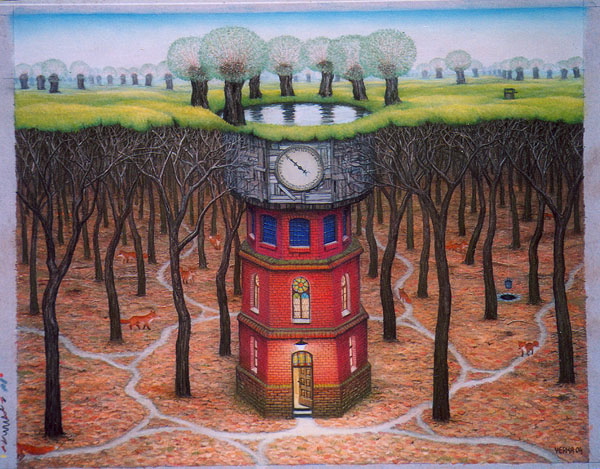
Jacek Yerka’s Subconscious Tower

A few pieces literally concern the subconscious.

Liz Hughes reviews Clem Masloff’s book Galactic Minds in her regular Book Periscope column, which is about a form of psychotherapy that involves the merging of the conscious and subconscious minds.

Cristina Deptula discusses Nisha Singh’s Bhrigu Mahesh: The Witch of Senduwar, which is a mystery novel where the hero believes that we can approach human psychology scientifically enough to say for sure that someone had it in them to do something. Detective Bhrigu Mahesh believes that we can ultimately understand the workings of both the conscious and subconscious mind.

Henry Bladon shares a piece about psychiatrist R.D. Laing, who seemed to enjoy getting people to challenge their thinking by making unconventional statements and encouraging them to embrace distress and confusion.

Other pieces can be divided into a few broad categories.

Memory and nostalgia

Joe Balaz sings a pidgin ode to the good old days and a lament on how times change, while Sandra Rogers-Hale gives a humorous take on whether she needs new technology. 

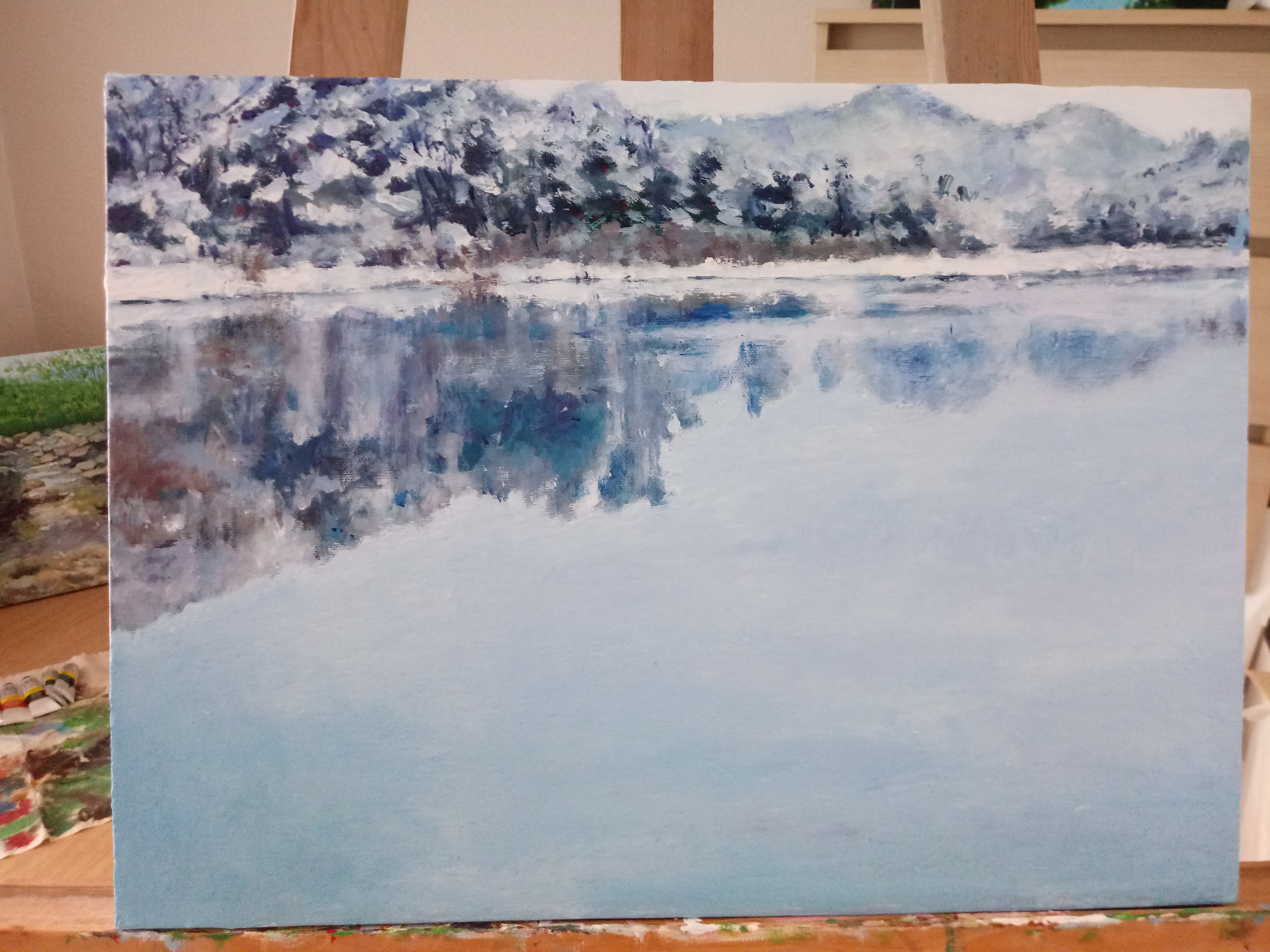
Artist Jeongeui paints a mountain mirrored in a lake. Reflections are like memories in that they resemble reality, bringing scenes to mind again. Also, as with our memories, some aspects of reflections are exactly accurate down to the last details, while others can be distorted and differ from the actual object.

Al Murdach remembers the flannel-board Christianity of his Sunday school days, while reflecting on feelings of implicit exclusion of those who are ‘imperfect.’

Michael Noel offers a tribute to musical great Dick Dale while Norman J. Olson describes visiting Elvis’ mansion, provoking thoughts on the King’s legacy, death, and how we all might be remembered.

Joan Beebe celebrates memories of happy family life, which are a comfort to her in a current time of sadness. J.J. Campbell finds that even nostalgia is a weak comfort in times of loss.

David Estringel writes of various forms of subtle grief: the loss of some poetry scenes to consumerism, a breakup that submerges him into his bed pillows, and just the slow death of not feeling his life is going anywhere.

His pieces resemble the negative side to Bob Eige’s painting Hall of Mirrors or Same Old, Same Old – the repetitive monotony.

Recollections of words and thoughts and images, sometimes loosely organized
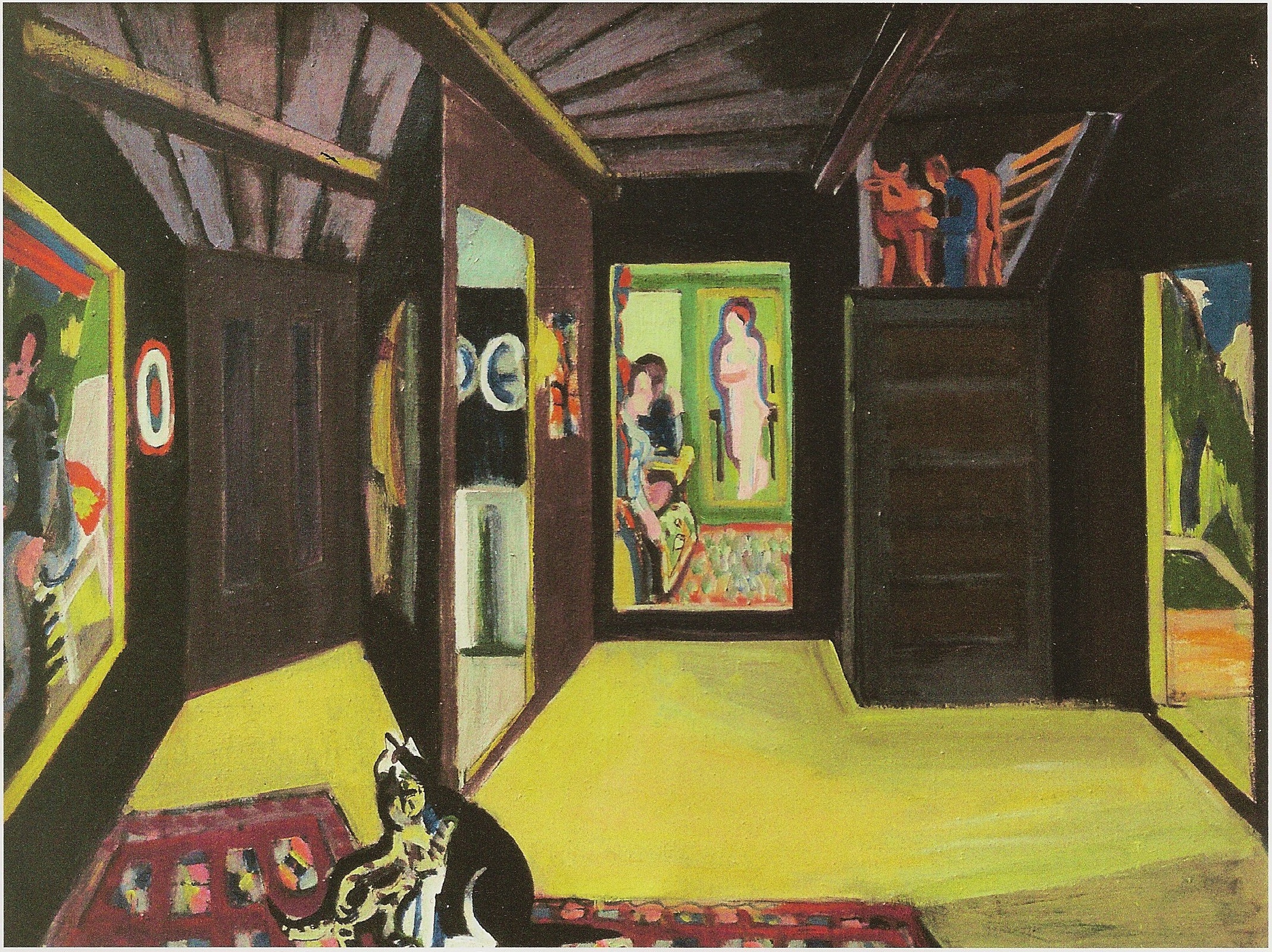
Art by German expressionist Ernst Ludwig Kirchner

Vernon Frazer’s concrete poetry adds words upon words, creating moods and images in a style organized like classical music. Ian Allaby does something similar with onomatopoetic words, lushly describing his wish to win someone’s heart.

Alan Britt reflects on the limitations of words to describe life, but acknowledges that words are often all we have.

Rodney Gardner’s poems intimate plant reproduction, meditating on awkwardness and death as we move through the life cycle.

Phillip MacDonald thinks of a tree’s changes through the seasons with a haiku, a poetic form evoking a glimpse or a brief thought. Jeff Bagato contemplates the banana in a longer but still thematically similar piece.

Christopher Bernard poses the paradox of a chilly spring: too sunny to be confined indoors, yet still cold enough for the days to feel like ice, slowing us down when we go to experience the word.

Walter Ruhlmann drags us through the miasma of where our minds can go with too much silence: ugliness in the harsh light of reality. Luke Kuzmish writes of low-budget hotels, too-early mornings, and social injustice with short lines that slow the reader down, giving a weary tone to the pieces that matches the subject matter.

Various contributors’ different takes on love

Mark Murphy shows us the paradox of middle age: we have more mature bodies and understand the world in deeper ways, but still possess the desire and hope to be loved.

Mahbub gives us poems of empathy, short little wishes and bursts of connection.

Chimezie Ihekuna asserts his sexual ethics and advocates against using others for one’s selfish ends.

In an interview with Carol Smallwood, children’s author Nancy Levinson discusses balancing writing with caring for her ill husband.

Contemplations of who we are, who we can be, where we fit into a larger world.
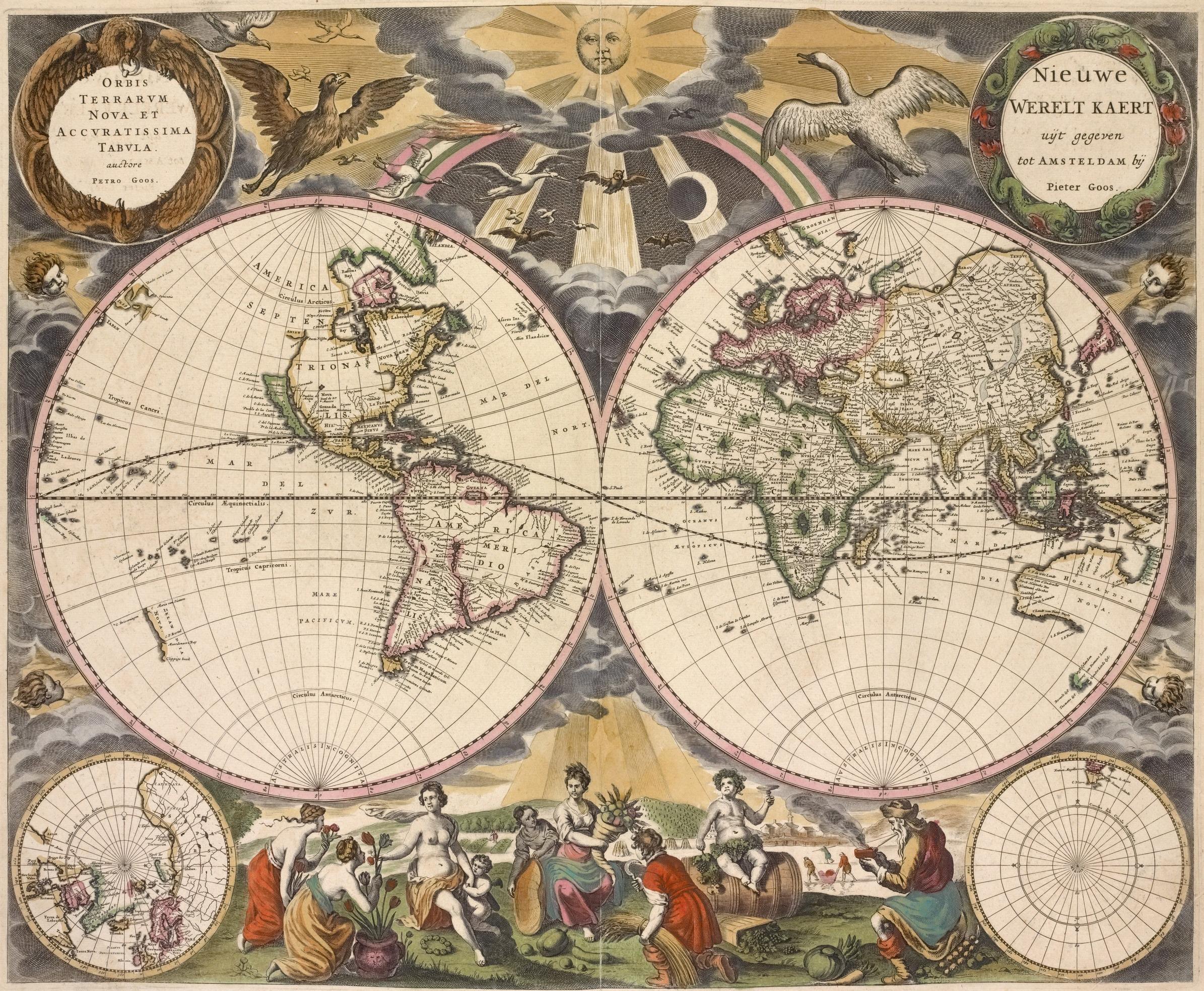
The NYPL’s digital collections include a number of maps in the public domain, like this 1672 world map by Pieter Goos.

In Ryan Flanagan’s tales of transgression, speakers engage in activities that are to some degree illegal or unsafe, and find them exciting. Christopher Bernard sneaks out to see Notre Dame during a high school trip, experiencing a moment of transcendence at age 17 that has become all the more poignant given the recent fire at the cathedral.

Adesina Ayobami Idris’ piece seems a satire of the facile get-to-know-you questions that proliferate on social media, but goes deeper, revealing her determination to find joy in the vastness of the universe, despite loss and grief.

Poet Steven surveys islands off the coast of Scotland in an elegantly restrained five-part piece, reflecting that in some ways they have not changed much over time. He also reflects on the limits of language and logic in pieces that rely heavily upon both.

Janine Canan reminds us that human civilizations come and go. We always live within nature, and She has the final word. In Jeff Bagato’s poetry, nature retakes civilization entirely.

Thank you very much for your perseverance in following your conscious and subconscious minds through the various posts of this issue!

We at Synchronized Chaos Magazine encourage people to read our regular contributor Mark Murphy’s story and consider supporting his fundraiser at the below link! 
CLICK HERE

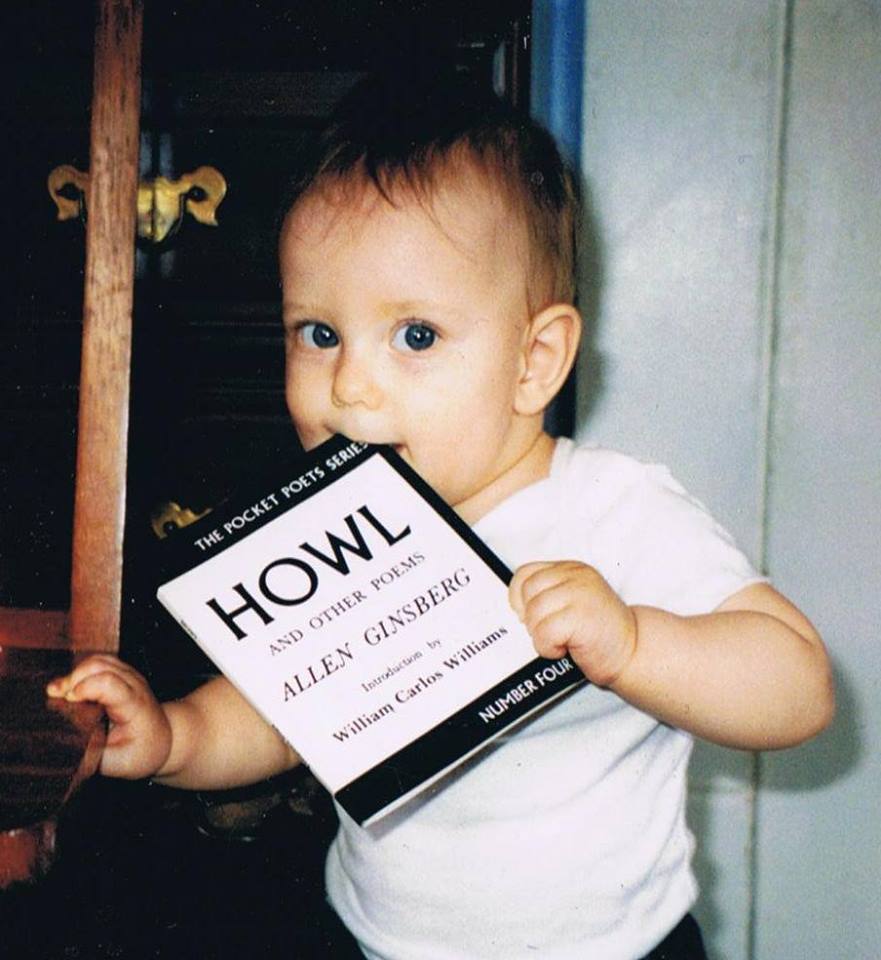
Mark enjoying poetry at a young age

10 years ago iI was living with my American wife in the UK. We were married in Dublin and then lived in the UK for two happy years, until my wife, Nora, was deported for not being a British citizen. I am a poor poet, living on benefits, due to my disability, and I haven’t been able to travel to America to see my wife because I cannot afford the air fare to get there, which has resulted in me not seeing my wife for over eight years.

In the meantime, I have written a full length collection of poems, ‘To Nora, A Singer of Sad Songs’ that is to be published this year by an American poetry press in New York. Nora is very excited and happy about this, as you can imagine. Alas, Nora desperately misses me, and needs to see me. Hopefully, this fundraiser will raise the money I need to make the trip and visit Nora and her son in upstate New York. If all goes to plan, I will visit Nora for a full month and explore the options for our future life together, including the possibility/probability of one of us re-locating to a different country. I’m also hoping to kill two birds with one stone, firstly by seeing Nora, and secondly, by promoting my new book with poetry readings. If luck is on my side, the book may well come out before I arrive in America and I may even be able to arrange some book signing sessions in local bookshops!

Here is the very first poem from ‘To Nora…’ which was written before we ever met in the flesh, and now stands as testament to our lives apart…

My Love is in America

I cannot hold you, nor yet kiss you,
yet with your song
you have rendered my heart
incapable of hiding in the loneliness of the moon.

Whatever histories pass us by
(whatever tyrants shall rise and fall)
I will bring you my poems
with bread and flowers
and we will make our bed in fields of wheat.

Whatever Graces attest their favour
(whatever divinities shimmer in the night)
you will come to me, eternally,
yielding your body, your mouth to mine,
and I will yield my seed, the fruit of all my blood.

My love, I cannot live without you,
it would be Death
and Death is over there
beyond the joy of song, beyond the sightless stars.

I hope my friends, colleagues and contacts on Facebook will understand my plight and my deep-seated need to re-unite with Nora, and donate whatever they can, small or large, to help facilitate my travel costs. My deepest thanks in advance, to anyone who responds to my call for help. May you live a blessed life.

Poetry from Joe Balaz

DA GOOD OLD DAYS

Da good old days
is kinnah like wun haze

and you gaddah go through wun maze
just to get dere.

Time’s ovahlap
is wun big lau hala mat

dat wen cover da linoleum floor.

Try open da door
and go inside

and you going find
dat da house is not da same.

You gaddah know dough
dats to be expected.

Dust off da hat
put ‘um on da head

and see how it fits today.

Restring da ukulele
so you can strum da buggah

foa see if you can still carry wun tune.

Da sparkle remains in da kupuna eye
and all da mo’opunas wonder why

mesmerized like alert zombies
on dere smart phones.

Dey stay losing touch wit demselves

cause dey kannot be alone
wit dere own minds

witout longing foa da mystique
of all dere gadgets.

If dey had to use wun quarter
to make wun call in wun phone booth

dey would tink
dat dey wuz back in da caveman days.

To dem

grandpa and tutu
look so funny

staring off into da distance
as if dey wuz remembering someting.

Well, dats how it is,

cause da vanguard
is carrying new colored kahilis

foa replace da oldah ones.

Different kine designs
on da feathered cloaks too

if you look real closely.

Da good old days
is now part of da universal fabric

dat some people wish dey could bend
through light, speed, and gravity,

so dey could jump back
into da previous frame.

kahili Feathered standards on a pole.
kupuna Elders
lau hala Dried leaves.
mo’opuna Grandchildren.
tutu Grandmother

Poetry from Rodney Gardner

Dummy

Duplication through your submission

Numbers tallied through a gem between her legs

Fruition may come through your probing

Perverted penetration and perforation

Subverted and diverted

You, the present resident is bent

Tortured and incorrect

Greetings to you

Abundant redundant fuck

Today is your moment

The armless plastic monarch

Shares her gift with you

A dummy goddess in true beauty

We tolerate no disrespect

Monorchid plastic outside

The soft interior bestows transfiguration

Your essence drains through your toes

New version conclusive

No longer elusive

Repellant

Foul

Waste

Green Machine

The machine has died

In its wake, a dirge plays on

The sound is deafening

Anguish of two thousand souls

Soon to join the ether

You clutched my hand

Holding tighter than I could remember

And I wondered in death

If I would still know your smile

The first time I heard that laugh

“These truly are the best of times.” I said

We walked further toward the center

The end all

Totality

A breeze swept through

With it the smell of dead plant matter and chemicals

Withering trees outside concluding as we were

Placing the masks over their faces

Indistinguishable from the next

Like they’ve always wanted

Rodney Gardner was born in California in 1975. At 30 he was ripped away from the west coast to finally become a real adult somewhere in Texas. He enjoys those things enigmatic and dark, seeking catharsis through the creation of music and poetry.

Poetry from Ian Allaby

Schemer


scheming, pouring potions, weaving wily words

circling the cerulean planet

planning, plotting, persisting

until at last some fatal vernal cosmo-teleo-blast

propels me, hurtles me

down down down

faster nearer faster nearer faster

till my thermo-armor melts in the searing sparks of the all-disdaining aura of the moth-cremating upper dazzlysphere

and my dura-dyno-wingtips crumple in the turbulation of the semanto-flagellic tendrils of the hyper-yakkityband

and my accu-sensors fizzle in the oleo-plasmic blur of the holy family-festing in the hollows of the humdrumityderm

(parachute! where’s my parachute?)

and my neo-electro-circuits flicker in the shattering reverb of the haunted ethno-echoes of the paleo-obligatum stratum

and my astro-motors sputter in the swirling hypno-quicksand of the kohl-eyed slammo-shutto of the valentine-bespangled larmo-ladyrinth

and

smooth as an arrow gliding

like light beneath the door sliding

awed and exultant i enter once more

the endorpho-morpho-phano-blastic core

of the moist flowerpot centre

of the naked molten essence

of the hub

of the hidden sacred part

of the secret satin city of your ever-loving heart


Elizabeth Hughes’ Book Periscope

Galactic Minds by Clem Masloff

Galactic Minds by Clem Masloff

Galactic Minds is a sci-fi- novel that would be appropriate for teen through adult age group. It is a very well written story about a psychiatric galactic hospital ship that travels to different planets and picks up mental health patients for treatment. The doctors try to help them using archetypal therapy which brings the conscious and unconscious minds together. The therapists enter into a new type of therapy that may help the patients even more. I thoroughly enjoyed this short novel and know that lovers of sci-fi will too.

Carol Smallwood interviews Nancy Smiler Levinson


Interview with Nancy Smiler Levinson

Nancy Smiler Levinson


Minnesota born, Nancy Smiler  Levinson, after majoring in journalism, worked at newspaper and magazine composition as well as an editing house in New York City; after marriage, she moved to California and had two sons. She has written many books for children and appears in several journals such as: Poetica, Third Wednesday, and Drunk Monkeys. Nancy’s included in Volume 140, Something About the Author: Facts and Pictures About Authors and Illustrators of Books for Young People.

Smallwood: You remarked: “Writing for young readers was the most joyful and challenging work I have ever done.” Please share with readers how your first fiction came about.

After gaining a  “track record” with two nonfiction books as part of a series developed by a small publisher, I was able to sell a young adult novel to a New York house.  Having written several stories for magazines, I dipped into longer fiction with a story that came from my inner youth, which became “The Ruthie Greene Show.”  The book jacket said that the author “offers a humorous, engaging account of how an ingenious young girl learns to star in a supporting role.” I might add that I enjoyed laughing at my teen self.  I was fortunate being able to work on several other books (fiction and biographies) with Ruthie’s editor.

Smallwood: Please tell us about your most recent nonfiction book for children.

I can’t call it recent because the book was published before my dozen years of full-time caregiving for my husband, during which time I had to lose my work researching and writing for young readers.  Having said that, the last title published is “Rain Forests,” a science easy reader published by Holiday House, beautifully illustrated by Diane Dawson.  As easy-readers may look breezy to write, they take a great deal of research and much work at paring down to the essence of the topics, using beginning vocabulary, and super kid-friendly “fun facts.”  A struggle, yet with satisfaction and reward in the end.

Smallwood: I smiled when noticing women are subjects in several of your children’s books. What motivated you to select them and do the necessary research? What are some of the steps?  

In the 70s, at the cutting age of publishing women’s stories, a small Minnesota publisher began a series on women in varied fields like art, education, science. . . and after communicating with that office, I was offered the opportunity to write about women in business.  This would be my first book. Following the format, chapters of five women, I whole heartedly dug into the research (remember there was no internet then).  I used my city library, as well as making direct “long distance” phone calls to some of the women or their offices, for further questions and fact checking.

Recognizing the need for a range of businesses and not all on the east coast, I so enjoyed researching both a bevy of women and the wide span.  And then, more fun than that, was writing each chapter narrated as a story, creating scenes, rather than taking a straight journalistic path.  A banker, a pioneer in the food-packing industry, an advertising agency owner . . . even the creator and producer of Sesame Street, Joan Ganz Cooney.

Smallwood: You give credit to Sheila Bender for “…her encouragement and Writing It Real for helping me….” How did you meet and what was this help?

Sheila and I were in a writers critique in Los Angeles some years ago.  Her contributions were always wonderful, and her critiquing insightful.  When she moved to Washington state and I began my decade-long poetic memoir I got in touch with her and asked if she would look at a section of my alleged manuscript. Not knowing if it worked at all, I awaited anxiously for her aye or nay.  Happily, she gave it a nod and with my new membership in her on-line community, Writing It Real (WIR), she did a super job of advising deletion of the repetitive MS, as well as suggesting the pulling together of chronological divisions. Then she worked at line editing.  MOMENTS OF DAWN finally saw the light.  I remain ever gratetful to Sheila and her encouraging me to write poetry, which helped me to reinvent myself.

Smallwood: Tell us about being nominated for a Pushcart.

An essay that I wrote, “On Line Dating in the Golden Years,” (yes I did give that a try when I was 75, after my husband’s passing) appeared in an anthology simply called “Getting Old.”
After its publication the editor called and asked if she would have permission to nominate it. First, I was stunned at the nomination, then amazed at learning that a writer needs to give permission. (I don’t know if this is always the case).

Smallwood: Please share what you are working on now and where readers may see your books.

WIR has been most helpful to me with guidance in turning grief into art.  So I have been working on such poetry and happily can boast a bit that some has been published in literary journals both in print and on-line.  I’ve also moved on to subject matter beyond illness and death and find that I can tap into my wit, which has always rather been there. I continue in this vein, and from time to time find myself also working on essays and short stories.

Since my kid-lit dates far back, most of my books are in libraries. Still in print after three decades are “Clara and the Bookwagon,” and “Snowshoe Thompson,” both easy-to-read historical fiction chapter books published by HarperCollins.  “Moments of Dawn”is available on Amazon or directly from me, the author.

Smallwood: Are there sites readers may read more about you?

Website: www.nancyslevinson.com

Carol Smallwood, Marquis Lifetime Achievement Award recipient, is a literary reader, judge, and interviewer.