Poetry from Scott Thomas Outlar

Reaching Beyond

…;

spiral out

beyond containment,

beyond constriction,

beyond restrictions,

beyond the veils

of illusion

that bind

our broken minds

with gilded chains

holding back

the path of progress,

the process of evolution,

the forward march

that can set

the initial spark

toward renaissance

and revolution

upon the earth;

spiral out

beyond the limitations

of what once

was thought

to exist

in this temporal masquerade

of purgatory induced

time and space;

spiral out

with Brougher

to find

that the future

has become imbibed

with a heady drunkenness

of creativity

let loose

to roam

in spaces

of higher truth

beyond the earth;

Continue reading

Short story from Claire Bateman

The Perforating Spider   

To what degree we should fear her we can’t know, but we extol her labor which is eleventy-seven percent more exacting than that of her arthropod relatives since she has thirteen feet (five more than the standard setup)–if you look closely, you might glimpse the flickering of their stochastic puncture-patterns on the moving spider map of the universe known also as the interdimensional network of negative space.

Nor can we discern whether she achieved her position or it was primordially imposed on her—is she an angel, perhaps a lesser god?

We do know that these feet are named respectively 1 absence 2 anomaly 3 discontinuity 4 the specious present  5 ellipsis 6 antithesis 7 stealth 8 the fugue-state  9 the lost sea 10 the anti-tonic 11 the oblique gravitational force 12 polysemy 13 cipher.  Note also her wing-buds, infolded, either prophecy or vestigial legacy of aerial predation.

Continue reading

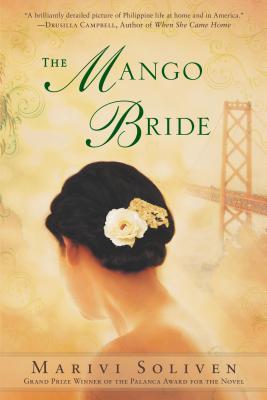
Excerpt from Marivi Soliven’s novel ‘The Mango Bride’

Chapter 19 – Day of the Dead, 1988

Marivi Soliven’s novel The Mango Bride

 On the Day of the Dead Beverly kept to the routine she had begun a year after her mother’s death:  she rose early, putting on her favorite pair of jeans and a blouse in the pale pink her mother favored.  She took her baby picture from the closet, giving Clara’s image a quick kiss before tucking it into an inner pocket of her backpack.  Then she spritzed herself with the Spanish baby cologne her mother had loved and walked out the door. 

The holiday was acutely bittersweet for Beverly, marking as it did two milestones in her life.  She had been born in the final hours of November 1; fifteen years later it became the day her mother died. But by the time Beverly turned twenty-five, her mother had been gone for ten years.  She had mourned long enough; it was time to seek joy.

Continue reading

Mindy Ohringer’s short story ‘The Man in the Yellow Hat’

The Man In The Yellow Hat

A meeting with my Editor. An Eminence Grise who makes house calls. These days, I am more patient than lover. It is he who lacks patience in my silken pajama presence. I am lobbied to put on a robe.

Autumnal daylight waned and my studio darkened. Uneaten homemade oatmeal raisin cookies grow stale. Slowly, I belted a faded kimono and stated the case for my latest project:  a novel based upon the relationship between two paintings.

“So, in my view, there’s nothing like a projective test. Oral and written responses to a visual prompt  reveal the inner workings of mind and heart. What do I see? A working man with skinny mustache.  A golden field. He wears a yellow hat. So he must become ‘The Man With The Yellow Hat’ without a monkey. I am not curious about this man. I am wondering where his monkey, George, went. I want to know what lies beneath…Where did George go at harvest time?  To the other side of the wheat field. Why? To visit pink toned Christina in Her Andrew Wyeth World. Yes, characters from children’s books and subjects of famous paintings visit one another. They share the same landscape. Who knows where one wheat field ends and another begins?”

My editor cringed and gagged on his Starbucks pumpkin spiced latte. The legendary Marshall Bloom thinks I’ve tossed my cookies for good. He lights the first of what will be a chain of cigarettes. I raced to my window, turned the lock, and shoved it halfway open. Marshall is a genius but there’s a limit to which I’ll humor his secondhand smoke.

“Why must you write everything in a fugue state? Why can’t you just produce some mainstream fiction, a romance, a cozy mystery or an erotic thriller? Something that can be adapted for Hollywood? Why must you insist upon reinventing American fiction as we know it?”

This is what happens when you have an affair with your editor. The man no longer knows his place. Instead of  “Mad Magazine’s”  “Spy vs. Spy”, we have “Ego vs. Ego.” Both of ours – colossal.

I’m the younger (albeit middle aged) female writer. A “Cherished Discovery Full Of Unfulfilled Promise. “ Whatever I’ve created hasn’t been quite good enough.

Marshall rose abruptly from the couch and attempted to smooth a wrinkled, summer weight suit. Nobody else would wear a vintage canary Brooks Brother ensemble in late October. A corpulent Van Gogh sunflower furiously paceed the perimeter of my miniscule rent-stabilized apartment. There’s a lecture coming…

“Ms. Alice Garrison, you’ve yet to demonstrate maturation since that ‘New Yorker’ piece. There are too many boundary violating, novelty seeking female voices nowadays. Especially stylized waifs from Brooklyn. Your distinct, deadpan elusiveness, while unique, isn’t helping you grow your audience.”

Grow my audience? Deliberately plant the seeds of commercial success? Feh. I’m writing for myself alone. Call me Greta Garbo. 

“Mr. Marshall Bloom, isn’t such insemination a task for the folks in publicity? Surely they must earn their daily bread? Hey, I’m just trying to tell my story on a grand, multilayered scale. Like Roth, akin to Mailer, a companion piece to Updike. Perhaps Pynchon, too?”

I stretched backwards in my earth toned club chair, pointing ballet flatted toes in his direction. Marshall remained oblivious to my need for validation and comfort. An Editor before Lover. Wit, charm, and lean, bare legs failed to deflect relentless criticism.

“You’ve got lofty ambitions. I’m not saying you won’t ultimately deliver. But much of your novel is inaccessible to the vast majority of potential readers.”

“Okay, Marshall. What should I do?”

A weary Marshall plunked himself onto my patchwork couch and stubbed out his cigarette.

“Set aside latest attempts at magnum opus.  I want to see what you can do with short prose. Delve into your romantic side and write. Of course, not about us.”

Tales of illicit intimacy. That’s a definite no-no. The less the soon to be ex-Mrs. Bloom knows, the better.

“Just slit my wrists and let it bleed all over the ‘Modern Love’ column?”

“Yes. But never fear. I’ve got a tourniquet.”

And that’s why I’m in love with Marshall. At seventy-seven, with decades of managing literary stables for publishers of all trades, he appreciates the risk I take each morning.  He knows my terror of facing blank pages and plumbing the depths of an overly synthetic, manic-depressive mind.

Marshall pressed his arms against crumbling armrests and pulled himself upwards. For the hundredth time, I contemplated how much he needs to lose weight and quit smoking. Not that he’ll listen to me. Marshall patted my head, stroked my hair, and kissed the back of my neck. My aged, yet ardent editor.

“Veins, my darling. Only sever those. Not arteries. That’s for the Nobel, the Pulitzer. Write about heartbreak but keep it a tad light. Remember that love is a mystery. Channel Hercule Poirot and apply the little grey cells. You’ll have something for me come morning.”

“You’re not staying?”

Marshall tousled my hair.

“No pouting. Be a grown-up. You need to be alone to write. I’m very much in your way. There’s Chinese takeout in the fridge courtesy of moi –  sesame noodles, fried chicken dumplings, hot and sour soup. That should constitute sufficient gastronomic inspiration.”

Marshall donned his unseasonable trademark hat of golden straw. He proffered a courtly bow and limped through my glowing doorway. The last rays of sunlight departed with him. Alas, my beloved editor isn’t much of a muse. I flicked on my secondhand lamps and sauntered across slippery hardwood floors. It was time to raid liquor cabinet. Pinot noir will do.

A barren computer screen glared. It’s a struggle limiting myself to genteel sips of Vampire’s Delight. What on earth am I doing with this story?  Where does a comparison of  these yellowed paintings lead me? Why has my mind cross-fertilized the music of “Fields of Gold” and “We Will Rise?” Am I doomed to only create inscrutable, masturbatory, or derivative work? How come when male writers engage in such practices, they are considered innovative?

If one tells a straightforward story, there’s a place for it. Conventional tales of woe or murder, with requisite twists and turns; memoirs of abuse, illness, or mid-life loss of love,  lilting descriptions of exotic destinations, all written in M.F.A. speak –for these depictions of human experience, there’s a ready-made audience. Even the frothiest Chicklit gets more respect than my outside the box endeavors.

Pouring a second bulbous glass of pinot noir, I contemplated all those awkward cocktail parties. The less than tactful inquiries about when I was last published. Those annoying questions about what, exactly, I write. At first, I say that my task is to seek divine revelation and conjure wonder. Heads shook with puzzlement. Literary Fiction, I tell them. I write Literary Fiction.

Literary Fiction…Litter Airy Fiction. Sounds like a disease for flakes. A fatal one.

My oval bearskin rug beckoned. Sirens whispered “Nap…” Eyes swiftly closed. When they finally opened, it was midnight. I dragged myself to my desk and stared ferociously at the empty screen. Pages and mind remained blank. Postulating a relationship between “The Man with the Yellow Hat”, “Curious George”, and “Christina” of “Christina’s World” led nowhere.

Shivering, I marched to the window, slammed it shut, and made my plea for enchantment.

 O Muse, why must you be so capricious? Why is it that I write best when newly in love or recently heartbroken? Why do quicksilver phrases elude me in the dullness of ordinary days? Does having won another’s heart quell acute suffering and silence my gifts? Must I lose in order to create?

Cellphone buzzing interrupted prayer. A number flashed on the screen.  It’s Grace Hermes, Marshall’s steadfast personal assistant. She does not call -especially in the middle of the night.

“Is that you, Grace?”

“Alice…I’m so sorry.”

“Don’t be. I was awake. Marshall left me with a mission. I’m trying to get that ‘Great American Feminist Novel’ going at long last.”

No reply. I hear sniffing. Snuffling. What could Grace be allergic to?

“Grace, you’re making very odd noises.”

No answer.

“Grace! Those were strangled sobs. What’s going on?”

“It’s Marshall. He was in the hospital, with Mrs. Bloom. A massive heart attack. Gone. Just gone.”

“His wife was with him?”

For Grace, tragedy becomes a teachable moment.

“Alice, she’s next of kin. Her phone number was in his wallet. She’s on the health insurance. The papers weren’t going to be filed until next month.”

“I…I thought Marshall would have taken care of all this ages ago.”

“Alice, Marshall loved you. He was waiting…Waiting for you. He just wanted you to write.”

“Good night, Grace. Thanks for letting me know.”

Cellphone angrily tossed among the fuzzy pillows of my decrepit couch.  

Endless weeping.

Mine.

###

Where has he gone, my precious Man in the Yellow Hat?

Wandered away, across golden fields,

Wind-blown acres of wheat and barley…

And I?

 I am the pet monkey he has left behind.


 Mindy Ohringer

My politically charged fiction, poetry, and essays have appeared in “The Thieving Magpie”, “Rat’s Ass Review”, “October Hill Magazine”, “The Greenwich Village Literary Review”, “MORE.com”, “New Choices”, and “The Columbia Spectator. ” In September 2018, I was a “Writer in Residence” at Byrdcliffe Arts Colony, working on the second book of my phantasmagorical trilogy about women writers, their struggle to create, and the 2008 presidential election.
In June 2018, I participated in Marge Piercy’s annual juried poetry intensive. My short story, “When The Men We Don’t Marry Come To Find Us” is forthcoming in the on-line literary journal “Terror House.” I’ve worked in entertainment public relations, government, politics, and public education advocacy. I studied Political Science at Barnard College, earned an M.A. in Politics from New York University, and completed seventy-two credits of doctoral work in Politics at N.Y.U. My blog, “Union & Utopia”, exploring how the political and personal intertwine, can be found at mindyohringer.com



Mindy Ohringer responds to Jasmin Johnson’s poem ‘watering the machine’

Some thoughts regarding

“watering the machine” by Jasmin Johnson,

Offered by Mindy Ohringer.


This…

an exquisite meditation on mortality,

folding and unfolding, interplay between the particular, universal, cosmic.

telescoping and magnification within the text – shifting lens of identity, black, female, queer, South,

migration, fraught, complex, and inspiration friendship, exploring what defines us, prodding us to wonder: what do we get to define on the journey, what is the journey?

It is suggested that we:

Bear witness.  Exhort morality. Discover within the full spectrum of human socialization, the scale of fragile identity formation and intimate loss. In the love of others, we find ourselves, lose ourselves, and are reborn as better selves.

Ask: What has shaped such a stunning soul, what is the underpinning of this suffering? What about it is truly known to us?

A partial answer: We know ourselves in contrast to Old Time religion, We create and dissect a multiplicity of selves within and outside of identities that are understood as independent variables by social scientists, and identity politics itself. Some independent variables such as age are less salient if the writer is young, some independent variables are more salient as the writer embraces certain intersections as intertwining method and home.

What do loss, suffering, particularly the loss and suffering that experienced as preordained by virtue of race, class, and gender, those pesky and profound independent variables, tell us? How do we awaken from slumber, from opiated, undifferentiated masses and change the world?  When do we awaken? It is art that tells us morning has come, will come, is coming…

We listen. We listen more closely. We love. We love more deeply and broadly. We honor our friends alive and dead. We summon and refract starlight.

A poem is written that fulfills this extraordinary mission. The one you heard.


Mindy Ohringer

My politically charged fiction, poetry, and essays have appeared in “The Thieving Magpie”, “Rat’s Ass Review”, “October Hill Magazine”, “The Greenwich Village Literary Review”, “MORE.com”, “New Choices”, and “The Columbia Spectator. ” In September 2018, I was a “Writer in Residence” at Byrdcliffe Arts Colony, working on the second book of my phantasmagorical trilogy about women writers, their struggle to create, and the 2008 presidential election. In June 2018, I participated in Marge Piercy’s annual juried poetry intensive. My short story, “When The Men We Don’t Marry Come To Find Us” is forthcoming in the on-line literary journal “Terror House.” I’ve worked in entertainment public relations, government, politics, and public education advocacy. I studied Political Science at Barnard College, earned an M.A. in Politics from New York University, and completed seventy-two credits of doctoral work in Politics at N.Y.U. My blog, “Union & Utopia”, exploring how the political and personal intertwine, can be 
found at mindyohringer.com
Edward Morris’ short story ‘The Star-King’

The Star-King
by Edward Morris

Le Journal Français
Private Collection, Item 41-A
Single cahier, acquired Montmartre, ca. 1900
Carot, Jeunet et fils, Rare Books
Handwritten; (order pages by number and name)
Signatory: (illegible)
Concierge on Duty, Hotel Belleville
For effects of the Deceased:
Oscar Fingal O’Flahertie Wills Wilde
*“
TO MR. W.P.”
*
Overture: [separate, unmarked]
We are all in the gutter, dear W., but some of us are looking at the stars.

A Childe made old, who caused public excitement and gave rise to many strange conjectures, lounged across a divan, smoking innumerable cigarettes, sketching with a piece of charcoal by the window. Outside, he could hear bees, and smell roses from somewhere close. The dim hum of Paris was like the wheeze of a distant concertina. Now and then, the shadow of an indignant pigeon or crow would pass down the long white chintz curtains of this room in this rooming house, with the bleakness of a Ukiyo-e reflection.

As it was in the Ukiyo style, the reflection was never the same as the object. The portrait the trembling, crow-tracked man-boy eked out upon the newsprint, stroke by stroke, was a selfportrait, yet never truly himself. Continue reading

‘Watering the Machine,’ short story from Jasmin Johnson

‘watering the machine’

“Never out my environment, cause I am my element”-Derek Mitchell (@derekm_)

We don’t forget where we’re standing when the ground below shifts. Instinct says that something has cracked the sky and earth all at once; fleeing for a final time. I am never still when any of this happens.

When it was my dad I was crossing the threshold of my mother’s bedroom studying the face of the only parent I would have left. My whole world in front of me tucked beneath a cloud of covers. When it was my grandmother I’d woken up in the middle of the night fighting the air to breathe minutes before getting the call. Another, I heard screams piercing through all the lights in the house; punching a hole into my stomach. I was 10 years old and jumping on the bed then. I was bound to land on that which lied beneath
me.

We are promised gravity and, in some measure, a landing. But it is difficult to understand or apply a child’s imagination of landing as an inevitable return to soil while they stand closest to it. As a child I filled my hands with dirt and cupped fireflies in my palms as they climbed around my fingers like tree branches.

Two years ago I could not write this all down. I felt unequipped to hold sobbing prayers or rosary beads of disbelief that swelled my chest; clogging sentences into syllables and suffocating those into mumbled leftovers. I was not nearly as creative as I thought I should be to filter tears into a sea of glass or a punchline. I could not gather the words and place them in any order that would direct me to you, instead of a period. This burial of hope made language an economy that was no longer worth the investment and communication became a foreign god that asked for more life from me than what felt
given.

That April night two years ago, stumbling out of an Uber, numb and loose, you appeared on my phone screen at 3 AM. Your smile wide as a billboard, the scattered words below read, “Was this your friend?” “Come to Philly.” “Through the window!”

Liquor stained the back of my throat as stillness felt like a blur that I wanted to bulldoze through. In front of my apartment door I thought about your body raptured by wind and held my arms out in front of me; opening and closing my mouth a few times as I waited for a name or maybe a god to crawl out.

The truth is that tomorrows felt inevitable then. On the other hand, death, like taxes and alcohol, was only for adults. And I remember being 11 years old sitting shoulder to shoulder with you on a field trip. They’d taken our 6th grade class to see a vintage version of Pocahontas or something very cowboys vs. Indians themed in traditional white liberal nature. But we were kids then and there was enough material about savagery that filled our bellies with laughter tinged with fear. We ate the words up and pointed fake guns at one another. For my life I cannot remember what you whispered that made me burst out in laughter and earn a striking glare from our teacher during a presumably sentimental scene.

Wiping my eyes with the back of my hands, your eyebrows shot up and a wide grin spread across your face as if you were never funny until that moment. I pretended that I was crying as an alibi to our loud outburst. You turned to other classmates announcing that the movie bought tears to my eyes as you whispered down the aisle for a Kleenex. I pinned this back on you as we soon carried this playful joke on the bus all the way
back to the classroom in fits of giggles. Years later we would turn 19 and come home from school for the summer.

You’d meet me at my internship and we’d walk Broad Street before settling behind an abandoned building hidden from the busy street. You’d pull out a bottle of peach flavored Amsterdam from your backpack along with a black lighter and rolling paper before we tore into our lives like our last meal. Your eyes fixed on the gum stained sidewalk, you’d confess you should’ve just gone to Brown when the door was open; but home felt like your grandfather’s chest. And we’d curse all the words we could find
for how that story ended. After a few swigs of silence we’d resort to imagining, future, soon, someday, into our palms as we admitted how much of the world was missing from them.

After a while we’d just settle back into the casual rhythm of the block. Lil Wayne’s Drought 3 mixtape usually poured from your phone’s speakers as we watched cars peel through the alleyway. Just North Philly-bred kids wondering what hid behind this city that often felt like a curtain. Leaning your back against the gate, flickering the lighter to
watch the flame disappear and reappear, a small smile tugs at your mouth when I resurrect our joke remarking that you should not to turn to crying again. “It gets you nothing but tissues.”

I knew your silence well but could not imagine it lying flat on a freeway. I asked as many questions that could fit in my mouth, a child all over again tugging at her mother’s hem, until they sounded like your name. “Did it hurt,” “Did you feel it?” “Did you know? “Do you know” I ask as if you are here beside me with a halo of smoke billowing around your head. We’re sitting by the water at Fairmount Park again sharing sips from a bottle, feet swinging from the edge of an abandoned balcony, eyes tilted at the sun sliding down the walls of our city. Calls rushed in to explain, to cry, for company, and I locked myself in a closet, covered by a veil of clothes hanging above me. Baptizing my phone in tears, I could not face death outside as inevitable as trees that shed in the winter.

But it was spring and the Alabama air felt thin. Light entered the room without pulling back a curtain and the earth’s scent became smoke from charcoal grills and the barbecue that surely decorated them. However, I wanted to remain in the night, in the shadows of a closet and pause time like a machine. My phone worked for me but a person felt more impossible. Facing a machine was different than facing a friend who could not be resurrected by an outlet.

Grief felt like a desert and I couldn’t water a thing. My love could not hold my friends tight enough for they’d all slip through the cracks as they were born through them. I’d refresh his Instagram account and barely touch the screen like it was an open casket or a newborn. Like I could dent something. Soon I opted out of the whole circus by not looking altogether. It’s like when Lebron throws a blind pass, pretending his peripheral isn’t there when that’s really his aim. I looked away from the screen and stayed away from the funeral while hoping that chronology would bend on his behalf. The algorithm would somehow intercede on itself and none of this would be true. This wouldn’t have to be written.

Extreme accessibility provides us with both the shock of death like a permanently lost signal and the overconsumption of it in a single scroll. The graveyard can now be as active as social media where Instagram captions turn into epitaphs overnight. Proof that they were once here and just that quickly not.

But the question that springs us from embrace to isolation is always where does all that warmth go? How do those bones live once we’ve buried them? Should they even? I accept that the phone I hold in my palms today will likely outlive the firefly I held those summer nights. I know that all things pass away and crumble into nothing. I also know that there are little lives on the way, some already here, tilting their heads back and watching us closely.

I’ve pressed my back against blades of grass while pointing at the sky until it was the tip of my finger. None of us knows the measure of life. But what the hell was and is the
point of it all? There are people that need evidence to believe. I needed reason to be. I needed beauty to exist for a reason. I needed death to happen for a reason. This was the payment for my serenity and the nursery for my logic.

But there was once where Derek told me he volunteers at an anarchic bookstore. He brings it up casually and goes, “A few people do it, we just go and sign in. Make time when we can.” He shrugs, “ And yeah, there’s no pay, it’s not for that forreal and nobody makes us come in…We make us, if anybody.” Then after a while he adds matter of factly, “Plus no one knows who the hell’s ever in charge, so there’s also that.”

I’ll keep it a bean.

I thought he and everyone apart of it was nuts. I truly did. Who has time to make time anymore? I also envied them all the way to admiration. Derek was a working full time student but he insisted on being endless. I wanted to speed through everything. I thought I had to keep up with seconds and I thought even those were limited. But he seemed to hold time in his palms by not even bothering with the thing or letting
the thing bother with him. This was also the guy blasting Lil Uzi while never noticing the white women in neighboring Subarus that stared at us like we were the obscenities pouring from our cracked windows.

When really above that volume he was likely yelling something about a philosopher he was studying like a song he couldn’t get out his head or a short story he couldn’t stop reading. I should tell you, I wasn’t raised this way. I was raised to believe eternal life was a location and that there was a pre-destined path to get there. And so nobody really tells you when you’ve become a backslider. After long absences, I’d return to careful gazes and hugs that held the question of what distance had carved out of me.

Who was this strange tattooed woman with a piercing now sprouting from her nose?
Spilling out impossible ideas of gender, politics and religion. Coloring outside of pre-sketched lines. I was raised to lick my wounds before something cracked the sky. Before a choir of trumpets descended from the heavens over mobs of hanging jaws and bended knees. Or something like that. So I was raised to “save” my life from fiery flames, and go to the altar. If I was an even better Christian I would have brought all the
“worldly” lives like Derek’s to that watery grave.

But I didn’t become that Christian and I wasn’t given a life where it was easy to be any Christian. I was given a black life, a queer one where the God I’d heard in sermons was not my friend but instead was often the gun to my temple. So when Derek and I talked about God he wasn’t on the throne, he was in some alleyway off Broad Street, behind the McDonalds on Girard. It’s all gentrified and presentable now but back then it was abandoned enough where we could cover his name in a veil of smoke and no one would notice. It was ugly and honest enough where God had to leave the throne for the hot seat. And that was probably the first time in a long time that I’d been to
church in a long while. Although, the one that baptized me was just a few blocks up.

At the time that Derek and I reunited we would try to meet up during breaks and catch up on everything that was driving us crazy about school. For him it was often whiteness. For me it was the Bible.

I attended a historically black Christian university in Alabama. Over there religion was a game of Russian Roulette. They thought of it as a bullet and used it as such. Like any church kid I had been given fear as a prelude to love early. I knew terror well and maybe that’s what locked me in a closet, holding my breath like it was time itself, because I thought of survival as a savior. Death was our neighborhood and not the
highway we took to leave it.

A part of me figured that if I could stabilize a sense of linearity, I couldn’t be flung from its embrace and I could grow old. And that meant something because so many of us hadn’t.

When graduation came we all scurried into the nearest building to secure this dream and avoid whatever it was outside killing us. That outside varied for each of us. The building we ran into did as well. We would die a metaphorical death that sent us to the White House, Hollywood or Harvard. Not the physical grave. Not this early. But if I am to end having said anything about my friend it is that he didn’t die before he died. And I’ve seen this happen. If I didn’t make it home that spring night it would’ve happened to me.

I was more heaven than alleyway. I wanted to be a street paved with gold and this often meant vomiting my appetite while rent hovered over my head like a ceiling. This also meant insomnia and loads of it.

Worry spilled over the brim of my life and a smile that felt like a grimace tugged at the corner of my lips when anyone mentioned the miraculous weight loss, the black girl magic degree. I was a flower that had more data than water. From the abyss of that spring air, I stumbled out of an Uber expecting the night to stay young. And there is something about not being able to catch a friend when they fall from the night.

Suddenly you want to remove all the buildings blocking the sun. You want to reverse time or push it to the very edge of itself. There was a moment where I realized all of the closets in my world. I’d hid myself in a closed corner with more outfits than people. So I decided to make my friendships infinite in more ways than a number. Maybe this is the crack in the sky. Maybe we must believe in our special ability to bring warmth to other lives even after ours has gone cold.