
FUNCTIONAL POTENCY AND OTHER RELIABLE TECHNIQUES REQUIRING EFFECTIVE IDENTIFIERS
We arrived at dusk
and spread ourselves
beneath what passes for a canopy
since the sky was forever flaunting its.
I set up my table
which has hinged braced legs.
The others brought tarot cards
and scented candles.
We welcome anyone who cares to pop in
with the stipulation
this is family run and
propensities for peace guide us.
“Is there a Tony here?”
Tony is here, sending lightning bolts
up people’s arses,
even in death irreverent.
His laughter starts our table a rocking.
We won’t get anything done tonight
regret he does not take us
a little more seriously.
Poetry from J.J. Campbell
J.J. Campbell (1976 – ?) is trapped in suburbia waiting for the end of the world. He’s been widely published over the years, most recently at Rusty Truck, The Rye Whiskey Review, The Beatnik Cowboy, Mad Swirl and Horror Sleaze Trash. You can find him most days waxing poetic on his mildly entertaining blog, evil delights. (https://evildelights.blogspot.com)—————————————————————————————————————————————————–what could be i used to look atbeautiful women and dream about what could be reality set in sometime around my late teens none of them look at me and think the same thing at least that’s how i’m explaining to myself why i am single still in my forties- ———————————————————————–of natural causes it becomes more obvious each day i will die alone i’ll be one of those stories on the news of some shut-in found months after he died of natural causes my luck, it will be on the toilet hopefully, with a smile on my face————————————————————————————————–in the sad facts another morning waking up alone entrenched in the sad facts that the world has decided you don’t get to be love there will be no holding hands on a sandy beach as the sun goes down no kisses under the stars no sweet nothings whispered anywhere near your existence insanity keeps you alive keeps you the heartbroken fool that still believes keeps you always willing to be punished yet again————————————————————————————-rivers of tears if it wasn’t for laughter, these days would simply be rivers of tears think of your pain as the last meaningful act on this earth the love of your life decided to live on the other side of the world the sun will come up again so will the skin cancer hope is only there for those that actually believe it exists—————————————————————————————–since forever left your arms embrace the painlike an old lover the distant echoes of years gone by since forever left your arms agony leaves a bitter taste the flowers all die before one last sweet whiff of a better tomorrow they will feed you this bullshit that all things get better with time happiness is not falling for the lie |
Elizabeth Hughes’ Book Periscope
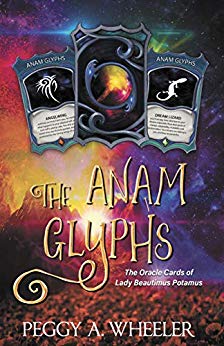
The Anam Glyphs by Peggy A. Wheeler
The Anam Glyphs is another Beautimus Potamus book. This book shoud actually be read before The Splendid and Extrordinary Life of Beautimus. This book explains the Anam Glyphs that Beautimus would read every morning. This book also contains the same delightful humor. It also has some very good advice or suggestions that one could use their own life. I thoroughly enjoyed this one and the other on Beautimus. I am definitely a new fan of Ms. Peggy A. Wheeler.
The Anam Glyphs is available here.
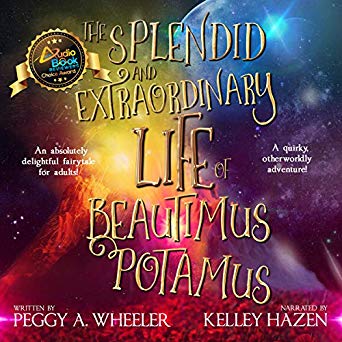
The Splendid and Extraordinary Life of Beautimus Potamus
Wonderful book, which Ms. Hughes enjoyed as well! Also available from Peggy Wheeler’s website.
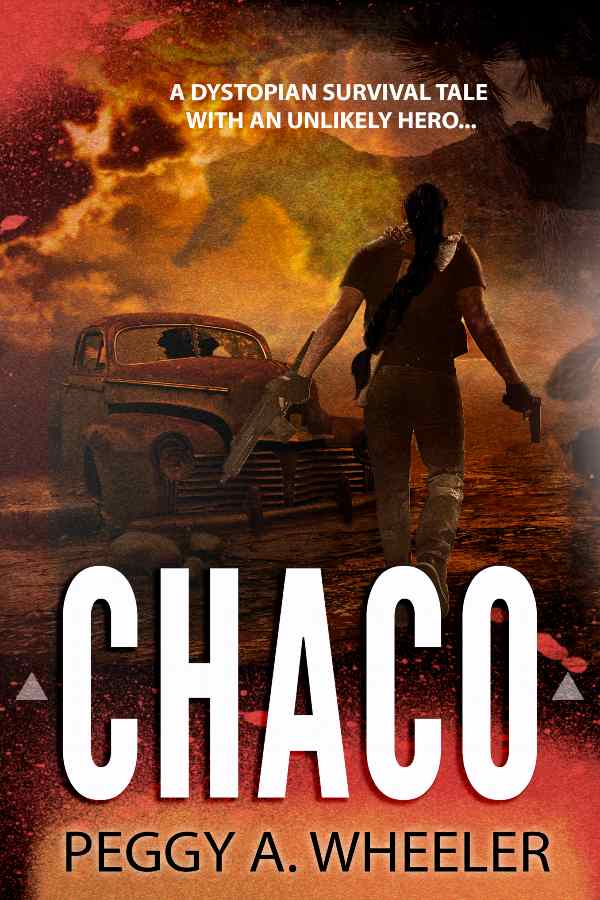
Chaco by Peggy A. Wheeler
Chaco by Peggy A. Wheeler is a suspense/adventure novel. It is about Chaco who is a “handyman” for Abigail and Russell walker. Chaco holds a secret that he has not told anyone. He has a Phd in physics from a German university.He has been watching the skies through his powerful telescope for solar CME’s. One day his fears come to fruition and the CME’s have not only knocked out power to homes and businesses, but newer cars will not run, no internet or cell phones. No way to communicate or cook. When people realize help will not be coming, people begin looting, killing each other and some lose grip of reality. Chaco decides the only way to keep himself, the Walkers, their granddaughters and the neighbors, the Pennymons safe is to go to a self sustaining commune the Walkers daughter lives in 800 miles away, most of the journey on foot. This is where the adventure and suspense begins and intensifies. I would recommend this for older teens and adults. This will keep your adrenaline going and turning pages until the end. It was difficult to put down and the adrenaline keeps going when you reach the end. I absolutely loved it and will be reading it again.
Artwork from Kerry Rawlinson
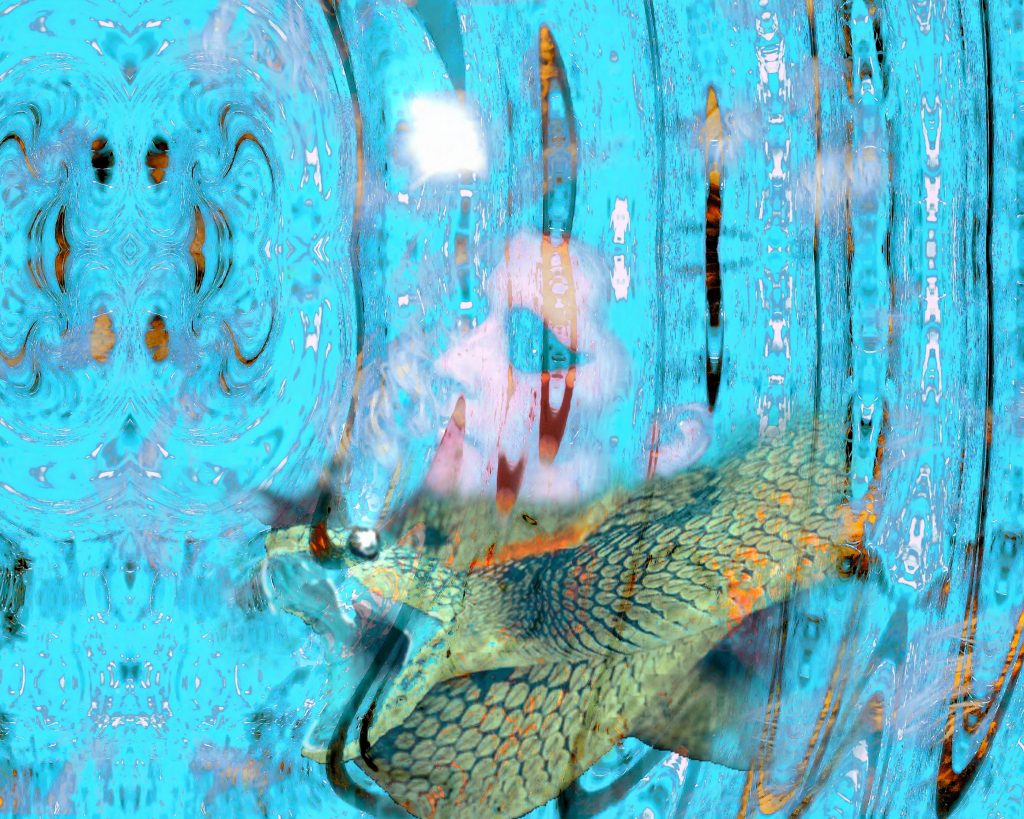
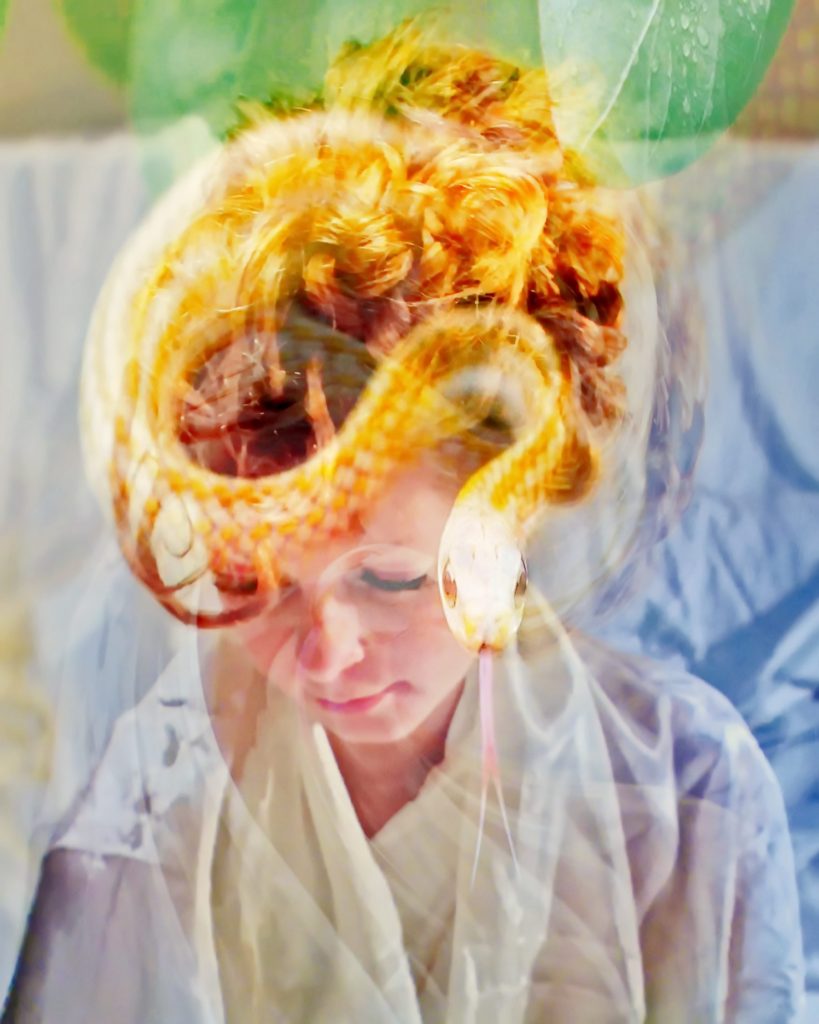
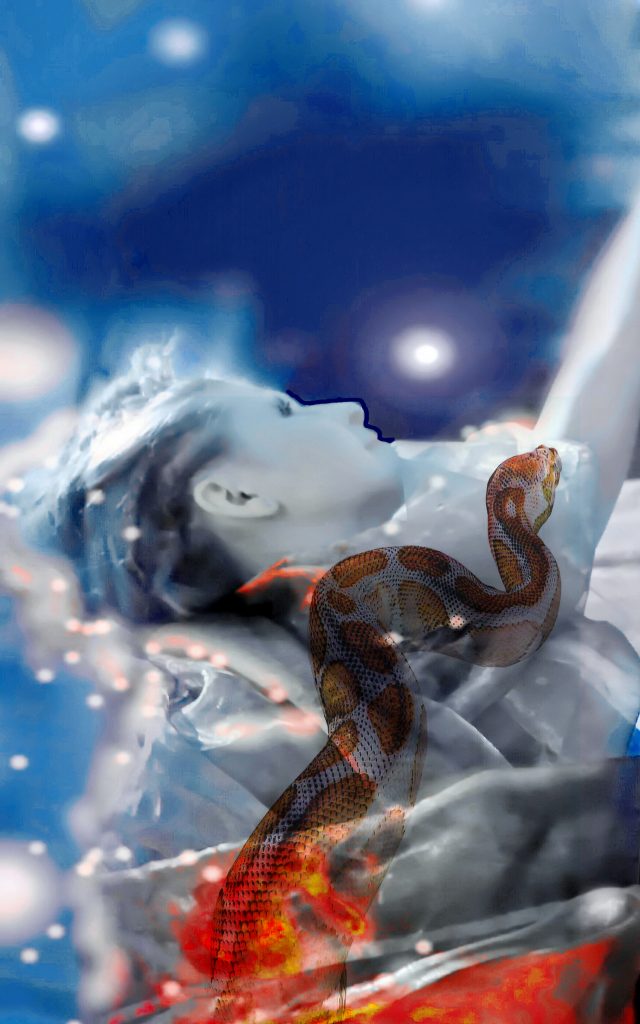
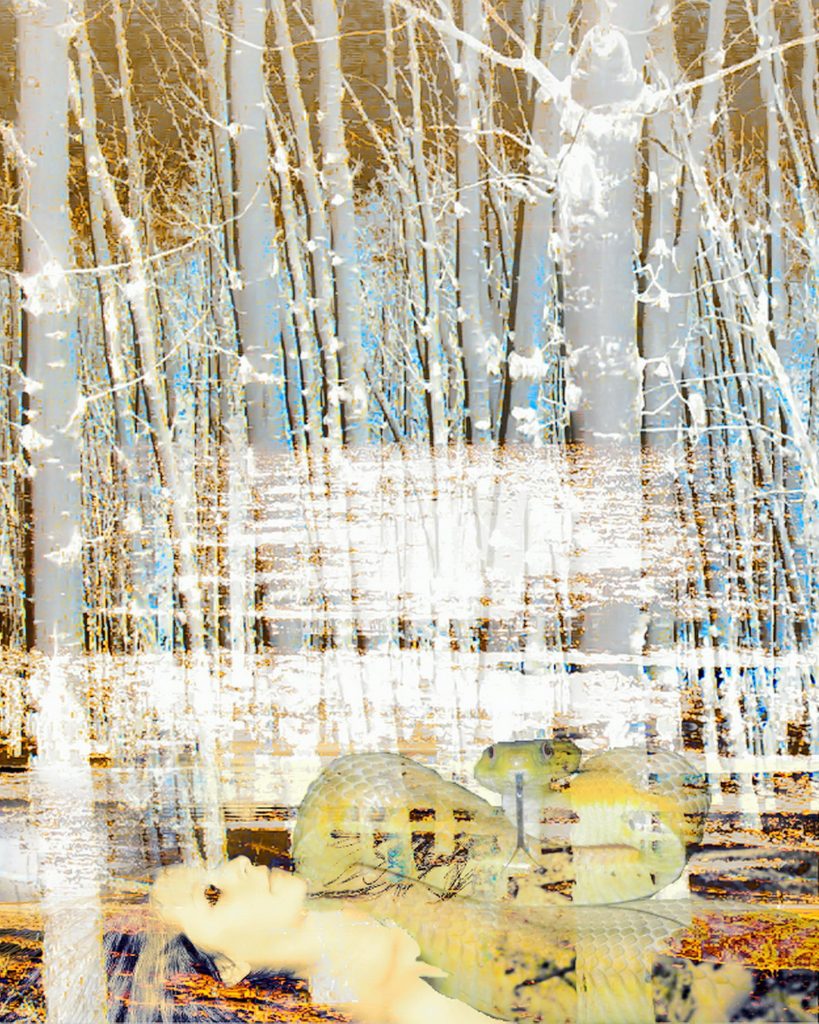
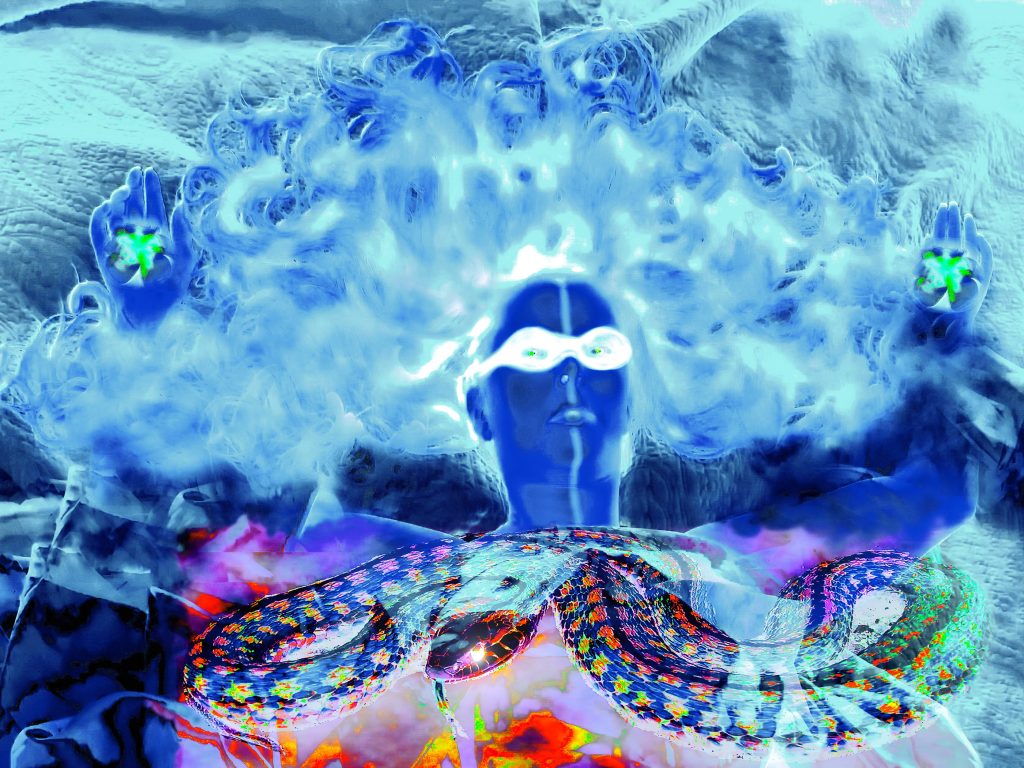
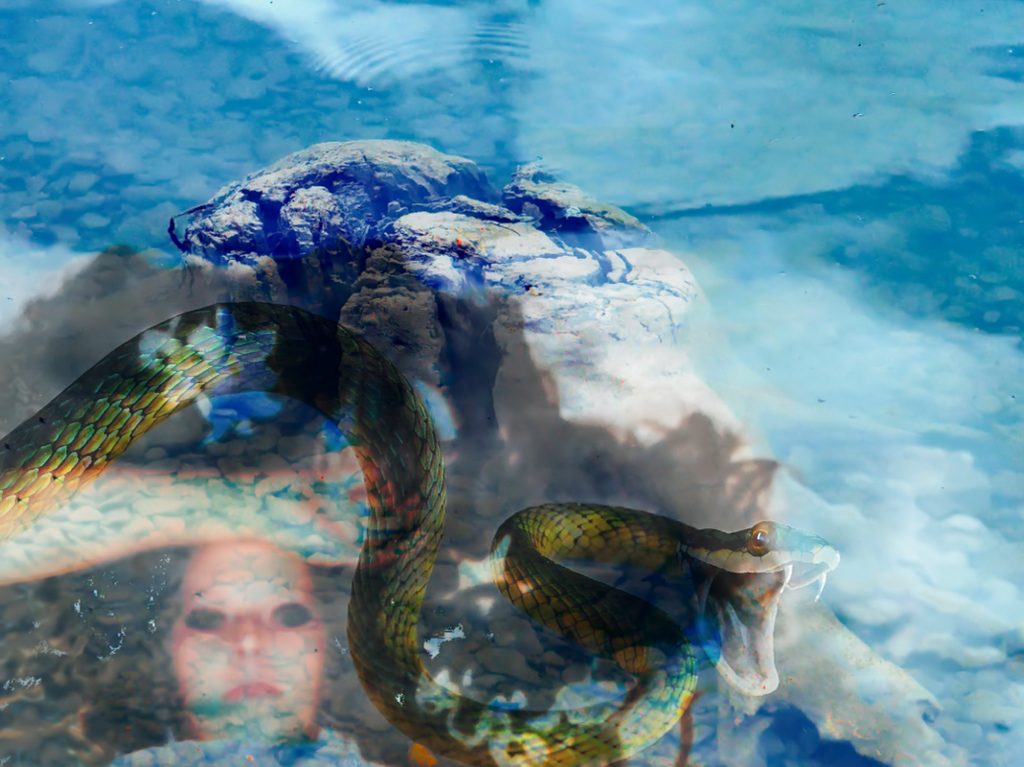
I come from Zambia, Africa. Unknown to most travellers, there exists a creature of myth & cultural memory called Chitapo. If you travel in the north, there are pictures around the Kafue area that depict her; in the south around the Zambezi also. She/they are part-mermaid/ siren, part snake, lurking in the depths of the rivers and lakes. Their enchanting song lures wandering souls into the water to drown. She is always hungry. In the half-awake, half-comatose state of grief, self doubt, fear of addiction or diminution, she appears to us. She’s beautiful and terrible, the snake ever poised and watchful, and we cannot look away… Do we dare embrace her? At what cost?
Decades ago, autodidact & bloody-minded optimist kerry rawlinson gravitated from sunny Zambian skies to solid Canadian soil, nurturing family and a career in Architectural Technology. Fast-forward: She follows Art & Literature’s Muses around the Okanagan, still barefoot; her patient husband ensuring she’s fed. She’s won some contests, e.g. from Fish Poetry Prize, CAGO Online Gallery, Geist; and recent work appears internationally, eg. Tupelo Quarterly, Across The Margin, Painted Bride Quarterly, Literary Review of Canada, Connecticut River Review, Pedestal Magazine, Riddled With Arrows,Boned,and Anti-Herion Chic; amongst others. http://kerryrawlinson.tumblr.com/; @kerryrawli
Poetry from Temidayo Jacob
WHAT THE SUN DOES
This is how the sun reminds
me of hell, everyday.
It pours its heat on the
soil to burn my sole and soul.
My body is butter.
The sun snogs me with hotness
and I become a lonely woman
whose vagina is awaiting
the company of her husband.
A boy once stared into my eyes
and prayed to me to let him
dip his index finger into me.
But I told him
butter kept under a scalding sun
is not meant to be touched,
you watch it die— and let it
find life again at the feet of sunset.
The boy stared at me again;
this time like he saw dark letters
of rejection brightening my face.
The sun climbed down my body
to create a shadow out of the boy.
BULLETS
I don’t know
what to call this.
All I know is that
there is this attraction
between my body and bullets.
I’ve heard of men
who defended themselves
with bullets.
I’ve hears of men
who won wars within themselves
with bullets.
But, here I am,
thinking of muting my body
with bullets.
This body doesn’t worth
self defense.
This body doesn’t worth
winning wars.
It is an incomplete building
stuffed with broken bottles,
ugliness, dirt, with no windows.
This building can never
own completion because
there will never be enough
resources to complete it…
except bullets; one or two.
When will you understand that
sometimes, gunshots are
noises that stop other noises?
MAR THE MAP
Sometimes,
scars do not heal.
they make us Ill and drag us to
young graves. The scars
on my body are
traps looking like maps,
leading strangers into different cities of ruins. I don’t want their feet there.
So, I try to put a closure on this fissure. But these strange legs
still open them with toes. Sometimes, no matter how many bandages you use to cover scars, something will still open them
and make them strive for air.
I saw a billboard:
“Give destruction to every part of the path leading to destruction.
Mar
the
Map!”
So I… So I… So I…throw
this body into fire like pieces of pitiful papers.
Who wants to see proofs of his own destruction?
Christopher Bernard reviews Word for Word/Z Space’s production of The Rime of the Ancient Mariner
OF DREADFUL CONSEQUENCE
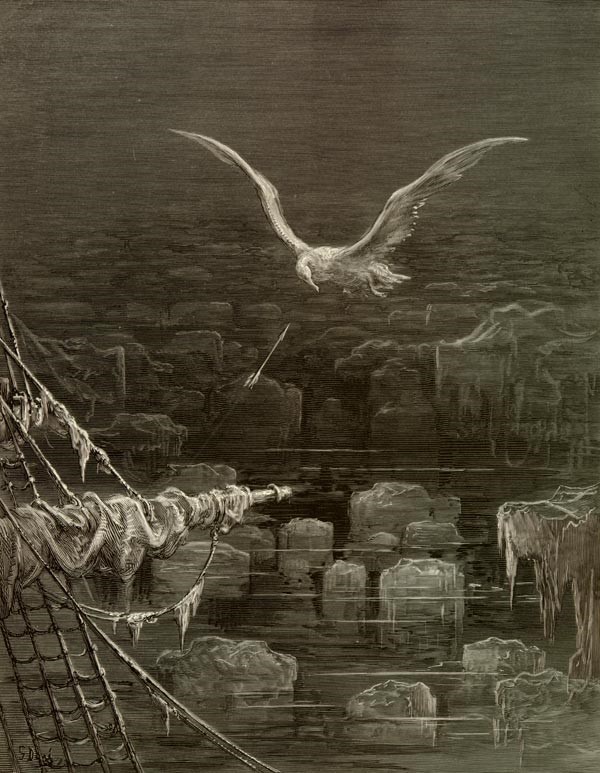
Illustration from “The Rime of the Ancient Mariner,” Gustave Dorè
The Rime of the Ancient Mariner
Word for Word Performing Arts Company
And Z Space
San Francisco
A review by Christopher Bernard
“ ‘God save thee, ancient Mariner!
From the fiends that plague thee thus!
Why look’st thou so?’ With my crossbow,
I shot the ALBATROSS.”
The new theatrical adaptation of Coleridge’s haunting poem by San Francisco’s Word for Word and Z Space could hardly be more timely. It opened on the day of the mass global Climate Strike of September 20; some in the audience still carried dust from local marches on their shoes.
The famous poem tells, in the form of an extended ballad, the tale of an old seaman who stops a young man on his way to a family wedding to tell him a story he is compelled to tell over and over again, of a mysterious and tragic voyage he made in his younger days south to the Antarctic wastes, where he shot and killed an albatross, despite the bird having led the ship back into open sea, thus sparing it wreck in frost and ice, and about the terrible punishments thereupon visited upon himself and the crew for this crime against nature.
Word for Word’s beautiful, sometimes harrowing, adaptation underscores the many prophetic aspects of the poem; not only for its, and our, terrifying future, but also those deeply rooted in our civilization: the humanism of the Greco-Roman world and the special creation of man and his role as master of nature claimed for him in the Old Testament; the humanism that has long defined Western civilization and that, turbocharged by the scientific revolution, the enlightenment, and the multiple industrial revolutions of the last two and a half centuries, has made us world-conquering and now world-destroying.
There is one question that anyone who has read “The Rime of the Ancient Mariner” has asked. The question has nagged for the more than two centuries since the poem first appeared. Students, teachers, critics, lay readers of all kinds ask: why on earth did he do it?
Why did the Ancient Mariner shoot the albatross?
It is not explained in the poem—indeed, the idea of motive is never raised. It seems an act of wanton thoughtlessness, boredom, whim. Yet, to a brutal fate, to avenging spirits and “a rotting sea,” to mass death and, for those who survive, a life worse than death, leads (in director Delia MacDougall’s memorable phrase) this “thoughtless act of dreadful consequence.” A seemingly random, unfortunate, but surely trivial deed has results beyond anything that seems morally or even practically explicable.
There is, perhaps, only one humanly understandable, if not respectable, reason. He did it, not because he thought that it was right or necessary, from superstition or fanatical zeal, or even from sheer malevolence—out of pride, cruelty; what we might call “malignant narcissism” or “toxic masculinity.” It was an act neither of misguided virtue nor of willful evil. He did it for one reason alone: because he could.
Our world of relentless disruption has come about for reasons not far different: the Mark Zuckerbergs, Steven Jobs’, Travis Kalanicks of the world have upended our existence time and again because they could. Some young man working in a midnight bedroom may yet find a way to blow up the world just because he discovers that, with this little thread of code populating every computer in the world with a single click of his mouse, he can.
Word for Word follows its customary method of dramatizing texts by presenting them literally “word for word”; in this instance, enacting the entire poem on a stage representing a minimalist skeleton of the Mariner’s ship, and flanked by sweeping ramps, like two arms embracing the vessel, that rise to a shrine-like alcove where figures of transcendence briefly appear—the “spirits” that inhabit the poem, including that of the albatross. The stage is a bit like a schematic image of a woman’s body, with head, arms, and womb: mother nature from which all things come and to which all things must in the end return.
Among the most notable performers of this evening were Lucas Brandt as both the Wedding Guest to whom the Ancient Mariner tells his inescapable tale, and the young mariner of the awful deed and spectral sea tragedy (most of the cast take double roles); a splendid Darryl V. Jones who takes the part of the Sun (who has indeed a defining role in the poem, as bringer equally of life and death) and also as the Hermit who shrives the mariner at the end of his long journey (Jones also wrote the idiomatic music for the Hermit’s song); and the lovely Leontyne Mbele-Mbong as a crew member and second of two disembodied spirit voices. Charles Shaw Robinson presented the Ancient Mariner with mournful authority.
The two directors, MacDougall and Jim Cave provide, in the program, particularly eloquent “director’s statements,” demonstrating an unexpectedly comprehensive understanding of Coleridge, who in later years became an influential philosopher some of whose ideas left traces on American transcendentalism, existentialism, and ecological philosophies. The directors, performers, and production team braid together their skills like good hemp cable to help the poet’s words, ideas, and warnings cross the generations to reach us with as much urgency as theatrical power.
It is well accepted that we are in the midst of destroying much of living nature that has thrived for tens of millions of years on planet earth, like the mariner’s shooting of the albatross, just because we can. Before our time no matter how much we were able to destroy each other, cities, cultures, entire civilizations, we could not, in effect, destroy everything. But now the world has become our toy; like many a child, we have been busy taking it apart to see how it works. And, like many a child, we are now crying because we don’t know how to put it back together again.
At the very beginning of this adaptation, in a brief prologue, the “spirits” that are as vital to the story as the benighted humans, and acting together as a benignant chorus made up of everyone except the tragic protagonists, present a short speech not to be found in the poem; it is repeated, word for word, at the poem’s conclusion. Who invented it? No one is saying. It is modest, kindly, ingenuous, and deeply moving, ending the performance on a note both questioning and hopeful. One can only be grateful, as we have never been more in need of hope.
_____
Christopher Bernard is co-editor of the webzine Caveat Lector. His novel Meditations on Love and Catastrophe at The Liars’ Café will appear in 2020; his third collection of poetry, The Socialist’s Garden of Verses, will also appear in 2020.
Synchronized Chaos October 2019: Literary Carousel
Welcome, readers, to October’s issue of Synchronized Chaos Magazine. As our editor Cristina Deptula is traveling, here’s a Literary Carousel of writerly advice and excerpts from books whose authors are clients of our colleagues Desiree Duffy (and the Black Chateau team), Kristina Marie Darling of Penelope Coaching and Consulting, and Gini Graham Scott of Changemakers Publishing and Writing.
Also, we will have a presence at four different LitCrawls:
Portland, Oregon (November 8th, the Portland Psychedelics, including Lisa Loving, Arielle Dione Hartwell, Douglas Cole, Jennifer Robin, Ted Cheng and Bonnie Greene)
San Francisco (Partnered Reading, where published authors write new short pieces inspired by the work of emerging authors) (October 19th at Adobe Books. Kristen Caven, Douglas Cole, Sheryl Bize-Boutte, Christine Volker, Aqueila Lewis-Ross, Robert Cohen and Joan Gelfand)
New York City (‘History Rhymes’ – Manhattan, October 12th in Cobble Hill) (Nhi Chung, Jim Feast, Bernadette Giacomazzo, Pam Saxelby, and the satirist ‘Autumn Leaf’)
Los Angeles (‘The Literary Heroics’, October 6th, Joan Gelfand, Raj Naiksatam, Jacqueline Berger, Charles Ayres and Peggy Wheeler).
One of our community members, Aqueila Lewis-Ross, a poet, educator, and community activist, invites people to order copies of her book and enjoy her work as part of a fundraiser she’s organizing in order to be able to continue her vital culture-shaping.

Desiree Duffy
Black Château offers award-winning digital marketing services. Website development, PPC, SEO, social media, digital public relations, online advertising, viral marketing, graphic design, branding, influencer marketing and media outreach are just some of the services we offer authors and their books.

Penelope Coaching AND Consulting
Available Services
Manuscript Consultations with line by line feedback on book-length length poetry, nonfiction, fiction, hybrid genre, experimental, and cross-disciplinary work, as well as chapbook manuscripts in all genres.
Application Coaching for artist residencies, literary arts fellowships, cover letters, projects proposals, grant applications, and more.
Book Publicity for your most recent poetry collection, novel, short story collection, memoir, hybrid text, or essay collection. We can assist with facilitating reviews, interviews, and features in literary magazines.
Professional Development Coaching and assistance with literary journal submissions, pitching articles to editors, pitching book reviews and review-essays, and networking strategies.
Private Workshops for Individuals and Groups, including courses on hybrid and mixed-genre writing, women’s writing, book reviewing, publishing arts, verse novels and the long poem, collaboration, and other topics as determined by student interests.
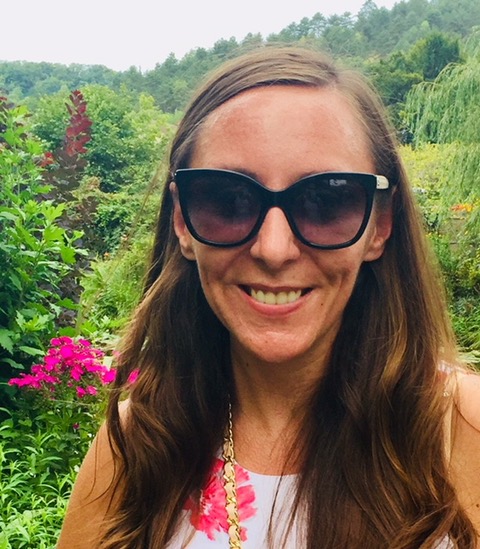
Kristina Marie Darling
Kristina Marie Darling was born in 1985 in Tulsa, Oklahoma. She is a first-generation college student and an advocate for women in the arts, higher education and the professions.
Kristina is the author of thirty books, which include Look to Your Left: The Poetics of Spectacle (University of Akron Press, 2020); Je Suis L’Autre: Essays & Interrogations (C&R Press, 2017), which was named one of the “Best Books of 2017” by The Brooklyn Rail; and DARK HORSE: Poems (C&R Press, 2018), which received a starred review in Publishers Weekly. She has also written in collaboration with Carol Guess, Professor of English at Western Washington University; John Gallaher, winner of the Levis Prize in Poetry; and novelist Chris Campanioni, who is the recipient of the Best First Book Distinction from the International Latino Book Awards. Kristina’s writing has been set to music, installed in gallery settings, utilized in fashion photography, and stitched onto kites by textile artists.
Her most recent poems appear in The Harvard Review, Poetry International, New American Writing, Nimrod, Passages North, The Mid-American Review,and on the Academy of American Poets’ website, Poets.org. Kristina has published essays in The Kenyon Review, Agni, Ploughshares, The Gettysburg Review, Gulf Coast, The Iowa Review, and numerous other magazines.
Her work has been recognized with three residencies at Yaddo, where she has held the Martha Walsh Pulver Residency for a Poet and the Howard Moss Residency in Poetry, both of which are endowed residencies awarded, by internal committee nomination only, to recognize outstanding contributions to the arts; a Fundación Valparaíso fellowship to live and work in Spain; a Hawthornden Castle Fellowship, funded by the Heinz Foundation; an artist-in-residence position at Cité Internationale des Arts in Paris; three residencies at the American Academy in Rome; two grants from the Whiting Foundation; a Morris Fellowship in the Arts; a Faber Residency in the Arts, Sciences and Humanities; and the Dan Liberthson Prize from the Academy of American Poets, among many other awards and honors.
A former Pabst Cultural Endowment Fellow at the Atlantic Center for the Arts, and the recipient of grants from Harvard University’s Kittredge Fund, Yale University’s Beinecke Rare Book and Manuscript Library, the Ora Lerman Trust, the Regional Arts Commission of Greater Saint Louis (on two occasions), and the Rockefeller Archive Center, Kristina also was named the recipient of an Elizabeth George Foundation Fellowship, a cash grant in the amount of $4,000 designated to further her contributions to the arts.
An editor, critic, and publisher, she serves as Editor-in-Chief of Tupelo Press and Tupelo Quarterly, an opinion columnist at The Los Angeles Review of Books, a contributing writer at Publishers Weekly, a staff blogger at The Kenyon Review, and a freelance book critic at The New York Times Book Review. Kristina has also held staff positions at Gulf Coast, The Best American Poetry, and Black Ocean, where she worked as a book publicist and grants specialist.
She has lectured on contemporary literature, poetics, the publishing arts, and creative writing at San Diego State University; New York University, as well as NYU’s Summer Paris Writing Program; the Sorbonne Library in Paris; the MFA Program for Writers at Wichita State University; the Poetics Program at the University at Buffalo; the University of Missouri at Columbia; the University of North Texas; Drake University; Buffalo State University; Florida International University; the Yale University Writers’ Conference; the University of Arizona; Western Washington University; and the Castle of Otranto in Italy. In 2019, she was named to the U.S. Fulbright Commission’s roster of Senior Specialists.
Kristina’s student loan memoir is represented by Marilyn Allen of the Allen O’Shea Literary Agency.

Gini Graham Scott, founder of Changemakers Productions
Changemakers Publishing and Writing has become a conglomerate of writing, publishing, and marketing services with a team headed by Gini Graham Scott, Ph.D.
She has written and published about 200 books — 50 with traditional publishers, 150 through Changemakers Publishing.
She has also written and executive produced 6 film projects, which include 4 feature films, a pilot for a TV series, and a documentary, as a co-producer through Changemakers Productions.