Penelope Coaching and Consulting – short story from Ron MacLean

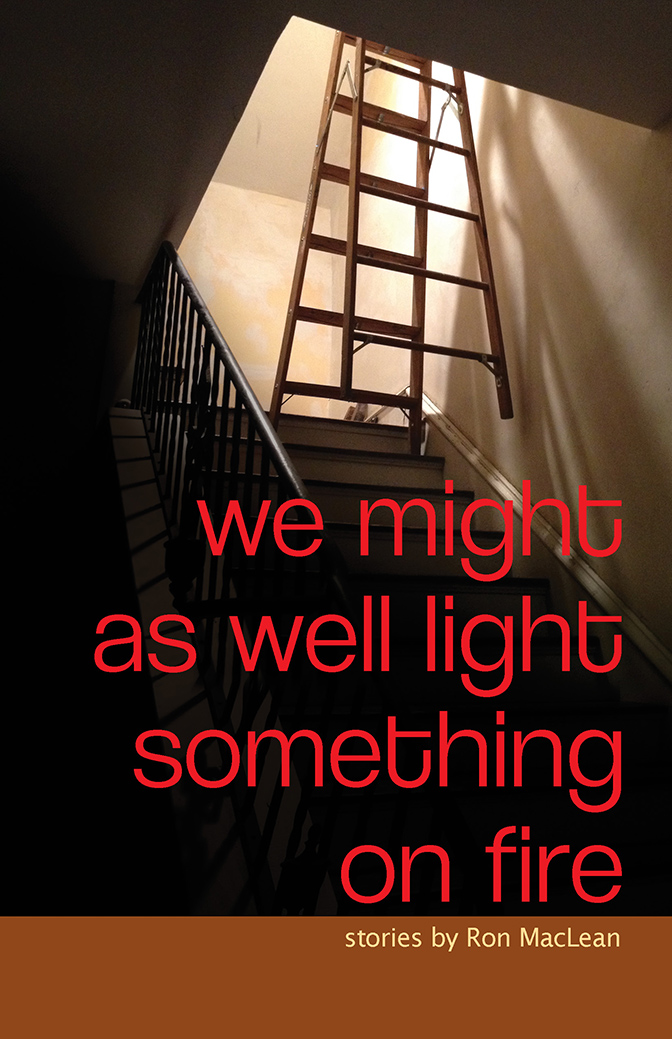
IT MUST BE BEAUTIFUL IN BERLIN THIS TIME OF YEAR
I got it from her, this habit of clenching my feet into a fist. I may not be the
sharpest knife in the jar, but I understand this: a marriage is built of bones and teeth.
We take care of ours: we brush, we floss, we see our dentist. Even so, I’m holed up in
a Florida hotel writing this eulogy while she’s at a shoot-‘em-up flick.

She doesn’t understand why we’re here. Thinks it’s some self-inflicted
wound. Some alligators are always trying to skate uphill, she’d say if she were here
now. You practically sawed off a limb to free yourself. Why come back? Her kindness
slays me. I’d know enough to not say, It’s my family. For her, the boundaries are
clear. She came for me – doesn’t even like crossing the Sunshine State line. Can’t
understand why I have to go into the teeth of it. She wants to keep me from pain.
Knows that’s not always possible.

The bed is too hard, the pillows too soft, it’s too cold to swim, and we can’t
afford room service. Every sentence I scribble I cross out, erase. The persistent hum
of HVAC. Low voices in the wall. Scraps of memory – a dish rack with two coffee
mugs, a transistor radio playing Percy Faith. The terrifying calm after each tempest.

The way, with enough conditioning, a crackle of static can make you flinch. Family, I
scratch out, is what hurts you.
I ordered dinner anyway. When it arrives, I will bounce it on my knee like a
baby.

I’ve tried to live by one simple rule: never microwave anything you care
about. It’s an inhospitable frequency, prone to shoot sparks or suck the life from
things. I’m the last one standing on this particular branch. She’d say all my family
ever cared about was getting the pool cleaned. What pool, I’d ask her. She’d make
that exasperated grunt. She won’t come to the funeral. Won’t cross that line.
Forty-three degrees. People think Florida is warm. Some of us know it takes a
second skin. But it must be beautiful in Berlin this time of year. The tulips at
Mauerpark, the former death strip between east and west. To walk hand in hand
where the wall came down – mauerfall – a place now alive with gardens and ponds,
jugglers and buskers, young love heedless of tooth decay. To see a city once divided,
now thriving. We can still get there.

Silence comes in so many forms. Companionable. Caustic. Cancerous. I cross
out. I write. I cross out.
Once a month or so I have this dream where my teeth fall out. Pour from my
mouth like water and glisten on the ground. I wake up caressing my molars. I don’t
tell her this. Where is your backyard pool then, she’d want to know – your pet parrot
squawking for sunscreen? Someday you’ll be soiling your trousers and wishing you
could chew solid food. I wouldn’t know what to say.

I once held a chunk of it – Berliner Mauer – at a college talk, the day I met her.
This woman – the speaker, a former East German – told how she chipped it out and
kept it, first to remind her the wall was down, then, over time, to remind her that
what’s built inside you doesn’t fall so fast just because you can move around freely.
Some nights a burger and a cold beer can set anything right. Here’s hoping. I
don’t want to paper over problems as I eulogize. Don’t want to let her down. The
room’s not helping. This polyester bedspread of autumn leaves. This broken bedside
table. How what we do to each other is the best we can. How we know in our bodies
silence can cut quick as any other blade. Somewhere there’s a minibar with my
name on it.

We got as close as Frankfurt. A stopover on a work trip to Denmark. Sat in
oversized rockers awaiting a connection. Failed to consider how singular the
opportunity could be. It wasn’t the best time for us. She on the phone with her sister.
I overheard: “To save that man, you’ll need a sharper knife.”
Do I wish she was here now, taunting and teasing, crumpling each inadequate
attempt into a ball and missing the wastebasket as only she can? Of course I do.
Instead of these scratched-out hotel pages, to bring a chunk of my own wall,
softened and smoothed with time, pass it from hand to hand: Here’s your eulogy.
Even the strongest signals aren’t always clear. We have our troubles. She
talks and talks. I shave my head, and still I can’t quite hear.

We’ve had a good ride, though. And we’re not done. I remind her almost
daily. She’ll come back adrenalized from the movie; she’ll chastise me for ordering
room service and for caring so damn much about this. You can’t toss a donut to keep
a duck from drowning, she’ll say. I’ll beseech her, I have no idea what you’re talking
about. She’ll hug my head. Family, she’ll say, are the ones who love you. We’ll take out
our teeth and put them in plastic cups ‘til morning. So we don’t hurt ourselves, or
each other, any more than is necessary.
Black Chateau PR – Sheryl Benko’s novel The Last of Will

The Last of Will – Book Excerpts That Will Take You on the Ride of Your Life

Sheryl Benko’s The Last of Will

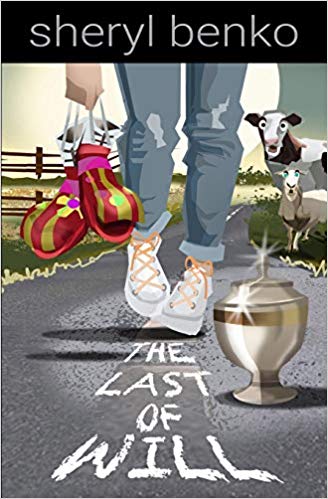
If you need some comedic relief, look no further. The Last of Will by Sheryl Benko is full of hilarious antics, witty comebacks and snide remarks. Greer is an eye-rolling, sarcastic teenager that always has something to say. Her family is going through a rough patch. Her Dad lost his job, her mom is trying to keep her floral business afloat, and her sister, well, she has a big secret that she’s keeping from her parents. Greer wants desperately to get her driver’s license, but how far will she go to practice? Her parents are insistent that that Greer take a road trip with her father. On the plus side, Greer gets to drive. On the downside – EVERYTHING.

Read these book excerpts to get a glimpse into the chaos that is Greer’s road trip in The Last of Will:

(Greer calling her sister, Liv, from a Wal-Mart in farm country)

“He’s looking at fishing poles,” I report.
“Why?” Liv squawks. “Dad doesn’t fish. Does he?”
“I don’t think so. But I’m not, like, joined at the hip with him twenty-four hours a day. He may have hobbies.”
Now he’s studying the archery bows. What? Is he planning to go off the grid and hunt his own food?
“That’s probably how the ‘Unabomber’ started,” Liv presumes, having no idea if that’s even remotely true. “He had a meltdown and lived in the woods, which Dad could be planning if he’s looking at survival gear, which means Mom’s gonna flip if you abandon him.”
Abandon? Does she have to use such a harsh word? It’s not like I’m never gonna see him again. I mean, he’ll come home eventually, right? They might sell maps here. I could get him a pocket version. Besides, I don’t think people “plan” meltdowns. That sounds like a more spontaneous thing. Case in point …
“And don’t even get me started on Mom,” Liv drones on, “who’s in such a tizzy with this whole wedding thing, I can barely deal. So you should be glad you’re with the less crazy parent, since Mom’s ready to lose it on that bride, who’s beyond lucky I’m not there, since I would have clocked that bitch by now.”

(Greer trying to convince her dad that they are being followed)

“Dad, I’m not kidding! He’s a psycho midget Eskimo! I saw him, like, three times!”
“All right, calm down,” Dad insists. “First of all, the appropriate term is ‘little person.’”
“Oh come on! We’re gonna do this now?? Our lives are in danger and you want to be politically correct?”
“Indulge me, like I indulge you,” Dad implores. “And if you want to get technical, was he a midget? Or a dwarf?”
“There’s a difference?”
“Yes. Were his limbs proportional?”
“I don’t know,” I admit. “I couldn’t tell, with his parka.”
“He wore a parka?”
“He wears it all the time.”
“Ah,” Dad catches on. “Which is why he must be an Eskimo, right?”
“Ex-actly.”

Continue the adventure and order your copy of The Last of Will on Amazon.

About Sheryl Benko’s The Last of Wil here: 

Greer Sarazen is like any teenager. All she wants is to get her driver’s license, to not be bugged by annoying people, and to NOT have her spring break interrupted. Yet, when her dad, Will – who has been unemployed due to downsizing – finally gets a job at the local cemetery, Greer is forced to tag along on a road trip to deliver a stranger’s ashes out of state. A stranded van, a clown, a rodeo, a disco-dancing nerd and a belligerent dwarf threaten to throw off the itinerary, while the departed “passenger” becomes an unexpected friend … proving that, sometimes, the things we truly need are the last things we would ever expect.


Black Chateau PR – excerpt from Tara Botel Doherty’s short story collection Growing Up Hollywood

Growing Up Hollywood – A Snapshot of One Family’s Life

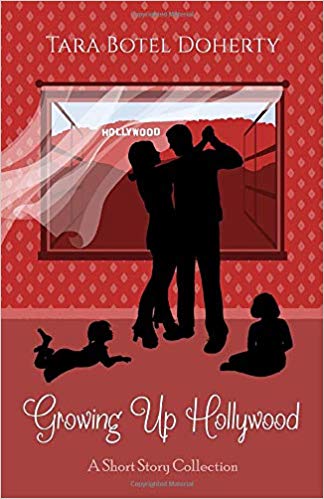
Growing Up Hollywood by Tara Botel Doherty is a collection of short stories based on the life of two young girls. The novel begins with a glimpse into the birth of a new family as we follow their mother Mia’s hopes and dreams. She meets their father and a whirlwind romance ensues. Soon, however, the rose-colored glasses come off and the reality of the family’s life is revealed.

Take a look at this book excerpt from Growing Up Hollywood:

“Once upon a time in Hollywood, I’m going to have a husband who loves me more than anything and a bunch of children who will be as graceful and beautiful as I am. We will live so high up in the Hollywood Hills that the palm trees will look like dandelions from our Olympus. My Prince will work in the studios and I will bring his cocktail out to the kidney shaped pool in our sprawling ranch style house where the growing Los Angeles skyline will appear to be just beyond our backyard. It will be that rare day when the smog has not attached itself to the civic center and the offshore winds are blowing. The perfect picture. We will be the white-boarded frame of perfection in our 1960’s snapshot. Post war. Post troubles. Post post.”

“Union Station ten minutes,” The conductor announced through the loudspeaker. She had finally arrived. The perfection of a downtown Los Angeles afternoon left Mia in the style of excitement that was reminiscent of innocent children on Christmas morning.

If you want to continue the story, you can find this novel on Amazon.

About Growing Up Hollywood: 

Hollywood is the land of hopes, dreams, and make-believe. Anything can happen on its tarnished and run-down streets, especially on the Boulevard in the 1970’s. Annie and Gracie, sisters aged 7 and 10, live near the Boulevard in the Hollywood Hills. As their mother and father edge toward divorce, these two young girls try to make sense of their lives amid their domestic chaos. From the outside on their unfriendly, dead end street, the picture may look perfect, but pictures are often deceiving. Follow these two sisters’ adventures as they grow up among the famous Hollywood landmarks and learn about life and people.

Visit the Boulevard with its tacky and sometimes shady establishments, and the patrons who inhabit them. Meet the eccentrics looking for fame and fortune among the stars on the Hollywood Walk of Fame. This collection of short stories offers a picture of what it was like to grow up in legendary make-believe Hollywood. The snapshots are short vignettes recalling businesses that existed for decades along Hollywood Boulevard where its connection to its past glory still existed. This is Hollywood before gentrification and big business development.

Synchronized Chaos September 2019: True Character Revealed

Announcements: I will be away during September so in lieu of putting together the normal October issue we will post writing and book reviews from our literary colleagues Desiree Duffy (Black Chateau Publicity), Gini Scott, Kristina Marie Darling (Penelope Productions) and others.

Also, in January 2020 we will have a special issue with the theme of ‘Philosophy,’ curated by our guest Editor and Synch Chaos colleague/thought leader Kahlil Crawford. So please begin thinking of work that you might like to submit for that issue!

Now, for September 2019’s issue, True Character Revealed. It’s been said that crises don’t develop our character so much as reveal it. And often, long stretches of ordinary life can do the same.

The ‘Eye of God’ Nebula

In her monthly Book Periscope column, Elizabeth Hughes reviews one title, Rajesh Naiksatam’s The Cloudburst, that focuses on teens from varying backgrounds surviving a flood together. The other books in her column illustrate another way that we show who we really are: in the day-to-day choices that we make. Vasvi Pande’s Krista the Superhero and The Girl with the Pink Crayon and Paul Trittin’s Jacobus: A Eunuch’s Faith present protagonists who build and reveal character throughout lifetimes of decisions and experiences.

Some protagonists need to see themselves more realistically, or at least take themselves less seriously. Daniel De Culla humorously posits a ‘spitting poet’ who believes he’s known for his wonderful verse recitations when in fact, it’s his habit of expectoration that gets people’s attention.

Ryan Quinn Flanagan writes of imposters, characters who play roles or get mistaken for others in often humorous ways. 

Luis Cuauhtémoc Berriozábal writes of our human weaknesses: trouble sleeping, confusion, only being able to accomplish so much. Damion Hamilton’s speakers are caught in uncomfortable situations not of their own making: profiled and falsely accused of crime, stuck in a line behind a broken cash register and angry customers. Sometimes they respond with understandable shock and sorrow, other times, as with the cashier, they rise to the occasion in memorable ways.

Abigail George raises awareness of the threats violent gangs pose to the youth of South Africa, while Robert Ragan draws upon ghostly, unearthly metaphors to describe a life lost in the waking death of addiction. J.J. Campbell writes of resignation to loneliness and an unfriendly world, illustrating the long shadows that childhood abuse and early heartbreak can have on a life.

In a more uplifting context, Michael Robinson describes elderly residents of a nursing home where he recently stayed while recovering from a medical crisis. His poetry humanizes the residents, rendering them as individuals.

Ernest Hilbert, whose latest collection Last One Out gets reviewed here by Christopher Bernard, uses form and elegance of language to recollect and consider moments he spent with his father and grandfather, and now his wife and young son. As with many great poets, the way Hilbert describes these moments, the language used, reflects the subjects’ character.

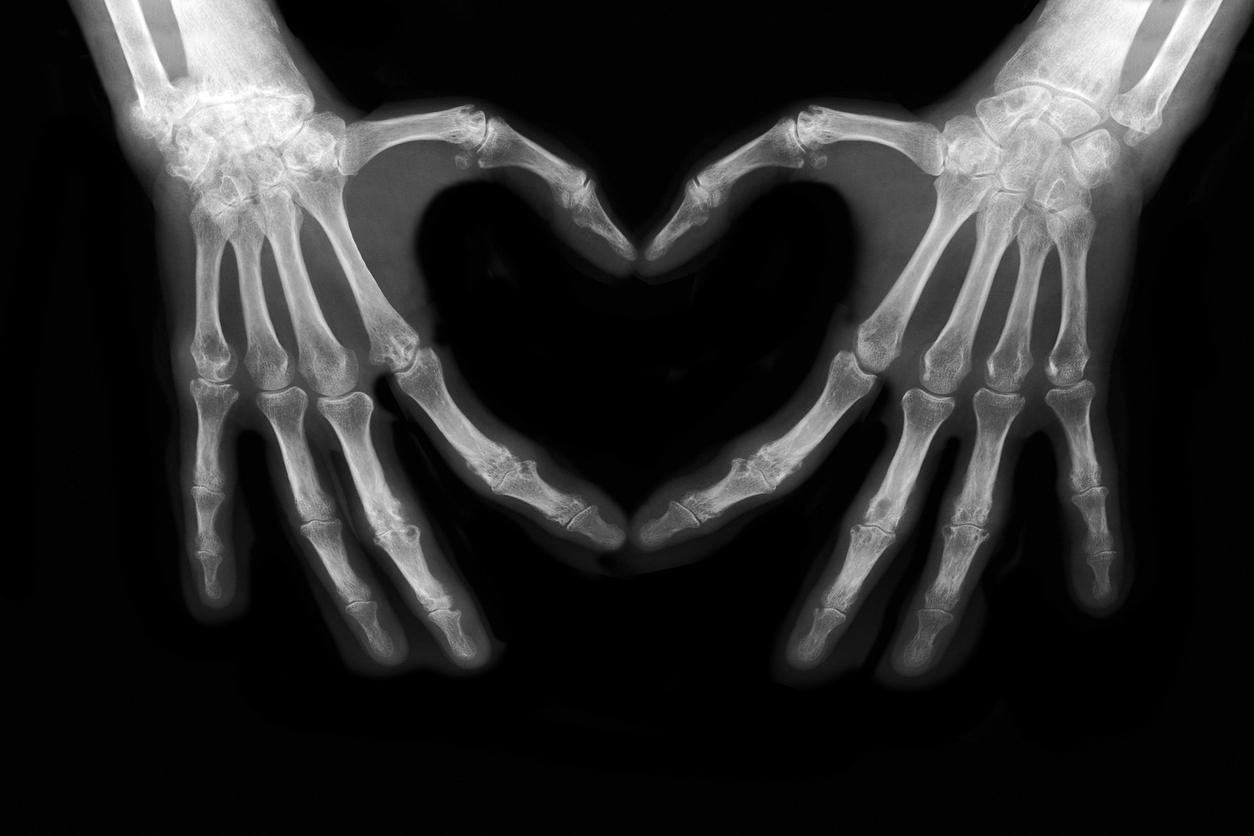
Bones of hands making the sign of love

Norman J. Olson critiques the ‘true character’ of the art world, which in his view often rewards businesspeople much more than the actual creators of the poetry, prose, music, film or performing arts pieces. Meanwhile, James Goss urges creators to master their craft and develop fresh ideas for its own sake.

Actor Federico Wardal lends insight into the process of how an actor embodies a character and how a director and scriptwriter envision and create one. His collaboration with Federico Fellini continues to inspire him to this day.

Mr. Ben reminds us to judge potential romantic partners by their current actions, rather than by our hopes for them. After all, it is our actions, attitudes and choices that reveal our character.

Mahbub writes of various positions where we find ourselves in life: victory and defeat, joy and grief. Yet, a true love can remain constant throughout our journeying. He also reviews Rajesh Naiksatam’s novel The Cloudburst, pointing out the social injustice exposed when different classes of society are forced to interact and see each other’s experiences. The novel illuminates how, no matter what groups and classes we belong to, we all share a common impetus towards survival.

Indian Navy flood relief efforts during 2015’s floods in Chennai

Enjoy Synchronized Chaos’ September issue, and we hope that it reveals a plethora of insights.

Poetry from Luis Cuauhtémoc Berriozábal

Plain Human

Where is the rest?

I have to do so much

like the energizer bunny

but I’m plain human.


I’m being asked

to bang that drum all night,

burn the candle at each end,

but I’m plain human.


I got tired arms.

I got tired legs.

This heart beats fast.

This poor head spins.


Where is tomorrow?

It seems to be here

sooner than later.

I’m plain tired.


Where is that bed

to lay my pillow to rest?

I sleep wide awake.

I’m plain tired.


I got tired arms.

I got tired legs.

I just need rest

to be myself again.


April Fools

April fools,

all day long.

April fools,

every day.


The hot August heat

knows it full well.

April fools into

September and October.


April fools

on Halloween.

April fools

on Turkey Day.


Nothing seems real.

We are on

joke alert with

each passing day.


It is surreal.

I can’t tell

the difference

with alternative facts.


Taking Note

My ear takes note

of the night voices

that do not tire

even as I hide below

the sheets.  I could

cut the ear off, but

I am no Van Gogh.

The silent flowers

drown in the sun.

My ear feels the heat

of the sun and hears

its sizzle. The sound

is deafening.

Essay from Abigail George

“Boy,16, arrested in gangland killing, gang member condemned to life
in prison, South African gang film “Four Corners”, the Northern Areas of
the Eastern Cape Province in South Africa, and the Numbers Gang: South
Africa’s biggest gang” by Abigail George

We are being erased into the background as if we are extras on a film
set. We must begin to communicate the threads of the entire rape of a
near wasted generation. Wasted by tik and marijuana. If they are not
wise (where do they get the wisdom from), if they do not have the
courage to pray and to change the circumstances that they are living
in (if they were not taught those values) what will happen to the
mulatto a century from now?

Coloured street gangs do believe in cultural unity. They call the gang
a brotherhood. They call the brotherhood a family. Blood is thicker
than water. These are dangerous life studies. There is a life science
but little literature on what the promulgation of the Group Areas Act,
the history of apartheid and post-apartheid South Africa has had on
stories, on investment in, on the self-discovery of the mulatto. He is
not White. He is not Black. It is too late to develop positive
Coloured youth because they are so far removed from the fabric that
makes up the modern world, and that marks them with the psychological
framework of the experiment of a pilgrim because in a way we are all
pilgrims. We are all searching for something that will intoxicate us
with life.

We want to see all living things, all animals with their own intuition
and sensibility. Not crime or criminal tendencies. Not addictions.
Addictions to sex, pornography, drugs and alcoholism. The girls are
sex machines bringing children into the world when they are hardly
equipped to deal with family life or raising children with echoes of
values and norms. Belief systems.

Not only do they exhibit psychopathic tendencies, but they also
display a racial tendency towards Black youth and Black women. Black
people in general. It is really destruction amongst these
self-saboteurs at its most basic level. The grassroots level. The only
people who will survive are the middle classes. The elite. The
educated. If you fit into any one of those classes then you are home
free in a sense. Home is a dirty secret but it makes the gangster
saintly amongst his peers. Coloured youth are on a mission to destroy
themselves, their families, the people that they love, admire,
worship. They are even on a mission to kill, to maim to murder. This
is no ghost story.

There have always been gangs. That is simply nothing new.
Heartbreaking stories of utter abuse at the hands of adults who in
retrospect had to devote themselves to family life and their children
but there have also been Coloured men and woman, great thinkers,
leading intellectuals who are now fostering innovative theories about
families who live in poverty. Theories about sexuality. Spiritual
poverty.

In the end, at some point in our lives we all experienced racism. We
were all on the receiving end of it or we gave it out. If you are an
educated mulatto you have got it made in a sense. You can be
philanthropic in your endeavours. You can help those who cannot help
themselves. If we lived in a perfect world everybody would have the
same opportunities, the same choices, challenges, obstacles facing
them, decisions to be made no matter what the colour of their skin
was, the same education (does this mean that everyone would be
educated and brilliant. Intelligent and lucky.)

Opening up the Pandora’s Box of the drug addict and all you will come
to witness is nothing but a skeleton fused with self-portraits of
self-hatred, selfishness and ego wasting away. Looking nothing at all
like their real age. Unfortunately, we live in a permissive society.
It is a society that gives us the go ahead or the permission if you
will to go ahead and do anything with your life.

The world will never get sick of prettiness. Men will never get tired
of it like they get tired of gender and class taking over the world or
being lectured on it. Men never get tired of taking the inexperienced
virgin to bed. That love-affair. I say this again. That there is an
invisible press out there. An invisible propaganda. Visionaries who
have and will always show us the right way. Entertainment has and will
always show us the wrong way.

I do not understand the sexuality of young girls. How they promote
themselves in the workplace. The relationships they have with older
male figures, father figures. It is as if they draw up a sacred
contract. The man has all the common sense. The girl dreams and
meditates of her prince. In the end everything is outweighed,
destroyed and the girl returns to her mother in the heartland of the
city she found herself in months before. If there is a baby in the
works, she will give birth to the baby and fall in love with the child
to the extent that she will keep it, raise it. But does she have the
oomph? Does she have the will and the drive to raise a child on her
own or will she succumb to silence, to isolation and to rejection from
her peers? Despair, hardship, loneliness?

She was not the wise one in the relationship but it will be months
before she realises this. It was the man with all of his common sense
who was the wise one and who knew how things in the end would
naturally turn out. The mulatto girl has a disembodied frame but she
will with an intensity raise her child. Her problems will become part
of the child’s consciousness and something usually will be deformed.
Mannerisms will be abnormal as the child grows older if there is no
father figure. Etiquette will be a castle in the sky. The boy will
grow up to be a rough through no fault of his own. It once again
depends on the mothering, on the family structure. If there is a
close-knit family structure. A nuclear family or a blended family of
half-brothers and half-sisters and a stepfamily perhaps the child will
be saved. Perhaps.

After the uprising of the riots in the Northern Areas where shops were
looted and badly damaged. When people lost their lives, family
members, businesses nobody was discriminated against in the Coloured
sub-economic areas. Was there a Third Force involved as people would
like us to be inclined to be believed? Was the special branch
involved? These are facts that ordinary people will never know.
The Democratic Alliance has a foothold in the Eastern Cape now which is
now one of the worst off provinces in South Africa. If you want to
believe that violence and murder was the order of the day those days
of the riots then violence and murder, looting was the order of the
day. I see the territory on the fringe that is before me. The
districts. The suburbs. The life and times of the elite who live
behind their high walls, their electric fences, their security fences
and dogs in White suburbia. It comes to me in heightened frequencies.
Violence is reality in post-apartheid South Africa but it is also
surreal. It is also a hallucination in Technicolor.

Otherwise violence is an excellent metamorphosis when studied
alongside individuals who committed themselves against fighting in the
struggle against apartheid. I cannot give it all up to my imagination
anymore. I must believe like Anne Frank that there is some good in
people and some bad but that there is good in them also. There was a
death, many deaths and bodies lying in the street. I cannot account
for the names and the faces that have crossed over to the hereafter.
We cannot all be monks and nuns. Violence tends to disrupt the order
in society, cause maladjusted behaviour, in the end what is its
purpose, what meaning does it give life?

In this world, like I have said before we cannot all be monks and nuns
but we can write. We can write poetry about the horrors of life, how
terrifying it still is to live in a racist post-apartheid South
Africa. If we write we can diminish and erase somewhat of the melody
and the blankness of the ultra-violence of the minor earth and the
major sky. We will never forget about burying the bodies of the men
and women who lost their lives in the riots like we can never forget
the struggle. The camps in Tanzania. Conversations and moods are
spiritual and bipolar in a sense when people talk about old-fashioned
days. We are haunted by those days. We want to relive them because for
us there was some vitality at flying solo before marrying, before the
school lessons and homework of children, the milk of human kindness
and tenderness.

Now I am reminded of Leo Tolstoy finding the kingdom of God within
himself, writing his letters to Ghandi, writing his confessions and
finally finding peace within himself. I am also reminded of Hemingway,
the writer driving ambulances during the war. River Phoenix, the actor
stumbling out of a club in the early hours of the morning, blinded by
alcohol, his veins pumped full of barbiturates. He later died of a
drug overdose. F. Scot Fitzgerald’s Jay Gatsby drinking bourbon.

Virginia Woolf’s waves, Lily Briscoe, and Mrs Ramsay. You may ask
yourself what does Barbra Streisand, Robert Redford, Venus and Serena
Williams, T.S. Eliot, Ezra Pound, Jean Rhys, Ford Maddox Ford have to
do with gangs and gangsters. Ganglands and guns going off in the
middle of the night. They make me forget. They make me forget about
the children I will never have, that I have not picked up a racket in
over ten summers.

They remind me that there is truth and beauty and in the final
analysis that there will always be room for psychoanalysis in the
world.

Short story from Robert Ragan

Author Robert Ragan

Fickle

She denounced the darkness and ever since Kristen has been on edge, the type to turn on everyone.

Her buddy, Brad, messages to ask about some loud smoke and as if she were a decent person. Kristen warned him not to call her phone asking about dope anymore. He brushes his dreadlocks away from his eyes with tarnished rings around his fingers. Brad looks at his phone like who the fuck does this bitch think she is?

Kristen was never decent, a two-faced wave rider. It was rumored that she literally sold her soul to the devil for crack cocaine. So the murder she was rumored to be a part of could have been a blood sacrifice. All jokes aside, she was a piece of shit for a person. But like clockwork every couple of months she swears she’s about to change her ways and give her life to the Lord.

Her brittle hair has been dyed black to death. A look of mild retardation in her eyes should tell anyone not to take her seriously. Yet, those brown eyes received so many compliments. Those full of shit brown eyes break so many hearts. The hearts of lovesick weaklings dreaming of tradition with someone who always worships the latest fad.

Kristen likes to tell people she’s haunted. Always some ghost who wouldn’t be caught dead in her flea-ridden shack. During these times she believes in nonsense but ask her about God and she’ll say He doesn’t exist. Then catch her in a month or two shouting out Amen and Hallelujah. Maybe falling out cold as a preacher touches her forehead in a Pentecostal Church.

Recently, Brad and a few of her other friends have been talking. Apparently they’re worried about Kristen, saying, “She’s been acting more strange than usual.”

A longtime friend of hers, named Tracy, tells Brad and their buddy, Tim, how Kristen has been slicing her arms with razor blades again. Tim throws his hands up shaking his head he says to Brad, “Remember the bitch telling me I was stupid for burning myself with cigarettes?”

Brad looks in his eyes and says, “You were stupid for doing that.” Then turning to Tracy, he looks her up and down from her light blonde hair to her toe nails painted bright pink. The three of them have been friends with Kristen ever since high school, where the four of them were branded as outcasts.

Looking at Tracy now you would never expect her to hang out with any of them.

Tim tosses back his own locks, forever trying to keep up with Brad; he plans on getting dreads too. Taking drags off a blunt he says, “Last I heard Kristen was shacking up with some convict fresh off the yard.” Smirking Brad says, “That lasted about a month, she called and told me dude tried to strangle her.”

Tracy’s eyes glow devious as they glance from Brad to Tim. Shrugging, her tanned shoulders revealed by a yellow tank top she says, “You know Kristen probably told him to choke her while they fucked.”

Pulling his dreads back in a ponytail, Brad then lights a cigarette. Exhaling smoke through his nostrils he says, “Last time I talked to her she was begging me to find some crack, ice…anything.”

Tracy, with a voice of judgement says, “Don’t tell me you went and found the shit for her.” Snapping back quick Brad answers, “Hell no! I told her to fuck off. I said it because the time before that she told me not to ever call her phone about dope anymore and I was just looking for weed.”

These friends part ways. Each of them are saddened by the way Kristen’s life turned out. Suffering from bipolar disorder ruined her destiny. They would all like to help her but the older Kristen gets the worse she loses her mind and now she won’t accept their help. On her spiritual kick only God can save her. Back sliding into damnation only the dope man can save her.

When her brain is frozen it usually makes the ghosts go away. But just the other night, Kristen saw the mouth of the Abyss open wide and swallow all those Spirits whole. Afterwards a calm voice followed telling her to find the skull with her fingers. Visions of her pulling, stretching, and eventually ripping off her own eyelids flashed in her mind faster than sharp lightning. Blood filled her eyes running over on her puffy cheeks.

She screamed and came to in front of the mirror pulling and stretching her eyelids. Thankfully, she stopped before ripping them all the way off.

Her mind has always been a home for evil. Well now she knows her thoughts are playing for keeps. It’s the worst time of her life and she has no friends or family to rely on. During brief moments of clarity, Kristen realizes she pushed them all away. Most times, she’s forgotten about it and cries their name as her tormentors prevail.

Just the other night she woke up unable to move. Looking down, she sees her body is covered with large black spiders. As she screams, one of them crawled in her mouth and began forcing its way down her throat.

In the corner of her bedroom shadows dance on the wall. Pleased by Kristen’s agony, they’ve destroyed great lives but here they only toy with the useless. She invited them in and this time they won’t leave.

The razor blades in toxic images shred all the way to her bones. Kristen feels compelled to face her own skeleton, take a tour of the prison that was her. Thankfully, the actual cuts never reach a vein. If duct tape doesn’t hold it together, it’s the afterlife or the crazy house.

All of her friends talk shit about her. Too weak to follow along the path they were blessed with, she carries on an ancient curse. It lives in her blood, bashing Kristen with her own bones. And she’s terrified of meeting the skull powered by the shadows.


Robert Ragan from Lillington, NC lives his life for art and writing. He has stories and poetry online at Vext Magazine, Outlaw Poetry, The Dope Fiend Daily, The Rye Whiskey Review, Drinkers Only, Under The Bleachers, Cajun Mutt Press, Punk Noir Magazine, Synchronized Chaos, Terror House Magazine, and Rust Belt Review, Horror Sleeze Trash. Alien Buddha Press has published his short story collection Mannequin Legs and Other Tales.