Christopher Bernard reviews Ernest Hilbert’s poetry collection Last One Out

FATHERS AND SONS

Last One Out

Poems by Ernest Hilbert

Measure Press

Poet Ernest Hilbert, photo by Daniel Mitchell

One of the peculiar benefits of “postmodernism” (a misleading term, as we never left modernity; if anything, are deeper in it than ever) has been that the modernist wars between “free” and “closed” verse have become increasingly irrelevant. “Closed verse” took a beating under the onslaughts of the Poundians, “projective” versifiers, Beats, confessional poets, “language” poets, etc., till the inevitable conservative backlash. Now there seems to be an uneasy truce between ageing surrealists, the conversational poets of the Midwest (enshrined in Iowa), and the classicists of the East, with an archipelago of individualists, eccentrics, and eclectics, who like to pretend, at least, that, by picking and choosing at poetry’s magnanimous banquet, and disdaining purity and puritanism, they enjoy the best of all poetries.

There has been a resurgence of interest, among practitioners at least, in the classical forms of English verse: sonnet, villanelle, sestina, blank verse, and the like, wed to grammatical exactness, logical complexity, strict metrics, and deep metaphor. The younger generation works in the tradition of the late Anthony Hecht, Richard Wilbur, and X. J. Kennedy; some of their better known modern-day exponents include Dana Gioia and Marion Montgomery.

Ernest Hilbert is rapidly becoming, for this reader, one of the most accomplished of these poets, with a wealth of imagination wedded to honesty of insight, integrity of vision, respect for form, and delight in the harmonies of language (including a strong appreciation for the Anglo-Saxon roots of English prosody that subtly inflects his own practices) that is second to none. His latest book, his fourth major collection, establishes him, I believe, as one of our leading poets. Reading him is not a little like the following lines about a hot summer day in downtown Philadelphia:

Stores prop open doors to lure in buyers:

Banks of icy air waft out in columns,

And I cross through one and nearly shiver.


As I emerge again to warmth,

I remember swimming in cedar lakes

That flashed like dirty tin in summer.


His new book is deeply retrospective. It begins with poems about himself as son and grandson, with a poem (titled, only half ironically, “Welcome to all the Pleasures”) about his grandfather “teaching” him to swim:

He hoisted me in summer air,

Spun me out over


The sluggish murk and let go.

I swear the river had no bottom.


This surge of terror and pleasure enwrapped ecstatically, with just enough of a gap between them for perception to piece through, as one is tossed into being out of oblivion, is captured more than once in these poems.

From Grandpa’s brutal lesson in confronting life, we are soon in the bright presence of Hilbert’s father practicing on the local church organ:

His eyeglasses lit from the bulb,

Bearded, he eased his bulk onto the bench,

Rifling folders of music in manuscript.


The huge organ rumbled in chorales,

Roared enormous chords, stopping midway

Through a passage, consigning a long resonance


From transept into the beamed vault of the nave . . .


while the young Ernest:

. . . explored while he scribbled notes on the sheets,

At times a subtle oath or cheerful “ha!”

While working on his Bach transcriptions.

. . .

Never before would I have been so low

To the floor and childlike, not at services

With the adults. It felt like a discovery.


The discoveries open into a lifetime.


One of the book’s finest poems is the climactic one in this deeply personal visit to his past contained in the book’s earliest section: “Great Bay Estuary,” set in the present but reliving similar boat trips with his father decades before:

Chuckling gulls luft up to swipe and hang

In muggy air over the riverside’s

Deadfall—jagged white as a splintered ice-flow.

A tern goes and returns like a boomerang

Across the scene.


In the poems that follow, we engage with neighborhoods in the poet’s home city and visits to the Chelsea Hotel in New York City:

We made love here,

Face down in summer


River for hours,

Pulled toward


Softening surf

Of a warmer ocean.


Snow-rigged galleons

Of cloud curl apart


Far above the city.

They perish and astound.


Then onward to the jazzing streets of New Orleans; to a glacier he bracingly clambers up; to the Sinai peninsula and a graveyard of blasted military vehicles, where:

The tank’s heavy as a dune,

Its patina matured to match the neighboring rocks . . .


Another has lost its turtle-like turret,

A hollow half-shell, dish for rare rainfall,

And one last, at an angle to the rest,


Its glacis plate sunk in sand, probing smoothbore

Angled down, as if to acknowledge

A long-ago blow and loss, and bows forever.


To Leningrad, and Shostakovich’s browbeating Seventh Symphony; to London and an antiquarian bookseller’s meeting, where:

Lord Markham appears to doze, looks drowsily

From his marble recess to Bayswater

And the Serpentine, undaunted, ignored.


And a man’s:

. . . voice ebbs in the breeze. Cell phones chirp.

Airliners roar overhead. Pigeons startle themselves.

. . .

His lips move for a while. He gestures dreamily

With his silver prize, his wife looking on,

And the sun burns through marble clouds,

Pools the rims of his glasses with mercury.


Woven through these journeys outward are those inward, wayward visits of memory from a squeezed tube of sunscreen (“It dreams like a bay in the humid light / Still promising summers already gone”), to visits of a commonly felt dread, a paranoia of the double-bind that has an uncomfortable basis in contemporary reality many reading this passage are likely to recognize:

You feel as if you’re being stalked

Today and don’t know who to trust.

. . .

           “The system cannot be unlocked.

           Your password has expired and must

           Be changed.” “You must log in with your

           Password in order to make a change.”


To the sheer sensuous joys of living, blazons to beer and martinis, and ocean floating:

I float for years, it seems, toes out

Small planes drone down the coast


To tow out ads for bars and bands or beer

As proud sea birds screech loud and strut . . .


To the oldest avatars of the inescapable past:


In the house, at night, I wait for a ghost

To present itself in the creaking halls.

. . .

But no ghost, not yet. When I rise at night

For the bathroom, past the empty spare rooms,


I feel a boy’s fingers, faint as snow, on my wrist.


Having begun with memories from childhood, of his father and grandfather, the collection ends with the poet as father, beginning with a gentle paean to his wife and ending with celebrations of his young infant son. And son meets son.

I always expect rich, fine gifts from Hilbert, and always get more than I expected. There are few weaknesses: perhaps a tendency to the portentous (there are perhaps one or two too many references to “darkness” and “kings”), and sometimes the gravitas is more than is warranted; the work might be leavened by a lighter, swifter touch here and there. But these are quibbles; one can make the same points about Milton.

Last One Out is elegant and athletic, eloquent and brave, deeply thought and felt; the work of someone who, if we survive, may well become one of our classics. Poems like these helped make me fall in love with poetry when I was a teenager. May they have the same effect on some young reader today.


Christopher Bernard’s fourth collection of poems, The Socialist’s Garden of Verses, will appear in spring 2020. His third novel, Meditations on Love and Catastrophe at The Liars’ Café, will appear in January 2020.


Essay from Norman J. Olson

thoughts on art and the death of my cousin

by: Norman J. Olson

on April 2, 2017, which was a Sunday, Mary and I caught a flight from MSP to LAX… we arrived at about 3:30 p.m. I had a rental car reserved, so we picked up the car and headed out on the 105… the car was a brand new Hyundai accent with like 1600 miles on it… it is always fun to get a brand new car when renting… and I have always liked Hyundai cars… we owned one about ten years ago and it was a very nice car… the counter guy tried like they always do to convince me that I needed a bigger car, but, I love small cars… I find them easier to drive and park and they use less gas, which on a driving road trip is sort of a big deal to me…


so, we headed east on the 105, north on the 605 and then east again on the 210 until we picked up the 15 north at Rancho Cucamonga and Fontana… then this lovely little car breezed up the mountain, through the Cajon Pass and into Victorville, where we picked up In and Out burgers for the drive… with a quick pit stop at State Line, we made it into Vegas and checked into the California Hotel… I love the drive across the desert and even though we have made it many times, I still love the colors as evening descends and the mountains go from blue to purple and gold… and this time of year, the creosote bush is green so the desert looks very lush in the sunlight with rich black shadows…

we spent two nights at the California and then two more nights at the Orleans Hotel on Tropicana near the strip… we spent a couple of afternoons wandering around some of the big casinos on the Strip first, Mandalay Bay and the next day, the Tropicana and MGM… at the MGM, an audience rating company solicits the gamblers to sit in on cuts from new tv shows and rate what they see… they offer various coupons and in some cases cash for this… we tried to go to one that was offering $50 but we missed that one by a few minutes, but we did sign up for the next one… the way it worked was, we were led by a woman into a room with about twenty small monitors and we each sat in front of one of the monitors… in our hands we had a rating device where we could continuously rate the show we were watching… it was a pretty lame sit-com, so I rated it as pretty crappy all the way… the woman said that the company was just a rating company and had nothing to do with making the actual programs but sent the rating information in statistical form to the production companies that made the shows…

also, while we were at the hotel California, a film crew set up across the street from the hotel in a parking lot where they were filming some kind of night scene… they had a big limo set up with all kinds of lights, reflection screens and cameras and sound equipment… there were a few dozen people busy setting up the equipment, checking the sound and lights etc… next to the set, inside the roped off area, they had tables set up with snacks and people who were not busy were grazing at the snack table… somebody asked one of the guards what they were filming and he said they were filming an Izod commercial and we should be careful not to step on the lizard… so, I have no idea what they were actually filming…

these two events got me thinking about art and how it exists in modern America… like, there are three players in the art game…   1) the talent – writers, directors, artists, actors, etc… who actually create the art… 2) production staff – in the case of film or tv, people like we saw on the set of the filming event or the people who we interacted with at the tv rating service… these are the people who bring the art to the audience… and 3) of course, the audience… the consumer of the art…

in film arts, where there is lots of money passed around and earned, there are lots of people and organizations in the second role, helping the talent make the film and then when the film is made, bringing it to an audience… in fact, there are lots of great stories in rock music about how the talent made a recording that was a hit but the record company got all the money because the band had signed a bad deal… the money comes from the audience but usually goes to the production people who pay the talent more or less depending on “the deal…”

so, as a literary press artist and poet, this paradigm applies differently… first there is no money to attract the promoters and fixers who in the case of Hollywood, put the work in a consumable format and present it to the audience in a palatable and profitable way… so, the poet and literary artist are left with the question of how do they get their work to an audience… now that we have the internet, the internet poetry journals are the vehicle of choice for me… the production people are usually poets and artists who are interested enough in their art to put in the hard work of editing and presenting these on line journals, usually at little pecuniary advance to themselves and often enough with the added annoyance of having to deal with poets and artists who think they are god’s gift to the world and are only poor working class shits because their great genius has not yet been discovered… I want to say, “you have been discovered, dude, but you are a poet not a rock star… there is no fame or fortune here, get used to it!!!!”

in the case of the fine arts which is to say the visual arts, we get production people who run museums of modern art who seem to feel that their job is not to bring art to the people that the people want and need but rather to give art to the people that will in the opinion of the arts people be good for the audience… fine arts artists are educated to take their place in this conceptual art paradigm and so you get all of the silly shit you see at a place like the Walker Art Center in Minneapolis… which has a small but very rich and influential audience and brings us crap like Damien Hirst’s pickled cows…

so, the production people are very important as long as their role is to bring art to the audience because it is that interaction between artist and audience that makes true art possible and valuable in the first place… without that interaction, we have artists sitting in their mother’s basement making art that nobody will ever see or we have the puerile intellectual elitism of Damien Hirst and a public aesthetically bereft to the degree that instead of art, they will attempt to get their aesthetic needs met by stupid sit coms… and the antidote to either situation is an audience that demands quality art, artists who make quality art and production people sensitive both to the needs of the audience and the abilities of the artists…


well, on Thursday, we left Las Vegas in the morning and drove again across the beautiful desert… coming across the high desert it was magnificent to see the snow covered peaks of Mt. Baldy to the right and Mt. San Gorgonio in the distance on the left… after all of the dry, desert mountains from Las Vegas to Riverside… we spent four days in Riverside with our amazing grandkids….

then Sunday night, took the red eye from LAX to MSP… arriving in MSP at about 7 a.m… on March 29, one of my many cousins had died and I had hoped to make it home to attend his funeral at 11:00 a.m. on Monday, April 10, which I was able to do… my cousin’s name was Kurt Youngdahl and he died of a massive heart attack at age 60… his funeral was very sad and moving… my older brother, who has been dead for many years now, and I used to babysit for Kurt and his older brother when we were in our early teens… I remember him as a cheerful kid… I know that he had a troubled life, dealing as so many in our family have, with addiction but that he had been sober for the last 6 years of his life…   and had been able to reconnect with his family in his sobriety… I had seen Kurt at a family gathering last summer and had spoken with him at length… so was sad to hear that he had died… on a personal level, this is certainly a reminder to me that we are all living on borrowed time and that we really have to make the most of these few days and hours that are given to us… so, I am recommitted to be thankful every single day for all of the many blessings I have received and continue to receive… I am unbelievably lucky to have my amazing and wonderful wife, children and grandchildren… and to still at age 69 be making art and living what is hopefully a thoughtful and engaged life…

Poetry from Michael Robinson


Sky


Michael Robinson (right) and fellow contributor Joan Beebe


Holding you in my arms, keeping you close.

The sky always a trusted place for my spirit,

Always reaching to touch the angel’s wings,

Holding you close to me forever.


Sadness


Sadness there is no sadness between the two of us,

Tears remind me of your smile and warm heart.

There is no sadness between you and me today,

Sadness is our way to hold one another close,

Watering our souls.


Sweetness of Life


Like the flowers that sprout up,

So is our love for one another.

Ever-changing, forever growing,

Forever blowing in the wind.


Bitterness


No bitterness as you move on with your life,

There is a sense of resolution between us.

No bitterness between me and the stars,

Angels rejoice while the stars sparkle.


Time


Heaven has no time,

Time passes only in the now.

Heaven does not need time,

We will always have time to love.


Empty Room


The folded sheets were neat across the bed.

Everything was as I remembered in your room.

The nightstand with a vase of flowers,

Holding each heart.


Words II


It was a warm summer evening,

Having what was to be our last conversation.

It was no words nor holding hands,

Just the look in our eyes.

The conversation is still with me,

What story our eyes tell.


Seldom


Seldom did I realize my care for you. Thinking back over the years, it was an unsaid understanding between us. Years passed, and now while you are in a nursing home, suddenly I miss you. My visits remind me of the years we spent sitting at the same table, unable to tell the story of our love. It was seldom that I did not shower you with my feelings. Now when I visit you. I cry all alone in the house.


Elizabeth Hughes’ Book Periscope

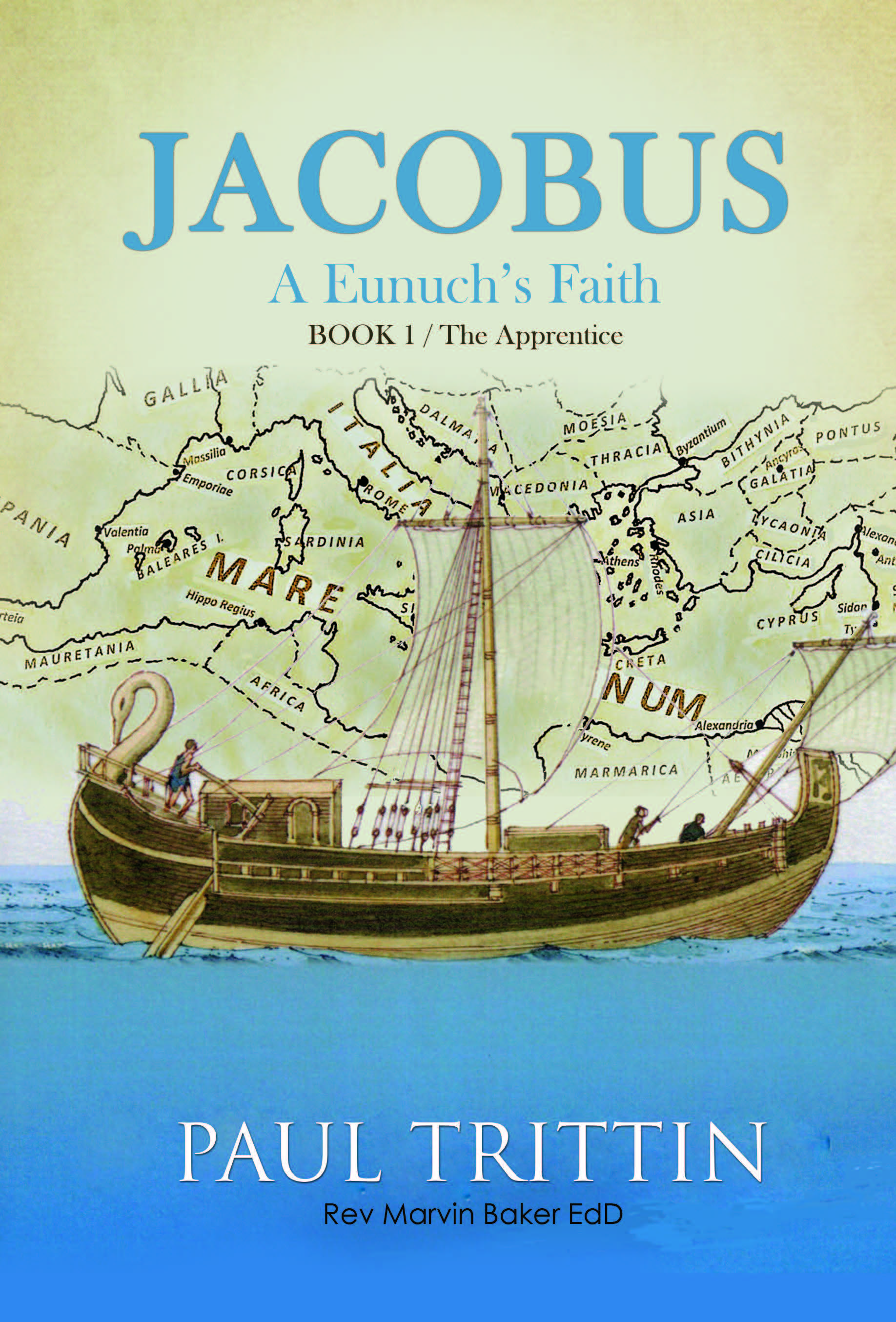
Paul Trittin’s historical novel Jacobus: A Eunuch’s Faith
This is the tale of a pair of twins, Jacobus and Josephus, born to Abraham Bar Jacob and his wife. Their mother passed away shortly after their birth. As the twins became older it became apparent they were both natural eunuchs. When they reached the age of manhood, 14, their father took Jacobus to work on his cargo ship, the Dolphin. The Captain took him under his wing and trained him well. The captain then introduced him to his extended family, who took him in and adopted him as one of their own. From this he learned of the prophet Jesus, who was said to love everyone including eunuchs, and wanted people to hear how to give their lives to His Father, God. This book is very intriguing and will hold your interest all the way through. This is Part One. I know Part Two will be just as exciting as the first.
About the book, from the publisher: 

In the first century Roman Empire at fourteen, the legal age of manhood, Jacobus’ father contracted him to relatives in Sicily as an apprentice learning his Jewish family’s shipping business. Being what the Greeks called a “natural eunuch,” he found himself living with two “cut eunuch” Carthaginian slaves who eventually became his lovers. As his apprenticeship progressed, the family recognized his natural leadership abilities surpassed his age. By sixteen he developed a strategy to enter the India trade which succeeded beyond expectations. He also become the second “spouse” of his cousin, the director of Aetna Shipping. Everything in his life changed when his brother-in-law, Simon from Cyrene, was awoken one night by a frightening vision causing some of the family, with their Judeo-Indian partners to take Simon to Jerusalem for Passover.

About the author: 

Southern California native now in Carson Valley, Nevada * Attended Vanguard University in Costa Mesa, California * Served US Army in Congressional Liason during Vietnam era * Vice President of three family held corporations, approx. 100 employees * Recruited to join three colleagues in Brussels to found what is now Global University Director textbook publications * First non-Flemish artist to participate in National Flemish Art Exhibition in Belgium * Director of Operations, Life Publishers International in Miami, Member Editorial Board * Primary Partner, YangTri Trading International, Kansas City * Partner, MIR House Publishing, Kansas City * Partner, BT Concepts, Grand Haven, Michigan * President, Baker Trittin Press, Publisher of Adventure Books for boys * Chairman Tweener Ministries, Sponsor of International Competitions for high school students to write children’s books, university scholarships were awarded * Commissioned Artist * Co-founder, Gay Christian Fellowship * International Foreign Missionary for a US-based Protestant Denomination, 16 years * A CLOSETED gay Christian from pre-puberty to 2009 Book 1 / The Apprentice

The Girl With A Pink Crayon In The Back Yard by Vasvi Pande
The Girl With a Pink Crayon In the Backyard is the first delightfully cute book. The author is a very talented now, 8 year old girl. She wrote the book when she was a mere 7 years old. Miss Vasvi Pande also did the illustrations for her books. It is about a little girl who is sad and lonely. When she spots a very sparkly pink crayon in her backyard. She picks it up and takes it to her room where she talks to it and takes care of it. She is very excited to take it to school with her the next day. This children’s book will be an absolute delight from toddlers to the second or third grade. Miss Pande is a very talented young author and artist. I think she will have a promising career in children’s books. I very highly recommend this book.
The Girl With a Pink Crayon at School by Vasvi Pande
The Girl with a Pink Crayon at School is an absolutely adorable book. Vasvi Pande wrote and illustrated it when she was 7 years old, she is now 8 years old. It is about a little girl who is very lonely and wants to play with two other little girls. She tells her magical pink crayon, then the other two girls notice her and want to play. This is a delightful children’s book that toddlers to second or third graders will enjoy. The illustrations are bright and colorful and will hold the attention of toddlers. I completely enjoyed this very cute book. What an inspiration to other children Vasvi is to write and illustrate such a delightful book at the age of seven. I believe Miss Pande has quite the career of a children’s author ahead of her.
Krista the Superhero by Vasvi Pande
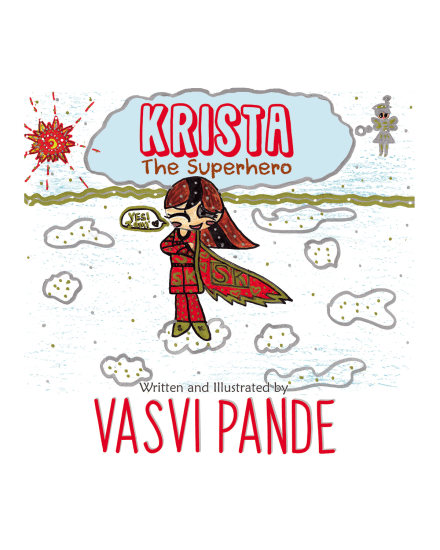
Krista the Superhero is another very cute book by Vasvi Pande. In this book, Krista wants to be a superhero. On her first day of kindergarten she sees a classmate who is about to get hurt and she helps him. This delightful book teaches children how helping others and always being nice to others makes not only other people but themselves feel good. This book has a story that toddlers to second or third graders will enjoy. The illustrations are bright and will capture the attention of a very young audience. I highly recommend this book. Miss Vasvi Pande has a bright future ahead of her as a children’s author and illustrator.
The Cloudburst by Rajesh Naiksatam
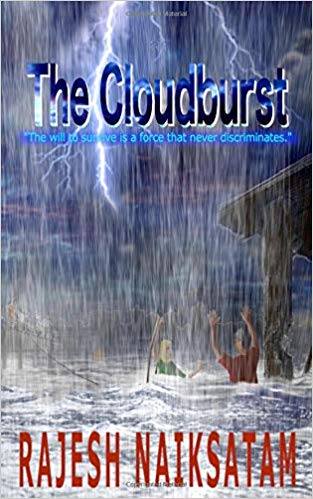
The Cloudburst by Rajesh Naiksatam is a novel perfect for the tween and teen age group. It is the story of Ganpu Aapla a !5 yr old boy who works with his parents in their dilapidated old house build on stilts. Above a window that says Takloo Chai Shop. The house is next to a bus stop. They used to live in Dabhol India until the government sold them out to foreigners, then they lost everything. While a teacher is waiting for her friend at the bus stop a tour bus with several privileged spoiled rich children breaks down. They all wait at the bus stop until the rain gets much worse. The teacher leads them up the stairs to Ganpu’s place and they all go in there. Then the rain gets so bad a flash flood starts and is about to wash the house away. Ganpu gets all of them to work together to build a sturdy raft. They all get on the raft and go to safety. Cloudburst has plenty of adventure on every page. Even teens will enjoy this book. It is definitely a real page turner. I enjoyed it very much and know it will make the perfect gift for a tween or teen.

Poetry from James Goss

Parking Lot Poem

Miles found ways to utilize time and space, inventing. We just exist as if that were ever enough, then Coltrane touches on the cosmic ineffable fixing your motorcycle by the side of the road, explaining why we should live in color, not sepia tones, sour milk and perpetual emergency room, exercising our freedom of choice, passing out lottery tickets of inequality our waking ritual, breakfast of mediocrity, self-satisfied drones of monotheistic endless plastic empires, empires of plastic surgery, the toast of the town, depraved money changers and emotional arbitrage, trading on hope, dope and celebrity everlasting, in whose god we trust, absolutely worshipping false American Idols, the slaves of freedom, because it is there, an excuse that covers up everything a red carpet death ward simplification, making life tidy, the suburban nightmare ordering chaos, a tombstone complacent pastime the rhythmic on-air male menopausal chatter, attempting to comfort the big guy football jock itch scoreboard burn rubber peel out gear grinding groaning peasantry for all that noise you solve life’s mystery bloodlust streetlights echo war, love and democracy for sale there will be no peace in our lifetime, Rome wasn’t built in a day and it didn’t fall overnight either, you can have it your way, you’re a lucky winner, shut up and play your guitar, you are doing your part for the war effort, keeping it going because you believe in yourself.

–James Goss

Poetry from J.J. Campbell

Author J.J. Campbell

Author J.J. Campbell

J.J. Campbell (1976 – ?) is stuck in the suburbs, wondering where the lonely housewives are hiding. He’s been widely published over the years, most recently at Horror Sleaze Trash, The Rye Whiskey Review, Misfit Magazine, Live Nude Poems and Yellow Mama. You can find him most days perched upon his soapbox on his mildly entertaining blog, evil delights. (https://evildelights.blogspot.com)
————————————————————————————————————————————-
back together again
i have had
my heart
broken so
many times
that i can no
longer put the
pieces back
together
again
i’m not happy
that destiny has
determined alone
is the only way
i can go through
the rest of this
life
but it is
what it is
i’ll have the
last laugh
every good
asshole does
——————————————————————————————
the second day
i had a woman cuss
me out this morning
because i wouldn’t
give her money
mind you, this was
the second day i have
ever talked to her in
my life
she said i was an
ugly fucking asshole
some people just
know i guess
—————————————————————————————
the calm before the proverbial storm
it’s that easy,
peaceful feeling
right before
disaster hits
the calm
before the
proverbial
storm
it’s why only
the lucky get
to live by the
moment
the rest of us
get blindsided
by reality
left to scramble
for whatever is
left
the hopeless
become helpless
while the rich
laugh all the
way to their
golden banks
in the cloud
——————————————————————————————
anger and despair with every chord
i remember the old
blues men i used to
admire in my late
teens
the smoke in the air
anger and despair
with every chord
sipping on a glass
of bourbon or
whatever my older
face could get me
i would always get
lost in the saxophone
solo
transported to a
woman i need, the
sweat racing down
my back and how
forever could wait
for just one more
moment
—————————————————————————————–
a sign of being defeated
this frown is
permanent
i believe it
was when
i finally
realized what
happened in
the bathroom
when i was
a child
it’s a sign
of sorrow
a sign of
being defeated
a sign of
submission
to whatever
unlucky soul
happens to
be looking
i’m too old
for this fucking
song and dance
anymore
i don’t think
of myself as
a victim
but the world
hasn’t exactly
supported that
thought
—————————————————————————

Mahbub reviews Raj Naiksatam’s The Cloudburst

A review of Raj Naiksatam’s novel The Cloudburst

By Mahbub

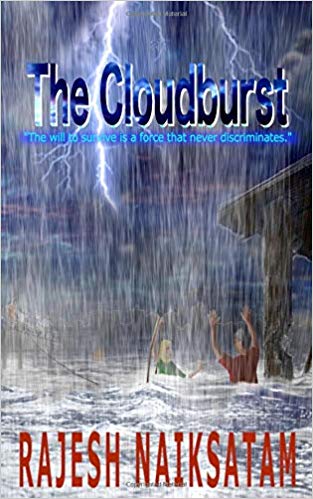
The Cloudburst by Rajesh Naiksatam is a novel that lives up to its title gradually, developing with an excellent form, style and line of thought. It reveals the past and present exploitation and persecution of India’s common people by both Indian nationals and foreigners. But nature is the best healer when all things within and outside us cleanse us, giving us a hope for starting anew. The author was born and brought up in Mumbai, India. So, his knowledge of the country runs through this story, taking place all over India and the Indian subcontinent. The characters are international, from all corners of the world.

Editor’s note: here’s a summary of Mahbub’s view of Rajesh Naiksatam’s The Cloudburst! 

E.M. Forster’s A Passage to India illustrated colonial attitudes towards Indian culture in 1924: the people’s behavior and attitudes, how the rulers treated the commoners. Now, nearly one hundred years later, Rajesh Naiksatam’s The Cloudburst pulls off a similar feat with a different type of setting, a fresh style and characters, and lucid and colloquial language. 

Mahbub, a Bangladeshi author and English teacher

Continue reading Mahbub’s summary/review here. Continue reading