Poetry from JD DeHart

Bear House


They tire of the too small,

too big conversations, the constant

comparisons; at least Snow White

had the courtesy to sleep a while

and Cinderella disappeared in her pumpkin

for a carriage ride into the night.

This girl just sits on the couch, whining,

threatening teenage pregnancy,

smearing on acne medicine,

then takes the car out late without permission,

eats all the porridge – cold, hot, she does not care

“Eating for two,” she teases, and they roll

their eyes, thinking:  Where did we go wrong,

Was it the late bed-time, too many video games?

When is she going to get a job?

Continue reading

Essay from Michael Robinson

“Don’t hurt me!” I said, sitting in the corner of a tiny room with pillows on the floor for my bed.

It was an August night and it was cold.

“I’m not going to hurt you.”

Mary would spend the next two decades telling me that she wasn’t going to hurt me. I’d get to hear this a lot, as I went through all the mental hospitals and ECT (Electroconvulsive Therapy) treatments. The darkness of the nights was plentiful in my marriage of thirteen years.

Continue reading

Poem from Sofia Benbahmed


Survival


Once, I wore a starved body.

My subcutaneous fat dissolved and my veins were visible,

Strangling my bones like vines on a weathered tree.

The bones in my feet protruded; it hurt to walk.

My eyes were flat bulbs cloaked in their overgrown sockets,

Sluggish and devoid of hope.

I conducted like a symphony a personal Holocaust.


What I think now is that some may read this poem and envy what they think I had.

But this poem isn’t about what I had, or what starvation taught me;

This poem is about absence and lack, the fundamentals of extinction and resurrection.

This poem is about what I didn’t have, and what health gifts me today.


Today my thighs touch. My breasts are restored and sag from my chest.

My hips are thick swans,

Sturdy and strong, curved and poised.


This poem is about empowerment and embodiment; about my eyes that now display my fear and love and hope –

My stretchmarks and scars my journey.


Today I am learning to belong to myself.

To see my body not as an ornament but as an animal; my animal, helplessly dependent on me. Worthy of grace, respect, love and forgiveness.

The body, you see, separate from its owner does its best –

Maintains, despite everything, an innocence.

It does all it can to sustain itself, no matter how abused.

This poem is an apology to myself and those who love me;

About wasting no more time;

About clumsily coming back to life;

About becoming warm again;

About a soul that is thawing.


This poem is about unexpected laughter,

About movement and strength and self respect

And about advocating for myself to myself;

The moments I feel proud to feed myself

And not experience guilt.

About what a miracle survival is.


How from the ashes I rise

And how you will see in my eyes a future that was once inaccessible.

Impermanence and uncertainty and fear that highlight the extraordinary experience

Of the gift of the present.

About embracing the life I have lived and what, as a result,

I can now give to you.


Join me in this endeavor, no matter what path you have walked,

What demons you have fought.

I invite you to accept and embrace all of yourself.


I release myself from self imposed imprisonment.

I rise,

I expand and subside;

Alive, after all.


I have survived.

 

Poetry from Akinmade Zeal

Love Apart
You held me close to your side
in the rise of the setting sun
and spoke swiftly to my heart
like the tides of the ocean
It was nimble!
How I savour it,
Had those smiles not been perfunctory;
Had they not been smiles born of hostilities.
We were once great lovers,
polarized,cursed with schism by the greatness of
our sacred egos.
Now we tether on the brink of wars within our
hearts,
we are love apart,
we are ourselves and our shadows,
we hold onto it to no avail
But, yet, we are successful:
holding on to nought.
We are love apart!
Smile the more, yet,
I can see through the lens of my love
the thicking cake of hatred that moulds in your heart like an anthill.
I harm myself,
Steel myself from the venom of your nimble hostilities
through love alone. Hate on while I love on.
We are love apart!
A. A. Zeal. (2017)

Poetry from J.J. Campbell


——————————————————————————–
the road to oblivion
 
another drink on the road
to oblivion
 
all poetic souls are tortured
as much as they allow
themselves to be
 
most of us have a safe word
 
only the crazy ones go full
throttle into the torture and
find a way to enjoy it
 
i wear crazy as a sign of pride
 
a sign of blissful ignorance
to all the better ways to go
about it
 
sure, i will die early and
someone will bitch about
a wasted life
 
i just hope someone peels
back the layers of a poor
looking corpse
 
and realize all the marrow
was sucked out
 
just not the way you wanted
it to be
 
that doesn’t mean the existence
had any less meaning than your
sad fucking pathetic life

Continue reading

Essay from Donal Mahoney

Call a Priest, My Father Said


My father never talked much about religion but he went to Mass every Sunday, the 6:30 Mass where few people would be and he wouldn’t have to deal with friends and neighbors. His contribution envelope was always filled out the night before, sealed and propped against the salt shaker on the kitchen table. It was gone with him when I as a child rose in the morning.


My sister and I would go to the children’s Mass later and my mother to the Mass at noon. We weren’t, spiritually speaking, a close family. Truth be known, we weren’t a close family. But that’s another story sometimes hard to write or explain.


I remember, though, when I was very small, not yet in kindergarten, walking by my parents’ bedroom going to the bathroom before going to bed and I would see my father on his knees saying what I assumed were his prayers. Yet I don’t recall him ever saying a word to me about God or religion. His life was hard work Monday through Friday and all the overtime he could get.

Continue reading

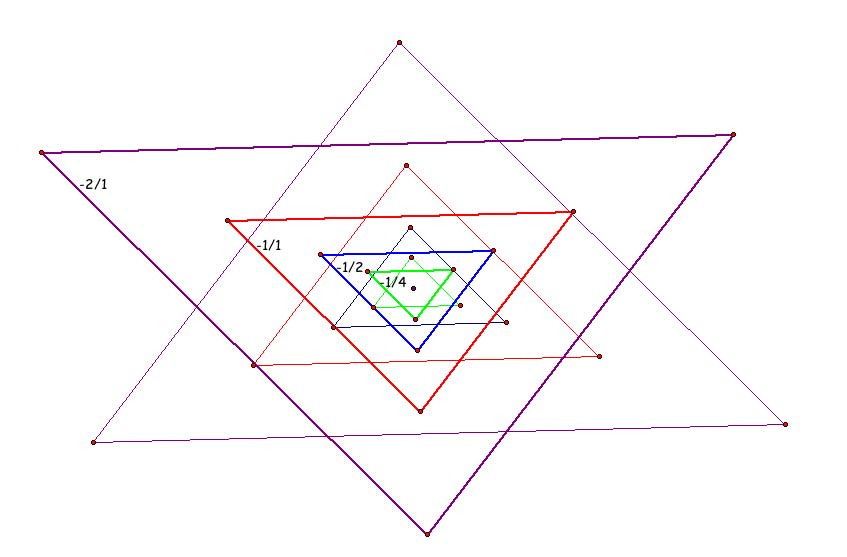
Synchronized Chaos July 2017: Scale Factor

scaledtriangles

A scale factor reveals how much a map has been adjusted to depict a much larger or smaller reality. Are the places shown ten times bigger than they appear, or twenty times smaller?

This month’s Synchronized Chaos contributions explore life at different scales. Photos and poems focus in on fragments of the body or of physical objects, probe individual psychology, or discuss people in relationship to society, human history or the non-human natural world.

JD DeHart’s surrealist poem confronts death through the point of view of a detached nose, wondering about its fate apart from the whole body. Jim Zola’s photographs show fragmentation as an artistic experiment rather than a sign of dysfunction, riffing off of broken Christmas ornaments, tree bark and ladder steps.

Elizabeth Hughes reviews Jamel Gross’ Exit Lives in her Book Periscope column. This is a short horror novel built around the premise that even violent people can change when confronted with events they can no longer ignore.

J.K. Durick’s poetry looks at how the human psyche responds to time: lengthy marathons, paranoid fear of the future, tracking the exact moment when circumstances and attitudes begin to change. J.J. Campbell’s pieces reflect cynicism and resignation in the face of death, yet suggest the possibility of renewed life through experiencing erotic love and the popular music of Prince.

Ryan Flanagan’s poems suggest that a degree of madness in human psychology and behavior may be as natural, although perhaps as disruptive, as an earthquake. He points to the absurd in our lives with readable humor, finally aimed outside our planet at the perennial controversy over the status of Pluto.

Allison Grayhurst starts with the individual and moves to a reflection on a person’s immediate social world – family, friends and local community. While interactions on this scale may seem less grandiose and relevant on a large scale, this is the sphere of experience that most directly shapes our lives.

Mahbub’s poetry highlights the intensity of our emotional response to our micro-environments. Romantic love, friendly affection, and personal religious faith carry physical weight and bring about a bodily response. Joan Beebe acknowledges individual self-awareness and consciousness and suggests that rather than just staying in a place of self-reflection, we can suppose that others have similar self-aware thoughts and thus feel a connection to others on a larger scale. She also points to a more personal religious faith, where God has a purpose for a small church mouse and can look after her pilot nephew.

Todd Wiggins contributes a profile of his son R.J., who is a skilled communicator and linguist at a very young age. While supported and encouraged by those around him, he’s on his own path, not determined by his age, his past or his environment.

Joe Schueler’s poetic subject seems excluded from his social world, and responds by actively breaking into someone’s life and psyche.

Rui Carvalho reviews a Japanese film, Delices de Tokyo, that focuses in on small communities: a dessert shop with a few distinctive characters, and a leprosarium where the patients find life together while in the process of dying. The film’s cinematography and rich color highlights the vibrancy of individual lives and relationships.

Akinmade Zeal moves from personal relationships to critique of the broader society. He calls out for the leaders and citizens of his native Nigeria to become more ethical and less corrupt and self-serving and to build a society driven more by thought and understanding and less by power and class privilege. In an interview with myself, Zeal points out how he and other Nigerian writers are driven to put pen to paper by their social consciences.

Vijay Nair lambasts the sitting U.S. president, comparing him in verse to a mouse who, although small, can destroy much larger beings by infecting them with plague. Like Zeal, he expresses direct, unambiguous critical sentiments through aesthetic poetic form.

Tony Nightwalker LeTigre reviews Tom Robbins’ novel Still Life with Woodpecker, an offbeat and humorous social satire of American culture and counterculture told as a loosely reinterpreted fairy tale.

LeTigre also contributes a poem showing how nature re-enters our civilized lives in a gentle, but determined way. This poem brings to mind Carl Sandburg’s fog, which enters on little cat feet.

Michael Robinson reminds us of the restorative psychological effects of nature, as forests and sunlight can expand our perspectives when we feel trapped in toxic human-made situations.

Vandita Dharni offers up elegant verse on romantic love and nature’s beauty, reminiscent of the aesthetics of Wordsworth and Elizabeth and Robert Browning.

Theophilus Adeyinka presents a contrasting perspective on nature, as his speakers labor to survive and produce food on dry, rough land. Living in the natural environment is a constant struggle, but also a dignified, worthwhile pursuit worthy of celebration in verse.

Finally, I myself review San Francisco State University’s annual Personalized Medicine conference. Researchers who presented discussed ways to make medical treatments more effective by customizing them for certain groups of people and ultimately for individuals.

As the closing keynote speaker pointed out, though, there can be psychological and social implications of how we understand and interpret what we see in the natural world. As Dr. Charis Thompson (of UC Berkeley and the London School of Economics) illustrated, a scientific and physical focus on the individual can be counterbalanced by a simultaneous social focus on social inclusion. This involves making sure individuals from different backgrounds are taken into account in medical research and policy and striving to extend this type of personalized care to more people.

As Joan Beebe also shows in her poem “Universal Oneness,” examining individual experience and acknowledging its uniqueness does not have to preclude understanding of and empathy for a broader community. We all share the experience of being unique in some particular way. The scales at which we understand our existence are not mutually exclusive, as understanding oneself can help us build bridges towards relating to the larger world.