
Poetry from Ajise Vincent

SAHARA BLUES X

They said my ancestors

wore sackclothes and raffias

of infectious nature,

that caused the outbreak

Of the black man disease.Polygamy.

So they brought chromatic strings

To beautify the nudity of our flesh

So men could dine with lust

And become dogs that are never satisfied.

SAHARA BLUES XI

I’ve seen homes

where dreams are lighted by poverty

and puffed out into oblivion

to cling to void air of nothingness. Homes

, where hopes are fed with smokes

pervading from ashes of bombed futures. Homes

, where foetuses seek to tango with death

even before the dance of delivery. These homes

are silent gladiators that inhibit the growth of posterity.

They are arsenals to kick start a revolution

at the demise of dusk.

MARABOUTS OF DOOM

Devious carnivores tieing turbans,

Tearing decorum of the Maghreb.

Heart steeled: dissipating mortals

With bogus pellets of martyrdom

Ancient caliphates they decimate.

Each dappled ruins tell gory tales

Of pouty vultures eating corpses,

Yet in their guts they still banter.

Hungry dust they solemnly satisfy

With remains of excavated graves

& blood of impeccable juveniles

Catalyzed by feral raids of impiety.

Innocent babies now motherless,

Drinking milks of their sly sisters–

Who now find daily nourishment

Betwixt the thighs of these carnivores

BIOGRAPHY

Ajise Vincent is a Nigerian Poet. His poem “Song of a Progeny” was a shortlisted poem at the Korea- Nigeria Poetry feast, 2015. His works have been published in London grip magazine, Kalahari Review, Sakonfa literary magazine, AfricanWriter, Indian periodical, Social Justice Poetry, I Am Not a Silent Poet, Afrikana ng, Poetry Pacific, The Poet Community, Whispers, Commonline Journal, Novel Afrique, Black Boy Review, Tuck Magazine and various literary outlets. He is currently finishing up a major in Economics at the University
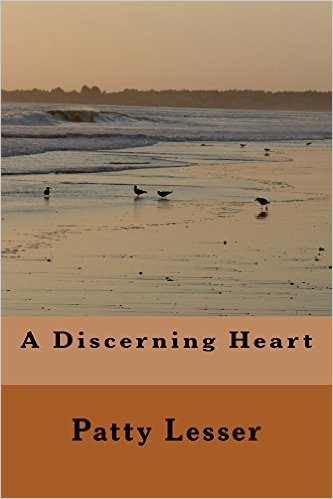
Holly Sisson reviews Patty Lesser’s novel A Discerning Heart

Becoming Human: A story of enchantment and love

Holly Sisson, MA

discerningheartcover

A Book Review of A Discerning Heart by Patty Lesser

Fiction writer Patty Lesser has broken from tradition in this modern day mythological tale brought to life through an empassioned display of a man lost and blind by his own self-pity and desire for power and respect. The author brings forth from the depths a gentler compassionate love that transcends both societal norms and his own aggressive wounded heart. This tale of two lovers uniting is not without its fair share of turns and twists. Sex, lies, exploits and magic enchant and keep the reader turning the pages as the plot thickens like grandma’s stew with a secret ingredient.

A love story as old as the ages, this Romeo and Juliet-esque story is filled with bits of modern day social issues from gender roles and culturally accepted marriage to sexism and the objectification of women, the invisibility of disability, and the simplicity of natural living being overcome by ambition and progress.

The imagery of land and sea is breathtaking and will immerse the imaginative reader in a world of beauty, nature, fantasy and magic. From solid ground to open sea we journey through transcendental archetypes of love, power, paradise, illusion, paradox and the balance of feminine and masculine, mystery and personal reality. The principal protagonist, Dim Jim, develops a character both shaped by a loneliness amplified by social marginalization and a victim mentality that leads his eventual surrender to love and beauty through the alchemical power of falling in love.

This story has a bittersweet happy ending reminiscent of a fairy tale, yet without the perfect due justice falsely implied in contemporary fairy tales. The real life consequences of decisions made by Dim Jim and his counterparts are certainly not swept under the rug, and the difficulty of a life filled with choices and a veiled sense of what happiness is weaves both tragedy and liberation along the way.

A Discerning Heart is somewhere between real-life and fantasy, a novel filled with the depths of love and the shallows of self-pity. It will pull the heartstrings of anyone young or old who has a taste for the enchantment of magic found in real life situations. Patty Lesser is becoming more of an accomplished writer with each novel she writes.

This novel may be ordered here. 

Essay from Ayokunle Adeleye

Saraki in Our Democracy

On the twenty-fifth of March, in the heat of the Presidential campaigns, yours truly released The Beauty of Democracy. That innocent article had been borne out of concern on the increasing lust for blood that fellow compatriots were displaying, and unabashedly too. They had seemed eager for justice and more; they had in fact seemed ready to take justice into their own hands. And I was concerned, as anyone should.

A change in regime had been imminent, the finger-pointing that customarily accompanied such regimes was gaining innervation; but the
excessiveness that the propaganda of the incoming band was preaching was beginning to gather much more momentum than could be needed to
oust the incumbent and Change! the nation. And so my fear had been: What would happen to the excess?

As it turns out today, one human gestational period later, that excess momentum has birthed vengeance, blind vengeance; vengeance blinded by
the propaganda for Change!, and nurtured by the myth that every rich politician is corrupt; vengeance ignorant of the simplest of political
truths: only the rich succeed in politics, as of today, when mere nomination forms cost tens of millions of Naira so as to “separate the
men from the boys”; and vengeance that has made a man yet on trial to be stoned as though guilty.

How visionary that humble, and largely unpublished, article has now turned out to be! For, in a bid to paint the former band of politicians as thieves, the propagandists conveniently forget that they themselves are politicians no different than the former, at least to the naked eye and to the vengeful minds of the awakened masses now thirsty for blood, any blood at all. A sentiment that now endangers our budding democracy, more than ever, as I had then opined nine months ago:

“Democracy is slow, democracy is cumbersome, democracy is imperfect, and it is apparent that the Opposition will, in their present stride,
taint our budding democracy in a bid to satiate the lust for blood that the gaping mouth of our populace desires… The supporters of the Opposition have taken it upon themselves to be plaintiff, judge and jury; to label every dissenter as cheap, corruptible, and shameless; to gang up and degrade the humanity of anyone speaking in defence of the defendant. They condescend, they insult; to them only the dumb and clueless will support his [Senate] President. Yet, the beauty of democracy is that defence is a fundamental human right, even to the accused, even to the allegedly guilty; and remains so, even in Nigeria, even now!

“We can all be misunderstood; I usually am, and anyone that is often misunderstood knows that nothing hurts more than the hypocrisy and sanctimony, the judging gazes and condemning sneers, the pre-emptive guilty-as-charged attitude and misplaced condescension.… For, the
beauty of democracy is that however wrong, guilty, [insubordinate, wealthy,] or clueless the defendant is, he must not stand alone. And
whoever chooses to stand by him, pardon his misdemeanour, and believe in him, must not be ostracised, not for his humanity.

“[Saraki’s] assailants go about the tents of democracy, with shrouds ostentatiously bearing the insignia of Change!, and with vengeance in
their proud stride. And as they do, they look down upon, and alienate, those of us preaching caution lest we find ourselves right where we
are, four years hence!… For, the beauty of democracy is that the leader be tolerant, father to all, and compassionate; that his followers be empathetic, accepting of others, and friendly to dissenters; that people are not maltreated in their own land because they disagree with popular opinion.

“[But it would now seem that Saraki’s assailants are prepared to] run our democracy off, or over, in their quest for applause… [and that
their] supporters have little regard for democratic freedoms [including the belief in the rule of law administered in a fair trial; as they themselves are] intolerant folk… [It would seem that we have alas voted] the inquisitors and the chips [are falling:] there [is] little tolerance for sympathizers, for due process, for proper defence; those of us who are apt to stand for the Constitutional Way will become targets, those who habitually dwell on the fence will become collateral damage, and no one will be safe. There will be no room for neutrality, caution or commonsense. And there will be no room for friends. Yet, everyone needs a friend at least; no one deserves to stand alone. For, that is the beauty of democracy: the right to the
freedom to opine, decide, associate, disassociate; to live, and let live!

“And if [rather than insist that due process be followed,] we keep quiet, if [rather than advocate the rule of law,] we hide our heads, if we [support rather than enlighten] the coercionists, then not only will our democracy lose its lustre, then not only will autocracy take over, and dictatorship in his wake, then not only will we suffer for our gullibility, but we will leave Nigeria worse that we found it: bound.

“I have thus stood by the weaker, more aggrieved side… You may psychoanalyse me as much as you want; only, I have done so for balance, I have done so for fairness, i have done so despite enormous pressure and grave threats. And I yet do [and as should you… I have thus and since taken it upon myself to defend the defenceless. For I am not a populist, and someday, it shall be me in the dock, and I shall hope to be shown the same mercy I have shown those before me: a laudable defence, and a fair trial.”

The exact thing every Nigerian deserves during trial. The exact thing you would expect if peradventure you are on trial. The exact thing Senator Bukola Saraki deserves; not a witch-hunt, not stoning, and definitely not jungle justice. Oh, Lord knows we have had enough of those!

Ayokunle Ayk Fowosire.
Sagamu.
@adelayok

Poetry from Michael Robinson

No Words


There never have been words that comforted me. No words of “I’m sorry for you loss” and what of my loss? It was a moonless night, or so it seemed. Something was wrong with my emotions and something strange about life set in. Feeling lost without being able to be alive. Such confusion Unable to touch or be touched…the rats ran up and down the stairs. The world began to disappear before my black soul, a soul without God’s touch, a motionless moon and stars that were shattered in the night sky. Everything seemed to stop…no past, no future, trapped with these rats lying on the alley floor with nothing but their skeletal remains. My life ended that very night since I could not feel anything. The darkness covered my body without mercy. There was neither devil nor hell just death…I’m unable to speak, unable to touch or be touched. I want to sit in a corner to melt into the night air. It’s hard to breathe…a gun would be nice to have, but I don’t think my death would stop the darkness….I wish she would appear so that I wouldn’t be alone. She would know what to say or what to do because I don’t. None of it makes sense.

A rope,

A body,

A porch,

Another body,

Empty thoughts about a future that will not happen,

Pitch black, like me, in a whirlwind of chaos;

I can’t help but feel insane.


Continue reading

Writing from Joan Beebe

PEACEFULNESS

I have often wondered how any of us in this frantic world in which we live could have moments of real peace.  The need for peace is so important to our wellbeing.  Of course it is terribly needed all over this world.  Personally, I believe there are things we can do to help us and bring that wonderful feeling of peace to our spirit.  I am thinking of a cold winter’s day, lots of blowing snow outside and we are sitting before a bright fire in our fireplace.  We have a cup of coffee or hot chocolate and we are reading a new novel that is so interesting we don’t want to put that book down.  There is another time when we are taking a walk on a perfect sunshiny day with a cool breeze blowing.  We are quiet and we hear the sounds of nature that surrounds us.  We decide to drive to the beach so we bring our chair and settle down to watch the sea gulls flitting here and there and then landing on the soft sand to beg for food.  There are sail boats far out on the lake and we watch as they seem to be floating aimlessly to nowhere.  We stay to watch the sunset with its pinks and red streaks across the sky and the light of day dims. We listen to our favorite music and find ourselves dancing around the living room.  Sometimes we find ourselves alone and we take time to say a prayer in that quiet moment.  Each person may think of their own way to allow themselves the time to enjoy some peace.  These things, in one way or another, are a way to bring peace into our hearts and we are strengthened with that peace for days to come.

Continue reading

Synchronized Chaos September 2015: A Sense of Wonder

A May 2015 study headed up by Dr. Paul Piff of the University of California – Irvine and described in Psychology Today suggests that when we have a sense of wonder at the larger universe and a connection to something greater than our own lives, we can become more empathetic and compassionate. The researchers speculate that a healthy measure of awe gets us out of ourselves and pulls us away from selfishness towards a broader perspective. And this issue of Synchronized Chaos brought that study to mind as the pieces here comment on and explore various facets of this sort of transcendence.

This month’s contributors begin with the excitement and wonder of childhood. Elizabeth Hughes, in her monthly Book Periscope review column, reviews Harraf Namrattle, the first book in Shirin Lederman’s The Trotters of Tweeville series, a collection designed to illustrate the meaning and value of kindness, and Robert Parfett’s Not-So-Wise Owl, a rhyming story of an owl weary of requests for advice. Neila Mezynski gives us a short poem where kids express their joy at a day off from school.

Joan Beebe shares some poetry where she’s amazed at vast alpine vistas and amused by squeaky household objects. She relates a young-adult vacation experience in upstate New York’s Adirondack Mountains with nostalgia for the adventure and the time with her friends in a spectacular area. Tony Longshanks LeTigre also brings us a faded memory of an old abandoned Victorian house in San Francisco where he stayed for a time. As with Joan Beebe’s reflections, but even more poetic and less literal, the facts of the past experience mix here with sentiment and wonder and we speculate along with him about what was real and what was a dream.

Peter Streitz shows through grotesquely tragic imagery the violence that can occur when insecure humans seek to surmount their own internal weaknesses by attempting to physically dominate and deny their natural connection to other species. Christopher Bernard, in his poetic prayer to Mother Earth inspired by Pope Francis’ words on the environment, reminds us that we are part of a larger world and that we can and should give back and respect and care for our planet as she has nourished us.

Ann Tinkham also looks at the destructive and seemingly impersonal power of nature in her short story “Afraid of the Rain,” where a young wife and mother risks her safety to salvage items left behind after the family evacuates the property during a flood. The piece becomes a meditation on what we keep and what we let go and how much risk we take to preserve the fragile and the beautiful.

Tinkham also invites us to consider the nature of courage. Who is the hero of her story, the wife who does not give up until she recovers what she most loves, or the husband who cares for their baby daughter in the meantime and focuses on building a new future?

Other contributions also probe how we become heroic, how we can survive the vastness and wildness of nature. We are part of the natural order, even if small individually compared to the galaxies and mountains. Ryan Hodge, in his monthly Play/Write column on video games, looks at how game creators develop archetypal superhero characters and what traits inspire players and involve them in the games. Hodge posits that often the most memorable heroes and heroines aren’t omnipotent within the fictional universe but develop their strength through hard work and perseverance and sometimes through a desire to overcome a personal failure or regret.

Michael Robinson writes of impersonal institutions: jail and the mental hospital. These confining images are placed alongside images of life: motherhood, home, and childhood. We see the inhumanity and degradation all the more when compared to the gentleness and humanity of the speaker’s family and early life, and wonder at the fortitude some people have to be able to survive such experiences. Strong families and communities can help people develop that resilience, which can be considered a form of heroism.

Siraj Sabuke and Laura Kaminski’s joint poetic sequence also honors courage and endurance. The two writers use images of moonlight illuminating other objects and parents giving life to children to show the power of poets who use their voices to bring others’ concerns and ideas to light.

Bea Garth’s poetry describes romantic love through images of motion and growth in nature. The shape of the words on the page reflects the subject matter of her poems, or at least the energy and direction of the speaker’s thoughts and feelings. Garth’s final piece shows a writer whose work has become a part of his character even when he has moved away from the stereotypical ‘poetry scene’ of San Francisco’s North Beach. His art comes from a connection to something outside his ego and conscious mind, even if only a dedication to articulating the musings of his subconscious.

Our final piece also offers reasons why people write, reasons grounded in a connection to the broader universe outside the writer. Dave Douglas, in a highly structured, intellectual and formal piece, rejoices in the adventure of following the imagination.

As editors and contributors, we hope that these pieces will pull you out of yourselves as you read and inspire creativity, wonder at the power of the imagination, and respect and empathy for the creators.

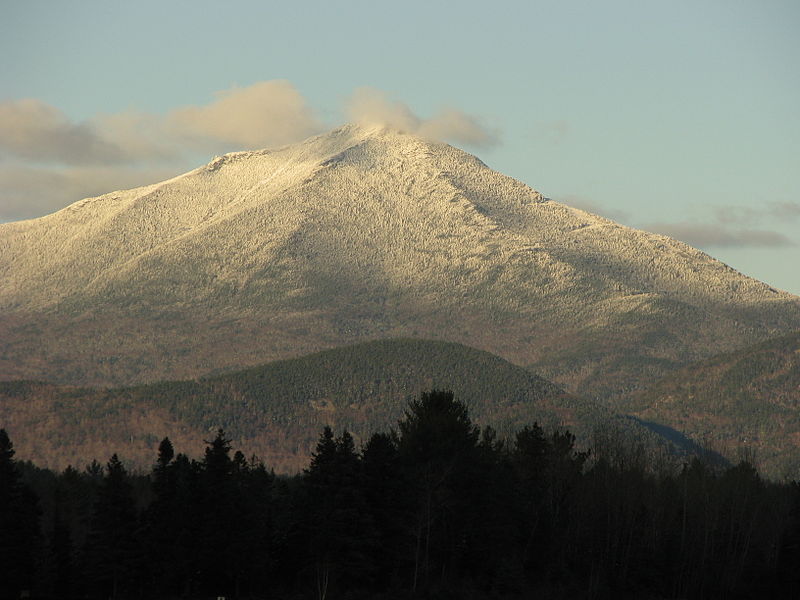
Whiteface Mountain in the Adirondacks from Lake Placid Airport. Public domain from Wikipedia entry on the Adirondack Mountains.

Whiteface Mountain in the Adirondacks from Lake Placid Airport. Public domain from Wikipedia entry on the Adirondack Mountains.


******************************************************************************************************

Also, our colleague in Portugal, poet and software developer Rui Carvalho, hosts a poetry contest on his blog and invites all writers to participate. Our magazine staff will provide editorial expertise to judge this competition and provide free writing coaching to the runners-up.

International Literary Contest: Poems and Tales for Nature 2015

Competition Adjudicator: Rui M. Carvalho

Prize-giving will be by the end of October 2015 using the web and the website where the results will be displayed.

No entry fee and Rui offers his first book of poetry, Tales for Love, to all who enter the contest.

For further details, rules & entry form visit http://talesforlove.blogs.sapo.pt