A Slow Suicide
I.
the pakistani painter’s studio
a shrine to her lost self
the finer things
glossed resistance
depressed days
blunted nights
II.
the darkest corner
of
her dust-laden studio
whisper
brighter
daysze.
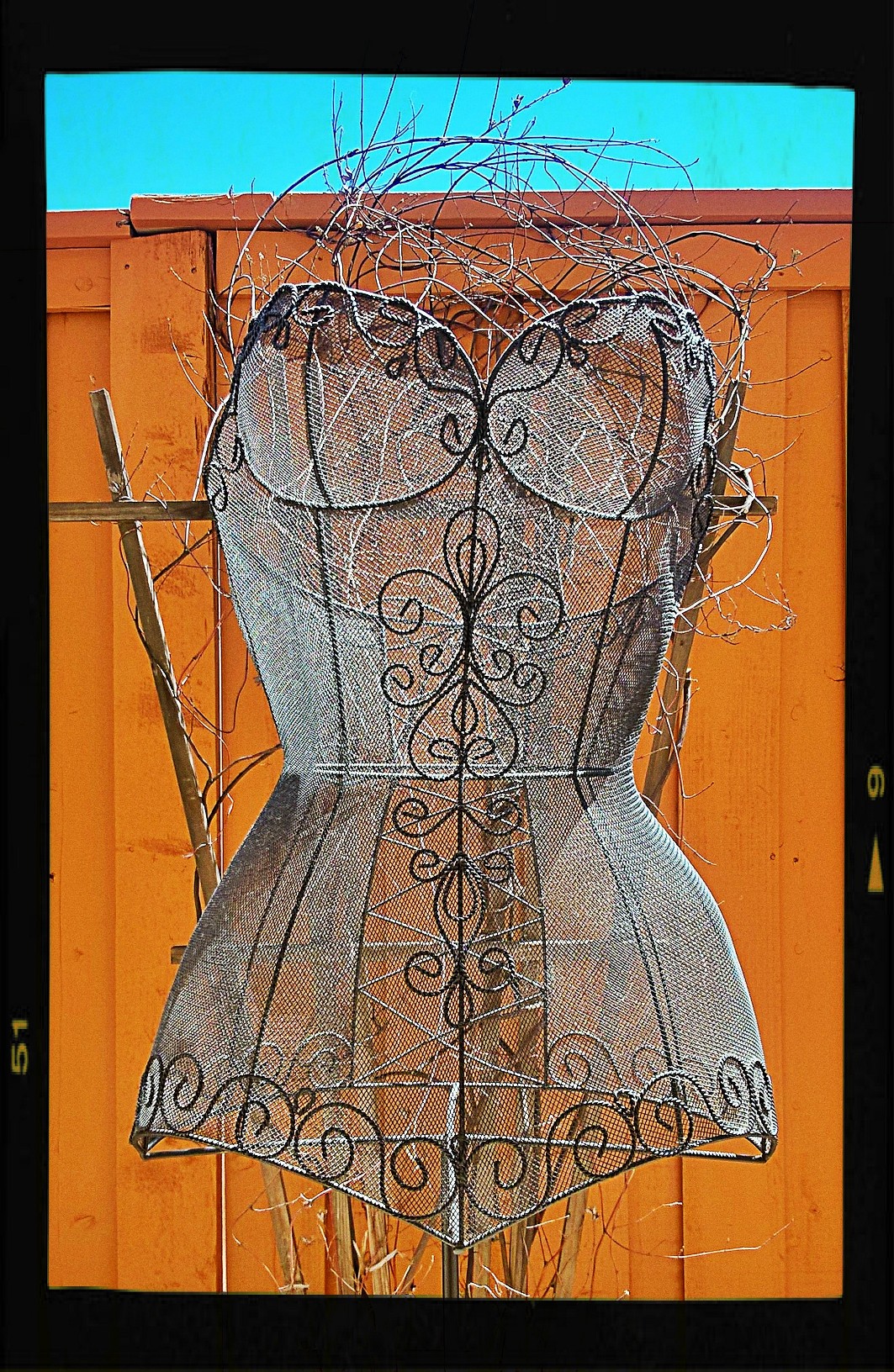

A Slow Suicide
I.
the pakistani painter’s studio
a shrine to her lost self
the finer things
glossed resistance
depressed days
blunted nights
II.
the darkest corner
of
her dust-laden studio
whisper
brighter
daysze.
Measuring Achievements
I count calories before and after workout,
collate data in charts and turn my home into
a museum of achievement, unsure about the
measure for the world to know, the desire of
fallen leaves to fly into houses, the loneliness
of colors for Abanindranath to call his peace,
The Peace Cottage*. I am used to the way we
climb mountains to celebrate temples on the
pinnacle of certain, and worship longing on
the rest. Slight tremors on countryside rail
tracks that reach us before the train mark
the achievement of arrivals and departures.
When eyes bury in themselves, a complicated
dial that resembles the engine room, I record
the waterfalls of blood in my body, the arrival
of death like the hiss of an alligator rising from
its depths. The devices make me a prophet
of transparent lies that dissolve like ice cubes
into my divination. When I leave, I am a cargo
train that passes through all stations and no
passenger knows where I am heading.
Note: * – A work by world renowned painter, Abanindranath Tagore.
Welcome, readers, to March’s issue of Synchronized Chaos Magazine! This issue seems to center on energy in various forms, both literally as a power source and poetically as a metaphor for people finding the inner strength needed to spur them on to greater insights.
Jaylan Salah writes about finding solace and creative energy through the Finnish rock band Poets of the Fall. As a writer and artist and a young person, Jaylan found welcome, affirmation, and thought-provoking ideas in the lyrics and beauty in the voices of her favorite band.
Since ancient times music has punctuated our life journeys and lubricated our experiences, from early hide drums and wooden dulcimers and lyres and chants to modern sounds produced through technology.
Michael Robinson also writes of his poetic inspirations in taut, restrained free verse, using birds and nature as a motif. Seagulls and peacocks have been present during various seasons of his life and thus evoke various emotions.
Joan Beebe celebrates nature’s renewal and beauty during spring. Her work, written with joy and full sincerity, heralds the coming of warmer weather. She also encourages readers to keep track of their pleasant memories by holding onto mementos.
Peter Jacob Streitz contributes a short story on the loss of innocence and natural human life-energy due to repression and fear from people who moved too fast to control what they did not understand. Elizabeth Hughes, in her monthly Book Periscope literary review column, reviews novels from Hazel Boyd which describe how a group of people, friends and lovers, work to maintain the caring and energy in their relationships over time despite the complications and challenges they face.
And, finally, in a writeup from museum docent Cristina Deptula, there’s a discussion of Lawrence Berkeley National Laboratory researcher Dr.Adam Weber’s research into improving the efficiency of hydrogen fuel cells. While Weber affirms the promise of this form of energy storage within the next 50 years, the technology will require much thought and effort to bring it to the point where it can become commercially useful. He outlines some challenges researchers are facing and methods they are using to work around these issues.
We hope this issue serves as a kind of ‘muse’ for readers as they continue their own creative and personal journeys.

Poets of the Fall in a 2008 live performance By wlodi – http://www.flickr.com/photos/wlodi/2447716470/sizes/o/, CC BY-SA 2.0, https://commons.wikimedia.org/w/index.php?curid=8938315
I first listened to the Finnish band “Poets of the Fall” in 2006. I was just starting college and they had just released “Carnival of Rust”; their second album. The first song that I listened to was “King of Fools”. I was awe-struck. It felt like I’ve been chosen to guard an ancient god that only whispered its secrets to me.
The guitar solo was great. The vocals were raw and emotional. Every single aspect of the song suddenly made sense. To a lonely, angry teenager, “Carnival of Rust” wasn’t just an album, but more of a way to adapt to the 2000s while carrying a hormonal hurricane deep inside you. Mark Saaresto’s –lead vocal- voice was more of a Jiminy Cricket to the wild, troubled writer who lived within me.
As he gently whispered lyrics from their song “Illusion and Dream”:
Hear them sing their songs off key
N’ nod like they agree
Buying the need to be discreet
Poof, my weariness would magically disappear. I would find courage and strength within to go on.
Okay, first things first.
Proper introduction: These guys are technically salt of the earth. Singer Marko Saaresto, guitarist Olli Tukiainen and keyboardist Markus “Captain” Kaarlonen started from scratch throwing everything away to seek the yellow brick road to art. Their songs tackled various subjects from life to sex, death to joy, and despair to empowerment. Their most recent album “Jealous Gods” reached the #1 spot on the Finnish album chart and the #1 spot in my heart as well. A collection of instrumental versions of five of the band’s songs will be released February 16th in an album under the title “Instrumental Collection Vol.1”.
They say every critic is a failed artist. That’s true to a point. I’ve always dreamed of being a rock star. As I juggled failed auditions to be a female lead vocal from one contraband to the other, I realized that writing about music could be easier than actually pursuing a musical career.
I had the privilege of representing Synchronized Chaos magazine in interviewing the “Old Gods of Asgard” via email and the result was a sincere and thought-provoking insight into the kitchen where the Poets shed their skin and become dragons, monsters, demigods and superheroes. One of the best things about “Poets of the Fall” is that their darkest melody never gives in to despair. Poets of the Fall’s lead vocalist Marko Saaresto described the musical process as an “inner need to write music” or else it would be “a short-lived love affair”.
Isn’t that just spectacular?
MEMORIES IN A SHOEBOX
Shoeboxes are meant for shoes
Or pictures you don’t want to lose.
My shoebox is filled with stories of old
The pictures are warm with memories untold.
When I look at those days of youth and fun
The memories for us have just begun.
The years fly by and we don’t think of time
Until we find that shoebox of mine.
Those precious memories are like gold
And bring smiles and tears from those days of old
So don’t throw away that shoebox of yours,
It may bring you comfort from days gone by
Because that shoebox is where those stories lie.
A HEARTBEAT AWAY
Winter days are usually long and dreary
Depression can overcome us
We don’t seem to have the energy
Or a spirit that is positive
We look longingly for sunshine and warmth
But soon we find we are just a heartbeat away from spring
Trees budding forth with their new shiny leaves
The green shoots of flowers are poking their tiny
Heads up above the ground.
There is a sweet freshness in the air around us
Our senses have come alive and we
Drink in the breath of renewal in nature and ourselves.

Adam Weber, photo from http://eetd.lbl.gov/people/adam-weber
Hydrogen fuel cells power city buses all over Oakland, CA, surrounding the Chabot Space and Science Center and transporting visitors around town. Guest speaker Adam Weber, staff scientist at Lawrence Berkeley National Laboratory’s fuel cell program manager, spoke at Chabot on future prospects of this technology during February’s enrichment lecture.
According to Weber, hydrogen fuel as a workable, commercial scale technology in the U.S. is at least 10-20 years in the future, as a minimum. However, he supports continued research and development into the area as the technology represents the promise of a 45 percent reduction in our country’s carbon emissions by 2050.
Hydrogen differs from other fuels as it cannot be mined or harvested directly, but must be produced on a large scale, usually by splitting water molecules through electrolysis. The energy to power the electrolysis can come from natural gas, coal, nuclear energy, or, as he hopes, ultimately from renewable sources.
MEN AND WOMEN—there’s a difference. At least that’s what Shields’ mom formerly decreed. It’s history. It’s science. It’s nature. It’s everything to do with equality and ONLY ONE HAPPINESS. And along with the laws of only one happiness, Shields also knew, by heart, all the other rules in Mom’s house. That’s why he waited a year after his 13th birthday to ask her about the man he’d met the previous Christmas, in his Grandma’s cellar. This was a terrible mistake. When Shields simply asked if the man she called “husband” loved him, his Ma threw a fit! The word LOVE was strictly verboten in or out of their home.
For it was his Mom’s belief that love, as a word, was worthless. “Gens de peu (the meaner class of people),” she’d crow with characteristic fervor. “Love everything from inanimate objects to gods, celebrities, and prime-time TV.” She’d quiz Shields: “And how can love describe the affections of men and women when we incessantly jabber, ‘I LOVE THE FLAG! I LOVE COKE! I LOVE NEW YORK! I LOVE JESUS! Have you ever seen a bumper sticker that says: I LOVE HUMAN BEINGS?'”
When Shields admitted to never seeing such a bumper sticker, or knowing what it actually meant to love, mom told him a story about a long forgotten, magical time when men and women were equally capable of love, because they both possessed The Lobe. God’s Lobe. The Lobe almighty.