Poetry from Russell Sivey

Insane Intimacy
She phrases it so violently, “I love you,” just like a large moose fighting for dominance of a bog that has food, enough for the winter. She pierces the eardrum with her scream, keeping the eyes direct onto my chest, hoping for the hairs to draw up and burst on fire. But alas they don’t, and she grieves for her inexplicable loss of the battle of wits. Her timely burst brought upon me a segment of fear, brought by the words of intimacy, but so stated with anger and disappointment. I know my love for her has been erratic, and she certainly deserves more, but going insane is not the solution I try to say. I bring this to her attention with the utmost care and concern, but she yells intimate phrases of jubilation between kicks and wails of fist throwing. I cry for her. And she jumps off the deep-end by flipping me off and complaining about nothing, I follow her masterpiece of craziness landing another head jarring scream off the top of her lungs, just saying, “I love you.”
From Russell Sivey

Essay from Ann Tinkham

Waiting at the Wrong Track

I perched on a tilting café stool next to my fiancé, trying not to taste the greasy McChicken sandwich I washed down with a bitter double espresso chaser. We were dismayed that McFood was the finest culinary experience the St. Charles train station had to offer. In the foreground, sleek bullet trains bound for Paris screeched in, loaded up with sun-kissed Mediterranean vacationers, and zipped away from Quais E, F, and G. Assuming our train would leave from one of these tracks, we settled in.

As I tuned out rapid-fire French spoken at adjacent tables and broadcast over the intercom, I overheard a language that carried me home. The slow-moving dialogue was peppered with wide open vowels and harsh R’s, the consonants of Des Moines, Boise, and Wichita. My eavesdropping tendencies kicked in; I became a stealth voyeur, comforted by an oasis of familiar auditory cues.

A twenty-something American couple with backpacks and roll-away luggage in tow, was also awaiting a train over delicate white espresso cups. She was pale with dark wavy hair framing her baby face. A scarlet-colored Euro-tied scarf draped around her neck. He was part punk rocker, part frat boy with cropped hair, blue jeans and a black sweatshirt. Upon closer inspection, I discovered a baby stroller among their sea of luggage. They had started early, determined that their bundle of joy would fall in love France as they had.

Continue reading

Poetry and prose from Joshua Dunlap

Life is Breathed Into a Hotel Room
The hotel room is large & the walls are covered with peeling white & blue pinstripe wallpaper; it is desperately clinging on. The side table is littered with miniature alcohol bottles, scraps of paper, a pack of cigarettes & a lighter.
She’s sitting on the bed, bottom-less with a black bra, casually taking drags from a cigarette.
Her legs are modestly crossed with her opposite hand between them, in a nonsexual way. Her back is to the large window with the beige curtains drawn back. The room is faintly lit with most of the light casually bleeding in from the outside world. The living, breathing city down below more than six feet beneath our feet. All warm bodies coming & going, each with their own existence.
Miniature clouds veil her painted red fingernails for seconds before dissipating. Making this moment in time as fickle & elusive as the smog billowing from the mouth of a smoke stack. It curls and dances in the air before melting into nothing.

I’m sitting across the room in an uncomfortable chair, also bottom-less with my legs crossed. I don’t know how long we’ve been sitting here like this. I’ve been using the ashtray as a makeshift timepiece; it’s almost full. I think it’s past midnight.

Continue reading

Poetry from Laurie Byro

Bill’s Constellations
for Billy Collins

Whatever actually happened at Yang-ping’s house

during that winter, there were seasons before and after
in which nothing happened. Rowboat’s skiffled along

rain-washed river bottoms, rocky but not impassable.
There wasn’t always a drunken moon or salty stars

in a black bowl of sky. A heron followed the boat
seeking clues about the lady in the wide-brimmed hat,

a blue ribbon trailing the wind like its mate’s feathers.
The tail of Scorpio slashed the wild sky. The woman

blinded by icy stars, could have been mistaken for a wizened
Chinaman, thousands of years old. The silent river spilled

no secrets about temptation or regret. The woman who navigated
these waters held a compass that could turn her boat around,

change to any direction. She planted her long legs solidly
on its wooden floor, a book open and faced down

beside her written by a man who’d traveled similar waters.
Many winters before, too many to record in a hand-painted chart,

a Chinaman paddled a river, his oars dripping stars.
Continue reading

Warwick Newnham’s short story

Burma Burnout, Myanmar Meltdown

by Warwick Newnham

They steamed mid-morning into the outer reaches of Singapore harbour having circumvented, where possible, the fleets of pair trawlers and gill netters and fish trawlers working from the shelf right up to the Port of Singapore Harbour port limits and with the ocean made from glass and gods’ own face shining down on them they formed up to a flotilla of green of squat modern prawn boats. They co-ordinated manoeuvres on Ultra-High-Frequency scramblers on company channels and High-Frequency sets are tuned as one to Radio-rock-n-roll-Singapore, Numbah-One-Pirate Radio:

  1. Rolling Stones; ‘Loving Cup’

    1. Gunners; ‘Sweet Child Of Mine’

      1. Ramones; ‘I Wanna Be Sedated’

        1. AC\DC; ‘Givin’ The Dog A Bone’

-The UHF dials in like a phone to scramble with an electronic squawk-

You get me on this one there Noddy?’

No Moose……..you can’t call me that now; I’m an ocean going master. Back 2 U’

Continue reading

Synchronized Chaos March 2015: What is Language For, Anyway?

This month’s issue poses a question: what are language and writing for, anyway? Why do we create and produce so many streams of words?
Fran Laniado spotlights a collaboration between writer S. Kay and craftsperson Gwen Rossmiller, where words take on physical weight by being engraved on wearable necklaces.Regular book reviewer Elizabeth Hughes samples a collection of fantasy novels with protagonists who gradually discover and step into their newfound powers, for good or ill. These include Victoria Alexandra’s The Book of Darkness: The Cora Myers Series, Nicole Quinn’s River of Disbelief (the next in her Gold Stone Girl series), and K.C. Simos’ Ambrosia Chronicles.Language can also be a tool we learn to use and a source of power and strength. Our contributors this month offer various suggestions for how and why we read, write, speak, and listen.Jessica Delgado’s poetry laments through songlike structured verse the trauma caused when addictions divide families, and renders in disjointed words the experience of being hospitalized. Her third piece, an essay, adds to this collection by directly asking why we should study writing and literature and then answering the question. These pieces together illustrate how writing can help us process intense experiences and convey them to others.Other writers demonstrate the power of words to ignite compassion and change.Deborah Guzzi’s poetry calls to mind social injustices and tragedies such as the brutality of the Cambodian genocide and racism against Jews and Native Americans. Her work also illustrates how language, taking the form of prayer, shared memory, and recorded history, can provide comfort and strength.
Rachel Stewart Johnson’s short story shocks us into awareness of others. We never know who we may encounter in an average day whose tragedies are greater than our own.
Adelayok Adeleye criticizes corruption within the Nigerian government on this international platform. Even administration changes never seem to make a dent in corruption or other real issues and often only have the effect of halting construction projects.
Tony Longshanks LeTigre reflects upon his experience surviving the deprivation and stigma of homeless life in San Francisco and on how the city has changed over the years to no longer serve as an affordable refuge for bohemians, students, immigrants, the working poor or those starting new chapters in their lives. Through his piece, we see how writing can allow people who slip through the cracks and don’t get a lot of positive notice in society to assert that they exist, that they are people with thoughts and lives.
Peter Jacob Streitz evokes a sense of grim disgust at the Holocaust in a piece written for the anniversary of the liberation of the Auschwitz death camp.

Writing can allow us to make sense of our world through storytelling.

Ryan Hodge, in his monthly Play/Write column, details how moral choices players make for their characters during video games, such as whether to follow laws or behave according to commonly held real-life ethical standards for the treatment of other creatures, influence the character’s story arc and who they become.
Cristina Deptula’s review of physicist and docent Steve Mathews’ recent lecture at the Chabot Space and Science Center in Oakland, California gives a brief overview of how the Western world’s scientists came to understand properties of light. Through a variety of languages, including that of mathematics, we are telling the story of how our world works and came into being.
As a counterpoint, poet, essayist and novelist Christopher Bernard posits a hypothetical ‘disinvention’ process, where we imagine taking apart the world as we know it and throwing away our technology. Whether motivated by environmentalism, asceticism or simply a desire to evaluate the world around us rather than immersing ourselves irrevocably into modernity, this process would represent monumental change.

Alexis Durante gives us a meditation on how three Greek goddesses might each come to meet her demise. We see beauty even in mortality, but also tragedy in that they leave behind much of themselves and become mere forms to be memorialized through statues and paintings. Language and art can be powerful vehicles for preservation of culture, but also imperfect windows to past and present flesh and blood realities, that mask truth or simply do not present the whole picture.

In some cases language is instructive and practical, a form of communication that brings information to an audience.

Amy Roiland’s description of her new FashionTap app, a social network for those interested in clothing and accessories that allows users to view, share and buy items directly through the application, lets people know about this new way to make the customer experience more personal and social. A blogger at the site Afashionnerd.com, Roiland hopes that her company’s app will not only make shopping easier, but encourage people to see the selection of clothes and development of a personal style as a matter of participatory art and craft.

Continuing his series on entrepreneurship, Nigerian medical student Adelayok Adeleye urges small business owners to stay aware of and properly manage debt and to borrow only when necessary.

Language can also become an instrument to express emotion and render moments into things of beauty, as in James Brush’s poem. Brush gives us an ode to long journeys in a recreational vehicle, where lines on a map become part of lived experience and the sounds of nature and the road become part of a shared language between the two protagonists and the world around them.

Laura Kaminski’s second installment of fables inspired by her childhood in Nigeria also grafts human language and lived experience into scenes of nature: woodpeckers, hummingbirds, white poplar trees. In this way our thoughts and dreams become enduring, intertwined with all of life, with the Earth’s natural history, and gain meaning and dignity. Kaminski also reviews Elsie Augustave’s novel The Roving Tree, a story of a Haitian girl adopted by wealthy Americans who goes in search of her heritage. Augustave, and Kaminski, draw upon poetic words to illuminate an intrepid quest for country and self.

Thank you for taking the time to read over this issue. We hope that this use of language will touch your mind and heart.

Announcements:

Writer, pharmacist and poet Jaylan Salah, who hails from Alexandria, Egypt, has published a new article, “On Writing…” in her blog La Loba the Great. (adult content).

Synchronized Chaos Magazine encourages readers to help support the return of thoughtful contributor Frances Varian to her home in the San Francisco Bay Area. Frances is the author of the poem “La Divina” and the essay “Love and Tragedy” published two years ago and lives on a small fixed income with a diagnosis of chronic Lyme disease.

Our editors are also passing on this link to support Finn Gardiner, who has created many of our icons and graphic artwork over the past years and managed the magazine for awhile in 2010. He needs assistance with a heating bill and lives in the frigid East Coast, USA, where the land is besotted with snowstorms.

Finally, we are hosting a joint spring reception with literary PR firm Authors, Large and Small, at Oakland’s Rock, Paper, Scissors gallery. Event will take place Saturday March 21st from 6-9 pm at 2278 Telegraph, and is free. All are welcome to come and read and share work or just listen. Rock, Paper, Scissors is struggling to keep the doors open and this event is a no-pressure, voluntary benefit for them. Readers may contribute here


Public domain image

Public domain image

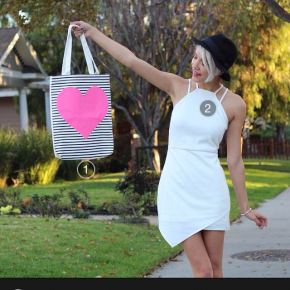
Amy Roiland’s new FashionTap application

FashionTap, currently available for download in the Apple App Store, is a fresh new fashion social network that allows users to discover, share, and purchase clothing directly through the app. FashionTap introduces an entirely simple way for linking top influencers with brands, retailers, and PR firms in any city. FashionTap also ushers in the ability for users to earn commissions on their posts by tagging products with affiliate links to the external websites where the products can be purchased.

“I was working PR at a clothing company and was finding it incredibly difficult to locate bloggers in various cities,” said Amy Roiland AKA Afashionnerd FashionTap’s CEO. “There was no way to search bloggers by location or top bloggers in general. We’ve got a world of information at our fingertips and yet no one had simplified networking in the now rising world of fashion blogging.”

FashionTap is a revolutionary new social networking app that unites fashion retailers, bloggers, models, stylists, photographers, brands, designers, and enthusiasts. The app’s stream displays posts of the users you follow in the same vertical style as Vine, Instagram, or Facebook. Click into a user’s photo and tagged products appear as an affiliate link below the image. When clicked these links send users to the website where they can purchase the product all without ever leaving the app. The search option allows users to search by photo, user, or hashtag. Users appear ranked by popularity with the option to narrow your search to a specific city. When posting, users have the option of taking a new photo, importing from Camera Roll, or uploading directly from their Instagram. Users have the option of making commissions on purchases made through their posts by linking tracking and payment information to their account.

Video Tour of FashionTap: http://youtu.be/E8VekOLz7qU