
Elizabeth Hughes’ Book Periscope

K.C. Simos’ Ambrosia Chronicles: the Discovery (part of a trilogy)
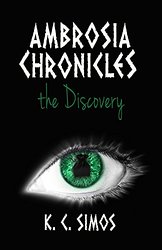
Book cover of Ambrosia Chronicles: Discovery

WOW!! Ambrosia Chronicles: The Discovery is an absolute must have for the fantasy lover. There is a hint of romance, magic, mystery, suspense and intrigue. It is the story of Alex who is going to school in Birmingham to be a lawyer. One day she runs into a classmate from grade school, Ian. He introduces her to his roommate Shan. One day she feels as though she has upset Shan and follows him to apologize when he is attacked. He hands her a pouch and tells her to stay hidden. What happens next will keep you on the edge of your seat until the very last page. I highly recommend Ambrosia Chronicles, I absolutely loved the book!

The Ambrosia Chronicles are loosely inspired by Greek mythology and available for purchase here: http://www.amazon.com/Ambrosia-Chronicles-Discovery-K-C-Simos-ebook/dp/B00R4WWNBQ

Nicole Quinn’s Disbelief: The Gold Stone Girl Book 2
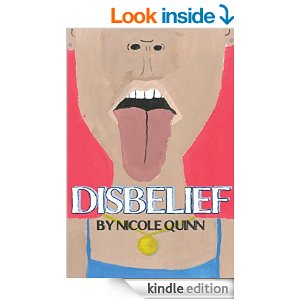
Book cover of Nicole Quinn's Disbelief

Disbelief is part two of the really great fantasy The Nightmare. It is filled with adventure and will keep the reader turning every page until the end. An SUL, Sulis, has come to Winkin City to take a life. Reve, Lord Nightmare, escapes from Winkin City and his mother, the Nightmare, in search of Rose, the Gold Stone Girl. He has fallen in love with her. He goes to the Off Grid to the people who raised her and they let him know she is not there. Rose was given to a monster in Disbelief. He now must find Disbelief in order to find his beloved Rose. I highly recommend Disbelief. I absolutely loved the book!

Disbelief, and the rest of the Gold Stone Girl series, may be purchased here: http:/www.amazon.com/Disbelief-Gold-Stone-Girl-Book-ebook/dp/B00SSJ2C7O/

Victoria Alexandra’s The Book Of Darkness: The Cora Myers Series
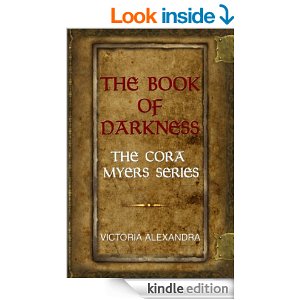
Cover of Victoria Alexandra's The Book of Darkness

The Book of Darkness is an exciting fantasy in which the last Protector must find the Book of Darkness and restore the King’s throne. Cora is the last Protector and a powerful witch who agrees to help the Hunter for help in finding her father and brother. It is the tale of good and evil. The evil ones want to take over but need the Book of Darkness in order to enhance their powers. The evil ones want to kill the good ones if they do not come over to the dark side. Read Book of Darkness today and enter the exciting world of fantasy and magic. I highly recommend this book.

Victoria Alexandra’s The Book of Darkness may be purchased here: http://wwww.amazon.com/Book-Darkness-Cora-Myers-ebook/dp/B00HB97QPA/


Essay from Adelayok Adeleye

The Paternal GAP

Fathers are wonderful people: caring, providing, and responsible. We
need more of them in governance. Yet we need more than them. As good
as fathers are, responsible and all, they rarely make good political
officers. Fathers, by their nature, are good providers, and rulers,
but are rarely good leaders as they are seldom good talkers: Fathers
direct and guide, but do not see reason to sit you down and explain,
and convince, why what they want for you is really what is best for
you; the very essence of leadership. Hence the paternal gap: Fathers
only demand trust, trust that they rarely give.

Fathers, by nature, know best. Or not quite, since times change; and,
as my people say, Ajá ìwòyí la fíí s’ode ìwòyì, modern times are best
secured by modern measures. So that instead of the politician’s
perpetual plea for blind trust, what Nigerians deserve is uncommon
honesty; instead of rehearsed speeches and recycled manifestos, what
we should have are untainted explanations on why things are as bad as
they are and the way out; instead of the Change! mantra, and the
Transformation Agenda, what we really want is accountability.

We have had enough of paternity stints and stunts, of accusation and
counter-accusation, of paint-him-bad and draw-him-down; now we just
want our sovereignty to be recognised and respected; power, after all,
belongs to the people and is vested in us, since democracy is the
governance of the people, by the people, and for the people, and yet
remains so, even in Nigeria…

Continue reading

Poetry from James Brush

All the Way
Asphalt miles vanish beneath ever-thinning treads.

Sometimes a truck passes and the car trembles.

The truck fades, a memory in the rearview mirror,

and in that distance behind us, we see freedom.

In the miles between radio stations, voices crackle

from Mexico from Flagstaff, islands in a static soundtrack.

The lines on the map folded on the dash become

highways through the desert, the smile on your lips.

From pine-shrouded campgrounds to painted ruins,

roadside motels to cars wrecked and rusting in the desert,

and in the night-crashing waves of the western shore,

we learn the meaning of these secret messages:

rhythm of wheels, music of static, your hand on my knee,

the elegant whisper of trucks traveling the other way.
///
Bio
James Brush lives in Austin, TX and posts things online at Coyote Mercury where he keeps a full list of publications. He also edits the online literary journal Gnarled Oak.

Essay from Tony Longshanks LeTigre

NOT OUR CITY ANY MORE

By Longshanks

1967: If you’re going to San Francisco, be sure to wear some flowers in your hair.

2015: If you’re coming to San Francisco, be sure to bring some dollars for your fare.

    Six unforgettable and unforgivable years ago I moved to San Francisco, hoping to flourish in a libertine paradise of limitless self-expression, and ran straight into a wall of disappointment. My naive hopes of hedonistic revelry in a sort of mirror universe where queers ruled and everyone got along were violently shattered. What I found were the glimmering fragments of a fallen utopia usurped by greedy opportunists and conservative reformers, embroiled in a full-scale class and culture war, as various groups of people sharply divided fought for limited resources in a compact space and the cost of rent was outrageous… and rising. I lost my job, house, and direction in life completely, then experienced a radical rebirth, became a squatter and fell in love with life outside the capitalism box, and arrived at a “free living” philosophy that I believe will influence the rest of my life.

    Standing presently at a crossroads in my life, I’d like to record my impressions of the City’s disturbing transformation, touch on ways I’ve felt degraded and subhuman due to being homeless, and highlight the consciousness-raising adventures I’ve had here with shout outs to some people and places with whom I feel connected as well as the profound liberation that grew out of my experience of having no fixed home. I’m permanently changed and a little shellshocked by all that’s happened, excited but uncertain about the future, for me and for SF, which is, as Candace Roberts sings in her great new music video that you should definitely find on YouTube (http://youtu.be/-yoRVJzQAe0), “Not my City any more.”

    During my first two years in the Bay Area I was violently mugged and assaulted in Fruitvale, got a good job with a global hospitality company but then lost it due to PTSD resulting from the Fruitvale incident, shared a house in the Richmond (my first in SF) with a creepy and perverted older man who terrorized me when I couldn’t make rent, escaped that nightmare to an SRO, worked for the 2010 Census, learned a lot about SF history, moved into a house atop Mt. Davidson (highest elevation in the City) where one of my housemates was a maniacal con artist living under a false identity who tricked me into giving him money, wrote for SF’s main LGBT paper the Bay Area Reporter (now a pale conservative shadow of its radical roots), got a job as a clothing checker at a club called Blow Buddies which had nothing to do with blow dryers, then moved into a flat on Folsom Street with a British witch dominatrix thinking I’d finally found my “Tales of the City” niche, only to lose my job and realize I couldn’t make rent. I was burned out by stress and the fruitless quest for employment, which required me to be passionate about brands and advertising (yawn), knowledgeable about technologies I couldn’t afford, or willing to go the route of human exploitation. I checked “none of the above,” and fell into the abyss.

Continue reading

Poetry from Christopher Bernard


The Invention of Fire
By Christopher Bernard

Fiery hand against black background


One day I heard on a street of this city –

billionnaire ville of high tech and IT,

cultured pearl of Silicon Valley,

capital of the 21st century,

San Francisco of the crazed and the crazy –

a man laugh out, “Whatever you do,

or think you can do, there’s one thing you can’t do:

you can’t disinvent technology!”


But, darling, what if we could, you and me,

undo the long golden chain of human

marvels and practical disasters, back

to the wild dawn of it all? What if we could

unpave, unpollute, unpoison the world

that we are destroying with our civilized life,

that Frankenstein’s monster of terror and sweat?


—The cell phone suddenly melts in my hand

like a Milky Way left too long in the sun.


The laptop wrinkles like an autumn leaf,


the desktop goes up in a puff of smoke

at the sparrow’s pass of a magician’s wand,

goes up with a smell of burning wood.


Servers curdle like bottles of milk.


GPS goes out like a light.


Monitors line up like dead fish on the sand.


Abruptly vanishes the World Wide Web

like a spider’s cobweb catching humans like flies,

and with it the stranglehold of the internet.


A wind picks up over the empty land:

it blows forests of sky dishes away,

flocks of radios, stereophonic herds,

the clotted brainpans of obsessive nerds,

landfills clogged with wireless TVs,

movie cameras, projectors – not those! – yes, those

too – molten flash drives and CPUs,

busses and rockets and snowboards and skis,

rollerblades, Velcro and nonstick pans,

silicon chips reduced to sand,

rare earth metals melting down with smartphones,

the burnt-out husks of intelligent homes,

trains and steamships and telegraphs and sails

crossing the seas like clouds of white whales,

skyscrapers and skylights, iron alloys and glass,

the first lawnmowers smelling of cut grass,

and the central beast at the heart of the wheel:

the million-headed Hydra, the automobile;

the casket elevator, the pick, the spade,

the tackle and hook of a cable of braid,

the IUD, pill, the condom, bidet,

vaginal rings and penis pumps

(the tech of pleasure isn’t spared its lumps),

Glocks and anklets, in vitro wombs,

water-sealed coffins and virtual tombs,

warheads and nylons and nuclear bombs:


the wind of time in reverse sweeping away

everything we invented: the plough, the clock,

the spectacles on the pimpled nose of a monk,

dreadnaughts, all dreading, at long last sunk,

pencil, parchment, typewriter, quill,

propeller, salt cellar, egg-beater, scythe,

horseshoe nail and dentist drill,

uncool change lane and cool Swiss knife:

everything that fell from the war of life

into our far too-clever brains

that are never satisfied and never tire,

back to the beginning of everything until

we lie down again in the mud of a cave

and, snuggling together, as we know best,

disinvent the one we can blame for the rest:

the two sticks that first rubbed together into flames.


See? All gone! It couldn’t be done?

We’ve done it, you and me, in the course

of a little fantasy and, with apologies, verse.

But then, I never needed any of it.

I have needed you, deep as I am in the mire.

Each time we embrace, we invent fire.


_____


Christopher Bernard is author of A Spy in the Ruins, In the American Night, 
and The Rose Shipwreck. He is also co-editor of Caveat Lector. 
His poetry can be found at his blog, “The Bog of St. Philinte.”


Image from Fire Fire Fire.

Poetry from Alexis Durante

“Death of Goddesses”

Aphrodite wraps a strand of pearls around her shimmering, pale throat, pulse fluttering wildly at the base of her neck as the precious stones tighten.  The rouge on her lips fades as the light drains from her eyes.  Once jewels, shimmering emeralds fade to grey, eyes blown black as her breath slows.  Asphyxiation is a peaceful way to go, they say.  It’s like falling asleep.  They don’t mention the fire in your lungs, nor the way your ribs feel like they’ve split apart.  Beauty never fades, not even in death, and a princess reincarnates as a goddess, skin as smooth as the pearls that strangled her.

Athena twirls the blade between fingertips, carefully tossing ideas in her head.  Strategizing.  Planning.  Plotting.  What she does best.  A wise commander, young only by her years, wants to feel comfort in her veins, so she splits them open.  A tree’s branches being ripped apart, petals of blood like shreds of roses fall from calloused skin.  The blood soaks up the fears, it soaks up most feelings, and it soaks up the words that die on her tongue as owl’s wings whisk a spirit from a body.

Hera finds her ring.  Purest of metals, brightest of stones.  She lays it before her, on a vanity of gold tabling a mirror with a laughable reflection.  Her fingernails dig into a palm, slender body tensed and muscles coiled to spring.  She lights a candle, watches the wick burn, watches the wax melt and drip and contort into a shape unlike its original form.  The feeling is not unfamiliar.  She twists the stone of the ring on her finger, pours out the pale dust encased in the brilliant cloak.  She breathes in, head swimming and eyes rolling back.  She slams down the ring with all of her force, hearing the mirror crack, though the significance of it is lost in translation.  She feels her insides tighten, her mind seize.  One trembling breath later, blackness.  Though her head slams into metal, she is given the cushion of a cloud.

“Tell us who you find most beautiful,” they chorus, Prince Paris below their thrones on bended knee.  Exteriors are perfection, crafted by Botticelli on a bed of satin.  Interiors are lakes of boiling blood, screaming souls, and spine-chilling pasts.  Mortals cannot see turmoil within; mortals only see the most beautiful sin.  Goddess of Beauty retains her crown, though porcelain skin can only do so much to cover a soul built on rubble.

Essay from Adelayok Adeleye

The POTENTIAL VII: Managing Debt

Around this time last year, I was owing NEPA some thirty thousand
naira; today, NEPA owes me some twenty-five hundred. Funny, eh? As at
when I was owing thirty grand, my neighbours prided themselves as the
rich ones, and insisted that NEPA cut our light at the meter points
(so they could retain their connections while I lost mine). One even
scorned me the month I paid three out of thirty, she stood in the
street and argued that I mustn’t be spared. I came back to meet me
disconnected. Well, she owes just as much now, a year later.

Truth be told, we all owe at one time or the other; even Dangote.
Sometimes, as in my case, we owe because someone disappoints and we
have to take responsibility. Either way, debts are easier incurred
than settled. In fact, one often pays off one debt with the other; run
in circles, never able to break out of the rat race. Luckily, there is
a way to pay debts and stay afloat. The discourse that follows is not
to make me out as some (arrogant) debt guru, but as someone who has
seen, and conquered…

Perhaps the first step is to stop the increase.

NEPA brought a bill N1 200 more than the previous month’s. I couldn’t
pay the whole bill, but I paid the N1 200. No, I didn’t wait till I
could afford the whole bill. The next month, the bill was N3 000 more,
so I paid the three grand. And was mocked.

What my financially illiterate neighbour didn’t know was that I coulda
paid much more than i did each time, I just didn’t. If I had, I’d have
pushed myself to the brink of indebtedness just to save face. I saw
the bigger picture. And those two months allowed me to prepare for the
tough times ahead: stocked the house with food, planned for farm, be
ready for the derogatory gazes of pseudo-rich classmates.

Continue reading