Cristina Deptula on Dr. Steve Mathews’ discussion on the history of Western science’s knowledge of light, at Oakland’s Chabot Space and Science Center

 Last month our own Steve Mathews presented an entire semester of classical and quantum physics to Chabot volunteers and guests during the monthly enrichment lecture. Charting the history of light, he began with Galileo, who attempted to measure the speed of light in 1638. Although Galileo couldn’t determine the figure to a great degree of accuracy, he placed the speed of light at at least ten times the speed of sound. Later that century, Isaac Newton investigated light and determined that it was a compound substance, made of different colors.
Olaus Roemer devised a more complex method of measuring the speed of light that involved comparing observed differences in the orbital period of Jupiter’s moon Io. Roemer figured that the differences were not due to actual changes in the orbital period, but because light takes slightly longer to reach Earth when our planet moves farther from Jupiter. In 1726, James Bradley looked to stellar aberration, slight changes in the stars’ observed positions due to the Earth’s movement through space, to calculate light speed.

Continue reading

Poetry from Jessica Delgado

Blood Drift

I.

Comfort me in the time of hour

At a time of utter loss

That I see thy face as a partial flower

Pure and mighty were thy words

In a storm they have caressed me

Now triumph over me in a world unheard

The place in which you now reside

Somewhere I can not imagine

Can never replace the place in which you took when you were alive

O take me now I plead on your bed

The bed of which you are now Queen

But in that instant, I felt fury instead

For the sake of the innocent of which

To spare all thoughts of feelings I can not say

Like a Frankenstein, I must now stitch

Continue reading

Fran Laniado interviews writer and jewelry maker S. Kay and photographer/magnet maker Gwen Rossmiller

— Fran Laniado

There has been a lot of talk over the past two decades about how the internet has allowed us to make connections that we might otherwise have never imagined. People find jobs, partners, and friends online. Even scientific discoveries are not unheard of. But the internet also allows for unique artistic collaborations, such the collaboration between writer and jewelry artisan S. Kay, and photographer and magnet maker, Gwen Rossmiller.

In the days before Twitter, S. Kay wrote a novel and a novella (unpublished). But for the most part, she gravitated towards shorter work: “either flash fiction or short stories”. However, she made the switch to Twitter fiction- stories that are 140 characters or less- when she discovered it.

S. Kay, also a jewelry designer, befriended fellow Etsy merchant Gwen Rossmiller through the Etsy Treasury Flash Mob, a fun group of people who do online art games. Familiar with one another’s work, the two began a unique collaboration: mini-book necklaces using S. Kay’s fiction, and Gwen’s photography.

Continue reading

Poetry from Deborah Guzzi

ashes fall from the joss stick: finger bones


My name is Devi, a foolish name really for it means Angel, and I certainly am not. The city of Phnom Penh had been our home. Father was a professor at The Royal University. I was their only child. I was just getting ready for school, Tuol Sleng High, when the Khmer’s arrived. They drummed on the door of our house and said “Get out, get out!” They had bomb guns pointed at us. One of the soldiers—not much older than I—a very dark skinned girl screamed at Father. “You have American friends? You speak English?” He nodded and said of course he did; he was a professor at the University. “You New People, you think you are so smart.” She shot him in the head. He tumbled like a string-less puppet onto the step. Mother screamed and cried. “You are not to cry,” they ordered, “Get out!”


the open door

let in a light rain:

the kettle whistles


They grabbed mother and I, and tossed us into the band of people milling in the street. They pushed us; prodding with rifle butts along the street lined with palm trees. I was glad it was warm. My black skirt and white blouse were all I wore. All I could think about was my feet. I had been barefoot when they came. What a foolish thing to think. Father was dead. Thinking of my feet. I wish I could go back and get my new shoes. I felt naked. Mother staggered behind me. I told her, “keep up Mae or they will kill you.” Mother bumped into the Grandmother in front of her. Yiey spit at the guard. He jammed the rifle butt into her face. She fell into the gutter. The line walked around her. The guard kicked her body. “Why waste a bullet?” He and the other half dozen guerrilla’s laughed. The girl guard ripped Yiey’s gold amulet from her neck. She wiped the blood off the necklace on Grandmother’s dress. “Be of use or die New Ones,” the male guard bellowed.


To my surprise, the Khmer guards took us to the High School. Mother was ripped away from me. All the women were taken outside. I could hear much laughter. There was screaming and cries to God. The dark skinned female guard smiled. “They are being of use,” she smirked. She sucked on her index finger and the male guard next to her howled. I never saw mother again.


So many, many: young children, young mothers, young boys, all marched days with little food or water. The temperature climbed over 100 degrees. Babies were torn from shawl slings and tossed away like garbage as they died. There were no more tears. We were to be ‘purified’ in a commune. The village was called Prek Sbauv. I struggled to live. I bent my back in the fields of the Old People.


What was life? I asked myself, so many times, but, to say no was to die. I did not want to rot in a rice paddy, not be reborn. Had no one burnt father’s corpse? Had no one placed the white crocodile flag in front of our home? I must live to see father and mothers’ bodies were burned. I must place their ashes in the stupa.


*The Cambodian genocide April 17, 1975

Continue reading

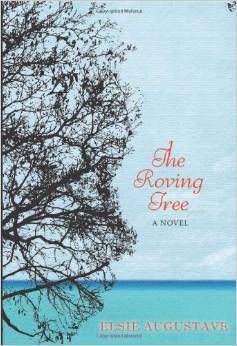
Laura Kaminski reviews Elsie Augustave’s The Roving Tree

Cover of Elsie Augustave's The Roving Tree

Elsie Augustave’s The Roving Tree (Akashic Books/Open Lens, 2013) is a masterful work of fiction, meticulously researched and exquisitely written. Despite the publisher’s statement that it is “told from beyond the grave,” the narrator’s voice is flawless — I kept feeling I was reading creative nonfiction, a book that should share a shelf with Maxine Hong Kingston’s The Woman Warrior, Elizabeth Gilbert’s Eat, Pray, Love, and Maya Angelou’s Letter to My Daughter.

I literally stood up and shook myself to break the spell after the deceased narrator brought the story to a close during the final few pages. My next thought was: This book needs to be taught to university-level humanities students: students of political science, history, sociology, anthropology, comparative religion, African / African-American / Haitian studies, women’s studies — and literature. Above all, literature. Timeless, insightful literature that teaches us about our history, our culture, our social mores, the barriers created by our own unnoticed preconceptions and ingrained prejudices — this book belongs with I Know Why the Caged Bird Sings (Maya Angelou) and To Kill a Mockingbird (Harper Lee).

Continue reading

Short story from Rachel Stewart Johnson


Errands


The veterinarian’s office had a noxious odor every time Angie Pell stepped inside. The odor was so strong that Angie found it hard to continue without a frown, and the frown would involve both the gray scoops below her eyes and the muscles that lined the back of her neck. She wanted to cover her mouth, and she wanted to provide commentary – good Lord, she wanted to say, before telegraphing her near-nausea via the sustained parting of her lips. She had never thought to worry about what caused such a foul smell. Her six-year-old daughter, Katie, introduced this concern.

“Why does it smell like throw-up in here?” the little girl wondered, not fifteen seconds in.

“Oh I think maybe that’s just medicine it smells like.”

“It smells like a baby died.”

Angie scowled. “Oh, Katie, please. Yuck. Come on,” she said. Angie looked at the only other patron in the waiting room, a woman whose likely age advanced the longer Angie studied her. She had passed fifty when the phone rang.

“Front Range Veterinary Clinic. Good morning,” the receptionist behind the front desk answered. Angie rolled her eyes. The receptionist was silent, the phone to her ear. Angie had to look away. “Hello?” the receptionist tried again. “Front Range Veterinary Clinic. Hello?” Angie rubbed her temples and spoke to her daughter.

Continue reading

Fables from Laura Kaminski

Fable Six: Dance

The dervishes are blown across
the desert lands like seeds,
they gather at the shrines
of Sufi saints to dance and pray,
they spin with arms stretched
up toward heaven, sprouting,
reaching for the light, longing
to learn to photosynthesize.

Fable Seven: Destruction

regarding the death of an oak in Syria, November 2013

Some call our dancing
heresy, took the shrine
at Atme, with their rifles
turned back those of us
who came to pray.

We gathered, then, within
the nearby shade of a large
weathered tree, made
our ablutions, spread our
carpets on the sand.

They came with axes,
proclaimed jihad with
chainsaws, toppled
the hundred-fifty-
year-old oak tree.

We take our mats—
the world is filled
with other places
to face the qibla.

Before we leave, we
turn and greet the angry
soldiers: Peace.

Continue reading