Kahlil Crawford reviews Lisa Stalvey’s memoir Food, Sex, Wine and Cigars

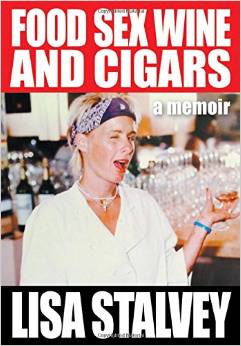
 Cover of Stalvey's memoir. Photo of author with a bandana standing in a kitchen.


A renowned chef, Lisa Stalvey spent the past eighteen years of her life penning her independently published cookbook-to-memoir, Food, Sex, Wine & Cigars.

A raw, experiential self-reflection; FSWC, to me, is more than a mere book – it is a Movement. Lisa embodies the literary risk-taking often absent today – a reality she, certainly, can relate to as a culinary innovator.

A personal memoir, in itself, is a massive undertaking; and to pen one, in lieu of culinary trendiness, is quite admirable. Reading Lisa Stalvey is like working in the culinary domain she previously mastered – spontaneous, intense, unpredictable, shocking..

One can never fully understand an artist’s creative process, but Food, Sex, Wine & Cigars is guaranteed to fulfill.

You may order Lisa Stalvey’s book here: 

Poetry from Michael Robinson

Fall Day

The noise of the summer is over,

The breeze of fall showers of leaves falls over me,

I’m left with a sense of wonderment,,

My spirit is captive by new emotions,

Old fears dissolve into something that has passed by,

Watching for a sunrise that I now can see,

The summer with its heat,

As the sweat falls down my face,

I can remember the gunshots,

But it’s different in the fall,

As I reach maturity,

It’s refreshing to watch the moon’s glow,

Darkness has its own peace.


Continue reading

Essay from Shannon Snyder

Whitehall

I descended into Euston station, pulled further down by the fast pace of the crowd on their way to work, just like me. The escalators took me further and further underground and I quickened my pace as I followed the throngs of people onto the platform. I glanced to my right at the giant sign outlining the blue veins of the Victoria Line, confirming that I was going the right way. I strategically made my way to the ends of the platforms, where I tried to convince myself that there were fewer people here and thus a shorter wait time. I stood behind rows of Londoners, listening to the cries of the worker who stood at the edge of the platform. He stood in a bright yellow vest, calling loudly for passengers to keep away from the platform, and blowing a sharp whistle to signal the closing of the train’s doors. I heard the automated, pleasant voice telling me to mind the gap, the whoosh of the train as it departed, and inched closer to the edge of the platform and my turn to board.

I could finally step into the train compartment, and pressed forward with the many other bodies. It was rush hour, and the passengers made themselves as compact as possible to allow room for the new people getting on. Today, I was lucky enough to snag a spot next to a pole to hold on to. This immediately brightened my mood; I was too short to reach the handles that dangled overhead and usually only had the wall of bodies around me to keep myself from stumbling as the train lurched forward. I had four stops: Warren Street, Oxford Circus, Green Park, and finally Victoria. With each stop, pedestrians came and went; there were businessmen with long, expensive-looking coats and perfectly trimmed haircuts, young men and women in casual dress, often with a book or headphones in, and always people sitting with their eyes closed and heads tilted back. I surveyed all of them, in wonder of what they wore and what they read and where they were going.

Continue reading

Poetry from Michael Robinson

A Change of Seasons

It is time for a new view of the seasons in my life.

As I get older and my hair turns gray and my bones crack,

I get older with the passing of the seasons.

Looking forward to spring as the winter snows cover my balding head,

Finding refuge in the room with the fireplace burning the coal of yesterday,

It was warm in that room with the one book and one chair.

It was only yesterday that I rode my tricycle and flow down the hill,

Alas, yesterday with all its promised tomorrows,

Yesterday with all its promises of a better life,

And the seasons change and I grow too old to care.

Continue reading

Essay from Shannon Snyder

Mosaic

Under an uncharacteristically clear London sky, I looked behind me as I rode across the playground on a pink scooter that was much too small for me. I was being chased by two three-year-olds, the make-believe cops in rapid pursuit of their robber. They shouted stop, stop! and I slowed down only enough to keep myself a foot ahead of them, mocking fear at my inevitable capture. In this moment, as I smiled broadly at the children chasing me, I realized how much fun I was genuinely having. In this small, enclosed playground in Westminster, everything had changed.

I was intimidated by the families that came to Cardinal Hume at first. They were all impoverished, and many of them recent immigrants. As part of my internship in the day care center, I would be taking care of their small children twice a week. It seemed strange to me that in the heart of Westminster, among the high rises and only blocks from Parliament Square, there could be such poverty. However, maybe it shouldn’t have been. In the past twenty years, the number of immigrants in the UK has doubled to 8 million, with a third of these people living in London. The city is one of the most diverse in the world, and people have come for reasons that are as numerous as their origins- for work, refuge, profit, personal development.

Immigrants have not been received warmly by many native Brits, who feel that they’re losing out in the competition for jobs and housing; politicians have added to the tension. Prime Minister David Cameron pledged in 2010 to pass legislation that would limit the number of annual immigrants to below 100,000; the current number of migrants is three times this. The United Kingdom Independence Party (UKIP) plans to go into the next election with a promise to ban any immigration in Britain for five years, while immigration policy is rethought. While London does hold a great appeal for many foreigners, many of these people struggle with the politics and ethnic tensions of immigration.

Many of the families I met at Cardinal Hume were immigrants from Eastern Europe or the Middle East. Their origins and thick accents, as much as I tried to deny it, did make me uncomfortable in the beginning. Back in Iowa, I had never been around people of a different religion or culture, and I was nervous that I wouldn’t be able to make a connection with the families. I looked through the glass doors that led out to the small playground, and the iron gates that surrounded it. I watched the women in hijabs as they pushed strollers through the gates and down the ramp from outside each morning, small kids teetering behind them. I often wondered what their hair looked like underneath the scarf; was it cut short or long, of a dark chestnut color, curly?

What would these women think of me, a young, foreign girl? Will they hate me because I’m American? I worried that these families had been displaced from their home countries because of political unrest or wars, which the United States may have played a part in. What if they were from Iraq or Afghanistan, had family who became casualties of war? Or the only American they ever saw was dressed in combat gear with a gun in hand, and the images of war would forever smear their perception of the US? However, the women scanned me without recognition; perhaps they saw my blonde hair, blue eyes, and fair skin and thought that I was another one of the Danish students who came to Cardinal Hume for a student teaching opportunity.

Continue reading

Poetry from John Grey

THE HEART OF MY MATTER


My love is sluggish,

crawls up in dark corners

where it won’t be so easily seen.

For it fears exposure.

It’s even terrified of the warm

that dwells within itself.


For the longest time,

my love was a bird on a branch

freely trilling.

Then it was a salesman going door to door.

Now it’s like the least likely suspect

in a mystery novel.

It may be guilty

but the neutral observer

will gravitate to a more likely perpetrator.


My love is here – I can see it –

in this man’s face in the mirror.

But, whenever there’s an audience,

it’s like a magician

whose disappearing routine

has become his life story.


My love is tenacious,

I’ll give it that.

It can cling to a wall like a praying mantis.

It could live down between the floorboards

for a thousand years.

It just doesn’t like company.

Is that so wrong?


Every now and then,

a woman says that she returns my love.

It’s a wonder I don’t confuse it with a library book.

Actually, I did once but the overdue fines became intolerable.


Continue reading

Ryan Hodge’s Play/Write column

Play/Write banner

-Ryan J. Hodge

For someone who enjoys a great story, is there anything better than a narrative that engages you from the very start? Imagine a world so rich you can almost smell the scents in the air, a delivery so clever it forces you to think in a way you never thought you would. I’m Ryan J. Hodge, author, and I’d like to talk to you about…Video Games.

Yes, Video Games. Those series of ‘bloops’ and blinking lights that –at least a while ago- society had seemed to convince itself had no redeeming qualities whatsoever. In this article series, I’m going to discuss how Donkey Kong, Grand Theft Auto, Call of Duty and even Candy Crush can change the way we tell stories forever.

What Video Games Teach Us About Writing For Addiction

First things first: This article is not about video game addiction; it regards what we can learn about addiction from video games. Okay? Okay.

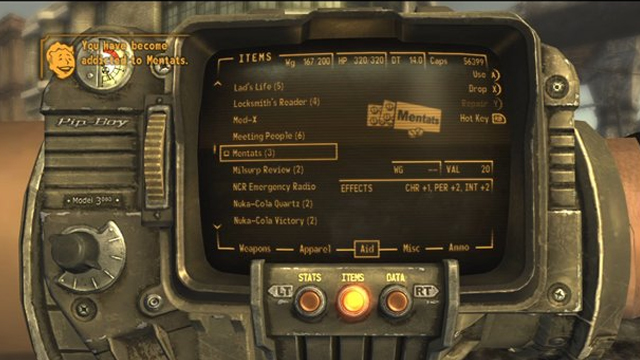
Video games, in general, tend to handle substance abuse rather poorly. “Drugs” (such as they are) will usually have some sort of status bonus in the short term, with a lingering status hit in the long term in what is supposed to be a simulation of “High” and “Withdrawal”.

In real life, however, there’s no handy pop-up alert to inform you when that alcohol you imbibe “only socially” has actually become a problem.

Though I’m sure Google’s on it.

Though I’m sure Google’s on it.

Addiction cannot be adequately simulated with a status effect or a woozy camera; it’s something that gnaws at you constantly. It’s all-consuming, almost impossible to ignore unless you’re actively gratifying it.

So if video games are doing such a bad job, why am I bringing them up as an example of addiction done right? The answer may surprise you.

Continue reading