
-Ryan J. Hodge
For someone who enjoys a great story, is there anything better than a narrative that engages you from the very start? Imagine a world so rich you can almost smell the scents in the air, a delivery so clever it forces you to think in a way you never thought you would. I’m Ryan J. Hodge, author, and I’d like to talk to you about…Video Games.
Yes, Video Games. Those series of ‘bloops’ and blinking lights that –at least a while ago- society had seemed to convince itself had no redeeming qualities whatsoever. In this article series, I’m going to discuss how Donkey Kong, Grand Theft Auto, Call of Duty and even Candy Crush can change the way we tell stories forever.
What Pokémon Teaches Us About Coming of Age Stories
‘Coming of Age’ or ‘The Rite of Passage’ is a staple in literature. Some of the most successful literary franchises have centered around a neophyte being thrust into a world that is equal parts incredible and terrifying. From Treasure Island to Harry Potter, there is a quintessential and visceral connection with the audience to be exploited with plot structures that amount to little more than just explaining how the ‘world’ works.
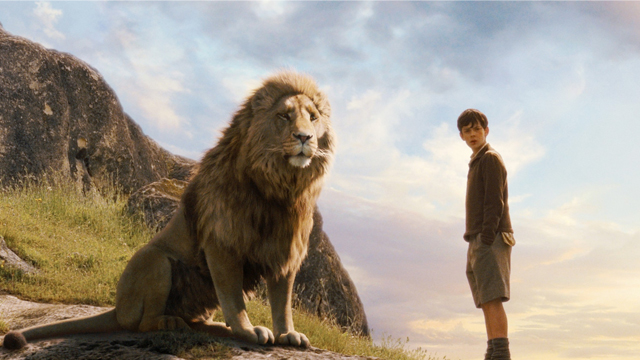
A lion! Thank God! Maybe the wolves will leave me alone now.
This genre, typically, is associated with teens and ‘young adults’, who (while perhaps not facing trials quite so fantastic) are learning in parallel with the characters how their own world works. Such stories allow an escape from the mundane daily routines of suburban living and imagine what it would be like to grow up in a place altogether more exciting.
It is little wonder, then, why Pokemon exploded in the mid-nineties and still commands a strong and loyal following even today. While, on the surface, Pokemon is a silly little game about battling monsters; its stories are coming of age tales at their core. In this series; players must explore, study, and experiment in order to reach the objective of becoming a ‘Pokemon Master’.
The first element we’ll address is exploration. One of the hallmarks of youth is discovering all that the world has to offer, including the dangerous and forbidden. The call to adventure, even ill-advised adventure, is a strong one. Take The Hobbit (J. R. R. Tolkien, 1937) for instance. The weakest element of the plot is, perhaps, the fact that Bilbo Baggins simply allows himself to become a part of the dwarves’ adventure despite having no desire or qualifications that would predicate his inclusion. Yet, despite the many hardships that will befall him; not only he, but the audience, are determined to see the journey through. Conceivably, Mr. Baggins could have turned around and gone home at any point. Perhaps, in fact, that would have been the rational thing to do. But he simply must see what lies in wait at Mirkwood. He simply must see a dragon for himself.