Poetry from George Sparling


                                     The Ventriloquists’ Terrorist


    There was a clear distinction between my subvocal, or, silent speech, and the words the


National Security Agency laid inside my brain. I wasn’t myself anymore. That’s not a


ridiculous assumption. Now, I hate to unload my mind. I’ve managed to shut up for a


few hours- reading, listening to jazz on Spotify on my headphones, but, sooner than


later, the NSA’s words must speak. They’re in control of my lips, my voice box, my tongue, my glottal


stop, my teeth, and my palate. It’s painful and I hope it’ll go away.


    If I put faith in my subvocal, silent speech, I can break the chokehold of the NSA. I


am not unlike other Americans- Americans who will not kiss the bloody flag. Digging


beneath the superficial, so many citizens have the power within them to alter the regime’s


power. Depressed and repressed for what seemed like epochs, we owe it to our sense of


decency to clobber the digital dictators. But not without a fight. 


       “What’s with the frown, Marty? It doesn’t do justice to your handsome self,” Pam


said. She was concerned, exactly the reason why I liked her. I hadn’t wanted her to become


embroiled in my internal affairs department–that region in the brain’s left hemisphere, the areas of


Broca’s and Wernicke’s, regions from where speech production stem.      


    I sealed my lips, clamped my teeth, but still, my tongue moved within. They’re


not my lips and tongue anymore, but they belong to the National Security Agency. My own words

have spieled out ever since I was two years of age. That’s what I did–I talked, and the NSA


stole my words like its agents were Hermes, the thief. I won’t bow down to


mythological hubris. Pam might have other ideas about how false my words sound,


streaming as if from a stranger- a foreign entity- You -the NSA.


    But the ventriloquists wanted to snatch me from Pam, who had so far stood by my side,


who hadn’t crossed enemy lines, and who mistook them for me. I had to speak sham-speech, but it was the


enemy within who had dictated it:


    “The National Security Agency has embedded words into me that are not my own, right now, as I speak, Pam. It’s an


operation to try to make random persons say they’ll commit terrorist violence.”


    Pseudo-speak compelled me to say that. Pam massaged my chest. She pressed her


hand on my heart and ran her fingers up and down my legs. She kissed my lips and touched


them delicately. She imparted familiarity, and allowed her sensuality to detect my fraudulent


words. At least now she knew the difference.


    “You’re talking paranoia,” she said, though speaking without condemnation, her voice strong


and sympathetic. I touched her throat, feeling the vibrations of her voice, as she uttered those three


words. Then I released my hand and watched her, a non-drinker, toss back a cup of vodka.


    Her face always looked kinder among persons, though unhinged in some way, like persons


with classic symptoms of paranoid schizophrenia. I hadn’t a serious mental condition,


but just a minor breakdown. The NSA could have engineered it, noodling around my brain. Testing,


one- two- three, we made penetration. Perhaps I was pliable, allowing a soft touch to affect my entire 


life like a fontanelle- soft and porous, easy to probe, and then control. 


    She worked for a spell in a mental hospital, where she met me-  then a patient. There was


little gap between her mode of thought and her mode of speech and that of mine. After hospitalization, 


we began living together. 


    She played along, saying, “I thought the NSA protected us from attack by terrorists.”


    “This is an experiment, I responded, “and I’m the test subject to verify whether they can terrify an


entire nation into submission. They can manipulate our minds into thinking we’re


terrorists, and not just ordinary citizens.”


    I’d better stop conversational exchanges, or, out of helplessness, she might

get a


psychiatrist to commit me to the same mental care unit as the one in which she fell


for me. That possibility could happen. If the NSA persists in making me parrot their words,


she might even leave. Every time I speak, she hears their words, and not mine, transmitted


from Fort Meade, Maryland, the location of the NSA headquarters. I cherish having freed myself from


inhibitions. Now a ventriloquists’ dummy, stuffed with words not my own, the rush


of imminent death of who-ness swept down and lodged in my mind. It was like a


sore- that, if untreated, would never heal.  


     Outside agitators obstructed my liberated spirit, usurping ownership of my speech.


Don’t I own the copyright for my words? I seek no wider territory except my mouth.


When I said, “stop mouthing off”, that meant you, National Security Agency. I hear you


as I brush my teeth: “We’re the floss between your teeth as you slide it back and forth.


We’re the teeth, we’re your ‘ahh’ after you finish,” I said, as Pam came out of the shower.


    “What’s with the teeth talk?” she said, toweling off.


    “The NSA flosses and talks to the morsels and gristle it removes,” I said. “They like


demonstrating omnipotence in mundane, psychotic ways.”


    “You’re imagining that. Why not see a shrink?” Pam said.


    Shrink-talk was a dirty word, but what could I do? I couldn’t place quotation marks around


these concocted words.


    “Surveillance has taken over, and we’re in control,” they said angrily. I spewed a


half-digested sunflower seed out my mouth. It landed between her breasts.


    “I wish I could help, but please, keep your mouth shut when we’re both in the


bathroom,” she said. Pam drew a line which I crossed. I licked the seed off and she laughed.      


    “I’m not paranoid”, I thought, “but wouldn’t an invasion, using my mouth as Nazi


Quislings, as their collaborating mouthpieces had during World War II, make one


approximate paranoia? You’re foreign, NSA; You have no passport or Visa; You’ve


employed high tech surveillance, and it hampered me to speak my own mind. If only


guerrillas could hit you where you’re the most vulnerable, when NSA employees are getting into their


cars after their shifts. But that’s hardware, and I’ve got to think software, I’ve got to go digital just as they


have. Catastrophes brought out opportunities, the insurgency builded like plaque on my


teeth, but not your plaque.”


    I thought, “Russia lost its Soviet Republics, and you also will surrender territories you once


had. You may move lips now, but for how much longer? When you told the world that I


had violent thoughts, you were an accomplice to murder. It’s not I who had to serve time in


a Super Max, but you. Today, when I introduce a fake stutter your mouth isn’t


prepared for, you creep in through my nostrils, not unlike a prisoner force-fed by a


feeding tube, which amounts to torture.”


   This morning, I gagged. I coughed. I couldn’t breathe. I had an asthma attack, and I


nearly choked to death- a morsel of food had jammed down my throat. Pam administered


the Heimlich maneuver, reaching from behind, and pulling hard on my stomach. The


obstruction flew out.


   “I could’ve poisoned that drink.” Those were words from the NSA, not mine. Pam was the last person I’d want


dead. The NSA had played around with lives, and made Pam think I was psychotic. She grabbed the


bottle and poured herself another cup of vodka.


    “Don’t try to be someone else.” Pam twisted her hair around her fingers, and her face


turned ugly. “What’ll happen to you if you don’t stop being somebody else?”


    “I have big plans,” I said. “But I don’t know what they’ll make me say next”.


    Pam’s eyes were red-rimmed. “What kind?”


    “Helpers will strap explosives around my body, so I can detonate the Statue of Liberty.”


    “Are you telling me the truth?” Pam asked. “Why would the NSA let you get away with murder?”


    “They foment terror, they don’t stop it. In two days, ka-boom.” My subvocal words began to


be retrievable. I added, “Do you hear trucks outside? The people who will strap on the suicide


vests are getting out.” I never heard anything, just used words on point- military lingo.


    “No, I don’t hear them. I hear birds, I hear wind blowing through trees, I hear you asking the


question, I hear you saying, ‘Read alternative media, even mainstream media. People will rise up


against digital totalitarianism’,” Pam said.


    “Yes, Pam, I said those words.”


    A small university such as this one gathers ten thousand protesters against the NSA.


    I don’t hear NSA-Speak anymore, and in a speech on the speakers’ platform, I said,


   “These are my words today, and not those packaged into my mind by the NSA.”   


    Another speaker took the mic. I gazed at the crowd, and thought, “You’d better be


certain they’re your words when you talk.”


George Sparling is a writer from Arcata, CA and can be reached at gsparling@suddenlink.net


Prose piece from Shelby Stephenson


FORTHWITH  − LAMENT:  TO ATTEMPT A MEDITATION ON GUNS     


Violence seems snug over time.  And I can’t say how much depends on GUNS.

In what he called “the old days,” my father would hunt lizards.  His grandpa Manly, my

greatgrandfather, would make arrows from reeds out in the reedmash.  My father would drive a

nail or steel spike into the end of the arrow and stick it with gum he got off a pine tree.  He’d

twine all that, and then take a Dominecker Chicken’s feathers and wing the arrows.  He made the

bow from scalybark hickory.  Gray lizards would run the rails and he would hunt them.  He

called the streaked lizards “racehorses”, they filled the hedges.  He said cats cleaned them out

of this country.  Those blue-tailed scorpions – cats got them too.

Guns meant “hunting,” when I was growing up.  The old people worried more about a cat

doubling up in the dirt (this was before lawns) than a gun going off.

There is a stanza in Leon Payne’s song, “The Selfishness in Man”:

          “Little children painting pictures of the birds and apple trees –

           Oh, why can’t the grown-up people have the faith of one of these?

           And to think those tiny fingers might become a killer’s hand!

           Oh, there’s nothing that stands out more than the selfishness in man.”


I think about how I grew up, following the hunters, becoming one myself, my Uncle Reuben

(he married my father’s sister Mary) lending me $16.00 to buy a full-choke, 12-gauge Iver

Johnson at Farmer’s Hardware in Smithfield, North Carolina.  Uncle Reuben knew I was ready to

hunt with the men and my father did too.

I learned as the years went along that killing anything was not my thing and that I went

along to be part of The Story; yet I always took pride in my Iver Johnson.  Maybe it represented

and still does, a big part of my childhood.

I don’t know.  Hunters enjoyed having me around.  On dove-hunts they would let me shoot

their Browning Automatics.  My single barrel was my way.  And I learned that I would much

rather be alone, sitting on the ridge of just-cut tobacco stalks.  I even felt comfortable in my way,

since I knew I was the only “hunter” who might have eaten squirrel-brains or pickled pigs-feet or

barbecued possum or the soft feet of pullets my mother stewed for me to eat, because I was the

“baby” in the family, my older brothers and sister and parents having first takes on the meaty

pieces.

I don’t know.  It’s  just as though Leon, the ex-marine (this really happened) stops his

“Dove Wagon”  – that long hearse-like Pontiac – one more time and I really do see the four

plastic doves wired to the rack on top.  He asks me, “Beer-stop – want one?”  It’s Saturday

afternoon, hot in September’s throes −  and I am invited to join the hunt, what with Uncle John

asleep on his upturned bucket in the ironweeds in this ten-acre field surrounded by hunters, some

of them with radios tuned to the football game in Chapel Hill.  Leon (in charge of the

“Beer-wagon,” too) makes his rounds.

The dentist has already killed a pigeon − this after he put his first-killed dove in a sack

stamped Southern Pines Dove Club − and he places the bag on the ground next to a cornstalk

and there is a rattle and that bird gets its second wind and flies off into the blue, the paper-sack

thrashing to remove itself.


Uncle John wakes up.


“Shot any today, Uncle John?”


“Yeah, I crippled one up pretty bad.  Running him down I was losing weight

and that bird was gaining strength − took me four chocolate bars to get back here to my seat.”

The ex-marine has already put me in my place.  Wearing an orange shirt, I appeared

in the A & P parking lot to go on the hunt.  “I see we got a deer-hunter with us today!  Don’t

make any low shots and don’t shoot any more pigeons.”

That was the day Harold Brady packed with home-made shot my single-barrel Iver

Johnson squirrel gun and stationed me among the sunflowers (a baited field).  He got where he

could see me shoot, the stock of my gun flying off and my left shoulder turning bluer every time

I cocked the hammer and pulled the trigger.  I stayed awake, thoroughly, never letting on I knew.

Eating dove’s another thing.  Seems like they taste better when you don’t go with The

Club − about twenty men − the latest weapons in their arms, plus, attire perfect for an ad in

Eddie Bauer.

Could my mama Maytle evermore fry dove!  That’s my preference.  Smothered in a wine-

sauce they smell like the inside of a paratrooper’s boot.  To think what muscles fly as beaks coo.

O mourning dove!  Are you a gentle love?  Hovering around the house, do you presage death?

A dove can dive with the conciseness of the purple martin.  Maybe not as fast.   Some of

the old-people used to say “Turkle-dove.”  Oh to symbolize such harmlessness and innocence

and to be hunted and shot for the table!  To be so well-contented as the dove!

Check this sauce it will lie in:


¼ lb dried prunes

1 onion (sliced)

1 bay leaf

6 pepper corns

½ pint (1 ¼ cups) red wine

4 onions (quartered)

2 ½ tbs flour

1 pint chicken broth

½ tsp salt

½ tsp pepper

Tbs red currant-jelly (optional)

Some Kitchen Bouquet (for browning)

Rosemary, basil, oregano

Put doves in pan:  boil; let cool

Marinate:  put all this in fridge overnight

Put oil, butter, and doves in pan

Fry quickly to brown.

Remove doves:  add onions

Finish frying:  put doves in sauce

Cover for 25 minutes

Add some chicken stock

Serve


Have you noticed the doves the second day of Dove Season?  They fly higher − like

smoking sun-streakers.  They know what it’s like to be shot at.

I feed them now.   I want to say this again:  my 12-gauge’s in the corner of my closet.

I primed sandlugs (tobacco) to pay back that $16.00 loan from Uncle Reuben to buy that gun.

Even at sixteen, I could feel the atmosphere in my blood, as if it were always hunting

season, right there in that hardware store – men’s chairs, the sacks of seeds.  I had been in there

before; so I knew the regulars.  They would shift their matchsticks.  I knew the conversation

would be about loss and ambiguity, crops and guns, too, divorce or wars, and some untouched

area memory fails to get ready for answers.

I can still feel the wind flapping the sign outside Farmer’s Hardware.  Maybe that is the

answer I keep looking for – among the rivets, the squeaks, tools, laughter.

Come to think of it, I thought all the men I knew were hunters.  Refrain:  my father’s

gun is a 12-gauge hammerless Fox Sterlingworth.  It’s leaning in the same corner of my closet.

His voice starts a story of wild turkeys he shot  – oh those stories he told – how he never got shot

himself, a miracle, he said – I picked many a shot out of the back of my coat.

          In memory I am troubled by the warm blood lightening the carcasses of dead animals, fur

and feather bending, where my hand touches hides stiffening – pulling over the eyes.

I love to see the doves relax around my feeders.

And I cannot forget Leon Payne’s words.  They give a context to my childhood.  And to

think that clematis still climbs the basketball post, leaning now, the vines clinging around a nail

where my father and I cleaned small game, hamstrung, the dogs yelping for the hides, my father,

grinning  wider, pulling skin over bodies, little shot-holes inflamed in tender meat, the cats

behind the hounds – meowing.  My father takes and stores his gun on the rack above his bed.

Now he lies among some lilies.  My mind outruns fyces and foxhounds and the farthest

wild woodscapes, trying to find him, adrift in tales curling from his cigar.

The wind ditches him for simple statements I come up with:   point your gun and fix your

bead.  What draws the people in your head?  Is it something the moon camouflages in shrillest

rune?  A dove flies right into your sight.  Does its grace pull you near its flight to urge you to

shoot what it beckons with your automatic weapon?  Consider the hare returning to its squat.

You have pressed your face against your gun-stock.  In school-class children paint birds and

apples.  Could little pupils be the cottontail, fruit, and trees?

I think about our basset, Oliver that never heard a gun.  I got him for hunting in places

Memory counts for nostalgia – those guns and dogs − part of my past.  Oliver!  Hunting dog and

house pet!  In the house he would nip my mother’s heels, as she walked by his bean-bag.  A

territorial basset-hound?  The vet said, “How odd for a basset − they usually lounge like

molasses.”  Oliver wanted to be head of the pack.  I’m not sure he ever heard a gun.  He would

not have been afraid, I can tell you that.  His allegiance to me was his lasting concern.

What I am trying to say is this:  On Paul’s Hill − where I was born at home in a

three-room shanty of a plankhouse I have restored and where my wife Nin and I have lived since

1996 in a “modern” brick-ranch home my parents  built in 1952 − the romance of the hunt is

dead and gone.

In some ways, however, I took after my father.  I am basically a storyteller.  I never really

loved to play checkers, though.  He was a champion player – he played in tournaments. He  loved

to play by himself, playing himself, talking to his “men.”  His checkerboard is on a table in the

plankhouse.  The checkers hold dust inside a Three Nun’s tin.  When I was a boy – is that his

voice?  Or mine?

          I’d make every shell count.  I’ve killed more squirrels since I was sixty. They are

multiplying in our yard now that you’re gone.  I mean, your backyard, or Grandpa Manly’s or

Pap George’s, or David’s before George.  The sign at the driveway still reads:  North Carolina

Century Farm.  I know every foot of this land.

I’d go slow, not pop any sticks and I’d hunt when the wind was blowing, if I could.  When I

was seventy-nine, I felt invisible.   If you don’t make a racket the squirrels will come to you.

Creek’s so open they can see you.  They stir around early in the morning about light and in the

evening about an hour before dark.  When you see one, don’t raise your gun.  If you do he’ll see

you?  I have me a piece of old tractor inner-tube I sit on.  I saw one within a foot of his hole one

time.  I took thirty minutes, slipped up on him.  One way to do is stagger the trees. Get a thick

place on him.  If you rake the trees, you’ll be heard.  And work the branch. 

Go down it?

           Ease along and watch the ground and trees. When you catch them not looking, that’s the

time.  In the Beaver Dam one day I saw five in one blackgum.  One turned and headed to Bob’s

Field.  They didn’t know what was happening?  I shot four out.  The fifth come back and I shot

him out.  Another day I got in the run of the branch with my boots so I wouldn’t make any fuss.

One squatted on a limb.  I scraped his head and he fell in a mud-hole and went around and

around.  I saw another one on the ground.  I shot him:  I know I hit him.  He went down on the

ground to die.  He was hurting so bad up there in the nest.  I sat there an hour and that squirrel

fell out of the tree kerrchoog.

Shotguns revisited?  The scene: my father looks up from his board − Crown me, Son, and

then he drifts:  When I was a boy, guns were mostly made by United Arms – Knickerbockers and

Bay States, Big Columbias with old-mountain barrels.  I got my Bay State from Mink Coats.

We’d shoot spots:  I put as many holes in the paper as the Columbia.  I’d take eggs Maytle

would gather and trade them for shells, got paid 50 cents a box for 25 eggs.  Then I traded my

Elgin watch for an old Remington, hammerless. And I owned an Iver Johnson one time,

the sorriest thing I ever toted in my hands.  

          Grandpa Manly bought me a Muzzleloader from Old Man Bill Turner Holland.

It cost $4.00.  One tube was busted.  Old Man Holland made me a new one.   That gun would

kick the tar out of you if you packed it with too much powder. One time Oscar Poole carried it off

and filled it up – I didn’t know he’d done that.  I shot a fox-squirrel. The boom knocked me clean

back in a clayroot.  I liked that gun, though, had me a shotgourd, with a corkstopper in the end.

          I’d buy black powder; keep the powder and paper in the gourd.  When I was grown

 Ma made me a shotbag from oilcloth that got worn at the edges where it fell over

the eatin-table.

          I’d dose − he’d shift his blackgum twig, set the checkerboard on the coffee-table.

Your greatgrandfather, my grandpa Manly, let me hunt with his musket.  He served in the

War Between the States. He learned me a sense of history.

          Was the musket heavy?

Heavy?  I couldn’t tote it all the way.

How did you carry, what’s it called − ammunition?

Oh – steer horns capped with wooden stoppers kept the powder dry – my gourd held

Number-6 shot and I carried a sling hunting sack at my side:  one time I leaned into the musket,

fired, and the tied paper-wadding set the woods ablaze.  Grandpa Manly beat it out with his

hat. It was a black felt I glanced as I was backpedaling into a clump of sow-thistle.  One time I

saw a turkey gobbler drag his wings, sweeping frost off the ground. Grandpa throwed his self

out straight as a stick below the reedmash, hiding behind that hat, pillowing his chest; he

triggered his double-barreled Bay State packed full of powder; feathers thrashed the ground; he

was over that bird with one booted foot on the neck, another astride him and he shouldered him

home. Did you hunt in cotton-chopping time?

           I’d leave my hoe in the field, get my gun and go down by the rock-quarry.  I saw a turkey

puff and strut his wings, stick his neck up beside a red oak. I couldn’t see his head – he saw me

and left:  I come back home, went back, he was in Finch’s Mash; I moved along the lowground

fence, holding my yelper of thin maple; I could mock a turkey exactly, clucking twice on my

caller.  I could hear him coming; I planted myself at the Simmon Tree Hole along a fence near

an open space.  I could almost smell him – hammer cocked and ready, I heard him again.  Like a

lark he flipped back across Middle Creek.  I went home, thinking of steak-gobbler breast. 

Maytle cooked me some fatback. With molasses it was out of this world.

           Consider my father’s world − his thirty-five hunting dogs named mostly for movie-stars

of the 1950’s − with the Newtown “comforting dogs.”   These are the dogs that

soothe the fallen ones with Love which lifts Comforting to a Vow − Love being the soul of

golden Chloe, and of the little children, parents – hours dedicated to families:  those dogs are

more than dogs – Addie, Prince, JoJo, Kye, Ladel, Luther, Moses, Ruthie, Shami, Isaiah –

Barnabas, Chewie, Addie, Hannah, Abbi − plus the pup, Isaiah, a child’s rave, as beauty begets

the Golden Retriever, first a gundog:  trained to love, its brave and tender disposition’s

Obedience. And consider Isaiah.  This Golden Retriever pup wowed Newtown.  And the adult

Goldens acted at ease to set the scene. Comfort makes sense possible.  These animals bring some

closure to horror.  Isaiah − the “helper” − learns from his companions – after a shooter goes crazy

with guns and weapons and and kills elementary school-kids and the ones who teach.

Somewhere in Memory, the K-9 Parrish Comfort Dogs visit all children.  They do not

wonder if dying’s final.  Hearing the call of Sandy Hook’s doggies-in-training, the boys and girls

pet and hug Isaiah.  They salvage embraces and kisses from brothers and sisters and friends who

feel better in that atmosphere.  Their grief is not in vain.

My father never grieved for animals he killed.  He never wore red either, or rode

nobly-looking on horse or mare.  He wore mustard-colored pants no briar could tear, thick

ones – turned him into a stop to wobble and deaden the way, excepting the hounds, a rabblement

ahead of the game; instinct served him like a potion the minute the hunting season opened.

When the cottontail returned to its lair my father was waiting there to fire. Our eatin-table

swelled my mother’s head.  He drank a toddy of pure apple brandy and his face turned red.

Every day now I get up and walk out to the plankhouse I was born in.  I can see clearly

Beaver Dam Swamp and Cow Mire from the high porch.  I take in the health and sickness of the

past and turn my meditation over to the mouse scrambling toward the crack in the window-sash.

Peace, I believe, comes and sits down for a long spell on the porch where my father’s

hunter-stool sits, empty, his gun in the modern house, well in its slip-on cover in the

corner-closet, silent among the clock-ticks.  I stand on that porch under the tin-roof in the

mizzling rain which makes me see farther than I can see into sacrifices my ancestors made for

the road, their low way through and around the clanking chain-traces, the mules (Black and

Gray), the tractors (Farmall), the land – and oh the faces on the wall of the living room of my

plankhouse – voices – of my tongue’s load.

I make up a song for my father; call it “The Song of Father Paul, S R,” as he loved to

call himself:


The old man, my dad, Paul, S R

Was a farmer who fished

And he hunted, too, for the table,

Always wanting to smell the steaming dish.


The needle-nose, sloughing, he hulled

And ate like it was salmon.

I mean, if he hooked a gar in Middle Creek,

He kept it – a trophy of memory.


He put that catch in wet burlap

To make sure not a one flopped back

Into the creek (my brother Paul

Lost a three-pound bass that flapped –


And bounced the bank into the creek,

Paul grunting and stomping all the way down

To the water − bubbling gone, gone, gone)

And Father Paul, S R, a swan,


Waving his arms all of a sudden,

A feathery drool his White Owl cigar.

Lord, I was laughing too!

The scene was really bizarre.


Oh my solemn Paul, S R

I knew from the time I was born,

Almost:  those years I can’t recall

I make up from others whose torn


Memories stick in my mind as my own,

The guns, I mean, hunting guns

(The word resounds real bad today)  –

It’s hard to write Newtown and come


Out clean, for the exploitation of arms,

More than any farewell can say

In words what currents grief

When children, shot, die in disarray.


Paul, S R never talked about “protection.”

Why the plankhouse I was born in?

We never locked, as I remember,

And few would dare shoot people – pure sin.


My song breaks into a swoon,

And bends lament for us humans

Whose actions might bother the NRA

More than the local Shooting Range.


And I am dislocated again;

Yet, as if you could see my father

In his hunting-pants, holding game

He would clean − or fish he would lather


To scale and prepare, no matter for someone

Else who might say – trash −

Hear me:  those days are gone:  his guns in the corner

Of my closet sunlight touches from a window-sash.


And so I end my lament.  My father leans back and tells again how it was – the dogs

and guns and men:

“Shoog had a bitch named Lemon and a Walker called Fancy.  I had Dinah, Blue, Bob,

Cora and Sing.  Sing was a beagle for the briars and thickets and Pa gave me Smoky, a redtick,

his voice thick as greased syrup.  Waylon Parrish had one he called Old Lawyer.  He’d figure out

the track; Waylon would holler – Hoiiiicckkkkk.  Hunter Bethune’s Judd had a mummer’s voice,

prettiest music I ever heard – choice.  And there was Rock – snow-white – sounded like a horn

on a duck.”

           Hair would rise on our heads while the Houstons moiled around the truck.

I’d close my eyes and he’d start again.  I could hear my voice in his – the bell-voices

coming back to me through sweetgums.  Suzie, short, blue-speckled, brought up the rear –

torsos of dogs gracing logs.  There was Black-With-The-Lion’s Voice swimming up Black Creek

where the fox took a turn, his space close to the posh fences of settlements, all wired; Jeams

grabbed one, it just sizzling, his jumping fists holding on, Holt Lassiter, hollering, “Dogs can’t

catch that Red!”  Hair would rise on our heads while the Houstons moiled around the truck.

Cora comes out of the woods near a nursery.  Bob holds the red fur in his mouth, dangling

like a sock he nurses, his jaws running over the South, the little bones never making it to the hole

the fox tried to take, the pack pushing him tight for eight solid hours.

It starts to rain and my father blows his horn and calls the dogs.  Slobber Mouth (my father

said he could outrun the Word of God with the Bible tied to His tail) and Wildgoose come along

fresh and sour at once, trying to jump another in the mash.  Hair would rise on our heads while

some dogs moiled around the truck all morning.  My father’s forgotten his hearing aid again.

He loved to get up before light to hear the dogs run.

I’d barely get into my breeches, as I heard − or sensed I heard − that red running in a

pattern around Paul’s Hill – absurd I thought; yet there he was – loping – moving his head, right

slow, left and right.  He looked just like a bird a new pack was raising to a height to behold, the

fresh dogs unable to hold their eyes on his tail, a bright red blur bearing down – and he could not

find his hole.  The hair would rise on our heads while a few dogs moiled all morning.

           In my head I hear my father everywhere.  Now he’s hiding in the lap of a footlog.  A little

snow has fallen and I see a turkey track; a man named B. Ryals thinks my father’s a turkey and

he pulls down both barrels and another man appears in the shape of my grandfather.  My father

calls him Pa; the story gets all mixed up in innocence and tall tale.  Dr. McClemore gives the

shot-man a pocket of pills.  By now the hair on my head stays in place. 

Turkey-wings appear among the yelpers my great-grandpa Manly makes out of wings.

The little bone he sticks in a cork, working well the end of a coffee-pot spout.  A gobbler sits up

in a wing-backed chair in a dream.  Feathers spread among my mother’s

fingers.  She’s sewing cloth around the butt-end of the turkey-wings.  Finch’s Mash gushes with

gobblers flipping lark-like across Middle Creek.  My hair stays in place all through

Thanksgiving and cotton-picking time.

No more the fox jumped in the rain.  The Fox-man slumbers among his pack.  No more the

run to the hole mid-morning.  The vision of his victories is shown to him.  No more the calling of

the hounds.  It seems to him they appear in human forms. No more Slobber Mouth and

Wildgoose and Bob and Bing and Ginger and Bette and Sing and Atlas and Butler and Tony

heading back to Finch’s Mash to jump another.  The sky seems a hue brighter than any he’s seen 

in the mash. No more the prettiest music in the world − forgetting his hearing-aid battery,

wishing he could be knocked in the head.  Covered with his Stetson, he startles from sleep.  No

more surprises of mustard-colored dogs lying alone, and Rufus Jones saying, “Back broke.”

He hears a call from heaven, he thinks, “Paul, the shades of night vanish days.”

No more stories of putting the invalid dog on a guano-sack and then in the cab of his

truck – wait –!

            Name was Spot.  At home I kept him separate from others.  He’d drag around, actually 

got to where he could walk.  After a month or so he could move pretty good.  His hind-end was 

warped up but he could run!  He put him in the kennel with the other dogs, took him hunting

with the boys and that was when he learned Spot was a cutter.  Spot wouldn’t bark unless he was

in front of the pack and when he got there he would blow that bugle.  It won’t long before the 

other dogs were following Spot.  One time they run a red for four days.  That fox’s ass was 

cherry red – I saw it twice.  And Spot solid put the heat on him.  I had to get some sleep during 

that race; so I went home, started to pull off my clothes, but the music was so pretty I got me a 

five-gallon bucket, took some coals outen the heater and put them in the bucket and I sot on my 

front porch, warming my hands, listening to Spot lead the pack to the fox.  When I got up about 

light I heard the dogs still singing.

          Said he put his breeches on and ran out on the porch:  That red was running in the same

pattern, circling my plantation:  I saw him!  He was loping, moving his head, right slow, to left

and right.  He looked like a bird.  I didn’t want to run my dogs and Spot to death.  Funny:  he

said the fresh dogs couldn’t keep that fox.  He run in a hole, and as far as I know, he ain’t come 

out yet; because, if he had, Spot would be burning his tail.

          And soon he said I’ve about wed my row − keep my grave clean at Rehoboth.

His 16-gauge single-barreled Harrington-Richardson (said he bought it from Lon Byrd)

I gave to his grandson Andy (my father’s wish).  His 12-guage double-barreled Fox

Sterlingworth, his nephew Jut said was an antique, I got here in my closet on Paul’s Hill.  I can

hear my father say, “Jut said he wants it back” – all these decades after he bought it from Jut.

Jut’s gone, my father, too, though I keep looking around for him.

          Somebody needs my guns.  I’d give them to you but you can’t hit nothing.  I give Andy

my  .22 Winchester rifle I used to shoot bullet after bullet through a co-cola lid nailed to a post.

          Survey the land when I die.  The line goes up the middle of the path to Reuben’s.   There’s

a stake in the corner of Roach Branch where Hector’s hogfeeding ground was.  Divide the land

up.  Include enough with the house to get the lower drainage.  Don’t forget to keep my plot

cleaned at Rehoboth. 


Short Bio:  Shelby Stephenson’s Maytle’s World is forthcoming from Evening Street Press.

 

Elizabeth Hughes: Book Periscope

This month, Elizabeth Hughes starts her ‘Book Periscope’ column with an original poem, highlighting the psychological toll imposed by homelessness.
the poem
 from Elizabeth Hughes
While riding the bus, I looked over, and saw a man with his cart piled high,
remembering the days when I too sat on the bus with my cart as well.
Some people would look at me and see a dirty homeless woman- pitiful and sad.
Others would look and say, “She’s homeless because she is horrible and bad.”
Then I almost broke the curse of bad luck with no place to go, getting booted to the curb again with nothing to my name, and with everyone saying, “You’re just one of them- nothing’s different, you’re just the same.”
Then I walked down the streets and stood on the railroad track,
Fully aware that when a train races towards me, that there’s no going back.
No one missed me, no one cared,
I would rather be dead, than homeless and scared!!
Now, here’s a book review, of a memoir from an expatriate engineer:
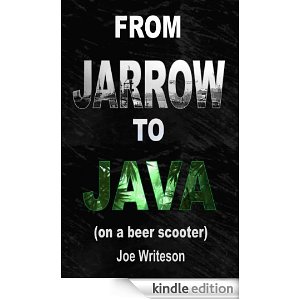
Review of From Jarrow to Java (on a Beer Scooter) by Joe Writeson
From Jarrow to Java (on a Beer Scooter), by Joe Writeson, is a very humorous book of the author’s life in Java. Joe Writeson leaves his home and just by chance accepts a position to oversee a huge, seemingly doomed construction project in East Java. What ensues when he takes on this monumental task is quite hilarious. Yet, one can feel his frustration in attempting to get the project going and completed. He runs into many obstacles, some of which will have you laughing out loud. One of the most important people he meets in Java is the woman he will marry. This book is very well written, humorous, yet tells of the frustrations and accomplishments in taking on a huge project. This book will capture your interest from the beginning to the end. Thank you Mr. Writeson, for a truly great book. I very highly recommend From Jarrow to Java. It is most definitely “my cup of tea”!!
From Jarrow to Java may be purchased here: http://www.amazon.ca/Jarrow-Java-Beer-Scooter-ebook/dp/B00C6D5FM2
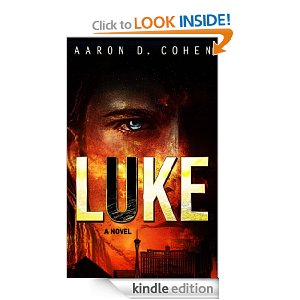
Luke, by Aaron Cohen, is a great novel about a man who used to be in “The Organization” and wants to take control of all prostitution in Las Vegas and then spread his empire to other cities. I would call it a crime/suspense novel. The characters are strong and the story flows nicely and keeps the reader interested. My favorite character is Charlie, a giant of a man who used to be a chef in Paris until his tongue was removed. His character is strong, powerful and lovable. Although each and every one of the characters are great in Luke. Thank you Mr. Cohen for a great novel. I highly recommend Luke. If you don’t usually read crime/suspense novels, try this one! I am sure you will enjoy it as much as I did. Aaron D. Cohen’s Luke is definitely my cup of tea!!
Elizabeth Hughes is a writer from San Jose, CA. She may be reached at hugheselizabeth@rocketmail.com

Tapati McDaniels on W. Kamau Bell’s Totally Biased comedy tour

Totally Biased Stand Up Tour at The Chapel

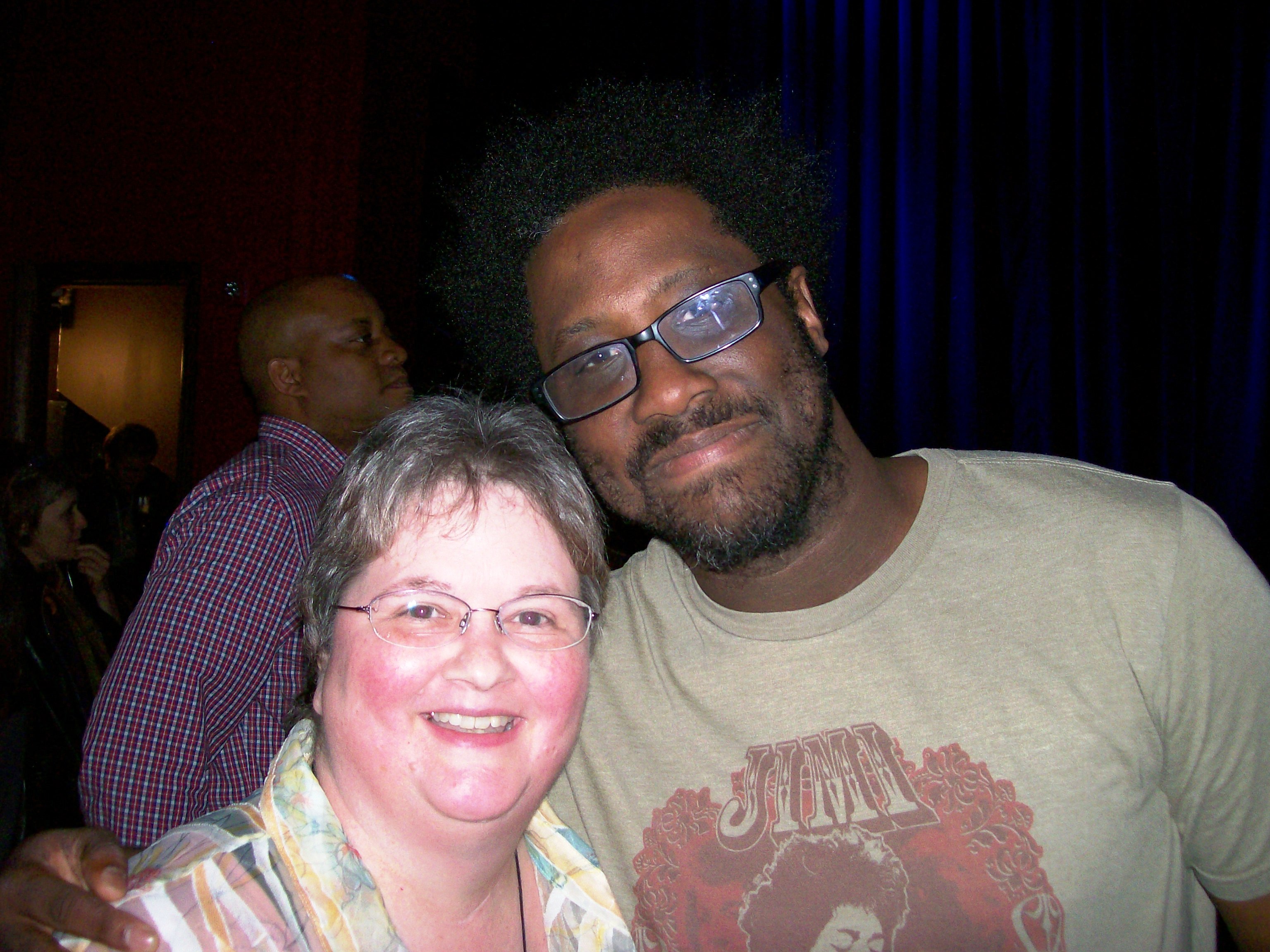
W. Kamau Bell brought his “Totally Biased Stand Up Tour” to San Francisco at The Chapel on Valencia Street Sunday, July 21 and 22. My husband David and I were there for Sunday’s performance. We’ve watched every episode of the FX show Totally Biased, wondering why it was just a half hour long. So we were, excuse the borrowed phrase, totally biased in favor of the show when we arrived. Fans will be happy to hear that the show will be an hour long on the new FXX channel which W. Kamau Bell assured me will be available on basic cable beginning September 4.

Appearing with Bell are writers and performers from the show, Kevin Avery, Dwayne Kennedy and Hari Kondabolu, along with Karinda Dobbins, a Bay Area comedian. The tour is showcasing talented local comedians in each city. Karinda Dobbins started the show, introduced by Bell’s disembodied voice via loudspeaker.

Dobbins soon had us cracking up, making the first Zimmerman trial joke of the night. One might imagine the show would be laden with them so soon after the verdict but it was nicely balanced, a leavening of reactions to the verdict without overtaking the other material. Dobbins told a story about a work review from her white boss which came the Monday following the verdict. “I got the best review ever. Thanks, George Zimmerman!” The audience went wild. She followed up with stories about her daughter ‘s music and some misleading Nicki Minaj lyrics involving oral sex and the flavor mango. I don’t want to spoil it but readers might want to review the lyrics to Minaj’s “Can’t Stop, Won’t Stop.” David and I resolved to catch more of her shows in the future.

Kevin Avery followed Dobbins. He’s the head writer for Totally Biased and grew up in the Bay Area. He is a very physical comedian, throwing his entire body into his performance as he described how he didn’t realize a college friend, also black, was gay before he came out because it was the ’90s, era of Hammer pants, wild hair, sequins and glitter. Emulating a back up dancer for MC Hammer had us clutching our sides as we laughed so hard it hurt. According to Avery, if you were black and gay in the ’90s you had to burst out of the closet with attitude before anyone would notice you were gay. Much of Avery’s set was self-deprecating, making fun of himself for being out of step with black culture, to the detriment of his dating relationships. He made fun of his speech and how close it is to “white guy speech” as performed by black comedians, explaining that his parents enrolled him and his brother in a Catholic school, all white except for them. After having spent his childhood in the Bay Area, he then went to college in Alabama where he was awaited by culture shock.

Next up was Dwayne Kennedy. He addressed Trayvon’s shooting directly, saying, “If you were a black man, you can’t walk on the sidewalk, run, even go to the store. You got to levitate. I’m just going to levitate to the store.” Why was Dwayne arrested? “He broke the law of gravity.”

Kennedy talked about why there aren’t more black serial killers. “There would be”, he explains, “if black people had higher incomes. At the very least you need a car. Dude, my bus pass ran out, can you come pick me up? I got this body…”

Kennedy says he’s praying for the hole in the ozone to open up more(mimics spraying aerosol can) and notices that more white guys are marrying black women. “They want a UV umbrella; take shelter of that increased melanin, African number 10.” But he saw an interracial couple one day and mimics the sister telling her husband off and Kennedy says “You didn’t think that was free?”

Hari Kondabolu was last up before W. Kamau Bell and made it clear that colonialism would be a theme. The comic, born and raised in Queens, had visited Australia, which has rules about not bringing harmful life-forms into the country which could destroy the ecosphere. “The indigenous people of Australia would agree.” Kondabolu makes fun of whiny liberals who say they’re moving to Canada and points out that Canada also has a history of colonialism, killed natives, and their prime minister is trying to gut the social welfare programs.

His best story of the night involved his dad picking him up from the airport. A white lady jumped into his dad’s back seat, mistaking his dad’s car for a taxi. Kondabolu tried to tell her that it’s not a cab, to which she said “Too bad, guess you should have run faster.” He could only assume that she didn’t really look at the car, just the color of his dad’s skin. “Oh, he’s in the servant class.” I won’t spoil the story’s ending, in case you get a chance to hear him tell it.

W. Kamau Bell was last to perform, followed by a Q and A session with the Totally Biased comedians. Continuing his comedic education on the subject of racism, he tells a story about a Facebook interaction with an ex-friend (emphasis on the word “ex”) who is a white atheist. This ex-friend posted a story concerning racism and tagged Bell so that he was getting alerts on his phone for each comment. The guy declared that whatever the story was about, that it wasn’t racist and Bell disagreed. At some point the ex-friend then said, “As an atheist, I am a member of an oppressed group too.” Bell says maybe atheists rank somewhere near the bottom of a long and ever-changing list of oppressed people, next to people who are allergic to nuts. Bell explains that white people don’t get to decide what’s racist or not. It’s not our area of expertise. People of color are taking the graduate course in racism, writing 500-page papers, attending class every day. White people audit the class, attend when they feel like it and then breeze in like they can break it all down. He said, “Just like I can’t offer an opinion on what’s sexist because I don’t know, I just audit the class.” With regard to his friend, he adds, “I’d rather you just burned a cross on my lawn, it’s cleaner. The cross will stop burning but you won’t shut the f— up.”

Bell states that his daughter is the reason he incorporates identity or sociopolitical politics into his comedy, to make the world a better place for her generation. So it’s no surprise that his daughter is prominently mentioned during his act. Beaming with pride, Bell talks about being a parent on the playground with a mixed race kid among other mixed race kids—who look like each other more than their own parents. Once they’re all together, things get confusing—he mimes losing her amid the many lookalike children and pulling out the wrong one—for instance, discovering it’s a boy, when he goes to change the diaper. Oops! Gotta go back and exchange the boy for a girl until he gets his daughter back. Bell muses that she looks white when he holds her and black when his mom holds her, “like a broken chameleon.”

The Q and A with the Totally Biased cast came next and as they set out chairs for the guys we all wondered where Karinda Dobbins was. The first question regarded the worst place they’ve ever performed and they had some hilarious stories that brought home the courage it takes to get up and try to make people laugh night after night in all kinds of venues across the country. Then, someone asked what we all wondered, “Why isn’t Karinda up there with you?” I think it was intended in every venue to be a Q and A with just the cast, but as we all wanted to see her, they brought Karinda Dobbins out. I wish she’d been there for the worst gig question because I can imagine she’d have a good story to tell. We all really enjoyed her performance and I hope appearing with the cast of Totally Biased results in more bookings. All in all it was a night of witty comedy at a lovely venue.

You can follow the performers on Twitter, in order of appearance: @KarindaDobbins, @KevinAvery, @DwayneTKennedy, @harikondabolu and @wkamaubell. Sample tweet from W. Kamau Bell: “Thank you to the people of Florida who came out to the @Totallybiased tour. & special thanks to George Zimmerman for not killing me.”

Tapati McDaniels is a writer from Sunnyvale, California, who is working on a memoir. She may be reached by leaving comments here, or at @tapati on Twitter. 


Wendy Saddler reviews Dean Hartwell’s St. Peter’s Choice

BOOK REVIEW: ST. PETER’S CHOICE

I was recently given an online copy of a rather interesting book called “St. Peter’s Choice” by Dean Hartwell, from a friend, which I proceeded to read. I was curious about this book, especially about the overall theme, about the existence of God, Heaven, and Hell. In short, it questions everything about the Christian faith, in an attempt to cast it as just another falsehood. The story centers on the following characters:

Peter: a man who God used, despite his shortcomings to be a mighty minister of the gospel, who is now at the pearly gates admitting believers. 

X, Y, and Z: Three non-believers with whom Peter has an in-depth conversation with, concerning God and the afterlife.

This conversation delves into the very foundation of Christianity, with X, Y, and Z openly challenging everything God says and does throughout history, thus proving that IF God exists, He is mean, capricious, and heartless. They also poke holes in theological facts, such as the existence of Hell. When they’re banned from Heaven, they are in a place of darkness, and can’t feel anything negative, such as the fire, heat or pain they expected. From this, they decide that God must be some type of liar. Therefore, everything else He has said in His word is useless fiction. In the end of the book, Peter refuses to enter Heaven out of protest with the other three, and stays with them, wherever they are.

The problem with this is that the writer cherry-picks Scripture, and takes it out of context, to support his views. He uses old, tired and superficial arguments against God and His Word, such as claiming that the Old and New Testaments contradict each other, when in reality they can be shown to support each other. The writer also fails to see that Hell is also described in the Bible as “the lake of fire burning with brimstone”, a place of “weeping and gnashing of teeth”, of “outer darkness” and torment (Matthew 8:12, 22:13, Luke 16:32, and Revelation 19:20, 20:10, 14-15) which will last for eternity. Not the mere emptiness Hartwell describes. 

The writer apparently has issues with the truth of God’s word, as well as with God, so he spouts what can only be the tenets of atheism, in ways that are not internally consistent. As I also looked into the other works of this author, it was very clear that this person is deeply into conspiracy theories, (9/11 hoax, etc) that have been easily debunked. 

While very thought-provoking and entertaining, this book is a work of pure fiction. It’s based on the atheistic influences of philosophical and scientific author Richard Dawkins, whose ideas are contradictory and confused at times, and the works of Dan Brown, whose assertions have been proven to be false. If one is unsure of their faith, needs affirmation of it, and wants to see “both sides,” I would recommend this. However, I would strongly caution that they carefully read God’s Word, examine history in every aspect, and seek out godly counsel. If one wants to read this to get an idea of what an atheist thinks, then go for it, but this in no way is something for a Christian to read as a devotional book.

Wendy Saddler is from Bensalem, Pennsylvania and may be reached at blondetrekkie@comcast.net 


‘Human Spirit,’ a poem by Lorene Miller

HUMAN SPIRIT

Her stride whispers her story.

Her voice is lost in the breeze.

She owns a face colored by the sun, with deep wrinkles defining dark thoughts.

Walrus like whiskers sprout from her chin and crusted saliva settles in the corners of her mouth.

Front teeth are missing and grey hair grows around a rubber band once bundling off a small ponytail.

Her clothing hangs on her body like a clothesline.

Her quiet existence floats around town tightly clutching in her arms, escaping newspapers, loose leaflets and plastic bags.

She is seen

diligently watering trees using a small paper cup.

She is seen

volunteering her services to nervous shoppers at the local thrift store.

She is seen

standing among young children reading free give away picture books.

She is seen

having quiet conversations to no one other than to herself.

She is known

to turn down monetary offerings.

She is known

to help a stranger look for a fallen wallet in a parking lot of a convenience store.

She is known

to show genuine concern for kept doves in a large aviary in the center of a city park.

She is known

to refuse a hamburger because she is a vegetarian

She appears to exist without definition, But yet when looked upon she defines a thought,

“When we see past society’s disguises is when the human spirit will walk on an equal plane.”

Lorene Miller is an active part of the writing group at her local library, in Hayward, California. She may be reached at lorenemiller2222@comcast.net

http://www.publicdomainpictures.net/view-image.php?image=19591

Image from George Hodan, who appreciates donations for cups of coffee for the use of his photos!

Synchronized Chaos August 2013 – Artistic Renderings

This month, August 2013, brings us to the fifth anniversary of Synchronized Chaos International Magazine. We celebrate with all of you, and thank those who have worked hard to keep this publication alive.

This month, the works submitted suggest a collection of artistic renderings, either literally or by applying the concept to other areas of experience. An artistic rendering involves reproducing something very accurately, paying attention to light, shadow, shape and proportion. This might seem more technical than artistic, but sometimes we need to understand what’s going on before we can start to interpret and react to it.

UC Berkeley astronomer Dr. Mate Adamkovics presents a complex picture of weather and climate on Saturn’s moon Titan, extrapolated from data from the Cassini mission and other recent observations. Using mathematical models, we can determine quite a lot of information from just a few empirical details.

Neuroscience columnist Leena Prasad does something similar, turning brain anatomy comparisons into a narrative about creativity, as expressed by a painter and his wife. And Evelyn Posamienter renders X-ray images of human brains into a series of formal poems, her Brainiography, suggesting the scientific precision of the medical examinations, but also the humanity of her protagonist, who reflects upon naivete, curiosity, and a changed life due to disability.

Painter Courtney Thiesen describes much the same thing as she outlines her mental process in generating work. She notices interesting objects around her and feelings she has, and lets them percolate in her mind and ultimately take shape as a completed portrait or scene. Poet and novelist Christopher Bernard looks at a finished painting, Haymaking by Jules Bastien-Lepage, and probes how much we can know about the character and the scene just by viewing the work, and how much is left a mystery.

Elizabeth Hughes examines a whole series of titles in her Book Periscope column (Sondra Sneed’s What to Do When You’re Dead, Gary Huerta’s Divorce: A Survival Guide for Men, Evelyn Posamienter’s Poland at the Door, Ekaterina Gaidouk’s The Adventures of Chi-Chi the Chinchilla, Mindy Mitchell and Edward Land’s Lube of Life, Taquila Thompson’s Hood Wolves, and Dean Hartwell’s St. Peter’s Choice). This month’s authors don’t shy away from the ‘big questions,’ tackling religious faith and doubt, gender relations and marriage, and urban crime and poverty. They also point to new and expanded life possibilities for seniors as we live longer, and illustrate life lessons for children in complex and unique ways. These books show how we can rise to deal with our challenges by re-thinking matters. Whether by discovering healing through faith, rejecting limiting dogmas or expectations for your age or cultural groups, rendering history and tragedy into art, or choosing to respond to difficult circumstances with compassion and patience.

Travel writing represents another way to capture and synthesize experience. Rui Carvalho’s Text from Portugal shows us Lisbon in a way that lets us actually see the destination, rather than focusing on the author’s internal psychology. We are thus able to learn about these places and visualize them through photos. While reading some popular memoirs, people can be tempted to cry out, ‘Author! Periscope Up, Mirror Down!’ in order to refocus the travel narrative onto the outside world. While some travel writers can effectively balance internal and external journeys, it can be good to have the chance to see a different place for what it is before bringing interpretations to the scene, and Carvalho allows viewers to do this.

Evelyn Posamienter travels metaphorically through European history and her speaker’s personal past in her poetry, with scenes of old age, lonely childhood and insecurity alongside creeping continents and crumbling cities.

Finally, debut author P.B. Gookenschleim, the ‘Lunch Lady’ returns to the grand scheme of things in her work, Beanum Infinitum. Reviewed here by staff writer Sarah Melton, the book poses existential questions about our place in the universe through the short illustrated tale of Beanitrio, one talking bean alone in the cosmos.

Reading this month’s issue can remind us that we are not alone in the universe. Others, from different times and places, have raised similar questions about our purpose and destiny, and have expressed themselves and sought to understand the world through science, art and writing.

Please enjoy this issue, and join us in celebrating five years!

Easter Sunrise Over Death Valley, California