Christopher Bernard reviews Jean Cocteau’s La Belle et la Bete


Josette Day as “Belle” and Jean Marais as “the Beast” in Jean Cocteau’s La Belle et la Bête.


GIVE ME BACK MY BEAST!


La Belle et la Bête

An Opera by Philip Glass

(based on the film by Jean Cocteau)

The Philip Glass Ensemble, with vocal soloists

Conducted by Michael Riesman


To celebrate Philip Glass’s 75th birthday, the Philip Glass Ensemble came to San Francisco to perform the magisterial minimalist’s opera, La Belle et la Bête (“Beauty and the Beast,” based on Gabrielle-Suzanne de Villeneuve’s celebrated fairy tale).

What makes this work unique is not that Glass based his work on a film; he had already done so with the first of a trilogy of works based on work by the unforgivably talented, unapologetically gay, and compulsive appropriator of surrealist gestes, Jean Cocteau: the chamber opera Orphée.

Here he went a good deal further. He stripped out the entire original soundtrack (which took some gall, as it’s a very fine one, composed by Georges Auric, an original member of the bad boys of French modern music, “Les Six”) and replaced it with an original score, with singing parts for the original spoken ones, the entirety performed live as the film is screened overhead.

And he chose a nearly perfect source, as Cocteau’s 1946 film – with actors Jean Marais, Josette Day, and Raoul Marco, and handsome camera work by Henri Alaken – considered by many critics to be Cocteau’s masterpiece, is a work itself of near-operatic fantasy.

What might have turned out to be one more lamentable exercise in postmodern kitsch is a near-masterpiece, a posthumous collaboration that would probably have tickled the ever-experimenting Cocteau.

The story is almost too well known to recount, yet is told with a few fresh twists: Belle, a Cinderella-like figure, is scorned and exploited by her two wolfish sisters and ne’er-do-well brother, though doted on by a father oblivious to his daughter’s misery – Belle is an unwittingly willing victim, in which those who love her, and even she herself (through an ideology of self-denial that reinforces the victim’s weakness and the power of the dominant – sound familiar?), comply in her servitude. She has a lover, a companion of her irresponsible brother, whom she refuses to marry because she feels bound to take care of her oblivious father, who allows Belle to be bullied and exploited by her two older sisters, who intend to get married and out of the household as soon as they find victims – er, husbands.

The father goes off to the city after promising Belle he will bring her back the only thing she asks for: a rose. After a business venture goes badly awry, he rides back home through a forest at night, where he discovers a magic castle, magically alive, which he enters and is served a feast by magical servants. Later he visits the castle’s garden, where a rosebush blossoms. Remembering his promise, the old man plucks the loveliest rose for his daughter. Upon which the prince of the castle, a hideously deformed monster (in the film, he looks like a giant cat, with sensitive ears that telegraph his feelings, perking him up when he says a prey for his next meal in one of the film’s deftly humorous touches), appears and tells the old man he has committed the one crime that is unforgivable in that castle, and now must die. The old man pleads for his life, and the monster relents, telling him he can go home to give the rose to his daughter, but only if he promises to return.

Once the old man is home again and tells his children of his plight, Belle refuses to let him go back, and goes in his stead, to face death as punishment for her father’s crime. But the monster, upon seeing her, falls instantly in love and instead of killing her, imprisons her in his castle and begins to woo her, even though he is aware that his hideous ugliness makes it impossible for anyone to genuinely love him.

Some men feel a curious self-contempt when they become aware of the strong physical feelings they have for women they admire and love; this story works well as an allegory for this, in an age that likes to pretend it is beyond such callowness.

The film, while never losing its fairy-tale quality, never falls into camp or archness, satire or over-sweetness, even at the dangerous happy-ever-after ending: it has a darkness, a fadedness and grittiness, that gives it, for all its fantasticality, a hardness, an actuality – like any poem worth its salt. This helps make the film’s final transcendence peculiarly credible and moving. Never has wishful thinking had a kinder, more eloquent advocate. (Though the final transformation of the Beast into a prince has disappointed some; is fabled to have made even Marlene Dietrich cry out, “Give me back my Beast!”)

Cocteau, who had made only one film before this one, in 1930, the surrealist classic Blood of a Poet, had refined his cinematic technique so that he knew just how much magic he needed to create in his world: disembodied arms holding candelabra in darkened hallways, disembodied hands pouring wine into the old father’s goblet, the masklike heads carved into the fireplace mantel shifting their eyes in curious glances at the innocent human partaking of his magic fare without so much as a question, Belle moving down a long corridor wafted by curtains blowing from floor-length windows, on invisible wings, without stirring her dress or seeming to move a shoe.

Joining Cocteau’s magie, douceur et poésie is Philip Glass’s. The signature style of the master musical stylist of our time is much in evidence. The essentials are all there: a steady rain of eighth-note ostinati, with the occasional long arpeggio, broken unpredictably by stately static chords; a steady house-music like pace that rarely varies over the 90 minutes of the work; continuous harmonic variation; and a keen sense of orchestration, which his ensemble, which includes several keyboards that can produce a theoretically infinite number of different sounds, makes possible.

Glass does not always avoid the danger of monotony, though what is remarkable is that he fails so rarely. He does this by constantly varying the melodic shape of the rhythmic ostinati and rarely allowing the music to sink into a groove of exact repetition except where such figures work to create a feeling of oppression or suspense. The singing lines are not arias but quickly paced, almost conversational lyrical recitatives, which cut through the ostinati like shards of roughness through what is sometimes an excessive smoothness of musical texture.

One peculiarity (noted by Romancha Pralapa) is that the original film is 94 minutes long, but the opera is only 90 minutes, as Glass, when composing the score, seems to have used a version of the film projected at too fast a speed. The result is that the performers in the film act and speak at just slightly too brisk a tempo, which has the effect of making the film seem a little like old-fashioned screenings of silent films before modern projectors were able to project them at the originally intended speeds.

The Ensemble has this music in their blood and clearly love the score. The admirable singers were Gregory Purnhagen, Hai-Ting Chinn, Marie Mascari, and Peter Stewart.

The opera was performed, as part of San Francisco Performances, at Yerba Buena Center for the Arts’ Lam Research Theater.

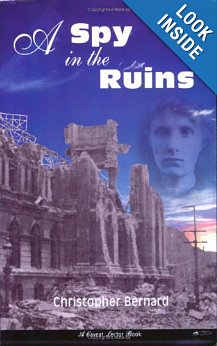
Christopher Bernard is a poet, novelist and critic living in San Francisco. His novel A Spy in the Ruins was published by Regent Press (http://www.regentpress.net/spyintheruins). He is also a co-editor of the literary and arts webzine Caveat Lector (www.caveat-lector.org).


Book Periscope: What’s New in Indie and Small Press Books, from Elizabeth Hughes


Christopher Bernard’s A Spy in the Ruins

“A Spy In The Ruins” by Christopher Bernard, is a very complex book. It is not a book that can be read quickly and just scanned through. The book is written well and you will want to sit down, put your feet up and drink a cup of tea or a cup of coffee and read it all the way through. I loved this book and highly recommend it. This book is definitely my cup of tea. Thank you Mr. Bernard for a wonderfully complex and great read!!

A Spy in the Ruins is available from Berkeley’s Regent Press and may be purchased here: http://www.amazon.com/A-Spy-Ruins-Christopher-Bernard/dp/1587901110/
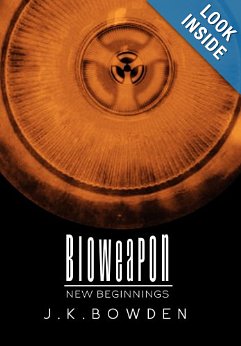
J.K. Bowden’s Bioweapon
‘Bioweapon’ by J.K. Bowden is a brilliant work of science fiction. I loved the book. ‘Bioweapon captured my interest from the start. It kind of makes you wonder how close human kind is to having microchips implanted in the brain and being controlled. The suspense and story flows from page to page, chapter to chapter. The writer captures and holds the interest of the reader to such an extent you don’t want to put the book down. I highly recommend this book. It is definitely’my cup of tea’. Thank you Mr. Bowden for an excellent work of science fiction. I am looking forward to reading the next installment of the ‘Bioweapon’ series.

 Jeremy Bowden’s Bioweapon may be purchased here: http://www.amazon.com/Bioweapon-New-Beginnings-J-K-Bowden/dp/1477159800/ref=sr_1_1?ie=UTF8&qid=1371147495&sr=8-1&keywords=bioweapon


Cristina Deptula on San Francisco State University’s Personalized Medicine Conference 6.0

Personalized Medicine 6.0: Emerging Frontiers in Diagnostics and Treatment

Tailoring treatments for different patients based on their genetics represents an emerging technology that could streamline medicine and reduce costs while maintaining quality of care. San Francisco State University’s Department of Biological Sciences’ sixth annual personalized medicine conference, organized by department head Dr. Michael Goldman, and held at the South San Francisco Conference Center on Thursday, May 30th, explored various successes and ramifications of this approach to biomedical science.

Dr. Kimberly Popovitz, CEO of Genomic Health, served as a keynote speaker. Her talk emphasized potential cost savings and health benefits for many cancer patients who will now be able to confirm that their diseases are slow-growing and less dangerous, and thus skip painful, invasive treatments. Some people will also discover sooner that they require urgent interventions, and in these cases, personalized medicine could save their lives.

‘Cancer’s becoming a chronic disease in this country,’ Popovitz said. While this is good for patients whose lives can be prolonged, the lengthy treatments are expensive. Also, currently, many people are over-treated for prostate, colon and some forms of breast cancer, receiving chemotherapy and radiation even when they are likely to experience normal lives without these measures. Yet, no physician or patient wishes to skip out on a treatment that could prove life-saving, even in rare cases, especially when they could be accused of letting someone die for financial reasons.

The more detailed understanding of a person’s cancer subtype and individual genetic makeup made possible through genomic sequencing and analysis can increase the likelihood that he or she will receive appropriate and timely care. Popovitz and others hope this will make a difference in the lives of the 1.6 million people diagnosed with cancer every year in the USA.

Currently researchers seek to understand which genes are associated with better or worse health outcomes, so they can provide this information to oncologists and patients to help them make better informed treatment decisions. Scientists are also studying RNA, a form of DNA that functions within cells to build proteins, and identifying genes whose action contributes to disease processes and which could be targets for new drug therapies.

The human genome provides so much information that, according to the conference speakers, physicians, including oncologists, might get confused and need guidance about how to interpret the data.

For this technology to move forward, we will need more research and more detailed predictive models. Popovitz and others emphasized that the complexity of the science is a major factor holding back progress on cancer cures. ‘People wonder why we spend so much time and money on this, and we still don’t have a cure yet. Well, we’re working on it, and it takes awhile because it’s just that hard!’

Dr. Popovitz ended her segment on a note of cautious optimism. Although it has taken a long time for the field to move forward, both technically and in the eyes of decision-makers who choose whether to approve studies and pay for treatments, Genomic Health’s technologies are now in use in countries around the world.

Next, Dr. Jorge A. Leon, of Leomics Associates, discussed the future of the field of molecular diagnostics, as related to other conditions as well as cancer.

Dr. Leon pointed out that it’s cheaper and easier in the long run to sequence a patient’s entire genome than to test for the presence of particular alleles, or forms of certain genes. Whole genome sequencing has become much more accurate, faster, cheaper, and simpler.

Cancerous cells within a patient’s tumors can mutate and develop resistance over time to chemotherapy drugs. Molecular diagnostics could also allow oncologists to identify which drugs would be effective in each patient before starting treatment.

‘It’s no longer impossible to think about sequencing the whole genome of an individual cancer,’ Dr. Leon asserted.

Data storage and information processing power requirements could be addressed through cloud computing. And, also by harnessing some of the region’s information technology expertise, drawing upon the software knowledge of Silicon Valley.

Dr. Leon, and several other presenters, discussed other factors which influence our DNA. These include epigenetic changes in gene regulation and expression due to our environment, substances in the environment which can affect DNA, spontaneous somatic mutations, and the genetic makeup of the bacterial species living symbiotically within our bodies. Personalized medicine hopes to account for all of these factors eventually within its models.


Applied Medical Genomics: Breakthroughs and Next Steps

A panel presentation followed these talks. Dr. Christos Petropoulos of Monogram Biosciences spoke first, outlining his firm’s research into identifying strains of HIV and hepatitis virus resistant to common treatments.

Sequencing the viral genomes seems a faster and cheaper strategy than the current technology of cell-based infectivity assays, where researchers observe directly whether a patient’s viral strains infect cells. However, genomic sequencing will take more knowledge and proficiency with tools than we now have. His company’s using emulsion PCR, a faster way to replicate DNA for observation, and sequencing by synthesis, a more effective way to identify variant viral strains.

However, many questions remain, including how to determine a threshold for how much resistant virus within a patient’s body should indicate a change in treatment.

Dr. Jonas Korlach of Pacific Biosciences talked next, again pointing to the need to consider factors beyond just DNA in these types of analyses. Integrating genetic, epigenetic (environmentally triggered changes in gene expression), protein, metabolite, and clinical databases would prove an enormous, but potentially greatly useful, project.

Someday in the future, this type of data might be accessible through iPhone applications, making our phones critical diagnostic tools. But today, researchers seek ways to improve the accuracy of laboratory results. Dr. Korlach pointed to an example of the limitations of our technology from UC Davis researcher Dr. Paul Hagerman, who works on fragile X syndrome. This condition leads to severe and permanent mental and physical issues for children, and results from inheriting excessive repeats of a certain DNA sequence, CGG.

To determine a person’s risk of passing on Fragile X syndrome to their children, researchers count the numbers of CGG repeats in the relevant DNA region. However, some people’s set of CGG repeats is interspersed with AGG codons (groups of three bases signifying a particular amino acid). These AGG codons significantly reduce the risk of transmitting the condition, yet often go undetected when geneticists count the number of repeats.

Dr. Korlach pointed out that there are 10,000 regions of possible nucleotide sequence repeats in the human genome. Many of these could well be medically important, including those within introns (regions of DNA on the genome not coding for particular proteins).

That, in addition to possible genomic effects from the DNA from the three pounds of bacteria co-existing inside our bodies, and from the bacteria we encounter every day, highlights the need for further data collection and research.

‘Personalized medicine needs comprehensive biology,’ said Dr. Korlach, advocating for epidemiological tools such as population statistics to be applied to this intensive genomics research project.

Next, Dr. Frank Ong, of Illumina Inc. talked about his company’s form of noninvasive prenatal testing for trisomies, extra chromosomes leading to conditions such as Down’s syndrome. Some fetal DNA makes its way into a mother’s blood during pregnancy, from apoptosis (programmed and natural cell death) within the placenta. This can be examined as a preliminary way to rule out certain conditions or refer mothers for further tests.

He, also, closed with a call for computer science, engineering, and business professionals to consider lending their skills to this emerging field.

‘Biology does not have all the answers,’ he said.

Dr. Ong and others then mentioned a project to sequence the DNA of foodborne pathogens, such as salmonella, to determine how and why some strains are more virulent and figure out how to avoid them.

Also, while molecular genomics remains quite expensive, some technologies developed through this technology can translate into forms affordable for developing countries. Bacterial DNA observation is one area where this has been possible.


What Personalized Medicine Can Mean for Patients: Therapy In Action

After lunch, Stanford’s Dr. Atul Butte, physician, scientist and entrepreneur, spoke. He discussed the case study of Steve Quade, a forty year old healthy white man with a family history of aortic aneurysm and sudden, unexpected death, as an example of the power of personalized medicine.

Mr. Quade discovered that he did indeed have a genetic predisposition to coronary artery disease, and his doctor suggested he take statins. However, he did not.

Here Dr. Butte joked that there was no genetic method yet to find the best way to encourage patient compliance with treatment.

Dr. Butte described the process of identifying potential health risks from a patient’s genome, which was surprising. High school students scanned and searched through academic literature to curate the data, and identify alleles linked to specific diseases. Placing this data into the common medical statistics format of a likelihood chart made it easier for physicians to comprehend and refer to when discussing these matters with patients.

He also reminded conference attendees not to ignore the effects of environmental toxins on the body and human genetics. As he mentioned, the set of all the toxins we’re exposed to over our lifetime could be considered the human ‘toxome,’ perhaps as influential as the genome.

A current research project known as  the National Health and Nutrition Examination Study (NHANES) surveys environmental factors for disease. Scientists are also using the approaches of molecular genetics to look at the effects of the environment on human health.

‘Do you want to change the genome?’ Dr. Butte asked. ‘Change behavior and the environment.’

Near the end of his talk, he mentioned that with our decentralized heath care system in the USA, researchers often do not know how many people have a particular disease, unless it is contagious. Except for Kaiser, our hospital systems do not coordinate record-keeping, and this has hampered population genetics and epidemiological research.

Next, Dr. Mark Sliwkowski, distinguished staff scientist with Genentech’s department of research oncology, explained the molecular mechanisms behind new breast cancer drugs, such as herceptin.

Nearly three million women within the United States have been treated for breast cancer, and nearly forty thousand die per year. Younger women are more likely to have a particular form of cancer known as HER positive, where a gene known as HER codes for a protein that works together with another substance to signal for the continued growth of tumors.

New-ish drug Herceptin prevents tumor growth by binding to the substances within the cell, known as ligands, to stop them from coming together to produce their signal. Although Herceptin has proved fairly successful in slowing cancer, 5,000 women still die per year from HER positive breast cancer.

Researchers now have developed another drug for breast cancer, Kadcyla, which inhibits microtubule formation within cells. Cytotoxic, Kadcyla kills tumor cells and seems more potent than Herceptin, although it has only undergone a small clinical trial. It also leads to more months without progression of the disease in patients, and creates fewer side effects than Herceptin.


Legal and Financial Ramifications of Personalized Genomics: Industry Perspectives

Next up was a panel on legal issues involved with personalized medicine. Dr. Hank Greely, of Stanford’s Center for Law and the Biosciences, spoke first.

Dr. Greely advocated for policies encouraging and facilitating corporate investment in research and development, including stronger patent protections.

‘In order to meet today’s stringent regulatory requirements concerning evidence for the safety and efficacy of these therapies’, he said, ‘we must spend a lot of money developing them.’ And the biotech companies seek return on their research investments.

Dr. Greely then went on to highlight the unexpected drama of coding, where new therapies receive classifications determining the level of government health and safety regulation they will be subject to, and whether public or private insurers will cover them. Companies must pay to test their therapies and prepare for them to undergo the complex coding process.

Next, Dr. Michael Shuster, partner at Fenwick and Est LLP, discussed patent law in relation to personalized medicine. He brought up some basic categories of things which cannot be patented under American law: the laws of nature (i.e. no one can own gravity), products of nature (animals, plants, fungi) and abstract ideas and mental processes.

Dr. Shuster brought up a few examples from case law relevant to the science at hand. Isolated DNA molecules were once ruled unpatentable as a product of nature, and methods of screening cancer therapeutics were seen as a law of nature. Techniques for comparing and analyzing DNA sequences can also be seen as an abstract idea, although the courts reversed themselves on that decision.

Finally, he reminded us that genes were not currently under discussion for potential patenting, just molecules.

Finally, Paul Sheives, JD, of the Biotechnology Industry Organization, spoke enthusiastically about what was needed to advance the field.

He pointed out, once more, the need for improved accuracy and validity of the genomic screening procedures, and warned that this would not be easy to accomplish.

“Have you read War and Peace? How about the whole Bible? Or the Lord of the Rings?” he asked. “Imagine reading each of these a thousand times. That’s how many characters we’re going to have to analyze if we look at all of our DNA base pairs.”

Also, he sees a need for scientists to educate doctors and patients about the meaning of the genomic findings. People need to understand the concept of absolute and relative risks, so they will not panic with slight risk increases or avoid needed tests and health measures because of a small decrease.

Communication will serve as a major part of this education. “Personalized Medicine?” Sheives said, echoing the theme of the conference. “That’s usually thought of as talking to people, seeing them as human. Genomics is only part of that.”


International Genomics and Biotechnology Investment

Next, a final panel celebrated regional investment in biotechnology, within the Skane region of southern Sweden which a small delegation at the conference hailed from, and locally within South San Francisco.

Moderator Andrew Copestake, CEO of Swedish Biomimetics 3000, illustrated the cost savings potential of personalized medicine through a French study through their National Cancer Institute. By not over-treating slow-growing, non-lethal cancers, the nation recently saved $69 million euros.

However, this type of success will require an unprecedented level of cooperation among the chain of healthcare institutions. Researchers within the United States hope to facilitate a similar type of collaboration.

Later, Stefan Johansson, CEO of Sweden’s Invest in Skane association, encouraged those present to visit and work within the country’s Oresund region, near Denmark. This former shipyard, now a working and living area, has now become a hub for biotech investment. The locale offers a proton and electron accelerator, a ‘science village’ full of biomedical companies, vodka, food, arts and media.

Research in progress at Sweden’s firms includes work on drug delivery, healthier aging, using the Internet to enhance patients’ access to health information, and enhancing the immune system. They seek to translate systems biology into clinical care, and enjoy beaches, sun, and golf, as the region’s supposedly unusually warm for Scandinavia.

Sweden also offers affordable hydropower, which benefits biotech firms, and England and other European countries offer tax credits for research and development.

Next, Michael Lappen, economic development coordinator for the City of South San Francisco, reminded us that they were the epicenter for product development, education, and surfing (down the Peninsula). South San Francisco is actively developing infrastructure and science and math education to encourage corporate and startup biotech investment.

Lappen said that companies will go wherever there are skilled workers with backgrounds in relevant particular fields, so we maintain our economic edge by supporting education. He said that outside of Sweden and the San Francisco Bay Area, Munich, Boston, San Diego, Singapore and parts of Shanghai were developing into biotechnology centers.


Genomics, Patient Care and Cancer: Concluding Keynote

Lastly, Dr. Carl Borrebaeck of Lund University’s CREATE Health program discussed new methods for personalized, and earlier, detection of pancreatic cancer in a final keynote.

One hundred people in the USA die per day of pancreatic cancer, and only three to four percent of people diagnosed with it live more than five years after diagnosis. Diabetics, those with a family history of pancreatic cancer, and others are at greater risk, but many people come down with the cancer for no apparent reason.

Dr. Borrebaeck pointed to the emerging development of a blood-based test for pancreatic adenocarcinoma. Through improved planar well microarrays for analyzing multiple blood samples, scientists in Lund, Sweden are closer to being able to distinguish whether a patient has cancer or just pancreatitis. Early treatment can go a long way to save lives for those who do have cancer.

Currently scientists investigating pancreatic cancer receive an overwhelming amount of information from the tests we have, and seek to identify peptide motifs, the signs of the presence of a few major protein groups.

He also discussed protein profiling for breast cancer. Researchers examined tumors from 52 patients, identifying 49 proteins associated with certain grades of breast tumors. These techniques enabled higher-resolution classifications.

Researchers hope to continue by uncovering the biology behind cancer’s progression from one grade to another.

‘This assay technology is not a replacement for a pathologist, it’s a tool for them.” Borrebaeck said.

Sweden possesses a repository of genetic cancer data from their relatively homogeneous population, and his group takes part in a worldwide collaboration with researchers in Tianjin, China, Oxford, Madrid, and elsewhere. They’ve also made inroads and connected with the Pancreatic Cancer Action Network, and are trying to stay on top of resistance by developing several antibodies for the same antigen. 

Overall, the conference reflected the promise, and challenges, of new technology, and left us in an upbeat mood. Near the end, over wine, cheese, and various sweet and savory snacks, undergraduate students presented quite professional research work on a host of posters. And, gauging from the conversations among the departing attendees, this sixth annual event will inspire continuing work in a variety of science and technology fields.


For more information, please contact San Francisco State University’s Dr. Michael Goldman, dnamed@sfsu.edu


Poetry from Dave Douglas

Coal Cars Going Over Trestle


Railway


On the railway inside

With a heavy payload,

I continue as this thought

And ignore the switch tracks


The engineer is my passenger

And I pull a freight of gold

With electronic waste

Never reaching the climax


I push the eighth notch

Highball to the next yard

But the cargo betrays you

I am full of double-stacks


Sparks take wing

The stress of steam

The strain of steel

The engine screams!


~


The derailment was close

Nothing was lost, except

The lives at the crossbuck

And the tears you wept


~


You decouple the old cars

And spot my new direction

I pick up broken passengers

Stopping at the next station


Over white-diamond mountains

Through obsidian-filled tunnels

Sunflower fields that glisten

And muscle-flexed trestles


Content in the journey of today

Not the destination of tomorrow

With treasures beyond the railway

Leading others as I follow …


Eighth notch: The final notch in the throttle; the most powerful position

Highball: A signal to operate a train at full speed.

Double-stack: Stacking one container on top of another

Crossbuck: The X shaped sign where the tracks cross a road


[“I” is the personification of a thought; and “you” 
is the mind, or the human containing the mind.]

Dave Douglas is a writer from Pleasanton, California and an avid cyclist. He may be reached at carpevelo@gmail.com 


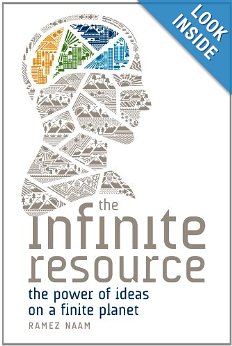
Charlotte Capaldo on speaker and technical innovator Ramez Naam’s The Infinite Resource: The Power of Ideas on a Finite Planet


We Are Our Own Best Resource

by Charlotte Capaldo 

State of the world publications typically support two common threads: pessimism, and politics. In our bipartisan nation opinions are often shaped by our political affiliates interpretations’ of science. In their attempt to win votes, political leaders tie things like climate change to other political issues, tossing the matter into the bottomless pot of political debates. Yet in his book The Infinite Resource: The Power of Ideas on a Finite Planet, Ramez Naam offers a refreshing perspective to the dreary story to which we have grown accustomed, depoliticizing the science because he believes we can change.

As an Egyptian immigrant to the United States, Naam’s life has been one of overcoming the odds. His parents taught him how to pursue a life seemingly out of reach, leading him to the land of diverse opportunities. Naam says this fuels his optimism, and his account begs of the reader to forge their own path of self-discovery to mine the humility the world needs to continue in prosperity. Naam reminds us that we all have something to fight for together.

Naam is not shy about tackling just about every aspect of the changing world, concisely arguing that, with the right choices, we, the planet and its citizens, will live long and prosper. There is something to appeal to everyone in this book, both the developed and the developing world. Tales of adventure narrate the informative text, which is littered with shocking facts and surprising insights. We see Naam riding his bicycle the length of Vietnam, hiking through the Guatemalan rainforest, and to the peak of Mount Rainier in the dark morning hours with a dead head lamp. This man has seen some of the most exotic ecosystems on the planet—and not just on a screen narrated by David Attenborough. His love of the natural world is apparent, as well as his love of humanity, whom he commends throughout the book as great problem-solvers, reminding readers of the feats we’ve accomplished in developing this planet.

Innovators, politicians and corporations alike have continuously made life on earth more efficient. As densely populated countries like China and India enter the developed world, the notion of finiteness plagues our thoughts. Naam, though, argues that while resources are finite, knowledge only accumulates—it is the “invisible resource,” and a multiplying agent of physical resources. While we may run out of oil, we will never run out of innovative ideas about new energy sources to replace or conserve it.

Naam states that “it doesn’t matter where innovation comes from. The best of them will spread. What matters most is that we encourage more innovation, period. And the best way to do that is to see the developing world rise out of poverty and into wealth.” His story is full of ideas—plans really—about turning the tables. It is a worthy read for anyone remotely interested in, or concerned with the state of humanity and the planet. His invigorating and factual tale will inspire hope in you, and will implore you to discover your own source of optimism.

Ramez Naam’s book, The Infinite Resource: The Power of Ideas on a Finite Planet  is available here: http://www.amazon.com/Infinite-Resource-Power-Finite-Planet/dp/161168255X/ He’s available to speak at startups and networking events around the San Francisco Bay Area. 

Charlotte Capaldo is a freelance science and technical writer in the San Francisco Bay Area. She may be reached at charlotte.capaldo@gmail.com 


UC Berkeley’s Dr. Eliot Quataert on the aftermath of the Big Bang


Orion Nebula

A few weeks ago, Dr. Eliot Quataert from UC Berkeley came to Oakland’s Chabot Space and Science Center to tell a modern fairy tale: the scientific story of how we, and our world, came to be.

He started by putting up some photos, illustrating the scale of the universe. Our solar system’s one light year across, compared to our whole galaxy, a hundred thousand light years across. The Milky Way contains a hundred billion stars and planets, and weighs roughly a trillion times the mass of our sun. Our nearest neighbor galaxy, Andromeda, is three million light years away.

Dr. Quataert shared quotes from Carl Sagan and Douglas Adams dealing with our relative insignificance in the face of the vast universe. We can certainly feel very small when we think about being out on the edge of our galaxy, in the Milky Way’s suburbs. And, as large as the Earth seems to us humans, light can travel around our planet in just a tenth of a second.

Back in 1929, astronomer Edwin Hubble first observed the universe expanding. Everything seemed to constantly move away from everything else. In more recent years, scientists speculated that gravity would eventually slow the expansion of the universe. However, data showed that the expansion was actually accelerating. For this to happen, according to Quataert, 74 percent of the universe must be composed of something we do not yet understand that can overcome gravity. For now, we refer to it as ‘dark energy.’

The Big Bang theory and subsequent expansion of the universe has predicted many phenomena we see in the universe today. For example, we observe background leftover microwave radiation, a holdover from the smooth early universe. Also, that our world contains, as expected, roughly 74 percent hydrogen, 24 percent helium, and two percent heavier elements, including nitrogen, oxygen, and iron.

Hydrogen and helium, with their simpler atomic structures, would have formed three minutes after the Big Bang. Over time, as the world cooled, some matter condensed into heavier elements. 13.8 billion years ago, when data suggest the Big Bang occurred, the laws of physics could have been completely different. Perhaps the universe could have been infinite, even then, and it would not make sense to speak of its ‘center.’

The universe as a whole moves fast enough to escape the gravitational forces holding the matter together, although localized, small, matter-rich areas are imploding and pulling together. Some of these areas are clusters of hundreds or thousands of galaxies, with stars orbited by planets. Currently scientists estimate that ten percent of the universe’s stars have planets one to two times Earth’s size, and have identified 3,000 exoplanets beyond our solar system.

We’ve come a long way from the Big Bang and the days of hot, dense, undifferentiated matter. But, no one yet knows why our universe expands, or where we’re headed. While we wait, though, we can take Dr. Eliot Quataert’s insights and share them in our conversations with others curious about the universe.

Cristina Deptula may be reached at cedeptula@sbcglobal.net and welcomes other science writing gigs, especially paying ones! 


Synchronized Chaos June 2013 – Glimpses of New and Familiar Worlds

A month to honor fathers and graduates, June also offers World Butterfly Awareness Day (the 2nd) and the anniversary of the publication of Ernest Thayer’s famous baseball poem, ‘Casey at the Bat’ (the 3rd). Superman made his first comic appearance in June, and Egypt first became a constitutional republic rather than a monarchy years ago this month. Soviet cosmonaut Valentina Tereshkova entered space June 1963 as its first civilian, and NASA launched Mars rovers Spirit and Opportunity ten years ago in June, to provide footage of the red planet.

In the same spirit, Synchronized Chaos International Magazine’s June 2013 issue permits our readers glimpses into new and familiar worlds.

Heather Spergel’s children’s book hero explores magical realms with the help of a very special guitar. Regular columnist Leena Prasad, author of the neuroscience column Whose Brain Is It, explores the phenomenon of hypnosis.  Fe de los Reyes’ musical Amerikana dances through the frustration and hope of the Filipino-American immigrant experience, and Romanian writer and painter George Teseleanu reviews Charles Ayres’ memoir of working within the Japanese entertainment industry as an American expatriate.

While Ayres has peppered Impossibly Glamorous with anecdotes about Japan’s music industry, the backbone of the tale is Charles himself: his resilience, humor and hunger to create places for himself to belong, wherever he travels. Although this can become a cliche of travel writing when not done well, the author experiences as much self-discovery as international education through his work abroad. He learns to select elements of various lifestyles and subcultures he admires, and incorporate them into his own life, consciously choosing to create his world rather than merely becoming a product of his environment. Summing up these hard-won life lessons as humorous commandments, he demonstrates how he has processed and integrated his experience into his daily life.

The Filipino/a immigrants in Fe’s performance piece also assert some control over their own identities, by choosing to appreciate both their homeland and their new lives in the United States. Even more so than Charles Ayres, Fe knows who she is and where she comes from. This knowledge gives her the strength to survive a complex and difficult immigration experience and embrace what she finds positive in a new culture.

Social scientists who have examined the psychology of extreme altruists, such as those who sheltered Jews during the Holocaust or launched initiatives to feed the poor or care for the elderly, point to feeling secure in one’s identity and having a sense of belonging as a predictor for pro-social behavior. If you know who you are, and are part of a solid, even if small, community, you can be more willing to do the right thing even when it is unpopular or risky.

Those factors may promote creativity and courage, as well as altruism. Feeling comfortable with yourself, and knowing that you have a home where you are welcome, can make you brave enough to explore a new world and experience it on its own terms, rather than projecting your own needs and insecurities onto its canvas.

Many of this month’s contributors have found the strength to peer out into new worlds, providing a glimpse of different realms of experience. San Jose’s Elizabeth Hughes mentions and reviews several new self-published and small-press books, in the first edition of her Book Periscope column.

Mimi Sylte also kicks off a new column dedicated to fashion, unique in that she focuses on designers in or near San Francisco, a city known more for writing and other forms of art. In her first piece, Sylte introduces herself and why she’s writing on the subject.

Poet Dave Douglas twists around a common metaphorical frustration, creating a personal landscape out of his ‘writers’ block.’ Like Charles Ayres, he responds with resourcefulness to create something for himself out of loneliness and confusion. As reviewed by Christopher Bernard, the Etel Adnan exhibit at the California College for the Arts also plays with words and artwork to render each in a fresh way.
Darion Wilson illustrates an entrancing but dislocating experience watching exotic dancers, processing the moment by rendering it in words. Katie Farris looks at the curious mixture of rivalry and loyalty in sibling relationships in her short story Batman and Robin, and Darion Scruggs poetically evokes the traditions of family and country life in his piece Generation After Generation. 
Staff writer Cristina Deptula examines the technical promise, logistical challenges and environmental concerns involved with the process of natural gas extraction known as ‘fracking’ or hydraulic fracturing. As with most ventures, there’s both potential and room for improvement.
There are some events in life we should count ourselves very privileged to have had the chance to observe, as Christopher Bernard underscores through his review of a one-night-only modern dance performance. The show, Continua in Light: Three Acts, springs up, then disappears. For some experiences, one simply has to be there, right in that moment. Watch now, and hold the memory forever. 
Frances Varian echoes that sentiment in her prose piece Love and Tragedy. Her memorial essay for two friends who passed away from incurable illnesses provides glimpses, not of death, but of life. And she examines the titular words, verbiage that has been repeated often enough to become trite, in new ways by going back to what they actually mean, through the lens of personal experience.
Those she knew overcame their grief and fear of death not by pining for an afterlife, or craving to be remembered, but through making the most of today through kindness and awareness. By being so alive, as Varian says, that even their deaths were celebrations of life, and thousands of healthy people signed up to be with them as they were dying. 
We hope this issue of Synchronized Chaos both grounds and inspires you, and provides a launching pad for you to head forth, as Spirit and Opportunity, to encounter new worlds and reflect upon your experiences.
(icon courtesy Finn Gardiner, a collective of artists in Boston, MA)