
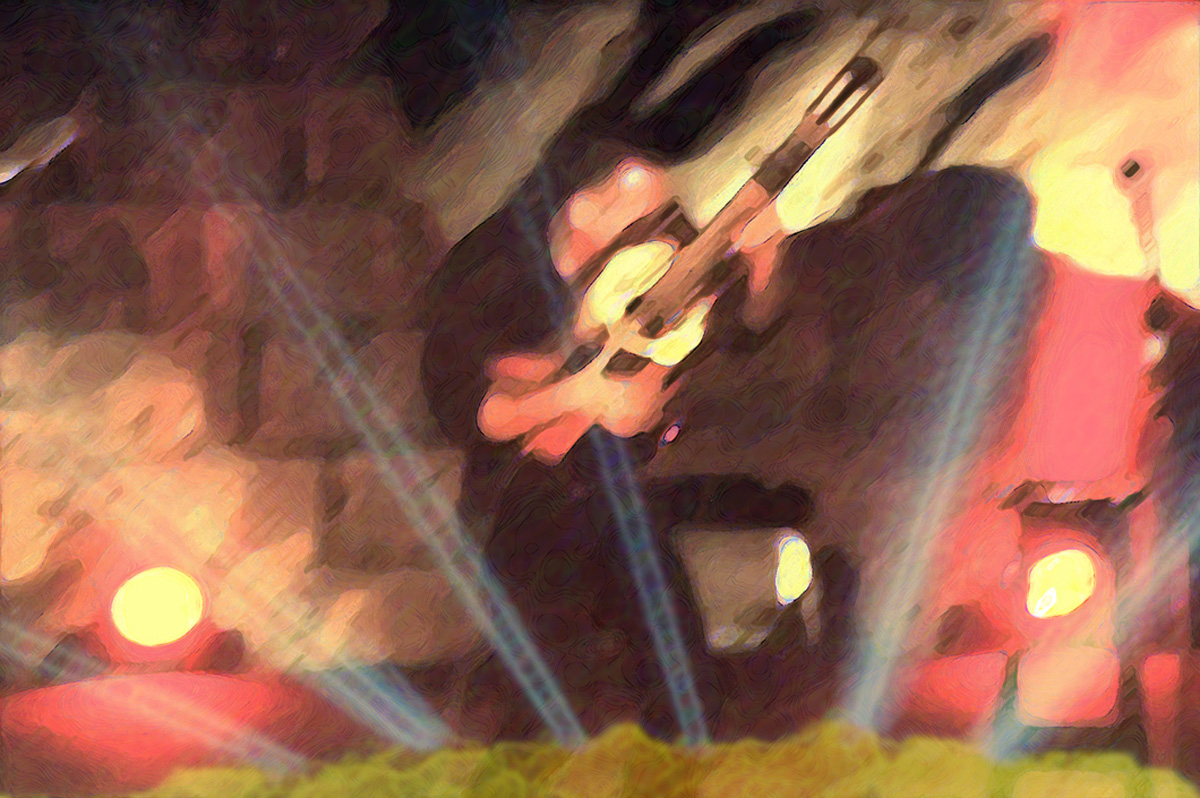
David Broza at Masada
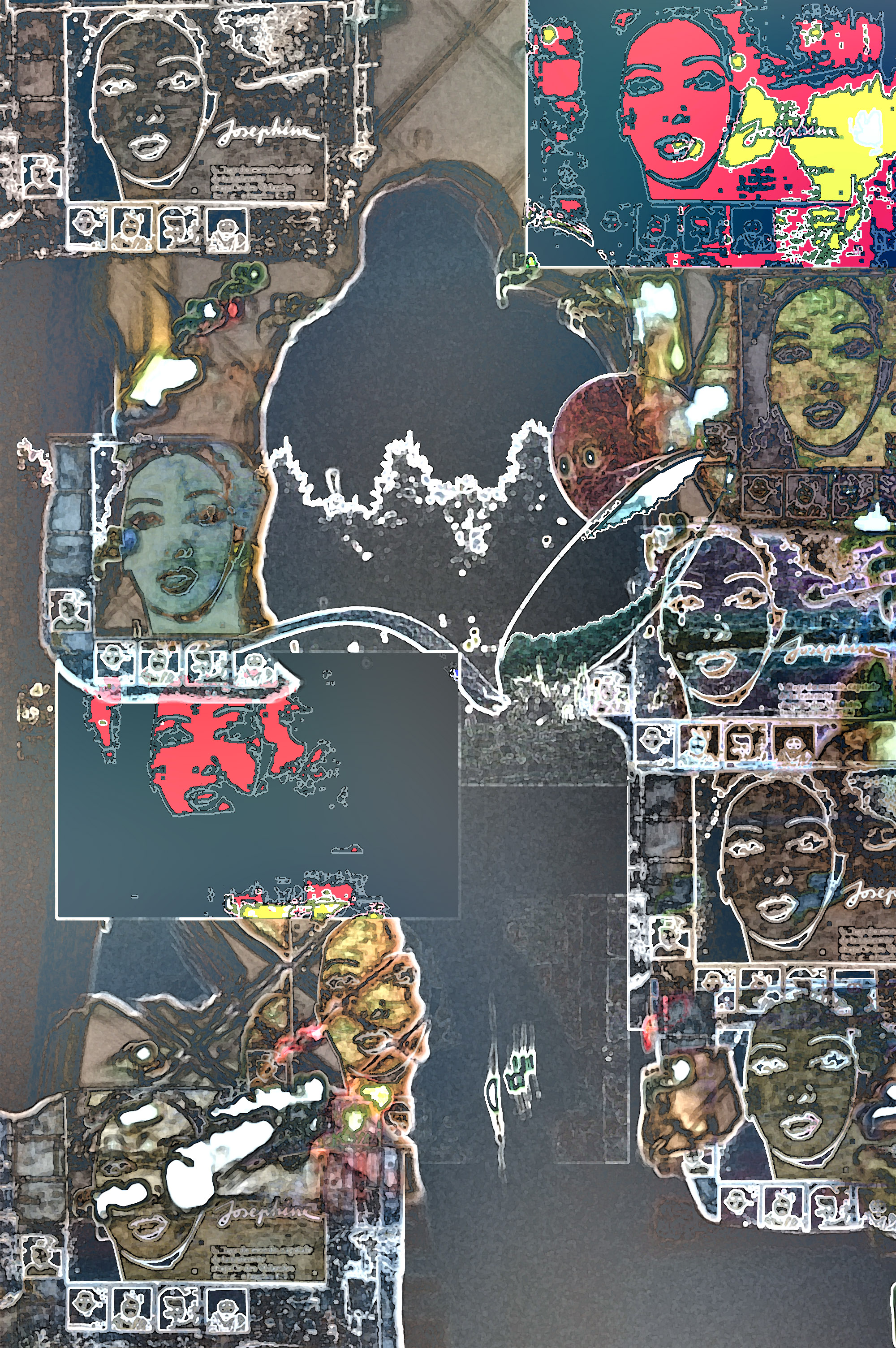
Josephine Baker in France
Last Night’s Storm
Michael Dickel’s prize-winning poetry, stories, & photographs have appeared in journals, books, & online—including: Sketchbook, Zeek, Poetry Midwest, Neon Beam, why vandalism?, & Poetica Magazine. He lives and works in Jerusalem at the moment. His latest book of poems is Midwest / Mid-East: March 2012 Poetry Tour ( http://www.amazon.com/Midwest-Mid-East-March-2012-Poetry/dp/1105569136).
Winter Sundays
I would wake and hear the cold splintering, breaking
Pull free from the red balmy quilts, almost suffocating
Slip through the gloomy hallways, bigger when they’re sleeping
Trace my fingers through the grooves in the cold walls until
I’d find the soft gleaming of the heater’s metal switch,
Shining like some imitation North Star
Flick it over, listening for the distant thrumming
I used to pretend there was a dragon rumbling
Somewhere within the walls, blooming smoke
A purring furnace against the
Wild howling of the winter
Banging on the door, stamping on the steps, muttering under the sill
The cold is crippling
I’d nest in the plush covers on the couch
Curl within that circle of heat, almost smoldering
Watching through the wide windows the blurring of the whites
The shell of the fresh-fallen sun and the crackling of the snow
The sky and the ground lost definition and merged
I wanted to see the sunrise
Wanted to see those colors play on the blank screen of the ground
Wanted to see the lights pull free from heavy quilts, too
Wanted to see them shatter like mosaics on the ice
But the colors smudged under my eyelids
And when I woke again, dawn was washing her paints off her hands
Oblivion
I’ll take you to my secret places
My scared places, here, shrouded
Veiled behind layers of thick, sleepy mists
On this fading cliff face
I peer into the distance
The city is swathed in heavy gray, stretching
I feel nothing
But the dew that freezes
In the marrow of my bones
I become one with the cold
I hear nothing
Only the gales that roar
Along the folds of my ears
They smother out any possibilities of sound
I cannot smell the world’s ugliness
The rushing fog that howls around me
Swirls into me, through me
The only scent here is ice
My tongue, exposed, is stripped
I feel white soldiers shrinking behind my gums
This probing fog grapples
My yawn is interrupted by chattering teeth
I see surreal
I came here often, and I dreamed
Too much
I was blindfolded by sight alone
Only silhouettes of phantoms,
Shadows of echoes, remain
These spiraling sprits that infiltrate the sky
And leave their damp footprints in my home
Movement
Caught the corner on a gate
Jerked backwards
Askew
Meant to be a dancer
Meant to be a lily, meant to
Be a fencer’s tip or a fish scale
Lost in a revolving door
Turning and hidden
A mind full of mirrors
Eyes like planets
Spinning, heartbeat spinning
Would have been flight
A smooth movement
Would have been more than
Crooked smiles
Fingers like unfurling ferns
Budding fruit, but interrupted
Meant to be a swan, came out a
Boy
As we ring in the month of December with this issue of Synchronized Chaos, the holidays are just around the corner. Hope and faith, besides being among the guiding forces of many great works of art, are the cornerstones of the celebrations which will be occurring later this month, so we thought we might make this month’s issue an examination of them. Let’s see what our contributors have to say about hope and faith in all their varied forms…
Hope can sometimes be found in unexpected places, as two of our commentators for this month point out. Dee Allen’s poetry collection Unwritten Law (reviewed here by Sarah Melton) does not shy away from harsh truths: the poet expresses bitter anger at the hate and oppression which is so prevalent in modern society. Yet, as Sarah explains, an element of optimism and life-affirming joy can still be detected in his works. Similar sentiments exist in the works of San Francisco artist James Irvine Taylor, whose exhibition at the local CAP gallery is covered by Randle Aubrey. Taylor’s pieces—brightly colored, imaginative, and sometimes science-fictional—convey the feeling that we’re heading toward a utopian future.
A number of pieces this month express hope for political or cultural change. Randle Aubrey’s essay “The Propaganda Machine: Don’t Get Fooled Again” aims to educate its readers on the number of falsehoods and inaccuracies being bandied about by the American media and looks forward to the building of a more knowledgeable and aware society. Ayk Afowolokoyasire contributes “On Recent Events: Ours Is a Nation,” an examination of the current political situation in Nigeria which criticizes the destructive actions of the Boko Haram, expressing hope for the strengthening of communal bonds and the establishment of peace. Political themes are also at the forefront in Richard Gigax’s novel The Great Escape, whose first two chapters are excerpted here: taking place in the near future, it deals with governmental corruption, revolution, and murder as seen through the eyes of a child.
In this month’s installment of her column Whose Brain Is It?, Leena Prasad examines the topic of obsessive-compulsive disorder. With a positive and optimistic tone, she focuses on therapeutic options, discussing the human brain’s neuroplasticity (the potential for change in its neural circuits) and the ways in which it expedites the condition’s treatment.
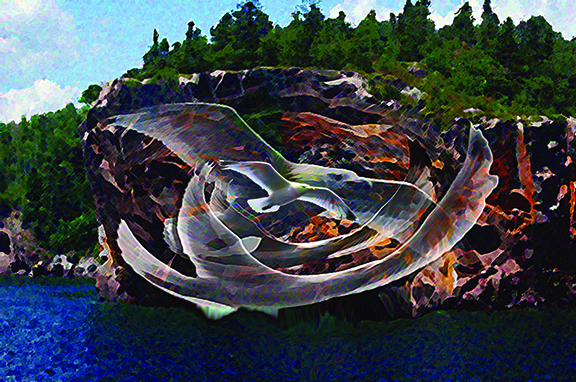
We’re also featuring a number of visual pieces in this issue, and many of them are infused with a sense of hope. Michael Dickel gives us several pieces of digital art representing scenes from nature: birds and butterflies in flight, flowers blooming, green trees over blue water. Each one is beautifully crafted, featuring vivid colors and a sense of movement. Michael also contributes five poems, as varied as they are well-written; they range from character studies to political statements to abstract pieces.
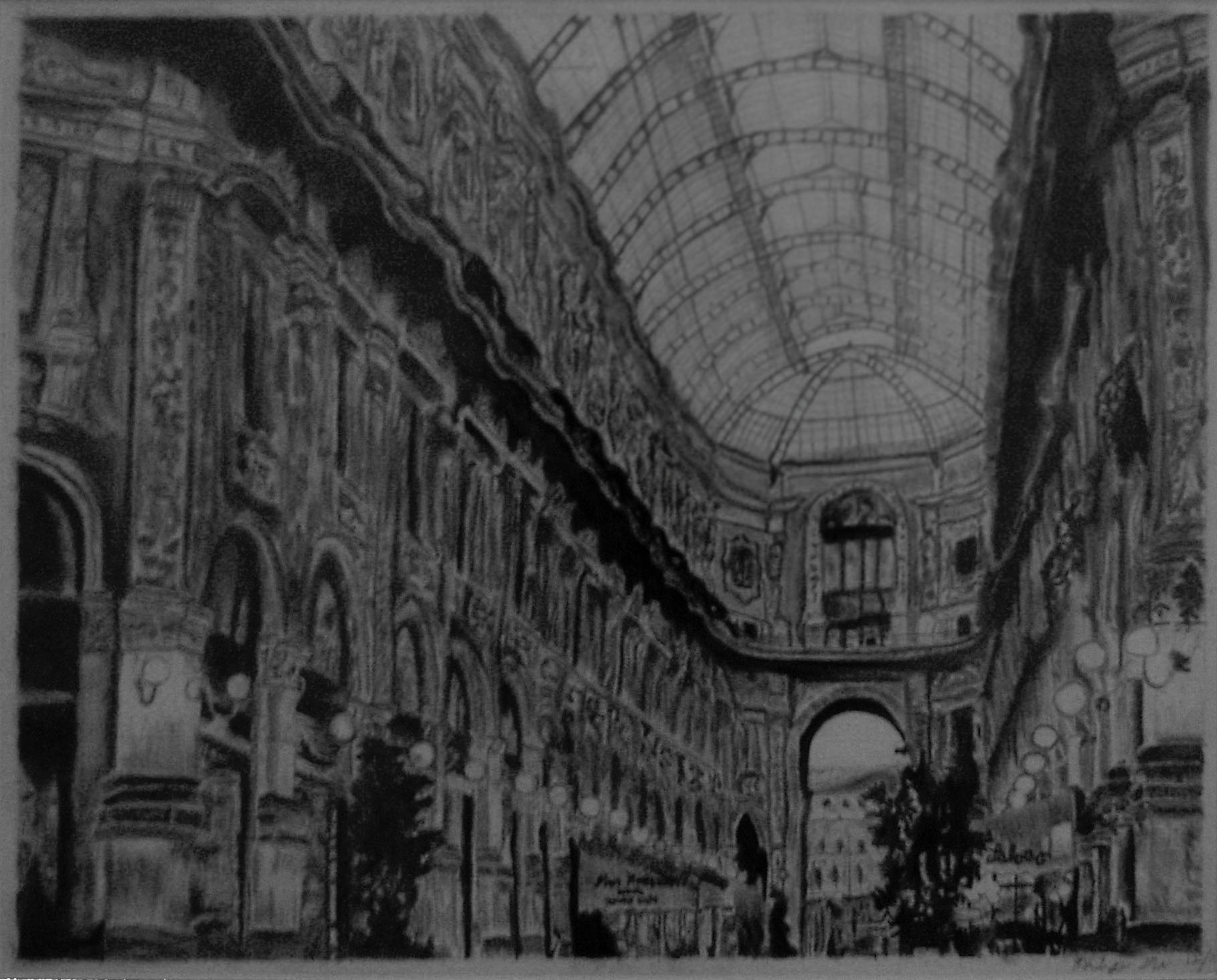
More visual art comes from Philip Ma, whose imaginative and innovative works include an awe-inspiring depiction of an Italian cathedral and the exhilarating sight of a winged car swooping over a crowded street, and Brenden Sanborn, who gives us a superb series of portraits emphasizing the beauty of the human body. Be sure to take a look at the work of both artists!
One of the motivating forces behind scientific inquiry is our hope that we can learn more about the mysteries of the universe. In this issue, Cristina Deptula reports on a recent lecture by UC-Berkeley’s Dr. Jason Dexter, who explained the nature of black holes and described some of the recent advancements in our abilities to observe them. And, speaking of things mysterious, don’t forget to check out Loretta Siegel’s poem “Mystery,” which weaves elements of the natural world together with a sense of unforgettable wonder and curiosity.
A happy ending in a work of art can always inspire hope in its readers. Randle Aubrey, making his third appearance in this issue, reviews San Jose Opera’s recent production of Johann Strauss’ Die Fledermaus, and he emphasizes the contrast between its lighthearted, pleasant resolution and the grandiose tragedies of other operas. In another of this issue’s reviews, Joy Ding examines Thao P. Nguyen’s one-woman show Fortunate Daughter and highlights the satisfying and emotionally affecting resolution of the play’s storyline. DanaLynne Johnson’s poem “Tumbling” also features a positive conclusion: it’s a well-written portrayal of initial trepidation followed by eventual success. Read it, as well as two other excellent poems by DanaLynne, here.
However, the lack of hope can sometimes be a powerful subject as well. Regular contributor Sam Burks weighs in this month with a set of three poems, examining such subjects as the crushing effects of stagnancy on human emotions, the bleak atmosphere of autumn, and the psychological makeup of a cynical and amoral character. Some of the poetry of Kamilla Bøgedal also expresses a somewhat bleak outlook: the disintegration of positive values, the inability to pursue one’s dreams, and resignation to a negative future are among the themes of “Answers Are Imminent” and “Depression with a Rhyme-Scheme.”
With the holidays quickly approaching, it’s particularly appropriate that several of the works featured in this issue deal with religious faith. Kim Brown gives us two pieces on the subject: the poem “My Life Today,” which discusses the ways in which God’s gifts have molded her personality, and the prose piece “Kimberly Luves Is a Brand,” in which she discusses several of the facets of her personality and lifestyle, touching on the role of religion in several of them. Meanwhile, J’Rie Elliott contributes the poem “A Babe,” which hearkens back to the birth of Christ and reminds its readers to contemplate his life and lessons as they celebrate Christmas this year.
Another work which touches on religion is Janine Canan’s poetry collection Ardor: Poems of Life, which mixes postmodern verse and social commentary with a look at Goddess-based Eastern religion. In her review here, Kat Merriweather praises Canan’s writing, particularly her original and witty observations about the essence of poetry as a medium.
Christopher Bernard’s short story “Prisoner of Darkness” comes at religion from a different angle—it’s a probing and disturbing examination of Christian/Muslim relations in American society. Touching on religious, cultural, and gender-based prejudice, it’s a truly fascinating and complex piece.
Our final feature of the month is Bramani Quinn’s essay “Drawing Up Blueprints,” in which she urges her readers to plan out a path which might allow them to follow their dreams. If people have faith in themselves and work out a way to achieve their most important goals, they can take the first step in constructing more satisfying and fulfilling lives.
We hope you enjoy this month’s issue of Synchronized Chaos! As always, feel free to leave comments for the contributors; if you’re interested in submitting some of your work to the magazine, please send it over to synchchaos@gmail.com.
“Unwritten Law” by Dee Allen
(Reviewed by Sarah Melton)
“If you aren’t outraged, you aren’t paying attention!” – Anonymous
Many a bumper-sticker, t-shirt and poster have been emblazoned with the above statement, and many poets, pundits and politicians have used the expression to embody their ideal of the way the world should be, in some way or another – but in reading Dee Allen’s “Unwritten Law”, I see something more than just a glib reference to that aforementioned outrage. I see its very embodiment, sincere and unflinching, in this collection of extremely provocative and well-written poems.
The introduction by the writer describes the first-hand corruption and racism Mr. Allen experienced from early childhood through adulthood, in Atlanta and San Francisco, and doesn’t shy away from making his opinions on law enforcement clear, even before the title poem, “Unwritten Law” makes that abundantly clear, with such openly aggressive lines as “The only good cop that lives is/a bad cop who keeps his mouth shut.” Though my initial reaction to this particular piece was one of anger and discomfort (as I have known several police officers personally), I also tried to keep an open mind, realizing that this level of anger and distrust was a result of a life experience much different than my own, and that such heated bursts of emotion may be exactly the call to attention the writer is trying to create. Such words don’t just entice, but outright demand the eyes and ears of those who would rather look away from the darker deeds of those in power than face the dirtier, uglier side of life that the disenfranchised and marginalized members of our society have no choice but to face head-on, on a daily level. He writes of wrongs in not just our own still-evolving society, but in other parts of the world as well – from North Africa to Wisconsin, Egypt to a Georgia prison cell, never shying away from calling out the unjust treatment of others, nor the indifference of those with the power to rise to their aid.
Then, somewhere in the midst of all this anger and outrage, there is a gratitude and love of life peeking through, like momentary pauses of sunlight in a dark and turbulent storm. In “Downpour”, he laments the suffering of the urban homeless in the storm, yet remembers to feel the appreciation of a dry blanket and a hot tea in his hands. In his poem “Rustwalker”, you see how the power of art can bring forth a sense of admiration and awe, though it’s left to the reader to decide whether such admiration was for the statue itself, or the city surrounding her. In “Game” he dares those suffering injustice to take an active part in fighting against oppression, and recognizes the latent power of the individual against seemingly insurmountable odds. While the aggression in some of his poems can be disquieting to say the least, the undeniable assertion that EVERY person deserves to have their basic needs met and their human dignity intact should (hopefully) be something that everyone can agree with.
These thought-provoking portrayals of corruption, struggle, rebellion, perseverance, and yes, even the scattered glints of hope, are presented in a simply-bound publication by POOR Press, a non-profit arts organization that provides media access to low and no-income adults in the Bay Area. For more information on this collection, Dee Allen, or Poor Press in general, you can visit them on the web at www.poormagazine.org. Allen’s previous book, “Boneyard” can also be purchased there.
Drawing Up Blueprints
After my first article, a lot of you want to know: how exactly do you follow your life’s passion? So, over the next few months we will cover every step you need to make it happen. Some steps will be simple, others will require a life time of practice, but they will get you results.
We know that we want to create this dream job, but beyond that we want to create a dream career, something sustainable long-term. We know that this creative force is what will drive the American economy into a new era of innovation; the overall happiness of the workforce will make growth and ingenuity a permanent state, and by carving out new niches in existing and emerging markets we create stability for the country as a whole. This is the theory behind our drive. It is the ground below the house we are building. It is not the reason you personally want to achieve your goals, but it will affect your process. You, building in it, will change it, and it will change the way you build.
So, in building a house, the first thing you need is an idea. Great, we have that already! Now it is time to draw up the blueprints. In making blueprints, you must be perfectly clear in what you want. How many rooms, doors, walls, floors, and windows will there be? What shape will the structure be? Where will everything go? How big will everything be? What will it be made out of? You must address these questions as they apply to your goals as well.
First, create the most detail you can in your picture. Where are you, how do you feel, who else is there? Do you own something or are you working for someone else? Are you an employer? How many employees do you have? Do you have regular, flexible, or variable hours? How much money are you making? Do you work independently, collectively, or collaboratively with peers and coworkers?
This can seem like a very daunting task at first. There are a lot of questions to be answered. Start with the big ones and work your way to the little ones. Remember to put yourself in a world without restrictions! Write down your answers in a new book or keep documentation on your computer. You will probably need a folder or a three ring binder for reference materials too. Make sure you can edit past accounts and include references and visual aids when necessary. You will use this documentation to brainstorm, hold yourself accountable, and make plans. As with any big process it is important to stay organized. You will probably do a lot of reflection and research over the next few months and it is important to have ideas and information handy. The closer you get to achieving your goals, the more important this will be.
As an example of what to do, I will state my dream and refer to it in my articles.
“I want to perform for a living. I have been belly dancing for six years and now perform burlesque, aerial silks, and fire eating as well. I also have an interest in health, wellness, and fitness. I want to marry my interests in a beautiful, creative space. I want to create a place where people can explore a multitude of performance arts and fitness activities. I see this place as bringing physical, mental, emotional, and spiritual wellness together. I will make it a place where energy is tangible and change happens all the time. I will have employees that teach various circus arts, yoga, meditation, healing practices, massage, fitness classes, nutritional wellness, and more. I will provide products and classes at a reasonable rate so that the people who need these outlets most can afford them. I will shine in my own artistic endeavors and encourage students and professionals alike to express their true selves through performance. I will run a full time professional performance group. The performers will also teach in the facility. All of the performers will be well versed in at least two arts and be driven to expand on their talents endlessly. We will create and choreograph performances collaboratively and travel the world performing incredible works of art. This is my complete dream.”
The first question you should address is “what.” I stated my dream; that is exactly what I want. It is big, it is everything I want. Forget the fact that there are not enough hours in the day to teach, manage, practice, train, and perform; that does not matter. Define everything you want! This will be your house, the walls, floors, windows, and doors. I like to start here because it is the easiest thing to picture and will help develop the answers to the next questions.
Next, address the why. My “why” is because I want to live passionately, with no regrets. I want to honor the hard work of my immigrant grandparents by truly achieving the American Dream. I will achieve this goal because I believe that it is my way of giving back to the world, that I can make a lasting change through performance, that I can express myself and change people’s attitudes and lives by teaching and performing. I want to work hard because that will make achieving my goal worth the effort. I want to train hard to change my body and be the best I can in everything I chose to dedicate myself to. I want to feel good about myself and help others feel that way too. I want to empower people to make changes in themselves and the world around them. I want to say a lot of things through my work.
Your “why” is the foundation for your house. No one will see it, but without it the whole thing will fall to the ground. At a personal level, “why” is how you get through the hard times, the mornings you do not want to get out of bed, the afternoons when television sounds like a much better option than doing more work, the weeks that never end, the months when nothing seems to pan out, and the years when it seems the world has turned its back on you. “Why” is what not only gets you through it, but keeps you moving in a positive direction, keeps you on track to achieving your goals. When addressing why, keep how you feel now and how you want that to change in mind.
Now ask, who? Who is building your house and who is living in your house? My dream is about me achieving something. I am building it, but I am not alone in my dream. I have employees, are they people I already know? Is my family involved in my dream? Who is my audience? Who would I trust while I was performing to run the studio? Do I want to have business partners to help me build? Who are my students? Who performs with me or for me?
Next tackle where. Where are you building? Where does not matter much to me geographically, but the space I intend to create does. That is my way of answering where. Your whole goal might be centered around a ‘where’. Another answer to where for me is that I want to perform internationally. That leads to other questions, who is taking care of my space when I am gone, who comes with me? Do not be afraid to revisit questions and expand on them.
Next up is when. When do I want to accomplish my overall goal? Every good contractor has a realistic timeline. I want to be performing/teaching full time within five years and want to own my space within ten. This is a long-term answer. As we create more specific steps in our journey we will create shorter more manageable time lines. For now, be generous, there will be hiccups in your plans so give yourself a lot of wiggle room. If you do not have an exact time frame in mind you can create a more relative ‘when’; such as, “when the kids are grown and on their own”, “when I can replace my current income”, or “when I finish my degree”. These can be harder to stick to but can be refined down the road.
Finally, how? How will you build your house? What resources will it require? This is often the hardest question to answer and will be broken down into a million pieces along our journey. For now, try to make a general statement of “how,” something like, “By building a reliable network of performers, maintaining an exciting website, having dazzling promotional materials, and booking paid performances as a group and solo act I will achieve the ability to sustain myself and my group.”
You may not be sure of some answers, and other answers might not even seem like answers at all. Sometimes, the answer is, “That does not matter to me” or “I do not know yet”. That is OK. Remember, this is a process. Be sure to write things down so that as you develop more answers and questions you can keep track.
You have a whole month to think about these questions. You can answer them all at once or take them on slowly, whichever feels best to you. Just be sure to answer them authentically, do not sell yourself short because you think something is unrealistic, and do not rush through your questions. The more precise your blueprints, the faster you can start building. Keep your questions and answers handy next month when we will take stock of our reality and set our first concrete goals.
Written By
Bramani Quinn
Soul Expressions Fusion Arts
www.BramaniSoulExpressions.com
Bramani@BramaniSoulExpressions.com
Life is a mixture of blessings and curses?
I’m grieving for my soul in the world; I’m all tuckered out!
I opened my soul back up to this wicked world; seemed like the contented way to live?
Dummy laxed in this crooked old world; the world lacks in thought and care.
my soul irritated and disgusted by tradition and religion. I am who God called, not a clone!
Although I’ve come so far; lately loose, unbalanced and, incomplete.
My genetic make-up is Human; I know God feels me, I know He hears me, when my heart speaks!
God cannot and will not lie; his word lives forever and gives life to lost souls alike!
His forgiveness allows me to shine. I empower, I encourage and motivate others in his truth.
My heavenly father for my own guidance and insight.
I went out on a limb for trouble, the troubled world realm
Overjoyed by mildstone success; Still it seems that I could care less
I could care less about me; even my enemies are my friends
My feelings are induced by my privacy use.
I know that the key to winning the day.
I’ve been sober thinking and chatty writing with God.
I’m so grateful for a God who loves a sinner like me
I am a repeated offender of the sin He doesn’t approve of
I am not worthy of disciple obligation; according to his wisdom and truth.
Still I’m just real; my deceitful attempts won’t crown me world’s greatest champion.
God has promised to give me a new start; a peaceful and abundant march.
I am a walking miracle; one whose mind and heart God changed for the better.
One whose internal scars and wounds were healed because of my belief in Him
”Christ Jesus” that is… He died so that I could live, as graceful as he did.
I have knowledge, wisdom, and understanding; Love for all, I’m real!
Because of God I am honest and live in truth.
I am a servant and not a savior, a mediator and not a pleaser of Men.
I am who I’ve been created for in Him.
I am multi-talented women; I recognize my God given gifts!
Because my Father and heaven loves me so much. He even expresses love to me through foes!
Dear God you are the way; Father Thank you for holding on to me!
I know I’m only human and I will make mistakes…
THANK YOU, LORD, FOR YOUR SAVING GRACE; CLEAN ME UP TODAY.
Continue to clean my mind, body, and soul!!
Flood my surroundings, with people who mimic your temperament and ways!
Give me the courage to live out your life plan for me…
Dear Lord let me be a successful vessel, and steward for you
Let my Cup over flow, with countless blessings like a river bank every day!
Thank you for spiritual freedom and liberty; thank you for giving me back me!
In Jesus’ Name
Amen