Love is silk, a patient nest within my heart. My eyes gaze into your face. Time carves deep canyons with its chisel. Tumble-grasses roll on the wind— your dried strands of hair. My eyes gaze on, but the heart does not see.
Hasten after me while the dew is wet. Do not break your resolve— hurry, come. Do not wait till the honeyed spring that stirs the soul runs dry, inevitably.
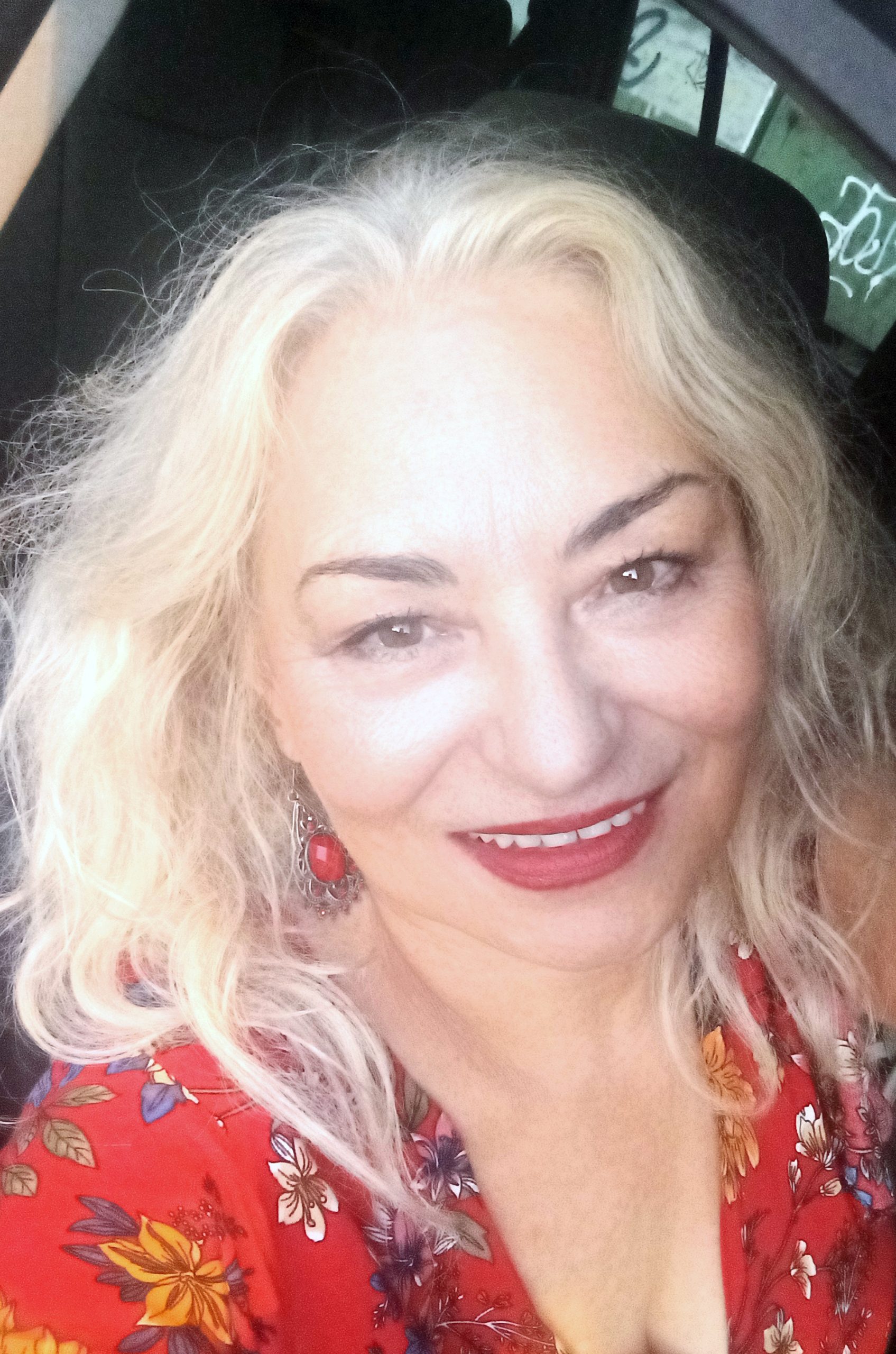
Valentina Pavlović is a contemporary poet from Belgrade, Serbia. Her poetry explores inner rhythm, shifts in tonality, diverse perspectives, and themes. Her work is recognized for its original approach to form, tone and expression, creating poetry that is intimate, powerful and universally relevant while enabling layered communication with readers.
Still call themselves the rightful, righteous ones.
The wounded souls endure the darkest night,
Yet moonlight whispers: dawn is on its way.
And night, too, will not leave its place in vain—
It knows the coming light will bring the day.
No human being can dispense true justice;
An unjust world deceives its own poor heart.
So let it go, O heart, and trust your Maker—
He is the One who gives true justice its part.
Justice will not simply fade inside a book;
Do not demand it from the lying crowd.
For nights themselves must fade and disappear,
Because the sun will rise, though not aloud.
The sun does not go down without a cause;
The night does not arrive without a dawn.
So let the world be judged by One who knows—
For after every night, the sun comes on.
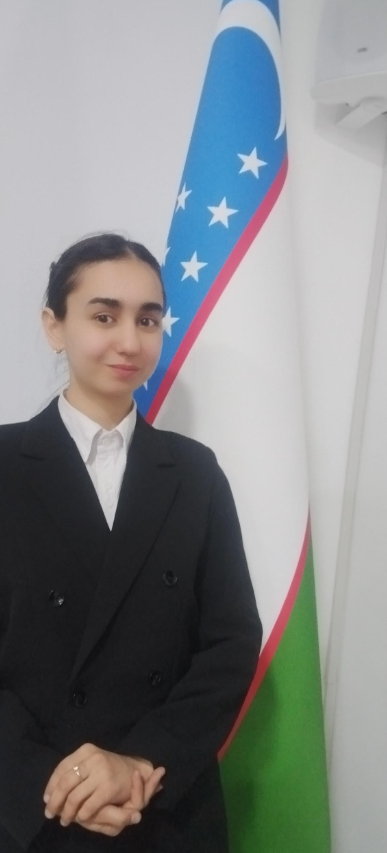
Xasanova Aziza Kumushbek qizi was born on October 1, 2004, in Chirchik, Tashkent Region, Uzbekistan. She is currently a student at Tashkent University of Economics and Pedagogy.
On March 1, 2025, she was awarded the title of “Faculty Zulfiya” in a competition organized by the university in recognition of her academic achievements and active participation.She is the author of several scientific articles published in various academic journals and conference proceedings.
Her poems, short stories, and other literary works have been published in numerous newspapers, magazines, and online platforms around the world. Her writings are regularly featured in countries including Albania, Pakistan, Italy, the United States, the United Kingdom, Germany, India, Argentina, Türkiye, Saudi Arabia, Uzbekistan, Kenya, South Korea, Bangladesh, Romania, and Greece.
We have been washing ourselves in blood for too long.
We have merged inhumanly with the war,
We haven’t prayed in essence yet.
The enemy is still pressing on our world.
Happy Eyes – seven centuries, save your child,
Wash the waters, sanctify the sun.
ОЧІ УКРАЇНСЬКОЇ ЗЕМЛІ
У краплистих споминах кохання,
Зрання, я бачу світло, зоряниці.
Її блаженні очі, її святе прохання.
Я з вами, навіть якщо спиці
Охотять змірювати час.
Я з вами, я побіля вас.
Кохайтесь ніжно в Помислові,
Із вами завше моє Слово,
Блакитний позір – Бог Любові.
Землистий і блаженний Спас…
Її досвітні Очі, її жаги дівочі,
Її яскраві рухи, її щасливі руки,
Її блаженні Яси, її надмірні , наші
Чуттєві міри пливуть сльозами рік…
Ми надто довго в крові мились.
Ми нелюдськи з війною злились,
Ми ще за суттю й не молились.
Ще тисне ворог на наш світ.
Щасливі Очі – сім століть, чадо спасіть,
Омийте води, сонце освятіть.
Тетяна Грицан-Чонка — українська поетеса, перекладачка й культурна дипломатка, авторка 15 поетичних збірок і роману-есе «Живі двері». Співавторка 200+ антологій, лауреатка міжнародних премій (Кафки, Бьолля, Хемінгуея, Бернса, Драйзера та ін.), відзначена Світовим орденом культурної дипломатії й титулом Посла Миру. Її поезія єднає культури, мовами і світами
A precious day of life.
Find me among a thousand buds, Accept me, wrap me with the mourning Of my yesterday’s shadow, My transparent frothy Words…. I am alive. Bring me the first kiss, Swallow the tears of earthly gifts…. Accept God’s wonders. I am alive…. In the lavender light, birds Are flying home, Roofs Covered with feathers of songs, Day…. I am in the sky, among the birds, Carrying water, sprinkling sins Of yesterday’s kin…. I am from the East…. I will learn your Words, I will give all of myself To the people…
*Sprinkling—–watering
Тетяна Грицан-Чонка — українська письменниця,
автор 14 збірок поезій та роману-есе «Живі двері». Її твори перекладено багатьма мовами, зокрема англійською, німецькою, киргизькою, сербською, румунською, італійською та в’єтнамською. Публікувалася в міжнародних журналах та є учасником різноманітних міжнародних платформ «ПОЕТИ СВІТУ ЗА МИР В УКРАЇНІ». Також Тетяна є рекордсменкою України з печворку «Босорка». У 2024 році отримала звання «Заслужений працівник культури України
Цінний день життя
Знайди мене серед тисячі бруньок,
Прийми мене, огорни сумом
Моєї вчорашньої тіні,
Мої прозорі пінні
Слова….
Я жива.
Принеси мені перший цілунок,
Проковтни сліз наземних дарунок….
Прийми Божі дива.
Я жива…
У лавандовім світлі птахи,
Прилітають додому,
Дахи
Вкрилися пір’ям пісень,
День….
Я у небі, поміж птахів,
Ношу воду, шпую* гріхи
Вчорашнього роду…
Я зі Сходу….
Я навчуся твоїм Словам,
Я всю себе віддам
Народу….
Три роки…
Три століття пройдуть у стоптаному часі,
Три трійки, повноліттям
Згребуть прорив…
Бики пасуть
Маленького ребристого папугу…
Над нами — пекло, під нами — біль, наруга…
У чому суть? Кого несуть?
Приймати слід весни у простори…
Ми зможемо — у тому й суть.
Ми зможемо — ми медозбори.
Я що? Я куди?
А геній прорікло дня…
Іду в розповсюджені руки.
Я — ти, Я — земля…
Злітаються круки.
У просторі — море буття,
У просторі — простір і звуки…
Тепер тобі Я — вже не Я,
Тепер — тільки стуки.
Закрився малесенький день
У темному коробі ночі.
Я ще добіжу,
Я ще долечу До неба,
До зір серед ночі…
У сні загубила печаль,
На ложі лишила вуаль.
У стомленім плесі
Купаються діти…
Де ти? А де я?
У небі — розжеврені квіти.
(Англійською)
Three Years…
Three centuries will pass in worn-out time,
Three threes, with coming of age,
Will gather breakthrough…
Bulls graze A tiny ribbed parrot…
Above us — hell, beneath — pain, disgrace…
What is the truth? Whom do they carry?
We must embrace the spring’s vast space…
We can — that is the truth. We can — we are honey-gatherers.
What am I? Where to?
And genius spoke of day…
I walk into outstretched hands.
I am — you, I am — the land…
The ravens gather.
In space — the sea of being,
In space — space itself, and sound…
Now to you I am no longer I,
Now — only pounding.
A tiny day has closed
Inside the dark box of night.
I’ll still run, I’ll still fly To the sky,
To stars in the night…
In sleep, sorrow was lost,
On the bed, a veil was left.
In the weary shallows Children bathe…
Where are you?
And where am I?
In the sky — flowers, glowing red.
(Французькою)
Trois ans… Trois siècles passeront dans le temps usé, Trois fois trois, à la majorité, Ramasseront l’élan… Les taureaux paissent Un petit perroquet nervuré… Au-dessus — l’enfer, en dessous — douleur, outrage… Quel est le sens ? Qui est porté ? Il faut accueillir le printemps dans l’espace… Nous pouvons — voilà le sens. Nous pouvons — nous sommes les cueilleurs de miel.
Moi, quoi ? Où aller ? Et le génie a parlé du jour… Je vais vers les mains ouvertes. Je suis — toi, je suis — la terre… Les corbeaux s’assemblent. Dans l’espace — une mer d’être, Dans l’espace — l’espace, et les sons… Maintenant, pour toi, je ne suis plus moi, Maintenant — seulement des battements.
Un tout petit jour s’est fermé Dans la boîte sombre de la nuit. Je vais encore courir, Je vais encore voler Vers le ciel, Vers les étoiles dans la nuit…
Dans le rêve, la tristesse s’est perdue, Sur le lit, un voile est resté. Dans les eaux fatiguées Les enfants se baignent… Où es-tu ? Et moi, où suis-je ? Dans le ciel — des fleurs rougeoyantes.
(Угорською)
Három év… Három évszázad lép át a koptatott időn, Három hármas, nagykorúsággal Gyűjti az áttörést… Bikák legelnek Egy apró, bordázott papagájt… Felettünk — pokol, alattunk — fájdalom, gyalázat… Mi az értelme? Kit visznek? Fogadni kell a tavaszt a terekben… Meg tudjuk tenni — ez a lényeg. Meg tudjuk tenni — mi vagyunk a mézgyűjtők.
Mi vagyok én? Hová? És a géniusz kimondta a napot… Nyújtott kezekbe lépek. Én — te vagyok, én — a föld… Gyülekeznek a varjak. A térben — a lét tengere, A térben — tér és hangok… Most már neked én — nem én, Most — csak dobbanások.
Bezárult egy aprócska nap Az éjszaka sötét dobozában. Még futok, Még repülök Az ég felé, A csillagokhoz az éjszakában…
Álomban elveszett a bánat, Az ágyon fátyol maradt. A fáradt vízben Gyermekek fürdenek… Hol vagy te? És én hol vagyok? Az égen — lángoló virágok.
Tetjana Hrytsan-Chonka is a Ukrainian poet, translator, and cultural diplomat, author of 15 poetry collections and the novel-essay “Living Doors.” As co-author of over 200 international anthologies, she has received prestigious awards (Kafka, Böll, Hemingway, Burns, Dreiser, among others) and holds the World Order of Cultural Diplomacy and the title of “Ambassador of Peace.” Her poetry bridges cultures, languages, and worlds.
Molly Marie Kent is quite simply one of the most electrifying creators in the rising metal underground. Onstage she is The Supreme, the Witch Queen architect behind Nashville’s rising Doom Stoner metal phenomenon Omenbringer, a band designed to seduce visually and devastate sonically.” She has built Omenbringer as a witch-coated, sex-positive, fantasy-driven metal coven, a project where spectacle and substance coexist, a band that looks like a ritual and sounds like a thunderstorm.
From the moment she appeared in my virtual studio, I felt that unmistakable charge—the recognition of someone operating from sovereignty, not performance.
I began with lineage. “You’ve talked about your inspiration coming from your background in performance, in burlesque,” I said, “and also Tolkien, Bettie Page… Frank Frazetta…the thiccness, right?”
“That’s right,” she said.
I told her how my collaborator Lee Bailes (screenwriter, director, author/poet) and I had been talking about writing a movie called Big Titty Goth Girlfriend, and how uncanny it was when her song appeared.
“It’s almost like your song manifested,” I said. “We were both like, whoa, dude. There it is.”
She laughed, delighted by the synchronicity.
I told her how performances like “Stir the Cauldron” strike me as “next level… really, really amazing when you have a woman who’s not afraid of being both sovereign and sexual.” She nodded, fully inhabiting that duality.
When I asked about her female musical inspirations, she didn’t hesitate. “Cherie Currie, amazing, I love The Runaways and Joan Jett, I love the raw sexual energy of that band.”
But she gravitates toward artists with their own worlds: “Amy Winehouse is an enormous influence… her voice, her raw realness in her lyrics.” She added Alison Krauss for “beautiful singing,” and then pivoted to the frontmen who shaped her: “Phil Lynott is the greatest frontman of all time. And I’ll stand on that. I’ll die on that hill.” Ozzy Osbourne follows immediately.
She loves Black Sabbath for their paradox: “They are perceived as this dark and evil band, but really a lot of their lyrics are very, very positive… almost like spells and witchcraft of positivity.” Iron Maiden is another pillar: “I love storytelling… I like Marty Robbins… I like all kinds of music that tells stories.” Her heart, she said, “is definitely living all the time” in classic rock.
What fascinates me most is how she threads classical music into doom metal. “A lot of our influence… is actually from classical music,” she said. “Distinctly and very obviously would be A Night on Bald Mountain by Mussorgsky. There are multiple themes within Thicc Darkness(Omenbringer’s debut full-length) that come directly from that piece of music.”
She wants her music to “seem vaguely familiar… likened to the greats… but fresh.”
Fantasia was her gateway drug. “I was very, very much into Fantasia,” she said. “The devil comes to earth and is having a crazy party… that animation sequence is incredible… it gives me chills. It has titties in it, you know? Like, it is epic.”
When we talked about the Omenbringer song Big Tiddy Goth Girlfriend, she revealed the deeper spellwork behind the camp. “Part of our mission as a band is to diversify the metal scene… to make women feel empowered and comfortable to come and have their tits out at our shows.”
She calls her fanbase “our coven of kindness.” And she emphasized the importance of trans fans: “Especially our trans Big Titty goth girlfriends… we want them to feel comfortable, seen, safe… their lives are hard enough already.”
Safety is ritual. “At any time… if you feel uncomfortable, there’s one of five of our band members, or 500 of our actual coven members, that are gonna make sure that you get to your vehicle safely.”
The song itself was a manifestation spell. “It was actually about two of my muses… I wanted to befriend them… my spell has come true. They are both very good friends of mine now.”
She added, “We do real magic when we’re writing our songs… manifesting real and powerful wishes.”
We drifted into literature—Baudelaire, Whitman, Stoker, Tolkien—because that’s where both our hearts live. She told me about “Chevalure,” her Baudelaire‑inspired song: “This poem… describes the fascination I have with this very particular type of woman… long, black, flowing hair… perfumed with cigarettes and roses.” She studied French in college: “I do speak French.” I told her I majored in Comparative Literature and have translated Baudelaire.
Her second album, A Night on Black Mountain, is a concept album: “laying siege to an evil witch’s castle… failing miserably… shipwrecking on her castle… being tortured in the dungeon… having to fight a dragon… narrowly escaping through a trap door.”
She’s pushing herself to write “as beautifully as possible… with as much literary nods as possible.” She loves hymnal language—“ye this, ye that”—and avoids repetitive choruses: “I want people to have a hard time remembering the lyrics… it’s tricky on purpose.”
When I asked about her occult origins, she went straight to childhood. “I was leaning into the occult as a young person… doing spells with my other witchy friends in middle school.”
Church repelled her: “I hated going to church… big ugly megachurch ones.” Fantasia seduced her. As she matured, she embraced her true persona: “If you’re fortunate and brave, you can lean fully into your true self… The Supreme is not a character. It is me at my most fancy, exuberant, wild side.”
She quoted Whitman unknowingly—“we all contain multitudes”—and I pointed it out. She laughed: “I didn’t know that came from him.”
Her spiritual path moved from Christianity to atheism to Satanism to something fluid. “Whatever I feel like at the time,” she said. She identifies with Satan partly because “I really love trolling the Christians.”
Mushrooms became medicine. “Every time I buy mushrooms, I can feel that very distinctly.” She keeps a tin labeled “souvenirs from my mushroom trip,” filled with handwritten revelations. One lesson: “I don’t have to love someone… I can love someone from afar.”
Her future album Sinister Trip will be “a dark mushroom trip… exploring death as a theme.”
When I asked about her persona, she said it’s “an amalgamation of Maleficent… Elvira… Dolly Parton… and Bettie Page.” She wants to be “everybody in the South’s honorary goth auntie… very campy, very sexy… but also very generous, very giving.”
Her ambitions are colossal. “We’re gonna be the next legacy band… the next Black Sabbath… Kiss meets Black Sabbath.” She imagines playing the Sphere in Las Vegas: “They turn the Sphere into a giant orb with my eyes… flying over the audience on my broom… we’re gonna be the biggest band in the world.”
I told her, “Yeah, you are.”
She laughed and said she wants a statue downtown: “Just like Bettie Page… I’ll be the third witch downtown.”
We closed with gratitude. “Thank you so much for having me,” she said. “Thoughtful questions.”
“Thank you so much, Molly.”
“Have a great day.”
“You too.”
Dubbed “the Baudelaire of our time” by The Crow (1994) screenwriter John Shirley, Alex S. Johnson is a transfemme polymath spoken word performer/author/editor and publisher with Nocturnicorn Books. His 18 published books include two archived at Harvard’s Widener Library for their cultural significance by senior cataloguer Craig K. Thomas, the brother of New Weird legend Jeffrey Thomas. He has been endorsed by the likes of Mort Castle, Caitlin R. Kiernan, Marleen S. Barr, R.U. Sirius, Jarboe and Jeffrey Thomas and has had work appear in such prestigious outlets as Rolling Stone magazine. He has made publishing co-appearances with Allen Ginsberg, Jack Micheline, Ramsey Campbell, Charles Bukowski, Kate Bornstein, Susie Bright, Patrick Califia and Neeli Cherkovski and performed with Iris Berry, Danielle Willis, K.R. Morrison, Puma Perl, Tricia Warden, Loren Rhoads, Ellyn Maybe and Richard Modiano. Johnson lives with his family in Carmichael, California.
Mother-of-pearl Transformed into love, art, and tenderness, he strove to mold his little angels, yet his partner—scornful of sculpture— preferred to sate their appetites instead.
And amidst endeavors scattered by the wind, and self-centered banners serving as mottos, art was dissuaded from the attempt to weigh the dilemmas of being and non-being.
Thus, yearnings dissolved into the mist, into a lost dream that fades away, into a mold shaped solely by pleasure.
And those little angels of divine mother-of-pearl, absent, could not witness the destiny of their wings, which still hang waiting to be born.
Delsa López Lorenzo. Cuba. Retired from the Credit and Commerce Bank of Yaguajay. Poet and storyteller; she writes for both children and adults. She serves as the Cuban director of the magazine América sin Fronteras (America Without Borders), founded in Mexico by Dr. José Ángel Ramírez. She has been accredited as an Ambassador of Peace by humanist organizations and was honored as a “Distinguished Woman” in the Mujeres Ilustres (Distinguished Women) program of Sancti Spíritus province, hosted by Saylí Alba Álvarez.
She has served as a juror for both in-person municipal events and online international events. She is an accredited member of the Mother Tongue Chair at the Simón Bolívar Municipal University Center (CUM). In Yaguajay, Sancti Spíritus, Cuba, she hosts various ongoing cultural programs sponsored by the Raúl Ferrer Promotion Center. These include Poesía para la vida (Poetry for Life), the Bernardo Amador Yunes Literary Workshop, and special programs serving the elderly, prison inmates, pregnant women, children with special needs, primary and secondary school students, and children in daycare centers, as well as workshops on décima poetry and repentismo (improvisational verse).
Her work has been included in anthologies across Europe, Latin America, the United States, Cuba, Spain, Peru, Ecuador, Argentina, Mexico, and other countries. She has won numerous awards in Cuba and abroad and has been featured in magazines, newspapers, and radio and television programs both in her home country and internationally. Her publications include the poetry collection for adults Réquiem para un amor (Mexico); the children’s and young adult storybook Paraíso de mascotas (Cuba); and the children’s books Juan Pirindingo y otros cuentos and Saltarina y el maja rastrero (United States). Her poetry collection for adults, Clamores de un hacedor de versos, is currently being edited for publication in Cuba.