Dr. Natalia Bisso announces international literary competitions open for entry

1. Attention: (Germany + Russian-speaking authors and visual artists from different countries of residence where there are no NOBLE LAUREATE AWARD Committees).

——————————————

OFFICIAL APPLICATION REQUEST

The WORLD

New World Laureate Award COMMITTEE

is proud to announce the establishment of

THE NOBLE LAUREATE AWARD

Award categories

, Literature – Poetry

, Literature – Prose

, Fine art

We sincerely invite poets, writers and artists from all over the world to participate in this unique international exhibition.

Design requirements

For authors

Please send a request:

Full name (or alias)

A country

Profile photo (in high resolution)

The biography is written in the third person

Links confirming your literary activity

List of published books

Critical reviews, articles, or interviews (if any)

Literary awards, honorary degrees, titles, memberships, and other notable achievements

————————-

For visual artists 

Please send:

Full name (or artistic pseudonym)

A country

Profile photo (in high resolution)

A biography written in the third person

Links confirming your creative career

List of exhibitions

Critical reviews, articles, or interviews (if any)

Awards, honorary titles, membership in the organization and other professional achievements

The presence of a published monograph is desirable, but not necessary.

—————————–

Application procedure

All application materials must be submitted:

as 1 Microsoft Word document (.doc or .docx),

with a profile photo attached as a separate image file, by e-mail to the National Award Committee of the applicant’s country.

Applicants are also encouraged to post links to interviews, documentaries, lectures, or short presentation videos showcasing their literary or artistic work.

Make sure that there is no such committee in your country.

THE DEADLINE FOR SUBMITTING APPLICATIONS IS OCTOBER 1.

(Clarification – this is not a competition, this is the whole creative path and activity of the author.

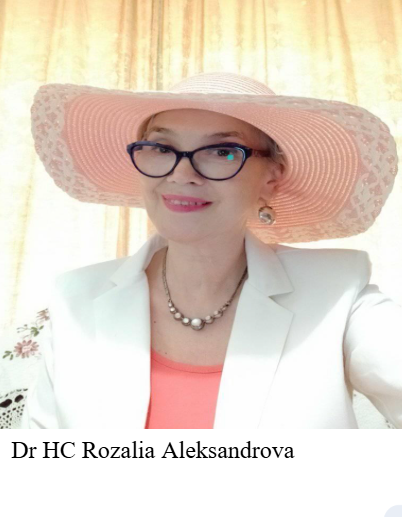
Dr. Natalie Bisso – President of the National (German) and Transnational Committee (in countries where there are no Award committees); Chairman of the National and Transnational Award Committee; official contact person for submitting applications.

Email:

natalirubisso@mail.ru

Additional explanations on the Application form in the clip:

_________________________

2. At the moment, the ILAST/ MLATT Association is holding a Friedrich Schiller literary competition, the acceptance of works ends on August 20.

The terms of the competition can be found here:

FB: https://www.facebook.com/groups/540040781692174/permalink/1053369007026013/

____________________________________

3. An offer for interested authors to join the International Literary Association “Creative Tribune” (MLATT/ILACT).

Links to get acquainted with the work of the Association:

 ILA group  “Creative Tribune” — FB: https://www.facebook.com/groups/540040781692174

Official website ILAST/ MLATT:

https://sites.google.com/view/ilact/главная

Those interested can contact the secretariat at: anamay05@mail.ru

or to the President of the Association: natalirubisso@mail.ru

Candidates for membership will be sent a questionnaire to fill out.

Essay from Matniyazova Gulizebo Adilbek qizi 

Learning English – The Key to Success

“A person who knows a language knows the world.” This wise saying has become even more meaningful today. We live in an age of knowledge, innovation, and competition. For every young person who wants to keep up with the modern world, build a successful career, and achieve great goals, learning English has become an essential need. English is not only a language of communication but also a key that opens the door to science, technology, education, and endless opportunities.

Today, many young people are eager to learn English. The reason is simple: knowing English allows us to study at the world’s leading universities, participate in international scholarships and projects, gain modern professions, and find opportunities anywhere in the world. However, every success requires hard work, patience, and determination. Dreams alone are not enough; we must work consistently to achieve them.

I am also studying English Language. One of my biggest goals is to achieve an overall band score of 9.0 on the IELTS exam and demonstrate my knowledge at an international level. God willing, I will achieve this goal through hard work, patience, and perseverance. I am not learning English only to get a certificate. I am learning it to broaden my horizons, gain new knowledge, and create more opportunities for my future.

Another great dream of mine is to take my parents on trips to foreign countries as a way of thanking them for their endless love, care, and sacrifices. In addition, I plan to transform my family’s houses located in the historic Ichan Kala area of the ancient city of Khiva into modern guest houses and contribute to the development of tourism in my country. By mastering English, I will be able to communicate confidently with foreign visitors and introduce them to the rich history, unique culture, and warm hospitality of Khiva. In the future, I hope not only to achieve my own dreams but also to make a meaningful contribution to the development of my homeland.

In conclusion, learning English is not just about mastering a new language; it is a strong step toward a brighter future. I firmly believe that every effort I make today will help me achieve my dreams tomorrow. Every new word I learn brings me one step closer to my goals. Every young person who learns English is building not only their own future but also the future and prosperity of their country. Great dreams come true only through great effort, and dreams never wait—they can only be achieved through determination, hard work, and continuous action.

Biography  

Matniyazova Gulizebo Adilbek qizi was born on June 22, 2006, in Khiva, Uzbekistan. She is currently a second-year student majoring in English Language Teaching at Urgench RANCH University of Technology. She is passionate about learning English, conducting academic and creative activities, and continuously improving her knowledge and skills. In the future, she hopes to become a qualified English language specialist and contribute to the development of education and tourism in Uzbekistan.

Poetry from Young-eun Kang

The First Word

You and I speak the same mother tongue,

yet we cannot understand each other’s words.

“Why do you like me?”

“When did I ever?“

“Then why do you hate me?”

“I never did.“

The words you throw arrive at different destinations,

facing one another like travelers changing at different stations.

Someone says that all eight billion people 

each speak a different language.

Even if that is the way language runs across the open grasslands,

if we could understand the different syllables at every joint of speech,

would sorrow, too,

become one?

The distance between words.

The depth between words.

The breadth between words.

They are only the landscape seen from the Tower of Babel.

The measure of a life that travels between heaven and earth is different.

The First Word,

clothed in flesh,

teaches us love.

When I move the tower of distrust and resentment outside my thoughts,

I can hear it.

Though our ears may hear differently,

our hearts hear the same.

“I love you.” 

“So do I.”

태초의 말 

     강영은

너와 나는 같은 모국어를 쓰고도 서로의 말을 알아듣지 못한다

너는 왜 나를 좋아하니

내가 언제

그러는 너는 나를 왜 미워하는데

그런 적 없어

네가 던진 말은 전혀 다른 목적지에 닿는다

경유지가 다른 말처럼 마주 보기만 한다

누군가 말한다

80억 인구가 각자 다른 말을 한다고

그것이 초원 위를 누비는 언어의 방식이라 할지라도

마디마디 다른 음절을 알아듣는다면 슬픔도 하나가 될까?

말과 말 사이의 거리

말과 말 사이의 깊이

말과 말 사이의 넓이는

바벨의 탑에서 바라본 지형일 뿐이라고,

하늘과 땅을 오가는 목숨의 셈법은 다르다고,

태초의 말씀이 몸을 입어 사랑을 가르친다

불신과 원망의 탑을 생각 밖으로 옮기니 들린다

듣는 귀가 달라도 마음속에 들린다

나 당신 사랑해요

나도요

Between Tree and Leaf

Between tree and leaf,

your dry bones

are blooming.

Neither tree

nor leaf,

waiting

arrives first

and blossoms.

There are times

when love

is a branch.

Joined

to an endless waiting,

rather than calling your name

until it becomes meaning,

there are times

when a branch

hurts more,

because it does not break,

whether rain falls

or the wind blows.

나무와 나뭇잎 사이

            강영은

나무와 나뭇잎 사이,

너의 마른 뼈가 꽃을 피우고 있다

나무도 나뭇잎도 아닌

기다림이 먼저 가서 꽃을 피우고 있다

사랑은 그렇게 가지일 때가 있다

한없는 기다림에 잇닿아

너를 불러 의미가 되기보다

비 오거나 바람 불거나 부러지지 않아

더욱 아픈 가지일 때가 있다

Prose from Brian Michael Barbeito

Screenshot

There was a colourful toy; and a wooden dog upon a string, and these things were from long before and there were as a rainstorm and the water climbed up the stream sides incredibly high to almost the tips of hills where evergreens lived. But even before that, the lady who was old and a guardian kept gardens and had flowers and raspberries that were colourful and robust and always happy during the summer sun under which they lived. She collected the raspberries sometimes, walking slowly, and carrying a bowl to put them in. She was then healthy, joyous, and often the boy that she took care of followed her and helped or just watched the world the, the trellis and brick and there were a wooden archway and gate that led to the backyards, to those raspberry and flower worlds…

How later the night darkness became full and the spirits spoke, but they were good spirits and angels and a group of them sang songs and comforted him in his ears if spiritual ears and other worldly hearing. And an oval carpet and God or existence was strongest, wisest, and once, even before that, he was sitting with his grandmother on porches and wore comfortable clothes and had curly hair and was happy, smiling, even laughing. 

Oh, he remembered her then and thought she was around currently. A guardian. And she was as she was then. Making things, sweaters, hats, and tablecloths. These were crocheted and useful, well-made, and made confidently and often. And he thought then that, Thank God the world had made her and that she cared for him, made him food, and gave him shelter.

In the far south there was a fine cement pool and beyond it, the sea. These things were good things and markers of the divine. He had been swimming in both. Sometimes the guardian was there, had been there, and that was good. In the modern time he wore a large blue winter coat and as he glanced almost accidentally in a mirror one cold winter day, he remembered the time of guardian and that he wore then a blue coat at least one winter and that it had zippers and a button and kept him warm. He thought it nice and somehow even auspicious that both coats were similar and that somewhere his light and the light of the guardian plus the angels and spirit was the same. 

——

Screenshot

Essay from Abdukarimova Qadriya

THE RELATIONSHIP BETWEEN LANGUAGE AND CULTURE IN EFL LEARNING

Termiz davlat universiteti Xorijiy filologiya fakulteti Filologiya va tillarni o’qitish: ingliz tili ta’lim yo’nalishi talabasi Abdukarimova Qadriya 

Annotatsiya

Ingliz tilini chet tili sifatida (EFL) o‘rganishda til va madaniyat o‘rtasidagi munosabat muhim ilmiy hamda amaliy ahamiyatga ega. Til nafaqat muloqot vositasi, balki xalqning qadriyatlari, dunyoqarashi, urf-odatlari va ijtimoiy tajribasini aks ettiruvchi madaniy hodisadir. Shu sababli EFL ta’limida madaniy kompetensiyani rivojlantirish o‘quvchilarning kommunikativ kompetensiyasini shakllantirishda muhim omil hisoblanadi. Ushbu maqolada til va madaniyatning o‘zaro bog‘liqligi, EFL ta’limida madaniyatning roli, madaniyatlararo kommunikativ kompetensiya hamda zamonaviy o‘qitish yondashuvlari tahlil qilinadi.

Kalit so‘zlar: EFL learning, language and culture, cultural competence, intercultural communication, communicative competence, language teaching, cultural awareness.

Abstract

The relationship between language and culture is one of the most significant aspects of English as a Foreign Language (EFL) learning. Language is not merely a means of communication; it is also a carrier of cultural values, beliefs, traditions, and social experiences. Therefore, understanding cultural aspects is essential for developing effective communicative competence in language learners. This article examines the interconnection between language and culture, the role of culture in EFL education, intercultural communicative competence, and modern approaches to integrating culture into language teaching. The study highlights the importance of cultural awareness in achieving successful language learning outcomes.

Keywords: EFL learning, language and culture, cultural competence, intercultural communication, communicative competence, language education, cultural awareness.

Аннотация

Взаимосвязь языка и культуры является одним из важнейших аспектов изучения английского языка как иностранного (EFL). Язык представляет собой не только средство общения, но и носитель культурных ценностей, убеждений, традиций и социального опыта народа. Поэтому понимание культурных аспектов играет важную роль в формировании коммуникативной компетенции учащихся. В данной статье рассматриваются взаимосвязь языка и культуры, роль культуры в обучении английскому языку, межкультурная коммуникативная компетенция и современные подходы к интеграции культуры в процесс обучения языку.

Ключевые слова: изучение английского языка как иностранного, язык и культура, культурная компетенция, межкультурная коммуникация, коммуникативная компетенция, языковое образование, культурная осведомленность.

In today’s globalized world, English has become an international language used in education, business, science, and intercultural communication. As a result, English language teaching has expanded significantly, particularly in countries where English is taught as a foreign language. However, language learning involves more than mastering grammar, vocabulary, and pronunciation. Effective communication requires an understanding of the cultural context in which the language is used.

Language and culture are inseparable concepts. Every language reflects the history, values, customs, beliefs, and social norms of its speakers. Learners who study English without understanding its cultural background may face difficulties in interpreting meanings, idioms, humor, politeness strategies, and social behaviors. Therefore, cultural knowledge has become an essential component of EFL instruction.

The increasing importance of intercultural communication has encouraged educators to integrate cultural content into language teaching. This approach enables learners not only to develop linguistic proficiency but also to interact successfully with people from different cultural backgrounds.

Literature Review

The relationship between language and culture has been widely discussed in linguistic and educational research. Scholars such as Edward Sapir and Benjamin Lee Whorf argued that language influences the way people perceive and interpret the world. Their linguistic relativity hypothesis suggests that language and culture shape human thought and behavior.

Kramsch (1998) emphasized that language expresses, embodies, and symbolizes cultural reality. According to her, language learning should involve cultural understanding because communication is deeply rooted in social and cultural contexts. Similarly, Byram (1997) introduced the concept of intercultural communicative competence, which combines language skills with cultural awareness and the ability to interact effectively across cultures.

Recent studies indicate that integrating culture into EFL classrooms improves learners’ motivation, communicative competence, and critical thinking skills. Researchers have also highlighted the importance of exposing learners to authentic cultural materials such as literature, films, media content, and real-life communication situations.

Modern educational approaches stress the need to move beyond teaching facts about English-speaking countries and instead focus on developing intercultural understanding. This perspective encourages learners to compare cultures, recognize cultural differences, and respect cultural diversity.

Research Methodology

This study employs a qualitative and analytical research methodology. The research is based on the examination of scholarly books, journal articles, and theoretical studies related to language, culture, and EFL education.

Several methodological approaches are applied:

– Descriptive analysis to explain the relationship between language and culture.

– Comparative analysis to identify similarities and differences between cultural perspectives in language learning.

– Content analysis of relevant academic literature on intercultural communication and EFL teaching.

– Interpretive approach to evaluate the significance of cultural competence in language education.

The combination of these methods provides a comprehensive understanding of how cultural factors influence language learning and teaching processes.

Language as a Reflection of Culture

Language serves as a mirror of culture. Vocabulary, idioms, expressions, and communication styles often reflect the values and traditions of a society. For example, English contains numerous expressions related to individualism, personal achievement, and independence, which are significant values in many English-speaking societies.

Cultural influences can also be observed in forms of politeness, greetings, and social interactions. Understanding these cultural norms helps learners use language appropriately in different contexts. Without cultural knowledge, learners may produce grammatically correct sentences that nevertheless sound unnatural or inappropriate.

The Role of Culture in EFL Learning

Culture plays a crucial role in developing communicative competence. Learners who understand cultural contexts are better able to interpret meanings, avoid misunderstandings, and engage in effective communication.

Cultural integration in EFL classrooms offers several benefits:

1. Enhances communicative competence.

2. Increases learner motivation and engagement.

3. Promotes critical thinking and cultural awareness.

4. Reduces stereotypes and cultural misunderstandings.

5. Prepares learners for global communication.

Through exposure to cultural content, learners gain a deeper understanding of how language is used in authentic situations.

Intercultural Communicative Competence

One of the primary goals of modern language education is the development of intercultural communicative competence (ICC). ICC refers to the ability to communicate effectively and appropriately with individuals from different cultural backgrounds.

According to Byram’s model, intercultural competence includes:

– Cultural knowledge.

– Skills of interpretation and interaction.

– Attitudes of openness and curiosity.

– Critical cultural awareness.

These components enable learners to navigate cultural differences successfully and build meaningful international relationships.

Challenges in Integrating Culture into EFL Education

Despite its importance, incorporating culture into language teaching presents several challenges. Teachers may lack sufficient cultural resources or training. Textbooks sometimes provide limited or stereotypical representations of culture. Additionally, some educational systems prioritize grammar and examination performance over communicative and cultural competence.

To overcome these challenges, educators should utilize authentic materials, digital resources, international projects, and interactive classroom activities that encourage cultural exploration and discussion.

The relationship between language and culture is fundamental to successful EFL learning. Language cannot be fully understood or effectively used without considering its cultural dimensions. Cultural knowledge enhances communicative competence, promotes intercultural understanding, and prepares learners for participation in a globalized society.

Modern EFL education should therefore integrate cultural learning alongside linguistic instruction. By developing both language proficiency and cultural awareness, learners become more effective communicators and more competent global citizens. Future language teaching practices should continue to emphasize intercultural competence as a central objective of English language education.

References

1. Byram, M. (1997). Teaching and Assessing Intercultural Communicative Competence. Clevedon: Multilingual Matters.

2. Kramsch, C. (1998). Language and Culture. Oxford: Oxford University Press.

3. Sapir, E. (1921). Language: An Introduction to the Study of Speech. New York: Harcourt Brace.

4. Whorf, B. L. (1956). Language, Thought and Reality. Cambridge, MA: MIT Press.

5. Brown, H. D. (2007). Principles of Language Learning and Teaching. New York: Pearson Education.

6. Richards, J. C., & Rodgers, T. S. (2014). Approaches and Methods in Language Teaching. Cambridge: Cambridge University Press.

7. Hall, E. T. (1976). Beyond Culture. New York: Anchor Books.

8. Moran, P. R. (2001). Teaching Culture: Perspectives in Practice. Boston: Heinle & Heinle.

Poetry from Mark Young

Ascension

It is springtime, & the mountain lions are just coming into flower. A few early ocelots are practicing calisphenics on the lower slopes, in between sherpaing tourists up to the holy peaks.


Madrigals are everywhere — not Walt Disney’s magical Colombian family but the musical variety, where a number of singers sing separate notes that make up the chords the music is written as.


The ocelots pause in their exercises, begin to debate whether training the groups of tourists to join in singing a capella madrigals would increase the pleasure of their climb, or would they run out of puff before they got to where they wanted to go.

BOUQUET D’ANTAN

Am unsure if I like the

smell of yesteryear. Too

much reminder of mould,

of dust that you can’t get

rid of. But now someone

has brought it back as a

fountain pen ink whose

color is magenta, & seems

unable to do anything more

than make your writing look

prettier on the page, much like

its stablemates, BOUTON D’

OR or KYANITE DU NEPAL.

an / afternoon thought / for Tom Beckett

an

other is

another all together

al-

together an-

other thing again

X, formerly known as Twitter, valued at $4bn

We have created 
a new website for 
surface mounted 
applications using 
discrete diode 
rectifiers available 
from any greasy 
spoon diner or 
adult toy store. A
glass passivated 
junction chip re-
presents the best 
available hand-held 
screen protection
to view it. This 
website has since
been valued at 
US$10 by dental

marketing experts.

The al-Khwarizmi ficcione

No record of it exists except as a refutation. & the only record of the refutation is a fragment of a manuscript without provenance, attributed by the late Umberto Allegrezza, on the basis of stylistic & scribic elements, to Abu Ja’far Muhammad ibn Musa Al-Khwarizmi, better known as an astronomer, as the inventor of algebra, & rumored to be author of a lost — or rather — hidden treatise on calculus & which, it has been claimed, was the basis for both Isaac Newton’s method of fluxions and Gottfried Wilhelm Leibniz’s integral notation.


The manuscript records the thoughts of al-Khwarizmi on a homily by his contemporary Photius, the Patriarch of Constantinople, adherent to a different religion, entitled “All Life is an Accident Waiting to Happen,” aware that it was an ironic title since what Photius was advocating was the exact opposite.


al-Khwarizmi’s piece has an equally ironic title. “All Accidents are a Life Waiting to Happen.”

Essay from Jumayeva Gulasal

COMPATIBILITY OF TRADITIONAL VALUES AND MODERN DEVELOPMENT

ANNOTATION

This article discusses the role of Uzbek girls in society, the preservation of national values, and the use of modern education and opportunities. Today, it is important for girls to gain knowledge, acquire a profession, learn modern technologies, and actively participate in public life. The combination of national values ​​and modern knowledge serves to educate well-rounded, independently thinking, and spiritually-minded young people. The article also analyzes the role of family, education, and society in the upbringing of girls.

Keywords: Uzbek girls, national values, education, upbringing, youth, modernity, spirituality, profession.

ENTRANCE

Uzbek girls have always been valued for their virtues such as decency, modesty, kindness, and respect for elders. Today, many opportunities are being created for them to receive quality education, acquire a profession, and demonstrate their talents. Therefore, acquiring modern knowledge while preserving national values ​​is one of the urgent issues.

LITERATURE ANALYSIS AND METHODS

In studying the topic, scientific and analytical sources on education, youth and girls’ development were studied. The research used methods of analysis, comparison and generalization. Based on the sources, the interrelationship of national values ​​and modern education was examined.

RESULTS

The analysis revealed that girls’ education expands their future opportunities. An educated girl consciously chooses her profession, thinks independently, and can contribute to the development of society. At the same time, it is also important to maintain national qualities such as respect for parents, decency, honesty, and kindness.

DISCUSSION

National values ​​and modernity are not contradictory concepts. A girl can preserve her nationality while acquiring modern knowledge and technologies. Support from family and educational institutions is of great importance in this.

CONCLUSION

In conclusion, Uzbek girls are an important and promising segment of society. Their education, spirituality, and growing up in modern professions are important for the future of the country. A girl who preserves national values ​​and acquires modern knowledge is the creator of the future.

REFERENCES

1. UNICEF. Education in Uzbekistan. UNICEF Uzbekistan.

2. UNICEF. Situation Analysis of Children and Adolescents in Uzbekistan. 2024.

3. UN Women. Leaving No Girl Behind in Education. 2022.

4. UNICEF. Adolescent Girls: The Investment Case.

Jumayeva Gulasal was born on July 8, 2010 in the Shofirkan district of the Bukhara region of the Republic of Uzbekistan. She is currently studying in the 10th grade of a secondary school. She aims to become a primary school teacher in the future.