Poetry from Roodly Laurore

Childlike drawing of a red cardinal bird on a holly vine with green leaves and red berries.
Peacock in yellow, pink, and blue, with a blue headdress. Red flowers on green stems.

In Beauty

Contemplate its beauty

Through trees big and small

Greens, yellows subject to whim of the wind.

Streams meet rocks

Offering pleasant sound to ears

Facilitating the meditation of spiritualists.

Birds of all species

Traveling from north to south

Create pleasure

For nature lovers.

Life is beautiful

The boat centered among seas

Followed by dolphins in flight

A fascinating sight

For travelers passionate about sea life.

-Roodly Laurore

En Rose

La vie est belle 

Contemplons sa beauté 

À travers les arbres grands et petits 

Verts, jaunes soumis au caprice du vent. 

Les cours d’eau rencontrent les cailloux 

Offrant à l’ouïe un son agréable 

Facilitant la méditation des spiritualistes. 

Les oiseaux de toutes espèces 

Voyageant du nord au sud

Procurent le plaisir 

Aux amants de la nature. 

La vie est belle 

Le bateau au fond des mers 

Suivi par des dauphins en vol d’oiseau 

Un spectacle fascinant 

Aux voyageurs passionnés des poissons. 

-Roodly Laurore

Roodly Laurore was born and raised in Haiti. He is an engineer and poet. His poems, widely published, are included in: Synchronized Chaos; Spirit Fire Review; Welter University of Baltimore; Taos Journal of Poetry; Kosmos Journal; Autism Parenting Magazine; Solstice Literary Magazine; The New Verse News; Jerry Jazz Musician and others. He is the father of two sons.

Jerrice J. Baptiste is an artist poet and author of nine books. She has been published in The Yale Review; Kosmos Journal; The Tulane Review; Eco Theo Review; The Caribbean Writer and many others. Jerrice enjoys playing the role of translator and illustrator. She teaches poetry where she lives in New York!

Poetry from Paul Durand

Even Now

A strange current took us far out from shore.

We floated, sharing our bright boogie board.

“Stay calm Roman”, he did, reflecting my worry.

A whistle blew from shore and distant guards ran down the sand.

Four swam out, muscled arms chopping through the sea.

My son and I waited, watched, stunned, hypnotized.

We bobbed on the waves, all around us the bathtub sound of water.

The lead guard reached me. Ponch from Chips.

He asked if we were OK.  “Yes” I said.

He told me to hold onto a buoy tethered to his body.

My son hugged a buoy attached to a woman.

As they swam us in, I kept the boogie board,

Grateful, so grateful for that boogie board.

A third guard swimming beside us shouted “Let go of the board!”

I complied, let go of my board, did as I was told.

We came to shore.

I stood, staggered in then fell onto my knees in the retreating foam.

To my right, the boogie board shot into the air like a joyous dolphin.

Vulnerable, humble, I picked up the boogie board, onlookers clapped.

I felt deep shame before my son’s mother.

After resting, I went to Ponch the lifeguard and thanked him.

He smiled his brilliant white smile and said “Hey, it’s what we do!”

He tried to teach me how to spot rip currents,

but I was still stunned, we had escaped death.

Paul Durand June 25, 2025

=================================================

The Patriot Ghost

An unfamiliar patriot-ghost emerged

Smoke-like from a shadowed ignored corner.

Raised-up a flag that flapped, snapped, called me out.

Glided close then eyeball to eyeball, morose,

Said “bad people are here to take your life,

to dominate, squeeze, inflict pain for fun.

You are their target, their common purpose.

Masked men have been deputized to kidnap

Brown-skinned persons off the sidewalks. You’re next.

Sisters, children, fathers, mothers, brothers.”

Grieved at what must be done, shoved toward war.

Outrage arced upward, across, a solar flare of unfocused action.

I jumped up to fight these forces, to push back to death’s door.

Citizens, we must save our homeland from banal annihilation.

Paul Durand

11/21/2025 Revised

Poetry from David Woodward

Krishnamurti on my mind

man-made-man

hiding behind

the esoterisms

of your sacred

                           script

you sculpture

a belief

of your own

demonstrative

                         self.

true religion

the search . . .

religion of truth

. . . true education

solitude

confidence . . .

to seek truth

confidence

elimination of fear—

including religion

We force

justice . . . as a concept

                  or can it be more . . . relevant

                  action more than spoken . . . demanded

                  & nurtured by the people . . . gravitational

                  forces raising awareness . . . court

                  rooms empty of lies . . . deceit

                  a disease . . . We

                  conquered.

love

is the source

or must be

(for reason

to be)

bonus:

book sense for holiday emotions

an eager book that has

sat on a patient

surface, waiting for

to-day, a day formulated

for the arrival of grand

emotions, the holidays are

here! absorbed by

the patient surface

no more, it works its way

into unsuspecting hands, greedy eyes

and a thirsty mind

lap up leaping words, linked

to treasures beneath

the surface you find

understanding, peace enters

gracefully and seductively

you learn to be at One

with what you usually escape: family.

Essay from Muhammadjonova O’g’iloy Bunyodbekovna

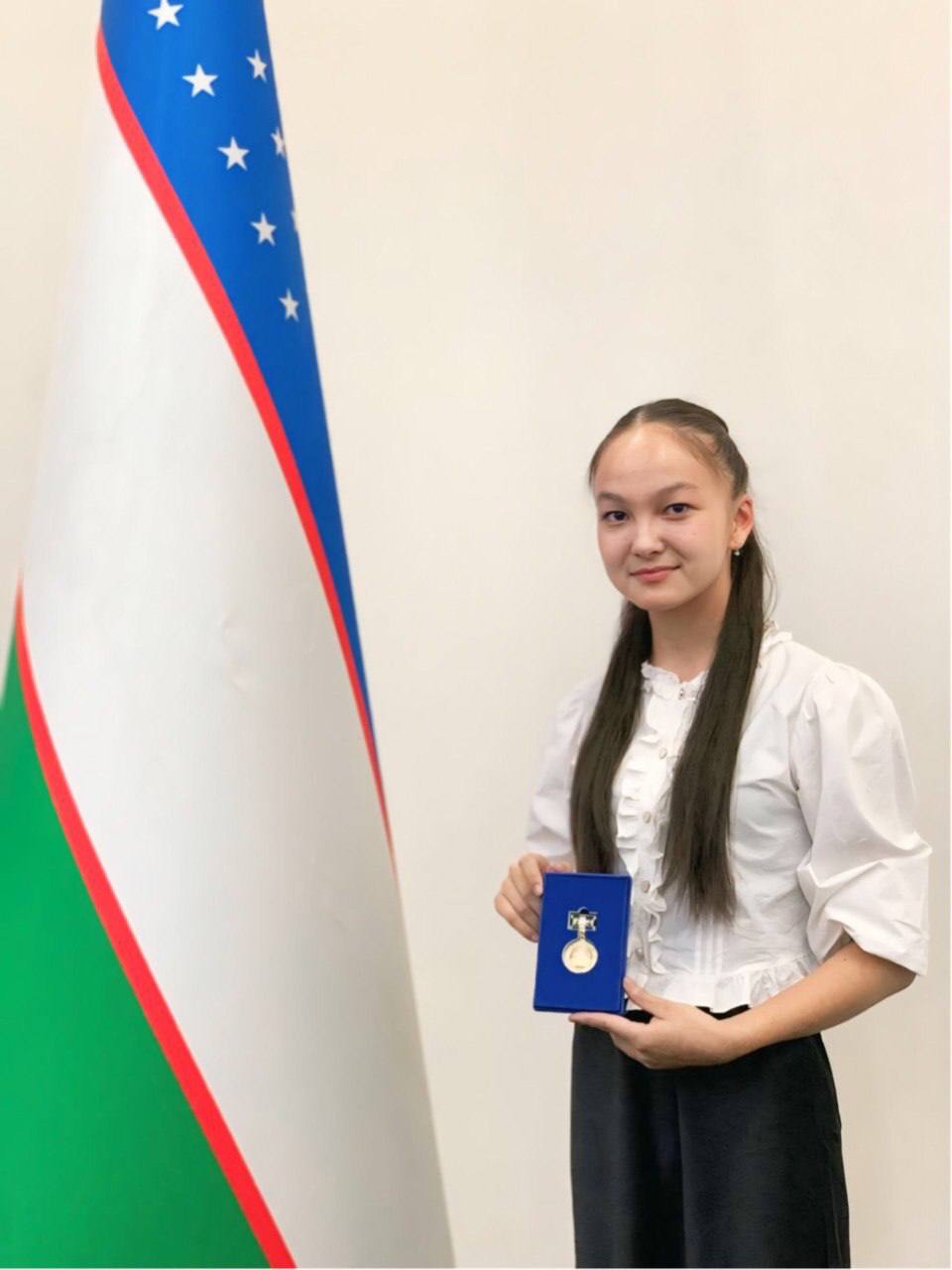
Young Central Asian girl in a black vest over a white top. She has long black hair and brown eyes.


MUHAMMADJONOVA O’G’ILOY BUNYODBEKOVNA


A review of Abdulloh Abdulmutiy Huda Said Bahlul’s book “Qulog‘im senda, qizim”

A book is a bridge of salvation between this world and the Hereafter, guiding us away from evil and towards good.

“Qulog‘im senda, qizim”… This book, written by Abdulloh Abdulmutiy Huda Said Bahlul, is a “treasure” that teaches girls and women to be chaste, well-mannered, and devout. This treatise is not only for girls but also an essential read for mothers who are not indifferent to their children’s upbringing. The reason is that it contains various noble virtues, illustrated through diverse stories and real-life examples, which call humanity only and solely towards goodness!

Every page of the book is an expression of a father’s boundless love and profound wisdom for his daughter. The author provides valuable advice on various aspects of life – from personal development to family relationships, one’s place in society, and most importantly, spiritual growth. These counsels are not mere dry admonitions, but are enriched with real-life examples and instructive stories drawn from the Holy Quran and Sunnah, allowing the reader to ponder deeply.

“Qulog‘im senda, qizim” is not just a book, but a manual for life. The advice and guidance provided within are beneficial not only for young girls but also for those with sons, and even for parents themselves. They help to approach child-rearing with a fresh perspective, to understand children’s hearts, and to guide them correctly. While reading the book, every individual reflects on their own life, the events around them, and most importantly, their inner world.

In conclusion, Abdulloh Abdulmutiy Huda Said Bahlul’s work “My Ear is with You, My Daughter” is an invaluable treasure that deserves a place in every home library, bringing comfort to the heart and spiritual nourishment. Every girl who reads this book will feel stronger, more confident, and spiritually enriched. I wholeheartedly recommend this book to all young people, especially to girls who are seeking firm principles and spiritual guidance in their lives. I am confident that the wisdom found within its pages will illuminate your life even in its darkest moments.

My name is Muhammadjonova O’g’iloy. I was born on September 11, 2010, in Qo’rg’ontepa district, Andijan region. I am a 9th-grade student at the 5th Specialized School.

Essay from Dilobar Maxmarejabova

Young Central Asian woman with dark hair and a black outfit outside near green bushes on a sunny day.

Frozen Fish

Coming home from work is the same every day. The streets are noisy, cars roar, people hurry, and children laugh and play with pure innocence. Life around me is alive, yet inside me—silence.

  There is a strange emptiness in my heart. As if something is missing. But what? I don’t even know. Deep inside my chest, there is a voice wanting to speak, but no one seems to hear it.

  As usual, I entered that same store to buy dinner. The shop assistant greeted me with his usual smile, his usual words:

 “Hello, how can I help you?”

 And I, once again, was silent. I didn’t know what to buy. I simply wandered between the aisles. Fruits, sweets, colorful products… and finally, I stopped in front of the freezer.

  There it was — the frozen fish.

  My eyes instantly caught it. Strange… why did my heart recognize this coldness so quickly? I reached out — cold, yet familiar somehow. In that very moment, I felt something… something I couldn’t explain even to myself.

  I took the fish. The shop assistant, as always, was polite:

  “That will be 30,000 so‘m,” he said with a smile.

 I handed him the money, but my thoughts had already walked away with that frozen fish. As I walked home, a thought crossed my mind: “This is not the fish… it’s me who is frozen.”

  Yes, perhaps I am the same — alive, yet without warmth. My feelings have frozen inside my heart. That’s why I cannot love, cannot feel gratitude, cannot trust anyone.

 There was a time when I was different — cheerful, innocent, someone who made others laugh. Now everyone says: “You’ve changed, the old Zebi is gone.” Maybe they’re right. Maybe I was once a fish swimming freely in the ocean, but the cold hand of life caught me… and froze me.

 Now I live, but I do not feel. I breathe, but I am not alive.

 Who knows, maybe inside each of us lives a frozen fish — a piece of ice that has grown used to the cold and forgotten what warmth feels like…

My name is Dilobar Maxmarejabova. I am a 2nd-year student at the University of Journalism and Mass Communications, majoring in Philology and English Language Teaching.

Poetry from Elisabetta Bonaparte

Young light skinned European woman with light brown hair and a red shoulder strap with sequins.

NO WAR

Another day cries out its terror,

the earth is red under the rubble.

The silence

of those who do not want to hear

falls upon the earth.

Indifference is gunpowder.

Elisabetta Bonaparte is an Italian poet, writer, lawyer and teacher. Her passion for poetry has materialized in a significant literary production, characterized by a profound sensitivity to existential and natural themes and by a refined, intimate and meditative language, rich in symbolism and metaphors. Elisabetta Bonaparte has participated in national and international literary competitions, obtaining First Prizes, Medals, Plaques, Special Prizes, as well as numerous other literary awards. Her compositions, translated into several languages have been selected and included in literary anthologies and published in national and international specialized journals, both in print and online, in many countries.

Essay from Matnazarova Munisa

Young Central Asian woman in a white fluffy headdress and light colored top and pants outside near some light blue and brown buildings. Historical looking area.

Preserving National Values — Our Duty

National values are the elements that make a nation truly itself and ensure its identity as a people. They distinguish us from other nations and, with their unique charm and originality, arouse curiosity and admiration in people.

Through our values, we come to know our roots and our true identity. National values are the spirit of the nation — the heartbeat that keeps it alive. Their sincerity, uniqueness, and inner beauty captivate every human heart.

What differentiates one nation from another are its language, traditions, clothing style, celebrations, and moral values.

For instance, our national values include the Navruz festival, the Uzbek people’s unique hospitality, respect for elders, and strong family unity.

Unfortunately, in today’s era of globalization, some young people are influenced by foreign cultures and begin to forget their own national identity.

The excessive impact of the internet, fashion, and foreign lifestyles can weaken our national values. Mixing languages in speech, ignoring national attire, or considering ancient customs as “old-fashioned” are dangerous tendencies.

Therefore, preserving national values is not merely about remembering the past — it is about protecting our future.

Young people play the most crucial role in safeguarding these values. If today’s generation deeply understands its history and culture, the future of our nation will be bright.

National values are first instilled within the family. Children learn from their parents’ behavior and their respect for traditions.

In educational institutions, subjects such as history, literature, and culture help awaken a sense of national pride among students.

Hence, every family and school must firmly uphold the fortress of national values.

In the age of globalization, national values are our greatest treasure. They not only distinguish us from other nations but also serve as a source of inspiration for the entire world with their unique beauty.

Our values are the bridge connecting us with our ancestors.

If each of us contributes to preserving them, future generations will take pride in their roots and heritage.

To preserve national values means to protect one’s homeland and one’s people.

Matnazarova Munisa Mahmud qizi was born October 2, 2006, in Xonqa District, Khorezm Region, Republic of Uzbekistan. Currently a student of Urgench State University.