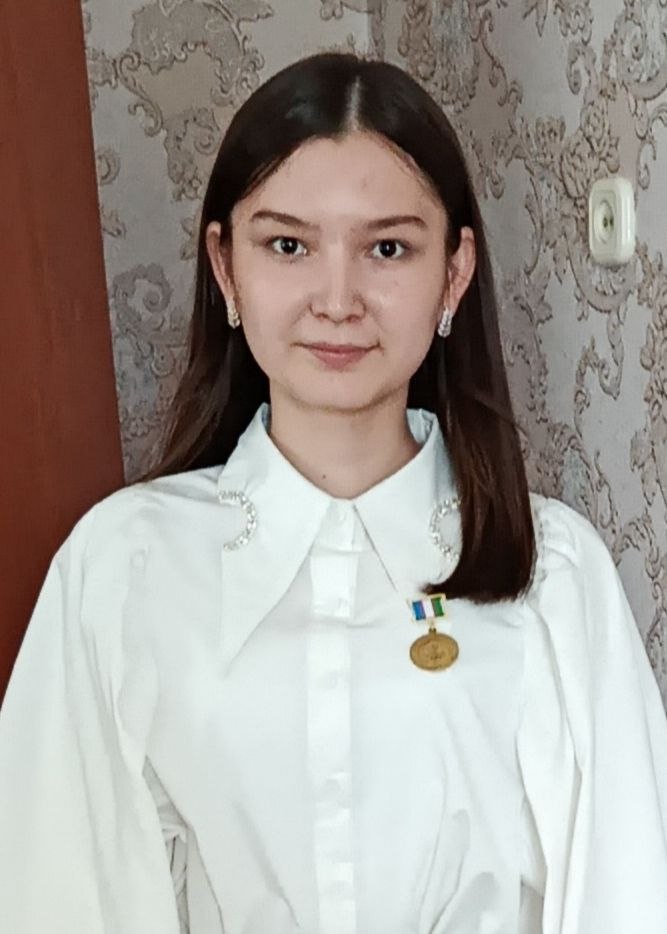
Essay from Ahadova Feruzakhon

INNOVATIVE METHODS OF WORKING WITH VOCABULARY IN MOTHER TONGUE LESSONS

Ahadova Feruzakhon

Kokand State University, Faculty of Primary and Technological Education, 1st year student of Primary Education

Annotation. This article scientifically analyzes modern and innovative methods of working with vocabulary in mother tongue lessons and their role in developing students’ communicative competence. It also highlights the effectiveness of increasing vocabulary based on interactive methods, digital technologies and creative approaches.

Annotation. This article analyzes innovative methods of working with vocabulary in mother tongue lessons and their role in developing students’ communicative competence. It also highlights the effectiveness of interactive methods, digital technologies, and creative approaches in enriching vocabulary.

Abstract. V state rassmatrivayutsya innovatsionnye metody raboty so slovarem na urokax native language and ix role v razvitii rechevoy kompetentsii uchashchihsya. The effectiveness of interactive methods, digital technology and creative approaches is clarified.

Key words: vocabulary, mother tongue, innovative methods, interactive education, speech development, lexical competence.

Keywords: vocabulary, mother tongue, innovative methods, interactive learning, speech development, lexical competence.

Key words: dictionary, native language, innovative methods, interactive learning, razvitie rechi, lexical competence.

INTRODUCTION

Today, at a time when fundamental reforms are being implemented in the education system, the use of modern approaches in teaching the mother tongue is of great importance. In particular, increasing students’ vocabulary, developing their speech activity, and forming independent thinking skills is one of the urgent pedagogical problems. Working with a dictionary is a key component of native language lessons, allowing not only to learn new words, but also to use them correctly, understand them semantically, and actively use them in speech.

According to modern pedagogical theory, it is necessary to use innovative methods in addition to traditional methods in developing students’ language skills. Because today’s student is being formed in an information technology environment, and his educational needs are also changing. Therefore, the introduction of interactive methods, multimedia tools, and creative tasks in the process of working with a dictionary increases efficiency.

Also, working with a dictionary serves as an important tool in developing not only students’ language skills, but also their thinking, logical thinking, and communicative competence. In this regard, this article studies innovative methods of working with a dictionary on a scientific basis and analyzes their practical effectiveness.

LITERATURE ANALYSIS

The issue of working on vocabulary in native language lessons has been studied by many scholars. In particular, A. Gulyamov, in his work “Methodology of Teaching the Native Language”, emphasizes that increasing vocabulary is the main factor in the speech development of students. According to him, through a deep understanding of the meaning of words and their use in speech, students learn to think independently [1].

Also, N. Mahmudov, in his work “Language and Speech Culture”, notes the need for a systematic organization of the process of working with vocabulary. In his opinion, each new word must be mastered by the student based on the context, otherwise it will not become an active vocabulary [2].

S. Matchonov, in his scientific works, specifically focuses on the importance of interactive methods in mastering vocabulary. According to him, methods such as role-playing games, clustering, and brainstorming naturally increase students’ vocabulary [3].In general, the results obtained scientifically confirm that innovative approaches in native language lessons significantly increase the effectiveness of working with a dictionary. This indicates the need to combine traditional methods with innovative approaches in the modern educational process, without completely rejecting them.

CONCLUSION

In conclusion, the process of working with a dictionary in native language lessons is one of the pedagogical areas that is of decisive importance in the formation of students’ speech development, level of thinking and communicative competence. The analysis conducted during the study showed that working with a dictionary is not just a process of teaching new words, but a complex methodological system that shapes students’ attitude to the language, develops their creative and independent thinking.

Traditional approaches – that is, methods of explaining, memorizing and translating words – although useful to a certain extent, cannot fully meet the requirements of today’s education. In a modern educational environment, it is necessary to involve students as active participants, increase their interest and direct them to independent research. In this regard, innovative methods significantly increase the effectiveness of working with a dictionary.

According to the results of the study, interactive methods (cluster, brainstorming, group work), digital technologies (electronic dictionaries, multimedia tools, mobile applications) and gamification elements contribute to the rapid and stable acquisition of vocabulary by students. In particular, these approaches increase students’ interest in the lesson, forming them as active participants and independent thinkers.

Also, the research revealed that when innovative methods are used, students develop not only their vocabulary, but also their speech literacy, level of logical thinking and creative approach. This directly affects the quality of education and the effective organization of the educational process.

In general, organizing work with vocabulary in native language lessons based on modern innovative approaches is one of the important factors in increasing educational efficiency. In the future, teachers should further improve these methods and widely apply them in the educational process. This will serve to form a high level of speech culture, independent thinking and creative approach in students.

REFERENCES

Gulamov A. Methodology of teaching the native language. – Tashkent: Teacher, 2010. – pp. 145–150.

Mahmudov N. Language and speech culture. – Tashkent: Science, 2018. – pp. 98–105.

Matchonov S. Interactive methods in native language education. – Tashkent: Innovation, 2020. – pp. 67–72.

Harmer J. How to Teach English. – London: Longman, 2007. – pp. 120–130.

Ahadova Feruzakxon Kokand State University Faculty of Primary and Technological Education 1st year student of primary education.
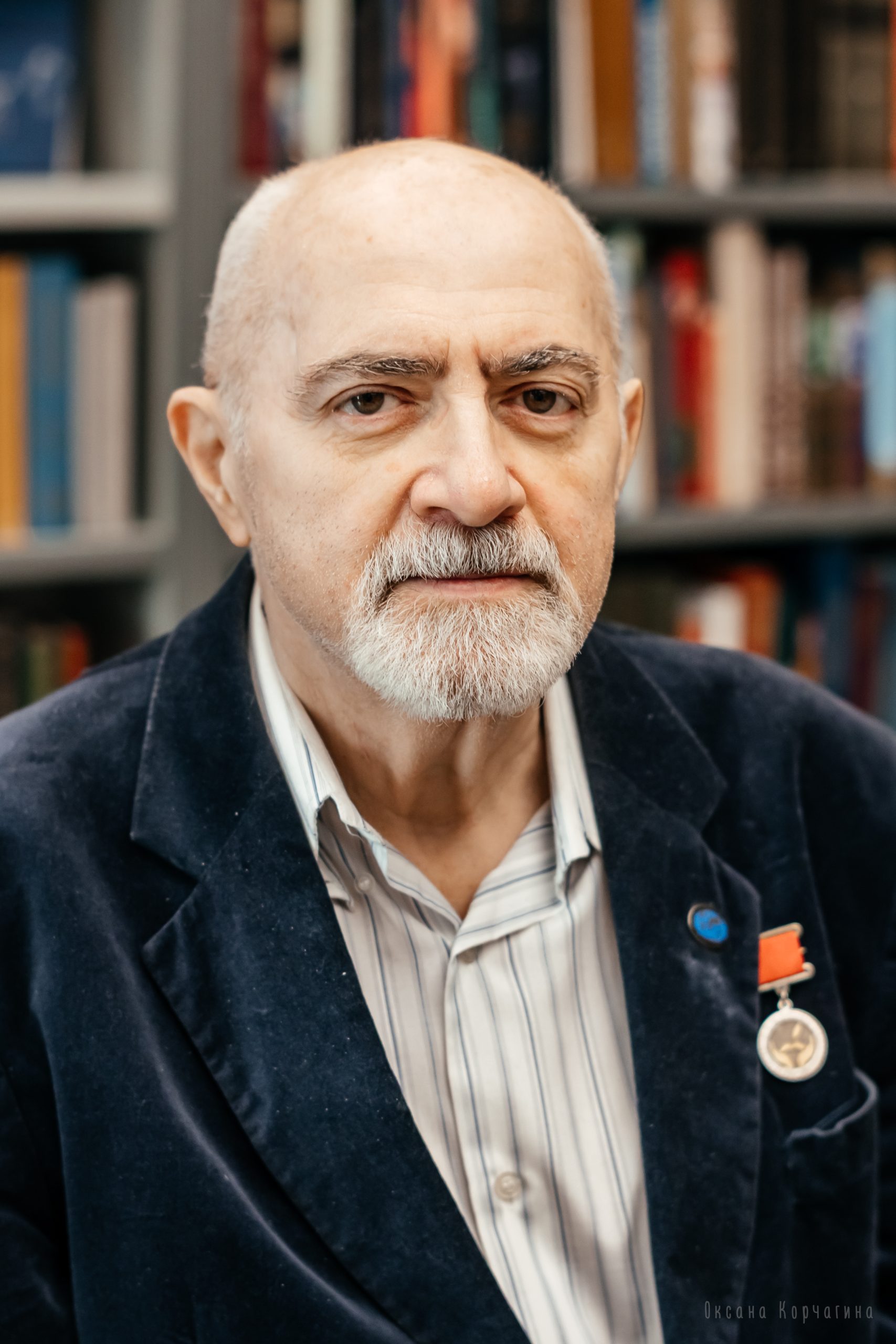
Essay from Shahnoza Amanboyeva

Digitizing Laboratory Education: The Synergy of 3D Modeling and Artificial Intelligence

Introduction

In the modern educational landscape, updating the teaching methodology is no longer just about providing hardware; it is about the complete digital transformation of the learning experience. Traditional laboratory settings often face significant hurdles, including a shortage of advanced equipment, high maintenance costs, and safety constraints that prevent complex experimentation. These limitations frequently hinder students from gaining the necessary practical depth in their fields.

The Power of 3D Modeling: Creating Digital Twins

The integration of 3D modeling offers a transformative solution by creating “Digital Twins” of physical laboratory environments. Unlike static diagrams, 3D simulations allow students to interact with machinery and chemical processes in a risk-free, virtual space. This is particularly vital for engineering and science students, as it enables them to perform high-risk experiments—such as high-voltage electrical testing or volatile chemical reactions—without the danger of physical harm or equipment damage. The ability to repeat these simulations infinitely ensures that the student masters the procedure before ever stepping into a physical lab.

AI Integration: Personalized Learning Trajectories

Artificial Intelligence (AI) acts as the “brain” of these digital laboratories. By incorporating AI algorithms, the virtual environment can monitor a student’s progress in real-time. It analyzes the logic behind their actions, the errors they commit, and the time spent on specific tasks.

Adaptive Feedback: If a student struggles with a particular step, the AI provides contextual hints or suggests supplementary theoretical material.

Customization: The system can adjust the difficulty level of the experiments based on the learner’s individual performance, making education truly personalized.

Challenges and Future Outlook

Despite the obvious advantages, the transition to fully digital labs is not without obstacles. Developing high-fidelity 3D environments requires significant computational power and advanced programming expertise (utilizing tools like Python, Unity, or Unreal Engine). Furthermore, digital simulations cannot yet fully replicate the tactile sensory experience of a physical laboratory. Therefore, a hybrid model—combining virtual preparation with physical execution—currently stands as the most effective pedagogical approach.

Conclusion

3D modeling and AI are not just tools; they are the architects of a new era in laboratory education. These technologies offer a scalable, safe, and cost-effective way to enhance the quality of higher education. To fully realize this potential, universities must invest in both technical infrastructure and the digital literacy of their faculty. The future of engineering education lies in this seamless blend of the virtual and the physical worlds.


Shahnoza Amanboyeva is a dedicated first-year Computer Engineering student at Urgench State University. She is passionate about the intersection of technology and education, specifically focusing on virtual simulations and AI-driven learning systems.

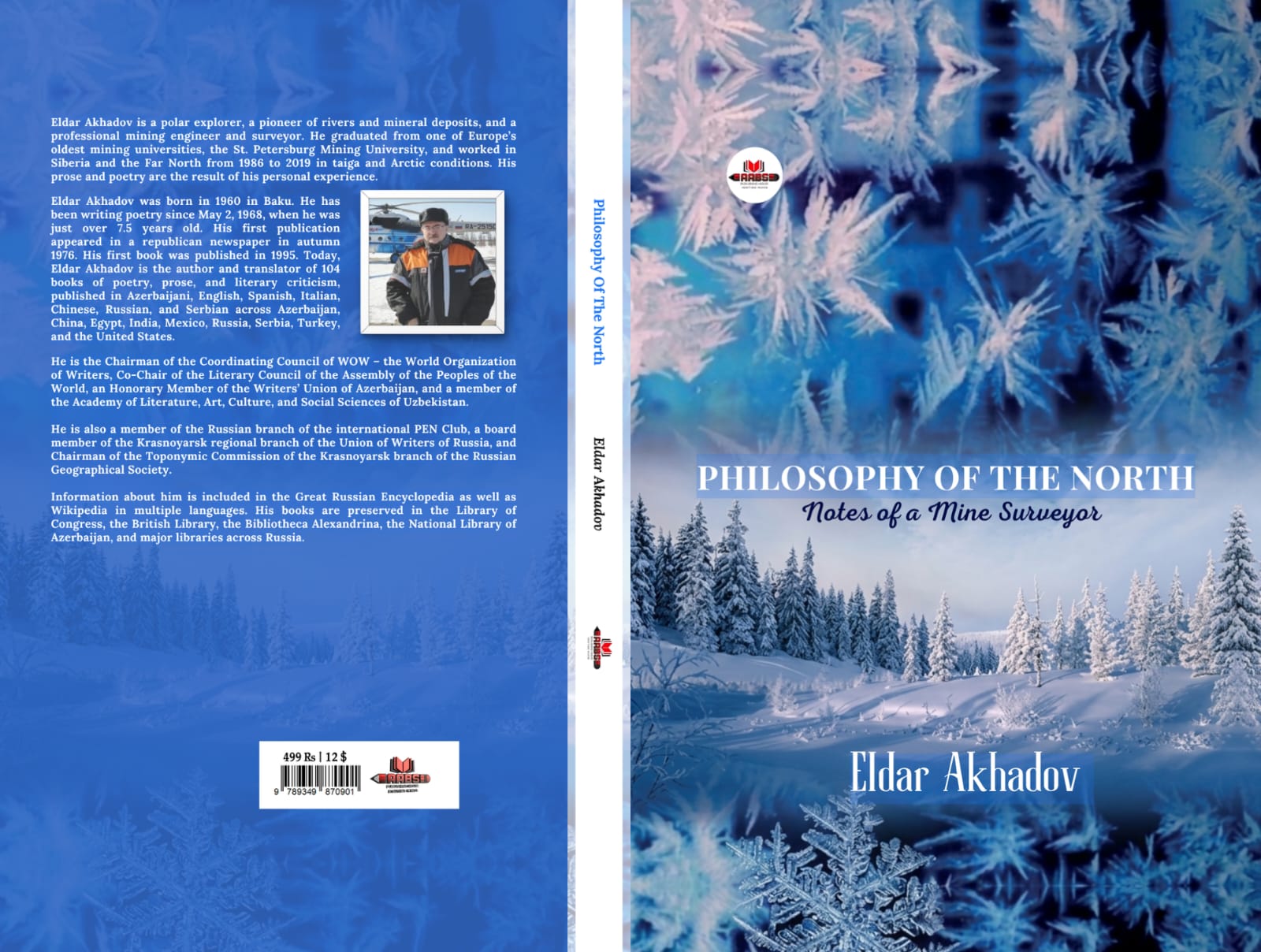
Eva Petropoulou Lianou interviews poet Eldar Akhadov


1. Dear poet! Please tell us about your childhood.

I was born on July 19, 1960, in Baku, the capital of Soviet Azerbaijan, to a Turkic family of an Azerbaijani father and a Tatar mother. Russian was spoken because it was the lingua franca of the USSR. I spent part of my childhood in the Penza region with my grandparents, who had moved there from the siege of St. Petersburg during World War II. Many of my mother’s relatives died of starvation during the Nazi siege of that city. Among her relatives were renowned musicians of international renown, such as Ravil Martynov, founder and chief conductor of the St. Petersburg State Symphony Orchestra. My father’s mother, my grandmother, Mrs. Sarfinaz, was descended from a Khan clan.  Her father, Khan Tagi, had several sons, but after the rise of Soviet power, they were executed. My grandmother survived only because she was married by then, bore her husband’s surname, and lived elsewhere. My father, Alikhas, was a staunch communist and a power engineer by training.

What inspired you to become a writer?

The May Day demonstration of 1968. My father took me to a large seaside square. It was spring, with a bright blue sky and an orchestra playing festive marches. This festive atmosphere inspired my first poems.

2. Who is responsible for a child’s future: parents or the environment?

The child’s parents, the environment, their personal talents, and their unique destiny. I was 15 years old when a stray shot from a neighbor’s gun nearly killed me. I survived and became a poet.

I also graduated from the oldest mining university in Europe, the Saint Petersburg Mining University (founded in 1773), and became a mining engineer and surveyor (a navigator of underground and surface geodetic work). I worked in this specialty in the Caucasus Mountains, the Siberian taiga, and the Arctic tundra of the Far North. I became an explorer, a member of the Russian National Geographical Society (founded in 1845), and the author of fiction and scientific books in seven languages, published in Azerbaijan, Canada, China, Egypt, India, Mexico, Russia, Serbia, Turkey, and the United States.

3. Wars are everywhere on our planet. Do you think we live in a favorable environment? 

What should we teach future generations?

I don’t think we live in a favorable environment, but the fact that we’re still alive is a great blessing. Future generations must learn to live in mutual understanding and love; humanity has no other path.

4. Share your opinion on literature.

World literature is as diverse as the peoples inhabiting the planet.

Nevertheless, it is possible to find common ground with all competent writers, because the universal spiritual and cultural values ​​of all peoples are the same.

About e-books.

E-books have a right to exist as a source of knowledge and cultural values ​​alongside paper books. The main thing is that people love to read.

5. What is your opinion of the new generation?

Do we have new talents?

Of course we do. I am the father of four children: two sons and two daughters. They are all talented in various ways.  I am convinced that all children are talented, and it is the job of parents and teachers to help them discover their talents.

6. Many poets and writers use AI to write poems and even books.

What is your opinion on this?

I am certain that AI was created to help people, but not to replace their creativity with electronic software. A program can simulate human emotions, but it cannot truly sense them.

7. What are your plans for the future?

I am the author of 108 books of poetry and prose for adults and children, and I plan to continue my creative work.  

8. A quote from your book that would inspire a young reader to read your book.

“To fly, you need wings. If you’re a poet, you’ll definitely fly.”

Poetry from Mustafa Abdulmalek Al-Sumaidi

The Ticking of Death

Tomorrow you will not be the one

who bestrode the world like a Colossus,

the predator you thought yourself to be

in a world once yours,

becomes merely a deferred biological feast,

in a plot of land measured to your body.

The dust will show no favour,

whether you were an emperor,

or a mere non-entity,

rather, to it you shall return, return—

just as you were first molded.

Your grandeur is spurious… ephemeral,

your self-idol, sanctified by your vain desires,

will crumble before the might of your last agony,

You will see the sun of your lungs sink into dusk,

To firmly believe your hubris will rise no more;

the terminal bubris—a solemn funeral…

so solemn, had been a masterful hypocrite,

but if your folly was too crude for such art,

you will be consigned to the grave in haste

In both cases, you are a tasteless joke

that dust narrates to itself

within a fresh grave.

Parade your shadow no longer;

one day, you’ll heed death’s steady tick,

as it unfastens the buttons of your fleshy shirt

to liberate the soul from your world’s cage—

the very world by which you were beguiled.

Then you’ll be rammed into a narrowed grave,

taught by the clay how you must bow,

so think not so, O Man

that marble will immortalize your name,

or the gold you hoarded will bring you grace

Far-fetched…

Neither shall you be immortalized,

nor the hubris you raised

with untruth endures.

Mustafa Abdulmalek Al-Sumaidi| Yemen

Poetry from Lan Anh

Beneath Invisible Boundaries

(A perspective of a Vietnamese economics student living and working in Germany)

Aschaffenburg, 03.04.26

I stand amid Europe’s winds and shifting lights,

where global headlines rise with every dawn,

and words of conflict, energy, and power

become the rhythm of an ordinary life I read each day.

Far from my homeland,

I hear voices echo through halls of authority,

speaking of security, nuclear thresholds,

and limits that must not be crossed

in a world defined by uncertainty.

I study economics,

and so I have learned to see invisible currents:

oil flowing through narrow straits,

capital moving across markets,

and expectations, trust, and belief

rising and falling like ever-moving curves.

The Strait of Hormuz is not merely a point on a map,

but a critical node in the global economy,

where even the smallest disruption can spread outward

into prices, inflation, and the lives of those

who have never set foot upon its shores.

I begin to realize

that within the great decisions of politics

there is always the presence of economics,

and within numbers that seem cold and abstract

lie the livelihoods of millions of families.

Between calls for sovereignty and alliance,

between confrontation and negotiation,

the world operates as an intricate web,

where no nation truly stands apart

from the influence of the rest.

Living in Germany,

I see this interdependence not as theory,

but in every energy bill I receive,

in prices, in the steady rhythm of a life

that seems distant from the idea of conflict.

And sometimes,

amid reports of war and macroeconomic analysis,

I find myself asking:

what does economic development truly mean

if it does not move alongside peace and stability?

The world continues to move forward,

through decisions shaped by risk and restraint,

and we — though separated by distance —

remain part of the same system,

where every shift in one corner of the world

can quietly reach into the lives of others

in its own unseen way.

Author: Lan Anh – Aschaffenburg, Germany

Poetry from Jacques Fleury

The Owl

                                             Between the intermission of sunlight and shadow is the eccentric owl,
              A paradoxical symbol perched on its prairie horse at the mythological rodeo,
                        Adorned with a grim grimace and stoic gaze,
                                     Embracing and embodying wisdom,  knowledge and intellectuality conceived and perceived as 

                                   teachers or seers, per nocturnal personality,
                       Especially due to their supernatural reportage with Greek goddess Athena, in Greek Mythology Athena, the Goddess of

                                                    Wisdom, was embodied by an owl, 

                              said to have sat on her blind side to help her see the truth better, underworld harbinger of medieval spirit literature,
 they are also embodiments of death,  darkness, mystery, and
Tragedy frequently showcased in Shakespeare’s literature, notably Julius Caesar,  

                                             as omens of death or calamity,
possessing dualistic qualities of wisdom and warning hence be weary of their company that 

                                                        proffer a complex tapestry of celebratory elasticity and foreboding fraternity…
They can also be romantic allusions symbolizing solitude and introspection much like  pensive poetic bards

                                                 conjuring up missiled missives as lymphatic literary marmalades…  

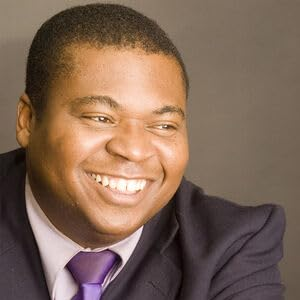
Young adult Black man with short shaved hair, a big smile, and a suit and purple tie.
Jacques Fleury

Jacques Fleury is a Boston Globe featured Haitian American Poet, Educator, Author of four books and literary arts student at Harvard University online. His latest publication “You Are Enough: The Journey to Accepting Your Authentic Self” & other titles are available at all Boston Public Libraries, the University of Massachusetts Healey Library, University of Wyoming, Askews and Holts Library Services in the United Kingdom, The Harvard Book Store, The Grolier Poetry Bookshop, Amazon etc… He has been published in prestigious publications such as Spirit of Change Magazine, Wilderness House Literary Review, Muddy River Poetry Review, Litterateur Redefining World anthologies out of India, Poets Reading the News, the Cornell University Press anthology Class Lives: Stories from Our Economic Divide, Boston Area Small Press and Poetry Scene among others…Visit him at:  http://www.authorsden.com/jacquesfleury.–

Silhouetted figure leaping off into the unknown with hand and leg raised. Bushes and tree in the foreground, mountains ahead. Book is green and yellow with black text and title.
Jacques Fleury’s book You Are Enough: The Journey Towards Understanding Your Authentic Self

Essay from Chuck Taylor

How Wonderful The Gift Of Life Seems 

Can you speak or write in the absolute now, or is the now gone in the time it takes for the now to hit your senses and wind its way up our nerves into our brains and then for us to speak or write it on a page?      

Can we overlook the micro-moments between perception and recording on the brain or on paper?     

In this near to now my dog licks his black paw stretched out on the bed. The light streams in a side window into this darkened room onto this notebook page and a dove outside calls. Those nearly nows are receding as my pen moves on the page trying to pin them down.     

The dove still calls. The air filter hums almost silently in this allergy season.     

Now there’s the sound of a page turning as I write more in the nearly now. It is close to quiet in this nearly now. A top drawer in this old brown wooden desk is half open. There is a humming in my ears. I have a taste of tinnitus.      

Here the nearly now is mostly still. Some might call it boring. So busy am I in recording that my thoughts are rare. My body feels a little tired. My sad bad knees are both aching. Should I be sorry this nearly now is not more dramatic?      

Put down your cell phones, kids, and enjoy the silence. Learn to muse and think on your own.    No bombs are falling outside but I know they are falling elsewhere. I hear the quite whir of a plane overheard. Rain is falling, a slow rain outside that my dog and I don’t hear, or maybe Coco dog hears.      

It’s been peaceful to settle into this nearly now. I am content, and now I am thinking in this nearly now, of a thought I had yesterday.     

Is that cheating?     

Is that thought as much of the now as the tinnitus in my ears? You may disagree if you are here with me in the nearly now at a later date.     

Yesterday’s thought is about the story of life’s beginning. I learned in school that life began with the mixing of chemicals in a warm body of water. The constant stirring in currents of the chemicals finally led to life. Perhaps it was a virus kind of life since a virus sits on the edge of life and nonlife.     

 But what if life bloomed in more than one place, here on this planet or elsewhere? What if life had multiple origins? Maybe there are aliens out there and distant planets we cannot travel to in multiple lifetimes. I am thinking of this in the nearly now. Any memory pulled from the past as thought is now in the nearly now.      

And when I am thinking in the nearly now, am I not also thinking a bit in the future in a yearning for the future?     

I’m thinking I may publish this rambling on the nearly now in the future. It is the possibility of sharing my thoughts with others that leads me to write them down. Nearly now thoughts of the future are pulling me forward.    

So perhaps no divides exist between the past, the nearly now, and the future. Time, as the old metaphor said, is a flowing river and cannot be divided.     

My hope is that some souls in the future will read this and the ideas will live again rolling through their nearly nows, and I will kind of live again.    

 It has stopped raining. My spouse is starting to move about, getting ready to check on the backyard garden. I give my love a quick kiss as she heads out the back door. I may feel differently tomorrow—what with the terrible calls coming out of the wider world—but how wonderful the gift of life seems in this nearly now.