Poetry from Yongbo Ma

Living in One’s Own World

“You just go on living in your own world!”

With these words, a door slams shut in a distant wood.

The fire flickers for a moment,

a thoughtful face brightening and dimming.

With these words, the planet quickly splits into many more.

On one side lies a desolate sea,

on the other, a barren desert.

Quadrilateral light rises in the night sky,

compressed by an inner reflux,

shifting among several possibilities.

Streets keep branching out from where he stands,

branching more and more

past every monument they meet.

Night falls like a curtain around his feet,

he is a statue waiting to be unveiled,

magma glowing inside him.

Refuse to Wake

In the south of the Yangtze in March, grass grows and warblers fly,

yet I still feel no warmth.

My heart remains like a block of chemically infused ice,

I have tried every means to thaw it,

all in vain, wine no longer ignites passion.

I have nothing to say to anyone, save for teaching

and going to the cafeteria. I lock myself away indoors,

drawing all curtains to block the unkind light.

I know the outside world is still the same outside.

Nature runs by a cruel law—

no mercy, no love, only mutual devouring.

A magpie pecks a soft thing on the lawn,

flies up to the bare branches of a parasol tree, 

its tail vibrating to keep balance. 

All things kill one another to survive, 

The universe drifts toward heat death.

I hurry to read on the south balcony while daylight lasts,

I read only books written by saints—

they murmur in deserts, on pillars, or in caves,

words no one can make out,

yet I possess endless patience for this.

Sunlight occasionally illuminates a fragile sentence,

like a spotlight framing an actor fainting in slow motion.

My longing for spiritual experience overwhelms all other needs,

yet those words and logics still bring no warmth,

sunlight reveals more dust.

I believe there is One who governs human history,

I believe local evil may be global good,

I believe when I turn the final page of the book,

something unprecedented will happen.

Yet my heart still tightens. I refuse to wake

to the still heavy reality.

I have spent my whole life in escape.

Late Night in Early March

Deep into the night of early spring,

darkness and spring water flow down the southern slopes of Purple Mountain,

only silent cars occasionally glide past on the street.

I carry Whitman’s heavy Moments of the Soul,

and a bottle of hometown liquor long out of production.

A full decade has passed,

and eight years since you journeyed north to the capital.

Everything has changed, yet nothing seems to have changed at all,

haggardness lingers, unhidden by white hair and night,

two crabs raise their claws and touch,

they will cross the vast starry sky, one after another.

Ancient Town of Tongli, our wandering with two kitchen knives,

Yancheng in Changzhou, frogs croaking amid our rain filling shoes,

the golden glow of rapeseed blooms hides in remote mountains,

the moon and fireflies of Linggu Temple—

I have never seen them again since that day.

This is not our hometown after all,

but where on earth can we call home?

At a small Hot Pot inn, only the two of us remain,

bright lights hang empty, midnight has long passed,

I feel uneasy, time and again, for the inn owner’s toil.

One more drink, brother,

those scattered lights of our conversation

are a silence growing deeper in the dead of night—

concerning faith, like the faint chill of early spring nipping at my shoulders,

ten years ago I came here, at the very age you are now.

Nothing has changed, the earth turns gently,

I watch the taxi’s red taillights flicker and fade away,

a cool wind brushes my fevered forehead,

I stand long on the empty street,

Staring up at the bare treetops of plane trees 

rising higher and higher against the stars.

Evening at Longhill Lake

Wooden villas, sounds crystallized with fragrance,

abstract murals pieced from small blocks of wood.

Lake before, hills behind—

wild expanse, high sky.

Here one may drink and sing aloud,

or keep silence with the wilderness.

The sun sinks west;

a soft breeze drifts like a ship’s wake.

Heaven and earth seem to wait

for a solemn rite to begin.

I need not speak, nor think at all—

abide in a happy, plant-like state:

swaying with the wind, yet still in time.

Twilight falls quietly like a fishing net,

autumn crickets chirp,

dried cow dung glows with its last light,

like pale yellow window paper

soaked soft into pulp,

breathing the scent of paste and raw flour.

The Final Room

You write poems in your final room,

I translate poems in mine,

between us lies the silence of a whole continent,

and a gray, early winter.

You look up now and then toward the far shore,

shadows of trees, an overturned boat,

the deep-yellow roof of a temple,

gradually, you lose track of which afternoon it is—

much as my writing hand moves slower.

Has your Keatsian unease and the fog-shrouded plain,

vanished for a moment? As I set down these lines—

no man is an island, entire of itself or sufficient alone,

as I hesitate between two versions.

By now you must have finished that afternoon poem,

rising, you step onto the balcony to smoke,

glance back at the emptied room,

then gaze long at the wrinkled surface of the lake.

When I pause my work, twilight floods the window

like crowds of murmuring ghosts,

scattering and hiding in rooms that recede one by one,

turn on the light, brother—we are far apart.

Ma Yongbo was born in 1964, Ph.D, representative of Chinese avant-garde poetry, and a leading scholar in Anglo-American poetry. He is the founder of polyphonic writing and objectified poetics. He has published over eighty original works and translations since 1986 included 10 poetry collections. He focused on translating and teaching Anglo-American poetry and prose including the work of Dickinson, Whitman, Stevens, Pound, Amy Lowell Williams, Ashbery and Rosanna Warren. He published a complete translation of Moby Dick, which has sold over 600,000 copies. 
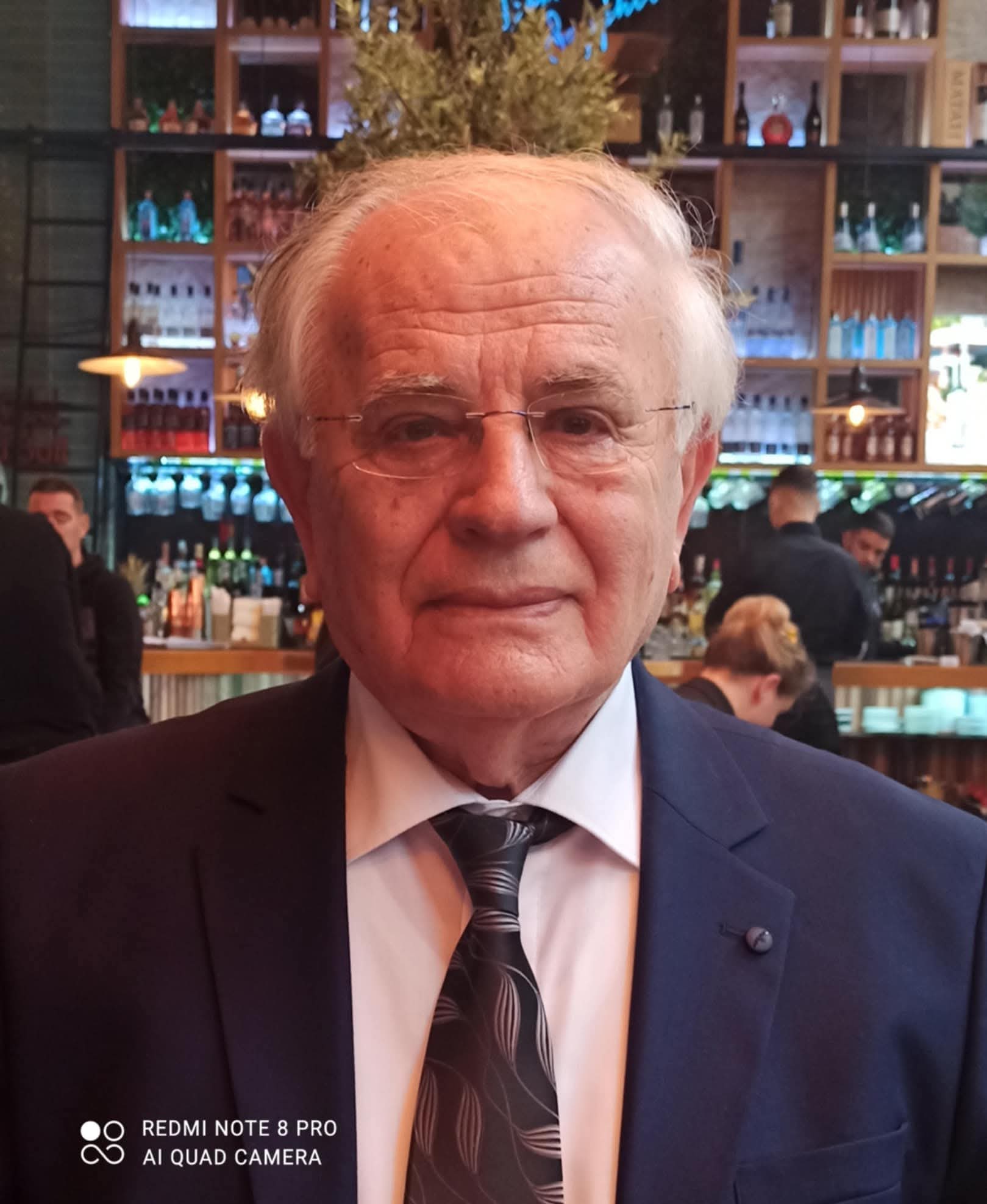
Essay from Delo Isulfi

By Delo Isufi, Albania

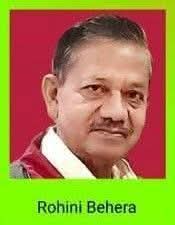
Homage to the Indian Poet Rohini Kumar Behera

I write these lines with a sense of احترام and inner gratitude, as a translator who had the privilege to bring his poetic voice closer to Albanian readers.

On March 12, 2026, the world of poetry lost a noble and gentle soul—Rohini Kumar Behera, a poet from Odisha, whose verses carry a rare purity of thought and a quiet spiritual depth. His poetry became part of my literary journey during the preparation and translation of the anthology White Fog, where, among many distinguished Indian poets, his voice revealed a sincerity that is both disarming and enduring.

I also recall with deep respect his life companion, the poet Swapna Behera, whom I had the pleasure to meet twice in India, during poetic festivals. Those encounters remain for me not only memories, but moments where poetry stepped out of the page and became human presence.

This homage is written in my name—as a reader, as a translator, and as someone who believes that poetry builds invisible bridges between cultures.

Peace For Mankind

Peace is sweet and adoring

A world of peace is endearing

A daring venture in present commotion

I dream of a World of Peace

Happiness is more a choice

Peace is kindliness of divine care

A heart comprehending each other

A soul reaching out to one another

Peace is where everything is silent

Peace is a petite gift from God

To nurture for the entire Mankind .

This poem unfolds as a lyrical meditation on peace—not merely as an abstract ideal, but as a lived, spiritual condition. The repetition of the word peace functions as an anaphora, reinforcing its centrality and transforming the poem into a quiet incantation.

Through metaphors of tenderness and divinity, peace becomes “a petite gift from God” and “kindliness of divine care,” elevating it from a human desire to a sacred value. The imagery of “a heart comprehending each other” expresses empathy as the foundation of harmony.

Message:

Peace is both divine and human—something to be nurtured within and shared universally.

My Gratitude

Happiness is my gratitude of veiled wish

Is the key to a life of hallowed bliss

Each moment with love , grace and generosity

A tender feeling of cordiality and positivity

Blessed are those who give without remembering .

Gratitude is riches , complaint a poverty

It can turn a negative into positivity

Is a secret door to ultimate happiness

Is a magnet to all life’s loveliness .

Gratitude can turn a meal into a feast

A house into a home , a stranger into a friend

Has a mission for tomorrow’s Vision .

Grace heals the heart that aches

Mends the wounds and patches the scrapes .

Let us embrace gratitude as our maxim

To express splendour of divinity in true axiom .

In this poem, gratitude is elevated into a life philosophy. Through extended metaphors—gratitude as “riches,” “a magnet,” “a secret door”—the poet reveals its transformative power.

The antithesis “Gratitude is riches, complaint a poverty” captures a profound ethical stance. Everyday realities are reshaped: a meal becomes a feast, a house becomes a home—clear metaphorical transformations that show how inner perception creates outer meaning.

Message:

Gratitude is the essence of happiness and spiritual richness, capable of healing and transforming life.

Nature Is Often Queer Magical

Nature is often queer magical

Present to us transcendental

A miraculous scene of allure

Seldom found in blue yonder

At horizon Sun takes farewell

The Moon bids being celestial

A rare view of holy Communion .

This brief yet evocative poem reflects Behera’s contemplative vision of nature. The phrase “queer magical” suggests mystery beyond logic, while the horizon becomes a stage for a cosmic ritual.

The meeting of sun and moon is rendered as a “holy Communion”—a powerful metaphor of unity, blending the physical and the spiritual. The imagery is minimal, yet deeply symbolic.

Message:

Nature reveals the sacred through its silent, eternal rhythms, inviting the human soul toward reflection and transcendence.

Rohini Kumar Behera’s poetry is marked by simplicity, sincerity, and spiritual depth. His themes—peace, gratitude, and nature—form a universal triad that speaks to all humanity.

This homage, bearing your voice as translator and witness, is not only a tribute to his passing but a celebration of a poetic spirit that continues to live through his words.

Poetry from Barbaros Irdelmen

I Wish You a Heaven, Mother
By Barbaros Irdelmen

Yesterday, your smile
still moved through the air.

Now the room
a quiet of unfinished sentences,
glances that stopped halfway.

On the side table,
a glass of tea gone cold.
Your room,
refusing time,
keeps a trace of your warmth.

I wish you a heaven, mother.

Let the earth be light above you.
Let the wind pass without knowing you.

Mountains should remain untouched.
The sky, unbroken.
The sea
free of all urgency.

At night,
may moonlight find your pages.

Let there be no distance
between you
and the names you carried.

Let longing
lose its language.

And happiness
no longer a thing
that must survive.May your tea
never grow cold

The Sign

By Barbaros İrdelmen

Ah, how long I have been waiting
for a sign
from those alluring,
colorful eyes!

If only it came…

Ah, then would crumble,
collapse into dust,
all the civilizations
that have ever been.

A Conversation with Yesterday

By Dr. Barbaros İrdelmen

When our eyes first met
we fell in love.

What day was it
when we were married?
You haven’t forgotten,
have you?

The children—
their graduations,
their going off to the army,
their weddings…

Then the grandchildren.

“Can such things ever be forgotten?”
we had laughed
the day I retired.

That grandchild in high school now—
when was he born?

Tell me,
do you remember
all of it?

Or was all of this
just yesterday,
truly?

Dr. Barbaros İrdelmen is a Turkish poet, writer, translator, and retired specialist in internal medicine and nephrology, lives in Istanbul. With 19 published poetry collections to date, his works have been included in numerous national and international anthologies, poetry festivals, and selected literary compilations. Currently a poetry columnist for Edebiyat Magazin Newspaper and TV, also contributes actively to prominent literary journals such as Pazartesi14 NEYYA Edebiyat, Kirpi Edebiyat ve Düşünce Dergisi, writer for the Papirus Magazine, Literature House writer. As a member of the Writers Syndicate of Turkey, he is not only known for his original poetry but also as a leading figure in the translation of world poetry written in English into Turkish. He is also a member of the poetry translators community, part of the ITHACA Foundation (Spain), building cultural and literary bridges across borders through the power of poetry.

Poetry from Sheikha A.

1)

in response to a monster jam video prompt on YouTube by Poetry Pea Podcast:

dust storm 

the butterfly landing of

a flying raptor 

2)

in response to a video prompt on YouTube by Poetry Pea Podcast:

dusk haze

a shatter of crows

wound the night

3)

in response to a 3 word challenge posted on YouTube by Poetry Pea Podcast:

crisp spring light

a snowflake’s shadow

stitched to the breeze

4)

solstice mirth

a swell of seashells

docking ashore

5)

elk tree 

a cranium of gold

dusky branches 

6)

shrine lamps

san’aa crescents alcove

white dawn

san’aa is an Arabic word for hymn/praise. 

7)

rain ruffles

reclined river

—lush lilies

8)

star-storm haze

pilgrim clouds flock

to Fujisan

9)

square waves

beneath her posture

seismic inhale

10)

dainty moon

aural feet of light

teasing rivers

11)

moon drowns

in Arabian Sea

white albatross


Sheikha A. is a Pushcart and Rhysling nominee from Pakistan and United Arab Emirates. Her poetry appears in a variety of literary venues and has been translated into 10 languages so far. More about her can be found at sheikha82.wordpress.com 

Poetry from Milena Pčinjski

UNDERSTANDING OF REALITY

We live, yet we do not understand reality.

Why do children starve?

Why do women sell their bodies to strangers?

Why do men ignite wars in the name of peace?

Who writes the rules that shape our suffering?

We inhabit a world that often feels merciless,

as if governed by fractured minds

granted authority over what we call reality.

Few realize that nothing truly belongs to us —

we are not the owners of the ground we stand on.

And even when those dark minds leave this world,

others arrive in their place,

equally distorted, 

sometimes even more so,

continuing what feels like an inherited task:

the slow erosion of what could have been lived in joy—

our lives, 

the purity of water, air, and food,

and the fragile abundance of nature itself.

It begins to seem as if everything is already decided,

as if the world has fallen into a logic we cannot reverse.

We try to understand,

but understanding does not grant control.

The rules are rigid, 

impersonal, absolute;

and we stand within them —

aware, yet powerless,

small against structures we did not design.

The burden of awareness is 

seeing clearly and feeling deeply 

the weight of a reality 

that cannot be changed.

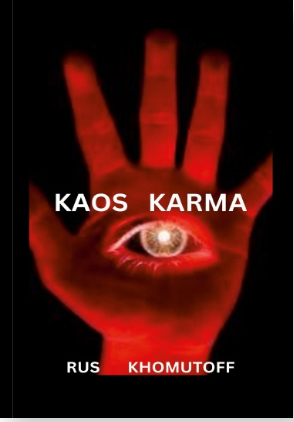
Joseph Nechvatal reviews Rus Khomutoff’s Kaos Karma

Review of Rus Khomutoff’s Poem Kaos Karma

“Essentially an artist does one thing throughout his career, but over the years he discovers its various implications and expands upon and deepens aspects of what had been present in his work. Perhaps that’s the difference between a serious artist and an entertainer. The artist is constantly deepening a single, obsessive theme, rather than decorating a succession of topical themes.”

~Richard Foreman

Rus Khomutoff’s poem Kaos Karma suggests an encounter between a body of literary writing and a body of magickal/philosophical writing, thus crossing (nonstop) various thresholds of consistency. This despite the consistent all caps no punctuation of its form that positions it on brink of resembling Jenny Holzer’s Truisms (1978–87), though she did not center the text as Khomutoff usually does. 

So I read Kaos Karma as an abstract machine that consists of formed and unformed formal functions expressing the relationship of literature to a philosophy of cut-up chaos magick (and vice-versa). As such, Khomutoff offers a way of saying something about the philosophy of poetry that began with Stéphane Mallarmé’s Un coup de dés jamais n’abolira le hasard, but also of the philosophy that is claimed by and for, and sometimes of, chaos magick’s labyrinthine conception of multiplicity and singularity.

In Kaos Karma the reader is not linked by means of period, genre, nationality, style, theme or political ideology; for it has a relentless high-wire flow of exposition that exposes a conniving with transcendence. Especially when its apparently cut-up philosophical transactions (without transitions) are underway. It is with this privilege I am according to Kaos Karma the sign of art that can force thought. This, while at the same time, it is busy effectuating dispersal and fragmentation, rather than totalization.

Khomutoff, on an aesthetic plane, screams in all caps urgent questions that confronts the reader with phrases from different disciplines as the poem oscillates between manifesto and chance. Yet the jump-cuts encountered in Kaos Karma are an encounter between a poetic discipline which decrees a level of specificity and irreducibility. The poet has an immanent manner when he is considered on quite another terrain: that of literature ‘itself’. For, Kaos Karma is important for what it can do as an ABSTRACT MACHINE, rather than for what it might be said to mean. 

This evaluative enterprise involves an assessment of the degree of affect produced by Khomutoff’s dramatic work as an impure intercourse between literature and manifesto. But Kaos Karma has a very particular slant deriving from two distinct (but intimately related) bodies of work, Beat literature on the one hand, and the rhizomatic philosophy of Gilles Deleuze and Félix Guattari on the other, as it gestures towards the preposition of its title. 

Of course rhizomatic philosophy is itself already subjected to particular encounters with connectivity in our poetic thinking, but the liaisons found in Kaos Karma reads as if the writer is pushing the reader to be impatient and to get on to the next phrase without pause. There is a privileging of a certain speed-flow of words here that merges the possibility that some of Kaos Karma is inscribe or prescribe with a heavy dose of something irrational.

While I would not wish to stress this view, what emerged out of reading Kaos Karma a number of times, is a fact that certain words used here (more than others) gravitate comprehensively towards specific mysteries around passion through the text’s emphasis on being and judgement.

It might be objected that the encounters with passion I found in Kaos Karma are arbitrary (validated by a mere coincidence). But each poem page, to a greater or lesser extent, bears the imprint of a coincidence of this sort. 

To identify a specific philosophical passion or problem in each of the pages of Kaos Karma would be reductive and subject the poet’s word-flows to the demands of rationality, instead of feeling. My point, however, is quite to the contrary, even though Kaos Karma read the third time through illuminated through these encounters with passion the philosophical tradition of Deleuze and Guattari for me. Particularly, their critique of interpretation which they together launched in The Anti-Oedipus. In that sense, Kaos Karma may assist the reader in the unlearning of romantic word-image-thoughts which have dominated the poetic discipline. 

This is only in part explained by the frequent recourse which Khomutoff makes in his work to ecstatic celebration. The uniqueness of the pertinence of the colorist Dionysian non-space he creates as a form of modulation questions the relationship of poetry to passion to the extent to which the magickal chaotic philosophy of Austin Osman Spare pervades his practice. 

Transfiguration forms the corpus of Khomutoff’s writing in this dramatic poetry. But the reader does not encounter a programmatic statement which might be applied by one attempting to write about literature and philosophy in the manner of, or after Kaos Karma. This singular body of work enters the bloodstream of this reader at a rate quite distinct but similar to William S. Burroughs’s Beat poetic transfusions. And yet there is a noncorrosive quality in these Kaos Karma poetic interventions which renders any attempt at a general theory of literature decadent. An intellectual-artistic enterprise doomed in advance. 

For me, the reading of Kaos Karma required an exploration of my memories of the work of Antonin Artaud, James Joyce, Henry Miller, José Saramago, Maurice Blanchot, Comte de Lautréamont, Samuel Backett, Jack Kerouac, André Breton, F. Scott Fitzgerald and the stream of consciousness writing that originated with Surrealism and the works of psychologist William James; even as the poem invents unknown or unrecognized affects and brings them to light. For Kaos Karma outlines a plane of consistency which enables, activates or prolongs mental fluxes and becomings as it unfolds a possible world of declaration which secretes and promotes incommensurability, heterogeneity and multiplicity. Such an encounter with such a world entails the crossing of a threshold of becoming, a displacement which scrambles positions of psychoanalytic or karmic interpretation. It consists of a stream of semiology which is anti-psychoanalysis. 

This banging bit of poetic writing is precisely an affair of becoming, but it is important to note that becoming in Deleuzeian terms does not entail the attainment of form by means of identification, imitation, or mimesis; but finding, rather, the zone of indiscernibility such that it is not possible to identify or distinguish this or that specific thing. It is a process, that is, a passage which traverses the livable and the lived inseparable from becoming. 

~Joseph Nechvatal

joseph@nechvatal.net 

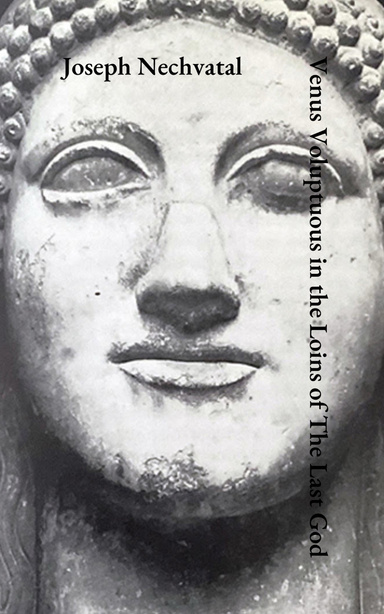
Joseph Nechvatal is the author of Venus Voluptuous in the Loins of the Last God, available here.