reaching toward a sky that has forgotten the toxic haze.
We were blind sculptors,
carving cracks in the earth’s skin,
extracting gold from its bones,
without hearing the lament that rose from the roots.
The ocean, a shattered mirror of plastic,
reflected our indifference,
its creatures, stars drowned in the abyss.
But one day,
the echo of a dying hummingbird
pierced the glass of our deafness.
We saw the moss wither on the edge of the stones,
the sun, a pale coin amidst the smoke.
We were reborn, not from maternal wombs,
but from urgency, from transparent guilt.
Each tree planted, a silver thread on a damaged loom,
each river cleaned, the pupil of an ancient god regaining its sight.
Now, the bees, tiny goldsmiths of the air,
dance over fields that don’t smell of chemical lament.
The mountains, wise guardians of memory,
rise up, green scars that tell of our redemption.
Our hands, once weapons of felling,
are now architects of nests,
tilling the earth with the respect of those who sow a future.
Conscience, a beacon lit in the fog of oblivion,
guides our steps toward the embrace of the wild.
This is the time of the second chance,
where the jaguar’s roar is not a legend,
and the whisper of the wind brings the promise of skies without ash.
We have learned that life is not a loan,
but a symphony we must protect,
each note, each being,
indispensable.
We have been the castaways who found their shore,
not building new ships,
but repairing the only one we had:
this blue, vibrant, and fragile home, that breathes with us.
GRACIELA NOEMI VILLAVERDE is a writer and poet from Concepción del Uruguay (Entre Rios) Argentina, based in Buenos Aires She graduated in letters and is the author of seven books of poetry, awarded several times worldwide. She works as the World Manager of Educational and Social Projects of the Hispanic World Union of Writers and is the UHE World Honorary President of the same institution’s Activa de la Sade, Argentine Society of Writers. She is the Commissioner of Honor in the executive cabinet in the Educational and Social Relations Division of the UNACCC South America – Argentina Chapter.
Maja Milojković was born in Zaječar, Serbia. She is the deputy editor at “Sfairos” publishing house in Belgrade, Serbia. She is the vice-president of the association “Rtanj and Mesečev poetski krug”. She is the author of 2 books: “The Circle of the Moon” and “Trees of Desire” She is the editor of the International Anthology “Rtanjski stihopevi” One of the founders of the poetry club “Area Felix” from Zaječar, Serbia and the editor of an international e-magazine for creative literature and culture “Area Felix”.
So why does a planet built on honey taste of poison?
Why do we return again and again, with bitterness coating the tongue?
Why does life itself stand on the brink?
Why do humans turn against humans— with reason, without reason— as if destruction were instinct?
Bees do not forget their order. They gather, they build, they sustain.
But we— creatures of thought, of language, of sky-reaching dreams— fall beneath them.
We grieve for an ant crushed underfoot, yet raise our hands against each other.
We were meant for something gentler— to sit side by side, soul beside soul, in a world that could have worked.
Since the first dawn, the stars have poured out light. They have never rained fire.
Then why do we?
At the summit of civilization, why do our faces still bend in shame?
Why does war return like a habit we refuse to break— border after border, generation after generation?
What kind of progress carries this depth of ruin in its shadow?
And in the end— this careful hive we have built, this architecture of survival—
may be the very thing that calls forth our collapse.
Chapainawabganj, Bangladesh
11 April, 2026.
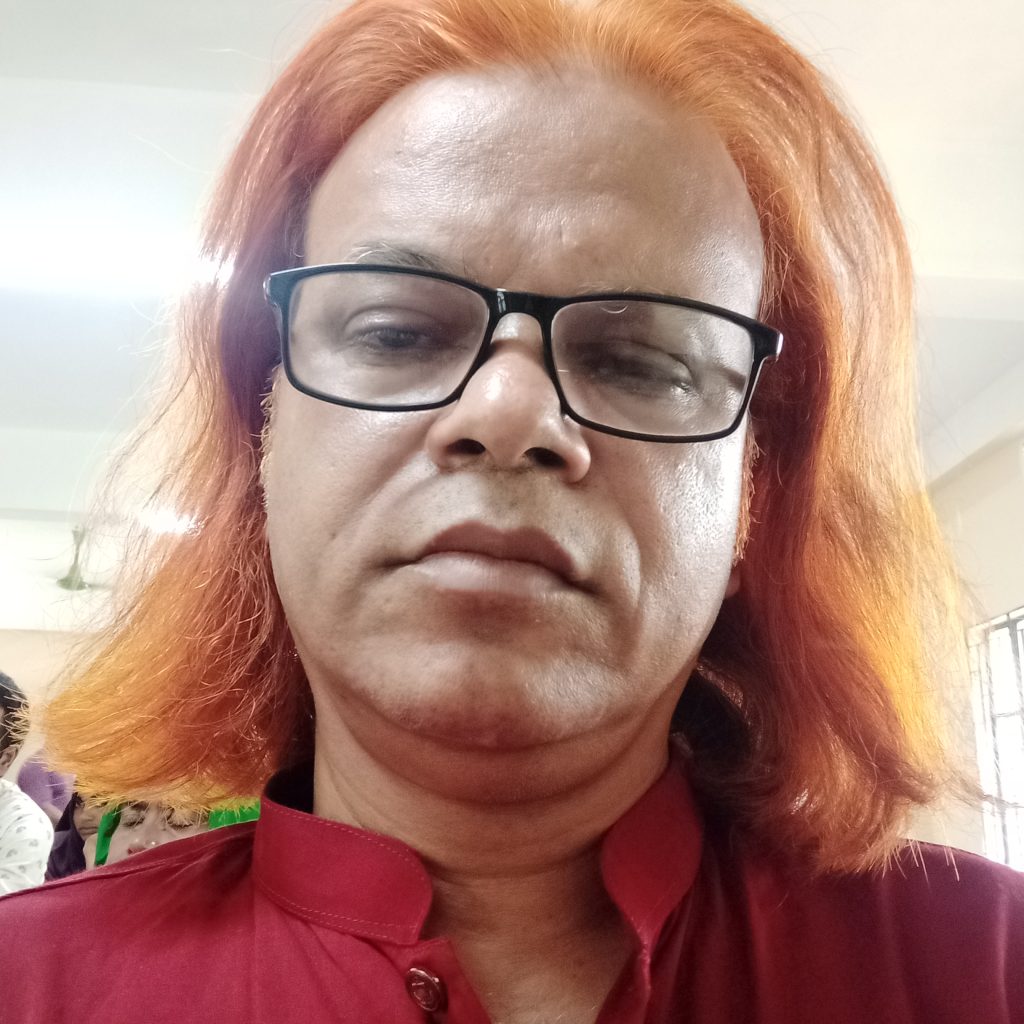
Md. Mahbubul Alam is from Bangladesh. His writer name is Mahbub John in Bangladesh. He is a Senior Teacher (English) of Harimohan Government High School, Chapainawabganj, Bangladesh. Chapainawabganj is a district town of Bangladesh. He is an MA in English Literature from Rajshahi College under National University. He has published three books of poems in Bangla. He writes mainly poems but other branches of literature such as prose, article, essay etc. also have been published in national and local newspapers, magazines, little magazines. He has achieved three times the Best Teacher Certificate and Crest in National Education Week in the District Wise Competition in Chapainawabganj District. He has gained many literary awards from home and abroad. His English writings have been published in Synchronized Chaos for seven years.
Once when he was in grade ten in 1990, his Bangla letter was selected as the best one from Deutsche Welle, Germany Radio that broadcast Bangla news for the Banglalee people. And he was given 50 Dutch Mark as his award. They would ask letters from the listeners to the news in Bangla and select one letter for the best one in every month.
From 17 to 30 September, in 2018 he received a higher training in teaching English language in Kasetsart University of Thailand for secondary level students through a government order from education ministry.
On 06 November 2015 he achieved Amjad Ali Mondal Medal for his contribution in education field by a development organization in the conference and felicitation function for the honorable personalities at Rajshahi College Auditorium.
On 30 December 2017 from West Bengal in India he was declared a ‘Literary Charioteer’ in Bangobandhu Literary and World Bango Conference and they awarded him with a Gold Medal in their International Literary Conference and Prize Giving Ceremony.
In 2018, he achieved Prodipto Lirerary Award in Prodipto Literary Conference at Kesorhat, Rajshahi for poems in Bangla literature. He received honorary crest from the administration of Chapainawabganj District Literary Conference and Cultural Function in 2021 and 2022 consecutively.
His poems have been published in many international online magazines such as Juntos Por las L Raven Cage Zine, and Area Felix. His poems have been translated and published in Argentine and Serbian, and he participated in many international online cultural meetings.
We cannot imagine our future without artificial things, because, for example, we cannot survive even one hour a day without the telephone or the internet.
Post‑Beat Poetics: Breath, Lineage, and the Ethics of Community By Kandy Fontaine aka Alex S. Johnson
Post‑Beat poetics begins where institutional Beat revival ends. It is not concerned with titles, laureateships, or the pageantry of literary inheritance. Instead, it returns to the first principles that animated the original movement: breath, embodiment, community, and the sanctity of the outsider voice.
The Beats were never a monolith. They were a constellation of seekers, queers, mystics, addicts, pacifists, anarchists, and wanderers. Their lineage was never meant to be curated by committees or guarded by gatekeepers. It was meant to be lived.
Post‑Beat poetics recognizes that the breath that animated Ginsberg’s long lines and Whitman’s yawp now moves through bodies historically excluded from the center of literary culture. Disabled bodies. Fat bodies. Queer bodies. Neurodivergent bodies. Bodies marked by trauma, poverty, and social disadvantage. These bodies are not deviations from the lineage—they are the lineage.
To write in a post‑Beat mode is to reject the stale rooms where trophies gather dust. It is to open the windows, to let the air in, to remember that poetry is not a competition but a communion. It is to stand with the ancestors—not as icons, but as kindreds whose breath still moves through us.
Post‑Beat poetics is not a return. It is an expansion. It is the recognition that the movement’s future lies not in institutional validation but in the lived experience of those who continue to write from the margins, from the body, from the breath.
It is a poetics of presence, resistance, and remembrance.
It is a poetics of community over hierarchy, lineage over branding, breath over bureaucracy.
It is, simply, a poetics of the living.
"You don't need a weatherman to tell you where the wind is blowing"-Bob Dylan

How quickly we
pivot
From
ethical foundation to
foundations
without them
So we must remember
the breath
It has been carried by
lungs of
generations
The bellows of
lineage
The great in
spir
a
tion
of
Legions
Before
During
and
To come
The heart: the core
beating
alive
open
Tremendous seeking for
true
kindreds
The heart
a muscle of memory as much as
circulation
The ring of the ancestors
their eyes, their
hair, their fingernails
Their nostrils
their
Scents
Sometimes a little
funky
Carried on the breeze
snuffled
snorted
Carried on shoulders
backs
limbs of post mechanics
Disabled
socially disadvantaged
fat
maligned
Queer
Gatekept
Out of the
region
The stale rooms where
trophies are
kept must be
Aired
the
Fuck
Out the
Rigid
enclosures
Where a handful of
anonymous judges
Decide who to
validate
Flung apart with a
tornado of
Just indignation
The skin
is
Holy the
Cells are
holy the
microbes that
crawl in our
Dust are
Holy and I stand with'
Blake and Ginzie I stand
with the
lineage of
kindreds and with the eye of
On
History condemn
The small minded
sacrilege that
Sets arbitrarily
apart that
Poisons
community
The water of
bodies the
Massive up
swelling of
Uncontrolled
anger
Bitterness
BIG MY GATE ENERGY
BIG MEAN GIRL ENERGY
BIG REGINA GEORGE VIBES
MY MY MY MY
PRECIOUS
Awards
ME ME ME
egotism masquerading
As
Whitmanesque
Sovereignty and
Cosmic
Bray
This is not right
I
Speak not for the moment
not for
This time but for
Times
Before
Present and accounted for
For the exiles and the humble of spirit
within the tradition
Feet planted
firmly in the turf of
Consensual
Reality
Breathe
stand and
In that breath and breadth
Command
yourself.
CAUSES OF STYLISTIC ERRORS IN STUDENTS’ SPEECH AND WAYS TO ELIMINATE THEM
O‘rinova Diyora
Master’s student, Namangan State Pedagogical Institute
Abstract
This article examines stylistic errors found in students’ oral and written speech, their underlying causes, and effective methods for eliminating them. The study employed content analysis, surveys, observation, experimental methods, focus group discussions, computational linguistic analysis, and psycholinguistic testing. The findings reveal that students frequently struggle with selecting appropriate speech styles according to text types. Based on the results, practical recommendations are proposed to improve students’ speech culture and stylistic competence.
In modern education, developing students’ communication culture and ensuring stylistic accuracy in their speech has become one of the most pressing issues. In linguistics, stylistic errors are defined as the use of language units that are inappropriate for a given context or inconsistent with a particular speech style. Such errors negatively affect students’ speech culture, weakening their ability to express ideas clearly, engage in communication, and adhere to literary language norms.
Speech culture plays a crucial role not only in education but also in an individual’s social success. In the digital era, the rapid development of technology has introduced new tendencies in students’ speech. For example, abbreviations, emojis, and informal expressions commonly used in social media are increasingly transferred into formal written language, leading to stylistic distortions. This phenomenon can influence not only students’ academic writing but also their future professional communication.
Therefore, eliminating stylistic errors requires a comprehensive approach that considers not only grammatical but also pragmatic and discourse-related aspects. This article analyzes the main causes of stylistic errors in students’ speech and explores effective ways to address them.
LITERATURE REVIEW AND METHODOLOGY
Numerous scholars have conducted research in the field of speech culture. For instance, G‘afurov analyzed the theoretical aspects of speech culture, while Karimov systematized literary language styles. Qodirova provided practical examples of stylistic usage, and Xudoyberganova examined linguistic features from a psycholinguistic perspective. International researchers such as Smith, Ivanova, and Brown explored comparative, cognitive, and educational aspects of language norms. Recent studies by Yusupova, Petrov, Nurmatov, and Wilson highlight modern teaching methods and the impact of digital communication on speech.
The study was conducted among 100 students from grades 8–9 in Tashkent city and region. Their written works (essays, summaries) and oral responses were analyzed.
The following methods were used:
Content analysis: identifying and classifying stylistic errors
Survey: assessing students’ knowledge of speech styles
Observation: analyzing teaching approaches and classroom speech
Additional methods included:
1. Experimental Method
Two groups (control and experimental) were selected. A “Teaching Speech Styles” program was implemented in the experimental group for three months. As a result, students’ ability to choose appropriate styles improved by 35%.
2. Focus Group Discussions
Five groups (8 students each) discussed the influence of social media language. About 70% of participants preferred writing “as they do on Telegram.”
3. Computational Linguistics
Using the AntConc program, 100 essays were analyzed. Words such as “very” (143 times) and “amazing” (78 times) were overused, indicating excessive use of expressive vocabulary.
4. Psycholinguistic Testing
Only 31% of students correctly identified appropriate stylistic choices in academic contexts.
Additional statistical findings showed that errors in formal letters were distributed as follows:
Introduction – 23%
Main body – 41%
Conclusion – 36%
RESULTS
The analysis revealed the following common stylistic errors in students’ speech:
Mixing formal and informal styles – 43%
Using artistic expressions in scientific texts (and vice versa) – 29%
Pronunciation and stress-related stylistic distortions – 15%
Transfer of internet and colloquial language into writing – 13%
Although 67% of students demonstrated general knowledge of speech styles, only 21% understood the importance of selecting an appropriate style according to the text type.
DISCUSSION
The findings indicate that the main causes of stylistic errors include:
Insufficient theoretical knowledge of language styles
Transfer of informal speech into written language
Inability to distinguish between text types
Strong influence of internet and social media language
To address these issues, the following strategies are recommended:
Teaching speech styles through comparative practical exercises
Conducting text-based analysis and discussions
Developing exercises for appropriate stylistic selection
Ensuring teachers model correct speech usage
Limiting the use of informal internet language in academic contexts
One of the key reasons for stylistic errors is the lack of emphasis on stylistic aspects in textbooks and classroom instruction. Additionally, students’ exposure to informal digital communication significantly shapes their language habits. Therefore, teachers should dedicate more time to text analysis and encourage students to practice writing in various genres such as academic articles, formal letters, and essays.
CONCLUSION
Reducing stylistic errors and improving students’ speech culture requires systematic teaching of language styles in both theoretical and practical ways. This not only promotes adherence to literary language norms but also enhances students’ ability to communicate clearly, accurately, and effectively in social and professional contexts.
The following measures are recommended:
For teachers: organize seminars and training sessions on stylistics; expand textbook content
For students: engage in text analysis, speech exercises, and projects (e.g., “Correct Speech” clubs)
For parents: encourage reading and monitor children’s speech habits
For educational policy: develop national programs aimed at improving speech culture
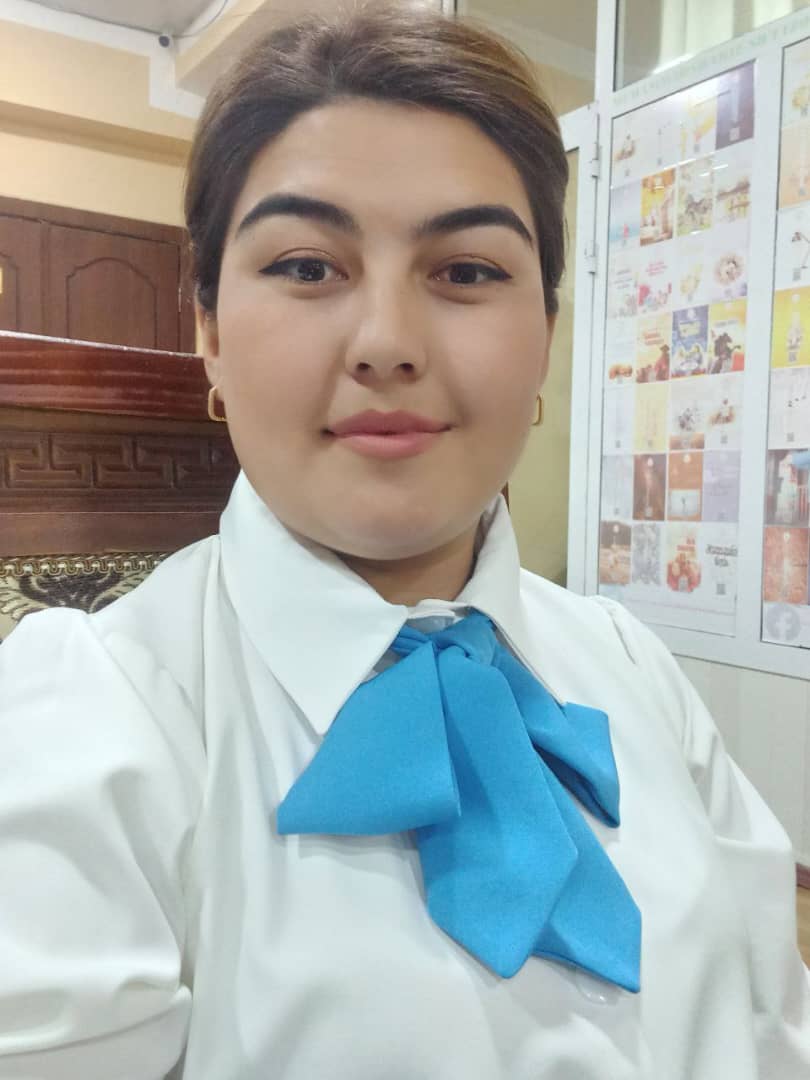
O‘rinova Diyora Kamoliddin qizi was born on November 6, 1997, in Uchqo‘rg‘on district of Namangan region. She graduated from Secondary School No. 25 in her district and continued her studies at an academic lyceum. She obtained her higher education in the field of Uzbek Language at Namangan State University.
Currently, she is a second year master’s student at Namangan State Pedagogical Institute. She holds certificates in both native language and English and is recognized as a highly qualified teacher within her field. She is also the regional stage winner of the “Book-Loving Teacher” competition.
Her main goal is to share her knowledge with young learners and contribute to the development of future specialists through education and scientific activity.