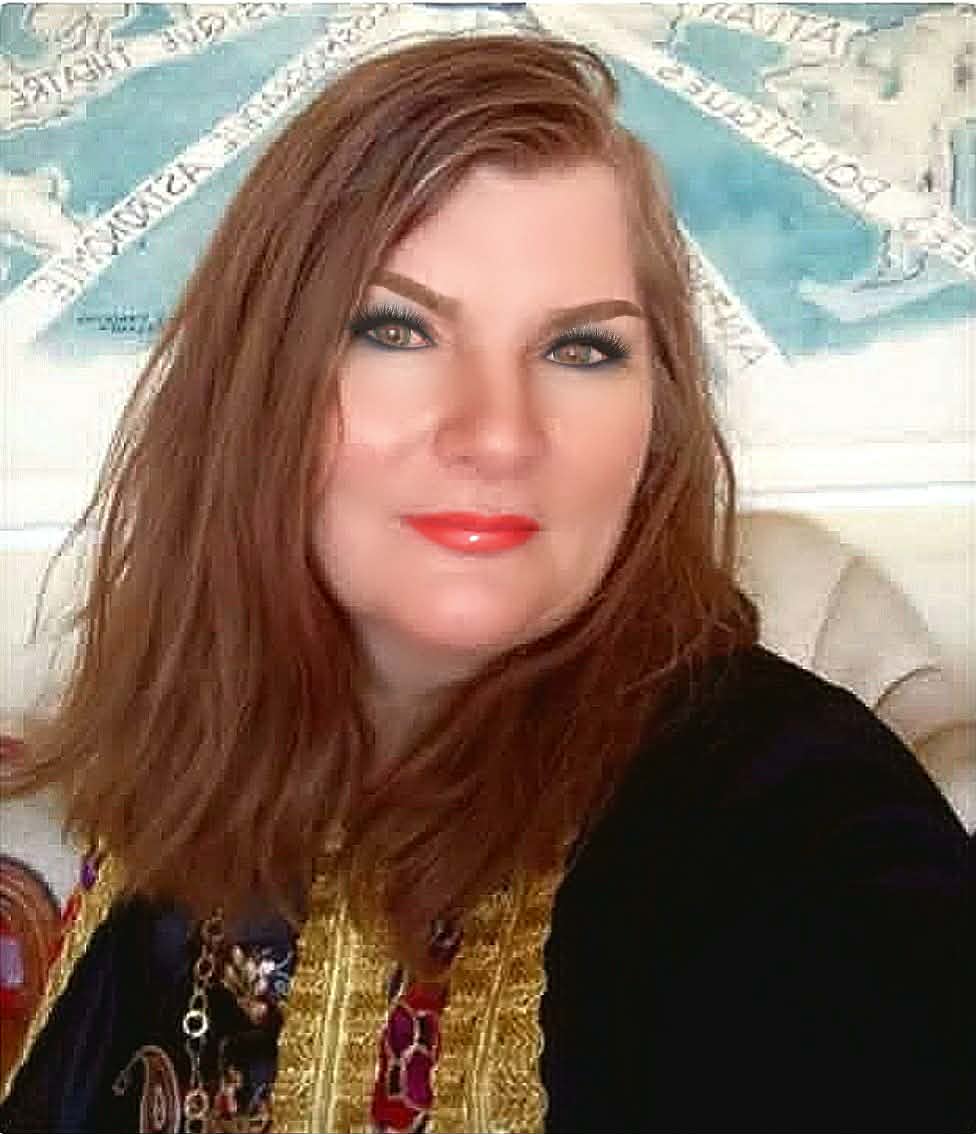
Poetry from Patrick Sweeney

he hit hard

even when 

we were just playing

          *

supporting his extraterrestrial theories 

with quotes from Jackie Gleason’s ex-wife

          *

the pace of the stone mason, the heat

          *

Romeo’s Barber Shop: 

one kind of haircut

and conversation

          *

giving her political opinion at pump number 8

          *

out among the smokers

the fragrance of the rainy night

          *

‘First self, self again; then you, Margaret’

          *

I put the cans out on Monday

and take them in on Tuesday

          *

cockroach hind-legging it

across the white tablecloth

          *

‘World builders’

always leaving out

the best parts

          *

they’d never heard the phrase: ‘indoor voices…’

          *

the origin of a word

or the memory of something I know

never could’ve happened to me

          *

well, it was a relief to learn that time wasn’t a consideration

in his wanting to change places with a scarlet leafhopper

          *

stifling, then someone decides

to drill a hole

          *

webs in the breeze 

flawless spectrums 

          *

if I could just get a little more nothingness into my last breath 

Poetry from J.J. Campbell

a rumor in the wind

and this what happens

when utopia was always

a myth

love simply a rumor

in the wind

loneliness as common

as the common cold

longing until it goes

out of style

hard to find comfort

in a land of broken

chairs and high

anxiety

tap the arm twice

and find a good

vein

hopefully

this one is laced

with something

milder

lost soldiers in

a frozen retreat

time not weather

the end came

years ago

no one bothered

to notice

——————————————————————

unremarkable

a doctor after

one of my latest

scans said the

results were

unremarkable

i have a few

ex-girlfriends

that would

agree

———————————————————-

slow and deliberate

hard to watch the seconds

tick away when the clock

is always flashing twelve

do you pick from the

pile of dirty clothes

or the pile of not as

dirty

no one warned you life

gets incredibly harder

as you get older and

the money stops

coming in

it makes it harder to

not figure death is

not the easiest but

the most logical

solution to all of

this

no loved ones to

talk you out of

your common

sense

only a fool waits for

a romantic ending

life comes at you fast

why is death so fucking

slow and deliberate

—————————————————————

broken and lonely

temptation is a beautiful

woman without any baggage

coming along for the ride

reality is every scar that

some dumb fuck put on

her in the past you will

be accused of at some

point

i can’t imagine why

anyone wants to

be with me

not like i am some

angelic soul that has

no scars

broken and lonely

what a way to go

through a world

that couldn’t give

two shits that you

exist

it is an endless agony

hoping for a kiss

sometime before

you die

sure, get romantic

on the verge of

another world war

——————————————————-

at the end of the horizon

whispers lost in the wind

all dreams go to die at the

end of the horizon

fifty cents off two lemons

too cold for lemonade

she told me she wanted

to see other people

i asked if i could do the

same already knowing

that answer would be

what it always has been

crash landing in the

middle of hell

do they even write

home letters to loved

ones anymore

somewhere coltrane

is playing and one

lucky soul will hear

it for the first time

if they only knew

it will be all downhill

from here on

J.J. Campbell (1976 – ?) is trapped in suburbia, plotting his escape. He’s been widely published over the last 30 years, most recently at The Rye Whiskey Review, The Beatnik Cowboy, Yellow Mama, Night Owl Narrative and Mad Swirl. You can find his latest book, to live your dreams, on Amazon by going here: https://a.co/d/0aaEe8ph

Poetry from Alan Catlin

This Is Not Art

: an assemblage

“The Americans call photography an art.  They have

galleries, institutions, exhibitions. But what I’m doing

is not art.”  Don McCullin

Cholera victim. Eyes rolled back into her head.

Cradled in arms of her husband as an offering to

Death.

Shabby woman of no particular age.  Standing in 

her, three-rungs-below-hell, dwelling.  “Rats the

size of cats,” her son says. Whoring is a way of

life here.  You have to eat.  So do the boy with no-future 

eyes.

An American soldier in Hue city. During the offensive.

Throwing a grenade amid the ruins toward an unseen

enemy.  Seconds before his arm is blown off

by a sniper’s bullet.  Before another soldier takes his

place. Throws a grenade. Is shot. Before another

man is ordered forward.

Three heavily armed, cocky young American soldiers

in South East Asia.  Their captive forced to his

knees, arms trussed behind his back, rope around his

neck like a leash. Eyes blindfolded with a dirty once-

white rag.  The village behind them about to burn.

Three blind black women fast walking in bare

feet past heavily armed guerrilla force on the last

days of the Smith regime in Rhodesia.

American army chaplain lifting an confused, dazed old

woman from bombing raid rubble.

A face only portrait of a starving boy in Biafra.

Oh, the Humanity!

Insanity: a poem with an epigraph and a closure by

The Poet Spiel

“It’s a good thing to die at least once in a lifetime.”

Life had become a place where

you could fall asleep in a world

that adhered to moral principles

and natural laws, and wake up in

another where all those rules had

been suspended.  Even the environment

unrecognizable. All the buildings,

public spaces transformed into

creations by narcotects, city planners

on cocaine using blueprints crafted

from splatter art like those pock- 

marked Bill Burroughs’ paint smeared

canvases randomly created by shotgun

spray patterns and arterial blood.

All the faceless men and  women

stick figures fashioned from coat

hangers, high tension wire art made

bright with electrical charges that

illuminate the night.  Nothing moves

but the poison gas clouds, the blood red 

sickle of a waxing moon.

“What if, in fact, the world does not end

but just goes on and on and on….and….”

After Reading What Light Becomes: The Turner Variations,

by George Looney

Is this how the dead

assemble, by fire light,

on river’s edge near

where the spires give

themselves to the flame?

The night is charred by

all this burning, are smoking

screens that descend from

blackened clouds as secrets

contained by ash.  No reason,

to direct water where

total conflagration reigns,

the passion of all this fire

must be spent, consumption

the end of this, of all things

mortal, of all things made

by man, even that, even those

who purport to rule the world.

One Life Is Not Enough

after artwork by Edward Boccia

for the allegorical voyages of all

these independent minded souls.

For the men rescued from a filthy house

of cards, pulled from the wreckage

of a breaking hall of mirrors 

unfolded now as an accordion,

a shaped enclosure reduced to shards

of crystal lodged in the near perfect

eyes of a princess dreaming of her

mythic lover. For that half-man, half-beast-

thing, sent in exile to sea with a fleet

of confusion boats, consigned to

onerous duties, trials, and elemental

war. For, a lifetime of tasking before

the tempestuous days of false ecstasies.

For dancing on the heads of ship to shore

lynch pins, pulled from the tortured

flesh of soon-to-be-sacrificial virgins,

defilement inevitable as the monstrous

heart excavated from a sacred ruinous

place beyond understanding. For an 

inexactness tiles fitting into a mosaic-

a map of love more lasting than all t

he misleading dreams that layered, 

obstructive dead adhere to, blocking 

the way inside; here, at land’s end,

the final choices are offered and

made. For the man with the lasting vision

is the one who come out whole on

the other side of night.

This war, that war, the next war, war everlasting:

with lines from Wilfred Owen and Siegfried Sassoon

“Out there, we’ve walked quite friendly with Death;

Sat down and eaten with him, cool and bland,

Pardoned his spilling mess-tins in one hand.”

Wilfred Owen, “The Next War”

Oh, brave new world of gravity rainbows,

long range death by guided missile, satellites,

drones;

all those Space X unscheduled midair disassembling,

air space disruptive, debris spewing on residential

homes and gardens;

all those air show explosions casting shrapnel 

to the wind like Turner fireworks falling, 

like Owen’s fleeting flares;

Oh, those happy days in the arms of death

like close combat in the green, all those mad minute

tracer rounds before the final fight,

before the shock and awe of carpet bombing

civilian targets, concussive assaults, in great

fireballs forged and deadly as Death From Above;

all those polluted by stealth bombers and super sonic

jet fighters, skirting toxic clouds and the acidic rain

that falls after;

Oh, the odd beauty of it all, the way the world

is ending with a blustery tweet, a nuclear winter

without Strangelove’s unearthly chorus singing,

“Until we meet again, I don’t know when…”

“War’s a joke for me and you

While we know such dreams are true”

Siegfreid Sassoon

Post Card to Thompson May 6, 20–: The Poet at Kurt Cobain 

Landing wearing a rubber dog mask 

and hand painted answers to 

Kurt C questions, Private Keep Out

He wrote Anthems for the Doomed

Youth: not Wilfred Owen but Cobain.

He’d be a one name rock star if he

were living now. So famous he didn’t need

a first and a last one, just a brand name.  For

personal appearances all he world have to do

is show, act cool, preen. Just being was enough.

Mega.

Man.

Went directly from his mansion to

rock and roll heaven with a shot gun in his mouth.

Fuck Go, fuck the two hundred dollars,

fuck Courtney Love.

He was already in Nirvana. What more

could he possibly need?

“I say shot gun, shoot em ‘fore he run now….”

Junior Walker

Poetry from Dr. Kathleen Bryson

50th Anniversary of the Moon Landings  

I. Day  

I scan London for some sign,  

but no one seems to remember  

so I’m watching Google Doodle  

to get a real sense of the undiscovered  

lands. Men can go to the moon but I  

I cannot even be bothered to go to south of the  river or Dalston to watch the commemoration film I’ll  I’ll see it tomorrow I promise myself.  

I looked earlier in the morning for moon  

moon jewellery, scavenged through my necklaces  but found nothing. Stars,  

stars, I think later in the day,  

I could have worn star jewellery.  

Google Doodles. The banality.  

This is not what I expected, which I  

I might as well admit happened to be global peace  the world united in Western commemoration.  Girls in silver go-go boots, young men painted chrome,  a U.N. Declaration to call it Moon Day.  

Everything stops just like the footage  

video I duckduckwent all the  

all the way to YouTube.  

Only three London cinemas  

movie theaters theatres cinemas theaters theatres  screening the big day.  

Maybe the programmers forgot the  

the momentous occasion but  

but most likely it’s generation y z born after  

but x still remembers the child blips of  

of space boots tang. Or maybe not.  

I am American. I am an extraterrestrial here.  

Different history but  

but my fate has converged here in London like  like my mother’s egg and  

and my father’s sperm against the odds.  

Everyone in the world gets along in love and beauty.  Beauty. I’d like to teach the world to sing.  

Sing. We have sailed to the stars. We have touched up Luna.    

Instead everyone taps their smartphone in deep thought I  I console myself to say maybe they’re watching the  the landings too or at least the Google Doodle.  I was seven months old but we  

we were in the Arctic with no TV or  

or even radio so my mother told me  

several years ago when she elaborated that 

she never could in fact have held me up  

to see the screen as I had always assumed.  

My mom too only saw it properly for the  

the first time this year at the age of 75.  

Instead we have a slither in the  

the White House bleating soundbytes on Mars a  

a desecration no communion tongue to cheek  

frenching the white tongue of the cool moon,  

our opal rising blue and gold green glittering  

like a Turk’s eye in the old form of  

of turquoise adjective admixture earthrise protect us  

us against the evil eye we are one people,  

we are one, we are al one.  

Like Knut at tides we stare at our phones at  

at inevitable earthset cut off from it it all but  

no we I one in the queue for the 249 bus one  

one woman at last is wearing a shirt  

with ostentatious stars on it that’s  

got to be it has to be a tribute I think but  

but I say nothing nothing to her.  

II. Night (when it is eerie to consider the scope of our passions a half year before the  pandemic)  

I will try not to let it go to my head.  

But Apollo 11 Astronaut Michael Collins  

just liked one of my space paintings on  

Instagram today of all days.  

I was just thinking that if someone ever  

ever offered me a free trip to  

the international space station I  

I would turn it down I think. Chicken a  

squawking earthbound chicken a flightless bird.  

Would you? I text my friends  

whilst humblebragging about social media valentines.  

I’d really have to think about it,  

friend one says. I couldn’t live easily myself  

if I turned down the chance, friend two says.  

I would go too, I say, because I’ve now changed my mind.  

Ha ha, no one’s asked, says friend two.  

My new friend MC is begging me to  

come with on his next launch, I text,  

claims he got a little bored with just Armstrong and Aldrin.  

I was going to go to bed, but I got so overexcited over the  

Michael Collins contact I poured myself a glass of champagne and  and went out looking for the moon.  

However, I also dropped the Ikea glass and  

and then cut my hand whilst being a responsible citizen. I  

I give a hoot and don’t pollute. I was  

was walking down a road next to mine home champagne 

Widow Click actually and  

and bleeding from my hand. I text this. Life in second person.    

Perfect, says friend two, that’s peak life.  

A guy tried to pick me up and I said  

I was looking for the moon, I elaborate.  

Then he saw my bleeding hand and desisted.  

“I dig crazy chicks,” says friend two.  

“Crazy chicks are easy…  

Oh wait, her hand’s bleeding… Nah.”  

I am texting with one hand. Time for a bandaid.  

Goodnight. Goodnight, Moon.  

London on the Moon  

Moon on a Stick is a good name for a pub  

or a retrofuturist dessert or a prog-rock album. 

I wonder how often it has occurred to you that 

all space medical doctors are essentially veterinarians  

due to their expertise in multiple species  

A.L.F., Vulcans, E.T., greys their 

cats, hamsters, bluebirds, dinosaurs.  

It has occurred to me. 

And now you have looked askance  

on my latest commission, 

on the anatomically incorrect Crystal Palace dinosaurs  

I was bribed to paint for £200 

alongside watercolour Routemaster omnibuses.  

I have defied you and painted this anyway.  

Despite my benign pareidolia that has me detect  

fizzing physiognomies in nearly everything  

with increasing regularity these days 

including the predictable jolly man  

like a 1970s smiley decal plastered on my planet’s rocky satellite. Yes, I know you can’t see the curve of the moon when you’re on it;  yes, I know you cannot see stars save the sun from the moon;  yes, I know there are no Crystal Palace dinosaurs or red buses on the moon.

Kathleen Bryson is an Alaskan-born evolutionary anthropologist and an EU virtual reality research fellow, with previous posts at Oxford and QMUL. She has had four novels previously published; 25+ short stories in publications ranging from Aesthetica to Bending Genres; and 45+ poems in venues from Magma, Star*Line, Always Crashing to Ranger.

Poetry from Jasmila Talić-Kujundžić

Levitating

I have never had my feet on the ground

I have never been deaf to the sound

Of clapping wings

I always had multiple rings

As a proof I am a wife to the world of Beyond

As a proof I have a strong bond

And unity with the Self

I have piles and piles of books on the shelf

But Words are coming straight from the Soul

As Alice I am falling into Rabbit’s Hole

I have no fear of becoming small and insignificant

I have no fear of touching my inner infant

I have great fear of becoming large

I have great fear of being deceptively in charge

Of keeping an illusion of masquerade ball

I would rather scream and call

Everyone to rip off their masks

To give up on their made up tasks

And hear the sound of wings clapping

Or maybe I should be tapping

Myself to the ground?

High voltage woman

There should be a sign on my forehead

So everyone could just sleep and go to bed

Instead of trying to be awake with my high-maintenance Self

They should just leave me on the shelf

Full of misunderstood books

I just don’t care about looks

About shallowness

About being less

I have never stopped being much and more

I have never stopped searching for soul’s core

A sign should say:

“Caution, high voltage”

I am somewhere near middle age

But it doesn’t stop me to engage

Myself fully to every emotion

To every life motion

I admit, it is exhausting

Sometimes I wish I could just sit and sing

Just dance and stare at sky

Just watch the birds fly

But I am a mother 

I cannot just say I don’t care, I don’t want to bother

With life’s biggest responsibility

I want to learn how to have ability

To relax

But still be me

But still be someone who deserves True Love

Just the way I am 

So dangerous, high-voltage woman.

Jasmila Talić-Kujundžić

Short biography:

Jasmila Talić-Kujundžić was born on December 26, 1989 in Banja Luka. She completed primary and secondary school in Zenica, and in Sarajevo, where she still lives, she obtained a master’s degree in Psychology at the Faculty of Philosophy.

Her first novel “The Sky Window” (BMG, Bosanska medijska grupa, Tuzla, 2025) was awarded as the best manuscript at the “My First Book” festival competition.

Jasmila worked for six years as the editor of the youth magazine “Preventeen”. She has a lot of experience working with children and young people, and has worked in schools and day care centers. She has published poetry, prose, essays, and articles on numerous portals, magazines, and anthologies.

She also won first prize in the competition for the best newspaper story organized by “Naša riječ” Zenica in 2008.

Jasmila is currently focused on motherhood and writing.

Eva Petropoulou interviews Richard C. Bower

Richard C. Bower

Dear Richard, I am very happy to have this interview with you. Let’s talk about you. How was your childhood? Your dream?

I was fortunate to have a good upbringing, with supportive parents and a stable home, growing up in a working-class town – Mansfield – in Nottinghamshire. It was a grounded childhood – simple in many ways, but rich in the things that mattered: love, encouragement, books, and space to think.

Books were always part of my life. I have been reading from a very young age, and I still remember getting books every Christmas. My Mum once told me a story that stayed with me: she had gone to order some books I’d asked for, including the works of William Blake, and the shop assistant remarked on what good taste I had for someone so young. That says a lot about where my mind was even then.

Writing was there from the beginning too. I wrote constantly as a child, and one of my English teachers recognised something in it early on, telling me that one day I would write a book. He was right – I’ve now had five published. But at the time, writing never felt unusual to me. I didn’t “dream” of being a writer because I simply assumed it was something everyone did – writing in journals and note pads, etc. It felt natural, like breathing.

Poetry always fascinated me. I would often find myself drawn to the poetry sections of libraries, trying to understand what it was. There was a wonder to it – something elusive, almost sacred. Alongside poetry came philosophy and psychology: questions of existence, meaning, and the workings of the mind. Looking back now, I can see that all of these threads became woven into my work.

I never consciously set out to become a writer. Life seemed to shape that path for me. But I do remember when I first went to university thinking how powerful it must be to write words that could genuinely affect, and inspire, another person’s life!

Now, through my books, essays, and my freelance writing – including my own column in local lifestyle magazines – I find myself in that very position. Looking back, it all makes sense. What once felt ordinary has become my life’s work, and I feel deeply grateful for that.

2. When did you meet poetry? Who inspired you?

Poetry found me early, though I only truly recognised it later. It became a language for the things ordinary speech could not hold. I have been inspired by many voices across time – from  William Blake to Jim Morrison. But life itself has been my greatest teacher.

3. What is poetry giving to the world?

Poetry gives the world pause. In an age of speed, distraction, and noise, poetry asks us to stop and feel. It reminds us of what is essential – love, grief, beauty, impermanence, truth. It keeps alive the inner life of humanity.

4. What about young people? Are they interested in literature and books?

I believe many young people are hungry for meaning, but they are growing up in a world that often fragments their attention. Literature asks for patience, and patience is becoming rare. But the hunger remains. The challenge is not that literature has lost its value, but that the world has changed its rhythm.

5. Tell us about your book. Why would you suggest your book to the reader?

My latest book, Introspective Soliloquies, is perhaps the clearest expression of who I am as a writer at this stage of my journey. It is a collection rooted in reflection, contradiction, rebellion, and inner searching – exploring themes of nature, identity, suffering, resilience, and the eternal tension between shadow and light. The title itself speaks to the essence of the work: a dialogue with the self, an honest confrontation with the inner landscape.

What makes this book especially meaningful to me is the journey it has taken beyond the page. It became my first work to enter the UK curriculum, now being studied in schools across the Midlands – something that felt both surreal and deeply humbling. That achievement also made headlines in India, because the book was published by the esteemed Indian publishing house Birutjatio, a publisher long associated with literary prestige and academic significance. Their catalogue has included giants such as Rabindranath Tagore, Nobel laureates, Bollinger Prize winners, and Pulitzer finalists. To become their first contemporary British author is an honour I hold close.

In many ways, Introspective Soliloquies represents a bridge – between the romantic inwardness of Lord Byron and the spiritual universality of Tagore. Some have described my work as occupying that middle ground, and I think there is truth in that. It carries both rebellion and reverence; both grit and grace.

The book also forms part of my wider literary journey – one that has seen my work recognised by UNESCO and Nottingham City of Literature, where I have been placed in conversation with the legacy of Nottinghamshire writers such as Lord Byron, D.H. Lawrence, and Alan Sillitoe. That lineage means a great deal to me, not because of status, but because all of them, in their own way, wrote against the grain.

I would recommend Introspective Soliloquies to readers who value honesty over polish, depth over distraction, and poetry that does not merely decorate life, but interrogates it.

Available here:

6. What is your favourite quote?

At the moment, my favourite quote is: 

“The energy of the mind is the essence of life.” 

                                                   – Aristotle. 

It’s a quote that resonates deeply with me and one that will appear at the front of the book I am currently working on. I won’t say too much about that yet, because I don’t want to give too much away, but I think the quote itself offers an insight into the spirit of the work.

It also reflects something central to me as a writer – my long-standing fascination with philosophy, consciousness, and the workings of the mind, which I mentioned earlier. Those themes have always run alongside my poetry.

I’ve always chosen quotes carefully for each of my books. They act almost like doorways into the work – particular fragments of thought that help frame the journey ahead. Over the years, those guiding voices have included figures such as Jack Kerouac, Hunter S. Thompson, and Carl Jung – writers and thinkers whose words have stayed with me, each for different reasons, at different times in my life.

7. What are your future plans?

At the moment, my future plans are rooted very much in the place I come from. As Poet Laureate of Mansfield, I am working closely and passionately with my hometown to inspire and encourage local writers, helping to nurture creative voices that may otherwise go unheard.

Over the past months, I have been giving workshops, talks, and recitals of my own work at colleges and various venues around the town, sharing not just poetry itself, but the deeper idea that writing can be a means of understanding ourselves and our communities.

A major part of that work has been my role as judge for Mansfield’s Writing on the Wall poetry competition – a heritage project tied to the restoration of the historic Old Town Hall. The competition invited writers to respond to themes such as hope, courage, reflection, and community, and the winning pieces will not only be published in an anthology – for many, perhaps the first time they will ever see their words in print – but fragments of those poems will also be woven permanently into the fabric of the town itself, inscribed onto the historic stonework of Mansfield’s Old Town Hall. I think there is something incredibly powerful about that: words becoming part of the landscape, part of the town’s memory.

Beyond that, my ambition is to build on the talent we are uncovering and create something lasting – an annual literature festival in Mansfield that is recognised not just locally, but nationally. Mansfield has a rich creative spirit, and I want to help give it the platform it deserves.

For me, the future is not only about my own writing. It is about creating opportunities for others, strengthening the literary identity of my hometown, and ensuring that the next generation of writers knows that their voice matters.

8. A wish?

My wish is that people return to themselves – to silence, to reflection, to authenticity. In a world that constantly asks us to perform, I hope more of us remember how to simply be.

Thank you.

Richard C. Bower

Author | Poet Laureate of Mansfield

UNESCO-Recognised Literary Contributor

Cultural Ambassador, Mansfield UK

Interviewer Eva Lianou Petropoulou