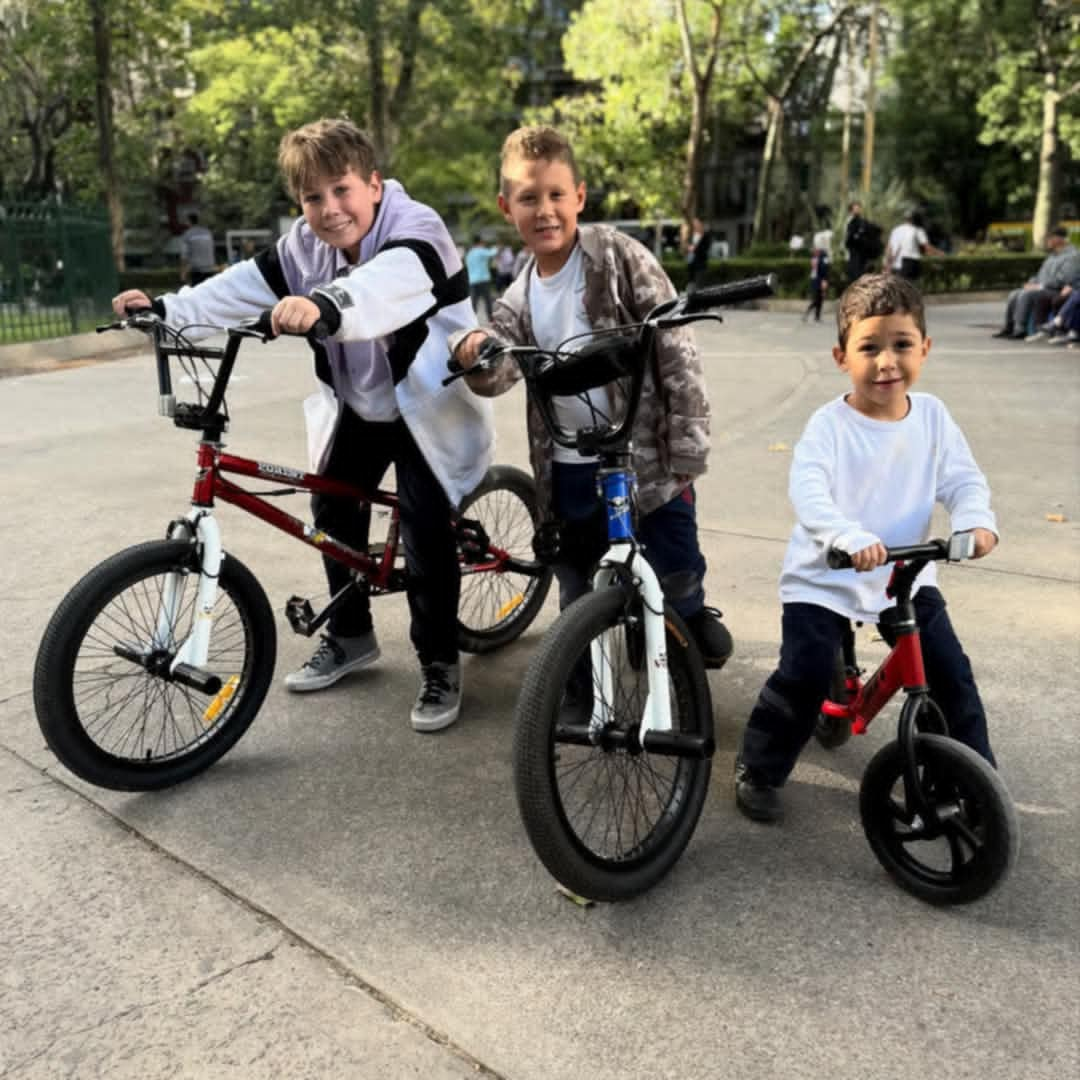
Ciro, eleven years old, a torrent of energy contained in a body and an intellectual mind. Your eyes, two deep pools reflecting the blue sky, serene yet full of the restlessness typical of your age. In them I see the future, a path yet to be charted, full of infinite possibilities. A future that fills me with pride and hope.
Constantino, eight years old, a spring sun in your shining blond curls. Your laughter, a spring that flows endlessly, brightening every moment. You are joy personified, a whirlwind of pure energy that infects everyone around you. A hug from you is a shot of optimism, a balm that heals any sorrow.
Milo, five years old, a little dark-skinned prince, sweet as honey. Your eyes, two bright stars that shine with radiant innocence. Your silence, sometimes, speaks louder than a thousand words, conveying a deep and comforting peace. You are the calm after the storm, the warm embrace that comforts me at the end of the day. A sweet whisper that reminds me of life’s simple beauty.
I love my princes.
GRACIELA NOEMI VILLAVERDE is a writer and poet from Concepción del Uruguay (Entre Rios) Argentina, based in Buenos Aires She graduated in letters and is the author of seven books of poetry, awarded several times worldwide. She works as the World Manager of Educational and Social Projects of the Hispanic World Union of Writers and is the UHE World Honorary President of the same institution Activa de la Sade, Argentine Society of Writers. She is the Commissioner of Honor in the executive cabinet IN THE EDUCATIONAL AND SOCIAL RELATIONS DIVISION, of the UNACCC SOUTH AMERICA ARGENTINA CHAPTER.
No boundaries, where colors can separate but blend,
Blend into different shades and hues
Even a black and white photograph
Has its different shades and hue
Yet our minds are set
Between one not even two.
For two will make us choose, be IN or OUT
And OUT will always be wrong
Because IN is always right.
And Tolerance does not mean Respect
Just waiting to prove the other Weak.
We see only what we want to see
We understand what we only want
We believe only what is beneficial
Others are blind or lying false.
How I envy the unschooled beasts
They have territories, yet respect boundaries
They do not attack, unless hungry
Knowing not of greed, nor hatred
How I envy the rainbow in the sky
Brightly shining after after cold dark storm
No color, but the sun makes it beautiful
Neither clashing, nor overlapping.
Nature is harsh but it has its rule
Diversity so to balance its growth
Yet we are smarter than Nature
We control, change and destroy
Rules made by Nature, we can overcome
Because we are smarter than Nature.
And rainbows are just part of foolish nature.
Vengeance
Once I donned the perfume of the innocent
Thinking it will shield me from evil’s intent
Yet when you recognized the purity scent
You came and tore down my peaceful tent
Your claw hands my virginal gown did rent
My mind to your devious wishes force bent
My soul to hell’s sulphuric kingdom sent
And my sanity to Limbo’s voidness went
I came back and wore the musk of the beast
My turn to bring havoc to the west and east
I watched as the hyenas and buzzards feast
For the past I know I should not care the least
But why instead of success I feel pains of defeat
Why do I feel numb from head down to my feet
Why have my heart and pulse end their beat
Ashes poured on my head and in the mud I seat
I am the victim but where is the sense of justice
I had my vengeance but where is my peace
All debts been collected yet trouble won’t cease
Tell me God Above, what did my spirit miss?
Lilian Dipasupil Kunimasa was born January 14, 1965, in Manila Philippines. She has worked as a retired Language Instructor, interpreter, caregiver, secretary, product promotion employee, and private therapeutic masseur. Her works have been published as poems and short story anthologies in several language translations for e-magazines, monthly magazines, and books; poems for cause anthologies in a Zimbabwean newspaper; a feature article in a Philippine newspaper; and had her works posted on different poetry web and blog sites. She has been writing poems since childhood but started on Facebook only in 2014. For her, Poetry is life and life is poetry.
Lilian Kunimasa considers herself a student/teacher with the duty to learn, inspire, guide, and motivate others to contribute to changing what is seen as normal into a better world than when she steps into it. She has always considered life as an endless journey, searching for new goals, and challenges and how she can in small ways make a difference in every path she takes. She sees humanity as one family where each one must support the other and considers poets as a voice for Truth in pursuit of Equality and proper Stewardship of nature despite the hindrances of distorted information and traditions.
Hot weather sweating the body and firing the nature
Suddenly the sky becomes so gloomy
Just like my beloved’s face in the shadow of sorrow
It stands as the dead of the dark starless night
In this puzzled situation I lean down in the lightning
The earth trembles with fire and die so many people in the thundering
After the rain in the half bright sky the rainbow blooms out with a hope
That colorful garden laughs out with heavenly brightness
The deaths embedded on the ground
And the bright flowers smiling on the other side
The rain takes out the lives in contrast it helps sprout the new lives
And the colored rainbow in the sky smiles in the glory of hope
We everyday weave.
Chapainawabganj, Bangladesh
13 May, 2025.
Md. Mahbubul Alam is from Bangladesh. His writer name is Mahbub John in Bangladesh. He is a Senior Teacher (English) of Harimohan Government High School, Chapainawabganj, Bangladesh. Chapainawabganj is a district town of Bangladesh. He is an MA in English Literature from Rajshahi College under National University. He has published three books of poems in Bangla. He writes mainly poems but other branches of literature such as prose, article, essay etc. also have been published in national and local newspapers, magazines, little magazines. He has achieved three times the Best Teacher Certificate and Crest in National Education Week in the District Wise Competition in Chapainawabganj District. He has gained many literary awards from home and abroad. His English writings have been published in Synchronized Chaos for seven years.
DEVELOPING CRITICAL THINKING SKILLS IN PRIMARY EDUCATION
Annotation:
This article analyzes the importance and effective methods of developing critical thinking skills in primary education. It emphasizes the significance of teaching students analytical thinking, problem-solving, and decision-making skills. The development of critical thinking not only influences students’ academic success but also has a significant impact on their social life activities. The article also provides detailed information about innovative pedagogical approaches, optimizing the role of teachers, and the effectiveness of interactive methods in developing critical thinking in primary education.
Primary education plays a crucial role in shaping students’ unique thinking styles and in the deep and solid acquisition of knowledge. At the same time, today, critical thinking, analytical approaches, and problem-solving abilities hold great importance in society. Critical thinking helps students not only in learning academic content but also in making the right decisions in various life situations. These skills play a significant role not only in school success but also in personal and social life.
Developing critical thinking skills in primary education teaches students to independently shape their thoughts, search for new ideas and solutions, and approach problems with a positive mindset. Moreover, critical thinking also enhances students’ communication skills, as they develop abilities to exchange ideas, engage in debates, and work in groups. This article discusses effective methods, approaches, and pedagogical practices for developing critical thinking in primary education.
Main Part:
The development of critical thinking skills in primary education has a significant impact on students’ future success. Critical thinking is an essential skill for a person to be successful in both academic and practical activities, enabling students to analyze their thoughts, make decisions, and think logically in various situations. There are several effective methods for developing critical thinking in primary education.
Interactive methods, which ensure active student participation in lessons, play a crucial role in developing critical thinking. Through group discussions, debates, solving logical problems, and role-playing, students learn to express their thoughts, listen to and analyze others’ opinions. For example, when working in groups, students present different perspectives, thus learning to approach a problem from multiple angles.
To develop critical thinking in primary education, it is essential to encourage independent thinking in students. In this regard, it is important for the teacher to monitor students’ activities, provide guidance, but leave the final decisions to the students. Students should be taught to structure their thoughts coherently, analyze evidence, and defend their decisions. This method fosters a sense of responsibility in students and promotes independent thinking.
Asking critical questions is an important technique that encourages students to think more deeply. Teachers should ask not only questions that require simple answers but also encourage students to justify their opinions. Questions like, “Why is this solution correct?” “What other alternatives exist?” and “How might this problem be viewed from another perspective?” provide students with opportunities to expand, evaluate, and analyze their thoughts.
Through practical exercises and projects, students link their thinking process to real-world problems. For example, scientific research, participation in team projects, and problem-solving and decision-making processes help students practically develop critical thinking skills.
Creative and innovative thinking is of particular importance in developing critical thinking in primary education. Students should be encouraged to generate new ideas, write them down, create prototypes, or find solutions through systematic thinking. This process enriches students’ logical thinking and allows them to analyze their ideas in more depth.
The role of the teacher in developing critical thinking is essential. Teachers not only transmit knowledge but also stimulate students’ thinking processes, ask them questions, and assist in generating new ideas. Teachers must tailor their pedagogical approaches to develop critical thinking, motivating, supporting, and guiding students in analysis and decision-making.
The methods discussed above serve to enhance the engagement of primary school students and stimulate their thinking process. In particular, suggesting real-life problems for students to solve helps them develop the skill of thinking about life-related questions. For example, questions like, “What would you do if the school ran out of water?” or “What would be your first action if you were the president?” encourage critical thinking based on the student’s perspective, empathy, and analytical abilities.
Additionally, tasks based on revisiting art, literature, and events deepen students’ creative thinking. For example, asking students to write a different ending for a fairy tale, predict the author’s intention, or imagine themselves in the role of a character combines critical and creative thinking. Through such tasks, children not only understand the events but also analyze them and provide their own evaluations, which forms the foundation for critical thinking.
Modern technologies also offer vast opportunities in this regard. For instance, logical games on digital learning platforms, question-and-answer tests, and problem-based interactive tasks allow children to independently develop their thoughts. This is an important factor in fostering critical thinking.
Based on the above, it can be concluded that the development of critical thinking is not a one-time activity, but rather a continuous strategy that should be integrated throughout the educational process. Every teacher should encourage students to think, ask questions, develop ideas, and make evaluations in each lesson
Conclusion.
In conclusion, developing critical thinking skills in primary education is an essential and indispensable aspect of modern education. This skill ensures that children have a conscious and active attitude toward life, knowledge, and events. By fostering critical thinking, students learn to make independent decisions, compare different opinions, assess evidence, and justify their own viewpoints.
Additionally, this process creates a solid foundation for their personal growth, effective adaptation to social environments, and helps them find their way in the future. The role of the teacher in this process is crucial — they must inspire students to think, ask questions, and analyze carefully.
Through lessons enriched with modern educational technologies, interactive methods, real-life tasks, and social activities, we can raise a generation of critical thinkers who are conscious and responsible. Therefore, every educator must continuously improve their activities in line with the demands of the times. After all, today’s young learners are tomorrow’s active members of society.
References
Xolmurodov A. Methodology of Primary Education. – Tashkent: “Fan va texnologiya”, 2021.
Xasanboyeva S., Yuldasheva M. Pedagogical Technologies and the Basics of Critical Thinking. – Tashkent: “Ilm ziyo”, 2020.
Turdiyeva G’. Innovative Approaches in Working with Primary School Students. – Samarkand: “Zarafshon”, 2022.
Muminova Farida was born on February 1, 2005, in Payariq district, Samarkand region, Republic of Uzbekistan. She is a part-time student in the Primary Education program at Jizzakh State Pedagogical University. Farida is one of the successful students in her field, a holder of several international certificates, and also teaches mental arithmetic to schoolchildren.
if our bodies had souls, they would spit, chew, break bread, beckon sheep in for the night, swim, sleep, rest, do everything the body would do if we were not trespassing it too.
Brooks Lindberg lives in the Pacific Northwest. His poems appear frequently in The Beatnik Cowboy, Horror Sleaze Trash, and elsewhere.
VO THI NHU MAI – A QUIET FLAME AMONG FELLOW ARTISTS
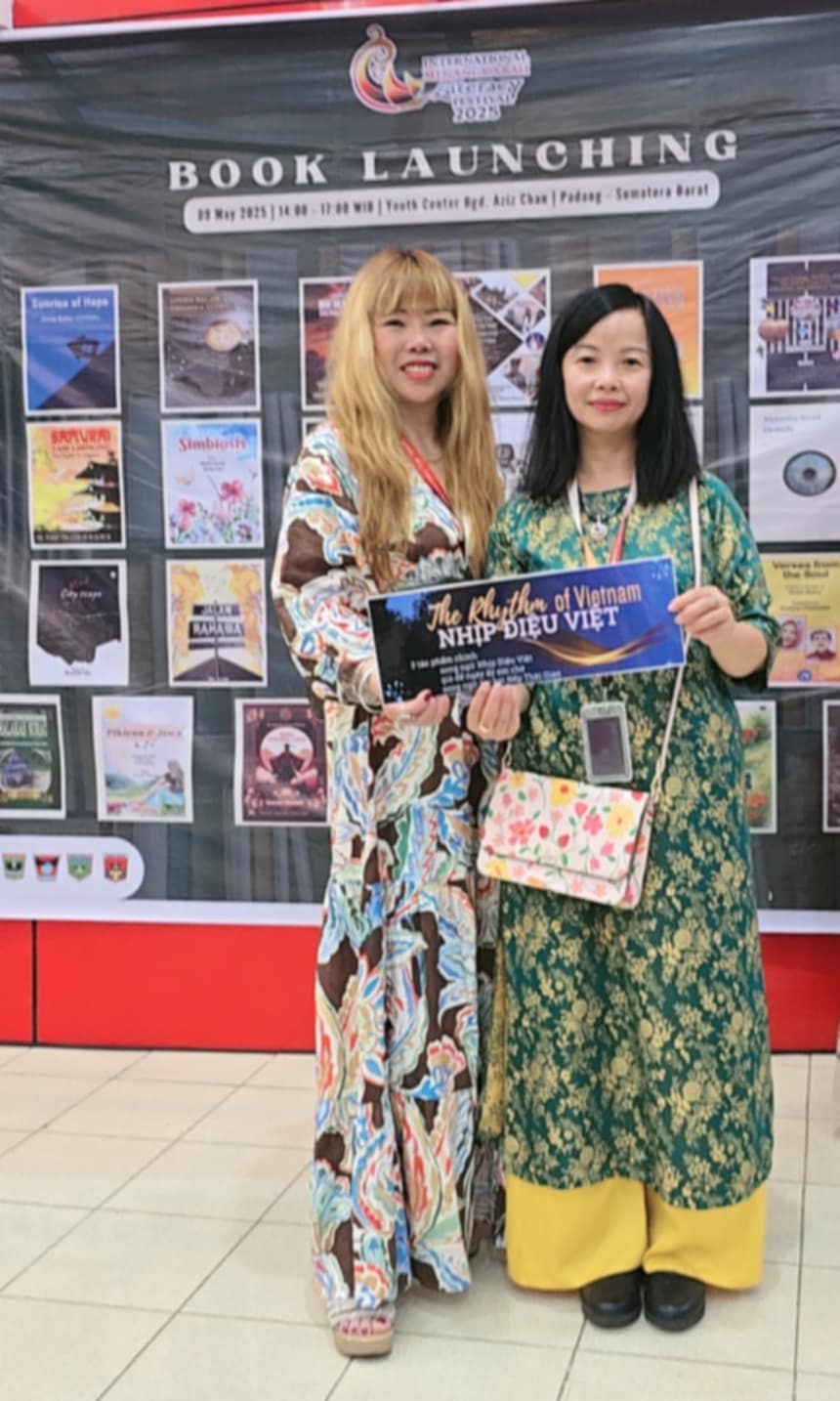
At the recent literary gathering, Vo Thi Nhu Mai made her debut appearance, not with loud declarations, but with a quiet presence that left a warm impression. As a first-time participant, she spent much of the time observing and absorbing the atmosphere around her. Though she spoke little, her attentiveness and gentle smile spoke volumes.
During the program, while others were caught in the bustle of performances and interactions, Võ Thị Như Mai moved gracefully between people, offering small yet thoughtful gestures. One such act stood out: she personally handed each participant a small card with their name written on it, a simple but touching effort to acknowledge and welcome everyone. It was a beautiful moment of connection, reminding us that care and presence can sometimes be more powerful than words.
Her demeanour was soft-spoken, but her actions carried sincerity. Many noted her warm energy, quietly friendly, respectful, and keen to understand the nuances of the gathering. In a space often vibrant with creative voices, Vo Thi Nhu Mai’s quiet kindness was like a calm note in a symphony, and her presence undoubtedly enriched the experience for all who were there.
The literary festival itself was a rich and colourful celebration of poetic voices from around the world. Held in a welcoming space filled with music, laughter, and multilingual readings, it brought together poets, translators, musicians, and friends of literature to share work, ideas, and cross-cultural conversations. Each segment of the program was crafted with care, blending each cultural literature with international voices, allowing a beautiful dialogue of language and soul.
Vo Thi Nhu Mai, though initially quiet, contributed meaningfully to this shared space. She took to the microphone and read her original poem “The Song of Life” in both Vietnamese and English, offering the audience a sincere glimpse into her poetic world. Her delivery was gentle yet confident, her words soaring with listeners across language boundaries. It was a moment of quiet power, her voice steady, her poem luminous.
In another generous act of cultural exchange, Võ Thị Như Mai also read a poem titled “Enjoy” by Greek poet Eva Lianou Petropoulou, further knitting the threads of international friendship. Her choice to present not only her own work but also honour another poet reflected the very spirit of the gathering: connection through words, across cultures, in mutual respect. For a first-time participant, Võ Thị Như Mai left a lasting impression, not just with her poems, but with her grace.