Give My Greetings To My Amazing God

In fields of sunflowers, where she roams freely,
A lady with flowing hair stands in awe,
Plucking cotton delicately from the earth,
Cradling it in her pure palm.

With a gentle breath, the cotton takes flight,
A dance of white against the sky.

Her voice carries through the fields,
Singing praises to the heavens above,
"Oh, cotton, you resemble an antique woman,
With silvery tresses, bring my greetings
To my beloved God," she serenades with passion.

Sunflowers sway in harmony,
Their vibrant petals *join* the dance.

In her own crafted stanza, she reaches for the sky,
Arms outstretched, twirling in graceful rhythm.

"Give my greetings to my exceptional God,
The one who loves and cares for eternity.
I am grateful for the pain that shaped me,
Into an artist, for the challenging days and nights,
That birthed a brand new life within me."

Tears blend with smiles, a testament to the journey she's embraced.
"Oh, my extraordinary God, you have granted me the power of prayer,
Ignited the fire of passion within me,
And blessed me with a mind and body that are forever grateful.
Give my greetings to my great God,
The one who embraces all, regardless of mistakes or skin type,
Always present in the nights and days."


I'm a sword

I am a sword for the tyrant
My role is to fight for justice
against all poverty and suffering
Some find it difficult to explain my existence

People judge me by my beaming smile
My interesting outfit will be looked at for a while
They don't know the struggles I face
Pain beneath my grace

Others despise me and hate me with joy
But they don't know what drives my practice
I'm not just a pretty face
I have a purpose, a reason to embrace it

I pretend to be happy, I pretend to be strong
But deep down, my heart is not in that song
And I bear the burden of the oppressed
My own pain, I have to suppress

I don't want to hurt my loved ones
So I pretend and hide the negative truth
I just shed tears before God
Because only he knows my pain and my love

He understands when others do not
He comforts me when I feel alone
He gives me the strength to keep going
And fight for the oppressed

I am a sword, a weapon for good
 however, misunderstood
I will continue my fight, my mission
To bring justice and end discrimination.


Anila Bukhari emerges as a luminous thread, in the legacy of Pakistan, weaving tales of empowerment. A beacon of hope in a world shrouded by adversity, she stands as the epitome of courage and conviction, etching her mark on the annals of history.

Anila, daughter of the nation, embodies the essence of strength and purpose. From the tender age of ten, she wielded the pen as her sword, crafting prose infused with the fervor of change. In a society veiled by patriarchal norms, she dared to challenge the status quo, amplifying the voices of the marginalized and disenfranchised.

With each stroke of her pen, she painted portraits of courage and defiance, shedding light on the harrowing realities of child marriage, forced unions, and the plight of the orphaned. Through her literary opuses, such as "No More Tears" and "Whispers of the Heart," she wove a tapestry of awareness, igniting conversations that reverberated across continents.

But her journey transcends the field of literature; she is an example of activism, a harbinger of change. At the tender age of fourteen, she started on a crusade for peace, dedicating eight years of her life to the noble cause. Her efforts culminated in international acclaim, as she was bestowed with the prestigious International Excellence Community Service Award, a testament to her unwavering commitment to humanity.

Anila's endeavors extend beyond the written word; she is a catalyst for action, a catalyst for change. Through her initiative, "No More Brides, Just Shine," she waged war against the scourge of child marriage, mobilizing communities and igniting a spark of hope in the hearts of the oppressed. From organizing speech competitions to spearheading educational campaigns, she left an indelible mark on the landscape of advocacy.

Yet, amidst her tireless crusade, she remains grounded in compassion, extending a helping hand to those in need. Through her project, "Hopeful Hugs," she brings solace to homeless children and solace to cancer patients, embodying the true essence of altruism.

Anila Bukhari, a visionary in her own right, is not merely a writer or an activist; she is a testament to the indomitable spirit of the human soul. Inspired by the timeless wisdom of Rumi, Maya Angelou, and Khalil Gibran, she dreams of a world emancipated from the shackles of injustice, where every girl can aspire to greatness.

In the hallowed halls of art galleries in the USA, Florida, and the Philippines, her verses adorn the walls, a testament to her transcendent talent. Her words resonate in the hearts of millions, a clarion call for change in a world yearning for transformation.

In her, we find the embodiment of beauty with brains, intellect, and compassion—a true luminary whose brilliance knows no bounds. Anila Bukhari, the daughter of the nation, a force to be reckoned with, and a guiding light of hope for generations to come.
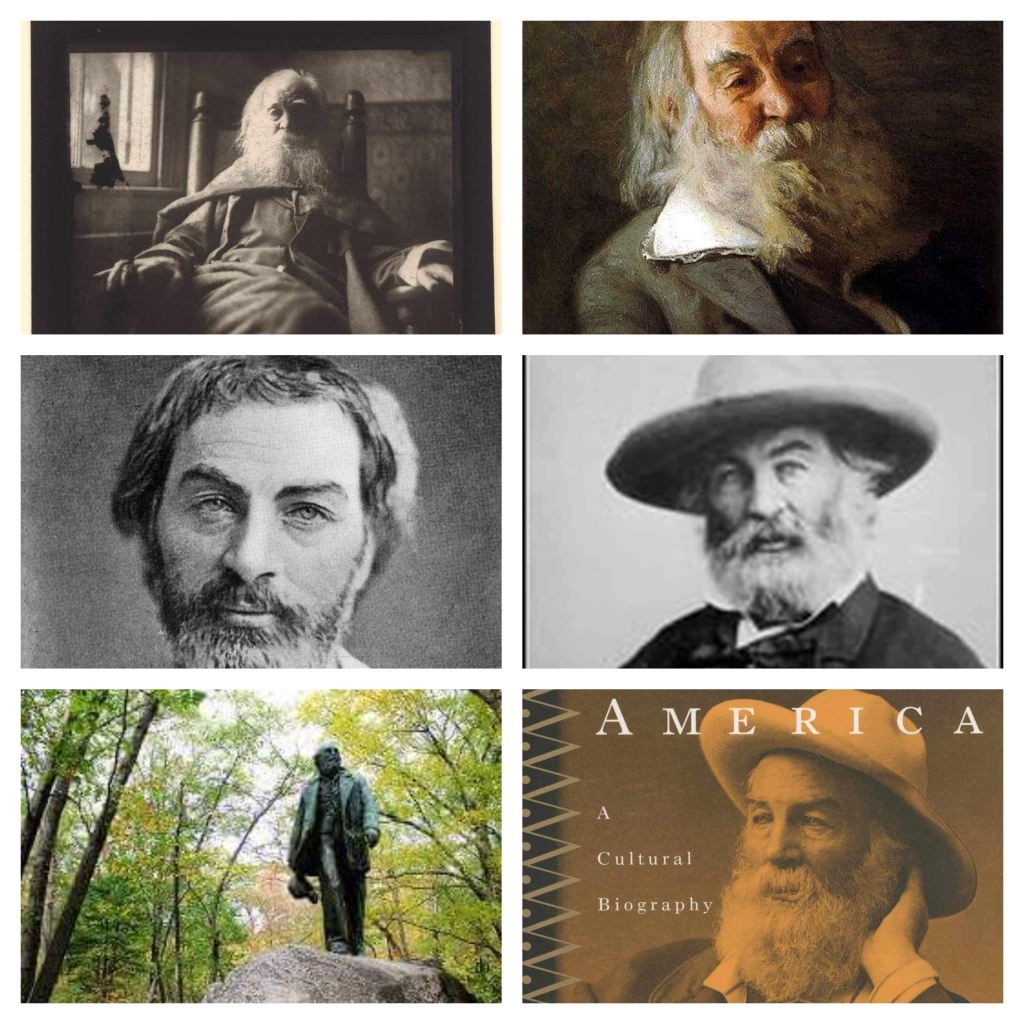
Written in memory of President Abraham Lincoln, to whom the poem refers as the captain of the ship of state by the master of Lincolnian verses. “O Captain! My Captain!” have parallel readings in analogy to “When Lilacs Last in the Dooryard Bloom’d” as transcendental poems by Poet of the Civil War, Walt Whitman. Grieving the lamentable bereavement of President Abraham Lincoln in contextualizing the universal implications of spatiotemporality as if there was the endowment of everyman’s elegiac dirge-like hymnal observance in the commemorative spirit of the cultural imagination.
Lincoln’s death is absorbed and re-coded as an extended metaphor, a projection of the speaker’s imaginative fantasy relating the objective historicity of memorial. “My Captain” is not only a term of endearment and loyalty, but a claim upon the person in correspondence to the solidarity and camaraderie of brethrenship in contrast with the acknowledgement and celebration of death as the end of all suffering that is especially true when considering “When Lilacs Last in the Dooryard Bloom’d”: the poem transports readers from a trinity of stimuli; that reminds the speaker’s of Lincoln’s heartless and inhumane cessation of life as observable in Lilacs newly bloom’d; “the great star early dropped in the Western sky in the night” and the “ever-returning spring” to the memory of Lincoln’s funeral procession “the coffin that slowly passes” on which the speaker leaves a “sprig of lilacs” … “but, praised! Praised! Praised!“ / “For the sure unwinding arms of cold enfolding death”. Social phenomena are encountered and absorbed as a kind of inseparable hyperconsciousness as apparently evidenced in the anthology Leaves of Grass .
The Lincoln poems are instances of the presidential death by assassination that resonates within the speaker’s mind whether in the crisp and condensed epitaph “This Dust Was Once The Man” or the deep languid reverberations of “But O heart! heart! Heart!” / “O the bleeding drops of red,”/ “Where on the deck my captain lies,” / “Fallen cold and dead.” […] “It is some dream that on the deck”/ “You’ve fallen cold and dead” […] “But I with mournful tread,”/ “Walk the deck my Captain lies,”/ “Fallen cold and dead.” Whitman’s elegies re-enacts and aestheticizes the mourning process; they revel in the lush subjectivity of the speaker as emphases of the stanza revelations manifest through floral laurel wreaths: “For you bouquets and ribbon’d wreaths—- For you the shores’ a -crowding” / “For you, they call the swaying mass, their eager faces turning.”
Walt Whitman finds the stature of Abraham Lincoln to be visionary, practical, prophetic, messianic and shrewdly realistic; Lincoln in Whitmanian perspectives was the poetic Shakespearean exhibited in both private and public affairs; Americanness symbolic of the roughs and beards, space and ruggedness and nonchalance literally anti dandified but prairie stamped character. “O Captain! My Captain!” is a rhetorical statement of the paradox involved in the president’s dying in the consecration and veneration of the brave heartedness and heroism. The Captain is also the speaker’s father as noted here: “Here Captain! dear father!/ This arm beneath your head! It is some dream that on the deck/ You’ve fallen cold and dead.” The figure of Lincoln shone over brighter despite the tragic incompleteness of his achievements: “Exult O shores, and ring O bells!/ But I with mournful treads, / Walk the deck my Captain lies,/ Fallen cold and dead.”
Walt Whitman’s transformation was grandiose and loftier in shifting and changing from the poet of the body to the poet of the soul, thus becoming poet of internationalism and cosmic from intense nationalism. This is crystal clear in the eloquence of the gratified poetic personality of Whitmanian spirit: […] “no more smart sayings, scornful criticisms or harsh comments upon persons or events, or private and public affairs […] never attempt puns or play upon words or utter sarcastic comments.” Passage to India foreshadows Walt Whitman’s fusion of traditional and philosophical speculations, contemplative reflections and poignant meditative perspectives of spiritual being in temporality towards immortality. “Divine efforts of the heroes and their ideas faithfully lived upon” symbolize Columbus as major figure within the allegorical symbolic background reading contextualizing the completion of the Union Pacific Railroad in May 1869 and the idea of the mystic passage of the soul to India. In addition to these scientific accomplishments including the Suez Canal connecting Europe to Asia and the Transatlantic Cable. Material and spiritual fulfillment prophetically revealed through “Passage to India” cloaked by the awkward enterprises of captains, engineers, explorers, voyagers, and scientists; and the mystification of the poet laureate merging with the Christian spirit: “Nature and man shall b disjoin’d and diffus’d no more/ The true son of God shall absolutely fuse them.”
Walt Whitman’s verbal melody and pictorial picturesqueness quintessentially enshrines the poetic aesthetics enfolded by the traditional and orthodox organic form and structure of art-nature analogy in “Passage to India!” . The passage literally refers to tangible reality of the transcendental American revolutionary achievements of scientific progress including the transcontinental railroad, the transatlantic cable and the Suez Canal while the surface metaphoricity of the cloaked textuality engraves the embodiment of enlightenment illuminative of labyrinthine alleyways from the discovery of knowledge to the advent of faith and spirituality as proclaimed by the declamatory phrases from the perspectives of the authorial viewpoint that dispels mysteries and enigmas of explorers, adventurers, voyagers and expeditionists.
Walt Whitman’s “Passage to India!” is a metamorphoses that occurs by the transposition, superimposition, transportation and transformation and/or flowing from descension to ascension through the cyclical flow of thoughts and feelings in the allegory of the biblical genesis of human individuals mounting to their deity in supplication of salvation and atonement. Organic evolution follows this metamorphoses towards meaning and effect between the continuum of changing and shifting. Form the point of view of multifaceted visages of poet, biologist and astronomer, God divines the cosmic power of celestial order with effulgence of phosphorescence to light, water, fountain and emotional tranquility. Crowning voyage of the individual returning to the soul paves the restoration of the younger kinsman melting in the fondness of the elderly sibling for the sake of death as comradeship fulfilling in itself. Pulse-like radiations of energy animate the poetic world of spiritual reality. Changing, shifting and evolving nature of life comes into perspective through the cycles of renewal within the pulse-like radiation. “Bathe me O God in thee […] seas of God” resonates the streams of Gangetic and Indus basins and their affluents; thoughts move like waters flowing in analogy with the rivulets running throughout literary history and cultural memory. In other words, projections of specificity in the historical trajectories implicate the spirits of the succumbing explorers descending and sinking down the slopes.
“Down from the gardens of Asia, descending radiating/
Adam and Eve appear, then their myriad progeny after them,/
Wandering, yearning and curious with restless explorations,/
With questionings, baffled, formless, feverish with never happy hearts,/
With that sad, incessant refrain, Wherefore O unsatisfied soul?, and whither I mocking life?”
Fortunate fall shrewdly points to the Biblical genesis referencing the allusive nature of allegorical transcendentalist humanity heralded by the spirit and matter. In this sense, frustration, despair, disillusionment, void, melancholia are implicated as inevitable premise of hybris in individualism. “Columbus walking in footlights in some great scena” notes Whitman of “[t]he sunset splendour of chivalry declining” to “misfortunes, culminatos[…] dejection, poverty and death.” Rediscovery of the Orientalists through “ascending body and spirit mounting to heaven” reinforces “the towers of fables immortally fashioned from mortal dreams.” Richard Chase in Walt Whitman Reconsidered has examined the relinquishment of poetry and the upholding of speech-making or oratorical quality as exemplified by the critical passage:
“The musing, humorous, paradoxically indolent but unprecedentedly energetic satyrs poets of the 1850s becomes the large, bland, gray personage with the vague light blue eyes and circumambient beard. Dionysius becomes not Apollonian but positively Hellenistic—prematurely old age, […] soothsaying, spiritually universalized. The deft and flexible wit disappears along with the contrarieties and disparities which once produced it. The pathos, once so moving when the poet contemplated the disintegration of the soul or felt the loss which all living things know, is now generalized out into a vague perception of the universal.”
Further Reading
Scott Borchert’s Lincolniana, “Southwest Review” Volume 100, No. 1, pp. 12-21, Southern Methodist University
Stanley K. Coffman Jr’s [University of Oklahoma, Norman] Form and Meaning in Whitman’s “Passage to India”, PMLA, June 1955, Volume. 70, No. 3, pp. 337-349, Modern Language Association Press.
Arthur Golden’s [ City College City University of New York] Passage to Lesser than India: Structure and Meaning in Whitman’s “Passage to India”, PMLA, October 1973, Volume. 88, No. 5, pp. 1095-1103, Modern Language Association
David Daiches’s Lincoln and Whitman, Johrbuch for Amerikastudien, 1996, pp. 15-28
Doppelgangers by A. Iwasa

I'm convinced everyone has at least one doppelganger.  There are only so many ways a human being can look.

For years I was haunted by one, who also had the same first name.  I became aware of this the first time I walked into Common Ground, a café in Kamm's Corners, Cleveland.  I walked up to the counter, and a really pretty barista said, "Hello Alex."

I was smitten but dumbfounded.  I asked, "How do we know each other?"

She squinted a little, and said, "Oh, funny, you look like my friend, Alex."

A few years later I was on my way to Common Ground for my second time and told this story.  My ride's older sister was sitting with me in the back seat and said, "That was me!  You look like my friend Alex, and I was the only cute girl working there, then!"

I could have keeled over and died.  She was still all kinds of cute, and now she was starring at me.  Perhaps this was when I found out Alex fronted Cows in the Graveyard.

Rewind to 1996, and I'm walking through a way over sold Mushroomhead, Incantation, Forlorn show at the Phantasy Nite Club in Lakewood, Ohio.  An extremely attractive young woman walks up to me and exclaims, "Alex!"

I ask, "How do we know each other?"

She looks me over and says. "Sorry, you look like my friend Alex."

"I am Alex!"

She laughs and replies, "Oh, funny, you're also named Alex?" then walks away leaving me disappointed.

A year or two later I'm walking through Parmatown Mall, and briefly talk with another mall rat.  Later he told me as I walked away his companion said, "He looks like my friend, Alex."

He told her, "That was Alex."

"No, Alex sings for a band."

"Alex sings for a band."

"Not him, different Alex."

I was also told she thought Alex was hot, for whatever that was worth.

A few years later I was on my way to Washington, DC to protest the war in Afghanistan before it started.  We stopped in Kent, and a student I didn't know sat down next to me and we got to talking.  Eventually she told me I looked like the singer of a band she just saw.  I asked if the bands was Cows in the Graveyard, but she couldn't remember.  I was ready to lose my mind!

The next summer I was at a drum circle behind the Rock and Roll Hall of Fame on a Sunday evening, and a lovely young woman I just met told a mutual friend she might have still been dating at the time, "Doesn't he look like Alex?"

He simply replied, "Alex is hot?"

"You think so?!"

"Yes!"

"I don't."

We make eye contact, I'm frowning deeply.  She laughs awkwardly and says, "What I'm saying?  Alex is hot."  We sort of become friends that summer, but I was always a bit suspicious that she was using me to make her ex jealous.

In October that year, the International ANSWER Coalition organized demonstrations against the second Iraq War before it started, and I went to the action in Clevo's Public Square.

Somehow I ended up in a conversation about doppelgangers, and I heard the worst doppelganger story ever:  "About every five years someone walks up to me, punches me in the face, and then says, 'Oh my God, I'm so sorry!  I thought you were someone else!'"

We all laugh heartily, I can't top that one, but I share my haunting story to a few good laughs.

Later I keep hearing people shout, "Alex!" but they're never calling for me.  I notice someone else answering all the calls as he dorks with the PA.  He has brown skin, about my height, glasses, shaggy hair (we both had long, long hair, then cut it about the same time)... and a backpatch:  Cows in the Graveyard.  I walk up to my long lost brother, and introduce myself.

I retell my story of how I'd been hearing about him for some six and a half years.  He'd like to know who all these pretty women were.
MY YEARN FOR HUMANITY

Search for tranquility, wandering with nothing

Nothing is similar for toddlers.

Without expectation, dreams scratching mind

Delving into the minds of loved one

I can see the evil seeds growing hence,

Faith dissolved, foster understanding halted,

Are Indelible memories my dreams ?

Is an offensive thought my reality ?

If men are women, then why gender ?

Now I’m like Vascoda Gama, not for finding countries,

The only men who want to see humanity.
arriva il freddo:
la falena ha
trovato casa

the cold arrives —
the moth has
found a home


giorni di gelo:
tutti gli idioti
che temono la morte

days of frost —
all the idiots
that fear death


mane d'inverno:
un vecchio imbonitore
parla di Dio

winter morning —
an old huckster
talks about God


sciolto il ghiaccio
si forma un'ostinata
distesa d'auto

frost has melted
a stubborn layer
of cars forms


l'unica cosa
che non possono togliermi:
pioggia d'inverno

the only thing
they can't take away from me —
winter rain


l'anno finisce:
nel fosso tra i rifiuti
il gatto morto

the year ends —
in the ditch amid the trash
the dead cat


Maurizio Brancaleoni is a writer and translator.
His poems / haiku / short stories / pastiches have appeared in several journals and collections.
He manages "Leisure Spot", a bilingual blog where he posts literary gems, reviews and translations.
Today in Uzbekistan, a lot of attention is paid to educating the young generation to have their own opinion, their own place, educated and potential. Therefore, the future of our nation depends on the education given to our youth today.
Knowledge alone is not enough to create a perfect generation in every aspect. In this regard, love for the motherland, humanitarianism, leadership and always forward-looking qualities should be formed in our youth in harmony with knowledge. In order for the future generation to grow up with these feelings, not only parents and teachers, but also the neighborhood and the neighborhood as a whole will need a great contribution of the society. In order for young people to become mature and well-rounded personnel, their rights and interests should be guaranteed first. In this regard, the rights of young people are guaranteed in almost every reform implemented in Uzbekistan today. As an example of this, the law of the Republic of Uzbekistan “On the foundations of state policy regarding youth” covers the issues of legal and social protection of young people, support of their talents, “On guarantees of children’s rights” The powers of authorities and management bodies in this regard and other social relations related to the field are legally regulated in the law. In particular, it is noteworthy that Article 41 of our Constitution guarantees the right to free general education for young people. The right of a person to receive education is also strengthened in the Law “On Education” adopted on the basis of our basic law and the National Program of Personnel Training.
On May 17, 2023, a meeting dedicated to the improvement of the Law of the Republic of Uzbekistan “On State Policy Regarding Youth” was held in the Legislative Chamber of the Oliy Majlis. As it was mentioned, in recent years in our country constant communication with young people who are the owners of our future, realization of their intellectual, spiritual and physical potential, in general, special attention has been paid to the issue of youth as one of the priority tasks of the state policy.
On the initiative of President Shavkat Miromonovich Mirziyoyev, June 30 was declared “Youth Day” in our country. “Brave boy” state award and “Builder of the future” medal were established in order to encourage our dedicated young people who are achieving high results and achievements in various fields. Also, a completely new system of working with the owners of our future – “Youth Register” and “Youth Program” is being implemented.
It is not for nothing that the new year 2024, which has entered our country, is called the “Year of Youth and Business Support” and the foundations of the third renaissance are recognized. We need to use this attention to the youth and the great opportunities created, to appreciate it, to justify the trust of our country and people.
Sherbekjon Salomov
Biography
Sherbekjon Salomov was born on November 19, 2003 in Kashkadarya region.
A graduate of the 62nd school
Participant of the Chirakchi District “Creative Youth” circle, established in 2014
Currently, he is a student of the University of Journalism and Mass Communications of Uzbekistan
For some time, he worked as an intern reporter at My5 TV channel
He is the head of the training department at Nuriba Public Speaking Academy
In 2023, he mentored more than 30 students to successfully pass the “creative exam” of the journalism department
He is familiar with many fields, such as HR, Marketing, SMM, Mobilography, which are considered modern fields in Uzbekistan
Journalist, speaker and presenter
Author of many poems and articles
Can communicate freely in English
Journalism and English teacher
Holder of many international certificates
He is a student of journalist Jamshid Umrzakov’s “Star Factory”.
He also studied at the public speaking academy of international speaker Dilorom Karshibayeva
His goal is to become a strong politician, international journalist and study abroad!