Essay from Abduxalilova Shoxsanamxon Azizbek qizi

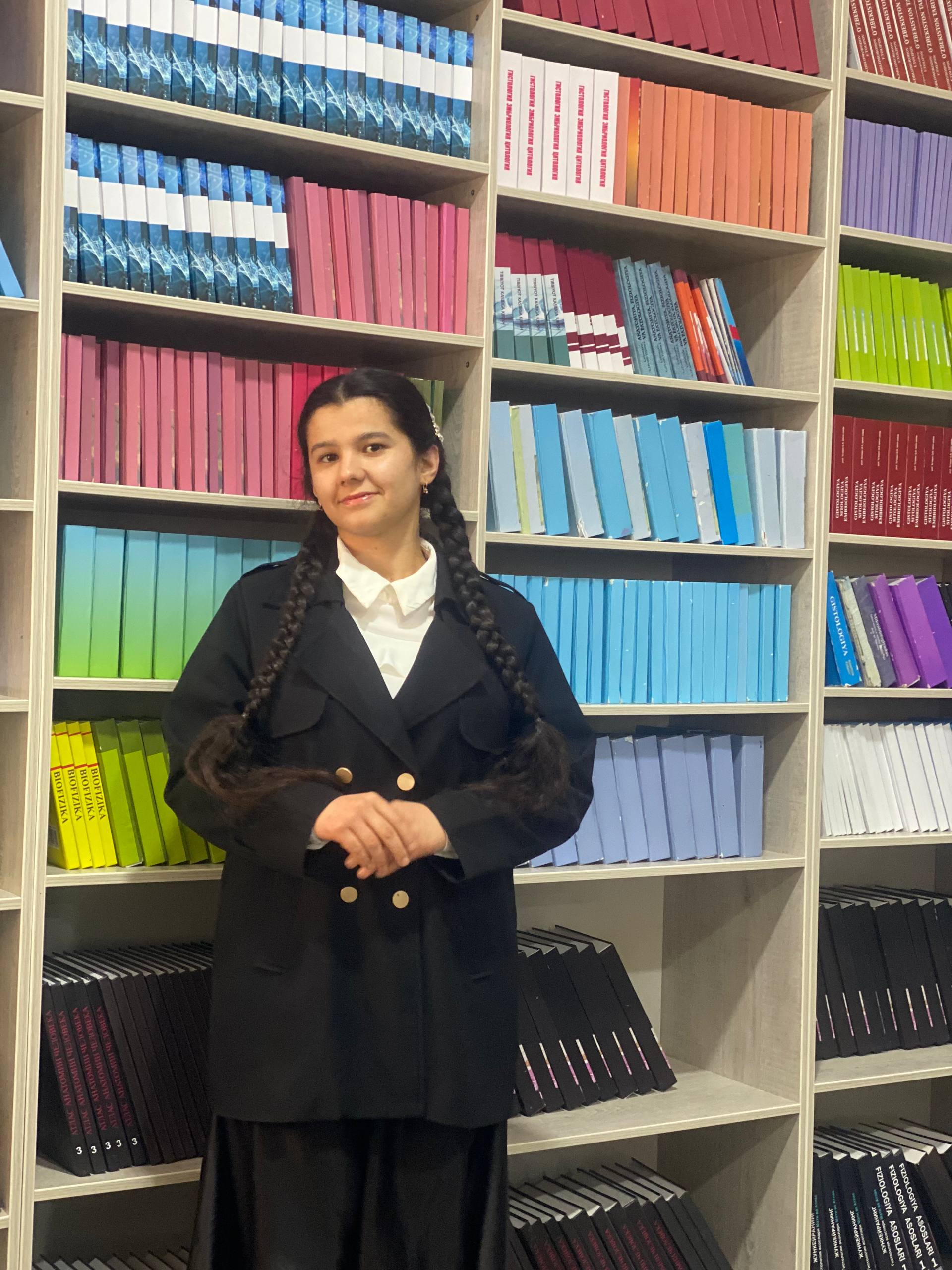
Abduxalilova Shoxsanamxon Azizbek qizi

Born in Polmon Neighborhood Citizens’ Assembly, Quvasoy City, Fergana Region.

Second-year student in the Primary Education program at Namangan State Pedagogical Institute.

BOOKS AS A FACTOR OF SPIRITUAL GROWTH AND PERSONAL DEVELOPMENT

Namangan State Pedagogical Institute

Faculty of Pedagogy, Primary Education Program Student

Abduxalilova Shoxsanamxon Azizbek qizi

Scientific Supervisor: Djakbarova Mahliyo Ibraximjanovna

Abstract

This article analyzes the role of reading culture in the spiritual development of individuals, as well as the psychological and social significance of reading. It examines the impact of book reading on reducing stress levels, its contribution to the upbringing of the younger generation, and modern methods of promoting reading among youth. Furthermore, the article provides information about ongoing reforms, initiatives, and presidential decrees in our country aimed at developing reading as an effective means of enhancing spirituality.

Practical recommendations for improving reading efficiency are presented at the conclusion of the article.

Keywords: spirituality, reading, reading culture, personal development, psychological health, “20-page rule,” intellectual potential.

INTRODUCTION

One of the greatest miracles discovered in the course of human development is the book. It is not only a source of knowledge, but also a faithful companion that enriches a person’s inner world and gives strength to live and struggle. In today’s information-driven society, the role of books in shaping the spiritual worldview of young people has become more relevant than ever.

A book is humanity’s greatest victory over time and space. It is not merely a source of knowledge, but a spiritual bridge connecting the past and the future.

MAIN PART

1. Spiritual Nourishment and Personal Development

Just as a person needs food to satisfy physical needs, the human soul requires reading. Through books, individuals become acquainted with the cultures of different nations, the lives of historical figures, and the mysteries of the universe. This process broadens one’s worldview and teaches critical and comprehensive thinking.

Unfortunately, many private publications today lack proper standards and criteria. For them, the absence of standards becomes the standard, and the absence of ideas becomes the idea itself. One sometimes wonders whether the authors of immoral and entirely unnational adventures were truly raised in a national cultural environment. Do we not realize that even one bad film or book watched or read by many people can negatively affect their spirituality?

In this regard, our respected mentor Azamat Haydarov states: “Regarding film titles, first there was a movie called ‘The Outsider Groom.’ Later, even the bride became an outsider. There is now a need to reread Abdullah Qahhor’s famous work ‘Tales from the Past.’”

Open book stalls located in busy areas are far more effective than luxurious bookstores situated inside buildings. People who are extremely busy often find it difficult to visit bookstores located in less accessible areas unless they have a specific purpose. However, when book stalls are located along common routes, even casually browsing may inspire someone to purchase two or three books. Additionally, this approach creates employment opportunities, fosters a competitive environment, reduces book prices, and saves the large expenses required for constructing luxurious buildings.

Creating an Open Electronic City Library

If the best and most beneficial books were made freely available on a special platform with open Wi-Fi access for city residents, and if gamification elements were incorporated into the platform, more people would be encouraged to read. Rewarding the most active readers annually and recognizing them as the best readers of the city could serve as motivation and inspire especially young people to read more.

Public Events

A citywide Reading Day marathon could be organized, where people gather outdoors and read books together, similar to a cycling marathon.

A week-long mass book fair could also be held, during which mobile book stalls sell various books in designated parts of the city. During this week, new book presentations could be organized, the best books and readers of the year could be announced, and even carnival parades dedicated to book characters could take place.

Of course, we ourselves are the organizers of such initiatives and public events. As a student of Namangan State Pedagogical Institute, I can confidently say that reading promotion activities are conducted not only nationwide but also in our institute. In particular, our library’s book collection has been significantly enriched, and the material and technical base of the Information Resource Center is excellent.

2. The Psychological Impact of Reading (An Anti-Stress Tool)

Reading is not merely a method of obtaining information; it is also a means of healing and reshaping the human psyche. In psychology, there is even a concept called bibliotherapy (healing through books), which is widely used to improve mental well-being.

Modern medical and psychological research shows that reading has a positive impact on human health. Just 6–10 minutes of reading can normalize heart rate and reduce muscle tension by up to 68 percent. When immersed in the pages of a book, a person forgets daily worries and finds spiritual relaxation in another world.

Throughout all historical periods, reading has been the most effective way of personal development and expanding one’s worldview. Even in today’s era of globalization, it has not lost its importance.

An important fact: Reading helps a person overcome feelings of loneliness. Through “communication” with literary characters, individuals realize that they are not alone in their struggles.

3. Success and Statistics

A common characteristic of all great historical figures is their passionate love for reading. Reading sharpens thinking, enriches vocabulary, and improves fluency of speech.

In recent years, attention to reading in Uzbekistan has been elevated to the level of state policy. As a result of the “Young Reader” competitions, thousands of young people have returned to reading. According to statistics, although the publication of fiction in our country has tripled over the past five years, the time allocated to daily reading still lags behind that of developed countries such as Iceland and Norway.

CONCLUSION AND RECOMMENDATIONS

Reading is not merely a way to spend free time; it is the most beneficial intellectual investment for the future. A personal library and regular reading are the only ways to preserve humanity and overcome spiritual poverty.

Practical Recommendation: If it is difficult to find time for reading, it is advisable to apply the “20-page rule.” By reading just 20 pages per day, a person can complete approximately 25–30 books per year. This is a number capable of completely transforming one’s life.

Recommendations

To further popularize reading in society, it is advisable to establish open electronic city libraries, incorporate gamification elements into specialized platforms, and introduce regular incentive systems for the most active readers. Only a generation that is closely connected with books can build a great future.

Social Reforms and Effectiveness

In Uzbekistan, raising reading culture to the level of state policy — particularly through the “Young Reader” competitions and the threefold increase in fiction publications — is a positive development. However, to reach international indicators such as those of Iceland and Norway, reading must become a daily habit and lifestyle.

In conclusion, reading is not merely a meaningful way to spend free time, but the only path to overcoming spiritual poverty and the most valuable intellectual investment for the future. A person who befriends books is capable of elevating not only their own life but also the spiritual image of society as a whole.

REFERENCES

Mirziyoyev, Sh. M. On the Program of Comprehensive Measures for the Development of the System of Publishing and Distribution of Book Products, Increasing and Promoting Reading Culture. Resolution No. PQ-3271, September 13, 2017.

Karimov, I. A. High Spirituality – An Invincible Force. Tashkent: Manaviyat Publishing House, 2008.

Hoshimov, O. The Book – A Lesson of Life. Collection of Articles. Tashkent: Sharq Publishing House, 2010.

Adler, M. How to Read a Book: A Guide to Intelligent Reading.

Dostoevsky, F. M. White Nights.

Essay from Toshkentboyeva Xumora

Toshkentboyeva Xumora

She was born on August 31, 2008, in Shahrisabz city, Qashqadaryo region. From an early age, she was curious about learning and had a strong interest in studying languages. Currently, she is a student at Samarkand State Institute of Foreign Languages, majoring in Foreign Language and Literature. In addition, she holds several international certificates and is among the students who are passionate about reading.

The Path of Development of Amir Temur

Abstract

Amir Temur is regarded as one of the greatest figures who left a profound mark on Uzbek and world politics and civilization. Today, we clearly understand the significance of his rich experience in establishing a just system of state governance. This article discusses Amir Temur’s path of development, his state-building policy, and his reforms in the fields of education and the military. It also highlights the importance of The Code of Temur in public administration and its influence on the worldview of modern students. Furthermore, the article reveals Amir Temur’s role as a great statesman and the processes of development achieved through his policies.

Keywords: Amir Temur, political stability, Timurid state, activity, The Code of Temur, military reforms, education system, historical heritage, Babur, Samarkand, justice, rule of law, centralized state.

Main Part

Amir Temur: His Life and Personality

Amir Temur was born on April 9, 1336, in the village of Khoja Ilgor near Kesh. According to legends, he was born holding a clot of red blood in his hand, and his hair was said to be white like that of an elderly man. Such descriptions were even compared to stories about Genghis Khan.

From a young age, he mastered science, military arts, and archery, possessing a sharp memory and strong determination. His father, Amir Muhammad Taraghay, was from the Barlas clan of Turkic origin and was a respected and influential noble in Transoxiana.

In 1370, after defeating Amir Husayn, he ascended the throne in Samarkand as the ruler of all Transoxiana. He organized campaigns to the Golden Horde, the Ottoman Empire, India, and Iran, establishing a vast empire.

Timurid Military Art

The Timurid army was precisely organized in terms of numbers, its battle formations were well-developed, and it was equipped with the advanced weapons and military technology of its time. Military units were distinguished by their uniforms, banners, and standards.

Their strategies included destroying enemy defenses through various methods, launching sudden strikes on major cities, surrounding enemy forces on a large scale, and defeating them step by step.

Amir Temur and his descendants, especially Babur, made significant contributions to the development of world military art. This has been acknowledged by military specialists and commanders. Known as a great military leader and innovative organizer, Sahibqiran succeeded in creating a disciplined army, wisely managing troops during battles, overcoming obstacles with strategic skill, and maintaining high morale among his soldiers.

The Educational Renaissance during the Reign of Amir Temur

During the Timurid period, special attention was given to education, science, and culture as the foundation of a renaissance. Scholars, poets, and craftsmen were supported, and the development of science was elevated to the level of state policy.

In building a powerful state and enlightened society, Amir Temur relied on ancient Turkic statehood traditions and Islamic law. He deeply understood that the foundation of any development lies in a high-quality education system. Therefore, he first focused on properly establishing education and upbringing and raising the social status of educated and enlightened individuals. Educational institutions were established throughout major cities.

Historical sources indicate that there was a tradition of enrolling boys in school at the age of four years, four months, and four days, and primary education covered all cultural regions of the vast empire.

The Code of Temur

During Amir Temur’s lifetime, a special work entitled The Code of Temur was written, describing the principles of state governance. The work consists of two parts and is considered a priceless historical source of the Middle Ages.

It includes biographical information related to Temur’s life events, his views on military art, and descriptions of state structure and governance. The centralized and powerful state created by Amir Temur was established based on the invaluable principles contained in this work.

The main ideas of the book include:

Justice as the main pillar of the state;

Supremacy of law as equal for all;

A disciplined army as the guarantee of a strong state;

Wisdom and consultation as superior to violence;

Loyalty and diligence as the criteria for holding office.

The historical significance of this work lies in the fact that The Code of Temur is an important source for studying the history of statehood in Central Asia. It served as a political guide for many rulers. Even today, it provides valuable ideas about leadership, justice, and order.

Economic and Cultural Development

After establishing a large state, Amir Temur created conditions for the economic and cultural development of his country. Ancient traditions of past eras were revived in a new historical form. As Transoxiana became a center of trade, economy, and culture across the Near and Middle East, cities such as Samarkand, Kesh, Bukhara, Termez, Tashkent, and Merv flourished and were beautified.

Large buildings of mosques, madrasahs, mausoleums, caravanserais, and bathhouses were constructed. It became customary for every victory to be immortalized in architecture. In his construction activities, Amir Temur pursued specific political goals — the structures he built were meant to demonstrate the power and greatness of his empire.

Conclusion

Amir Temur occupies an important place in history not only as a powerful military commander but also as a great statesman who paved the way for development. His path of progress was achieved through the establishment of a strong state, just governance, and reliance on knowledge and enlightenment.

References

Amir Temur – A Great Military Commander and Statesman. Collection of materials from the Republican Scientific-Practical Conference. 2025, 420 pages.

People’s Word newspaper.

The Code of Temur. Conclusion section, 318 pages.

Essay from Masharipova Yorqinoy Ravshanbek qizi

Masharipova Yorqinoy Ravshanbek qizi. Student of the Urgench State Pedagogical University, Philology Department.

SYMBOL OF COMPASSION

There is such a being in this world that no matter how much one writes or speaks about her, it will never be enough; there will always remain words left unsaid. Because a mother is not something that can be fully described by words — she is a sacred presence understood by the heart, felt through emotion, and measured by a lifetime. A mother is the beginning of life and the continuation of humanity. As long as she exists, we are never alone; as long as she exists, humanity remains whole. Even before we come into this world, our mother lives together with us. The nine months during which she carries us beneath her heart are not merely a biological process, but a school of spiritual connection, patience, and self-sacrifice. Throughout these months, a mother swallows both her joy and her pain. From that very moment, she begins to live for a child not yet born. She gives up everything that could pose a danger to the life growing within her. The warmth and affection we feel from the very moment of our birth belong to our mother. Perhaps that is why our love for mothers has always been different from all other loves.

When speaking of the purest love in human life, nothing can compare to a mother’s love for her child. Her compassion and affection are so pure that they are free of conditions and calculations. She never expects a reward for everything she does for us from birth until maturity. Seeing her children happy is the greatest happiness for a mother. In this world, the only person who believes we deserve a better life than the one she herself lives is our mother.

It is truly difficult to imagine life without a mother. She loves us more than anyone else. When the time comes, she is ready to risk even her life for us and strives to never let us lack anything. She always offers us the best of everything: food, clothing, words, and love. Even if she wears old clothes herself, she considers the best worthy only of her children. Have you ever noticed that when food on the table is scarce, a mother’s stomach is always “full”?

According to research, the strongest pain in the world is the pain a mother experiences while giving birth. And she endures it. As infants, we cry at night due to natural processes, and she endures that too. When we fall ill, her soul suffers even more than ours. As if that were not enough, she spends sleepless nights caring for us, forgetting rest and even herself — and she endures all of this for her children. But what about us? What have we done, and what are we doing, to repay those sleepless nights? We simply claim that we are not understood. Yet did she not understand us when we were infants and unable to speak? Was it not she who sensed our hunger and restlessness without a single word? Sometimes knowingly, sometimes unknowingly, we hurt her feelings, yet she is a mother — would she ever truly resent her child?

We often consider ourselves people of high self-worth. Let me explain this with an example. Imagine that we take care of a domestic animal, say, a puppy. We feed it, play with it, and when our affection overflows, we might even bathe it. Time passes, and it grows into a large dog. One day, it starts barking at us and, having learned from stray dogs, even tries to attack us. Naturally, we would beat it or chase it away, trying not to let ourselves be harmed. Now think about it: is a mother, who has suffered, forgotten her own dreams, and devoted the most beautiful years of her life to raising her child, truly deserving of harsh words or complaints from her children over trivial matters? What should we call the fact that she faces such situations not once but many times, swallowing her pain each time and continuing to give love as if nothing happened?

A mother is the only being whose patience knows no limits and whose love is unconditional. She endures pain, adapts to sleepless nights, passes every harsh word from her child through her heart, yet continues to give love. But this silence and endurance are not signs of weakness — they are signs of greatness.

We have no right to think that a mother’s patience is infinite. Every swallowed sorrow, every unspoken pain leaves a trace in her heart. A mother does not expect perfection from us; she expects humanity — a kind word, a moment of attention, and a respect that lasts a lifetime.

Therefore, let us value our mothers not after losing them, but while they are still alive. For success achieved without a mother’s blessing is empty, and a path walked without her prayers is barren. As long as a mother exists, there is a mountain standing behind us. Before that mountain collapses, recognizing its value is our greatest human duty.

Essay from Dilafruz Muhammadjonova

ANDIJAN: ON THE CROSSROADS AIMING FOR THE FUTURE

 “My Andijan, which saved my soul there, remained with me…”

  (Babur)

     Uzbekistan is a Motherland that lives forever in our hearts! O dear country, which has captured the morning shimmer of the sun in your orbits, I feel helpless, no matter how many words I find to describe you. You are a sacred land where stars embrace in your mountains, where the wind writes pages in your steppes, and where the breath of life sparkles in your rivers and lakes! Sun particles smile and scatter across your sky. Every morning your dawn breeze creeps through my soul. These breezes feel as if they carry not just the air, but the living breath of history. You are like a perfect picture drawn for the face of the earth; I feel the breath of tranquility at your every point. You are not the pearl of the East; you are the crown set within its bosom! Thousands of dreams blossom in your every inch of soil, and the birds that fly in your sky sing the song of freedom.

     Andijan! The rays of dawn are reflected in your white tunics, the wings of swallows harmonize in your silk belts. You are radiant like a bride whose solar hair is scattered across the sky. You are a miracle that has made both the sun and the stars fall in love with you. You are a mother who bestows hope in the hearts of your children and courage in their gaze.

     In the heart of every person is imprinted the bright image of the land where they were born and raised, where they took their first breath. This image is not only a geographical location but a part of the soul, the beginning of destinies, the first foundation of the future. Andijan, in turn, is the lifeblood of blessed Uzbekistan, a living witness to a thousand years of history, the inspirational abode of the great Mirzo Bobur, the land of hardworking and sincere people, the supporting mountain of the nation. The description of this land, where every inch of soil is kneaded with the traces of history, and every drop is moistened by the sweat of a hardworking farmer’s brow, is beyond an epic poem. My chest is full of pride and honor for growing up under the warm sun of Andijan and being raised among its rich culture and generous people. This is not just a fleeting emotion, but a feeling ingrained in my heart and soul, an eternally connected spirit, a dear fortress to me. It is not only the apple of the eye of the Fergana Valley but also a majestic land standing tall as the Eastern gate of the country, a symbol of the harmony of historical heritage and modern development.

     The great personality who stamped his seal on Andijan’s glory is undoubtedly Zahiriddin Bobur. The great writer of his time, statesman, and great commander, this world conqueror who founded the Mughal Empire in India, was born in the dignified bosom of this land. Talented poets and poetesses, including Nodira and Muhammad Yusuf, the Venerable Jadid Abdulhamid Chulpan, the world-recognized Shaykh Muhammad Sadiq Muhammad Yusuf, Shaykh Hasan, Husayn Yahyo Abdulmajid, and many other scholars and intellectuals originated precisely from this region.

     Andijan is the most invaluable gift nature has bestowed upon the local people. This land, which is one of the most fertile and lush areas of the valley, is deservedly called the “Jewel of the East.” Even the thistle that grows here is a cure for a thousand ailments. The true wealth of the province, I believe, lies in its simple, hardworking, and sincere people. Andijan residents are known for their devotion, sincerity, and hospitality. Their every word and gaze reflect boundless love for the homeland, respect for labor, and gratitude for life. Here, let alone speaking a harsh word to a person seeking refuge, even looking at them coldly is considered a sin. Their tables are always open, and their magical hands are always ready to prepare pilaf.

Their friendly words and unique, sincere dialect are proof of their warm embrace, even for strangers who come from afar. The juicy accent is like a stream rushing through the blood of every Andijan resident. I also speak this dialect, and it always gives me a special warmth and pride.

     Andijan people are very emotional individuals who completely immerse themselves in work, friendship, and even sorrow with their entire being. The neighborhood is the center of life in Andijan. The ties of neighborliness here are extremely strong. There are such close neighbors who share fresh bread when baked, and meat from their meal when cooked, that an unaware person might think they were born from the same mother. Their affection, kindness, and generosity are extraordinarily high. Those who are too shy to address each other as “you” are Andijan residents; those who hold weddings for forty days and forty nights are Andijan residents; it is exactly them who have turned unity and community into a core value! In particular, Andijan is a crossroads of cultures, a magical land where the vigor of people whose hearts are as bright as their faces is reflected, a place upon which the Creator’s gaze has fallen.

     Today’s Andijan fundamentally differs from yesterday’s. The province is known not only for its cotton fields but also as the powerful heart of modern industry. Moreover, Andijan is considered a center of the sacred religion of Islam, a hearth of science and enlightenment. This region has presented countless talented individuals to society—from scholars and philosophers, famous religious figures to undefeated athletes, sharp-penned poets and writers to Honored People’s Artists of Uzbekistan—all have emerged from this land. In the remote villages of the region, there are still countless women and girls faithful to their “paranji”, accomplished reciters of the Quran, as well as students worthy of various named scholarships and honorary titles, striving intensely in the pursuit of knowledge. This is, of course, a vivid proof that the future of Andijan is bright.

Dilafruz Muhammadjonova was born on January 2, 2007, in Qorghontepa District, Andijan Region, Uzbekistan. She is currently a second-year student at the Faculty of Philology of the Uzbekistan National Pedagogical University named after Nizami, majoring in Uzbek Language and Literature Education.

She is proficient in Uzbek, English, Turkish, and French. She holds national certificates in Mother Tongue and Literature as well as English.

Essay from O’roqova Nargiza

O‘roqova Nargiza was born on March 26, 2001, in Ishtixon district of Samarkand region. She is currently a first-year grant student at Tashkent State Medical University.

Her work experience includes teaching Biology at Secondary School No. 33 in Ishtixon district of Samarkand region during the 2024/2025 academic year.

She graduated from the Faculty of Biology at Jizzakh State Pedagogical University in the 2020/2024 academic years.

She is fluent in English, Russian, Arabic, and Turkish.

CAUSES AND ANALYSIS OF THE INCREASE IN ALLERGIC DISEASES IN CHILDREN

O‘roqova Nargiza Sherali qizi

First-year student, Group 102-A, Faculty of General Medicine

Tashkent State Medical University

Abstract

Allergy is considered one of the most common health problems among children. Allergies arise due to various factors and are largely associated with parental supervision. This article discusses the causes of allergies, as well as measures for their prevention and treatment.

Keywords

Allergy, dust, children, health, genetic predisposition, environment, medicine, parents, medications.

Introduction

In recent years, allergic diseases among children have become increasingly common, including allergic rhinitis (nasal allergy), bronchial asthma, atopic dermatitis (skin allergy), and food allergies. The prevalence of these conditions has been steadily increasing over the years. This trend is evident not only in medical statistics but also in everyday life.

Main Part

Allergy is a condition characterized by the body’s hypersensitivity to certain environmental factors and is manifested by the production of antibodies in response to antigens. These antigens bind to antibodies and cause abnormal reactions in the body.

Causes of Allergies

Food Allergies

Food allergies are among the most common types of allergies in children. The most frequent allergenic foods include milk, nuts, eggs, fish, melon, wheat, mung beans, and soy. Symptoms may include skin rash, itching, abdominal pain, diarrhea, and in rare cases, anaphylaxis (a severe allergic reaction resulting from increased sensitivity to antigens entering the body).

Respiratory Allergies

These occur due to the inhalation of allergens such as house dust, animal fur, and mold spores. The main symptoms include runny nose, coughing, sneezing, itching, and redness of the eyes.

Drug Allergies

Some children may develop allergic reactions to antibiotics, antipyretic drugs, or vaccines. Symptoms may include skin rash, swelling, and redness.

Contact Allergies

Skin allergies occur upon contact with allergens such as chemicals and metals. They are characterized by redness, rash, and itching of the skin.

Insect Bites

Reactions caused by bee, wasp, or mosquito stings can range from mild redness to severe swelling and anaphylactic shock.

In addition, allergies may be caused by hereditary factors, diseases of internal organs (such as the stomach, liver, and kidneys), frequent infectious diseases, and intestinal parasites.

Diagnostics

To select appropriate treatment for allergies, it is necessary to identify the allergen through diagnostic methods. In many cases, eliminating contact with the triggering factor is sufficient to relieve symptoms.

Diagnostic Methods for Allergies

Skin tests: Allergens are introduced through scratches or injections. Reactions such as redness and swelling may appear within half an hour. Delayed-type reactions may also occur.

Blood tests: Used to determine IgE levels for diagnosing type I allergies.

IgE testing: Based on blood serum analysis and commonly used for detecting food allergies in children.

Blood tests are considered more accurate and safer. Specialized allergy centers successfully conduct such diagnostic studies.

Prevention

Prevention of allergies involves avoiding contact with allergens and eliminating products that trigger allergic reactions. Regular wet cleaning of the home, as well as removing carpets and textile items, is important. Strengthening and hardening the body is also recommended.

Conclusion

Allergies in children are serious but manageable conditions. Understanding the types of allergies, as well as methods of prevention and treatment, helps parents provide a safe and comfortable life for their children. Most importantly, timely consultation with specialists and adherence to their recommendations are essential.

References

Nishonboyev K.N., Hamidov J.H. Medical Biology and Genetics. Tashkent, 2005.

Mavlonov O., Tilavov T., Aminov B. Biology. Tashkent, 2019.

Med24.uz — Allergy: symptoms, diagnosis, and treatment.

Doriclub.uz — Types of allergies in children: prevention and treatment.

Essay from Turğunboyeva Dilafruzxon

Preschool Education — the Foundation of the Future

Preschool education is not only about preparing a child for school, but also about laying the foundation for the formation of a person’s character during the most important stage of life. It is precisely at this stage that a child’s thinking, speech, emotions, and social relationships begin to develop.

A child first fully encounters society in preschool. There, they learn to wait their turn, share, listen, and express their own thoughts. These skills later become essential in school, in society, and throughout life.

The educational process in preschool institutions is not limited to lessons alone. Learning through play, drawing, singing, and physical activities all contribute to a child’s holistic development. Play is the most natural form of learning for a child, as it is through play that they understand the world.

Today, new approaches are being introduced in preschool education. Child-centered teaching methods that consider children’s interests and needs are being applied. Each child is recognized as an individual, and special attention is given to developing their abilities and potential.

The role of the educator is extremely important. An educator should not only be a source of knowledge but also someone who understands the child’s inner world, supports them, and gives them confidence. Education given with love provides a child with strength that lasts a lifetime.

In conclusion, preschool education is the foundation of future society. The way children are educated in preschool today will shape the people who live in society tomorrow. Therefore, paying attention to preschool education is the greatest investment in the future.

Turğunboyeva Dilafruzxon, a third-year student of Preschool Education Psychology and Pedagogy at the Faculty of Pedagogy, Namangan State Pedagogical Institute.

Essay from Turgunov Jonpolat

Climate Communication in Authoritative Media Systems Between Official Narratives and Public Responsibility in Central Asia

Author: Turgunov Jonpolat
Tashkent, Uzbekistan, Independent climate activist


Abstract: Climate change is not only an environmental issue. It is also a communication issue. In Central Asia, where media systems are often closely connected to state institutions, climate reporting follows specific patterns. This article analyzes how climate topics are presented in state-aligned media systems, whether critical perspectives are visible, and how independent journalists operate within structural limitations. Using examples from Uzbekistan and regional practices, the paper argues that climate communication often remains institutional and event-based rather than investigative and community-centered. However, new digital platforms and youth journalists are slowly expanding the space for more analytical and solution-oriented climate narratives.


Keywords: climate communication, Central Asia, state media, environmental journalism, media systems, public discourse

Introduction
Climate change affects Central Asia deeply. Rising temperatures, water stress, desertification, and heatwaves are becoming normal. However, how societies understand these changes depends strongly on media communication. In many Central Asian countries, media systems operate in a model where state institutions play a dominant role. This influences how environmental issues are framed. Instead of investigative climate journalism, reporting often focuses on official meetings, government programs, and international cooperation events.

This article explores the structure and tone of climate reporting in authoritative media systems and asks three central questions:

  • Is there a critical approach to climate policy?
  • Are stories based mostly on official press releases?
  • What space exists for independent environmental journalists?

Structural Characteristics of Authoritative Media Systems in Central Asia
Central Asia’s media landscape developed within post-Soviet institutional traditions where the state historically played a central role in information management. Even though the region has undergone reforms and modernization processes, the legacy of centralized communication structures continues to influence how public discourse is shaped. In countries such as Uzbekistan, Kazakhstan, Tajikistan, Kyrgyzstan and Turkmenistan, media institutions often
operate in close alignment with governmental structures.


This alignment does not always mean direct censorship. Rather, it shapes the tone, priorities, and framing of public information. Climate change, as a politically sensitive and economically complex issue, becomes embedded within institutional narratives of stability, development, and reform. Instead of functioning as an arena for public debate, media coverage frequently positions environmental topics within the broader discourse of national modernization.
In this structure, journalism tends to prioritize official voices.

Ministries, state agencies, and formal press conferences serve as primary sources. As a result, climate communication becomes vertically organized. Information flows from institutions to citizens with limited space for horizontal dialogue among experts, communities, and independent analysts. The outcome is not silence about climate change. On the contrary, climate topics are increasingly present in public discourse. However, the manner of presentation remains institution-centered rather than society-centered.

Institutional Framing of Climate Narratives — Real Examples and Regional Data
Actual climate communication in Central Asian authoritative media often centers on institutional achievements and official events, instead of deeply analysing climate impacts. For instance, media reports in Ūzbekiston frequently highlight participation in international climate meetings and government climate strategies without evaluating local consequences on citizens’ lives.


Climate statistics underline the severity of regional climate change: According to a recent press release by the United Nations Environment Programme, Uzbekistan’s average annual
temperature has risen around 1.6°C over the past six decades, nearly three times the global average of 0.6°C. In parts of the Aral Sea region, increases between 1.8°C and 2.5°C have been
recorded. Drought frequency has also risen, with six dry years occurring between 2019 and 2024 — highlighting intensifying aridity. These changes contribute to significant economic losses, estimated at about US $92 million annually in Uzbekistan alone due to climate-related impacts.


Despite these data, climate communication often frames severe stresses such as drought and rising heat as environmental events rather than part of a long-term crisis. Reporting frequently prioritizes visual narratives about national strategies: press releases on renewable energy projects, tree planting campaigns, or national climate plans get front-page coverage, with limited commentary on whether these approaches address root climate drivers.


For example, while Kazakhstan’s state media might celebrate national wind energy investments under broad “green tech” campaigns, there is typically limited investigation into how projected
cost, regional grid integration challenges, or community impacts are being tackled. Similarly, Uzbekistan’s television and print media often summarize government announcements on irrigation modernisation without contextualising how increased water scarcity may affect
farmers or rural livelihoods over time. Institutional framing thus remains dominant: climate is a governmental topic to manage, not a multifaceted social challenge open to public scrutiny and debate.

The Press Release Model of Climate Journalism With Facts
State-aligned media in the region rely heavily on press releases from ministries and state agencies as primary sources for climate information. This reliance tends to produce descriptive narratives rather than critical, analytical reporting that interrogates policy outcomes. For instance, official communications about irrigation or water resource management often highlight achievements or plans without rigorous critique. Yet climate data reveals the gravity
of water stress in Central Asia. The Sixth Assessment Report of the Intergovernmental Panel on Climate Change emphasises that decreased precipitation, combined with higher evaporation rates, contributes to increasing drought conditions across the region with water scarcity ranked among the top five global climate risks for Central Asia. Such trends are expected to disproportionately reduce flows of glacier-fed rivers vital to agriculture and livelihoods.


Media reports frequently frame drought and water stress in terms of short-term shortages or infrastructure development projects, rarely juxtaposing them with broader climate projections or showing how annual river discharge trends are shifting. This press release driven coverage pattern limits public engagement with robust climate data.
Beyond statistical understatement, another challenge in press-based reporting is the lack of local scientific interpretation in public communication. Without bridging global climate models and local experience — such as explaining how rising temperatures and altered precipitation patterns affect irrigation or crop cycles institutional narratives may unintentionally obscure the long-term, cumulative effects of climate change on everyday life.

Barriers to Investigative Environmental Reporting Context and Data
Investigative journalism requires data access and editorial independence — conditions that are constrained in many Central Asian media systems. While climate data is produced at national
and international levels, not all datasets are released in a timely or accessible way for independent scrutiny. For example, Uzbekistan’s climate communication infrastructure is constrained by limited dissemination of detailed greenhouse gas inventories or comprehensive water resource datasets accessible to journalists.


Meanwhile, public perception surveys show that climate change is often not the foremost labelled concern among the general population. In Uzbekistan, around 40% of respondents consider climate change “very serious” and another 40% regard it as “fairly serious”, yet only a minority explicitly connect it to global warming mechanisms, with many instead focusing on visible local issues such as pollution or water scarcity. This indicates a gap between climate
science and public understanding — a gap that analytical journalism has the potential to bridge.


At the same time, climate extremes are emerging with marked intensity. In early 2025, a severe heatwave affected all Central Asian countries, with temperatures reaching up to 10°C above
pre-industrial levels in some areas a pattern strongly linked by scientific attribution studies to anthropogenic climate change. Such events underscore the urgency of media narratives that both contextualise data and humanise local risk.

Digital Media and Emerging Counter-Narratives — With Regional Evidence
Digital platforms are gradually expanding the communicative space for climate discussion. Independent online outlets and social media creators increasingly translate complex climate assessments into simpler local narratives. Reports summarising findings from international bodies, like the IPCC and UNEP, are being shared more frequently outside state press channels, highlighting regional temperature anomalies, prolonged drought periods, and water scarcity risks.


This newer media sphere enables inclusion of citizen perspectives, such as farmers describing crop stress during extreme heat or urban residents discussing rising healthcare issues related to heatwaves. These localised narratives help to connect the statistical reality of climate change with lived experience.

However, the digital divide remains a limitation. Not all rural communities have equal access to online content, and independent digital outlets face financial constraints. Nevertheless, these
platforms have started to attract broader audiences, especially among youth who engage with climate topics in local languages and through multimedia storytelling.

Public Trust and Climate Legitimacy Tying Facts to Narratives
Public trust in climate information is shaped by how transparently media integrate scientific evidence with localized impacts. As climate change intensifies temperature anomalies and changes precipitation patterns, societal well-being becomes inseparable from environmental trends. Yet the gap between scientific reporting and media framing can lead to misunderstanding or underestimation of climate risks.


Analytical journalism that situates official initiatives within broader climate data and lived realities can strengthen public trust. For example, contrasting government statements on water infrastructure with IPCC projections on reduced river runoff could enable citizens to appreciate both achievements and ongoing vulnerabilities.


Reflective Framing Exercise
Consider a real climate-related event such as a prolonged heatwave in Tashkent or water shortages in rural areas.
When analyzing media coverage, the following questions should be systematically asked:

Is the event framed as temporary weather or as part of a long-term climate pattern?

Are scientific experts cited alongside official representatives?

Does the report include data comparisons with previous years?

Are vulnerable populations mentioned?

Is responsibility discussed, or only response measures highlighted?
If most answers emphasize institutional response without structural explanation, the communication model remains vertical and descriptive. If the answers include contextual data, expert diversity, and social impact discussion, the communication becomes analytical and participatory. This evaluative approach transforms passive reading into critical media literacy.

Headline Accountability Analysis

Headline construction significantly influences public interpretation. Readers and researchers can apply a simple comparative model:

    • Headline focused on announcement:
      “National Climate Strategy Launched Successfully”
    • Headline focused on accountability:
      “How Will the New Climate Strategy Reduce Urban Heat Risks by 2030?”
      The first headline signals completion. The second headline signals evaluation. Interactive analysis invites readers to identify which framing encourages public engagement and policy monitoring. Such small linguistic differences shape democratic depth in environmental discourse.

    • 8.3 Journalist Role Simulation

    To further explore interactive engagement, imagine the role of a journalist attending a climate-related press briefing.

    Instead of limiting questions to descriptive clarification, the following lines of inquiry may be introduced:

    What measurable indicators will determine success within five years?

    Is the environmental data publicly accessible for independent verification?

    What external scientific institutions contributed to assessment?

    How will policy implementation be monitored at local levels?

    What risks or uncertainties were identified in preliminary analysis?
    This model demonstrates how journalism can remain professional while strengthening accountability. Interactive questioning does not destabilize governance. It enhances transparency and long-term legitimacy.


    Conclusion


    Climate communication in Central Asia reflects the broader structure of authoritative media systems in the region. While climate topics are increasingly visible in public discourse, their framing remains largely institutional, announcement-based, and centered on official narratives. Reporting often emphasizes governmental initiatives, international cooperation, and strategic reforms, yet deeper analytical engagement with implementation challenges, data transparency, and social impact remains limited.

    This pattern does not indicate the absence of climate awareness. On the contrary, environmental issues such as rising temperatures, water scarcity, drought frequency, and urban heat stress are widely recognized. However, recognition alone does not guarantee communicative depth. The key challenge lies in the transformation of climate reporting from descriptive coverage to explanatory and evaluative journalism. The analysis demonstrates that reliance on press releases and official sources narrows interpretative space. Without inclusion of independent scientific expertise, community voices, and measurable accountability indicators, climate discourse risks becoming formal rather than participatory. Episodic framing of extreme events further reduces structural understanding of long-term climate processes. At the same time, the region is not static. Digital media platforms, youth communicators, and emerging independent outlets are gradually expanding discursive boundaries. These actors introduce localized narratives, translate global climate science into accessible language, and personalize environmental risks. Although structural constraints remain, the communicative environment is evolving.

    The future of climate journalism in Central Asia will depend on several interconnected factors. First, improved access to transparent environmental data is essential for analytical reporting. Second, journalism education must integrate climate science literacy and investigative skills. Third, media institutions need to balance informational stability with responsible critical inquiry.

    Authoritative media systems are often associated with coherence and centralized messaging. Yet climate change, by its nature, demands dialogue, explanation, and adaptive communication. Sustainable climate discourse requires integration of institutional strategy, scientific evidence, and lived community experience.

    Ultimately, the central question is not whether authoritative systems can communicate climate issues, but whether they can deepen that communication to foster accountability and long-
    term public engagement. If climate reporting evolves from announcement-centered narratives to dialogic and evidence-based journalism, it can strengthen both environmental governance
    and public trust across Central Asia.

    References

    • Intergovernmental Panel on Climate Change. (2021). Climate Change 2021: The Physical
      Science Basis. Contribution of Working Group I to the Sixth Assessment Report of the
      IPCC. Cambridge University Press.
    • Intergovernmental Panel on Climate Change. (2022). Climate Change 2022: Impacts,
      Adaptation and Vulnerability. Cambridge University Press.
    • United Nations Environment Programme. (2023). Climate change impacts in Central
      Asia: Rising temperatures and increasing drought risks. UNEP Regional Office for Europe.
    • United Nations Framework Convention on Climate Change. (2022). National
      communications and greenhouse gas inventory reports: Uzbekistan. UNFCCC Secretariat.
    • World Bank. (2023). Central Asia Climate and Development Report. World Bank Group.
    • Asian Development Bank. (2021). Climate Risk Country Profile: Uzbekistan. Asian
      Development Bank.
    • Freedom House. (2023). Freedom in the World Report: Central Asia Regional Overview.
      Freedom House.
    • Reporters Without Borders. (2023). World Press Freedom Index 2023: Central Asia
      analysis. RSF.
    • Central Asia Barometer. (2022). Public perceptions of climate change in Uzbekistan. CAB
      Research Report.
    • United Nations Development Programme. (2023). Climate adaptation and governance in
      Central Asia. UNDP Regional Bureau for Europe and CIS.
    • Hallin, D. C., & Mancini, P. (2004). Comparing Media Systems: Three Models of Media
      and Politics. Cambridge University Press.
    • Entman, R. M. (1993). Framing: Toward clarification of a fractured paradigm. Journal of
      Communication, 43(4), 51–58.