Poetry from Nurbek Norchayev

Sometimes I’ve wanted to be a star.

Sometimes I’ve wanted to be a sun.

Sometimes I’ve thought of placing roses on the autumn leaves along the path.

Denying the existence of autumn.

“Oh, where is that garden of compassion, full of flowers?”

These are feelings I’ve sometimes had.

Life is like a river, with two banks.

I once wanted to live on that coast.

Sometimes I want to distance myself from those unfulfilled desires.

Sometimes, the leaves bear witness to my sorrow.

Given that it is difficult to survive without hope,

I once wanted to dedicate my soul to happiness.

In nature, God is the only helper.

This is the existence of humanity, the existence of humanity.

Where will the ship of destiny sail?

Sometimes I want to look back on my tomorrow.

*****************************

Poem by Nurbek Norchayev. He is from Kashkadarya Region of the Republic of Uzbekistan and is currently a fourth-year student at the Shahrisabz State Pedagogical Institute.

Translation: O. Latipjov (Translation Service)

有时我曾想成为一颗星星

有时我曾想成为一颗太阳

有时我曾想把玫瑰花放在小径上的秋叶上,

否认秋天的存在。

”哦,那充满鲜花的慈悲花园在哪里”,-

这些是有时我曾这么感觉。

人生就像一条河,有两岸-

我曾想住在那片海岸边。

有时我想远离那些未实现的愿望,

有时,树叶见证了我的悲伤。

鉴于没有希望就很难生存,

我曾想把我的灵魂奉献给幸福。

在自然界中,上帝是唯一的帮助者

这就是人类的存在,人类的存在

命运之舟驶向何方?

有时我想回顾一下我的明天。

*****************************

诗歌作者:努尔别克·诺尔恰耶夫    Nurbek Norchayev。他来自乌兹别克斯坦共和国卡什卡达里亚州,目前是沙赫里萨布兹国立师范学院四年级学生。

翻译:O. Latipjov(翻译服务)

Short story from Bill Tope

Prom Night

Merci didn’t know what to do next. A cute jock had asked her out. Parker wasn’t just Highmount High School’s best soccer player, but one of the state’s top wrestlers as well. Merci could just feel Parker’s strong arms around her now. She smiled.

Parker had asked her to go to prom, which was tonight. What should she do? How should she behave? What would be expected of Merci in the wee hours after prom was over? Had she been asked at the last minute because she wasn’t cute enough, feminine enough to have been asked by others first? Merci had just learned that Parker had broken up with another girl. Was Merci only an afterthought? The thought troubled her. After all, no one else had invited her, and now to have the reputed “love machine” invite her was a little overwhelming. Maybe Parker’s rep was just that, a rep. Merci decided to put her misgivings aside and just enjoy the evening.

Actually, Merci had been asked to prom by one boy, but when she politely declined, he got sore and told her he only asked her because no one else word. It was a pity invite, he’d snarked at her.

Now it was prom night. Merci stood before her cheval mirror, inherited from her grandmother, and looked at her reflection. She had chosen an A-line dress, in a pastel shade of blue. She hoped it would go alright with her date’s sequined black tuxedo. Merci’s father had told her that it made her look older, more adult-like, and she had beamed at the compliment. She fleetingly longed for her mother to have lived to see her attend prom.

“Merci,” shouted Dad from downstairs. “Your prom date is here.”

Merci drew a deep breath, released it and eased nervously down the staircase, careful not to trip. At the foot of the stairs she observed Parker, resplendent in tuxedo and vest and bow tie. As the two came together and held hands, Merci’s father said, “You take care of my girl, now, Parker.”

“I will,” she promised, and the two slipped through the door and to the car, where Parker drove them to Highmount’s first-ever LGBTQ prom.

Poem by Emmanuel Taiwo

Robbing a Song

A green Bird sang beside my windowsill—

‎its soothing voice still lingers and twitters;

‎the birdsong makes light of heavy hills.

‎yet the Hunter came, ready for the kill.

‎The gentle Wind is good for my soul:

‎it foretells the coming of the sweet Bird;

‎whose music lightens and puts me at ease.

‎only, the evening tides disturb this calm.

‎Trees rustle; yet ignore the Wind’s strides,

‎the Storms made them lie low and murmur,

‎they cheer the warmth of evening tides.

‎if only they knew; the Wood-cutter draws near.

‎A quiet Stream flowed by my house,

‎it splashes when the morning wakes,

‎little creatures stream through its water.

‎who is to dissuade the Fisher that lurks?

Oh, the Storms raged a while ago;

‎they crashed and flashed— hell let loose.

‎the water in my house was ever quiet,

‎hushing the fearful waves without.

A fateful morning, Lightning split the sky,

‎it was terrible— ah, my frightened soul!

‎my heart clenched; forbidding a howl,

‎still the thunder roars, like a lion enthroned.

‎‘Keep your soul at peace,’ Mother says,

‎‘allay hunger, build a house that is warm;

‎the taller, the better— yet make it firm.

‎water and air, the lands you walk are mine’.

‎‘Let us ascend the mountains’ said a friend,

‎he felt misplaced amid the city’s clamor.

‎what if I tire, what if I stumble and fall?

‎it matters not; I only seek the Height of all.

‎Life has a song— paired with a dance:

‎She says delight, yet sends forth Storms;

‎She bids us ascend, then return to Dust.

‎She says all change endures but for awhile.

Life took away the breath She gave!

‎‘nay, never bewail my sweet child’ She says,

‎‘splendid the miracles of every morning,

greater still is that wonder whispering ‘Revive’’.

‎Here Life, All-Mother, reigns— comely as a Queen,

‎to condemn, to bless; at a fleeting whim,

‎‘should you ever slumber yet never wake,

‎surely rest on beneath the mortal Dust’.

‎The Bird still sings— sonorous as before,

‎unaware the Fall is near— trees cheer on,

‎the wandering Wind whooshes along,

‎the morning still stirs creatures awake.

‎Storms be quiet, Life commends the steadfast;

‎what I longed for: mastery over the sky,

‎the house I built basks in this same light,

‎in the mountains— I was lifted to Height.

‎Ascent or Dust, the short-lived bids no joy;

‎this knowledge conceived even more toil.

‎Wanderer I was, I am, may this remain;

‎I was here, I am here, I hope I never fade.

Essay from Fhen M.

Waray Literature and Kimball’s Critique of Contradictions in Eagleton’s Work

III

The Leyte Samar Heritage Center has a cozy bookstore called Kaaradman Library & Bookshop, which specializes in Visayas literature. They carry titles like Pinili: 15 Years of Lamiraw, Tinalunay: Hinugpong nga Panurat nga Winaray, and Sa Atong Dila: Introduction to Visayan Literature. I picked up Bagulaya’s Writing Literary History there. Afterwards, I headed to Dunkin’ Donuts on Salazar Street and devoured the book over donuts and iced coffee. It was dusk. The first page I read was Bagulaya’s critique of modernist literature.

Both Brooks and Richards obviously privilege the language of poetry. But this privileging denies practical logic which makes poetry anti-logic. It reduces the poem to New Critical sophistry. No wonder Brooks appreciated Donne’s poem for its paradox: “The lovers in rejecting life actually win the most intense life” (Brooks 1972, 38). From the above sophistry, it is obvious that New Criticism is not only anti-practical logic, it is at the same time metaphysical. They are able to resolve the apparent contradictions not in the material reality, but in metaphysical space of the poem. Moreover, the notion that poetry is different from the normal prose language because it uses metaphor is also unacceptable. As critic Terry Eagleton counters, “the idea that there is a single normal language, a common currency shared equally by all members of a society, is an illusion” (1983, 5). (Bagulaya 100 emphasis added)

IV

The following applies Kimball’s critiques, originally directed at Eagleton, to Bagulaya’s “The Ideology of Modern Waray Poetry,” examining the parallels point by point.

Forcing Everything into a Marxist Framework

Kimball’s criticism of Eagleton: His discussion of aesthetics “transforms a philosophical innovation into a dramatic example of class warfare… as if reason were a feudal lord oppressing the serfs of sensation” (24). Bagulaya does exactly this. He takes poems that appear to be about personal, intimate experiences – such as Victor Sugbo’s “Kan Margaret,” which is simply about an uncle leaving his niece (Bagulaya 110) – and forces them into an allegory of “city vs. countryside,” “center vs. periphery,” and “semifeudal exploitation.” Just as Kimball accused Eagleton of twisting Baumgarten’s aesthetics into a narrative of political oppression, Bagulaya reduces every line of poetry to a symptom of economic relations. He assumes that everything (the choice of subject, the use of imagery, the decision to write about private life) must ultimately be explained by the “semicolonial, semifeudal” structure of the economy. Bagulaya posits that “Modern Waray poetry has so far been argued as the most recent cultural development of the persistent semicolonial, semifeudal Philippine economy (120). To Kimball, this is not analysis; it is ideological projection: seeing only what your theory tells you to see, regardless of what the work actually says or means.

Misinterpretation and Distortion of Meaning

Kimball’s criticism of Eagleton: “[He] drastically misreads the philosophers he discusses” misunderstanding Schopenhauer’s pessimism as a product of ‘class history’ rather than an essential feature of existence (24). Bagulaya fundamentally misrepresents the meaning and value of modern Waray poetry. He interprets its focus on the private realm, intimacy, and personal emotion as a sign of indifference, political unconsciousness, or support for the status quo. But as Kimball would argue, this is a total misreading. The turn toward the personal is not necessarily a “failure” or a hidden political stance; it can be a deliberate choice to explore human experience, beauty, memory, or individual truth, which are valid and meaningful in themselves.

Bagulaya claims that because these poets do not write explicitly about revolution or class struggle, they are “unconscious” or trapped in “split modernism.” This is like Eagleton saying art is only valuable if it serves a political end. Kimball would point out that Bagulaya judges the poetry only by his own political standard, completely missing its literary, emotional, or cultural value. He mistakes literary autonomy (the freedom of art to be about things other than politics) for a flaw or a contradiction.

Obsession with “Contradictions” That Exist Only in the Theory

Kimball’s criticism of Eagleton: “One must always be suspicious when a Marxist uses the term ‘contradiction,’ because it usually means that some aspect of reality is not conforming to his vision of things” (24). The entire analysis revolves around the idea of “split modernism,” the claim that modern Waray poetry is contradictory because it mixes modern techniques with traditional or romantic themes, and because it is caught between feudalism and modernity. Kimball would argue that this “contradiction” is not a flaw in the poetry, but a flaw in Bagulaya’s model.

There is nothing contradictory or wrong about a culture or literature blending old and new, local and foreign, personal and social. This is normal in every living tradition. But because Bagulaya measures reality against a rigid Marxist model of historical development (where things should move from feudal to modern in a straight line), he calls it a “split.” As Kimball said about Eagleton: “Minus that [Marxist model], it is merely a complex process that refuses to accommodate itself to the predictions of philosophers.” Bagulaya creates the problem himself, then blames the poetry for it.

Reducing Art to Ideology, Denying Intrinsic Value

Kimball’s criticism of Eagleton: “[He does not] care much for literature except in so far as it is an instrument for social change” (24). This is the core of Bagulaya’s argument. For him, poetry has no intrinsic value. It is good or bad, progressive or backward, only based on how well it reflects or challenges the economic base. He writes: “Modernist aesthetics is not enough… It takes a twenty-first century socialist revolution to transform poetry.”

To Kimball, this is the ultimate reductionism. It means that art is nothing more than a tool or a symptom. Bagulaya dismisses the beauty, skill, imagination, and emotional power of Waray poetry as secondary or even irrelevant. Just as Kimball rejected Eagleton’s view that aesthetic experience is “as coercive as law,” he would reject Bagulaya’s view that a poem about family or nature is actually just a hidden statement about surplus value or feudal exploitation. He would say: This tells us nothing about poetry, but everything about the critic’s obsession with politics.

Obscurantism and Dogma

Kimball’s criticism of Eagleton: His writing often becomes obscure and forced; full of jargon that keeps reality at bay. Bagulaya relies heavily on abstract terms like semicolonial semifeudalism, political unconscious, split modernism, ideological position, center vs. periphery, terms that function like a closed system. Once you accept these definitions, his conclusions follow automatically. But as Kimball would note, these are not discoveries; they are assumptions built into the language. By using this kind of jargon, Bagulaya avoids actually engaging with the poetry on its own terms. Instead of describing what the poems mean, he describes only how they fit (or fail to fit) his theory. And like Eagleton, he ends with a dogmatic conclusion: only a socialist revolution can save it, a solution that comes straight from ideology, not from literary analysis.

This analysis is a perfect example of what happens when literary criticism is swallowed whole by Marxist ideology. Bagulaya reads every poem as a coded document about class and economics, misinterprets the legitimate choice of personal themes as political failure, invents ‘contradictions’ that exist only in his own theoretical framework, and reduces the rich, diverse tradition of Waray poetry to nothing more than a reflection of the economy. It is not an analysis of literature, it is ideology in action. It tells us almost nothing about the poetry itself, but a great deal about the rigid, reductive worldview of the critic.

V

Bagulaya’s Writing Literary History gives space to Sugbo’s Waray verses. On page 277, you’ll find the opening lines of Sugbo’s poem “This Anticipation for Poetry”.

How wearisome this search for poetry

More so when neither moon nor sun on you shines

The speaker is describing that looking for, creating, or seeking out poetry feels tiring, tedious, and exhausting. The act of trying to find or write poetry is difficult and draining; it feels like a heavy, unending effort. The sun and moon are metaphors of light, hope, clarity, inspiration, and guidance. The speaker is saying that the effort to find or make poetry is already tiring, but it becomes even more difficult and disheartening when there is no inspiration, guidance, or hope. Without that “light” (creativity, meaning, or motivation), the search feels pointless, bleak, and heavy. It describes the frustration of trying to create or find art when there is no inspiration or reason to keep going. 

Short Biography

Fhen M.’s essay “Waray Literature and Kimball’s Critique of Contradictions in Eagleton’s Work” appears in Synchronized Chaos, an interdisciplinary journal focused on art, music, culture, science, and literature. Literary Heist also publishes his prose “Imagination of Disaster in the Major Works of Henry James: A Study by Genotiva.” From 2016 to 2017, he worked as an academic writer at Zeveral Academic Consultants Inc. in Pasig City, Metro Manila. During his tenure, his team leader gifted him a copy of the 2014 animated film The Prophet, adapted from Kahlil Gibran’s 1923 book. The film follows Mustafa, a poet and activist under house arrest in Ottoman-era Lebanon, as he engages in profound conversations with the townspeople on topics like work, love, and death. One of Gibran’s notable poems featured in the film is “On Work”.

Essay from Timothee Bordenave

Some Ethical Considerations

In a world necessarily conceived as vast or even immense, it is important to consider for ourselves—the necessary center of our attention and perception, and the sole source of our intelligent reflection—that we can only observe a very small part of it, then focus our attention on even less, and logically, if we can even think intelligently about an even smaller portion…

In this vast world, of which we can only reflect on a necessarily much smaller part, and in which we almost necessarily perceive, as far as I know, as men or women, the presence around us of other men or women who, as far as we can tell, constitute representatives of our species—and even if we are not entirely certain of this, since, in Descartes’ words, they could be automata or even images, after all—and although it may be considered that we could never know any of them completely for certain, because we are ourselves and they are not, we can nevertheless, through interaction with them, whether personal or cultural, and through the use of language or what our behavior involves : be corresponding with these people, often when we observe them, and if not, researching or learning about them, at the very least through language and then through logical, and often intelligent, reflection on their own language and behavior.

This allows us, through what we call social norms, to understand each person or group of people who can be perceived, observed, and then reflected upon in order to interact with them and shape our lives around them. By observing this social norm, convention, or consensus of behavior accepted by everyone within a society, and often simply by applying what is legitimate—respectful of the law and perhaps of the tolerance observed around us—we can live a life that is as safe and less dangerous as possible. Even though a part of this danger or risk to our own life, existence, cannot yet be entirely evaded as coming to us from the social body, certainly, this is commonly accepted, the life which is by reason closest to the conventions observed between various people and for their social organization is undoubtedly the least risky and can be the best condition for us to be able to, by our activity, hope to establish ourselves and prosper through study and work, as long as we find satisfaction or pleasure in it – I believe.

So, morality, this notion of directing our intelligent will toward our behavior in society, is often—and it seems to me as well—designated as the best way to live intelligently in society for as much as possible. This is because if each person determines the modality of their actions according to overall criteria that resonate with them, either through an affinity with ideas, or with people who share them, or through a taste for a particular activity, or perhaps a particular sensation or feeling, then those who necessarily have a life that unfolds in time and is oriented in space will be better able to find coherence between their efforts and their undertakings or interests, and between these and the relevance of their ideas in what they conceive or hope for, or in what they believe. The result, I believe, will be—or so it is said—a better sense of both themselves and their accurate understanding of the world, as they see fit.

This morality—or, as I would personally prefer to call it, for my own reflection here, the somewhat more limited term “ethics”—is traditionally defined by philosophers, particularly the Greeks, as an attraction to and a will to work for the good, whether considered for oneself or for others, and vice versa.

The good is often defined by these same philosophers as encompassing four notions: beauty, goodness, utility, and pleasure. Here, I, Timothy, who subscribe to this definition of both morality or ethics and that of the good, must acknowledge that I am not so important as to claim to know nothing more about it or to be unable to define it better. And while moral or ethical good is certainly a commonly established concept, I cannot claim to already possess it, but only that I can express a desire to approach it.

When we act legitimately and observe the tolerance of customs and traditions in our pursuit of good, then I believe that our intellectual capacity and perhaps a little intelligence will suffice for the life we ​​lead in society to be, indeed, through reciprocity I believe, good, beautiful, pleasant, and useful… And this is something I believe I have often observed around me. But as for the opposite of good, which we call evil, composed of physical or intellectual suffering and a supposed form of satisfaction derived from this suffering, whether inflicted to oneself or another, it is important to reject it; this is, moreover, the unequivocal social norm. And if you feel drawn to moving away from it, I believe, and if, unfortunately, you should because it has happened find it better to recover from it and then move away from it, this seems rational and appropriate to me. Moreover, if evil, the opposite of good, were composed of ugliness, wickedness, uselessness, and unpleasantness, I personally cannot envision any appeal in it, nor do I understand how anyone could find any in it. As the proverb says, if we reject evil and distance ourselves from it, it will not harm us.

However, if we strive for good, I believe that logically, through the exercise of our will, we increasingly align ourselves with it. Similarly, through study and action, we can improve our abilities. More generally, I believe that wanting to do good, then observing how to undertake it, and considering its principles in order to reflect on how to implement them, ultimately determining one’s behavior, and then persevering in this, is already, up to that point, doing good! Thus, we will begin to live better.

I have only intended to express very common considerations here in order to visualize them in writing, and I am certainly no one else capable of explaining or teaching a complex concept or line of reasoning to another, as I possess neither a vast vocabulary nor the texts of the masters of the past. However, even for myself, I realize as I write these few lines that, much as I expressed earlier, attempting to define this seemingly simple question of ethics in writing has required an effort that, as long as I applied myself to it, has greatly helped me to better understand it and opens up new perspectives now, allowing me, I hope, to then conceive of new ideas.

Timothée
Paris, France 🇫🇷❤️🕊️
26.V.16. 

*****

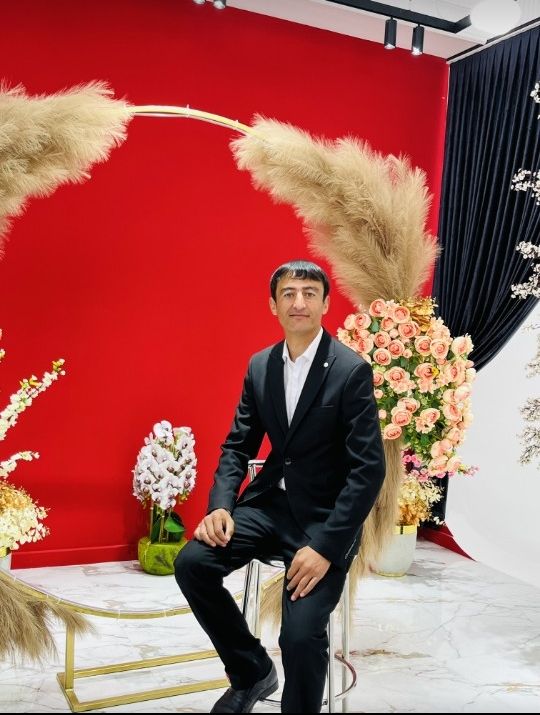
Born in 1984 in Paris, France, Timothee Bordenave is a French author of fiction and essays, and a poet. He has published many books, about 25 to date, and his literary works have been translated in large parts to about 20 languages… He is also a visual artist, whose photographs and paintings have been shown in France and in various international locations.

He used to work directing libraries in Paris, and nowadays he is a full time creative.