Essay from Bobur Matyokubov

Diagram illustrating Matyokubov's work into lessening thermal conductivity of walls

Ways to increase the energy efficiency of buildings and their external barrier structures
A second diagram
Egamova Marguba Turakulovna, teacher;
Matyokubov Bobur Pulatovich, teacher;
Samarkand State Architecture and Civil Engineering University, Uzbekistan.
pulatovich93@gmail.com

            Abstract:  In this article the results of theoretical and field studies with different thermal design solutions of external walls to improve the energy efficiency of buildings.
            Keywords: Natural energy, external barrier construction, polystyrene,thrombus wall, heat-physical

           Nowadays, rational use of natural energy resources remains one of the main tasks in all developed countries of the world.
In order to effectively use natural energy sources in Uzbekistan, in the reconstruction and perfect repair of residential, treatment, children's institutions, schools, lyceums, colleges and boarding schools, which are being built and used in accordance with the requirements of KMK 2.01.04-97*, which was adopted in 2011 as amended, their energy in order to increase its efficiency, it is necessary to increase the thermal protection of external barrier structures.[3]

         Therefore, in order to increase the energy efficiency of buildings, thermal-physical practical experiments were carried out on external wall samples with different structural solutions in the laboratory of the "Building and Constructions" department of SamDAQU. Some of these are listed below:
           In the joint enterprise "OOO SAM ROS KHOLOD" a non-removable form of polystyrene foam was prepared, in the laboratory of the "Building and structures" department of SamDAQU an external wall sample was built and thermal-physical experiments were conducted. this. The experiment was conducted based on the requirements of UzRTS-809-97 "Determining the thermal conductivity of barrier structures" method [4].

 Experimental results were compared with theoretical studies. 
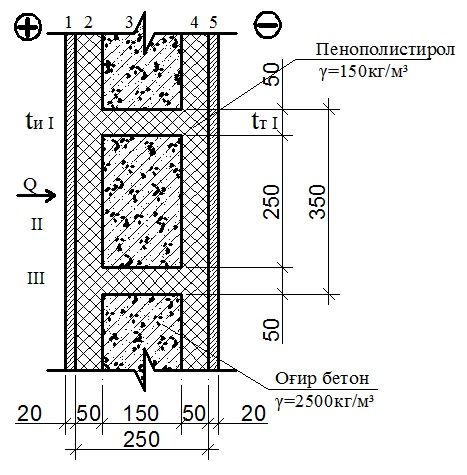
The scheme of the wall structure is presented in (Fig. 1).
Figure 1. Scheme of non-removable formwork wall construction made of foam polystyrene.
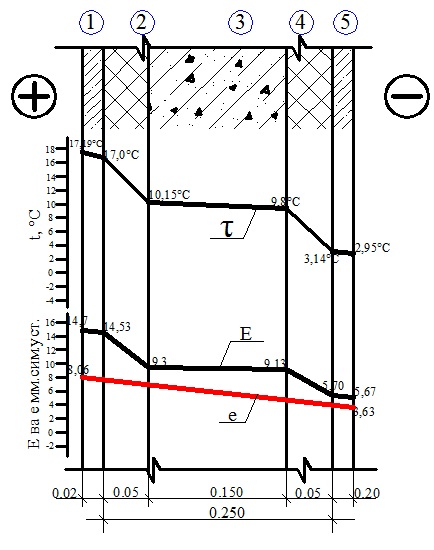
 The total thermal conductivity of this structure is Rу =2.49 м2 .(м2. оC)/Вт and the total thermal protection meets the requirements of QMQ 2.01.04-97 *. In addition, as can be seen from Figure 2, condensation moisture does not form in the layers of this structure.

2 - picture. Moisture status of non-removable formwork wall construction of expanded polystyrene
1 - Cement-sand plaster; 2 - Polystyrene; 3 - Cast heavy concrete; 4 - Polystyrene; 5 - Cement-sand plaster;         In addition, various studies are being conducted in the field of using solar energy for heating buildings in our Republic. An experimental solar house with a heliosystem of the "Thromb Wall" type is located at 40° latitude in Princeton. Built in (New Jersey, USA), this latitude corresponds to our country.        

However, such buildings, i.e. "Tromb wall" type solar buildings with helio system, have not been designed and built in our country. In order to build this type of buildings in the climatic conditions of Uzbekistan, it is necessary to justify them as a result of thermal-physical theoretical and practical experiments. For this reason, we have installed a "Thromb wall" model on the outer wall of the laboratory of the "Building and Construction" department of SamDAQU, and thermal physics research is ongoing.                   

In order to increase the energy efficiency of buildings with the help of local materials, a constructive solution was developed for the external wall with non-removable formwork made of foam concrete, heat protection increased with foam polystyrene. The advantages of this construction are as follows:       

      1. The wall structure will be completely restored from local materials; 2. The period of construction of the building will be shortened sharply; 3. The energy efficiency of the building and its exterior will increase; Increases the overall earthquake resistance of the building.

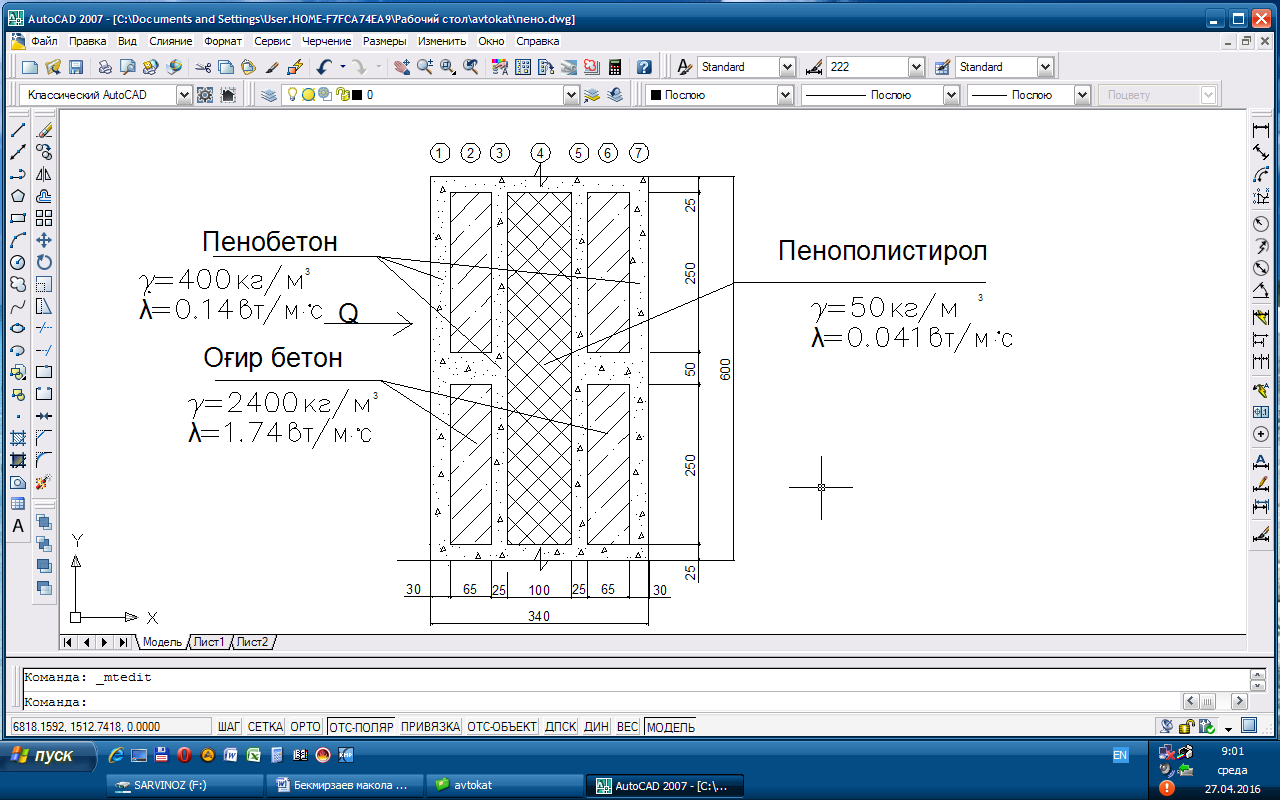
 In order to use this construction in practice, it is necessary to theoretically base it on a thermal-physical basis. For this, it is necessary to determine the total heat transfer resistance of the external wall construction, whose calculation scheme is shown in Fig. 3, compare this resistance with the heat transfer resistance given in QMQ 2.01.04-97*, and recommend the effective thickness of the wall. In addition, it is necessary to justify the formation of condensate moisture in the layers of this construction or not using the graphoanalytical method.

    Thermal-physical calculations are performed in the following order.
   Since the non-removable external wall construction of foam concrete shown in Figure 3 is not homogeneous, we cut it with planes parallel and perpendicular to the direction of heat flow and determine the thermal heat transfer resistance.
 Figure 3. Scheme of a non-removable formwork wall construction of foam concrete.

         We divide the construction into parts I and II by cutting it with a plane parallel to the direction of heat flow. The first part is made of foam concrete and the second part is made of heavy concrete and expanded polystyrene. We determine the heat transfer resistance for the first part using the following formula.

R_I=δ_1/λ_1 +δ_2/λ_2 +δ_3/λ_3 ;          (1)

For thermal physical calculations, we accept the following heat transfer coefficients[3].

1. Foam concrete, Υ_0=400-600 кг/м^3,λ=0,14 Вт/(м^2∙℃) ;
2. Heavy concrete, Υ_0=2400 кг/м^3 ,λ=1,74 Вт/(м^2∙℃) ;
3. Styrofoam, Υ_0=100 кг/м^3,λ=0,041 Вт/(м^2∙℃);   
     
〖   R〗_I=2,428 м^2∙℃/Вт. Surface of the first part F_I=0.05. 
The second part of the structure consists of foam concrete, heavy concrete and expanded polystyrene. Its heat transfer resistance. RII=3.298( м2 .оC)/ Вт.

We determine the thermal heat transfer resistance of this structure using the following formula [2].

R_II=(F_I+F_II+F_III+⋯.)/(F_I/R_I +F_II/R_II +F_III/R_III +⋯.)    (2)
Here, R_I,R_II,R_III…,- thermal heat transfer resistance of individual layers,  м^2℃/Вт;  F_I,F_II,F_III…, the surface of individual parts, м^2

The surface of the second part is F_II=0,25..
Wall thermal heat transfer resistance, RII=3.1(5 м2 .оC)/ Вт.
         
Cutting the construction with a plane perpendicular to the direction of heat flow, 1;2;3;4;5;6; and divide into 7 layers (Fig. 3).
1st and 7th layers of foam concrete〖 R〗_1=R_7=0,214〖(м〗^2∙℃)/Вт; 3 and 5 layers of foam concrete 〖R_3=R〗_5=0,178( м^2∙℃)/Вт; 4th layer expanded polystyrene R_4=0,10/0,041=2,439 (м^2∙℃)/Вт;; Since part 2 is not homogeneous, we determine the average heat transfer coefficient of the construction using the following formula. [1.2]

λ_ўр  (λ_I xF_I+λ_II xF_II+λ_III xF_II)/(F_I+F_II+F_III )=1.473 Вт/(м^2∙℃),

Here, λ_I,λ_II… is the thermal conductivity coefficient of the materials that make up the individual layers, Вт/(м^2∙℃) ; F_I,F_II…  surfaces of individual layers,

Then R_2=R_6=0,044 ( м^2∙℃)/Вт.
       So, R_⊥=R_I+R_2+R_3+R_4+R_5+R_6+R_7=3,311 〖(м〗^2∙℃)/Вт.

The heat transfer resistance of a non-homogeneous structure is determined using the following formula. [1.2]
R=(R_II+〖2R〗_⊥)/3  =  (3,157+2x 3,311)/3=3,259 〖(м〗^2∙℃) / Вт,

          We determine the total heat transfer resistance of a non-homogeneous wall structure made of foam concrete.
R_ум=R_и+R+R_T=0,114+3,259+0,043=3,416 〖(м〗^2∙℃)/Вт;
        Therefore, the total heat transfer resistance of the non-removable formwork wall construction made of foam concrete that we recommend meets all the requirements of the level of heat protection specified in QMQ 2.01.04-97*.

	Conclusion. The following can be concluded from the above theoretical and practical studies:

1. As a result of the calculations, it was found that the thermal protection of the non-removable formwork wall construction made of foam concrete is sufficient for the conditions of Uzbekistan and meets the requirements of QMQ 2.01.04-97*;
2. Heat transfer resistance of non-removable formwork wall construction made of foam concrete, thickness 38 cm. and it is 4.9 times greater than the heat transfer resistance of a brick wall with a density of 1600 kg/m3 and 1.3 times greater than the heat transfer resistance of a non-removable formwork wall structure made of polystyrene foam;

3. If this wall construction is based on thermal-physical practical experiments, it will provide an opportunity to build various energy-efficient buildings.

References

	Шукуров Ғ.Ш., Бобоев С.Н. Архитектура физикаси 1-қисм. Дарслик Қурилиш иссиқлик физикаси-Тошкент, Меҳнат, 2005 й..160 б.
	Шукуров Ғ.Ш.,Исломова Д.Ғ. Қурилиш физикаси. Дарслик - Самарқанд,. 2015 й., 217 б.
	ҚМҚ 2.01.04-97*  Қурилиш иссиклик техникаси.-Тошкент, 2011й.

	Ўз РСТ 809-97 “Тўсиқ конструкцияларининг иссиқлик узатишга қаршилигини аниқлаш” Т., 1997й.
	Bolikulovich K. M., Pulatovich M. B. HEAT-SHIELDING QUALITIES AND METHODS FOR ASSESSING THE HEAT-SHIELDING QUALITIES OF WINDOW BLOCKS AND THEIR JUNCTION NODE WITH WALLS //Web of Scientist: International Scientific Research Journal. – 2022. – Т. 3. – №. 11. – С. 829-840.

	Тулаков Э.С., Бўронов Ҳ., Матёқубов Б.П., Абдуллаева С. А.. Кам қаватли турар-жой бинолари ертўла деворларининг иссиқлик изоляция қатлами қалинлигини ҳисоблаш. //Me’morchilik va qurilish muammolari Проблемы архитектуры и строительства.Samarqand 2020. №2. -С.41-45.
	 Pulatovich, M. B. . (2021). Energy Efficient Building Materials for External Walls of Residential Buildings Physical Properties of Heat. International Journal of Culture and Modernity, 9, 1–11. Retrieved from https://ijcm.academicjournal.io/index.php/ijcm/article/view/67

	 Тулаков Э.С., Матёқубов Б.П.. Thermal Insulation Of The Foundation Walls Of Buildings And Calculation Of ItsThickness. THE AMERICAN JOURNAL OF ENGINEERING AND TECHNOLOGY (TAJET) SJIF-5.705 DOI-10.37547/tajet Volume 3 Issue 04, 2021 ISSN 2689-0984  The USA Journals, USA www.usajournalshub.com/inde x.php/tajet -С.70-78
	
Pulatovich, M. B. . (2021). Analysis of Underground Projects of Energy-Efficient Residential Buildings. International Journal of Culture and Modernity, 9, 12–18.Retrieved from https://ijcm.academicjournal.io/index.php/ijcm/article/view/68
	Inatillayevich, G.O. and Pulatovich, M.B. 2021. Analysis of Underground Projects of Energy Efficient Low-Rise Residential Buildings Built on Highly Flooded Soils. International Journal on Integrated Education. 4, 9 (Sep. 2021), 96-102. DOI:https://doi.org/10.31149/ijie.v4i9.2156.
	
Pulatovich, M. B. ., & Innatillayevich, G. O. . (2021). Laboratory Experimental Studies on the Properties of Highly Sedimentary Lyos Soils when their Moisture Changes Over Time. European Journal of Life Safety and Stability (2660-9630), 8, 91-98. Retrieved from http://ejlss.indexedresearch.org/index.php/ejlss/article/view/119
	 Pulatovich, M. B. ., & Shodiyev, K. . (2021). Thermal Insulation of Basement Walls of Low-Rise Residential Buildings and Calculation of its Thickness. International Journal of Culture and Modernity, 9, 19–27. Retrieved from https://ijcm.academicjournal.io/index.php/ijcm/article/view/69
	
Матёкубов, Бобур Пўлатович, and Сарвара Музаффаровна Саидмуродова. "КАМ СУВ ТАЛАБЧАН БОҒЛОВЧИ АСОСИДАГИ ВЕРМИКУЛИТЛИ ЕНГИЛ БЕТОНЛАР ТЕХНОЛОГИЯСИНИ ҚЎЛЛАНИЛИШИ." INTERNATIONAL CONFERENCES. Vol. 1. No. 15. 2022.
	Pulatovich, M. B. . (2021). Energy Efficient Building Materials for External Walls of Residential Buildings Physical Properties of Heat. International Journal of Culture and Modernity, 9, 1–11. Retrieved from https://ijcm.academicjournal.io/index.php/ijcm/article/view/67
	
Тулаков Э.С., Иноятов Д., Қурбонов А.С., Матёқубов Б.П.. Бинолар-нинг ертўла деворларини иссиқлик изоляциялаш ва унинг қалинлигини ҳисоблаш. //Me’morchilik va qurilish muammolari Проблемы архитектуры и строительства.Samarqand 2020. №4.(2-қисм) -С.29-32.
	 Матёкубов, Б. П., & Саидмуродова, С. М. (2022). КАМ СУВ ТАЛАБЧАН БОҒЛОВЧИ АСОСИДАГИ ВЕРМИКУЛИТЛИ ЕНГИЛ БЕТОНЛАР ТЕХНОЛОГИЯСИНИ ҚЎЛЛАНИЛИШИ. INTERNATIONAL CONFERENCES, 1(15), 103–109. Retrieved from http://researchedu.org/index.php/cf/article/view/319
	 
Inatillayevich G. O., Pulatovich M. B. Analysis of Underground Projects of Energy Efficient Low-Rise Residential Buildings Built on Highly Flooded Soilshttps //doi. org/10.31149/ijie. v4i9. – Т. 2156.
	 Matyokubov , B. P., & Saidmuradova, S. M. (2022). METHODS FOR INVESTIGATION OF THERMOPHYSICAL CHARACTERISTICS OF UNDERGROUND EXTERNAL BARRIER STRUCTURES OF BUILDINGS. RESEARCH AND EDUCATION, 1(5), 49–58. Retrieved from http://researchedu.org/index.php/re/article/view/364.
	https://scholar.google.com/citations?view_op=view_citation&hl=ru&user=jhldcIoAAAAJ&citation_for_view=jhldcIoAAAAJ:RHpTSmoSYBkC.

	Носирова С. А., Рустамова Д. Б., Эгамова М. Т. ЭНЕРГИЯТЕЖАМКОР УЙЛАР-ЎЗБЕКИСТОННИНГ ЯҚИН ЙИЛЛАРДАГИ ЭНГ АСОСИЙ ШИОРИ //Журнал Технических исследований. – 2021. – Т. 4. – №. 2.
Final diagram

Essay from Atagulla Satbaev

Young Central Asian man in a black turtleneck with short hair and brown eyes.
Atagulla Satbaev

Unbelievable palmistry

My tongue is crooked, honestly –

I can not look into your eyes.

Scattered line on my palm is connected to my destiny

I deceive myself just like that.

I am wandering of searching the line of love in my hand,

without finding it in my life …

There are living walls between us

There are living walls between us.

Draw an invisible boundary.

What is the benefit of our separation?!

It parts us from our love.

Ruthless living walls between us.

It is like dying is not meant for them-

The tears are just a sight to behold.

(Didn’t they face with the passion !?)

Living walls between us.

They part us, even the paths;

Constantly looking at us …

We are moving apart further

Living devils between us.

They will not fall.

They are eternal…

***

Drown the hourglasses into water,

put a rope around the neck of time

released its the last breath.

Tied the clock hands to the stone

I tried to hold off the life

and live.

But –

Could not stop

My heart

Screaming

Just like a clock in my chest …

It is not true when they say

We are lack of power when it comes to the time:

time loses –

when it stops beating

My heart…

Atagulla Satbaev was born on August 10, 1995 in Nukus city, Uzbekistan. His poems were published in local magazines and journals.

Essay from Shabnam Shukhratova

Nowadays it is common for young people to travel to far-flung places to study. This essay will argue that despite the fact that it often leads to financial difficulties, it is far more advantageous to study in places that are far away from one’s parents because it leads to independence. 
 
Young people frequently face financial problems if they decide to enrol in a degree course in a distant town. This is because it is no longer possible for them to live in their parents’ house, and they, therefore, have to pay for their own accommodation as well as utilities and food. This can come as quite a shock for many young people who have never had to pay a bill in their lives. For example, in this country, it is common for young people in this situation to take on part-time jobs so that they can pay their expenses while at university, and perhaps the most popular such job is being a waiter in a restaurant or bar.  
 
The great advantage of studying in a far-off place is that it allows young people to experience what it is like to be independent of their families. In many Western countries, it is humiliating for someone over the age of 18 to have to ask their parents for money and also to not be able to live their life the way they want to because they have to live by their parents' rules. Leaving the family home allows them to choose whatever lifestyle they want and not be under any influence from their elders. For instance, at universities in the UK, it is noticeable that students who are no longer living in their parents’ houses mature more quickly than those who are still living at home, and this is clearly because they cannot depend on their parents and must instead embrace their newfound independence. 
 
In conclusion, travelling to a distant place to study might be financially challenging for those who have just left their childhood home, but the advantages of being independent far outweigh that drawback.


Shabnam Shukhratova 


She was born on August 13, 2008 in Navbahar district, Navoi region. Currently, she is an 8th-grade student of school 21 in Navbahor district and is the class captain of this class. Her works have been published in anthologies. She is also a volunteer. SHe is also a participant and winner of various Olympiads and competitions. SHe also has international certificates.

Nowadays it is common for young people to travel to far-flung places to study. This essay will argue that despite the fact that it often leads to financial difficulties, it is far more advantageous to study in places that are far away from one’s parents because it leads to independence. 
 
Young people frequently face financial problems if they decide to enrol in a degree course in a distant town. This is because it is no longer possible for them to live in their parents’ house, and they, therefore, have to pay for their own accommodation as well as utilities and food. This can come as quite a shock for many young people who have never had to pay a bill in their lives. For example, in this country, it is common for young people in this situation to take on part-time jobs so that they can pay their expenses while at university, and perhaps the most popular such job is being a waiter in a restaurant or bar.  
 
The great advantage of studying in a far-off place is that it allows young people to experience what it is like to be independent of their families. In many Western countries, it is humiliating for someone over the age of 18 to have to ask their parents for money and also to not be able to live their life the way they want to because they have to live by their parents' rules. Leaving the family home allows them to choose whatever lifestyle they want and not be under any influence from their elders. For instance, at universities in the UK, it is noticeable that students who are no longer living in their parents’ houses mature more quickly than those who are still living at home, and this is clearly because they cannot depend on their parents and must instead embrace their newfound independence. 
 
In conclusion, travelling to a distant place to study might be financially challenging for those who have just left their childhood home, but the advantages of being independent far outweigh that drawback.


Shabnam Shukhratova 


She was born on August 13, 2008 in Navbahar district, Navoi region. Currently, she is an 8th-grade student of school 21 in Navbahor district and is the class captain of this class. Her works have been published in anthologies. She is also a volunteer. SHe is also a participant and winner of various Olympiads and competitions. SHe also has international certificates.

Essay from Mirfayzbek Abdullayev

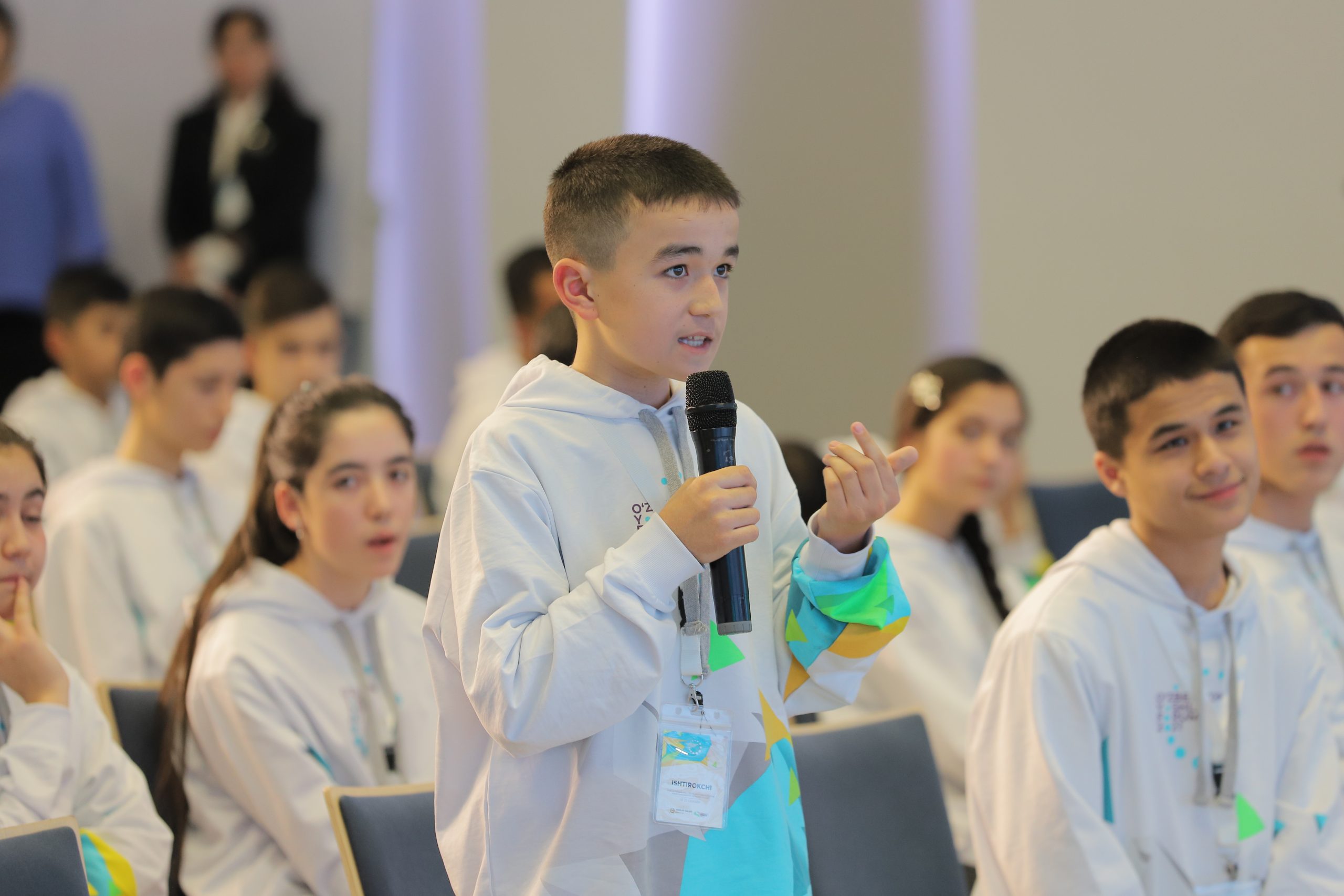
Young Central Asian boy stands up with a microphone in front of a group of other children, all dressed in white sweaters with colorful sleeves.
Mirfayzbek Abdullayev
Youth policy begins with children's policy

Currently, I am the leader of the children’s organization’s “Kamalak” under the youth union of Uzbekistan. I have been working in this system for three years. Do you know what the leadership gives to children? First and foremost, leadership provides children with a happy childhood. Along with this, it provides skills such as helping our peers, working with children through projects based on their learning and interest.

In the system of "Kamalak" children's organization, we implement various social projects. An example of this is the "Euclid Olympiad" project to increase students' mathematical abilities during the winter vacation, the "Chess Kingdom" online competition among students interested in chess, and the "Eco Frame" project among students interested in taking pictures. Many projects are currently being carried out in order to meaningfully organize free time of students. During the coming summer vacation, we are planning to hold the "Summer with a Kamalak" project in schools, neighborhoods, parks, streets, and camps.

Almost 22 years have passed since the foundation of my beloved organization "Kamalak" children's organization. It is no exaggeration to say that the organization discovered thousands of talented children during this time. In addition, before I joined the organization, I was a child whose speech was not developed enough, and when he appeared on stage, he would forget his words. I became a leader in the organization, I went to different regions, I made friends there, we talk and exchange ideas with them through social networks. 

Last year, as a member of the Uzbek delegation, we participated in the international "Children of the Commonwealth" forum organized in Kyrgyzstan because of my exemplary work in "Kamalak". We exchanged ideas with knowledgeable and active students from 6 countries and participated in discussions on various topics. We are using the knowledge and skills we have gained from the international forum among our peers. Friendship, social activity, field trips and unforgettable memories are the gifts that "Rainbow" gives. I am proud to be a part of such an organization! At this point, I would like to recall the favorite motto of our organization:
For the homeland, friendship and happy childhood!

Mirfayzbek Abdullayev
Student of the 4th general education school in the city of Karshi, Leader of the “Kamalak” of Kashkadarya region

Synchronized Chaos August 2023: Reality Reframed

Welcome to a fresh month of Synchronized Chaos! We’re exploring reality from different perspectives, experimenting with different takes and different frames.

Mark Young’s poetry evokes reframing, repurposing, contrast, and juxtaposition.

Map of the world's continents on a golden apple with a stem and leaf.
Photo c/o Patricia Keith

Ellie Ness contributes a sketch of cultural exploration by contrast: an Englishwoman abroad in Iraq under under Saddam Hussein. We see a sketch of domestic life, the different spheres of influence of men and women, the power relationships and norms.

Caleb Ishaya Oseshi’s black and white photography illustrates ordinary people of Nigeria. We see them living everyday life, walking, bicycling, carrying children and other objects in vibrant street scenes.

Isabel Gomes de Diego photographs a barbecue, inviting us to imagine the people who will gather to enjoy the feast.

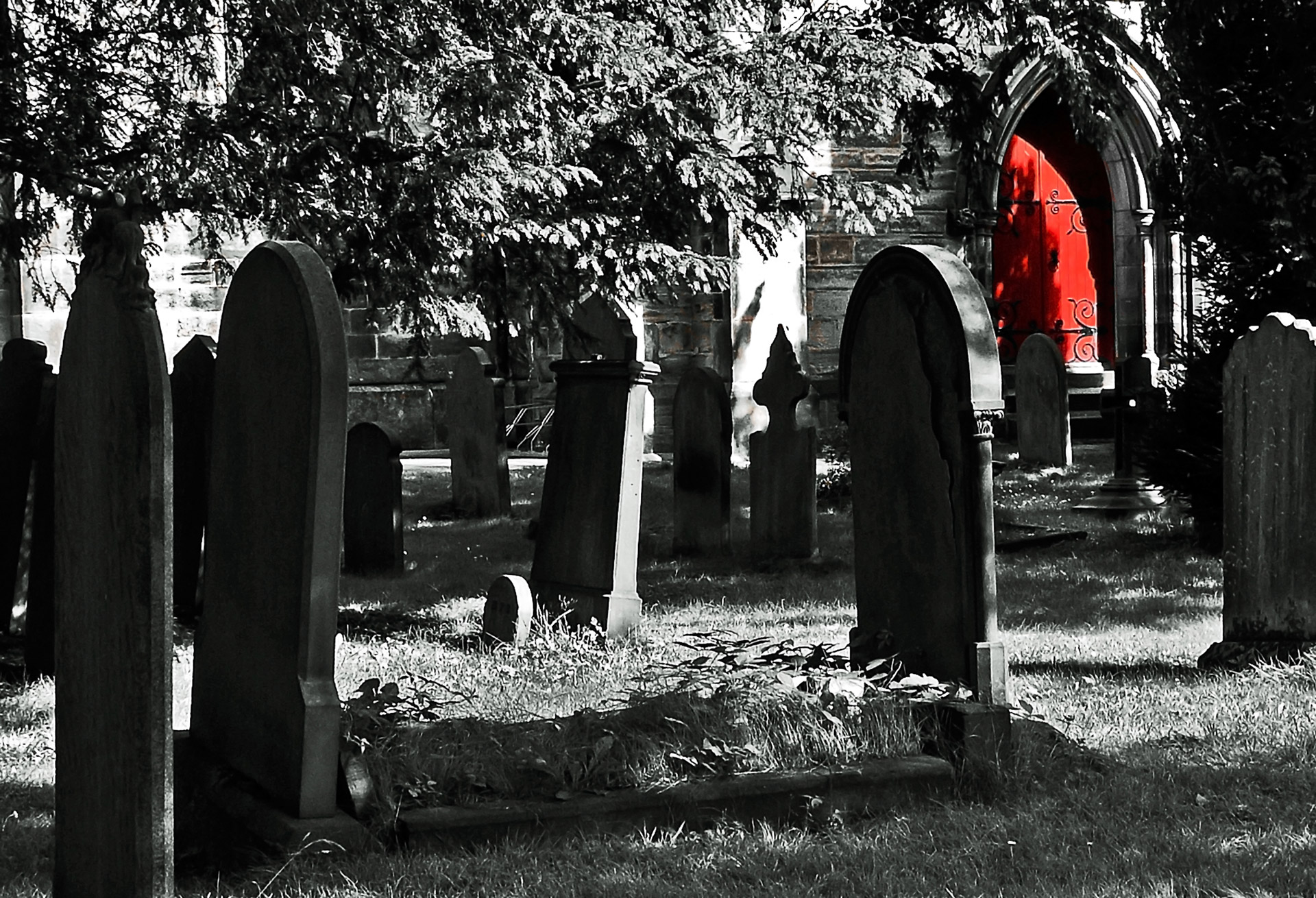
Black and white cemetery with tall rounded headstones lined up in the grass under a tree. One chapel or tomb has a red door.
Image c/o George Hodan

Ahmad Al-Khatat speaks to romantic love, grief, and the desire to connect across cultural and physical differences.

Sa’ada Isa Yahaya conveys the physicality of grief, the pain of a nation stored in a person’s body. Fortune Simeon illustrates how grief transforms and colors our everyday perceptions. Ogwuche Bella’s speaker attempts to love despite overwhelming personal and societal grief.

Shamsiya Khudoinazarova Turumovna sings a story of grief, for a nation and for a person. Wisdom Adediji buries grief into poems, as writing is both a way to hide and to express feeling. Taylor Dibbert reflects on a man losing a beloved dog.

Mykyta Ryzhykh writes with the feeling of a cold winter’s barren landscape, addressing death and our search for meaning. Christopher Bernard references the whole cycle of life with his piece on a fallen tree in someone’s backyard. Azemina Krehic evokes a history of wartime loss in her piece on a fruit that never ripens. Jerry Durick explores how we cope with different types of global or local disasters.

Duane Vorhees probes how our minds seek purpose and consciousness behind random and arbitrary forces in society and nature. J.D. Nelson confronts us with sets of words that seem haphazard, inviting us to co-create potential meaning.

Texas Fontanella describes an uneasy peace among roommates in different states of sanity. Lauren McBride’s structured poems highlight confusion and chaos of various kinds, mental and horticultural.

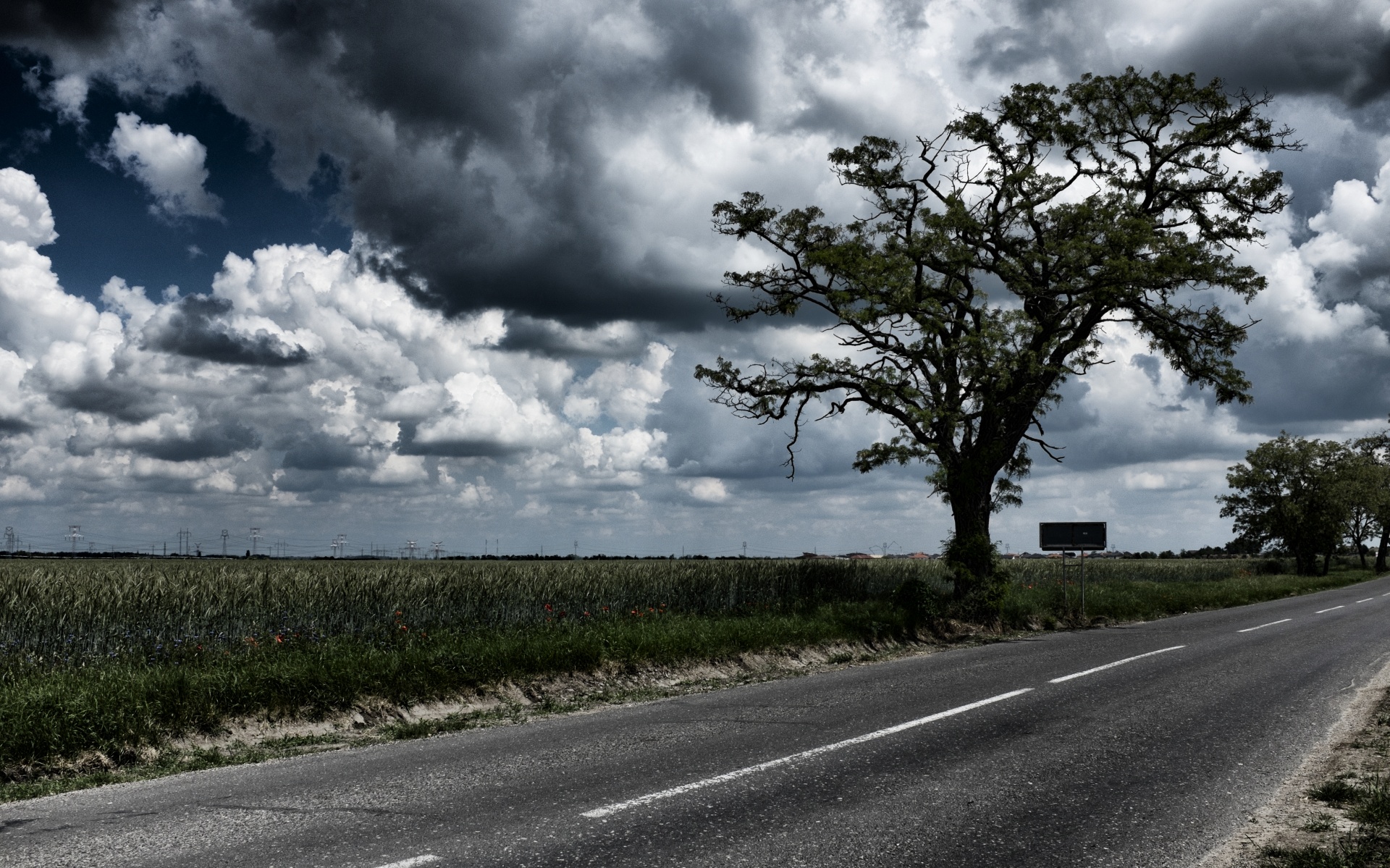
Sparse group of windswept trees growing along a two lane country road near a field with clouds in the sky and a billboard in the distance.
Image c/o Michal Spisak

Aklina Ankhi expresses union with nature, even as it’s being crushed by the growth of civilization. Rezauddin Stalin joins in with nature’s other creatures in individual expression through his poetry.

Channie Greenberg photographs various kinds of colorful fish while Sayani Mukherjee revels in the intoxicating sight and scent of white roses in summer.

For Don Bormon, the wind inspires thoughts of freedom and adventure. John Culp references snowmelt on a glacier to convey his joy at opening up emotionally to love and personal growth.

Mahbub Alam talks about love in the age of climate change and extreme weather while Kristy Raines explores how love can help us see and appreciate different sides of people and Lilian Dipasupil Kunimasa relates her quest to live to the fullest, to find and understand true love.

Annie Johnson reverently speaks of long-term love and stillness under the moonlight while Jerry Langdon sends up cleverly crafted and structured poems about life and love.

Yellow sunset behind the horizon, wispy white clouds in the sky, blue above the sunset. Couple embraces in the lower left corner.
Image c/o Circe Denyer

Texas Fontanella’s offbeat love poem concerns falling for someone and not being able to explain why.

Anna Ferriero gives a poetic take on love and creativity, drawing on fairy tales. Kristy Raines shows how love can help us see and appreciate different sides of people.

Tanvir Islam describes a deep love and intimate connection with another person while Shakhriyo Kurbanova regales us with a lyrical paean to her Uzbek homeland and Borna Kekic raises a verbal flag and shows his pride in and affection for his Zagreb hometown.

Mantri Pragada Markandeyulu sings exuberantly about the joy of love and life while Daniel De Culla’s funky photographs reflect humor, observation, and a bit of social commentary.

Part of a tree trunk showing cracks and rings near a dark brown center.
Image c/o Petr Kratochvil

Noah Berlatsky offers up a funny take on poetry that isn’t up to par.

Ian Copestick’s humorous poetic speaker faces mortality with ambivalence while J.J. Campbell reflects on getting old and feeling upstaged and left behind by modern society. Meanwhile, in another piece, Copestick presents some people who celebrate life in the golden years, standing proudly outside with a Bentley.

Mirta Liliana Ramirez writes of the comfort and pleasure of nostalgia in our later years. Mesfakus Salahin urges people to go forth and live with gusto at any age.

John Grey looks at how people from various generations perceive each other.

Rock climbers out on a starry night above some misty fog. One person bends to help another up a cliff.
Image c/o Mohamed Mahmoud Hassan

Bahora Bakhtiyorova points to how men who embrace traditional male gender roles can live them out in a positive way as protectors and providers and role models for their sons.

Gustavo M. Galliano illustrates the progress of dementia through a first-person tale where a man remembers emotions but not the names or categories for relationships.

Sabohat Saidova’s story concerns the importance of caring for and remembering family while Dilfuza Dilmurodova offers up love and respect for her mom and Wazed Abdullah crafts poems of tribute to his mom and his dad.

In Chimezie Ihekuna’s story, parents’ sharing their own former failings and becoming vulnerable encourages their son to get back on the right path. Meanwhile, Toshmatova Madinaxon Kodirovna highlights ways young people are changing the world.

Silhouette of a sunset with graduates throwing their caps in the air against the orange cloudy sky.
Image c/o Mohamed Mahmoud Hassan

Shoshura Husaynova compares international educational systems and suggests ways the Uzbeks could learn from the Finnish. Xudayberganova Mehriniso sends up pieces on school and the value of education while Ravshanova Gulnoza Shamsiddinovna surveys technology for learning and teaching foreign languages and Dildorakhon Eshmurodova gives thoughtful consideration to the debate between paper books and e-books.

Z.I. Mahmud explores Western literary criticism through a piece examining the story structures employed by British author E.M. Forster in contrast to those of other novelists.

In another academic-adjacent piece, A. Iwasa’s review of Claire Dederer’s Monsters: A Fan’s Dilemma explores the age-old question of whether we can separate flawed artists and their abusive behavior from their art.

Doug Holder satirizes the now-problematic figure of Archie Bunker, reviving an old caricature for comic effect.

Muhammed Aamir’s story illustrates how people cannot ultimately free themselves by abusing or denying the humanity of others. It is in resisting that temptation that we can reclaim personal agency.

Line drawing with funky paint where a sunflower grows inside a lightbulb. Flower is green and yellow and the background is pink, purple, tan, and blue, like drops of paint.
Image c/o Linnaea Mallette

Slavica Petrovic reminds us of how we can find ourselves in different stories as we grow.

Maja Milojkovic celebrates the power of change and renewal while Emina Delilovic-Kevric speaks to creating a joyful home amidst the scariness of the world. Eva Lianou Petropoulou conveys her wishes for hope, peace, and comfort and Elmaya Jabbarova’s strident piece urges us to get busy making a kinder and more peaceful planet.

We hope the diverse palette of work showcased in this issue inspires you to reach out and view the world from a new perspective.

Poetry from John Culp

+


Snow melt falls
  from Granite Walls 
      Stands Beauty with 
         the Power to Exhale 
with Eyes Raised to Test the 
spray with tongue & Skin.
 
      In  testing 
    I've  passed  my own  test 
 found within   my Love  I AM

            Let go to Awesome
Given  Self  to Wisdom 
      to  leave  no  concern 
          Knowing 
& Seen  the universe 
       disappear from demand, 
           received  in  satisfaction, 
to continue finding a Welcome 
    with or  without 
            change. 

     The Awesome Heat
 that melts  the snow 
       can wait  upon
 to let  One  know 
 & Allow,
 My Heart,
 the Fruits of Winter. 
    
                                                        ...........


Penned July 13, 2019
    by  John Edward Culp 

Poetry from Azemina Krehic

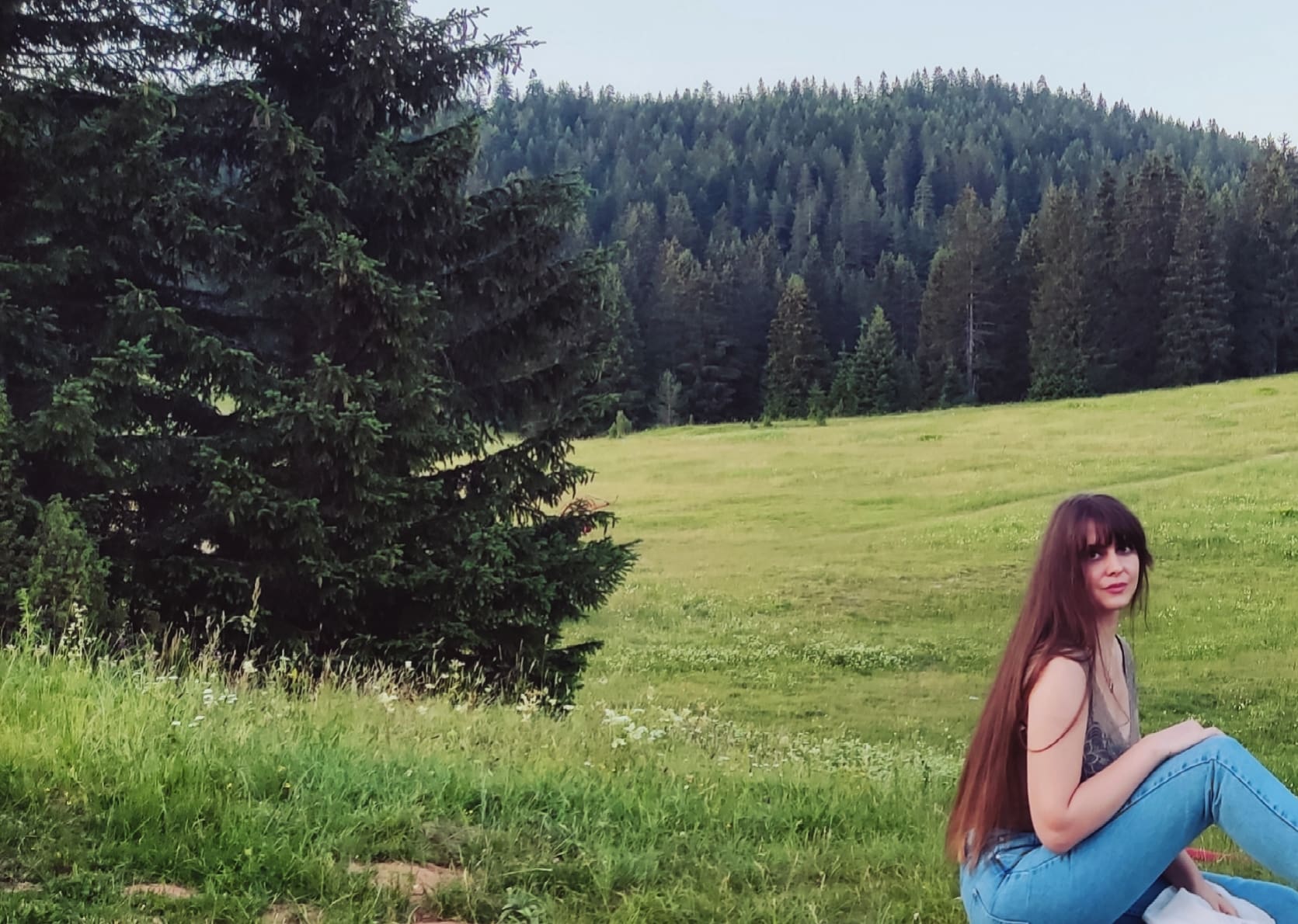
Young white woman with long dark hair sitting in a meadow clearing in a forest. She's got a green top and blue jeans.
Azemina Krehic
ABORTION OF A FLOWER

In October,
pomegranates ripen in the sheltered south.

This summer you wanted them to admire the blossoming in the swirling flames of your hair.

One flower became a fruit that never ripened.

Torn like a child from the womb, he dried in the heat
of Herzegovina stones.