
Influence of Indian Classics on World Literature

Dedicated and acknowledged to the memory of June whom I love endlessly and the repertoire of my dearest and fond mummy…

Brief Biography of the Author: Formerly Undergrad freshman English Literature Major hailing from department of English and Humanities (ENH) at Brac University. Presently of latest accord, Z I Mahmud is a fullbright Indian Council For Cultural Relations (ICCR) scholarship fellow Suborno Jayanti Scheme achiever-awardee and UG aspirant of University of Delhi’s Department of English. Z I Mahmud exalts in the glories of glamorous explorations with glowing sparks of somber sobriety lingerings in stirrings of literary criticism, literary theory and genres of narrative.

Readers are heartily welcome in cordiality to intimate in correspondence through email: zi.mahmud@g.bracu.ac.bd


A literary analytical essay and criticism of the postmodernist era in Indian Bengali Prose


The Indian Bengali prose writers and authors particularly postmodern novelists have embraced the Indian subcontinent with literature characterized by narrative techniques such as fragmentation, paradox, unreliable narrators, often unrealistic and downright impossible plots, games, parody, paranoia, dark humor and authorial self reference. Well, the purpose of the essay is to reflect the extraordinary chronicle… A tribute to the writer’s zealous and enthusiastic spirit that refuses to give up; to family love that persists in the face of desertedness, repeated depression, dismay and denial.

A triumph… Here portrayal and foster of parental relationship with children and children’s attitude and behavior towards parents reflect to the audience that can reach across a nation’s mistakes, and offer forgiveness…. An amazing story by the distinguished novelist Chanakya Sen, whose spirit and creativity belie the unimaginably struggling and enticing endeavours in his life. “Putro Pitake” is a gift of understanding….A compelling story revealing the incarnation of love and peace and sharing of shame and pain so that others will do the same, and so awaken to themselves through exchanging letters.

What is remarkable and enlightening is how the contemporary biographical sketch in the novel describes the attachment of parenthood and children duties. The writer procrastinates in the prefatory note amidst the novel the contemporary world’s young minds blooming attempts to their fathers. In the ever changing and rapid time, fathers are failing to approve and understand their children; while the children have stepped into the perilous extinction of family connection and relationship. Thus the novelist takes an assignment while dwelling in New Delhi to prepare the manuscript of the adventurous and enchanting novel.

Today, dad, both you and I are aware of that fact that truth speaking persons are very much rare whose talks are very much limited. Confucius, declared, “it’s the duty of the children to abide by the commandments of their parents.” Even our religious scriptures denoted fathers as ‘heaven’, ‘religion’ and ‘divine or sacrilegious’; acclaimed international acknowledged establishment of empire from the ancient time.

Your struggles and endeavours are incomparable to us.. You guys have had accepted wholeheartedly and without rebellion; achieved peace and dreams.
We have questioned and despite alienating the protestations couldn’t reach further peaks. Why? Simply because you and we share a deep bond of love. We couldn’t accept your parenting; but without you our lives seem meaningless.

We understand the meaning of independence and sovereignty, would like to pursue; but failed since we aren’t truly independent and sovereign.
With those whom I have spent my four years of life are dwelling in North America. I have seen them in New York. Toronto. Having exchanging a discourse within three minutes they would proclaim crystal clear: My dad is a horrible man. I hate him. Or my mother…. Even the British people’s sons and daughters are the same with the same blasphemy attitude towards their parents. But we Indians wouldn’t ever dream of saying that I hate my parents.

I remember and feel nostalgic regarding the cigarette consumption incident that you had shared with me when I was a high school student reading in eighth standard. The writer intelligently creates dramatic colloquial linguistics in the tone and speeches hereby.

“Ketu, have you ever dreamed of eating cigarettes?”
I had said, “No.”
“Haven’t you tried a single one?”
“No.”
“Had you, isn’t it?”
“No, I dislike the smell of it.”
“If you feel interested, do tell me.”

You had thoughtfully expressed, “Sons start eating cigars secretly. They take cigars out of curiosity and many feel it as a privilege of bravado and heroism. They hide themselves while smoking because the elderly people forbid them. If you ever want to smoke, do tell and ask me. Do buy branded cigars from some good shops and share your experience of smoking.

I wanted to know when have you learnt the art of smoking.
At a very elderly stage. When I was a B.A. student, I had stick the hostel wallboard, smoking is restricted in this room. Then after finishing B.A. I had broken that ideology.

The characterization and twists in the plots delve the necessity of critical understanding as if some when some discourse and dialogues are being shared:
My study mate Ajitesh can be well in your remembrance. Last week he came from New York and visited me in Toronto; bringing with him few letters received from his father.

Sri Pranesh Kumar wrote, You have achieved education, visited abroad and having the thought of being free and independent; you’ve the full freedom and liberty of choice in your life. You aren’t understanding that this faith is very unrealistic and sinful. You are my blood and flesh; we both are equal and same but not different. The bond of family relationship should be maintained in the exactly same manner while I had the hereditary obedience towards my father; your grandfather having obedience towards your god-grandfather.

Remember that you are the heir of Sitapur’s Dotto family; you cannot simply forget that and detach yourself from the roots. I have given you food, education, love while parenting; you have the similar duties and responsibilities towards me, as I had towards my father and my father had towards my grandfather.

Ajitesh didn’t visit his motherland since three years and he was determined not to visit this year as well and the father had taken that he would never see them for an entire life.
Ketu had been saying, “Why don’t you visit your family for once?”
“Digress, what would happen if I don’t visit?”
“You could’ve met everyone.”

“I feel reluctant to visit anyone?”…after few moments silence, “Except mother.”
“Fine, visit your mother then.”
‘Not only she has been my mother but she is my father’s wife, brothers and sisters and sister-in-laws and nephews and nieces’ mother.”

“Aren’t you going back to India?”
“What would happen if I don’t?”
“What’s the big deal in staying in America.”
“Nothing….. But I am surviving! I am having freedom and liberty in my lifestyle here.”

“What have you been doing?”
“I drink when I am thrilled. Spend nights with girlfriends. I am taking pods when I am feeling agitated.”
“However, homeland doesn’t suit all these things. I have to consume job named opium and drink poison called wife.”

“Annoying.”
“Why did you leave your native and settle here?”
“Means? Being granted a PhD certification at Columbia University. Didn’t they offer you a fellowship in PhD program?”
“Are you doing PhD?”
“Didn’t you quit?”
“You had joined marshal, isn’t it back home?”

“I had been suffering from that kind of a disease. While studying in Patna, I felt suddenly that the poor farmers' distress and dismay cannot be eradicated unless I take arms to change the recession India. Middle class Indians would never revolt; even the labourers wouldn’t because they are always in the dream of living a middle class lifestyle. I felt that the hungry and deprived farmers are capable of taking the weapons and becoming guerilla.”

We were having seminar at the English Department while suddenly the news of buildings and halls capturing by the students was spread. A girl named Rose Mary Walcot was reading the paper. Suddenly she had stopped reading and began screaming, “Crude establishments, fuck all the deans.” The class was being tutored by emeritus professorEugene Velnde. He picked all the books and gradually very swiftly moved away from the class. Many students began to gather at the Chemistry Building. I went straight to the dorm. If I had known you were there, I would definitely had had strolled the Chemistry building.

Here postmodernism has become part of our lives and entertainment concerning those words that made ourselves home with everyday language. The postmodernists are embracing disorder and taking playful approach.
“Mr. Gupto! I am Helen!”

Handshaking was over. Approaching ahead, Helen Dalton said, her husband was cooking steak, so she had to come alone, her husband is good cook though she attends most of the cooking sessions at home. Robert Dalton worked in a weapons factory and returns late evening. Helen Dalton is a nurse at the neighbourhood drug addiction rehabilitation so she visits patients homes to collect statistics over discussions. Within a second of time Mr. Gupto was enchanted and thought the woman to be mesmerizing as because of her friendly and amiable nature. The Daltons had three children: the elder girl completed 13 years named Elen, 11 years middle son George and the youngest 9 years aged Henry.

A banqueting meal scenery description highlights the incident among the family members including the paying guests couple Rostum (a Muslim) and Sumona(a Hindu)… Quoted….
“I said, School and college history lessons we had been taught that Muslims had deep fond for Hindu girls. Grabbing the girls and feeding them beef as a lesson.”

The temptation and lamentation topic touches the hearts and souls of the readers when the visitation of the Hippie Village scene can be visualized.
While I was a learner at Columbia University I often visited the Hippie Village in the dusk of the evenings. And had met and befriended a great number of these Hippies village friends and acquaintances.
Cycloidal light sand poster decorative small café restaurant few hippies were gossiping. I often went there. They sang, danced, ate pod, laughed, loved, slept while sleeping, when hungry would satisfy themselves with few pennies from their pockets whatever was available, consumed teas and coffees several times and often discussed the mysterious lifestyle of destiny; I felt intoxicated hearing those stories as if I have arrived in a far away world…NASA, Johnson, Nixon, Vietnam don’t have any connection. Similarly there is lack of unity among Columbia-Harvard, MIT-Princeton and Cornell scientists where several years after years Johnson empire and society are being established.

Especially in the 1960s the unconventional appearance, typically having long hair associated with a subculture involving a rejection of conventional values and the taking of hallucinogenic drugs. The author met his first lovely damsel and admirer here through the vivid and enticing description of the character Cathy.

“Cathy, meaning Katherine, looked opposite to Peter. Five feet five inch body and absolutely white as if bloodless. The head was full of golden hair waving her back. Two small deep eyes as if bluer than the autumn’s sky…. These lines denote personification and enlivening spirit of the writers beautiful imagery. Cathy’s hair is very whitish body reflects the golden hair waving her back as if uncommon beauty found in New York.

Contradictory and paradoxical statement shows as an exemplary one: “Robert Ashe belonged to the extremist wing of the Anti British Catholic Movement."
Prominent imprudent words and colloquial languages are abundantly used to entertain adult audiences and parents would decide whether to teach them sex education in the appropriate memorandum. “What’s the Bangla meaning of sex, dad?”

“…? I feel bad mouthed to utter that abusive word..I feel very much embarrassed. Men and women sex organs, the body’s hidden sexual organs, become the discussions in our homes and gatherings discourse. But these words are being used everyday not as Bangla but as English. We say, private parts, say penis, say breasts although know that these words have had some Bangla meanings as well as Sanskrit. Yeah, poet Joydeb and even before him epic poet Kali Das, thank goodness that they didn’t know English.

By enthralling spirit of the writer, the lyrical songs explain the philosophical Essay on Man which excited the writer saying that the followers of Pope belong to modern generation:
Pleas’d to the last, he crops the flowery flood,
And licks the hand just raised to shed his blood.
Oh blindness to the future! Kindly giv’n,
That each may feel, the circle mark’d by Heav’n:
Who sees with equal eyes, as God of all,
A hero perish, or a sparrow fall.
Atoms or systems into ruin hurl’d,
And now a bubble burst, and now a world,

The 18th century English Literature amazed the kindred spirit of the writer and inspired his fascination. I had spent innumerable evenings with English professor Santosh Vataya in her neat and tidy apartment; where she had the assistance of a domestic worker do attend the household chores; her personal library had a collection of more than 2000 books; a single sleeping bed was found in the bedroom; the drawing room had a simple sofa set; discolored, tattered and torn as if some cushion of animals observed as dead skin. We had discussions regarding 18thcentury English Literature, university politics, students social and cultural issues, criticism and rumors of different teachers; and sex; at first Ms. Vataya would simply used to be much diligent in speech, listen patiently and smile lucidly, but the topic of sex would make her face deepened and she felt restless. Gradually the hesitation and irritability disappeared and she had consented me to come closer to her silently; shared few talks personally and questions regarding sex had come to her mind too. She used to love a Kashmiri Brahmin, presently a government employee, their relationship was deep, she thought that he would marry her but he didn’t; instead he had married a Kashmiri virgin and Santosh Vataya felt desperate hesitation to embrace her beauty with uplifting spirit to entice loving admirers anymore.

Susan Ford wasn’t Elizabeth Barnstein, Emily Heart; she was only exceptionally Susan Ford. I discovered her while typing my thesis assignment for M.A. examinations. She had advertised in the Columbia University students oriented daily newspaper. Telephoning her one morning finally I came to visit her studio apartment downtown in New York.

While ringing the doorbell thrice she had opened the door. She just woke up wearing a sleeping robe.
Upon staring at me, she said with a drowsiness of hand, “Oh, you are that Indian boy whom was supposed to come this morning. Come get inside. Sit there and I am coming right away.

Susan went into the bathroom. Studio apartment offers a single room with drawing, bedding, cooking, dining, and everything. I looked and found scattered stuffs .. disorganized bed, there is a table at a corner with IBM typewriter, beside expensive music system: Fisher. Around the other corner of the room there is a piano and a great number of books were laid on the cover, most of them were art and photography. Around the third corner of the house there was a curtain wrapped in a steel framed a small dark room, Susan Ford must have printed and developed the photographs film there. The wall painting were of naked Picasso and three half naked damsels. Apart from these pictures there were many posters displaying contemporary antiwar rebellion’s different scenes and two of them were arts relating to women's liberty and feminism. The wall had contained daily, weekly, monthly newspapers and magazines articles extracts and essays. The worktable had accompanied a sofa set, which looks that in terms of necessity it can be changed into a bed; a love seat. Yesterday night’s fermented foods were laid down on the dining table and plate glasses were looking as if two persons had had dinner last night. Few yards from the dining table there was cooking gas stove and another few yards utensils; wash basin sink. There was a table lamp upon the working table, a table beside the sleeping bed.

“Your English is very nice. American students don’t write these kind of language. They write strong and lengthy sentences. Many words but less meanings. You language is simple but meaningful.”
“Welcome. Within seven days I have to submit the thesis assignment.”
“If not, then?”
“Acquiring degree would be postponed for six months. To me such a length of time would seem terrible to me.”

Susan stared at the calendar very thoughtfully calculated with a pencil that was on the table.
Said, “You would deprive my sleep for seven nights.”
I said, “I absolutely don’t want that.”

“Okay. I never like reading thesis. Your thesis essays seem fond of reading. I would do it. But, one condition. You would visit me everyday in the evenings. You would sit here. Many questions would arise in my mind. Your English has got a little weakness. This happens to foreigners. If I phone you about the questions and commentaries then it would take a long time. You would stay with me everyday for 3 to 4 hours. I would handover everything on the 7th day.”

Susan Ford didn’t shoot President Johnson, she hadn’t the wisdom and courage to attempt firing someone and murdering; but Vietnam antiwar protesting rebellion encouraged her to protest boldly. Susan was injured and brusied four times by the police and suffered three times imprisonment because of her participation in the antiwar protesting rebellion. The rebellion’s pictures had been taken by none but Susan because professional photographers were lacking.During the Chicago democratic party convention among the hundreds of people Susan tremendously shouted with them together: “The whole world is watching! The whole world is watching!!”

After enjoying the concert we had been to a serene restaurant of the 57th Street. The bill made my eyes to stare frowning forehead! Susan said, “Can I share?” I hadn’t paid heed to her words. I handed the four ten dollars note opening the wallet to the waiter.
At 11:15 pm we had arrived at Susan’s apartment.

I said to Susan, “Would you make me a coffee?”
Susain questioned, “For how long would you stay?”
I declared, “The whole night.” As well as added, “If you have n objections.”
Susan laughed a victorious laugh and said, “Most Welcome.”
I phoned my home.
You had picked up the call, Dad.

I said, “Dad, I am staying with Susan in her apartment tonight.”
You paused for a while and said, “Okay.When would you come?”
“Tomorrow Morning.”
“Okay.”
You had dropped the phone. I dialed once again and again you had picked up the phone.

“Dad, are you understanding what I am saying?”
You said, “Tonight you aren’t returning. Coming tomorrow morning.”
I said, “I am going to sleep with Susan Ford tonight, dad.”

I walked with Susan holding her hand towards the Jewish neighborhood so that the features could be understood as well as Italian, Polish, Irish and Dutch traditions and culture. Where drugs can be bought, who are the pushers; how to recognize the adulterous people on the streets, how do they trap and bewitch the male; happenings inside the massage parlour, who attend massage, which art schools showcase naked women; what happens at the harlem at night; which restaurants are buzzed by New Yorkers writers as a place of gossip for the whole night, Susan roamed around and showed me. Susan took me to “Gay Party”, where it was gatherings of homosexual personalities males, and lesbian party, where, homosexual girls get together. Both classes of people were friends of Susan; with whom I have mixed and made crystal clear regarding the doubts of homosexuality. I learned to eat Pot with Susan. Learned to be crazy and intoxicated while drinking wine. I never had appetite for drinking, one day getting drunk, I had vomited hilariously in Susan’s apartment. Susan cleaned and washed the vomit with her own hands. Bathed me, fanned my head and laid me sleeping.

Susan dislike the fact of my stay in Toronto leaving New York.We had debate since past few days.She had taken me to be deserting her. She could realize the victory of Indian parents and the defeat of her America love. She couldn’t tolerate the defeat of losing to these parents.

Kill Burn Avenue’s community was created by Susan Ford with the view of ideology. The entire house had 18 rooms; 48 boys and girls shared a communion established by Susan. Nevertheless, I was a foreigner so the communion members were sharing their talks with me wholeheartedly. Many of them had faith upon me. But few of them didn’t like me at all; they disliked the fact of my interference in their matters.

Susan told impatiently: A herd of foreign astray people’s mingling would make up your day? Not doing any job, left studies, not drinking wine and sleeping with girls, not consuming drugs. What have you been doing then?

I became hurt and said: You are aware of what I have been doing.
Susan said, “I know, because of me you are suffering this condition. You were better as adorable son ideal of parents, you could have earned your PhD degree in Columbia University by now. But you have mingled with me….

Susan’s letters arrived for the communion and dearest sweetheart lover. Susan had settled in California near the Mexico border..
I said June, “Have you come from London?”
June said, “No. From Liverpool.”
Very sweet voice. Very clear pronunciation.
“Would you read here?”

June said, “No. I am attending at University of York.”
“Freshman?”
“Sophomore.”
“What’s your subject?”
“Philosophy.”

“Then you are in the team of Mailini. Two philosopher friends would rock together.”
Robert Simson was becoming my admiration. Not only he was a sculptor, but writes poetry as well. It was decided that next week he would visit my apartment in Toronto to recite his poetry.
I said, “If June wishes, do bring her along. I cannot cook like Malini but whatever I cook never becomes distasteful.”

During the farewell she said, “I would love to”
June was being invited to a date. June said, “Let us do some work instead of it. I love cooking. I would arrange a meal preparation soon. Do you love lamb roast?Don’t you? With potatoes, beans, carrots boiled. It would be finished within an hour. Then lets visit to the movie theater. Downtown is showcasing Baryman The Silence. I love watching it. What do you say?”

June wrapped herself in an apron and I had begun assisting her.
There had been unending talks and discourse relating June’s personal life and taste of culture. She had promised that the marriage should be held in Delhi as a wedding destination. To the analytical conclusion there seems to be convention of ironic self reference and absurdity the way of manifested farewell. Hereby June bloomed a brimming full moon’s smile and the author describes with imagery and personification: “Firefly!” June has learnt few Bengali and asked the meaning of the word, “Firefly”.
Synchronized Chaos Mid-October 2022: Embracing the Mystery
FYI: Synchronized Chaos Magazine will hold an in-person event the afternoon of New Year’s Eve in conjunction with the Third Space Gallery in Davis, CA. Exact address and time to be announced.
This event is a concert, art show, and literary reading with the theme of Metamorphosis. What has changed over the past few decades? What can we learn from people of different generations about how to hold onto wisdom from the past while transforming and adapting to a new, and hopefully better, world? So far participants include the Davis High School Activist Club, speakers from Bet Haverim’s Social Justice group, and musicians Joseph Menke, Avery Burke, and the Electric Turtlez.
This event will be a benefit for Sacramento Take Back the Night and the Revolutionary Association of Women in Afghanistan, (which you may support online here) both of which are grassroots and anti-imperialist organizations working for all people to be able to safely participate fully in the cultural lives of their communities. We encourage attendees to donate what they can to support either or both organizations and then come enjoy the show!
For updates and reminders, please sign up here on Facebook or Eventbrite.
Also, Abdullah Al-Mamun announces Bangladesh’s search for high school creative talent.
Welcome, readers, to mid-October’s issue of Synchronized Chaos. This time around we explore the power and pitfalls of contemplation and various ways of understanding our world.
Henry Bladon harnesses insomnia to pose meandering questions about our existence. Similarly, Celeste Alisse’s protagonist ponders life by literally staring at the wall.
Yahia Lababidi relates the psychological insights he gained through his desert journeys. Mesfakus Salahin writes of embracing the mystery and the wildness of nature. Christina Chin and Uchechukwu Onyedikam highlight our inescapable connection to the broader natural world through images of light, water, and death in their poetic collaboration.
Ubali Ibrahim Hashimu finds his romantic emotions reflected by the beauty of the moonlight. Mahbub writes of a dignified love with an elegant sunset for a backdrop.
R.W. Stephens‘ photography dwarfs human subjects beneath trees and sky. On a more human scale, Kathleen Denizard celebrates the solace she finds in gardening and Channie Greenberg presents lush images of fruits on her kitchen.
Tanvir Islam presents a paean to birds, while the hero of Syed Tabin Ahbab’s science fiction tale harnesses trees to produce oxygen, the bane of robots gone wrong.

Gaurav Ojha opines that the best way to understand ourselves is through mindfully understanding our relationships rather than withdrawing from them, by isolating ourselves in the wilderness or anywhere else. Z.I. Mahmud probes a humanist way of connecting with the natural world along with our own society in his academic piece on Rachel Carson and David Attenborough.
Fernando Sorrentino’s short story takes a humane perspective as well. He humorously dramatizes the effects of rapid privatization of social services, in this case, criminal justice and mental health care, on a honeymooning couple.
Jack Galmitz observes the details of his kitchen as he cooks a fish stew. Maid Corbic presents a thoughtful paean to Prague and to Austria’s cultural heritage. Chimezie Ihekuna continues his countdown to Christmas with two pieces in which lovers and families eagerly await the holiday.
Oona Haskovec wonders about memory through an imagined photo. What might we be doing now, or soon, that will become important in the future? Sherzod Komil Khalil reminds modern city dwellers how foreign their lives and vocabulary would seem to outsiders in his short story.
David Topper honors his artist father’s memory by making observations about his life from his last painting. Christopher Bernard contributes a more ambiguous tribute to both Queen Elizabeth and to the earth in the time of climate change.

Ridwanullah Solahudeen acknowledges that the gifts of nature and the divine come and go, in our unpredictable world. Md. Tanvir Hossain reminds us that even our own actions are to some extent out of our control, while Faroq Faisal writes of human frailty and mortality.
Chloe Schoenfeld illustrates the senselessness of real-life violence through the metaphor of mangled dramatic productions.
In her other two poetic collaborations, with James Young and Kimberly Kuchar, Christina Chin draws upon fall, death, and Halloween imagery, again reminding us of our inevitable journeys to the grave.
Babatimehin Asiwaju’s poem relates the psychological distress of a lonely man who has barely survived great trauma. Mobarak Saed’s piece is of a trapped soul’s quest for escape.
James Whitehead’s intellectual poems probe mortality, innocence, and the development of a person’s character.
J.J. Campbell returns with a mixture of psychological determination and resignation, while Adepoju Timileyin writes of prophecy and destiny, concepts which may sound exciting, but also convey a lack of control and choice over one’s own life.

Sayani Mukherjee’s piece regales us with its bold life force, triumphant over misunderstanding and ignorance. J.D. DeHart’s speakers declare their own intellectual identity in the face of the obvious and subtle dangers of everyday life, including the pressure to conform. J.K. Durick also writes of social contracts and conformity, of self-expression through traditional and sanctioned channels.
Md. Nurujjamman’s detective tale shows a crime solved by one brave, conscientious and observant person. Richard LeDue shares his personal dreams of transformation, of building a better world.
John Culp sends up Dickinsonian odes to laying fear to rest, while Patricia Walsh urges us not to overlook the power misfits and introverts have, whether for good or ill.
Sayani Mukherjee, in a second piece, takes solace in her poetry and in the passage of time.
Aisha MLabo shares her artistic inspiration and aspirations, while Jaylan Salah celebrates the eccentric genius of loner and film director Jim Jarmusch.

Jim Meirose’s writing takes an unusual approach, with a surrealist reflection on the pope fish, while Peter Cherches renders up writing prompts as “not quite stories.”
Alan Catlin gives poems of discovery: found poems from book titles and postcards. But also pieces of minimalism and loss, of the power and cruelty of cultural and aesthetic erasure.
Robert Fleming creates “mathematical” renditions of human relationships and Queen music, while Kenny Johannson presents a stained and typed manifesto as a work of art.
We hope the diverse artworks in this issue will inspire you to contemplate and create as well.
Essay from Jaylan Salah
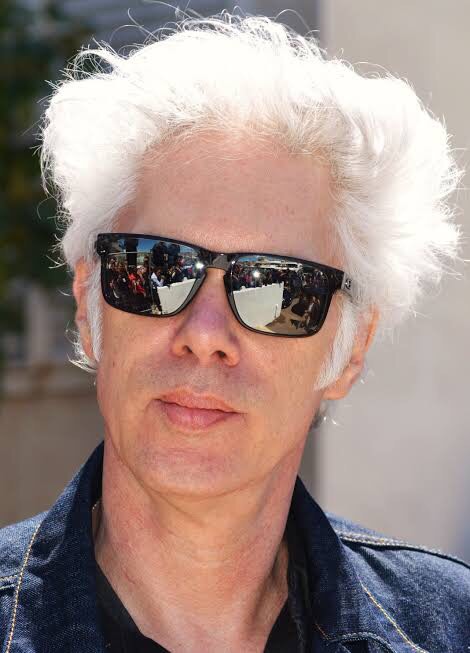
Jim Jarmusch, who are you?

"If aliens watched us make a film, they would think we were ridiculous,"
- Jim Jarmusch, the New York Times, 1992

In one episode of the Simpsons, they meet Jim Jarmusch to ask him who he is. He replies that he tries to answer that question in his films.
So, watching Jim Jarmusch’s films may lead the viewer to understand who he is.
Who could that be?

A loner, a poet, a musician, a socially-awkward artist, reluctant to the spotlight, determined to create art as long as it takes him, a stranger, a philosopher, and a spiritual creation.
All this is obvious, but who is Jim Jarmusch anyways?

He is a weirdo who embraces weirdness to the fullest. All comments and descriptions of him emphasize the halo that surrounds him everywhere. Longtime friend Tom Waits called him,
“The key, I think, to Jim, is that he went gray when he was 15 … As a result, he always felt like an immigrant in the teenage world. He’s been an immigrant — a benign, fascinated foreigner — ever since.”

Juan A. Suárez described Jim Jarmusch in one of the Contemporary Film Director book series. He wrote that Jarmusch was: "An endearing eccentric slightly at odds with his surroundings whose presence is at once self-effacing and subtly pervasive".

Jarmusch enjoys odd pairings of people who sometimes can’t communicate what and how they feel because they either speak a different language or their backgrounds are entirely different. Isn’t this Jarmusch trying to communicate with people all his life? He is trying to be understood by a world that rarely understands him and treats him with caution, probably leaving the sign “Handle with Care” taped to his forehead.

Jarmusch is not concerned with film time. He wants to approximate real-time as much as possible, whether in an awkward café, a room where someone spends too many nights playing guitar, a bus route, or woods mimicking Purgatory. Jarmusch tries to decipher the time code and what it means in real life or on screen. His films are long shots of people breaking the ice of distant relationships and communication methods that miss the spot.

Is he simply a filmmaker or a true artist? How does that show in his movies?

French and Japanese cinema has had a significant influence on Jarmusch. It shows in his deep interest in character analysis and the use of black and white.

Jarmusch’s movies are minimal and austere, strangers on a strange land where nothing is hospitable or inviting. Nothing seems familiar, not the Lower East Side, not Detroit, not Tangier, and not the western town Machine. He is deeply affected by film noir where the traces of a mysterious story where goodness or badness doesn’t matter shows in most of his films. There is no classic good guy/bad guy in a Jarmusch movie, even the ones minding their own business may face a situation where their morality is tested. Still, they don’t end up as heroes or villains but merely humans counting their steps and making the necessary movie one at a time.

Jarmusch is not concerned with breaking that eerie feeling of otherness. He embraces otherness in his films through his protagonists or -more or less- the lack of an actual hero on whom to build a film. He is fascinated by musicians and music. It is his source of inspiration as most of his movies seem like meditative pieces on life, like lengthy guitar solos or jazz improvisations.

Viewers don’t feel his films are meticulously-structured narrative-wise, although his command of the technique shows. Listening to actors talk about Jim Jarmusch shows how they feel that it is genuine and unrestrained to be working on a Jim Jarmusch film. Tilda Swinton called it “like Christmas every day”. Johnny Depp described him as “one of his best friends”. Austin Butler mentioned how he discussed red carpet style with him. Iggy Pop explained how trusting he was of Jarmusch’s artistic choices that he asked him to make a movie about The Stooges regardless of his appearance in it.

In his interviews, Jarmusch speaks slowly, taking his time with answers and elaborations. It doesn’t seem like he is in a hurry, and he seems oblivious to the surroundings, the crowd and the attendees matter least to him, and neither does the one interviewing him or engaging him in a discussion. With Jim Jarmusch, one becomes in Jim Jarmusch's land, where senses collide and coalesce to create a feeling and evoke emotion in the viewer.

However, sometimes, Jarmuschian films may not need to be watched. They can be music compositions on their own. The music takes centerstage more times than often, with soundtracks ranging from grungy electric guitars to ambient electronic music relying heavily on analog synthesizers.

For Jarmusch, music comes first. A love for a musician or a sound could build an entire movie, which is why his films might seem strange without the soundtrack context. His movies are not for the people who cannot immerse themselves in an artistic experience.

But since movies have differed gravely in context and content from before, this eccentric artist has seen a surge in popularity with younger audiences who may or may not be looking for a way to disconnect from the average top 10 on a streaming service experience.

Jim Jarmusch may have been the rockstar of American indie filmmakers, but an aloof one at that, the Thom Yorke of the scene, adding his musician status to the mix, Jarmusch chose a life of secrecy rather than bathing in the much-welcomed attention that stars and star makers revel. His identity remained the same throughout his career, and his state of weirdness proved not to be an act, but an authentic personality trait, as his films grew further apart and his filmography grew more eclectic.

Although his latest film, “The Dead Don’t Die” is an asymmetric, sublime, zombie post-apocalyptic, star-studded tale, it still had some  Jarmusch-ian elements.

A collector of music, photographs, poetry, and people before starting any project, Jarmusch is the American hunter, going out on expeditions to capture gems that pass unnoticed by others, dismissed as mundane. He is the ultimate hoarder, but a poetic one at that. His career in retrospect was not concerned with the aesthetic star beauty of charisma.

“Stranger than Paradise” and “Down by Law” had more unknowns than known actors. Iggy Pop made more than one appearance in a Jarmusch movie, and Yasmine Hamdan appeared in a magical scene to steal the spotlight from Tom Hiddleston and Tilda Swinton.

The thing with Jarmusch is that he experiments with actors all the time. He allows them to surprise him. He retains that curious kid fascinated by art deep and doesn’t let go in favor of the director’s ego.

Jarmusch dismisses the traditional storytelling structure. Like a jazz musician, he improvises, creates scenes on the spot, and changes dialogue constantly. The ending result is a bit chaotic but within a frame of synchronicity. His style doesn’t overshadow his characters’ triumphs and misgivings, lost as they are in big cities, woods, or within the walls of their own homes, they go on aimless journeys not to follow a dream or set on a hero’s route, like the flow of the river, as they move, stillness would only mean stagnancy and Jim Jarmusch is by no means a static artist.

Jaylan Salah Salman is an Egyptian poet, translator, two-time national literary award winner, animal lover, feminist, film critic, and philanthropist.
She received her BSc in pharmacy in 2011, and has published film criticism articles, short stories, poems, and translations in many websites and offline publications such as “Al Ahram”, “Vagues Visages”, “Synchronized Chaos”, “The Gay Gaze”, “Cinema Femme Magazine”, ” Eye on Cinema” and “Guardian Liberty Voice”. Her first short story collection, “Thus Spoke La Loba”, was published in 2016 by the Egyptian Supreme Council of Culture. Her first poetry collection in English, “Work Station Blues”, was published by PoetsIN, a British publishing house with the purpose of destigmatizing mental illness and supporting international artists. Her debut novel “Bogart Play me a Classic Melody” has made wide critical acclaim and was recently chosen as one of the 32 novels in the “Arab Voices” initiative at the virtual Frankfurt Bookfair in 2020. Her second poetry book “Bury my Womb on the West Bank”, was published in 2021 by Third Eye Butterfly Press and available on Amazon in both ebook and paperback formats. Her second novel “Rita’s Dance” was published in 2022 by Noon for Publishing and available for purchase both in paperback and ebook formats.
Short story from Fernando Sorrentino
Re-Entry into Society

By Fernando Sorrentino


Translated from the Spanish by Mary Esther Díaz

We spent our honeymoon in Bariloche and returned to Buenos Aires on a Saturday at dusk, eager to spend our first night together in our cozy one-bedroom apartment.
We found a cage in our bedroom.

It looked just like a parrot cage, only larger. It had a round base, nearly 3 yards in diameter, and vertical bars that came together at the top like meridians, forming a pointed dome that touched the ceiling.

To make room for the cage in the bedroom, our bed and our nightstands had been moved into the dining room, where the dining table and its four chairs had been pushed against the wall. It would be hard to open the cabinets, blocked as they were by the bed. Furniture, floors, and walls were badly scratched.

In the cage, there was a pale man with reddish hair. He seemed to be very clean and a bit anachronistic. He was wearing a black, double-breasted suit with gray pinstripes, a white, starched shirt, a dark tie, and well-shined black shoes. He held a gray hat on his knees; it was as clean, old-fashioned, and new as the rest of his person. Those period pieces, which looked newly-made, gave the odd impression of being props, a disguise, or some archaeological reconstruction.

We noticed all this a bit later. At first, Susana and I were shocked. The man waited for us to calm down, then said in a monotone:

“I wasn’t expecting you today. According to my information (he consulted a booklet) you were supposed to return tomorrow night. The time line is quite clear: ‘Friday the Twelfth, induction of the mentees; Saturday the Thirteenth, physical and mental adaptation; Sunday the Fourteenth, arrival of mentors.’ And today, if I’m not mistaken, is Saturday the Thirteenth.”

“You’re right,” I said, “We came back a day early. It’s not very pleasant to be back to work just a few hours after returning home.”
“What’s even less pleasant is receiving guests early. Mr. Rocchi will not be happy about this breach of etiquette, which, by the way, will also upset my plans for the night.”

“Mr. Rocchi? The owner of the real estate firm?”
“Who else? He, personally, made all the necessary arrangements, and they weren’t quick or easy. But Mr. Rocchi believes that all citizens should be extremely zealous about observing the laws and making sure they’re observed by others.”
I decided to set him straight.

“Laws? Which laws are those? And since when does that so-called Mr. Rocchi, a mere businessman, have any right to enforce the law?”

The man continued, still in a monotone:
“You, obviously, are someone who has not yet learned about life. Furthermore, your wedding celebration has prevented you from learning about certain changes introduced in real estate legislation. For example, Mr. Rocchi is now a magistrate. You’re a magistrate, too, within certain limits.”

“Me, a magistrate?” I gave an incredulous chuckle.
“Not quite: more of a magistrate’s assistant.”
“An assistant to Mr. Rocchi, then?”

“It would be unwise of me to get ahead of the official decision. However (and here he lowered his voice) I trust you to keep this information in strictest confidence.”
“And why are you telling me this confidential information?”

“My golden rule, sir, is knowing how to get along. Since we’ll be spending a lot of time under the same roof ….”
“A lot of time under the same roof?!”

“That’s right, sir. I’m older than you by at least 30 years. I have made very little progress; I’m at the lowest rung of the ladder of incarceration: I’m only an inmate. On the other hand, you are a free man who has already achieved the first promotion on the ladder of incarceration: the rank of assistant.”

Susana then exploded:
“I have never heard so much nonsense in my whole life! Simply put, the problem is this, ‘What the hell is this man doing here with his horrible cage in our bedroom?!’ Furthermore, who and why have they taken the bed and nightstands to the dining room, and who will pay for the damage caused by the movers?”

“My dear lady, I cannot condone the abrasive tone of your complaint. There are practical issues here. The bed had to be moved because, otherwise, the cell could not have been installed according to regulations. As for who will pay for the damages, the authorities plan to gather a team of laborers of various trades who will, for a small sum, return your furniture and walls to their original condition. But you asked, what the hell I am doing with my horrible cage here in your room. In turn, I would ask you, do you think I’m here of my own free will? Do you think I like being a prisoner?”

“I don’t care whether you are a prisoner of your own will or someone else’s. All I know is that I want your cage out of our bedroom!”

“It is not a cage. That term carries the disagreeable connotation of captive animals, which is just the opposite of the humanitarian spirit that guides our governmental authorities. Nor is it a cell or a dungeon. Its technical name is re-entry receptacle.”
This correction irritated Susana even more.

“Why should it be in our bedroom? Why in our bedroom? Why in our bedroom? Why? Why? Why?”
“Our Argentinian representatives and senators are very intelligent, educated, industrious, honest, austere, and altruistic people. In light of these virtues, they have ratified new laws that are jointly known as the Social Re-Entry Regulations and that .…”
"Do you expect me to believe,” I interrupted, “that you’re in our bedroom because of some new regulations?”
He placed his hat on his left index finger and, grasping the brim with his right hand, gave it a twirl as he shook his head.

“I am only an inmate. Within the system of incarceration, I fulfill the smallest of roles. You enjoy a rank one notch higher than mine and, in theory, should be better informed about such matters than I. Yet, in practice, it never works that way, as I have been in the system for many years, whereas you have just been admitted. You should be glad for your admittance, but you’re not. This phenomenon is not, by any means, initially present in the majority of people, but it always comes. When you have read the new regulations, you will feel not only joy, but also pride.”

Susana’s hands were balled into fists.
“If you will allow me,” the man added, “I could share some information about the Social Re-Entry Regulations ….”
“I’m anxious to hear them”—his leisurely manner was hard to take.

“The authorities, after examining the old system, found that it did not meet the needs of modern society. Therefore, they did not delay in replacing it with another one based on a consensus of ideas. Are you following ...?”

"Yes, yes, go on,” I said, waving my hand impatiently.
“The Social Re-Entry Regulation is based on two interrelated principles: A and B. The purpose of A is the progressive re-entry of the prisoner into society. The purpose of B is to replace the old system of collective incarceration units with individual incarceration units. Real estate firms distribute the prisoners among new domiciles and, thanks to this policy, the old jails are demolished and replaced by parks and plazas.”

“But why in new domiciles?”
“Old domiciles don’t always have a pleasant appearance and can negatively influence the prisoner’s psyche. On the other hand, a modern prison environment has a very positive effect on his or her re-entry into society. Besides, housing a prisoner brings great joy to the homeowners. It’s as if .…”

“Hang on a second: Susana and I are supposed to be your guards and you’re our prisoner?”
He shook his head in disappointment.

“The authorities no longer use the terms guards and prisoners. They use mentors and mentees, which are words better suited to Principle A of the system: the progressive re-entry of the prisoner into society. Don’t you agree?”
“But I see that both you and the authorities use the term prisoner.”

“Only as a poetic metaphor so the mentors will understand their obligations.”
“Obligations …?”
“Or shall we say, duties. These are simple and few. You need only provide me with food, clothing, medical and psychological assistance, exercise, toiletries, etc., of appropriate quality and quantity. In short, the material accouterments a human being as such deserves. The mentee’s spiritual rehabilitation is also provided for through recreation and information. I’m entitled to newspapers, magazines, books, television, and audio equipment .… Two nights a week, Tuesdays and Thursdays, friends of a certain age visit me. These gentlemen enjoy playing cards and dice, and it is expected that you shall offer them an assortment of snacks and beverages.”
“How many people would that be?”

“Never more than eight or ten. Likewise, I have not given up my sex life: on Saturday nights I am visited by Miss Cuqui, a pretty, charming, and educated young woman. A young woman of such merit naturally could never fall in love with me, so you must compensate her for her favors. I’m unaware of the exact fee, as I detest handling anything so banal as money. Instead, I enjoy art and, three times a week (Monday, Wednesday and Friday), I take drum lessons from a young rock musician who enjoys soft music and whose fees are not very high.”

“But,” Susana interrupted, “How are we supposed to manage so many expenses?”
“That's just my luck,” he said, shaking his head. “My other colleagues were housed in homes with good financial backing …. Alas, life can be so unfair …. I would suggest that you document the situation in an official letter, attaching a separate sheet in annex, in original and four copies, on official, sealed paper, which must be signed by a public accountant and a notary. The annex should bear a detailed account of income and expenses so that the mentors can prove financial hardship. The authorities take great pains to resolve any otherwise irremediable problems sustained by the mentors, and they may even be able to give you a mentoring grant.”

He suddenly fell silent, making it clear that he had gone too far by revealing this benefit. I had to ask:
"What does the mentoring grant entail?”

“It entails rights and responsibilities. As to the former, the authorities will try to find you both night jobs. For example, the gentleman could be a railroad employee at one of the suburban commuter railway stations. As for the lady, I don’t think Miss Cuqui would be opposed to initiating her in the art of her ministry. In exchange for these privileges, you will have to attend Comprehensive Mentor Improvement Training. The cost of this training is very low and is offered in the city of Luján.”

“Luján?!” I stammered stupidly. “It’s so far!”
“You are not required to request the grant,” he recovered. Then, with a yawn, he added, “It’s almost dinner time. I don’t have any special preferences; I will eat any kind of food, as long as it is abundant, varied, appropriately spiced, and accompanied by a red wine of excellent quality.”

Susana ran to the kitchen.
“I always take a bath before dinner. Here is the key to the cell.”

He handed me the key through the bars. I opened the door and he emerged. He was carrying a small duffel bag, in marked contrast to his formal dress. And now a paradoxical sense of health, strength, and well-being burst forth from this walking anachronism.

“You needn’t hold on to the key. I keep it to come and go, as I wouldn’t want to be a bother to anyone. Madam!” he called out, “Would you kindly turn up the heater a bit for me, please?”

“And you,” he said as he turned to me, “bring me a clean towel and, in preparation for tomorrow’s activities, don’t forget to buy me a large bottle of shampoo formulated expressly for dyed or tinted hair.”

I did as he said. He draped the towel around his neck. We left the bedroom and stopped in front of the bathroom.

“I would like to remind you that today, Saturday, is the day that Miss Cuqui comes. As shy as she is, it would be unsettling for her to meet with strangers. So, if you please, you and your wife should retire no later than eleven-thirty.”

Resting his hand on the doorknob, he added, “I shall be using the full-size bed. The authorities have failed to notice how very uncomfortable the regulation cot is. Oh, and clean sheets, if you please.”

“Um … and how long will all this … take?”
"You may return between three-thirty and four in the morning. Ring the doorbell once; if there’s no answer, do not ring again. Miss Cuqui is very energetic and, when she finishes her work, I usually fall into a deep and well-deserved sleep. In that case, check back in the morning at ten o’clock sharp – not before because I will still be resting and not after ten, as I usually take my breakfast at ten-fifteen.”

As he entered the bathroom, I managed to ask him:
“How long is your sentence?”
“It’s a life sentence,” he answered, as his words were drowned out by the sound of running bath water.

          In memory of my beloved K.

Poetry from Henry Bladon
In the House of Insomniacs

Freckled phosphenes flicker through
paper-thin skin as
corpuscles bounce onto
egg-shell sensitivity.

Salty eyes survey the scorched screen
where fragmented images have been laid
by hessian brushstrokes
and monochrome shadows dance
to throbbing visions in the hall of half-sleep.

The distant screech of a lone owl
befriends the anonymous night.

Atonal phrases, reversed images,
neologistic nattering magnifying words
while ignoring the fine art of speaking,
where permission to rest is withdrawn.

Voices whisper noisome nothings
as the sleep prospectors mindlessly
mine another far-flung valley
or scale another grey wall.


Worthlessness

I was walking along a winding tarmac path
contemplating my own inconsequentiality
and that I find it best not to dwell
on a pointless search for purpose.

It doesn’t matter to me whether existence
is like an intergalactic vacuum.

Am I any more important
than tiny transparent spider?

Do you know how the world ends?
Is it with a cloud of honey-scented candyfloss?

Maybe it just heats up so much we all melt.

I could be an important politician.
I could say something like “Imagine yourself in my shoes,
I have all the power of the free world.”

But actually,
it makes me feel much better
to acknowledge my own worthlessness.
Poetry from Chimezie Ihekuna

Merry Christmas!

( The Phone conversation between James and Jane)

Jane: James, it’s been over eleven months in the waiting for Christmas
James: Jane, in as much as we’ve been waiting for this period to come; now it has. You know how time flies.

Jane: You’re right! I’ve been waiting for us to meet. You know what James?
James (sounding anxious): Jane, What’s that? You know I’m not good at guessing rightly
Jane: Just guess….
James (a bit upset): Just can’t!!

Jane: Okay. You know I miss you a lot.
James (Indifferent): Yea. Is that all you have to tell me, Jane?
Jane: So, what’s wrong with that? You know how upset I could be…when you sound that way

James: Oh! I’m so sorry. It was never intended.
Jane (jokingly): You’d better be. Anyway, apologies accepted. We are about being ushered into a season of love, merry-making and harmony. So, no need to harbor bitterness.

James: I agree. You’re right! Will be great meeting you after missing you…
Jane: I can’t wait to have my arms around your shoulders so tightly. You know what I mean
James: You can say that again, sweetheart. I roger that! (Smiles) It won’t be long, honey. Just two weeks to the time.

Jane:  I will be on leave before then and before your eyes would twinkle, I’ll be with you, saying, ‘Merry Christmas!’
James: Jane, I’ll be glad to reciprocate this. I dream of seeing you…like now! Merry Christmas, my dearest Jane!

Jane: Merry Christmas to my darling, James. Again, Merry Christmas!
James: Got to go, Jane. Will call you back later.

Jane (concerned): Hope no problem…
James: Nah! It’s just that I got some other tasks on my work plate to attend. Hmmm…wished we could keep talking every day. Just have to go back to work. Merry Christmas in advance!

Jane: Merry Christmas in Advance, darling. Miss you!!! (Kisses the phone)
THE PHONE HANGS UP
The End


The Month of December

Welcome to the ‘December’ month
There are three other ‘’ber’’ months-September, October and November
But the month of December is different

It is a period for the season of Christmas;
the celebration of the yuletide
the month where the first day would be counted as a build-up to the celebration date-Christmas Day
the preparation of gifts items, other presents, food varieties and several decoration tastes starts long before the December 25th deadline

the month of December houses the ‘’Merry Christmas’’ celebration and paves way for the ‘’Happy New Year’’ wish.
Poetry from J.J. Campbell

-------------------------------------------------------------------------

where did it all go wrong


i see my reflection

in the window


where did it all go

so wrong?


this woman wonders

where i lost my smile


i start telling a story

about a bathroom

floor and a horror

that visits my dreams

to this day


she tells me the name

of a great therapist


i give her the names

of all the drugs that

never worked for me

---------------------------------------------------------------

years of decay


loneliness

is a weapon


sometimes

a broken heart

never heels


these old bones

have seen the

horror of endless

years of decay


pain is the only

companion that

doesn't have plans

in the middle of

the day

------------------------------------------------------------

a kiss and a bottle of wine


whispers

in the rain


long lost lovers

realizing time

can't be made

up over a kiss

and a bottle

of wine


it's that cold feeling

of what could have

been that haunts every

soul that ever dared

to love or be loved


the scars come with

the territory


those that can't take

the pain i would advise

to learn to take the baby

steps first


love yourself


sometimes,

that is the

hardest

of all

----------------------------------------------------------

to deal with anxiety


i guess the easiest

way to deal with

anxiety is to no

longer give a shit


be careful applying

this to all aspects

of your life


most people won't

understand and label

you an asshole


the joy is that other

assholes will recognize

you and give you that

nod of approval


look there, a whole

new set of friends

----------------------------------------------------------

another morning appointment


my mother hates

the mornings about

as much as i do


yet here we

are again


another morning

appointment, this

time at the dentist


she swears she

only takes these

appointments if

they are the only

time the place

has


i beg to differ

and casually

remind her of

all the mornings

she had to wake

up early for work


you are retired

now


you are allowed

to enjoy it


she tends to forget

that


and i wish i wasn't

the one to have to

remind her

---------------------------------------------------

J.J. Campbell

jcampb4593@aol.com

https://evildelights.blogspot.com


https://goodreads.com/jjthepoet


J.J. Campbell (1976 - ?) is old enough to know where the bodies are buried. He's been widely published over the years, most recently in Jellyfish Whispers, Dumpster Fire Press, Terror House Magazine, Horror Sleaze Trash and The Rye Whiskey Review. You can find him most days on his mildly entertaining blog, evil delights. (https://evildelights.blogspot.com)