Essay from Nilufar Ruxillayeva

  Nilufar Ruxillayeva


Happiness is…

 Happiness! This 4-letter word embodies all the virtues of the world.

   Everyone defines happiness differently.

 Happiness for someone:

 – to achieve a great career;

 – to have a car;

 -use of the latest model phone;

 – construction of a house on the ground floor;

 – to sit at the same table with high-ranking people – happiness!

   But at the moment there are few for some:

 -coming into this world;

 -seeing the sun in the early morning;

 – having breakfast with the family;

 – giving a smile;

 – looking forward to the release of the first book;

 – building a family, raising children, pampering grandchildren;

 – living in love among loved ones is happiness..!

  So, this sentence of the Hero of Uzbekistan Erkin Vahidov can fully reveal the sentence of happiness:

   What else is missing from you?

   Happiness in reality is to win!

   Not everyone is lucky,

   To breathe in the morning!

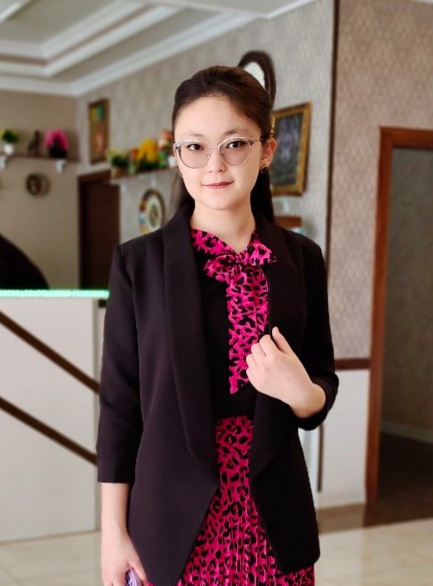
Nilufar Ruxillayeva, a 1st-level student of foreign language and literature at the Faculty of Foreign Philology of the National University of Uzbekistan named after Mirzo Ulugbek. Argentina’s Juntos por las Letras, Egypt’s Creativity, Art, Culture Organization, India’s Iqra Fund Organization, India’s All Indian Council for  Organization of Technical Skill Development, Kyrgyz Union of Writers, Member of Kazakhstan “Double Wing” Writers Union, Council for Technical Skill Development, National Human rights and humanitarian federation, Glory Future Foundation member! Official guest of Stars international university conference!

Creative works: published in Great Britain, Uzbekistan, America, India, Turkey, Azerbaijan, Russia, Kyrgyzstan, Kazakhstan, Moldavia and posted on the Internet!  She was awarded with a badge and “Letter of trust”.In addition, she participated in the 02.02.2023 issue of “Bekajon” newspaper with her biography!


Kavya Kishor is the winner of the best author category.
She is a practicing child of the “Ibrat” children’s project. The anthology HEART TO HEART was published and put on sale in Great Britain.  FM 101.3 broadcasts “A minute with literature” on Bukhara radio.

Poetry from John Culp

        A non-exclusive Release of 
         Heartfelt that Matters

    My Rest comforts 
                   Time's Engine 

 The staggering rhythm 
        that rests  in  Awe
        of   LOVES Rising 

            •          •          •

           Daylight upon 
       Soothed that knows
    That knows in the Quiet 

 Appreciate a gift 
poured from the Timeless 
      Oceans 
                 of
                    LOVE 


 by John Edward Culp 
      March 11, 2023

Synchronized Chaos Mid-March 2023: Sense and Sensibility

Welcome to March’s second issue of Synchronized Chaos!

Our friend and collaborator Rui Carvalho reminds us about our Nature Writing Contest for 2022.

This is an invitation to submit poems and short stories related to trees, water, and nature conservation between now and the April 1st, 2023 deadline. More information and submission instructions here.

This month, Synchronized Chaos’ contributors explore our senses and perceptions of the world, and how we process them through thoughts and feelings.

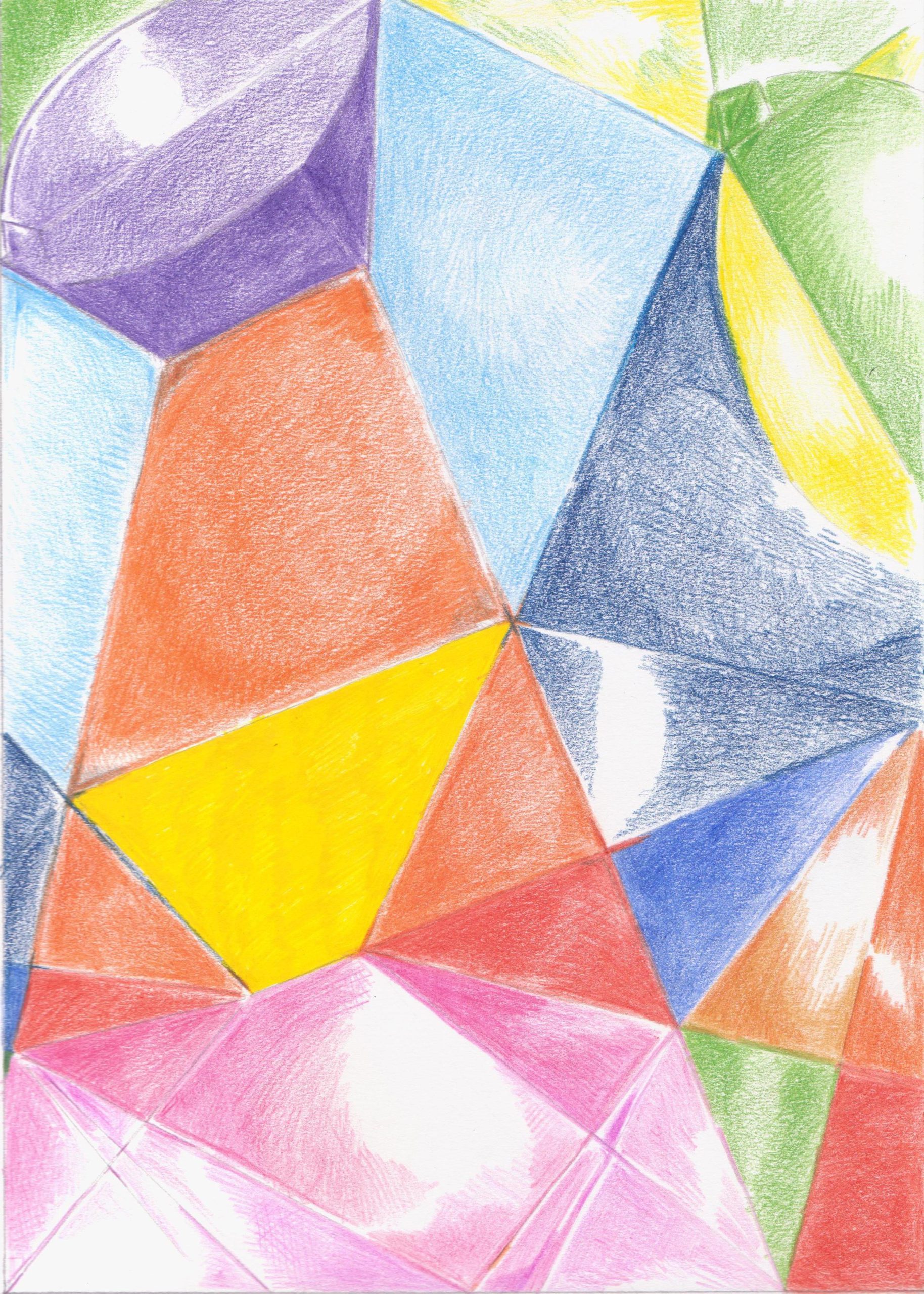
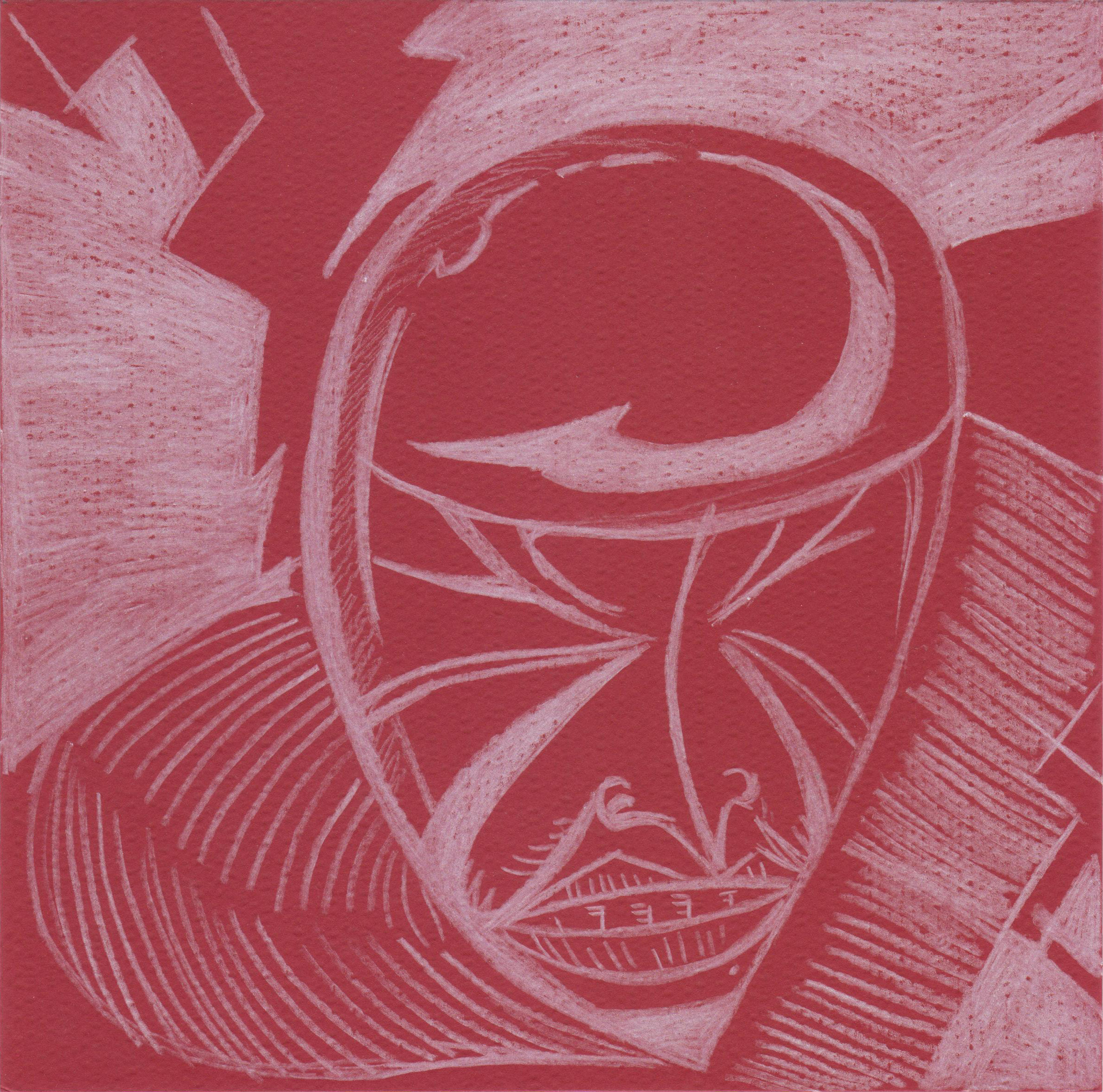
Channie Greenberg sends us colorful images of marine and freshwater fish in various settings, while Mark Young’s non-representational art revels in the joy of line and color. Michael Barbeito aims to capture the spirit, or the essence, of the scenes he depicts. Nathan Anderson provides a visual rendering of a cacophonous stereo sonic landscape.

Jim Meirose crafts a surreal doctor’s visit that goes awry, while Martina Gallegos relates an anecdote about a pigeon who flies into an elementary school classroom, to the wonderment of the children.

Image c/o Finepic Beat

Faiza Yahaya Maibasira’s poetry expresses her awe at life, friendship, and love. Sayani Mukherjee’s piece depicts a mystical union with nature or a lover, while John Edward Culp’s piece reflects the otherworldly ecstasy of true love, which includes grace given for the times when he falls out of sync with his partner.

Emina Delilovic-Kevric also speaks to creation and spiritual questing on a more intimate, personal level, within an uncertain world.

Aliyu Umar Muhammad relates her inner spiritual journey to find beauty in tumultuous surroundings, while Lewis LaCook provides a meditative look at life when we slow down to nature’s timescales.

Photo c/o Linneaea Mallette

J.D. Nelson’s haikus on ordinary subjects convey a bit of mystery and curiosity, while Karol Nielsen writes of the ironic and incongruous moments of daily life.

Susan Hodara explores the different ‘itches’ we experience, which becomes a meditation on the nature of desire. Daniel De Culla probes our human foibles and transgressions in his piece on the locals at a village cafe.

Jaylan Salah profiles Egyptian rapper D.A.R.KK. and discusses the appeal of his original songs, sharing both joy and struggle.

Christian Emecheta’s sci-fi piece conveys how we can manage the dangers of deep emotions rather than suppressing them and losing part of our humanity.

Photo c/o Gerhard Lipold

Mahbub Alam develops a more balanced perspective on life when he stares out at the moon, and then, later, when he remembers the brave history of his home nation, Bangladesh.

Farok Faisal literally “reflects” on himself by looking in a mirror, wondering how age has changed him. Santiago Burdon’s protagonist confesses and expresses remorse for an action born of hate and ignorance that shamed him for decades.

Joseph Wechselberger relates how we serve as spectators to various types of trauma. Sarah Burgess expresses her inner anguish at being excluded and viewed as a burden, while J.J. Campbell processes his life’s losses with a mixture of defiant nostalgia and despair.

Peter Cherches speaks to wear and tear over time, of machinery and relationships. Mesfakus Salahin reminds us that while death is a part of our existence, it does not carry the last word.

Image c/o Lode Van De Velde

Mario Loprete consigns pieces of our modern urban landscapes to posterity by sculpting them in concrete. A. Iwasa also addresses themes of cultural preservation with his review of Phil Cohen’s Archive That, Comrade! Taylor Dibbert looks at social media as a modern archive, considering the paradoxical relationships we can have with our digital memories.

Z.I. Mahmud contributes his own personal ‘archive,’ a set of his favorite literary quotes and reflections on historical authors.

Norman J. Olson reflects on his artistic correspondence with Beat poet Charles Bukowski and considers that he’d like to emulate the man’s craft, but not his life.

Maurizio Brancaleoni evokes the difficulty of conveying his literary intentions within his poetry, while Chimezie Ihekuna urges perseverance, in artistic craft as well as in life.

We hope you enjoy the panoply of works included in this issue!

Poetry from Emina Đelilović-Kevrić

Emina Delilovic-Kevric


My son in his thirties

I dreamed that I gave birth to a son in his thirties

A tall blond man

He went through all the plays in the nearby theater with me

He believed, like me, that poetry can save us a little more

He was telling me how happy he is

I held his hand and said I believe

How he cares about totally irrelevant stuff,

like most of the human race.

Hearts of girls he will take each day

The jacket he saw in passing, books to buy,

but he doesn’t have enough money yet.

I listened to him attentively

As men with a deep voice are listened to

While reciting poetry by the fire

I woke up

The announcer was announcing on the radio

Several new world disasters

I touched my stomach

And he reciprocated.

Revolutionist

He was a revolutionary man

He waved from the top of the frenzied village

I invented a woman who flies

I see her every night

I make her womb out of wet clay

And a couple of kisses.

I breathe into her the joyful rain

Then, when it flies away, I shout with all my might

That I love her

Nothing ever came out of it

Except my rust.

What are you missing today?

Power cube

Legs that will carry you

Although the bones remain inside

You will leave all other phenomena

Trapped on the shelves

What are you missing today, when you don’t have time to think

About the soul, happiness, aspirations, not even about suffering

Like recycled material, you smell of use value

A factory woman with an apron over her swollen, congenital stomach

Adds colorful blocks to the leather boots of the A series

Bare-handed and barefoot rows across the sea.

Essay from Norman J. Olson

thoughts on Bukowski – letter to a friend

I have read through some of your blog posts and I must say, have enjoyed the read…  you said that you were involved in the “meat poets” …. ok…  the only one of them that I know anything about is Bukowski and he was independent as much as a part of any school…  I guess…  anyway, I discovered Bukowski when I first read “Post Office” which I ran across in a book store, shortly after it was published…  I loved the slice of life feel of the writing, the wry humor and the view from the bottom of the working class which is not overly represented in American Literature…  I read his other novels as they came out and as I ran across them and picked up a few volumes of his poems as well… I don’t know that the poems amounted to much as “poetry” but they had the same lively style as the prose and were vigorously accessible and full of wit and humor… like the prose…

I was working at a factory printing telephone books at the time that I first ran into Bukowski’s writing…  I was going to grad school as an English major, driving the hour plus to River Falls, Wisconsin for classes in the daytime and working full time nights printing telephone phone books… I got a lot of breaks during the job and would write my college papers as my rolls on the press wound down… and later, after I dropped out of grad school in the mid 1970s, I would spend the free time reading, writing and drawing with ballpoint pen on telephone book cover stock…  I had been an undergrad art major at the u of Minnesota and had mostly learned from that experience that the world of contemporary art had no place in it for me or the artwork that I was doing and wanted to do… so, I went to grad school at River Falls as an English major… I was writing and submitting poetry regularly, at least one or two submissions a month, and was getting rejections on all of them…  this pattern continued from 1970 to 1984 when I finally had a poem accepted for publication…

my job involved putting rolls of paper on a printing press the size of a house and I would write prose and poetry in my head while working and then write it down as my rolls ran down… I had no interest in contemporary poetry beyond Dylan Thomas and maybe a bit of Ginsberg…  I had learned about poetry from my mother who’s taste went toward Alfred Noyes and Rudyard Kipling (from her father)…  I had discovered the British romantic and Victorian poets and so was trying to be Blake, or Tennyson…  updated with contemporary images…  needless to say, the editors were not impressed…  I did not save the ms when they came back to me…  I figured that if the poems were not good enough to be accepted by an editor, they were not worth saving…  so, by the time I started publishing, my poetry was one that would often incorporate half remembered or fully remembered images from a poem that had been submitted and tossed, into a new poem…  thus, if anybody ever cared enough to read through my published work, there would be a to me interesting, repetition of words and images…

after the acceptance in 1984, I decided that I had proven to the world and to myself that I could write a poem that was good enough to be accepted by a prestigious literary journal (the “GW Review”)…  and I decided to quit writing poetry…  of course, within a few years, I was back to writing poetry again  and submitting…. so I had my second poem accepted in 1994…  after that, pretty much everything I submitted was accepted…  so, I continued until the twenty teens when I really just stopped writing a lot of poetry…  my poetry had changed and was no longer formal rhymed poetry, and I am not sure any of it has any literary merit, and even if it does, I am not sure that having literary merit has any value to the modern world at large…  is writing a good poem as useful to the world as turning over a shovel full of dirt, or doing any other mundane task???  well, I don’t know…  probably not…

so, anyway, I always have been a voracious and fast reader and when I would finish reading a book I liked, back in my printing press days, I would often send a fan letter to the author just to let them know that I had enjoyed the book enough to take the time to let them know…  so, it came to pass that I wrote a letter to Bukowski, a fan letter, about one of his books that I had enjoyed… I remember that I wrote the letter while sitting on an ink can in my little nook, under a steel stairway, behind the “reel stands” of the old Wood Hoe, web fed telephone directory letterpress…  the air would have been thick with paper dust, chemical smells and vaporized oil and oil based ink… the gigantic press would have been roaring like a freight train… I would mail a letter like that at the post office, on my way home from work at 7 a.m…

much to my amazement, a week or so later, I got a reply from Bukowski…  a personal letter from the, by this time, famous author…  I was excited about this and wrote him two more letters, both of which he responded to…  I then thought that I had imposed upon the famous author enough and so did not write to him again…

I still enjoy reading Bukowski…  I love biographies of artist for one thing, and his novels and to some degree, his poems too, read like autobiography, even though I know they are fiction…  but the stories of being a great artist, mingling with the down and out sons and daughters of the working class gutters and bars have always been fun to read…  I also enjoy Fante’, Celine and Hamsen et al and to some degree Hemingway, all of whom seem to be Bukowski’s progenitors…  Is Bukowski a great artist??  I guess that is for history to decide…  will people in our problematic future even read novels anymore???  I think they have already mostly given up on reading poetry…  Hmmmm….

so, the only response I can really make to a statement like the above, is, of necessity subjective…  I enjoyed and enjoy reading Bukowski…  that is enough to me…  so many in the poetry small press world seem to want to emulate Bukowski’s hard drinking life style…  but little poetry of interest seems to come from this crowd… although, the myth of the intoxicated genius is one that was foisted on me by my own parents… who, in spite of the horrors that alcohol had wrought in our family, firmly believed that I could not be a real artist because I did not drink or use drugs… well, that is a myth that mostly pisses me off…  I would not have liked being around Bukowski, I think, had I met him, as I have no patience for and little sympathy with people who are intoxicated… addicted and fucked up… I have no interest in telling other people how to live their lives, but when their bad decisions impinge on me, I reserve the right to walk away…  as a child, I could not walk away, but I have not been a child for many decades now…  so, I enjoy reading Bukowski but have no desire to live or write like he did…