
Not Quite Stories


1.	My name is Sampson. Chester Sampson. People call me Sampson.
	“But how did you know about me and Danvers?” the conniving little blond called back to me, as they were taking her away.
	“It wasn’t difficult, sweetheart,” I told her. “Considering.”

2.	Daisy hadn’t given him a second thought, yet there he was, on her doorstep, carrying a potted plant.
	“Remember me?” he asked.

3.	“Things was hard back then,” the old man told the visiting nurse.
	The nurse, who hadn’t asked a question, didn’t bother to wonder when “back then” was.

4.	The brothers hadn’t seen each other in over 20 years. Identical twins, they’d had a falling out, and they lived far from each other, on opposite coasts. This particular day, Tom had gone to shop for khakis at the Banana Republic in the mall near his home. When he entered the store, all eyes turned to him. He wondered why.
	Tim came out of the dressing room to look at himself in the full-length mirror, in his new khakis. As he looked into the mirror, Tim noticed Tom behind him, in the distance.
	Tim wondered how the reunion would go, but to his relief, still staring into the mirror, he saw Tom turn around and leave the store.

5.	My son-in-law found me in the kitchen, after my husband was gone. I asked him if he wanted a cup of coffee. He sat.
	We sat together at the table, drinking coffee. Not another word passed between us.

6.	“It was after the war,” she told him.
	“So, all of a sudden everything changed?”
	“No,” she replied, “not all and not so sudden.”

7.	After weeks of indecision, Cora finally decided to call that number. She pulled the piece of paper out of her purse and made the call. When it connected at the other end, she was surprised to be greeted by one of those pre-recorded menus. The choices were very confusing. She relied upon her instincts to tell her which path to choose. Unfortunately, it was the wrong one.

8.	“Mr. Thorndike will see you now,” the secretary told the man sitting on the blue-upholstered bentwood chair in the anteroom. The man’s palms had been sweating, and he’d been rubbing them along his slacks above the knees.
	The man got up and knocked on Thorndike’s door.
	“Come in,” Thorndike yelled, in a neutral tone of voice.
	The man went in.
	He never came out.

9.	He was driving. On the freeway. He looked up at the sign, above and ahead. Belford 20 miles, Grainger next exit. He got off at the next exit.
	She’d just have to wait.

10.
Poetry from J.K. Durick
                 Neighborly

This is a neighborhood of gardens

garage sales and lawn art and, of

course, slogans, like “black lives

matter” and the ones that bring

together a set of slogans covering

all the bases, black lives again and

something about women’s rights,

immigrants, and gay rights, and they

remind us that love is love. Now

there are an endless supply of flags

some U.S. but mostly Ukrainian. We

live the times and capture the mood,

flowers of various shades and sizes

and now since it’s primaries time we

set up lawn signs endorsing one or

another of the candidates, Becca

seems to carry one street and Molly

another. We divide up along liberal

lines, signs, slogans and flowers, and

people sitting in lawn chairs trying so

hard to sell off things they no longer

have a use for and a few cars pull up

looking for a bargain. This neighbor-

hood has never been much of a bargain

basement but an easy spender of words.

                                     In Line
Perhaps it’s instinct, perhaps it’s one of those cultural things

That grow up with us, become part of us through training and

Discipline, something passed on, parent to child generation to

Generation. We all know the rules, what we must do, and what

We must not do if we want to belong, fit in, like everyone else

Around us. We gather and quickly learn our place. This is what

Lining up is all about. It’s time passing, it’s standing and waiting

For something, the something we must believe comes next. This

Is how we belong, become members of the group, the group in

Line for the next show at the movie theater, in line waiting to

Check into our flight, in line for the cruise ship, in line for just

About anything we see as an objective, and they have the ability

Thwart our desire or need. They depend on our instinct and on

Our willingness to go along and be part of a group lined up in

Order, first come, first served. This keeps everything so civilized,

No crashing, no pushing and shoving, no demanding attention,

None of those things. Now we are in line, and we wait. We might

Complain but never too loudly. We were trained to do this and

Half of our lives will be used up this way.


              Airport Waiting
Standard advice says arrive two hours before
Your flight, but in a small airport

The advice seems ironic.

Here we are two hours early

And now we wait

Collect in surprising numbers

Sit together by the assigned gate

And wait

Are we being set up?

Set up for a mass shooting?

Can’t we picture the gunman going by

The TSA oddly enough still armed.

The news will say something about our group

Husbands and wives, parents and children

Friends and relatives

All there

Following the standard advice

Two hours early, so why not become big news

We listened so carefully

And so here we are

Sitting ducks wanting anything beyond

This two hour wait

Two hours we’ll never get back!
J. K. Durick is a retired writing teacher and online writing tutor. His recent poems have appeared in Third Wednesday, Black Coffee Review, Literary Yard, Sparks of Calliope, Synchronized Chaos, Madswirl, Journal of Expressive Writing, Lightwood, and Highland Park Poetry.
Poetry from Ubali Ibrahim Hashimu
SOLACE OF MOONLIGHT

To be kissed by the moonlight
Is such a glowing grace
To be caressed by stars
Is such a life
Draped In darkened blue
Dancing from mercury to Venus
What an honest dance.

To be found by the light of the moon
And loved under a blackened sky
Let the sun forget about me
It never heard me crying
Not today.

As there is something so special
about the moonlight
Like it was made just for me
Because no matter how bad things go
I have the moon as my company.
Poetry from Sayani Mukherjee
Simple

Ruins among saplings
A crescent washed glow
Global apothecary, time's healer
Crashed out in
Woolen sweaters.
Disasters gravity's rainbow
A Forlorn runaway train
A crumpled cup of waiting
Soon muzzles out.

A thin beat of a shy evening
They all called her.
Now the words are naked
Unzipped motion
Cinema like it moves away
Ties the gift in a parcel
A matchbox to keep the little roses safe
Laced pearled of few words
A minimalist safebox
Frees the burden
In little simple emotions.

Solace
By Sayani Mukherjee

Nascent images booned
My brewed morning
With words as if fragmented clothes
I thought,
They will play with me-
A criss cross algorithm
Between simplicity and public vain
And then will appear
A blessed halo
And silver whispers
that will somehow ring by my side
With nightshades and soft clouds-
A brimful of common poetry.

Because, only I know the voice
Natural, unscarred within
And the serene utterance
As it colours the morning prayer.
Then, a cradled shadow
A wet dripped morning,
Raindrops two or three,
And a cottage of green simplicity.

The rugged path will be my destiny
It is not just worldly wisdom
for my wishy washy tale
But my whimsy haze
And my romantic spree
An eternal wish for an April spring
With my brewed morning
And my winged pen
Leading my green path
Towards my bundled sky
And a grim, earthy solace.
Synchronized Chaos October 2022: A PAN-LATIN AFFAIRE *
by Synchronized Chaos Guest Editor Lorraine Caputo
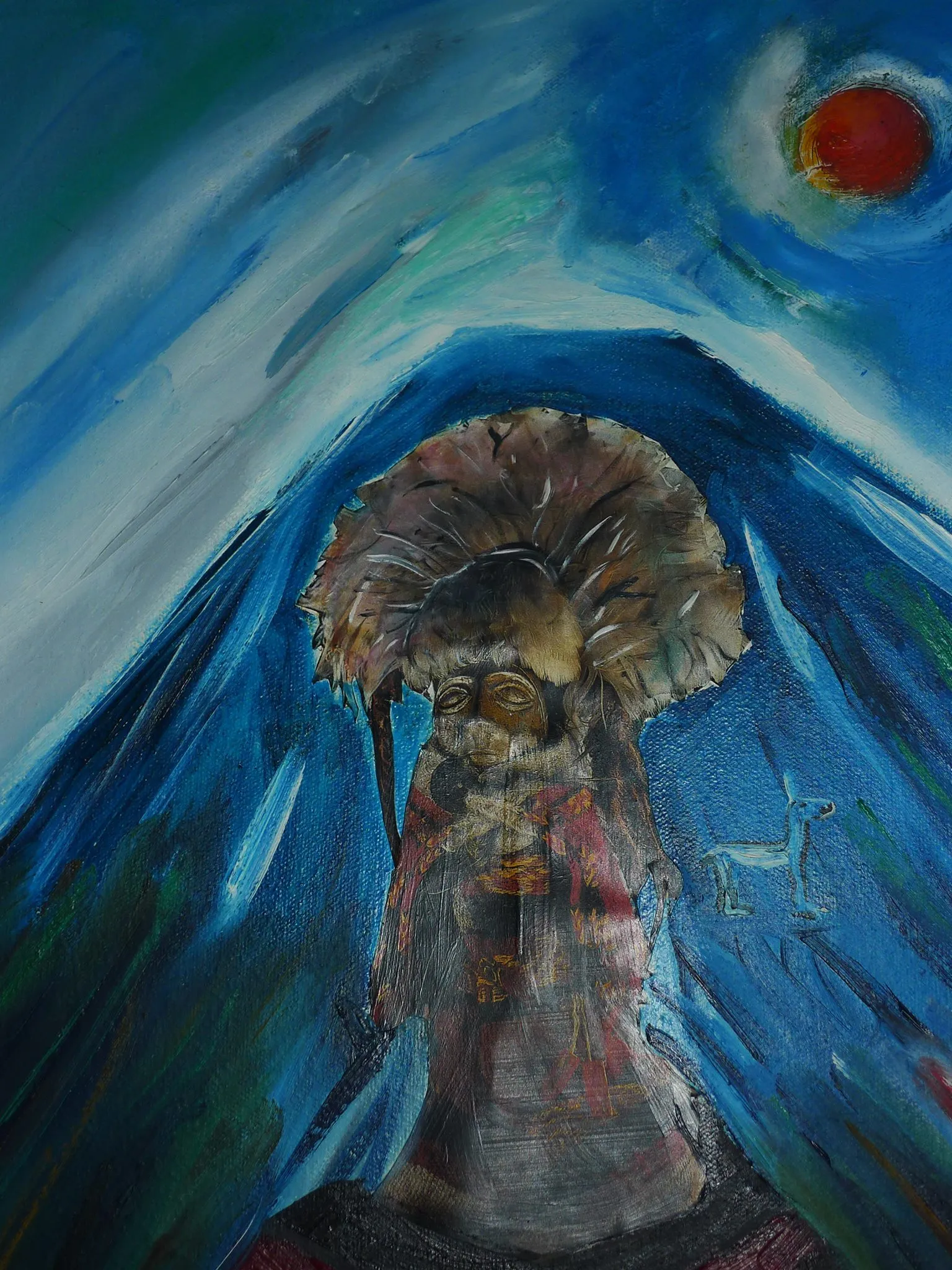
From mid-September to mid-October, Hispanic / Latinx Heritage Month is observed, celebrating the culture and history of Spanish-speakers of either side of the ocean, in Europe and in the Americas.
This month starts off with the observances of the independence from Spain of the Central American Republics – Guatemala, El Salvador, Honduras, Nicaragua and Costa Rica – on 15 September, and Mexico’s Independence from that colonial power on 16 September. Chile celebrates its Independence and Fiestas Patrias on 18 and 19 September.
Also during this month – on 12 October – is the former Columbus Day, observed in Spain, Italy and the Americas. Now this date has different names in recognition of the Indigenous nations that populated the Americas before the 1492 Spanish invasion: Día de la Raza (El Salvador, Uruguay), Día de las Culturas (Day of the Cultures, Costa Rica), Día de la Resistencia Indígena (Day of Indigenous Resistance, Venezuela), Día de los Pueblos Originarios y el Diálogo Intercultural (Indigenous Peoples and Intercultural Dialogue Day, Peru), and Día del Respeto a la Diversidad Cultural (Day of Respect for Cultural Diversity, Argentina).
Synchronized Chaos’ Hispanic / Latinx Heritage Month literary feast also invites the other Latin cousins – French, Italian, Portuguese-Brazilian, Romanian, Catalan – to participate.
So, come join our party! ¡Buen provecho!
In his delightful short story “Mabel’s Library,” Fernando Sorrentino portrays the love of reading and of one’s personal book collection, in both life … and death.
In “Why (Do) White French Institutions Have a Hard Time Admitting The Impact Of Racism/Colonialism In Black Serial Killers’ Psychological Damage?: The Case of Thierry Paulin”, Victoria Kabeya asks a question that is common in this “post-colonial / post-racial” world, that [former] colonial powers proclaim – whether it be France, Spain, Portugal, Britain, the US, or …
Gabriella Garofalo’s “Blue Scenes” is a suite of poems woven with blue and so many colors of lives and their trails / travails. (Read this poem aloud – the rhythm will carry you …). In “Flames in the Wind”, Andrea Soverini captures the spirit of what is life – a perfect allegory for the upcoming Día de los Muertos.

The duality of what heals us – yet poisons us is presented in Diosa Xochiquetzalcoatl’s poem, “Café de la Olla.” Meanwhile, with his pair of poems, Roberto Rocha invites us to his barrio to witness the contradictions that are the “American Dream,” and the realities versus the stereotypes of what a Chicanx is.
With his essay “When the Stars First Came Out – Carmen & Bidu,” Josmar Lopes recounts the life and fame of two great Brazilian singers: the lovely Bidu Sayão, who is virtually unknown in the United States, and the electric Carmen Miranda, who became a Hollywood star.
In “Ballad of the Checkboard”, Ana M. Fores Tamayo asks who should be stepping back – the white or the brown-skinned, pawns in a chess game dictated by a white judge. “Fishing in the Green” is a surreal landscape of different lives / lifestyles existing parallel. “Matrimony” is a celebration of love. In “The Three Fates” / “Los Tres Destinos,” Fores Tamayo meditates on the passing of time … and life.
Despite her mother’s well-founded misgivings, Linda S. Gunther gets to see her father once again, at least for a short while. This “Rockefeller Center Reunion” is a story that is well-known by many children of divorced families.

Diana Magallón‘s trio of images portray dancelike movements across multiple dimensions – trompe l’oeil (trick of the eye), hieroglyphics, and 3-D syncopations quiver with indigenous flair. Magallón and Jeff Crouch then offer a quartet of images that dispel the smoke of “100 Días de Humo” (100 Days of Smoke).
Does dancing cause one to fall into an everlasting love? Daniel de Culla answers that question for us in his poem “El Bailaré” / “The I’ll Dance.”
* This edition was inspired by the work of Fernando Sorrentino as well as the principle of Pan-Latinidad.
Short story from Fernando Sorrentino
Mabel’s Library
(La biblioteca de Mabel)

1.

As the sufferer of a certain classificatory mania, from my adolescence I took the care of cataloguing the books in my library. By my fifth year of secondary school, I already possessed a reasonable, for my age, number of books: I was approaching six hundred volumes. I had a rubber stamp with the following legend:

Fernando Sorrentino’s Library
Volume nº ______
Registered on: ______

As soon as a new book arrived, I stamped it, always using black ink, on its first page. I gave it its corresponding number, always using blue ink, and wrote its date of acquisition. Then, imitating the old National Library’s catalogue, I entered its details on an index card which I filed by alphabetical order.

My sources of literary information were the editorial catalogues and the Pequeño Larousse Ilustrado. An example at random: in some collections from the various editors were Atala. René. The Adventures of the Last Abencerage. Sparked by such profusion and because Chateaubriand on the pages of the Larousse seemed to have a great importance, I acquired the book in the edition of Colección Austral from Espasa-Calpe. In spite of these precautions, those three stories turned out to be as unbearable to me as they were so evanescent.

In contrast with these failures, there were also total successes. In the Robin Hood collection, I was fascinated by David Copperfield and, in the Biblioteca Mundial Sopena, by Crime and Punishment.
Along the even-numbered side of Santa Fe Avenue, a short distance from Emilio Ravignani Street, was the half-hidden Muñoz bookshop. It was dark, deep, humid and moldy, with wooden creaking planks. Its owner was a Spanish man about sixty years old, very serious, and somewhat haggard.

The only sales assistant was the person who used to serve me. He was young, bold and prone to errors and without much knowledge of the books he was asked about nor where they were located. His name was Horacio.

At the moment I entered the premises that afternoon, Horacio was rummaging around some shelves looking for heaven knows what title. I managed to learn that a tall and thin girl had enquired about it. She was, in the meantime, glancing at the wide table where the second hand books were exhibited.

From the depths of the shop, the owner’s voice was heard:

‘What are you looking for now, Horacio?’

The adverb now showed some bad mood.

‘I can’t find Don Segundo Sombra, Don Antonio. It is not on the Emecé shelves’.

‘It is a Losada book, not Emecé; look on the shelves of the Contemporánea’.

Horacio changed the location of his search and, after a great deal of exploration, he turned toward the girl and said to her:

‘No, I am sorry; we have no Don Segundo left’.

The girl lamented the fact, said she needed it for school and asked where she could find it. Horacio, embarrassed before of an unfathomable enigma, opened his eyes widely and raised his eyebrows. Luckily, don Antonio had overheard the question:

‘Around here’, he answered, ‘it is very hard. There are no good bookshops. You will have to go to the centre of town, to El Ateneo, or some other in Florida o Corrientes. Or perhaps near Cabildo and Juramento.’

Disappointment upset the girl’s face.

‘Forgive me for barging in’, I said to her. ‘If you promise to take care of it and return it to me, I can lend you Don Segundo Sombra.’

I felt as if I was blushing, as if I had been inconceivably audacious. At the same time, I felt annoyed with myself for having given way to an impulse that was contrary to my real feeling. I love my books and hate lending them. I don’t know what exactly the girl answered, but after some squeamishness she ended up accepting my offer.

‘I have to read it immediately for school’, she explained, as if to justify herself.

I then learnt that she was in the third year in the women’s college at Carranza Street. I suggested that she accompanied me home and I would let her have the book. I gave her my full name, and she gave me hers. She was called Mabel Mogaburu.

Before starting our journey, I accomplished what had taken me to the Muñoz bookshop. I bought The Murders in the Rue Morgue. I had already the Tales of the Grotesque and Arabesque and, with much delight, decided to dwell once again on the fiction of Edgar Allan Poe.

‘I don’t like him at all’, Mabel said. ‘He is gruesome and full of effect, always with those stories of murders, of dead people, of coffins. Cadavers don’t appeal to me.’

While we walked along Carranza toward Costa Rica Street, Mabel spoke full of enthusiasm and honesty about her interest in or, rather, passion for literature. On that point, there was a deep affinity between us but, of course, she mentioned authors who converged in and diverged from our respective literary loves. Although I was two years older than her, it seemed to me that Mabel had read considerably more books than me.

She was a brunette, taller and thinner than what I had thought in the bookshop. A certain diffused elegance adorned her. The olive shade of her face seemed to mitigate some deeper paleness. The dark eyes were fixed straight on mine, and I found it hard to withstand the intensity of that steady stare. We arrived at my door in Costa Rica Street.

‘Wait for me on the pavement; I’ll bring you the book right away.’

And I did find the book instantly as, because of a question of homogeneity, I had (and still have) my books grouped by collection. Thus, Don Segundo Sombra (Biblioteca Contemporánea, Editorial Losada) was placed between Kafka’s The Metamorphosis and Chesterton’s The Innocence of Father Brown.

Back in the street, I noticed, although I know nothing about clothes, that Mabel was dressed in a somewhat, shall we say, old-fashioned style, with a greyish blouse and black skirt.

‘As you can see’, I told her, ‘this book looks brand new, as if I had just bought it a second ago in don Antonio’s bookshop. Please take care of it, put a cover on it, don’t fold the pages as a marker and, especially, don’t even think of writing a single comma on it.’

She took the book—with such long and beautiful hands—with what I thought was certain mocking respect. The volume, of an impeccable orange colour, looked as if it had just left the press. She turned the pages for a while.

‘But I see that you do write on books’, she said.

‘Certainly, but I use a pencil, with a small and very meticulous writing, those are notes and useful observations for enriching my reading. Besides’, I added, slightly irritated, ‘the book belongs to me and I give it any use I like’.

I immediately regretted my rude remark, as I saw mortification in Mabel’s face.

‘Well, if you don’t trust me, I prefer not to borrow it.’ And she handed it back to me.

‘No, not at all, just take care of it, I trust your wisdom.’

Oh’, she was looking at the first page, ‘You have your books classified?’ And she read in loud voice, not jokingly: ‘Library of Fernando Sorrentino. Volume number 232. Registered on: 23/04/1957.’

‘That’s right, I bought it when I was in the second year of secondary. The teacher requested it for our work in Spanish Lit classes.’

‘I found the few short stories I’ve read by Güiraldes rather poor. That’s why I never thought of getting Don Segundo.’

‘I think you are going to like it, at least there are no coffins or cursed houses or people buried alive. When do you think you’ll be returning it?’

‘You’ll have it back within a fortnight, as radiant’—she emphasised—‘as you are giving it to me now. And to make you feel more relaxed, I am writing my address and telephone number.’

‘That’s not necessary,’ I said, out of decorum.

She took out a ballpoint pen and a school notebook from her purse and wrote something on the last page, she tore it out and I accepted it. To be surer, I gave her my telephone number, too.

‘Well, I am very grateful… I am going home now.’

She shook my hand (no kisses at that time as is the way now) and she walked toward the Bonpland corner. I felt some discomfort. Had I made a mistake by lending a book dear to me to a completely unknown person? The information she had given me, could it be apocryphal?

The page in the notebook was squared; the ink, green. I searched the phonebook for the name Mogaburu. I sighed with relief, a Mogaburu, Honorio was listed next to the address written by Mabel.
I placed a card between The Metamorphosis and The Innocence of Father Brown with the legend Don Segundo Sombra, missing, lent to Mabel Mogaburu on Tuesday 7th of June 1960. she promised to return it, at the latest, on Wednesday 22nd of June. Under it, I added her address and phone number. Then, on the page of my agenda for the 22nd of June, I wrote:

Mabel. Attn! Don Segundo.

2.

That week and the next went by. I continued with my usual, mostly unwanted, activities as a student in my last year of secondary.
We were on the afternoon of Thursday the 23rd. As it usually happens to me, even to this day, I make annotations on my agenda that I later forget to read. Mabel had not called me to return the book or, is that was the case, to ask me to extend the loan.

I dialed Honorio Mogaburu’s number. At the other end, the bell rang up to ten times but nobody answered. I hung up the phone but called again many times, at different times, with the same fruitless result. The process was repeated on Friday afternoon.

Saturday morning, I went to Mabel’s home, on Arévalo Street, between Guatemala and Paraguay. Before ringing the bell, I watched the house from across the street. A typical Palermo Viejo construction, the door in the middle of the facade and a window on each side. I could see some light through one of them. Would Mabel be in that, a room occupied with her reading…? A tall dark man opened the door. I imagined he must be Mabel’s grandfather.

‘What can I do for you…?

‘I beg your pardon. Is this Mabel Mogaburu’s home?’

‘Yes, but she is not here right now. I am her father. What did you want her for? Is it something urgent?’

‘No, it’s nothing urgent or very important. I had lent her a book and… well, I am needing it now for…’—I searched for a reason—‘a test I have on Monday.'

‘Come in, please.’

Beyond the hallway, there was a small living room that appeared poor and old-fashioned to me. A certain unpleasant smell of stale tomato sauce mixed with insecticide vapours floated in the air. On a small side table, I could see the newspaper La Prensa, and there was a copy of Mecánica Popular. The man moved extremely slowly. He had a strong resemblance to Mabel, he had the same olive skin and hard stare.

‘What book did you lend her?’

‘Don Segundo Sombra.’

‘Let’s go into Mabel’s room and see if we can find it’.

I felt a little ashamed for troubling this elderly man that I judged unfortunate and who lived in such sad house.

‘Don’t bother’, I told him. ‘I can return some other day when Mabel is here, there is no rush.’

‘But didn’t you say that you needed it for Monday…?’

He was right, so I chose not to add anything. Mabel’s bed was covered with an embroidered quilt of a mitigated shine. He took me to a tiny bookcase with only three shelves.

‘These are Mabel’s books. See if you can find the one you want’.

I don’t think there were one hundred books there. There were many from Editorial Tor among which I recognized, because I too had that edition from 1944, The Phantom of the Opera with its dreadful cover picture. And I identified other common titles, always in rather old editions. But Don Segundo wasn’t there.

‘I took you into the room so you could stay calm’, said the man. ‘But Mabel hasn’t brought books for many years to this library. You have seen that these are pretty old, right?’

‘Yes, I was surprised not to see more recent books…’

‘If you agree and have the time and the inclination’, he fixed his eyes on me and made me lower mine, ‘we can settle this matter right now. Let’s look for your book in Mabel’s library.’ He put on his glasses and shook a key ring.

‘In my car, we’ll be there in less than ten minutes.’

The car was a black and huge DeSoto that I imagined was a ’46 or ’47 model. Inside, it smelled of enclosure and stale tobacco. Mogaburu went around the corner and enter Dorrego. We soon reached Lacroze, Corrientes, Guzmán and we entered the inner roads of the Chacarita cemetery.

We stepped down and started walking along cobbled paths. My blessed or cursed literary curiosity urged me to follow him now through the area of the crypts without asking any questions. In one of them with the name MOGABURU on its facade, he introduced a key and opened the black iron door.

‘Come on,’ he said, ‘don’t be afraid.’

Although I didn’t want to, I obeyed him, at the same time resenting his allusion to my supposed fear. I entered the crypt and descended a small metal ladder. I saw two coffins.

‘In this box,’ the man pointed to the lower lit, ‘María Rosa, my wife, who died the same day Frondizi was made president.’ He tapped the top several times with his knuckles.

‘And this one belongs to my daughter, Mabel. She died, the poor thing, so young. She was barely fifteen when God took her away in May of 1945. Last month, it was fifteen years since her death. She would be 30 now.’

He leaned slightly over the coffin and smiled, as someone who is sharing a fond memory. ‘Unfair Death couldn’t keep her away from her great passion, literature. She continued restlessly reading book after book. Can you see? Here is Mabel’s other library, more complete and up to date than the one at home.’

True, one wall of the crypt was covered almost from the floor to the ceiling, I assume because of lack of space, by hundreds of books, most of them in a horizontal position and in double rows.

‘She, methodical person that she was, filled the shelves from top to bottom and left to right. Therefore, your book, being a recent borrowing, must be on the half full shelf on the right’. A strange force lead me to that shelf, and there it was, my Don Segundo.

‘In general’, Mogaburu continued, ‘not many people have come to claim the borrowed books. I can see you love them very much.’
I had fixed my eyes on the first page of Don Segundo. A very large green X blotted out my stamp and my annotation. Under it, with the same ink and the same careful writing in print letters there were three lines:

Library of Mabel Mogaburu
Volume 5328
7th of June of 1960

‘The bitch!’ I thought, ‘Think how earnestly I asked her not to write even a comma.’

‘Well, that’s the way things go’, the father was saying. ‘Are you taking the book or leaving it as a donation to Mabel’s library?’

Angrily and rather abruptly, I replied: ‘Of course I am taking it with me, I don’t like getting rid of my books.’

‘You are doing right,’ he replied while we climbed the ladder.

‘Anyway, Mabel will soon find another copy.’

[From: How to Defend Yourself against Scorpions, Liverpool, Red Rattle Books, 2013.
-
Translated from the Spanish by Gustavo Artiles

Other versions

Spanish (original text)

La biblioteca de Mabel (2013). Delicias al Día (dir.: Agustín Díez Ferreras), Valladolid (España), marzo 2013, págs. 8-9.

La biblioteca de Mabel (2013). Gramma (directora: Alicia Sisca), Universidad del Salvador; Facultad de Filosofía, Historia y Letras; Escuela de Letras, Buenos Aires, Nº 49, diciembre 2013, págs. 238-245.

La biblioteca de Mabel (2013). En Fernando Sorrentino: Paraguas, supersticiones y cocodrilos (Verídicas historias improbables) (2013). Veracruz (México), Instituto Literario de Veracruz, El Rinoceronte de Beatriz, 2013, 140 págs.

Italian

La biblioteca di Mabel (2013). (translation of Inchiostro team). Inchiostro. Rivista di storie e racconti da leggere e da scrivere (direttore: Giampiero Dalle Molle), Anno 19, Nº 3-4, Verona (Italia), maggio-dicembre 2013, pagine. 11-14.

German

Die Bibliothek von Mabel (2014). (translation of Sandra Fuertes Romero y Jana Wahrendorff). In Fernando Sorrentino: Problema resuelto. Cuentos argentinos de Fernando Sorrentino / Problem gelöst. Argentinische Erzählungen von Fernando Sorrentino (2014), Düsseldorf, dup (düsseldorf university press), 250 Seiten.
Read Fernando’s bio HERE.

Essay from Victoria Kabeya (V KY)
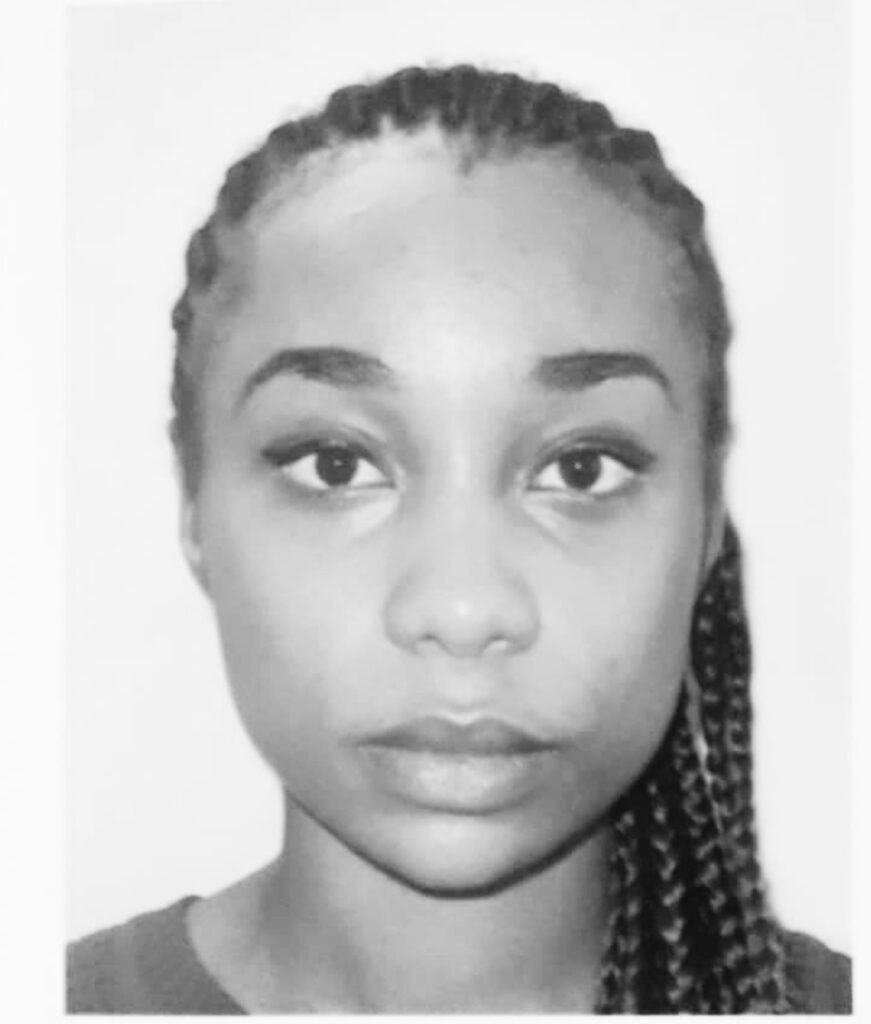
Why (Do) White French Institutions Have a Hard Time Admitting The Impact Of Racism/Colonialism In Black Serial Killers' Psychological Damage?: The Case of Thierry Paulin

France's most notorious serial killer was a black man. Thierry Paulin.

Born in 1963, in Martinique, the young man left the earth at only twenty-five, leaving behind him a horrific legacy. Between 1984 and 1987, the year of his arrest, Paulin murdered twenty-one old ladies in Eastern Paris to steal their money and fund his lavish lifestyle. However, though he admitted to having murdered twenty-one old ladies, the French police had enough evidence to suggest he would have actually killed up to forty of them, with a total of sixhundred attacks and theft.

Thierry Paulin and Guy Georges are still the only two Afro-descendant serial killers in France to this day, a nation whose phenomenon of mass murder is still rare. Both men share the same background, were mixed-race, abandoned by their parents, evolved in a white French conservative society which rejected them for being Afro-descendants and did not have (a) place in psychiatry to treat their specific conditions.

If a few documentaries were made about Paulin, and a few books were written about him, only white people were behind these projects. In the tradition of the French media in the 1980s, they did not approach Paulin as the failed human being he was, but as an animal exposed in a freak show from whom any institutional power wished to exploit for their own gain.

Indeed, in the 1980s French society, a time when Black people were even more invisible, the arrest of Paulin appeared as a surprise. In that sense, the French journalists, not only exploited the killer and the victims to feed sensationalism, but they also needed to further and create the image of a monster who had appeared from nowhere in French society to attack innocent white old ladies.

In all the articles written about him by the journalists and experts, Paulin was introduced as a total enigma, when his downfall was never shrouded in any mystery, as it rather took root in a specific side the French institutions did not want to dive into.

Thierry Paulin highlighted the hypocrisy of French society, whether in justice or law, regarding the treatment of Caribbean groups in the postcolonial migration waves which started massively in the 1960s. None of the journalists who attempted to focus on his history ever talked about the brutality of the Caribbean experience.

Indeed, Paulin's fall into mass murder was directly linked to and caused by the tragedy and the failure of the Afro-Caribbean immigration experience in France at that specific time. Upon studying his case, the medical institutions even failed to understand the structure of Caribbean families - especially when it came to family abuse inherited from slavery - in order to evaluate the damage it had caused in Paulin's psyche.

In the racist white French landscape of that time, Paulin had to remain this freak, light-skinned, mixed-race, young gay mass murderer and occasional drag-queen, who had suddenly decided to crush the lives of innocent and helpless old white women. Therefore, if a few modern white journalists have tried to understand the mind of Paulin, they still refuse to focus on the impact of racism, the Caribbean immigration experience, poverty, social isolation and psychological damage of the black mind.

First of all, this hypocrisy of the white French institutions can be explained by history itself. Though France was always a great colonial power which greatly contributed to the Slave Trade, the French authorities are no stranger to the black body. Yet, contrary to the Northern European white colonial powers which furthered the concept of apartheid, through racial separation, Latin powers such as France rather focused on the idea of universalism, métissage (race-mixing) in order to annihilate any revindication from the colonized groups.

As a consequence, if the French institutions do not recognise the differences in races, due to this principle of universalism, then racism can not be a valid argument when it comes to the damage of one's black mind. This hypocrisy helps the French institutions to reject their role in colonialism (and) slavery since they can hide behind the principle of universality.

Thierry Paulin never had the possibility to be diagnosed, understood and perceived for who he was, due to the policy of universalism. Neither the media nor the psychiatrists wanted to know the truth but rather wanted to exploit Paulin for him to fit in their own pre-conceived ideas regarding the murder.

Paulin did not kill because he was a born-killer or a born-beast, but was psychologically and mentally ill. Yet, such approbation of his mental health was not pushed at the forefront by the media as the journalists only highlighted any degree of sensationalism.

When interviewed by racist psychiatrist Serge Bornstein in 1988 and in early 1989 before he passed away of AIDS in his hospital-prison cell of Bichat, Paulin was described as arrogant towards the medical staff. In reality, a narcissist, he knew the scheme which was being displayed before his eyes. All wanted to exploit him and he refused to give them any secret, especially from his childhood. Yet, one thing should be mentioned. If the judiciary and political institutions promote the idea of universalism, such ideology exists in medicine, especially in psychiatry. Though this sector claims not to see race and differences, the French medicine was based upon colonial and racist
principles which date back to the Enlightenment era in the 18th century.

Later, cases such as that of the Venus Hottentot whose remains were kept and exposed until the 1970s, would illustrate our argument. The black body in French medicine is invisible, and such reality comes as even more shocking since France has been a great colonial power.
In that sense, Paulin was given techniques of analysis which were made and conceived for white male criminals.

Paulin, as a mixed-race Caribbean young man, was the product of another reality which is that of the impact of slavery and French colonialism on the Caribbean societies and thus, in families. If the impact of the slave trade and its oppressive system were to be recognised, the French societies should have been forced to acknowledge that Paulin, just like Guy Georges, were not "monsters" born out of nowhere, but the pure products of France's historical, social and political failures regarding the treatment of black minorities, whether mixed-race or not.

Paulin's mind was never analyzed by a black psychiatrist, but rather by incompetent white French psychiatrists who had no knowledge of black Caribbean societies at all. Both the psychiatrists and media refuse to admit that racism, race and black historical oppression can not only destroy a family's structure but also weaken the mind of a black individual living in the Western sphere.

Thanks to social media, more and more black women in France took to Twitter to denounce their mistreatment in French medicine. Most of them had been the victims of the Syndrome Méditerranéen (translated to Mediterranean Syndrome). The latter refers to the constant mistreatment of black patients whose symptoms of pain are not initially believed to be true by the white doctors who are in charge of them. The group members are, through prejudice, always said to lie and exaggerate their pain.

In 2017, French-Congolese Naomi Musenga lost her life for this reason. As she was suffering from a hemorrhage, she called the SAMU and a white female dispatcher mocked her and her symptoms, refusing to take her seriously. The young lady eventually died of her inner pain and struggle.

The medical structure at the time of Paulin was not only late, but never studied Paulin's dysfunctional family background, his mother's psychiatric identity or even thought of understanding him through the Caribbean experience, as they rather chose to remain focused on
their racist views, using the brutality of the murders to support their diagnosis.

On the contrary, in the United Kingdom, another great European colonial power, white psychiatrists had written reports, as early as the late 1960s, to alarm the health government on the risk of schizophrenia on Afro-Caribbean patients linked to racism, the trauma of isolation, poverty and the effect of a double identity. But France, which was always late, even when it comes to the technique of DNA, did not study its minorities at all.

Paulin was thus presented as a brutal individual, when his crime history follows the pattern of a crushed Afro-Caribbean man who failed to find a place in a white French society which did not want him. The constant abuse from his family, whose members rejected him, weakened him deeply. He suffered from severe depression as a result of his parent's abandonment, hence a mental disorder which was never addressed. He never found any institutions in his youth which could have helped him heal his mental disorder and rather carried on reaching the lowest levels of his own self. He gradually became suicidal, psychotic, became a sociopath and eventually a psychopath as soon as the crime frequency increased.

Paulin was not born a monster, but rather was the product of both black Caribbean and white French sociopolitical failures. Just like Guy Georges, Paulin could have been saved and possessed all the resources necessary to make it in life but he was failed in his mental state until he committed the worst. Paulin was, before anything else, a mentally ill individual who had inherited important psychological issues which are not mentioned by the French media until this day to further the racist description they made of him.

The case of Paulin also helps us note one thing when it comes to the absence of black psychiatrists. Two years before Paulin was born, Frantz Fanon passed away from leukemia at the age of thirty-six. He remains, until this day, the only black Caribbean psychiatrist to have written about the impact of colonialism on the black mind, while the Black Americans had W.E.B. DuBois as early as the beginning of the 20th century. This highlights the lack of interest of white French institutions regarding the case of black psychiatry, especially when Western medicine has been tied to the capitalistic value of the minorities in the spectrum of raw capitalism.

Paulin fascinated in the morbid experience for what he portrayed and not for how complex his psyche had become. There was, from the white psychiatric group, no desire of healing, understanding in order to repair any damage but they rather fed their egos as they hoped Paulin would correspond to their pre-established, fraudulent diagnosis. If the worst white French and Belgian serial killers and paedophiles were deeply analyzed even in their most repulsive actions, Paulin, a black Caribbean killer, never received such a privilege. The latter had to be exploited for sensationalism only and sexually deconstructed.

If Frantz Fanon remains the only black Caribbean psychiatrist to have written about the colonized black subject in psychiatry, one problem exists regarding the silence of Paulin's community. Not one single black Caribbean intellectual, whether Aimé Césaire, Edouard Glissant or Maryse Condé, spoke out to explain or attack the media in their racist treatment of Paulin. The Caribbean community still refuses to speak on it. This silence can be understood by their history and immigrant status.

At the time of Paulin, the Caribbeans had been bred to submit, fear and not question the white French authorities at all. They had no political power, no economic presence, and had massively arrived through the colonial programme which was the BUMIDOM. The Caribbeans were bred and raised to live through and for the white French gaze only. If all of them knew the real reasons behind Paulin's motivation to kill, they would choose to turn a blind eye. Plus, the homophobia of these French Caribbean societies did not encourage the members to speak on the Paulin case, thus explaining their distance from him. Yet, Thierry Paulin is not 1987. He is the 1990s, the 2000s, the 2010s, the 2020s, will be the 2030s, and 2040s as long as the questions regarding the status of the ignored Caribbean community in France is not brought up.

Indeed, the Caribbean youth, decades after Paulin's death, still have to deal with the same treatment endured by their forefathers. They remain isolated and their social problems, including that of food poisoning through chlordécone, are voluntarily hidden. And though the years went by, the treatment of black patients in psychiatry is still nonexistent. As a consequence, France is not protected from the sudden emergence of a new Paulin in the years to come.
VK Y
(previously known as Victoria Kabeya)
French-Belgian author and historian of African and Middle Eastern heritage. Born in France, 1991, she began her career in 2015.
As a scholar, Kabeya’s work evolves around postcolonialism through art (mostly rap French music), the study of the Sicilian/Neapolitan subject in postcolonial Italian society, Blackness in the Arab world (Israel, Palestine, Syria, Lebanon and Iraq), the Afro-Caribbeans and Indigenous Natives in Latinized America, Race-mixing and the consequences of psychological trauma among young Black boys in the ghettos.
Purchase: V KY: libros, biografías, blogs, audiolibros
Read: VK Y, Victoria Kabeya