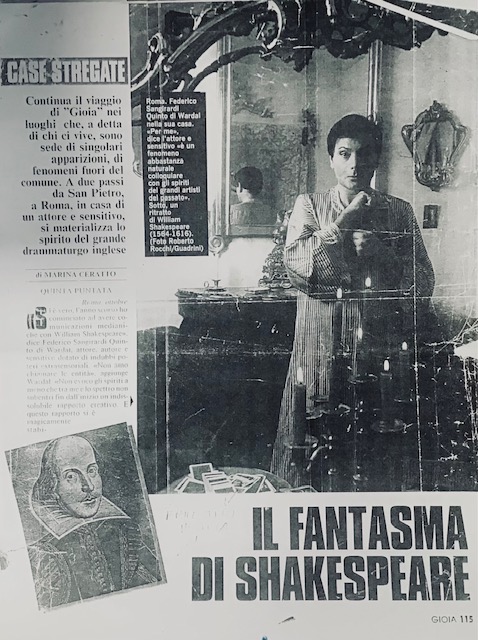
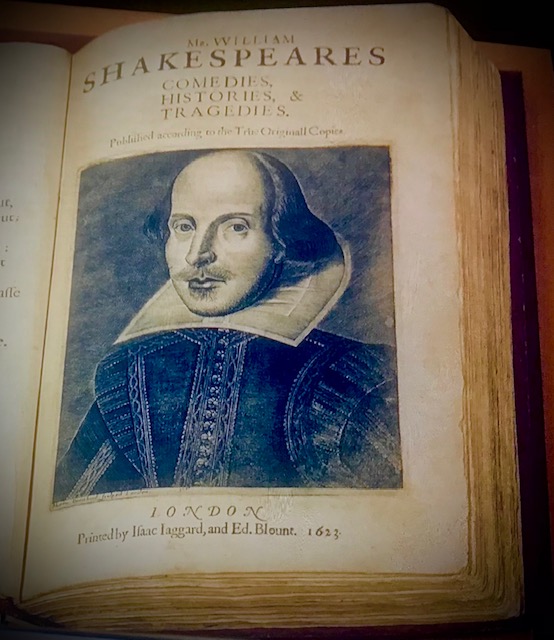
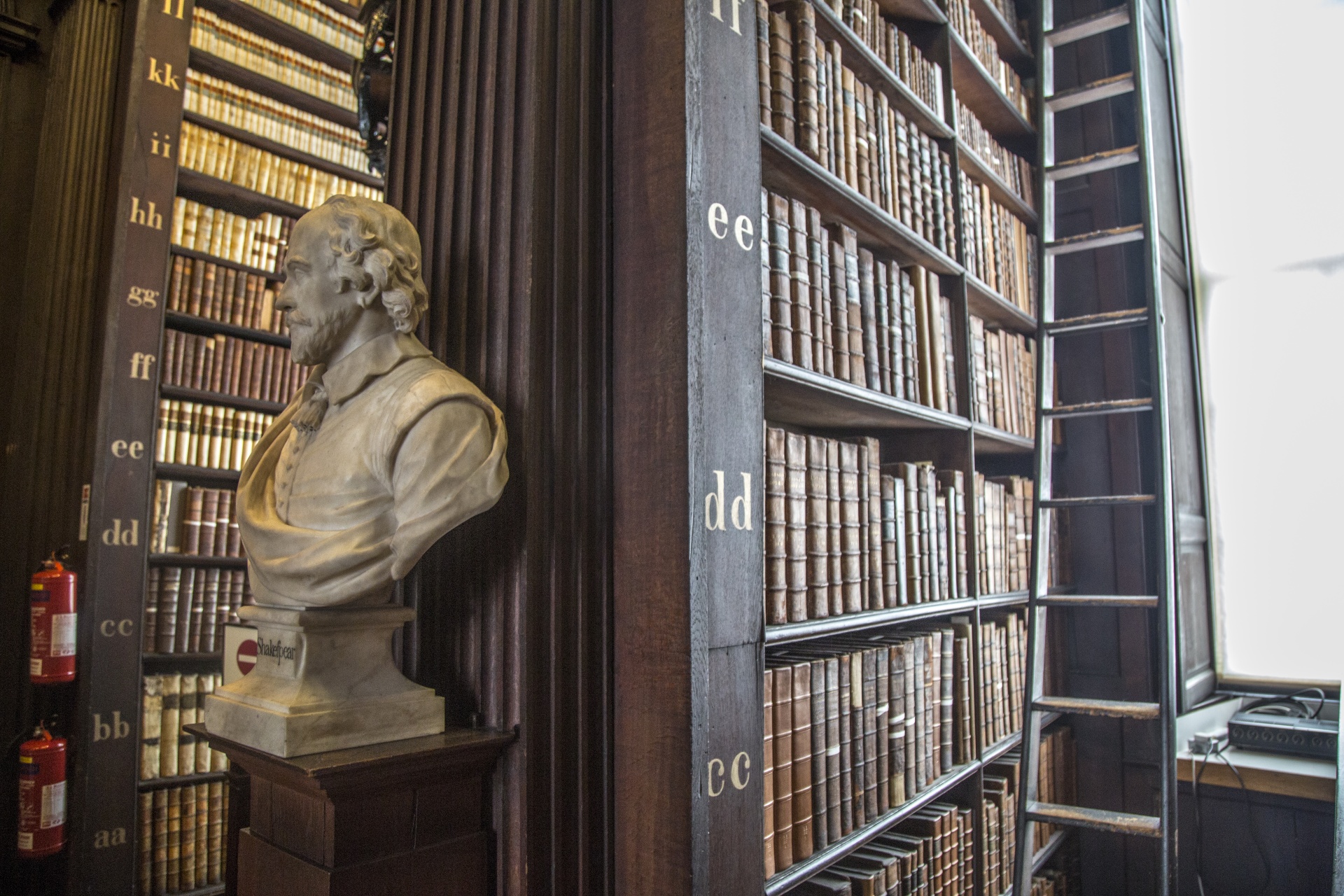
Enchantment: After 422 Years A Drama That Evokes Shakespeare
By Federico Wardal
After 402 Years, A Play Evoking Shakespeare
402 years on the wings of destiny until it reappeared: Enchantment, an esoteric drama written around the year 1620 about Shakespeare, four years after his death.
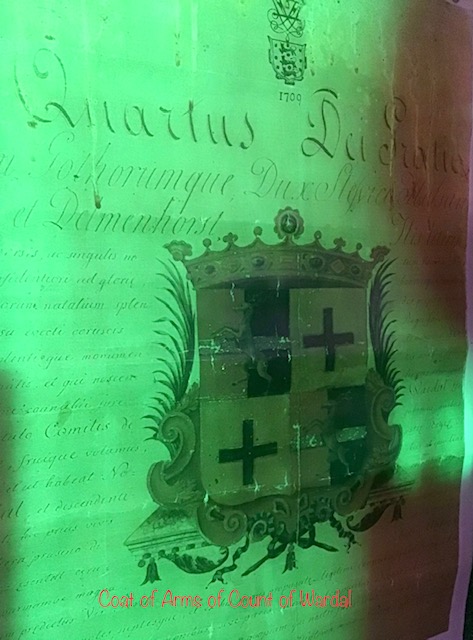
About the author, we only know that they were somehow connected with Denmark, since on May 4, 1709 the drama was donated in Vicenza by King Frederick IV of Denmark to Andrew Quintus, on the occasion of his proclamation as “Count of Wardal”. Andrea Quinto loved the theater and as a Venetian loved The Merchant of Venice and Romeo and Juliet, both set by Shakespeare in the Veneto, and the co-star of Incantesimo is Hamlet, prince of Denmark. This could explain the reason for the gift.
The play, however, was given, not in Danish, but in English. It is believed that the author was very close to Shakespeare, perhaps a disciple of him, since, in one scene, Shakespeare’s temperament is described as someone who often changes his mood.
Enchantment intrigues as it describes Shakespeare’s creative mechanisms relating to inventing Hamlet, Ophelia, Richard III, King Lear, Desdemona, Lady Macbeth and Juliet and Romeo. But there is also an intense scene with the character of Death and some prophecies about today’s world. Whoever wrote it is surely an esoteric who wrote the drama with the method of “automatic writing”, that is, through the connection with a spirit: that of William Shakespeare.
There is much to understand between the lines of the text, in which secret codes may be hidden that could be related to political secrets of northern European countries at the time of King Frederick IV of Denmark. All this does not affect the extraordinary theatrical value of the text. Its plot is totally unique. An actor playing Hamlet, at the moment of the appearance of the ghost of his father, the king, murdered by his uncle, is captured by the spirit of Shakespeare, who, during a journey into the afterlife, makes him meet with his most famous characters.
It is interesting that if the automatic writing takes place under dictation by a spirit, by means of a special concentration or trance. Also the actor, co-star of the drama, is already in a state of special concentration or trance, for this reason he has the possibility of communication with the spirit of Shakespeare. The text clearly describes a fact known to few: the timescale of humans is different from that of ghosts. For this reason, the actor can take time off from his Hamlet play and travel with Shakespeare to the afterlife and then return to the scene, continuing the Hamlet play, without the audience noticing his absence in the least!
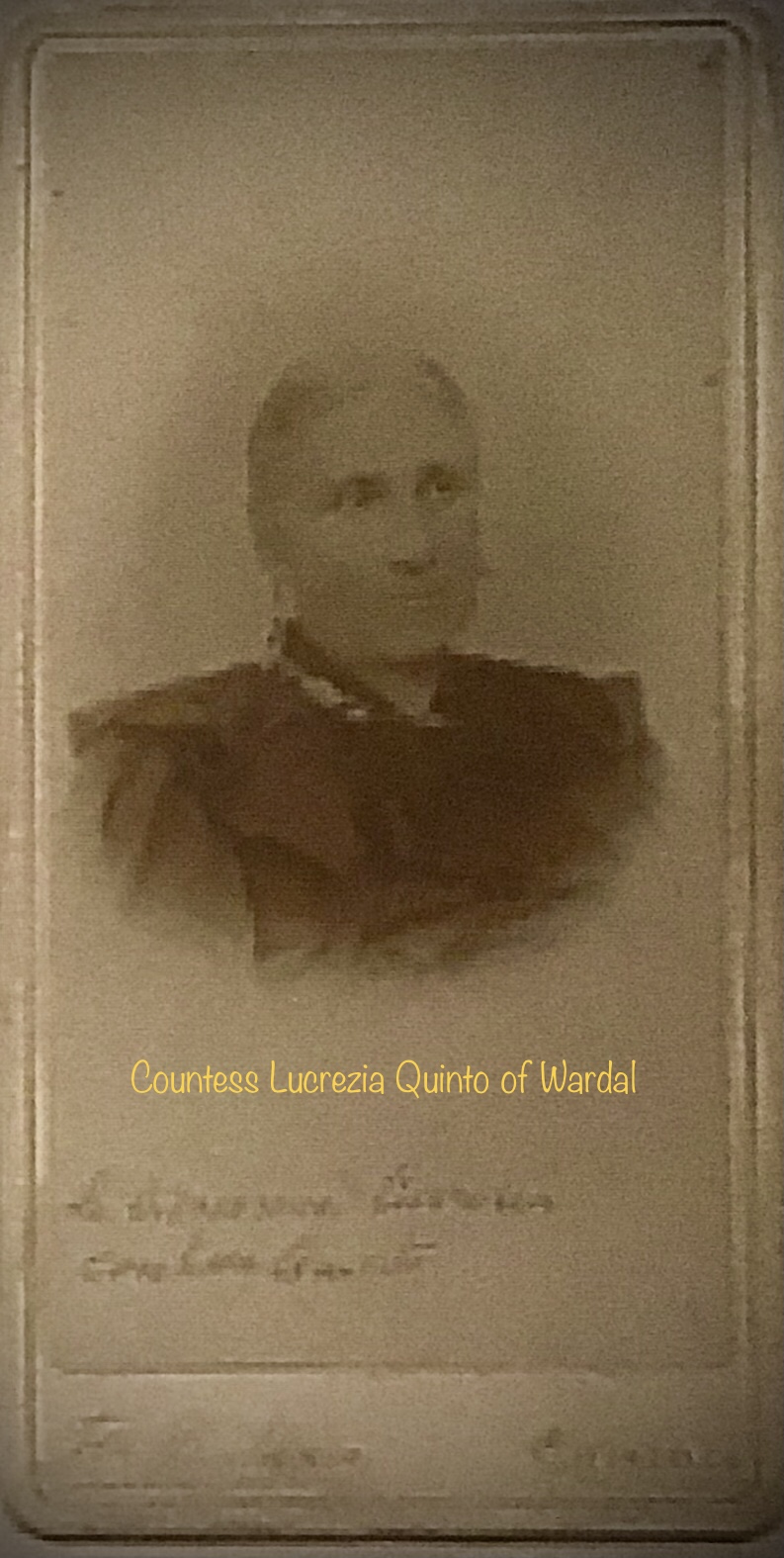
The richness of the text is impressive indeed. The author must have been a great scholar and soon it will be discovered who he or she is. After 1709, the text again aroused interest and was translated, also in Vicenza, into Italian around the year 1800 by Countess Lucrezia Quinto, great-granddaughter of Andrea Quinto.
Then it was forgotten again, but now it is finally back in the light. Here it is in English and Italian.
You Just Can't Win

I did a
really,
stupid
thing,
this week,
well, last
week.
I ran out
of Prozac.

I've been
really ill,
all week.

Feeling
nausea,
unable to
eat properly.

It's been a
fucking rough
week.

I finally got
it together
to pick up my
tablets today.

I think it's the
first time that
I've ever read
the instructions
on how to take
them .

It was all there,
" Don't let your
pills run out.
The withdrawal
symptoms
include
nausea,
sickness,
low mood.

Lack of energy,
and motivation.
Etc. "

Basically,
all the shit
I've been
going through
in the last, horrible
week.

It's
my
own
fault.

I
know
that.

But,
I look at
the side
effects from
taking them.

They're
almost
exactly the
same.

You
just can't
win.
Peach
By Sayani Mukherjee

Peaches for summers
Easy going smooth finish.
Drilling of my internals
I deny in small whispers.
Quiver a word a little too bold
As the climax turns up-
After all those
Unspoken unspoiled earthings
When the room gets too much exposed
I put on
Aromatic screens facades
Goldfishes a little bit safe
To draw up
An innocent plaything like a peach.
To shut down
Testing the waters when the crowd drops on.
At the midnight quake
A little quibble, a dripping of dew.
Inhaling innuendos
Amidst a thorny rose
The peach does its job.
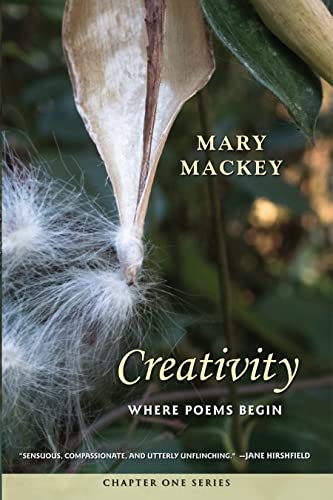
Title: Creativity: Where Poems Begin
Author: Mary Mackey
Publisher: Marsh Hawk Press
Genre: Literary Creation: Poetry
Pages: 110
ISBN:  9781732614123 (paperback)
Price:  $18.00
Publication Date: September 2022

Review of Creativity, by Mary Mackey

				          By James Tipton

Where is creativity before it becomes the created thing?  Mary Mackey’s new book, Creativity, explores the range of creativity itself:  its subtle, pre-language source, experiences and people that helped inspire or discover it, and the poet’s journey from the depths beyond thought to the forming of a concrete, original image.  People may think of art as its finished product—as, say, a beautiful sculpture.  But what they don’t see are the chips of marble on the artist’s floor: Mackey shows us all the scattered chips and their usefulness for her.

She defines in her introduction the process of creativity as:  “…the movement of an adult mind back to the radical innocence and vision of the very young child who sees, not only the reality we all share, but all those unnamed, unclassified parts of reality we learn to overlook as we grow older. “

Mackey consistently returns to the notion that the source of creativity is beyond categories.  One has to go beyond the boundaries of the rational mind to find creativity waiting, like a jaguar beyond the flicker of firelight.  She starts us with her visions and sensations as a child who can be “conscious and unconscious at the same time…float in infinity.”  That child lives in the pre-verbal source of creativity.  Adults talk her ”into reality” but at the price of abandoning “all that exists outside its walls.”  She enters “the world of time, the world of words.”

Creativity takes us on her journey from the source of creativity to its manifestation as poems and her first novel, and back to the source, which she must rediscover after the rational mind has chased it out of her.

	As a child in school, math, with its abstractions, makes her mind ”blank out.”  But geometry, dealing with “solid, palpable things: shapes, forms, positions and angles” is a different thing.  It’s a process of seeing the world in a specific, minute manner, which leads her to poetry.  It’s all about the looking, noticing what’s there, the microcosms that surround us, as in her childhood perspective:
“…the world outside my window is on fire with autumn, and the leaves are blowing like sparks, torn off the trees by a wind that lifts them up and thrusts them toward the earth in wave after wave so the air seems filled with falling embers.”

Her art of noticing continues: “I study one leaf closely, following its flight.  I study another leaf immediately next to it.”  This close observation leads to a unity of subject and object, of seer and seen: “I feel a thrill of recognition, as if this room has joined the whirling world outside the window.  As if both are for a single moment the same.”  One could see this as another interpretation of Keats’s ”negative capability,” in which the subject is negated and becomes the object, but it’s more than that.  It’s about a fundamental interconnection, the discovery of which emerges as poetry: “I want to sing the words in my head, the words that will go outside and merge with the leaves, and then return to me so I can put them down on paper.”

	The structure of Mackey’s book itself is one of integration of rational language and vivid, intuitive imagery: she starts and ends each chapter with a poem that conveys in verse the essence of the chapter.  The poems are carefully chosen as microcosms that bring the chapter to the reader on another, more subtle level.

	Mackey traces in each chapter a source of inspiration for her, whether pleasant or unpleasant, such as the ecstatic visions of the high fevers, the wildness of the jungle, and the challenges of being a feminist in a non-feminist world.  Each of these experiences is boundary-breaking, taking her beyond what she perceived before as the world.  And going beyond boundaries takes us to the major journey of the narrator: to discover and rediscover the pre-language source of the poem itself.  The book’s narration brings us her story in the present tense: it all unfolds now for her in reflection and for the reader in a style of presentational immediacy.

	One experience separates her from the source of creativity, and that is, ironically, the path of the scholar.  The Harvard senior thesis, the doctoral dissertation, the articles on literary criticism: even though they take her deeply into her field they take her out of the pre-verbal range of poetry: “my rational mind seems to have taken over at the expense of instinct, intuition, and ambiguity.”  Since the act of creativity, and not logical, analytical, scholarly thinking is the deeper truth of her being, this lack of being able to write poetry brings her a sense of “disconnection, a dull ache, a background grief.”  She asserts early in the book that “poetry continues after logic ends.”  That is why she felt drawn to the worlds of the high fevers, why she loves the jungle: “In the jungle I will fall in love with wildness, and this love for wild things will make me into a poet.”  The jungle frees her from the restrictive and relentless logic of the scholar.

	So the last third of the book takes us to her rediscovery of the poetic source within her.  And to do this she must abandon also the voices of other writers as well as her own scholarly voice.  In the dark night of the soul, which, for her, was the dead-ends of her life throughout 1971, she “wrote and wrote, and the words flowed so easily it seemed as if they were being dictated by a voice apart from me, a voice somewhere deep in my brain that finally knew what poetry was.”

The last twenty pages of this little, but powerful book, bring us to the realization of jaguars.  Mackey reflects: Jaguars are the keys that unlock the dream work for the shamans…or maybe it’s not a messenger I need, but some sort of technique that will lead me into those parts of my brain that have been inaccessible since I learned to speak.  She eventually succeeds in this endeavor to be both “at a desk in a room in Berkeley, California, and…plunging ever deeper into a great ocean—boundless, infinite, and indescribable.”

	Mackey simplifies and clarifies the source of poetry: it doesn’t involve the self-destruction of Rimbaud’s derangement of the senses, but a heightened awareness of the senses and of the intuition.  Near the end of the book she takes us to the inception of a poem that comes not from suffering or from chaos but from the silent, wordless depths of the mind:

"After a while, ideas and images come bubbling up from the depths.  A poem begins to form in my mind, not a complete poem, not a polished poem, but the seed of something. The poem does not come in words."

Read the book to find out more about where poems come from.  Mackey’s style is immensely lucid, readable, and engaging.  It is a trick to make the complex clear and the abstract concrete, but she does it. This book will be enlightening not just to anyone interested in the creative process, but also to creative writing students at all levels, discovering in themselves their own pre-language source.

-- James Tipton, PhD, Professor of English, College of Marin, and bestselling author of Annette Vallon, A Novel of the French Revolution (HarperCollins).

You can buy copies of Creativity at your local bookstore, on Amazon, or online from Small Press Distribution.
Seeking the enlightened One

His garment is a reservoir of healing,
His Name is a strong tower,
His shrilled voice of glorious melody is calling,
All heavy laden and burdened and cumbersome,
Come to the fountain he provides.

In him is light and there's no darkness nor blemish,
Seek him all along and stay on the road that leads to his holy city,
No book or wisdom surpasses his,
In him is peace eternal.

Seeking the Enlightened one is as digging below the earth for jewels,
It is finding what the soul craves,
Finding him means humility and love,
Find him, because only he gives grace.

He is the bright morning star,
He sees your tears and hears your cries,
He has no beginning and no ending,
Like an oceans no one knows his beginning and his ending.

Out of his love he formed you before you existed,
Saved you even though it was death he tasted,
He is the mirror of your thoughts,
To reflect what is ugly and wrought.

Guiding your steps to the hilltop of life,
The gracious Lord leads you to glory,
Follow him and will change your story,
I dont see any cause for you to worry!

Seeking the Enlightened one requires your life,
All the waves and strikes,
They will come to accompany you to his presence,
Just as his blood broke the house of death and set you free.
Welcome, readers, to August’s first issue of Synchronized Chaos! This month the submissions seem to hold hidden depths, tell stories not always apparent on the surface.
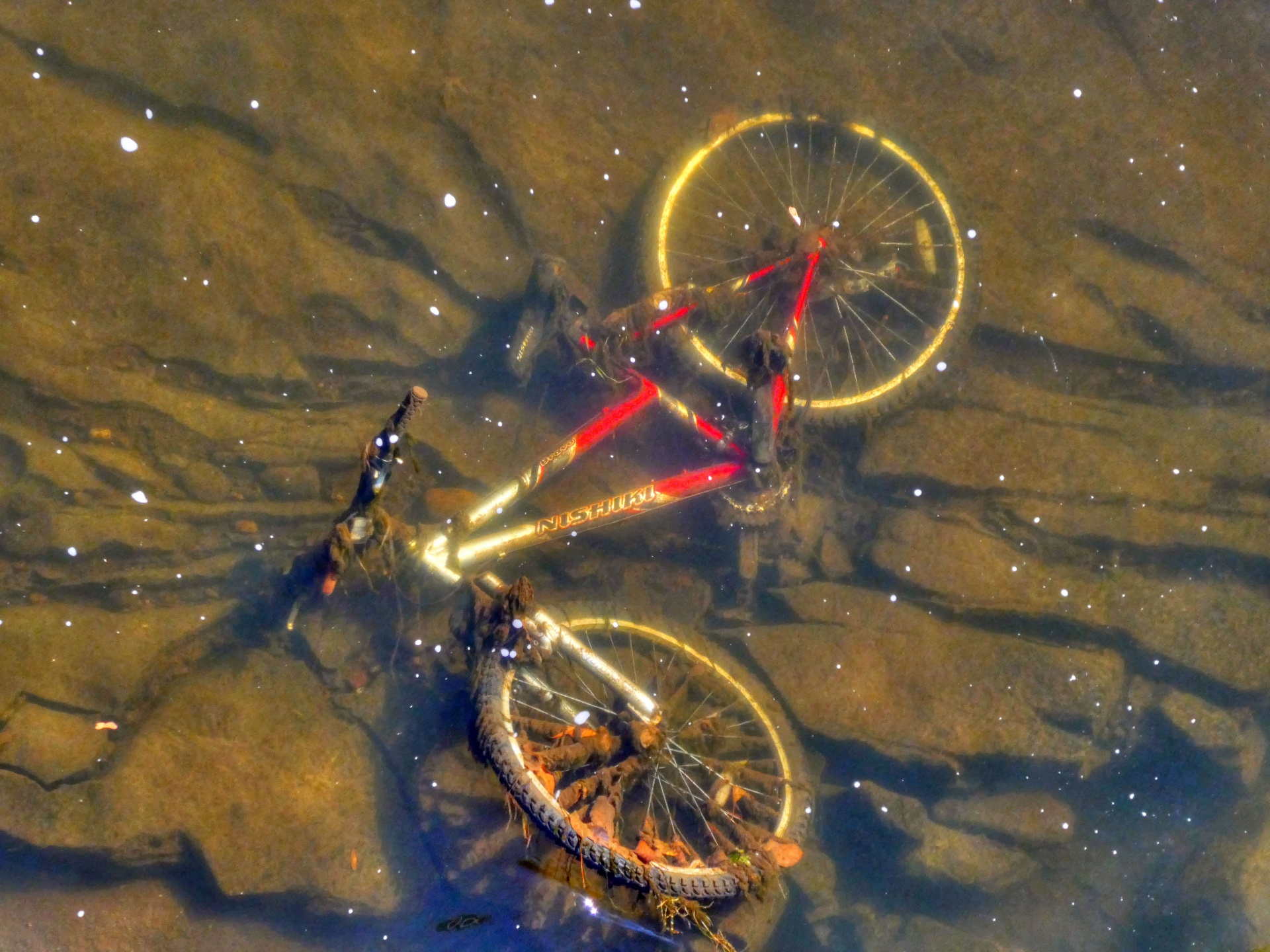
Channie Greenberg sent us a surrealist, painterly photo of a pond, inadvertently in keeping with the theme.
Jim Meirose’s work resembles the submerged elements of a story, as if a child were listening to a tale a bit beyond their understanding. In biology professor Livio Farallo’s piece, complex impulses of thought move as if across synapses, encouraging readers to think.
Alan Catlin sends up loosely connected images of dreams and insects, while Anthony Ward conveys nostalgia through sounds and smells and Chimezie Ihekuna exults in the Christmas season.
Mesfakus Salahin ruminates on imperfectly remembering dreams, while J.J. Campbell and Ian Copestick mourn the dull ache of loneliness and the physical weakness that comes with aging.
Richard Le Due talks of losing yourself to age or memory, or forgetting you’re not lost. Chris Butler reflects on the limits of our knowledge and how ignorance manifests through book burning and environmental inaction.
Gaurav Ojha critiques searching for knowledge that is too theoretical and doesn’t apply in practice.
Kahlil Crawford contributes poems of observation: watching and being watched, finding the cultural “bones” of a city.
In his review of Lisa Loving’s Street Journalist, A. Iwasa explores the role of reporters and the question of whether we can or should ever be truly objective.
Luis Cuauhtemoc Berriozabal writes of our emotional subjectivity, how our unease overtakes us, even in the midst of nature’s beauty. Mahbub grieves with a critically patriotic sorrow political assassinations of leaders of his home country of Bangladesh, while expressing the wonderment and refreshment he finds in nature’s creatures.
Susie Gharib writes of seeking refuge from the world’s dangers through flights of metaphor and myth. Ahmad Al-Khatat highlights the unwelcome persistence of traumatic memory for a refugee.
Mark Parsons’ pieces deal with disembodiment: being alienated from one’s own body and from one’s art, having to do random work to sell out/or in order to earn a living.
In the same spirit, Skaja Evens writes of the struggle of art-making: not only overcoming artists’ or writers’ block to make the art, but the challenge of staying true to one’s craft when one does earn some recognition.
J.P. Lowe’s protagonist realizes after his mother’s passing that she had personal artistic passions which she sacrificed for the sake of motherhood. His piece explores and honors buried identities and what we feel we have to give up for each other.
Jake Cosmos Aller presents various people who vanish or fade from consciousness one way or another, because they pass away or because others choose to erase them.
Mike Zone shares “discarded” movie concepts, ideas he had for movies that sound barely plausible but may never be filmed.
Jelvin Gipson relates the experience of hearing different voices within the spirit and choosing what to follow, having knowledge just out of reach. Timothy Jonathan talks about the ups and downs of life, figuring out who he is and accepting his own complex humanity.
Gabriel T. Saah and Samandarova Barno encourage people to choose creativity and love over simple greed for material objects and money, especially at the expense of others.
Taylor Dibbert expresses resolve at moving forward after a breakup, reclaiming oneself after a failed partnership.
Z. I. Mahmud explores in his literary essay how conscience nags at those who use their will to dominate others in illicit ways. Michael Robinson relates the transcendent experience he has through faith, where in church he can surrender and come close to God and step out of the limits of time.
Nazokat Urinboeva’s parable encourages compassion, diligence, respect, and mindfulness, while Rus Khomutoff speaks of the emergence of something new, the birth and flowering of a new world.
The Sad Morning of 15 August at Dhanmondi 32 Number House


As the water flows, you are shining in the mind of the people
The Banglalees will remember you forever and ever
You are twinkling in the darkness of night
Where there is no shade of exploitation and torture of Pakistanis
Your name always floats in the air by the singing birds, in the tune of flute
Wherever we go in the world-
Your love for the people, the bounty of heart always opens the page
What a patriotic feeling you paid for the nation!
Standing on the Padma barrage I look over the sky -land- water-green trees and fields
How the barrage protect the people of the riverside village!
Though the mainstream of the river has turned back to the other side
The role you played for the country
Made free all people from the bondage
The nation enjoys the scent of the tuberoses at the moonlit night
But my heart sinks into the depth
When the clock strikes on the 15 August of 1975
The misleading soldiers attacked house numder-32 at Dhanmondi in Dhaka
Where Bangabandhu lived with his family members
And the petals of the roses fell down to the ground
It was raining early in the morning - all vanished.


Chapainawabganj, Bangladesh
11/08//2022

The 7 March Speech of Bangabandhu
(On the death Anniversary of the father of nation, Bangabandhu Sheikh Mujibur Rahman)

The historic time was 7 March of 1971, at Suhrawardy Udyan, Dhaka
A poet of politics stood on the stage and started his speech ----
Always reflects in mind ------
"This struggle --- struggle for freedom
This struggle ------struggle for independence
Joy Bangla"
With this slogan the speech came to end
The whole nation got ready to fight against Pakistan
Now this sound is not common at all
It has got the honor getting enlisted as one of the world's best speeches by UNICEF
This speech vibrates our blood for unification as Banglalees - generation after generation
Tears drop down with respect and honor
Our Great leader Bangabandhu Sheikh Mujibur Rahman
Have you heard the news of your 7 March speech for world's recognition?
We know you will never respond
You are in such a world that no news will reach you --good or bad
But you are always as bright as the sun removing the darkness of night
Though you were shot by some derailed Banglee soldiers at the early morning of 15 August, 1975
A barbaric death occurred by killing all the members of Dhanmondi 32 number house
Except Sheikh Hasina and Sheikh Rehana living in Germany then
The little baby, Sheikh Rassel - his crying prayer to live - did not touch the miscreants' heart
We know you did have a great belief on every Bangalee
So instead of living Bangabhaban you liked to live at Dhanmondi 32 number house
In the liberation period Paki Government could not have the courage to give you death penalty
Your popularity among the people of the then East Pakistan kept you in such a secured place
Unity is strong, - they knew it
But after four years of independence the Bangalee wicked conspired and killed you
What they did they lose? They shot him like the ancient mariner killing the Albatross
This killing crime can't have any other way for salvation
It snatches away mental and physical fitness for breaking the law of conscience
As we see Lady Macbeth passing her sleepless nights always seeing blood of Duncan in her hand
And Macbeth hallucinates the murder weapons,
"Is this a dagger which I see before me,
The handle toward my hand."
This is nature fixed like the software in the system of body
Breaking once, it does not work any more
They have killed you but not the nation
You are always flowing in every touch of wind
You are living in every Bangalee's heart
May your soul rest in heavenly peace
We all pray for you on this anniversary of death, 15 August, 2022.

Chapainawabganj, Bangladesh
12/08//2022


                                          Beautiful Nature in Life

           The sun is reflecting on the water of the pond. How sweet the scent of the roses! The colors of the dew drops spark in my eyes. Today after many years when I am standing on the stage to play the role, there are two things always floating on the surface of mind to go in this world; the sights of roses and the sights of the burning red iron. I can recollect here ‘Songs of Innocence and of Experience’ by William Blake. Blake saw the lambs as the innocent picture of life. At our childhood we all are innocent like the lambs grazing in the field. At that time we all bloom like fresh flowers on the branches of the trees. On the other hand, when we grow up day by day and started to get experienced, we become tigers. Though tigers have no power to resist their rage, they crave for the lump of meat. By experiencing day by day the world seems to be hard.  Hard realities make our heart rude and crude. Then we rush to the beauty of nature. So many flowers, so many green leaves, waters, so many birds are there around us to look for.

          When I see the various types of birds with their different colors, sizes and voices over my head from trees to trees, I get fully lost finding peace and happiness in mind. Their voice and color, their love nature between each other, their collection of food and shelter, always reflects on our life. Not only they please us but they teach us also in so different ways. Their struggle for life and ways of life are very regular to follow in our practical world.

          At the age of twelve, I bought a pigeon from a market. I made a wooden room for it to live. After some days I bought another female one to make them live in harmony. It’s beyond my capacity to express my joy with them I passed through. Whenever I would go near the first one, it started calling, ‘Bak Bakum Bak’, with round motion raising the throat circling around and placing the deep dark and blue eyes on mine. Its dark blue eyes, grey feathers and strong sweet note of voice always enchanted me.

One day at evening I saw that my hearty pigeon, my loving caller had not reached. All other pigeons came back from fields and the only that did not reach. I totally lost my heart and I could not understand what I should do. In this way one day, two days went by. But it did not come back. I did not know how I tolerate this absence of that pigeon. There were many other pigeons. But only for this lost one, my total arrangement appeared to be empty and hollow. After that one voice said from above, ‘Wait and you can see the pigeon if it survives.’

Then with courage in my heart I thought I had to have patience and it must come to me back. Then one day after forty days suddenly the pigeon was seen to call with its past glory of voice in the morning on the roof of our cooking room. I saw and observe whether the pigeon was mine or not. O no, there was no wrong between the connection of the bird and me. What a touch of love! I overwhelmed with joy. I saw that the feathers of the pigeon were cut. But they grew again, small but able to fly and at last flew away to me. It’s called beauty of love. Nobody can stop the flow of love that has already been built up. Nobody can snatch away one’s glory of beauty without causing death. After so many days when I feel very lonely I think of the beauty of the bird and the flowers where I regain my beauty and love in heart.

It was early in the morning we reached the Kuakata sea-beach.  After getting down from the bus we rushed to the spot from where we could see the sun rise. We looked at the horizon where water and sky had already been mixed. The sun was rising and thousands of people were standing there waiting for sunrise. What a nice scenery the sunrise was! The sun was, as it were rising from the water of the sea. After some time we went through the sandy area to see the red scorpions. They were playing hide and sick in the morning soft sun light on the sand. How wonderful their moving! How wonder their color! We saw the sun set there just like rising from water; the sun sank gradually into the vast water of the ocean. This glory of beauty appears before me as a colorful light when I see nothing to move in my practical life.

When I was very little I walked through the aisles of the green fields. The murmuring sound of rivers, hearty songs of the farmers, the fishermen and the oarsmen always turn me to that world, a world of peace and harmony. I cultivated various types of vegetables in my garden such as brinjal, tomato and many others.  I also planted many fruit trees like jack fruit, guava, mango etc. When the vegetables and fruits were born in my garden I was astonished to see them. They looked like the stars twinkling in the sky. My heart overwhelmed with joy by the sight of the brinjals, tomatoes.  I saw again and again, loved them and showed others telling how nice they were!
Cox’s Bazar is the largest sea beach in the world. It’s a hilly area covered with large and small trees. Bounty of the Bay takes us to the unlimited glittering world of love. Water swells, water dances, water washes away all the germs of our body and mind. Water touches my knees and whispers in my ear what I never heard before.

What a wonderful place Saint Martin’s Island is! It’s an island surrounded by waters. It’s a very small island. It’s called a coral island. The coral in different shapes and colors can make anyone excited. How clean and blue the water is! What a lovely sound of the water! How the palm trees rise high! How the beautiful turtles and their nests are! After all, anyone can be spell bound to see its sight.

Sundarban Mangrove Forest is a world heritage site. The forest is very beautiful regarding its trees and animals. Royal Bengal Tiger is the attraction of this forest. When I was visiting on a wooden boat, a deer came beside water and raised its neck and head towards us. It was looking like my dear from long waiting situation with its dark eyes. And it seemed to say what I would like to listen. Our boat ran forward and a large golden snake came again to drink water and went away on the blink of the rainbow in the sky. Every after some distance there went through a canal. The forest is like the sacred womb of a mother that keeps her baby safe and healthy with much care and certainty. And side by side there goes the vast sight of water to run through day and night and enjoy the beautiful watery world. We can enjoy the play of dolphins flying towards the sky and the rainbow in the sky after raining.  How charming and adventurous life here!

In the last autumn I was walking through the way beside the Mohananda River. It was afternoon. There were light clouds in the sky. The sun was reflecting on the water of the river. I looked at the sky. But the color of the sun was spreading out over head and around me. Mingling different colors- red, green blue, yellow, magenta etc. have made a deep symbolic one throughout the clouds. It was shining on a large leafy tree. When I threw my eyesight on the leaves of the tree my heart overwhelmed with joy how charming and colorful the leaves of the tree were! Different types of deep colorful sun were sparking throughout the leaves. I had no idea before this sight that the sun also can have such these colorful sights. And it’s no fun, original colorful sun. If I would float on this colorful sun!

While coming back from that shining place suddenly a sunny bright rosy light was raying on a certain place of the water body. The water was whirling and there playing light and shade on that spot. Nothing to say, nothing to express the joy I found in my heart. When I see my four year old little daughter's face and hear her free loud laugh, I can see the sight of the whirling water on her face and can hear the sound of the whirling water.

What a pure, what a mind blowing sight it was!

Every season has its own beauty. When it’s winter, it’s cold always day and night.  In winter, morning dew drops on the grass and when the sun rays on it, the drops glitter in our eyes though it vanishes within a moment. Sometimes fogs are so deep that we can’t see anything to move on the way. But the fog has its own beauty that the world seems to be covered with a white piece of cloth. After dispersing fog, when the sun rises, we sit together in the sun light to warm up ourselves. Even the sunshine in the winter morning is more valuable than the gold to the poor. Many new birds come from Siberia and they fly beside the rivers. It’s very enjoyable to see the varieties of birds in the winter season.

 In spring, we see the flowers blooming in trees after trees, a sign of prosperity and happiness in life. Every tree is filled with new green leaves and flowers. Cuckoo sings from branches after branches. Suddenly it calls cu-u-u, breaking the silence of painful thought. All seem to be glorious and the sweet scent of flowers charms us all.
When the dry leaves fall down from the trees, it also takes its own color and view. We walk through the solitary shady place on the red carpet in the palatial mood.

Once I went up over a hill. I looked at the sky and the ground. Here is a fantastic establishment and a direct connection between the sky and me. After evening when the moon and the stars rose in the sky, it looked like a wonderful dreamland. The moon, as it were was calling me to fly on the soft shining light from mountain to mountain and watch the whole world throughout this feather of light. Here light acts as the source of power to express many languages from the trees. They open their mouth and speak to me so many stories of love and pain. It does not break my heart to hear the story of pain and sorrow but it refreshes my mind and mentality to absorb more painful thought.

This mountain is mysterious. When the water was falling down from the highest peak, my eyes could not believe it at first. Is it possible to fall water from the highest peak? Where it is difficult to reach the peak of the mountain, water falls from that place! It flows without any break. This wonderful flow of water goes through her way to the unknown vast area where we find ourselves flowing over time after time. This sight of waterfall refreshes our eyes, body and mind.

When the ducks walk together, beside the lake or when they swim in the river or lake, how nice they look! Once I have some cocks and hens in our home. I was then High School Student. Early in the morning the cocks started to call and by their sound of calling I woke up from bed. I left them to go outside of the wooden room and they ran quickly to the open field. Whenever I spread out my hand, the hen sat down. The hen as if knew me from long time. When I gave them rice or wheat, they all came very near to me and I enjoyed their taking foods. It is also very exciting to look at the new born hens and cocks from eggs.  How nice the days were!

The tea garden of Sylhet is an excellent sight. Here the green leaves of the tea garden can be compared with the green decorated world. Visiting it, anyone must say ‘Wow’. The green leafy trees can make our eyes fresh and when we keep our lips on the cup of tea, again the sound automatically comes, ‘Wow’, removing our fatigue.
In every sphere of life may it be good or bad, we want to be in touch of nature. When I look at eight or ten year’s students’ face, they all look like the petals of the roses. A glow of red always flows on their face. When they laugh, they seem to be butterflies flying on the green leaves. I can see a glorious nation throughout their all activities.

Like that if we, the grown up people stand beside the poor to support their condition, stand beside the wretched, beside the suppressed then the world would be a heaven for all of us. Nobody would suffer, nobody would die. If we would not think for torture of others, would not cause death only to show power, then we all would live in peace and happiness. This is the glorious side of human nature.

I like the drops of rain very much. When it rains, I observe the drops how they fall rhythmically, how they sound growing a new image in our mind, how they make our environment clean and fertile. We find our best thought of musical journey with every drops of rain; we find new idea to write a prose, poetry or fiction. I see how the children run to and fro and make fun in the rain. I wonder how the new blades of grass sprout! How the dead can get back life in all the elements of the environment!

When I walk through the open field, the green sight of paddy or wheat softens my eyes and sitting under a large banyan tree I inhale the fresh air. Just at that time a flock of birds fly over my head in the blue sky. On the other side a pea-cock appears before my eyes from a bush and stared to dance with long colorful feathers. What a beauty! I fly in the sky with the birds. I dance with the pea-cock on the ground. From this suffocated life in cities or towns, we always wish to wander about a place where we find a beautiful natural sight that refreshes our heart and mind.  We like to worship of beauty. So in any condition, joy or sorrow our heart wish for the beautiful sight of nature, a world where there is always a fruitful meaning of life.