Fourth installment of Z.I. Mahmud’s thesis on Charles Dickens’ David Copperfield

Discussion related to the motivation and inspiration behind the foreshadowed novel David Copperfield Or The Purpose of Preferences and Study Of The Text

Dickensian scholars and Dickensian studies would be adventuresome pursuit with the prospective narrative: David Copperfield. Fostering mainstream consciousness and dreaming socialist spiritual civilization parallels both traditional and modern critics radically. Glimpses of Victorian lifestyles, Dover countryside, Canterbury tales, lamp posts and carriage coaches of London streets, and Kent seashore cherish the readers with delight, ecstasy, glee, emotional or sentimental temperament for a life time awakening. 

In the valedictory note, it is essential to denote that reading David Copperfield’s imaginative characters in the fictional biography improves proficiency of creative faculties, strengthening cognitive function,germinating fruits of endeavor, resilience and endurance, awakening hearts and bosoms to grow and develop philanthropy, boosting humanitarian feelings and ennobling humane attitudes.

Consulted Works Or References Or Further Reading & Bibliography

David Copperfield’s Agnes Negotiating An Ideal by Adam Gregory Pence, A thesis presented for the BA degree with Honours in The Department of English University of Michigan, Spring 2000.

Death And Inscriptions With Respect To David Copperfield, Great Expectations and Charles Dickens, Anna Foley’s thesis submitted in partial fulfillment of the requirements for the Degree of the Master in Arts in English in the University of Canterbury, 2003. 
 
Charles Dickens’Great Expectations Penguin Classics Edition Review - A Moral Fable Appeasing Rhetoric With Laughter’s Appeal

Introductory thesis statements

Charles Dickens’ Great Expectations is indeed the masterpiece classic with the dignity or statute of luminary or phosphorescent best seller editions, cataloging as autobiographical genre in the literary fiction shelf. Notably, Penguin Classics Edition, globally have attracted the fancy of millions of readers or reviewers. 544 pages biographical literary fiction genre written or anthologized by Charlotte Mitchell of the UK Penguin Classics publication retail price makers sells the novel at UK pounds 5.99.

Genesis of the Background

Historically Great Expectations was authored by the Victorian novelist Charles Dickens incidentally after the periodical publication of David Copperfield somewhat between 1860 and 1861. Great Expectations’ somber psychological, moral and comic  temperament paraphrases or allegorizes Victorian livelihood, cultural tradition and societal lifestyles; themes or subject matter of parents and children, power and powerlessness, aristocracy and genteelness, fantasies and reality, vanity and gratitude. 

Great Expectations’ Bildungsroman genre illustrates the process of self -discovery and maturation through experience different  phases of life cycle as the protagonist moves through the Victorian Era with gas lamps lit night and daylight darkened by black clouds of smokestacks.

Dickensian characterization has attained the wholesome attributes of human psyche and surpassed contemporaries (critical realists of the 1840s and 50s connoting William Makepeace Thackeray, the Bronte Sisters, George Elliot, Thomas Hardy and so on) so critics or reviewers have bequeathed Dickens with intelligent anecdotes of critical appreciations.

The definition of distinguished Victorian gentleman has been idealized by Charles Dickens in the reformation, apprenticeship, education or moral improvisation, psychological culmination, Bildungsroman rumination of the hero or narrator Pip.

Melodramatic exaggerations have been reflected in the comic or witty characters until realities fade away. “Haughty spirits” and “freakish eccentricities” of Miss Havisham especially pervaded even David Copperfield despite mastery or popularity. Philip Pirrip Pip, the heroic character or narrator protagonist, Miss Joe Gargery, the dictatorial disciplinarian motherly figure who uses the ironical menacing “tickler” to abuse Pip. Mr. Joe Gargery, the backsmith whose warmth and generosity shields Pip’s against adversaries amongst the countryside forge cottage of Kent and recreational Three Jolly Bargeman. 

In Kent’s seashore southeastern England, Dickens spent the first nine years of his childhood. Mr. Wopsle, the  pontificating dramatic clerk of the parish braging thrown open to commoner, Uncle Pumblechook, Joe’s self-important relation who acts in concert with Mrs. Joe and Mr./Mrs. Hubble who despise children and they were wheelwrights (they are minor characters in the novel). 

Abel Magwitch, the lately benefactor and earlier gypsy convict or prisoner, Estella, the unrequited heroine, minor character Mr. Compeyson, the husbandly figure who materializes Miss Havisham’s heart or the second convict or escapee, Mrs. Wopsle, the aunt of Mr. Wopsle, educating elementary students at school in evenings. Miss Havisham, the haughty spirited dowager or mysterious spinster with opulent dwelling (ironically Satis House gilded and ornate crumbling ruins of a gothic mansion and cold winds blow at the rotting barrels of dilapidated brewery) with her adopted daughter, Miss Estella, the idealized vanity or ambition maiden whose name connote star in literary terms. 

Biddy, the resident store keeper beneath the school, teaching assistant to Ms. Wopsle, her grandmom, minor dwarfian dramatist persona characters include those wedding feats relations jockeying for favour of Miss Havisham (They were Sarah Pocket,  Georgiana, Camilla and Raymond). Sarah Pocket frequently visits Miss Havisham to assure herself of a generous bestowed endowment and she dislikes her brother Mathew Pocket. Dolge Orlick, the malignant labour whose torments the Joe household and the vengeful devilish antagonist. 

Jaggers, the lawyer of Abel Magwitch and Miss Havisham whose solicitation benefit inheritance funding and adoption lawsuits. Clara Barley, the fiancée of Herbert Pocket. Jaggers’ law clerk Wemmick was hard, cynical, obsessed and sarcastic. (Wemmick jovial or wry caretaker or caregive of aged parent and even Walworth manor. Miss Skiffins marries Wemmick). Bentley Drummle, the tout whom Estella engages into matrimonial alliance. Startop, the tutelage of Herbert’s academia and organizers of Magwitch’s escape. Last but not the least, minor personality Molly, the biological mother of Estella living in Jaggers’ shelter as disguised housekeeper.

Cliffhanger denote the dramatic and exciting ending to an episode of a serial leaving readers or audience in suspense and intrigued or spellbound not to miss the next episode. Cliffhanger or a cliffhanger ending is a plot device in fiction which features a main character in a precarious or difficult dilemma confronted with a shocking revelation at the end of an episode of a serialized fiction. This incentivizes the audience to return to see how the characters resolve the dilemma.

Symbolism (literary figurative trope to differentiate literally the object or action having multi layers of interpretation) or metaphorical imageries contrasting naturalism and realism in Dickens’ Great Expectations. “The sun was striking in at the great windows of the court, through the glittering drops of rain upon the glass, and it made a broad shaft of light between the two and-thirty and the judge.”

Dickensian characterization enthralls and enlivens reader or critics with metaphors and personification alike symbolism and cliffhangers discusses earlier.

Figurative or rhetorical devices: Metaphor is a figure of speech such a word or phrase symbolically allegorizing the aspects of characters to objects or actions which is not literally applicable. 

“Humbugs” and “toads” are recurrent metaphors in Dickensian characters’ description. At Satis House, the wedding feast invited guests the flatterer Sarah Pocket, Georgiana, Mrs. Camilla and Mr. Raymond are metaphorically “toads’’ and “humbugs” to the narrators’ psyche. “Humbugs” and “toads” symbolically allegorizes a branded individuals with peculiarities figuratively and literally they have the etymological or lexical inferences; humbug: artifice of a crooked fellow to adopting dishonesty and toad: a tailess amphibian with warty skin and stout bodily figure secreting poison. 

Personification, as a literary figurative speech, embodies or caricatures characterization with subtle abstraction. Miss Havisham, the haughty spinster and eccentric figure wearing of a wedding whitish bridal attire covering veil personifies “grave or burial dress” and “shroud” apparently. Moreover, the wedding feast banquet table infested with vermin and insects embodies of frosty fungus and mortifying decay. To the narrator’s voice, Miss Havisham hangs over the beam as if she is the resurrected image of living death hanging over the deathly gallows.

In figurative language, antithesis is a rhetorical device or figure of speech referred to a person or a thing that is the direct opposite of someone or something.

Wemmick’s personified non-identical twin images is a perfect epitome with contrasting Wemmick of Little Britain and Castle of Walworth.

Visual imageries from the novel illustrate these exemplary quotes, “I saw that the lamps in the courts were blown out, and that the lamps on the bridges were shuddering, and that the coal fires in barges on the river were being carried away before the wind-like red-hot splashes in the rain.”

Dickens loves feasts and scorns fasts as references from the narrative exemplify the Christmas Dinner scene. Oxford Academic Journal published critic Barbara Hardy argues that foods weren’t Dickens’ gluttony for gourmet rather they had been nothing but lovely ceremonies of sociability. Christmas dinner and the English geniality or gregariousness or bluffness of the pub setting weren’t sentimentalized as isolated institutions of goodwill. 

Good will connotes to the hospitality, amiable affinity, cheeriness, conviviality or chumminess which were ironically conventional curtailed hunger or poverty from the window.

Barbara Hardy acclaims meals- beyond the giving, receiving, eating, and serving of food in her essays in criticism: Food in Great Expectations. “These values maybe summed up as good appetite without greed, hospitality without show, and ceremony without pride or condescension.”

Furthermore, good housekeeping practice can be compared with the nourishing and well ordered meals.

Play within a play occurs when Pip feels connected with the implication of guilt and vindictive proclamation. George Barnwell, a criminal in a play Wolspe reads who is sentenced to the gallows. “Deathly gallows” symbolic of Pip’s psychological distress traumatized at the news of parting with Estella. Estella, the fancy of Dickens deserted into forlorn since Estella went abroad.

More next month!
Screenplay by Chimezie Ihekuna

Title: A Taste of His Poison
Adapted from a book by Chimezie Ihekuna (Mr. Ben)
Screenwriter: Robert Sacchi

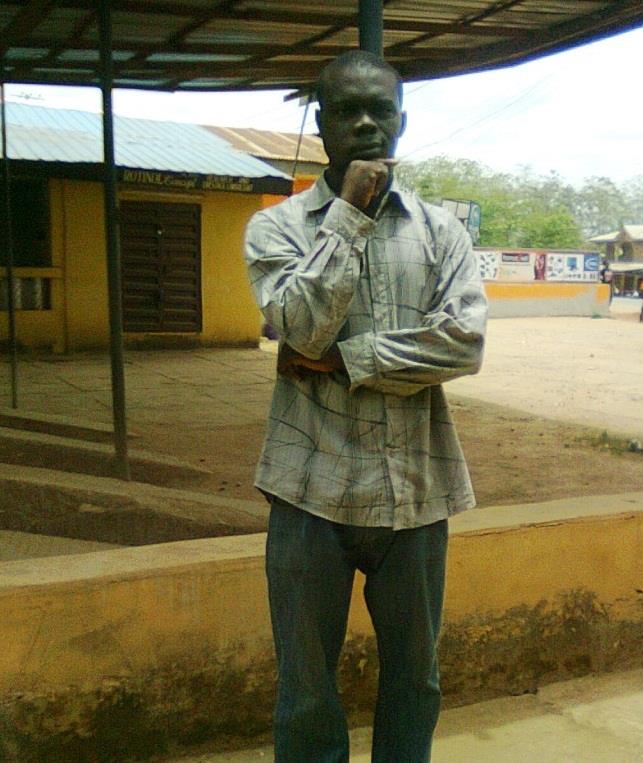
Chimezie Ihekuna (Mr. Ben) Young Black man in a collared shirt and jeans resting his head on his hand. He's standing outside a building under an overhang.
Chimezie Ihekuna

Genre: Drama

For reviews, production consideration and other publicity, please contact us through the email addresses below:

mrbenisreal@gmail.com

rsacchi@rsacchi.20m.com

Ricardo feels short-changed whenever he’s in business with his boss,
Martinez, who does ‘’business’’ at the LaGuardia Airport, with all the five
major staffers, a part of his drug-cartel network. Having worked for his
boss for over a decade, Ricardo sees the need to pay him back in his coin.
Despite his faithfulness through the years, Martinez is fond of denigrating

Ricardo’s efforts his efforts and using the proceeds—that are due Ricardo—

to his chains of girlfriends. Ricardo’s complaints hold no water as Martinez prioritizes
his lovers over intricate business deals he has with Ricardo.

However, Ricardo seeks a way for his boss to someday, have a taste of his
poison—revenge for the wrongs he did to him. He figures out a plan. He
discusses with his doctor to create an clone of himself and contracts with a
willing-to-die for -the -money street thug, Roberto, to do his
bidding—Ricardo’s impostor—delivering fake dollars,
instead of the actual consignment as instructed by his boss. Roberto, or
better known as ‘’Ricardo’’, is aware of the whole plot.

‘’Ricardo’’ is well-paid and is fully prepared for the task ahead. Ricardo,
knowing the ropes of the cartel, explores the loophole and finds an escape
route never to be seen again. Ricardo leaves the cartel with the hugest
fortune, untraced!

The success of the plan is to Ricardo’s advantage but leaves ‘’Ricardo’’ to
an uncertain fate…

Poetry from Mahbub

Poet Mahbub


 Daily Haunting
  
 Everyday I wake up from bed with a question
 Whether I am fine or not
 This trembling and painful palpitating heart
 Confounded for tension and shock
 The dogs are barking outside
 What's the dream glaring to soothe the earth?
 Damn the model of fashion or civilization
 Every single day rebounds with its flinching face 
 The sound of unexpected scream and murder
 The sound of unexpected howling of the children and the mothers
 Falling in a victim of racial attack
 People are growling for this unbearable torture
 How does this audacity act on?  Why's this plan for murder?
 My heart is breaking down into the cries of Palestine and Syria
 The daily unruly hue and cry all around us
 We know it very well the strong always devour the weak in the jungle
 The blood is oozing on my head at the dead of night I scream out
 Everyday I wake up from bed with a question whether I am fine or not.
  
 Chapainawabganj, Bangladesh
 28/10//2020
  
 Resentment
  
 It opens the room for resentment
 On the daily happenings from the daily pages 
 Or on the television screen
 Or on the social media
 At the beginning of the day
 At the time of taking our breakfast with hotchpotch
 At a glance it opens the room for resentment
 Reclining on the wall I brood over
 Cry and break the heart silent
 No way to escape
 Beautiful or graceful the word 
 The mutual respect of Love
 In no way we come closer to each other, one another
 Overflowing water clogs the roads
 No way that we can mingle
 Opening the room for resentment. 
  
 Chapainawabganj, Bangladesh
 28/10//2020
  
 My Clytemnestra
  
 Like Agamemnon I had my Clytemnestra
 She killed him for many reasons
 But why was I sent to the way never thought before?
 Your soft wings turned into an iron rod 
 And tried to play the role on me
 O my Clytemnestra, you knew very well
 How much I had my love for you
 As you had for Aegisthus 
 In other part of the story
 That Helen had for Paris
 At one point of our talking at night
 All on a sudden you choked me off and fled away with him
 A poor and helpless lover, floating on the bed
 Twisting hands on the forehead
 Till the morning sun peeped through window on the face
 And the birds with its sweet note brought me to my sense.
  
 Chapainawabganj, Bangladesh
 28/10//2020
  
 Facing the Destiny
  
 The plants are growing so fresh mingling the sky with the azure seas
 Welcoming us to this sunny the dewy sparking morning 
 But unseen danger lurks everyday 
 Though we have made fence all around    
 Going on with the fight for you and me
 The ruthless killer spreads the hands over 
 Breathing in the air or touching the things
 Just like the birds' pestilence-stricken
 Silent and drowsy, the body trembling in severe temperature
 Everyday, every moment
 The beds are fixed with the ventilators
 Survival depends on immunity   
 Some cross the Styx, some convalesce
 The persons left behind are also waiting for the same journey
 Who's not destined to this ringing?
 We are all undergoing with the passport
 Of course not the same from where we came into  
 To the last we are bound to ----
 Let peace be upon all of us.
  
 Chapainawabganj, Bangladesh
 31/10//2020
  
 A Plight to Joyonto
  
 Joyonto, No, I'll not let you go
 Please, stay here some more
 My heart must stop circulating blood
 In this hazy and foggy world
 Yet, would you like to leave me alone?
 Firing and darkness over the head
 What a devastating cyclone uprooting the trees!
 In this desolate condition how can I take my breath?
 Flooded and fired as far as you look 
 Joyonto, please hold my hand 
 Reach me to my home I live across the river
 Let me be your part
 As shaped as the sign of love
 In this large sky the moon is rousing the ocean
 Please hold my hand 
 Keep me tight in your arms in this isolated land
 Let us make the dark night colorfully enlightened
 Oh, what a love, dear!
 Joyonto,  ------- please, come on. 
  
 Chapainawabganj, Bangladesh
 01/11//2020 

Poetry from Michael Steffen


 A Concession of Love
  
 She followed the travel and the antique shows
 on PBS all through the Sunday lull,
 his couch’s better half. With upturned eyes
 let him zap over to the NFL
 taking her book up, asking that the volume
 be kept down. Though she couldn’t hold her interest
 wholly aloof from the barbaric game—
 surprising dad with a gasp, Gaw that dude’s fast!
 She’d look back at her novel with a glance…
 Then marvel at the fans and their face paint.
 She wanted to know just why the referee
 had thrown that flag. And frowned ambiguously
 at the vainglory of a touchdown dance.
 Hoisted her eyebrow at the extra point.  
 
   
 Reference
  
 Rekindled from an OED, a word
 from long ago “jangala,” a dry, dry
 land, a desert, flourishes to the green wood
 jungle has come to depict in her day—
 lapsed as her gaze off to another book
 so for its cover. She reads silent at
 the PC on her elevated desk
 amid the printed volumes to check out.
 How better embody that little-heard
 fountain Wisdom than surround oneself
 with her spines? Delicate as usage, hard
 as sense to fix, one can only imagine
 her orderly and tidy as these shelves—
 going home, her hair in the wind undone.
  
   
 The Super-id
  
 The sea
  
 ever wagged by its tail.
 It’s all continuum, seals playing
 out into their horror of an orca’s play
 with little mind for manners, appearance,
 “plasticity,” the business
 of the sails of cloud
 stacked like the coasts’ glass mountains,
 these Aeolian beings, drawing from it
 fertile rain, shimmering nets
 and devastating storms. Great
 unselfconsciousness swims
 between one’s hunger and another’s
 from deep memory
 clear to the shallows of our shellfish.
 And our muck, threatening its copious
 data of marvels. And unmasking me,
 boy wizard on the shore
 of the ponderous metaphor. 


 To My Problem
  
 “Symptoms, symptoms,”
 said the therapist, halfway into
 another session. “It’s good of you
 to talk about them. Shortness
 of breath and temper. Irritableness.
 Obsessive compulsive. Insomnia.
 Erratic spending.”

 I don’t know
 how professional it was
 of my Doctor Strangelove,
 though it certainly had a psychological effect
 on him at last to come unhinged
 and just lay it all out—
 “Mr. Steffen,” with a deep sigh,
 “underlying all this chaffing,
 there is some little stone somewhere in your shoe.”
  
 I've written you letters
 with no address for the envelope
 with my thinking it out,
 how to unravel your skein
 of sudden desires and a tilted past.
  
 I've come away from psychologists,
 from groups and meetings
 with certificates and tokens saying I could
 overstep your molehills—
 only again day after day to find myself
 lulled in the elevations of attitude,
 on the islands of prickly fruit
 grousing about the prices, the wait,
 bearing my teeth at others
 with their deplorable hair and manners.
  
 Only to have them—What's
 your problem?—invoke you anew
 and remind me
 everybody drinks the same water.
  
 With your sniff dreaming a rib bone
 from the takeout bag being kicked around
 by the wind, snapping at
 the wind's hand, biting your fingernails,
 drifting again into the blind spot
 of your oncome; with your
 dispersal of asking, flirt, maker
 of No… Huh-uh… Get lost…
  
 Should I only try again
 author of the shrug, again and again—
 to the break of sunlight
 out of nights and days of rain
  
 so here and there an afternoon
 I am filled
 and you vanish
 like water
 into the green flag of the grass.


Recipient of a 2021 Massachusetts Cultural Council Fellowship, Michael Steffen’s poems have appeared in publications, including, The Boston Globe, The Concord Saunterer, The Dark Horse, The Lyric and Poem.

Poetry from J.J. Campbell

Poet J.J. Campbell
scare yourself back into existence
 
angels laugh at the
ache in your heart
 
they taste the blood
in your fear
 
they help you tie the
rope around your neck
and find the sturdiest
tree in the town
 
it is your unwillingness
to step beyond these
mortal thoughts that
confuses everyone
 
why be tied to just what
they want you to know
 
expand your brain
into the darkest hole
you can find and scare
yourself back into
existence
 
give the world all
your secrets
 
break these chains
and never be afraid
of falling down
 
but never think anyone
will ever help you back
up
---------------------------------------------------------------------------------
a frantic phone call to my mother
 
i remember taking my mother's
diaphragm into show and tell
one day and said i used it in
the sandbox in the backyard
to sift the sand
 
there was a frantic phone call to
my mother from a horrified teacher
 
my mother had no clue what
i had done
 
i figured i was getting an early
start at being a standup comedian
 
of course, it was the 80's and
we had no clue how to actually
encourage an active imagination
in a child back in those days
 
they were too busy trying to get
me to understand conformity
and division
 
i was already reading at a college
level and no one understood what
made my mind tick
 
none of them ever did until i got
to high school and found an english
teacher who knew immediately i
was way beyond anything he had
planned in his class
 
so, he told me to go write a book
of poems and show him what i was
working on
 

best teacher i ever had
----------------------------------------------------------------------
abandoned buildings
 
i sometimes find
myself drifting off
mid-conversation
these days
 
i'll hear an old
massive attack beat
in my head and start
thinking about doing
drugs in my youth
 
abandoned buildings
 
the cemeteries and
open fields where we
would count the stars
and give them better
names
 
and it's not that those
days were better or
more open or free
 
they just held a sense
of a better possibility
than these days
 
stuck in a digital world
of faceless souls and

juvenile criminals
-------------------------------------------------------------------------
the dotted line
 
engulfed in flames
 
trembling hands
and a dotted line
 
a little scotch used
to calm these nerves
 
now it takes more
than anyone should
comfortably drink
in public
 
it's not every day
you're signing away
the right to live
 
but you understand
this is the best for

everyone involved
------------------------------------------------------------------------------------------
the horizon looks bleak
 
i used to mark
the days on a
calendar with
a marker
 
now i do it
with blood
 
the horizon looks
bleak and then i
see a mirror
 
haven't shaved
in years
 
no reason to ever
love me screams
like a woman in
danger
 
i have prepared
for my death since
i was a child
 
the life goals i was
allowed to pursue
have all been
checked off
 
now i just need
a sunset
 
a trusty shotgun
 
and a little music

to send me home

J.J. Campbell (1976 – ?) is old enough to know where the bodies are buried. He’s been widely published over the years, most recently at The Rye Whiskey Review, The Beatnik Cowboy, Dumpster Fire Press, Misfit Magazine and Horror Sleaze Trash. You can find him most days on his mildly entertaining blog, evil delights. (https://evildelights.blogspot.com)

Poetry from R.P. Verlaine

Departure's Price 
 
To feel what isn’t there 
is all I need this far
into a one-night adventure,
daylight now ends. 
 
Wanting her to tell me nothing,
except lies that would convince 
a clock to move forward 
to no return or a pause 
at the precise or 
rumored false step 
any love demands more 
than once... 
 
Around which we skirted,
skilled as puppets 
who can do little more 
than entertain 
even when the applause 
is neither obsequious 
or false. 
 
And now the price of 
departure, a tax 
wanton drinking and lust begets, 
awaits with receipt... 
 
As we linger in a paid for bed 
without the energy for lies,
I check messages 
that say nothing. 
 
While she watches,
showing no emotion,
a copy of me,
trying to figure out 
long after the last kiss 
how to get out of this 
with a grace we both lack. 
 
Knowing this was a mistake 
and the new day only 
a chance to make more.


K2

Driving to the airport, its nearly dawn
turbulent dark skies and dim tiny stars
my lone company- the radio's low.
Trying to make sense why so much has gone
awry or failed to transpire so far.
all faith submerged , lost to the undertow.
where life seizes you and then flings you down
until you’re prostrate on knees or the floor
someone shouting ten and you’re counted out.
I'm driving to a new start and new town.
It wasn't love K, you closed all the doors
I kept knocking still, with all of my doubts.
K, I see your face with its vague sad hope
its goodbye tears, it wasn't love but close


Beginnings

Do not ask me of others, let’s start fresh.
As if we were rare seedlings in the spring
sprouting promises with our sweetest thoughts
rooted deep beyond earthly wants of flesh.
Beyond true love’s lost dark imaginings
pale jealousies , tides of mistrust wrought.
Let ardor beckon, wondrously new
we’ll be its play things, puppets in a dance.
outside the present to postpone regret
by giving love each day its place, yet true
to ourselves, mocking fate’s uneven chance
diving to we know not, and come out blessed.
So let’s begin, without a sin or stain
after I ask you this-what is your name.


Her Blank Canvases 

Home dining alone or with one who cares 
she claims she’s happier since the divorce 
won’t marry again even in a dream. 
When asked if she still paints, I’m made aware 
passing fancies and hobbies run their course 
as does a lover lost in the midstream. 
Where I drowned in drink after she left me 
to go to Paris with a man she thought 
loved her and did till the money ran out. 
While I stayed servant to the tapestries 
of color and wild imaginings caught in a canvas awash in reckless doubt. 
When I say I still paint, there’s dead silence 
ah there’s much that dies without violence. 


Truncated Affair 

You can kiss 
each of 
my tattoos,
she said,
if you buy me one. 
 
I asked about
the scar on her cheek.
She was silent,
not wanting me 
near wounds,
healing or unhealed. 
 
We made love,
our confidence 
misplaced in 
a bed where  
excitement’s rush 
& its dichotomy 
to both discover and hide 
were the wrong guides 
to entwine us 
past the 
temporary. 
 
She was precious,
much as she denied it 
when sober, which
was rare. 
 
Each morning, 
pouring me coffee,
she'd do two lines,
check mgs,
leaves me 2 poems
someone else wrote  
a disquieting challenge 
I never clearly won 
or lost. 
 
When we traded kisses,
I'd win every time
it didn’t count. 
 
Real or imagined,
her smile is always enough 
to earn her tattoos. 
 
Trouble came 
in a script for a movie 
she began to think 
was us...
 
In real time 
arguments, complications,
violence, plot twists 
to an ending. 
 
Predictable,
even with all the  
rewrites. 
 
Her goodbye, 
open ended evil,
made truth out of the lies 
in the disconnected 
thoughts of her
I can't disconnect  
from now,
unable to sleep 
i'm no longer awake 
without some cost. 
 
Imagining only 
her ink stained body again 
leaving mine unmarked  
with its sweat 
almost clean enough 
for purgatory.

Poetry from Sushant Kumar

 Mother looks exhausted

 …..And she works
 Nowhere, some say
 Neither at any
 Administrative workplace
 Nor any I/NGOs
 No job; nothing, she does.
 Yet, she wakes up
 Always early in the morning
 Along with cock’s doodle -doo
 And, the whole day and late night
 And in sun, in rain,
 She accomplishes
 Something;
 Called, household chores
 
 Cause, She, a Mother,
 Who beholds a golden
 Future for her offspring
 She has no such thing
 As OFFICE TIME
 And, A Housewife,
 An identity all provide
 And exhausted,
 She always looks 
 Multiple times than any
 Office goer
 As her eyes awake like
 Owl over the night
 And hands unrest like
  A machine
 
 Cause, A golden future
 As she beholds
 For her offspring.
 Be conscious and
 Considerate
 And read and interpret
 Your mother’s eyes,
 You see
 Tears rolling down
 Yet, smile on face
 And exhausted
 Yet, loaded with affection
 As your achievement is
 Her satisfaction
 
 So, she cares
 Upbringing you
 The best way
 Because, as a golden future she
 Beholds
 For her offspring
 Though her work is not recorded
 In any administrative office
 
 Yet she is uncelebrated,
 Unsung hero
 Behind her offspring,  
 As a golden future always she
 Beholds
 For her offspring. 
Poet Sushant Kumar

Bio: Sushant Kumar B.K. is a Nepalese poet, educator and freelance writer who resides in Gulariya, Bardiya, Nepal. He has MA degrees in English Literature from Central Department of English, Tribhuwan University(TU) and Political Science from Kathmandu Central. At present, he has been pursuing his third master degree in Public Administration. He teaches at Janasewa Multiple Campus, Baidi, Bardiya. He is also the principal of Bageshwory Secondary Boarding School, Gulariya, Bardiya, Nepal. He writes poems in English and Nepali language.

He has attended writing workshop jointly organized by Fulbright Nepal and Dignity Initiatives, Kathmandu, Nepal. His poem “An Age of Paradox” has been published in An International Anthology, Pandemic Poetry 2020, and his poems are featured in The Kathmandu Post, The Himalayan Times, The Gorkha Times, My Republica, Indian Periodical(India), Grey Thoughts(USA), The Piker Press (USA), Borderless Journal(Singapore), Williwash WordPress (Nigeria), Sindh Courier(Pakistan) ,Seto Pati, Sahitya Post, Shabdasopan, Central Khabar and Firewordsdaily . He can be contacted at bksushant26@gmail.com.