
How Lexi Howard’s Cassie/Hallie was actually Arthur Miller’s Marilyn/Maggie

Dangerous, Messy Blondes from “After the Fall” to “This is Life”
If Marilyn Monroe was alive in our times, everybody would have hated her.

What a ditzy blonde, obsessed with her sexuality, why can’t she get a grip? She should use her privilege to lift other women up, not fall all the way down the stairs?

Feminists would have been the first to attack her. Want proof? Here’s what happened to another sexy bombshell, Megan Fox, another beauty icon who instead of garnering sympathy and worldwide attention was thwarting attacks coming at her with the same frenzy of all the toxic men who wrote petitions accusing her of being a snob, a diva, and what for? She was young, inexperienced, and lacked the Old Hollywood glamour.

It’s so easy to hate Cassie Howard from Euphoria.
It’s so easy to collectively spite a young, blonde, flawless-looking -or so they are described- woman whose public humiliation and downfall alludes to the rise and fall of starlets like Marilyn Monroe, Nicole Richie, Britney Spears. These beautiful and haunted women give our societies so much pleasure in masturbating to their beautiful faces and delicate bodies. But as something that is so out of reach for us, we also enjoy crushing them, breaking them, watching them get raped or hurt onscreen, watching them lose it or publicly humiliate themselves, that’s when we can safely call it quits and roll the word on our tongues like caramel Mckintosh…yes, we got ourselves a big, bad, whore.

A whore. That’s what Cassie Howard became for everybody. A sensational, privileged, white-ass, pouty-lip whore. Everybody started hating her and creating memes about her. Cassie became the manifestation of the Britneys, the Marilyns, the Nicoles, and the Pamelas that we buried, long forgotten as they caved under constant critique. Despite being the byproduct of the industry and the culture from which they so rightfully emerged, these women were doused in hatred gasoline, lit and left to burn, only for a whole world of hungry onlookers masturbating to the slithering flames.

So Cassie Howard, if not patient zero, but she was the pinnacle, the head on the stick for every defamed, shamed, young sexual woman out there, who was not born with a catalogue as to how to navigate the modern world without being constantly abused by men, relatives, friends, and family.

Cassie might have been a fictional character, but to a lot of close inspectors, she was the manifestation of their worst nightmares. Women who were not yet enamored by the GRRRL Power anthems and the -somewhat hypocritical- inclusion themes of sisterhood and feminine friendships on basis of a so-called sophisticated form of white feminism. Would women accept Cassie in their all-feminist club? Maybe. But if that so, why wasn’t Megan Fox accepted? Was it because she was taller than everybody, hotter than everybody, sexy and unabashed about it, outspoken and vocal about her likes and dislikes, about how men treated her in a mute Hollywood, pre #MeToo era? If Megan Fox saw that treatment, then Cassie Howard would be no different.

It's hard to accept Cassie in a world where female celebrities who are cheered on their sexuality and sexual appeal to all sexes are constantly screaming independence, acting as if men are the least things on their minds. While some of them are sincere and true, some of them make it hard for a woman to show weakness, let alone admit that at some stage of her life she was obsessed with her looks or how she would look in the eyes of men.

In her book 90s Bitch: Media, Culture, and the Failed Promise of Gender Equality, Allison Yarrow describes the scrutiny a woman faces when she is under the public eye:

“Women touched by scandal, whether they were alleged perpetrators or victims, were hounded by the press. When any woman made the news, she often stayed there for days, weeks, months, and, in some cases, years. Meanwhile, news consumers blamed women for their own unceasing visibility, as if they had narcissistically engineered unflattering coverage of themselves for personal gain.”

Rings a bell? All that applies to Cassie, even though Cassie was the byproduct of an upbringing where she became well aware of her sexuality early on in her life, with two parents quarreling and getting at each other, the “father” her favorite who became her first letdown and her biggest heartbreak, and the mother who idolized her beauty to the degree of worship, creating a raft between Cassie and her sister Lexi, whose years were spent watching Cassie being idealized, catered after, and polished like the virgins who are raised and beautified only to be eaten by the dragon at the end.

Cassie had her share of toxic, manipulative, insecure men, who were so confused and helpless in the face of her sexuality. Her boyfriend McKay loved her, but as an insecure American teenager, held under the toxic masculinity grip from the neck, he doubted his love for her every second. He was unable to accept her for who she was; small, quivering, insecure, addicted to feeling loved and ogled over. Every step Cassie took was a mistake. She went from man to the other, most of them only there for that temple on which they would bow at first, then try to break at the end of the day, gaping viciously and aroused at the ruins.

Even to her sister, a compassionate female bystander, Cassie was nothing but the image of the mess she makes. She was the icon of failures and disrespect. She was a feminine woman reminiscent of the 1950s/1960s, she was a joke, a bad replica of someone who wanted to audition for the drama club rendition of Oklahoma. And to her sister, she was what Marilyn Monroe was to Arthur Miller; a Maggie, an archetype.

In his play After the Fall, Arthur Miller brutally dissects Maggie, calls her a joke, a beautiful piece trying to take herself seriously.
Lexi describes herself as an informed, smart, hardworking, and curious woman, while reducing her sister to the size of her tits. In a sort of meta/deux e machina theatrical interpretation of her life, Lexi savagely tears her sister apart, displaying all her embarrassing, pathetic, vulnerable moments. Lexi became a badass, a hero, a triumphant of all the side characters in real life. Essays were written about how Lexi was relatable since everybody felt sidelined in their lives, so Lexi’s revenge seemed, a work of art, but Cassie’s public meltdown seemed “pathetic, uncontrollable, shameful, and what Arthur Miller would use to describe his Maggie, “a tart”.

In Lexi’s After the Fall, Cassie was called Hallie, the resemblance between both Hallie and Maggie is undeniably brutal and scary. These two blonde, sexually attractive women who were mainly “known for their bodies” were put under the microscope, so that audiences at stare at their tiniest action and analyze their reactions, like a mirror that both women use respectively to discern the size of their pores during a night beauty routine. Intead of creating a safer narrative for women to grow without being judged, both Arthur Miller and Lexi have given viewers the opportunity to ridicule and make fun of these women.

Still with Allison Yarrow describing the ideal woman on TV in the 80s/90s:

“Television’s ideal woman in the late 80s and early 90s was “beautiful, dependent, helpless, passive, concerned with interpersonal relations, warm and valued for her appearance more than for her capabilities and competencies,”

So when Cassie emerged like a phantom from 90s TV grave, everyone was horrified. Why was she there to remind people of the things they need to forget. Female TV characters nowadays are strong, cold-blooded, vicious, uninterested in seeking romantic conquests, and they definitely…definitely, were not interested in finding the right man. So when Cassie; a drunk, gurgling mess, standing with her skimpy blue dress, her boobs showing during a lengthy scene, or being dressed like a Nabokovian Lolita by her abusive lover/her BFFs on-and-off boyfriend while the camera glazes over her soft skin and her long, well-coiffed blonde hair, people couldn’t help it but glare. They couldn’t help but reduce her to a joke, a meme, a funny incarnation of a woman. Cassie, to them, was a dark mirror in which they saw shadows of self-destructive women that they obsess over but insanely want to ignore, gaslight, or interpret as creatures unworthy of their time.

But in the end Cassie is not the victim nor the perpetrator. She’s neither a hardcore feminist nor a brainwashed Southern girl, she’s a woman who has not been handed a catalogue on how to live life like a free soul, regardless of her gender, her sexuality, or sexual desires. She was not being told any compliment beyond her looks, to the extent of craving them, and when she is denied that pleasure, she sits there like a broken China doll, wilting in shame, regurgitating all her moments of public humiliation, accenuated by her sister’s satirical portrayal of a Cassie-like blonde figure, masturbating in front of the eyes of a hungry audience, reducing her to a mad woman lashing out at those who harm her, wanting them to stop. Britney Spears of the 00s anybody?

At the end, I will quote Allison Yarrow’s book again, just to highlight some points in the Cassie argument:

“…let’s reexamine the stories that are told and sold about women—that we tell and sell ourselves. Probing the failed promise of gender equality for truth and meaning is the first, essential step in confronting the sexism that suffuses women’s lives today—and to prevent it from suffusing the lives of our daughters and sons in decades to come.”
Synchronized Chaos November 2022: Behind the Scenes
Welcome to November’s first issue of Synchronized Chaos Magazine!
First of all, we encourage you to come on out to Metamorphosis, our New Year’s Eve gathering and benefit show for the Revolutionary Association of Women of Afghanistan and Sacramento’s Take Back the Night. This will take place at Woodstock’s Pizza in downtown Davis, CA, time TBA.
Second, our friend and collaborator Rui Carvalho has announced the opening of our Nature Writing Contest for 2022. This is an invitation to submit poems and short stories related to trees, water, and nature conservation between now and the March 2023 deadline. More information and submission instructions here!
Now for this issue, which provides glimpses behind the scenes into dreams, thoughts and processes behind the world we see every day.

In his short story “The Cubelli Lagoon,” Fernando Sorrentino probes the depths of a mysterious lake rumored to be riddled with alligators.
J.J. Campbell begins his poetic offerings with an assertion that the rest of the natural world remains more powerful than humans. He then comments on human nature, looking at everyday scenes and letting his mind wander. Emmanuel Umeji does something similar in his poetry, where the speaker stares up into the sky and reflects on life and death.
Chloe Schoenfeld describes the calm and moist atmosphere after a rainstorm.
Chimezie Ihekuna continues his Christmas countdown while Norman J. Olson contributes more of his detailed and thoughtful sketches and oil landscapes. Olson says his is “not an art of societal amelioration” yet the attention he gives to people and places in his work encourages viewers to notice their depths and regard them with respect.

Damon Hubbs explores scientific research in a slightly macabre way, with poems about the skull of dead 17th century physician Sir Thomas Browne. John Thomas Allen also touches on the mystery of death through a poem where the lines seem to wind you down to the grave. Mesfakus Salahin presents death as the poignant but inevitable end of all relationships.
In contrast, the flowers Channie Greenberg photographs are very much vibrant and alive, even when cut and displayed in a vase.
Lorraine Caputo also conveys how humans interact with and harvest from nature in her literary sketch of a large commercial banana farm in Latin America.

Daniel de Culla gives a bawdier take on nature writing, with a piece on sexy pumpkins and Halloween traditions in his native Spain.
In a different vein, Sayani Mukherjee builds a scene and a mood around a single rose in a vase in a person’s room.
J.D. DeHart presents vignettes shaped by memory, where he describes his amusement or wonder at encounters with horses, strange noises, etc along with conveying the scenes themselves.
John Steirer also draws from ordinary life as a source of grace and amusement in his series of reflections on middle age, teaching, and learning.
Strider Marcus Jones evokes the background rhythm of life even as great global struggles for power and liberation take place: seeds waiting to germinate, couples falling in and out of love, poets writing and hoping for interesting content.
Pippa Phillips and Jerome Berglund distill experience past the vignette into single thoughts and nearly subconscious observations.
Kyle Hemmings captures moments of irony, poignancy and surprise in his tiny poetic vignettes. John Culp explores his personal consciousness in a thoughtful piece.
Clive Gresswell brews up a heady mix of language and thought in his poems.
Mary Grimm evokes a dream experience with a title reflecting the nonlinearity of the narrative.
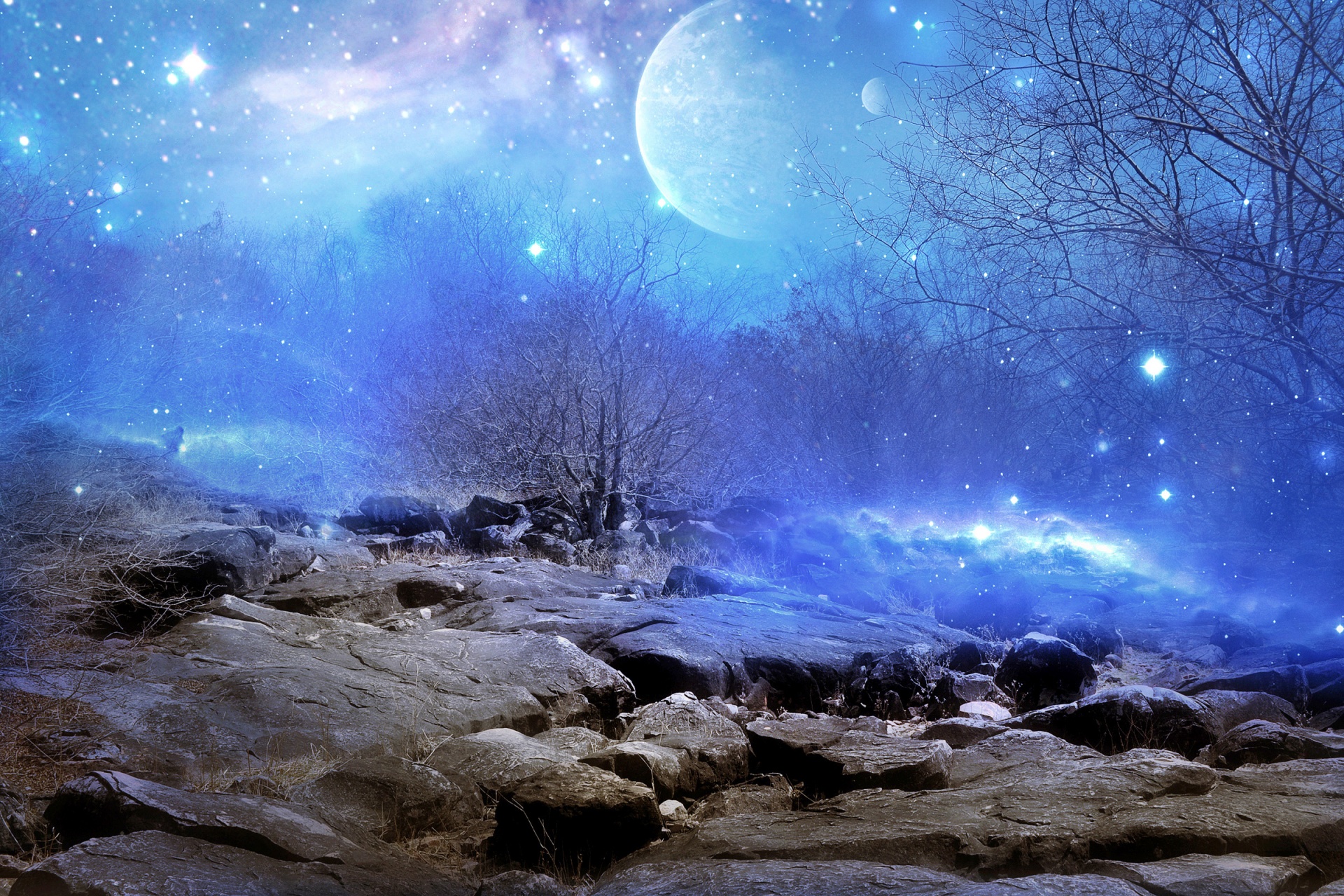
Mark Young’s artwork also eschews direct representation to focus on the effects of juxtaposing contrasting colors and visual elements.
Poet John Tustin writes elegantly of characters brought together into the same space who get driven apart or don’t end up interacting. As in Mark Young’s work, the beauty lies in the implied connections and contrasts.
Jim Meirose evokes a surreal atmosphere with a vacationing couple and their unusual tour guide at the Acropolis.
Christopher Bernard’s poem comments on people of differing income levels sharing urban space, encouraging the homeless and dispossessed to walk with the same self-assurance as the wealthy.
Olawe Opeyemi’s poem shows a speaker mourning sorrow and injustice he sees from his window.
Adepoju Timileyin’s characters also observe each other, speculating and empathizing from a distance. Sometimes they actually interact, though, as he does with his grandmother. In his final piece, Timileyin points to writing as a way to connect.

Shilpa Barti also brings together disparate artistic elements, with the effect of celebrating creative growth in nature and through literature and music.
Z.I. Mahmud also turns to literature as a subject, through his scholarly essay on the global and historical impact of Indian classics.
Jaylan Salah interviews author Joanne Harris (most famously the creator of the book that inspired the movie Chocolat) and discusses her themes of cuisine, creativity, small towns and tolerance/acceptance as well as how these themes come through in her later, darker works.

Mary Beth O’Connor, in her memoir From Junkie to Judge, illustrates how personal struggles such as addiction and abuse affect people of any class, race, personality or profession.
Awodele Habeeb touches on the social dimensions of personal struggle. He points out the inadequacy and cruelty of telling young people that education will prepare them for a better future if society does not provide avenues for them to use the skills they gain.
That sentiment is a driving force behind our New Year’s Eve gathering and choice of organizations to support. We do hope that Synchronized Chaos Magazine can play a part in opening up pathways towards allowing society to benefit from the creative gifts of all its members.
Poetry from Clive Gresswell
Sleep

riotous fortitude              the feet at       his command
forcing into rectitude        colours flood    night time
semblances those              flattered tears   encapsulating
weary figures of disgrace     the flitting  fortunes dipped
in honeycombs of perfection’s    strangled     hand the
beauty fades into           day’s long calling        subtlety
wrenched & wrecked       from epiphany    wild dreams
engulfed          in             sudden falling       shards
distilling          your virtues      controlled  antipathy
golden memories  recycled  & harmony     reboiled
in among the               snakes         of            wrath their
seething                      nightmares             claiming in sleep.


Vowels

damn bursts        into    shards    unruly laughter
the destitute rehearse        comeuppance for
the gentry whose falling      failing          capital
lays siege     to wailing    wallflowers  and embrocation
a dalliance  with     creatures     from    darkened pools
emitting  blood       lusts    of    linguistic  deadpan images
throttling gestures rekindling          tears of russian literature
& innocence devolving           once again      the inhumanity
of man        his drenched        thru           bones declared
whittled down               in   passages        a trespass on this
night-time curfew          its razor blades     screeched against
the vowels                      laid before           his lolling tongue.
These two poems are from Clive Gresswell’s new and as yet unpublished collection SPACES. Clive, 64, suffers from bi-polar but still worked for 30-plus years as a journalist. Eventually though ill-health caught up with him. He is now a well published innovative writer and poet the author of five books of poetry and published in many magazines from BlazeVOX to Tears in the Fence. He has an MA and a BA (First Class) in Creative Writing obtained as a mature student.clivegresswell@gmail.com
Poetry from Chloe Schoenfeld
After The Storm

Candle light
Dark sky
Silhouettes of trees
Line the view outside
Booming thunder
Flashing light
Replaced by the sound
Of crickets in the night
Dull fire shines bright
A blanket of wet
Coats the surrounding land
It’s calm now
Poetry from John Culp
I AM
My Attention
  Unconditionally
      & just Rest a bit.

  As I AM is Attracting
 As LOVE draws near.

     ENERGY   is
            FORCE times
                    DISTANCE,
perhaps as
 time draws
  nearer this thought
    unconditionally.

      I AM
        Here
 Calls  Looking  at
      The Expectations
           of LOVE
  & just Blessed a bit.


by  John Edward Culp
Scripted Sunday Morning
October 30, 2022
Poetry from Kyle Hemmings
Synchronicity

Two caged parrots
mimicking
a false climax


Tone Deaf

In the fading light
the bare trees
whisper
your half thought-out
thoughts

The Last Visit

Growing child-like
& hungry
in her lonely
reindeer eyes

Inflation

Warblers living
on dollar store
crumbs

The Noisy Nude

Painted in gouache
& several variations
of pink
the nude in the picture
giggles
as the art critics
walk by.
Kyle Hemmings has work published in Otoliths, Pure Slush. Potato Soup Journal,and elsewhere He loves 50s sci-fi films and 60s garage bands.
Poetry from Strider Marcus Jones
WEEDS LEFT


weeds left,

wilt in the sun

without work and water.

their seeds

are the wild flowers,

waiting for volcanic wind

and ash to fall,

so the fertile cinders

can colonise herbaceous borders

ending the old age

of selfish sediment

treading it down

in molecules of time.

another marxist

dons his trenchcoat

and tears pages from his red book

planting the old words

of revolution

in minds of homogenous compost.

over-privileged gallows begin to swing.

bullets sweat in their chambers

waiting for the right heads.


THE DARKEST FLOWER IS THE EVENING

again

consensual persuasions

make sensual equations

as we smoke and share a think,

then the same

as she bends over the shingle sink

breasts slapping

on bowl and rim,

peachey buttocks yapping

as i slide in

and out of her velvet purse

each time deeper than the first

two parts making one perfection

of mental physical connection.


outsides

i saw two magpies

in the branches of a tree

barbed tower

watching our sharing eyes

shape fractured liberty

slipping the shackles of feudal power.


in this then,

i know how all of when

you're gone

reduces me to being one

and the darkest flower

is the evening

opened by your scent

giving everything

and receiving

mine in mind and meldings meant.


THE TWO SALTIMBANQUES

when words don't come easy

they make do with silence

and find something in nothing

to say to each other

when the absinthe runs out.


his glass and ego

are bigger than hers,

his elbows sharper,

stabbing into the table

and the chambers of her heart

cobalt clown

without a smile.


she looks away

with his misery behind her eyes

and sadness on her lips,

back into her curves

and the orange grove

summer of her dress

worn and blown by sepia time


where she painted

her cockus giganticus

lying down

naked

for her brush and skin,

mingling intimate scents

undoing and doing each other.


for some of us,

living back then

is more going forward

than living in now

and sitting here-


at this table,

with these glasses

standing empty of absinthe,

faces wanting hands

to be a bridge of words

and equal peace

as Guernica approaches.


LOVE WANES LIKE OLD NEWS

she left,
without remorse or love to lose-
and cleft
the music from the blues.
bereft,
in melancholy mental muse-
the theft
of love wanes like old news,
and jests
through pain to wear in new shoes-
the rest,
just words in ink and oral clues.


POETS IN THE BACKFIELD

Stay a while?
The subliminal cuts are coming through
These days of deadly boredom,
And poets in the backfield
Writing
Something
Interesting.


Hardy,would not like today,
Life's become an angry play;
And our deoxyribonucleic acid
Carries no imagination,
That's not already put there
By a rival TV station.


I can hear you saying,
Yes,but,we have the right to choose:
A color,and a ball of string-
Or poets in the backfield
Writing
Something
Interesting.


You said:
"The Golden Bird eats Fish
In South America
And most of the peasants let him,
Because of Bolivar."
Yet,millions starved in Gulag camps,
And Czechs cried fears when Russian tanks,
Thundered through their traumoid streets
Pretending not to be elite.
As one old soldier put it:
"The West and East preach different dreams,
But ride the same black limousines."


Stay a while?
These sheets are cold
Without your sighing skin;
And this poet in the backfield
Is writing
Nothing
Interesting.

Strider Marcus Jones – is a poet, law graduate and former civil servant from Salford, England with proud Celtic roots in Ireland and Wales. He is the editor and publisher of Lothlorien Poetry Journal https://lothlorienpoetryjournal.blogspot.com/. A member of The Poetry Society, his five published books of poetry  https://stridermarcusjonespoetry.wordpress.com/ reveal a maverick, moving between cities, playing his saxophone in smoky rooms.

His poetry has been published in numerous publications including: Dreich Magazine; The Racket Journal; Trouvaille Review; dyst Literary Journal; Impspired Magazine; Melbourne Culture Corner; Literary Yard Journal; The Honest Ulsterman; Poppy Road Review; The Galway Review; Cajun Mutt Press; Rusty Truck Magazine; Rye Whiskey Review; Deep Water Literary Journal; The Huffington Post USA; The Stray Branch Literary Magazine; Crack The Spine Literary Magazine; A New Ulster; The Lampeter Review; Panoplyzine  Poetry Magazine and Dissident Voice.