In the autumn leaves, they see the grief of parting.
They whisper a tale into the ear of the grass,
The sorrow of the earth that you pass by, unknowing.
Sometimes burning in the fire like Mashrab,
Sometimes awaiting the dawn like Cholpon.
Those who could not speak the truth to the world,
Passed through, swallowing their pain all along.
A poet’s only wealth is a single pen,
One white sheet of paper is their everything.
The agony of the heart transferred into lines,
The lamp of faith, in the darkness, shimmering.
They are reborn only after they die,
Their breath lives on within the pages of books.
A poet is the chain that is called the Truth,
The voice of freedom, no matter how it looks.
My pen trembles too, as I sit and write,
Perhaps it is destiny, or perhaps a sting.
When a poor poet passes from this world,
Their words remain, a bright and glowing thing.
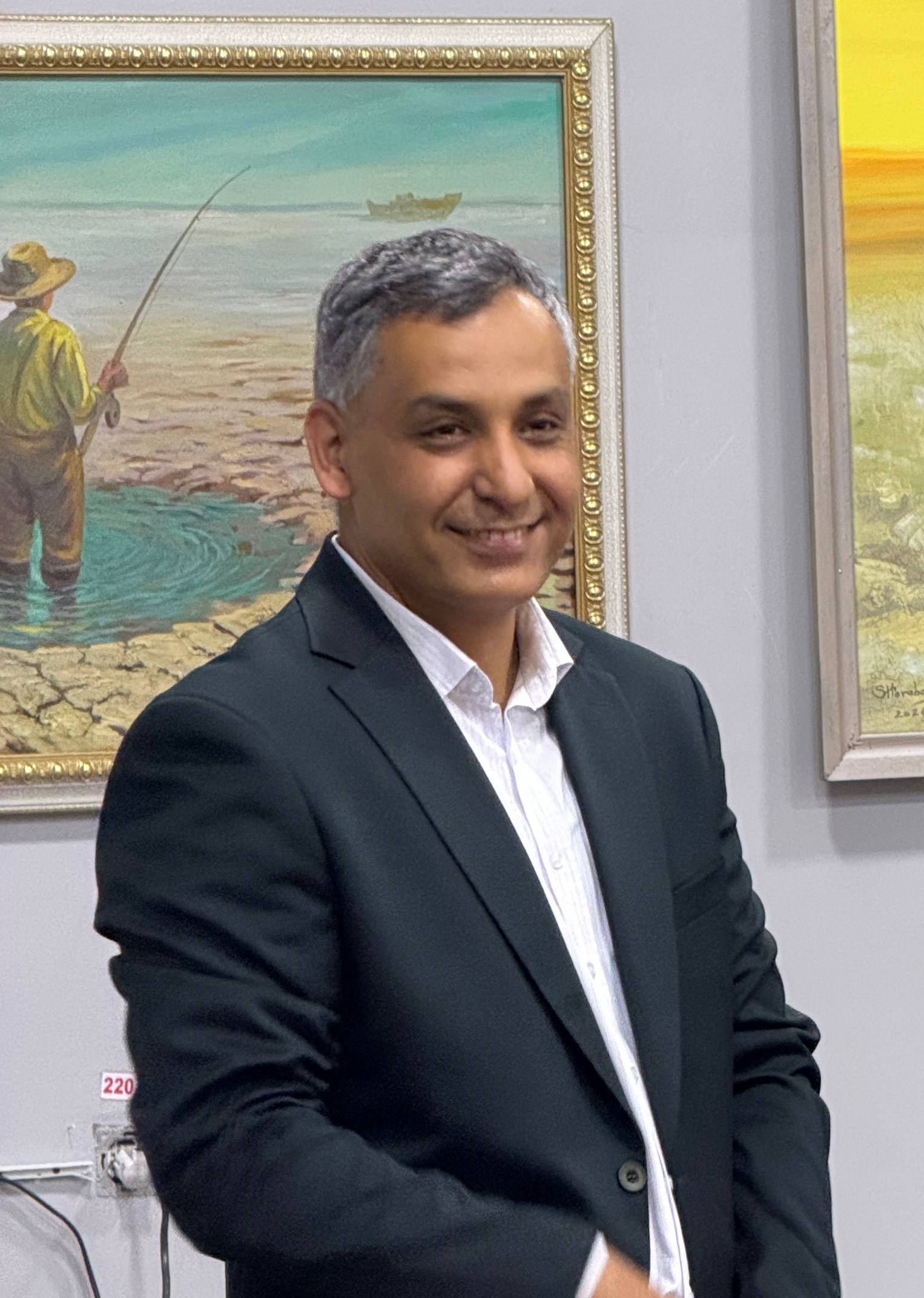
Ozodbek Narzullayev was born in the village of Boston, Koson district, Kashkadarya region. Several of his poems have been published in various anthologies and international journals. He has actively participated in numerous creative competitions, earning honorary titles and prestigious awards. He is the recipient of over 100 diplomas and certificates.
Currently, he serves as the Koson district leader of the “Yuksak Parvozim” (My High Flight) project. He is also the author of the published poetry collection titled “Qalb Kechinmalari” (Experiences of the Soul).
MODERN TECHNOLOGIES AND METHODS IN REACTIVE POWER COMPENSATION
Muxtorov Xabibullo Kozimjon o‘g‘li Student of Andijan State Technical Institute
Maxsudov Moxirbek Head of Department at Andijan State Technical Institute
Abstract
This scientific article is devoted to the study of modern technologies and methods used in reactive power compensation. The presence of reactive power in electric power systems can reduce the energy efficiency of networks, cause excessive voltage fluctuations, and disrupt system stability. Therefore, the implementation of reactive power compensation systems is important for ensuring the efficient operation of power systems and reducing energy consumption.
The article examines the main methods and technologies of reactive power compensation, including static and dynamic compensation systems, capacitor and inductive compensation systems, as well as automatic control systems. In addition, the economic efficiency and environmental impact of implementing these technologies are analyzed. The article emphasizes the necessity of applying modern technologies in order to improve energy efficiency, enhance the operation of power networks, and reduce environmental impact.
Keywords: Reactive power, compensation system, modern technologies, static compensation, dynamic compensation, capacitors, inductive compensation, automatic control system, energy efficiency, power network, environmental impact.
Introduction
Reactive power is a type of power that is used only for generating electromagnetic fields and does not perform useful work. It is mainly produced by electric motors, transformers, and other inductive loads. Excessive reactive power leads to voltage drops in electrical networks, energy losses, and reduced equipment efficiency. Therefore, its compensation is of great importance.
Modern technologies and methods for reactive power compensation play a significant role in improving the efficiency of power systems. By applying these methods, it is possible to reduce excessive energy consumption in networks, ensure reliable and stable system operation, and minimize environmental impact. Today, various methods have been developed for reactive power compensation, including static and dynamic compensation systems, capacitor and inductive compensation methods, and automatic control systems. These technologies significantly improve the efficiency and performance of power networks.
Reactive Power and Its Importance in the Network
Reactive power is a type of power in energy systems that is not associated with actual energy consumption but arises due to the phase difference between electric current and voltage. Excessive reactive power is mainly related to the presence of inductive loads, which reduces network efficiency. Muxammadov (2016), in his article “Main Methods of Reactive Power Compensation in Electric Power Systems,” analyzed the negative impacts of reactive power in the system and described compensation methods in detail.
Capacitor and Inductive Compensation Systems
Capacitor and inductive reactive power compensation systems are among the most common and effective methods. Capacitor compensation systems are used to fully or partially reduce reactive power and improve the efficiency of power systems. Jumaniyazov and Yusupov (2018), in their work “Capacitor Compensation Systems and Their Impact on Energy Efficiency,” explained the application of such systems in power networks in detail.
Inductive compensation systems also ensure the processing of reactive power, and their application in energy systems increases voltage stability within the network.
Dynamic Compensation Systems
Dynamic compensation systems include technologies capable of operating at high speed. They are used to optimize the variable characteristics of reactive power and prevent temporary voltage drops in the network. Such systems are especially effective in networks with large inductive loads. Qayumov (2020), in the article “Dynamic Compensation Systems and Their Efficiency,” analyzed the operating principles of such systems and the issues arising during their application in networks.
Automatic Control Systems
Automatic control systems play a major role in reactive power compensation. These systems are especially effective in cases where reactive power changes rapidly in the network. They make it possible to control reactive power in real time, thereby increasing the stability of the power system and reducing energy losses. Ismoilov and Zokirov (2019), in the article “Optimization of Reactive Power through Automatic Control Systems,” analyzed the advantages and practical applications of automatic control systems.
Economic and Environmental Efficiency of Reactive Power Compensation
Reactive power compensation not only improves the efficiency of power systems but also enhances economic and environmental efficiency. By saving energy and reducing excessive energy losses, the efficient operation of the network is ensured. Iskandarov (2017), in the article “Environmental and Economic Efficiency in Reactive Power Compensation,” demonstrated the environmental impact and economic aspects of reactive power compensation.
Advanced Technologies and Innovations
In recent years, reactive power compensation technologies and methods have played an important role in improving the efficiency of power systems, reducing energy losses, and minimizing environmental impact. Capacitor, inductive, and dynamic compensation systems, along with automatic control systems and advanced technologies, further optimize this process. The methods and technologies presented in research studies are considered effective tools for ensuring the stability of power systems.
Experimental Analysis
To evaluate the efficiency of reactive power compensation systems, experiments were conducted to study the operation of capacitor and inductive compensation systems in various power networks. These experiments assessed the energy efficiency of the system, excessive energy losses, and network stability.
Mathematical Modeling
Mathematical models were developed to simulate the efficiency of reactive power compensation. Using these models, the expected results of compensation systems under different operating conditions were predicted. The efficiency of compensation systems, voltage variations in the network, energy losses, and economic performance were modeled.
Simulation
In this study, simulation software was used to investigate the efficiency and energy stability of reactive power compensation in power networks. These simulations made it possible to observe, in real time, the results occurring during the compensation process in energy systems. Different compensation systems were analyzed and compared based on the obtained simulation results.
Statistical Analysis
The results obtained in the study were evaluated using statistical analysis. This analysis was applied to assess the efficiency of compensation systems, energy losses, voltage fluctuations, and the overall operational stability of the system. Statistical indicators were identified, and their impact on network optimization was demonstrated.
Results
During the research, the following main results and conclusions were obtained:
Efficiency of Capacitor and Inductive Compensation Systems
The research results showed that capacitor compensation systems enable fast and efficient compensation of reactive power. These systems quickly reduce reactive power in the network and improve energy efficiency. However, inductive compensation systems are mainly effective in systems with high-power inductive loads and provide energy savings during long-term operation.
Dynamic Compensation Systems
Dynamic compensation systems provide high-speed operation and optimize the variable characteristics of reactive power in the system. Simulation results confirmed that these systems reduce voltage fluctuations and ensure the stability of the power system. They are especially effective in preventing temporary voltage sags and short-term increases in reactive power.
Automatic Control Systems
Automatic control systems are effective tools that allow reactive power to be managed in real time. The research results showed that automatic control systems increase the stability of power networks and provide the ability to control reactive power at an optimal level. These systems are important for reducing excessive energy losses and improving the efficiency of system operation.
Economic Efficiency
Reactive power compensation systems can be economically efficient. As shown in the research, the implementation of compensation systems significantly reduces energy losses in power networks, thereby decreasing operational costs. In addition, ensuring stable operation of power systems improves the efficiency of industrial production processes.
The study demonstrated that modern technologies for reactive power compensation, particularly capacitor and inductive compensation systems, dynamic compensation systems, and automatic control systems, operate effectively. They improve the efficiency of power networks, reduce energy losses, and ensure system stability. Furthermore, the economic and environmental efficiency of these systems is considerably high, playing an important role in the optimization of energy systems.
Conclusion
This scientific article examined modern technologies and methods of reactive power compensation. The research results showed that reactive power compensation systems are highly important for improving the efficiency of power systems, ensuring network stability, and reducing energy losses.
The main methods of reactive power compensation, particularly capacitor and inductive compensation systems, dynamic compensation systems, and automatic control systems, significantly improve the efficiency of power networks. Capacitor systems provide fast and effective compensation of reactive power, while inductive systems are effective for long-term operation. Dynamic compensation systems ensure high-speed operation, reduce voltage fluctuations in the network, and increase system stability.
Automatic control systems allow reactive power to be controlled in real time, improving system efficiency and reducing excessive energy losses. In addition, the economic and environmental efficiency of reactive power compensation is significantly high, contributing to reduced energy consumption in networks and minimizing environmental impact.
References
Muxammadov, A. (2016). Main Methods of Reactive Power Compensation in Electric Power Systems. Tashkent: Fan va Texnologiya.
Jumaniyazov, D., & Yusupov, B. (2018). Capacitor Compensation Systems and Their Impact on Energy Efficiency. Energetika Journal, 32(5), 89–97.
Qayumov, N. (2020). Dynamic Compensation Systems and Their Efficiency. Electrical Engineering and Energy Systems, 44(3), 112–121.
Ismoilov, Sh., & Zokirov, I. (2019). Optimization of Reactive Power through Automatic Control Systems. Electric Power Engineering and Automation, 37(2), 58–65.
Iskandarov, R. (2017). Environmental and Economic Efficiency in Reactive Power Compensation. Energy and Natural Resources, 25(1), 123–130.
Sabirov, D. (2021). Advanced Technologies and Reactive Power Compensation. Energy Technologies, 52(7), 150–158.
Zaytsev, S., & Ponomarev, M. (2018). Efficient Technologies for Reactive Power Compensation. Efficient Management of Electric Energy, 10(4), 45–56.
Buryakov, V., & Sokolov, Y. (2019). The Impact of Capacitor and Inductive Compensation Systems on Energy Efficiency. Energy Resources and Systems, 23(6), 134–141.
Hingorani, N. G., & Gyugyi, L. (2000). Understanding FACTS: Concepts and Technology of Flexible AC Transmission Systems. This work presents the theoretical and practical foundations of FACTS technologies, especially STATCOM and SVC devices.
It is not marked on any map. It is neither in the mountains nor beyond the sea. It exists within a person. In that place, two voices live: one is fear, the other is love.
Aziza discovered this place at the age of 17.
From the outside, she was an ordinary girl — she studied well, was disciplined, and had dreams. But inside her, there was a quiet emptiness. Since childhood, she had learned to be strong: not to cry, not to share her pain, to say, “I can handle it myself.”
Her father was always away on business. Her mother was strong, but she hid her exhaustion. They loved Aziza, but their love was often unspoken. And unspoken love is sometimes misunderstood.
One day, Aziza failed an important exam.
Others saw it as an ordinary failure. But for Aziza, it opened that hidden place inside her. There, fear laughed:
“See? You are not enough.”
Aziza began to believe that voice. She grew colder. She shrank her dreams. She distanced herself from people. Because if you want nothing, then nothing can hurt you — at least, that’s what she thought.
But there was another voice inside her. It spoke very quietly.
One night, her mother came into her room. There was no long speech. She simply placed her hand on Aziza’s shoulder.
“My daughter, you fell. But I respect you not for falling, but for trying.”
That sentence echoed in the silence within her.
At that moment, Aziza understood something: love does not shout. It does not demand proof. It simply stands beside you.
The next day, she decided to fight not the exam, but her own fear. The results did not change immediately. Life did not suddenly brighten. But in that mapless place inside her, something shifted — the voice of fear grew quieter.
Years passed. Whether Aziza achieved success or not — that is not what matters.
What matters is that she learned to guide that inner place. She realized:
Love does not protect a person. It does not save them from pain. It does not even prevent them from falling.
Love is the reason we rise after we fall.
And the deepest truth is this: a person becomes strong not through others’ love, but when they learn to love themselves.
Now, in that mapless place, one voice is heard more clearly.
It is love.
Abdusalomova Marjona Jahongir qizi was born on May 30, 2008, in the Jizzakh region. She initially studied at School No. 38 in the Forish district until the 9th grade. Currently, she is studying in a specialized class focused on biology and chemistry at School No. 31 in Jizzakh city.
Marjona is the holder of more than 35 international certificates and is a participant in the city stage of the Zulfiya State Award. She has been awarded badges such as “Behbudiy izdoshlari,” “Ta’limdagi muvaffaqiyatlari uchun,” and “Millatlar mozaikasi.” She has actively participated in a number of international and national-level anthologies. In particular, she is a participant in the anthologies “Kelajak qalamlari,” “Tuyg‘ular daftari,” “So‘zlarimdan jahon eshitsin,” and “So‘z sayqali.” In addition, she is the author of the anthology “Men sharq qiziman.”
Marjona is a member of the Argentina Writers’ Union, and her articles have been published on the Google platform. She has worked as a coordinator in the Forish district for the “Oltin qanot volontyorlari” organization and is currently an official volunteer of the Girls’ Academy. She has also been actively participating in various international conferences and webinars. She served as the coordinator for scholarships and state awards during the April 15–19 program of the “NextGen Summit” project. She has also achieved success in education: she holds a B+ level certificate in her native language and a C+ level certificate in history. In addition, she is knowledgeable in logistics and is currently learning trading.
She has studied the Turkish language and has read more than 100 works of fiction. Marjona has also actively participated in courses focused on personal development, psychology, and entering the international arena. One of the most important and unforgettable moments in her life was when she achieved her first success and was awarded the badge “Ta’limdagi muvaffaqiyatlari uchun,” celebrating this joyful moment with tears together with her parents and loved ones.
Kokand State University, Head of the Department of “Art History”, Associate Professor Sharabayev Ulug’bek Muhamedovich
Faculty of Art and Sports
Fine Arts and Engineering Graphics
3rd-year student: Tuychiyeva Odinaxon Axmadjon qizi
Annotatsiya: Ushbu ilmiy maqolada zamonaviy rangtasvir san’atida milliylik va globalizatsiya jarayonlarining o‘zaro ta’siri, ularning san’at asarlaridagi in’ikosi hamda milliy o‘zlikni saqlab qolish muammolari tadqiq etilgan. Globalizatsiya sharoitida tasviriy san’atning umumjahon tendensiyalari bilan uyg‘unlashuvi, yangi texnologiya va uslublarning kirib kelishi milliy maktablar an’analariga qanday ta’sir ko‘rsatayotgani tahlil qilinadi. Tadqiqot davomida zamonaviy rassomlarning ijodida milliy ramzlar, etnik motivlar va an’anaviy qadriyatlarning modernistik va postmodernistik uslublar bilan sintezi ko‘rib chiqilgan. Maqolada san’at asarlarining badiiy-falsafiy mazmuni, ularning global madaniy makondagi o‘rni va ahamiyati qiyosiy tahlil etilgan.
Kalit so’zlar: rangtasvir, globalizatsiya, milliylik, madaniy integratsiya, etnomodernizm, tasviriy san’at
Abstract:
This scientific article examines the interaction between national identity and globalization processes in contemporary painting art, their reflection in artworks, and the challenges of preserving national identity. It analyzes how the integration of global trends in visual art under globalization, as well as the introduction of new technologies and styles, affects the traditions of national schools. The study explores the synthesis of national symbols, ethnic motifs, and traditional values with modernist and postmodernist approaches in the works of contemporary artists. The article also provides a comparative analysis of the artistic and philosophical content of artworks and their role and significance in the global cultural space.
Keywords: painting, globalization, national identity, cultural integration, ethnomodernism, visual art
INTRODUCTION
At the beginning of the 21st century, globalization processes have intensified in all spheres of human life, including culture and art. Globalization is not only an economic and political integration but also the unification of cultural values, acceleration of information exchange, and closer interaction among different civilizations. This process has significantly influenced contemporary painting art. Today, national borders in visual arts have become more fluid, and international stylistic and technical standards have gained prominence. However, under such conditions, the issue of “national identity” has become increasingly relevant.
The relationship between national identity and globalization in contemporary painting is complex and contradictory. On one hand, artists have access to global artistic achievements, new media technologies, and international exhibitions. On the other hand, there is a risk of losing national roots and the homogenization of artistic expression. These tendencies can also be observed in the visual art of Uzbekistan. While the national painting school has a rich historical tradition, it has also become an active participant in global artistic processes.
The aim of this article is to study the mechanisms of synthesis between national traditions and global trends in contemporary painting, analyze artistic uniqueness in painters’ works, and determine future development perspectives. The research object includes paintings created over the past twenty years and their artistic explorations.
LITERATURE REVIEW
The issue of national identity and globalization in contemporary painting is one of the most relevant topics in modern art studies. Scientific research in this field widely covers the preservation of national culture, the influence of global cultural processes on art, and the creative explorations of contemporary artists.
According to art scholars, globalization has created new opportunities for the development of visual art. International exhibitions, internet platforms, and cultural exchanges have enabled artists to become more familiar with world art trends. At the same time, some researchers note that the strengthening of global cultural flows may weaken national artistic traditions.
Studies conducted by Uzbek art historians highlight the unique features of the national painting school, Eastern aesthetic principles, and the influence of folk applied arts on contemporary painting. These studies emphasize the importance of national imagery, traditional color harmony, and modern interpretations of historical themes.
Some academic sources analyze the synthesis of modernism, abstractionism, and postmodernism with national styles in contemporary artists’ works. Researchers view this process as a result of cultural integration and artistic dialogue. The issue of maintaining balance between national identity and modernity in young artists’ works is also emphasized.
Foreign literature widely explores issues of identity in the global art space, cultural transformation, and changes in visual thinking. Researchers stress that the integration of cultural heritage and innovation is crucial in defining the place of national art in the international arena.
Overall, the literature review shows that national identity and globalization are interrelated processes in contemporary painting. Studies emphasize the necessity of preserving national values while effectively utilizing global artistic achievements.
RESEARCH METHODOLOGY
This study employed a systematic approach, comparative-historical analysis, and hermeneutic methods of art studies. The methodology includes the following stages:
Theoretical analysis: Scientific literature, theories of globalization and cultural identity, and international experiences were studied.
Comparative analysis: Works of contemporary artists from different countries, especially Central Asia and Western Europe, were compared to identify national and global features.
Iconographic and semantic analysis: Symbols, color schemes, and compositional structures in paintings were analyzed in terms of their national sources and modern interpretations.
The study used a conditional model expressed as:
I = f(N, G)
where I is the integrative value of the artwork, N represents national components (traditions, mythology, ornamentation), and G represents global components (modern techniques, abstraction, conceptualism).
Additionally, the creative activity of more than 50 contemporary artists and their participation in international biennales were analyzed statistically. The empirical basis of the study includes artworks from the collections of the Uzbekistan Academy of Arts and international galleries.
ANALYSIS AND RESULTS
The analysis identified three main models of interaction between national identity and globalization in contemporary painting:
Ethnomodernism model: Artists combine national ornaments, miniature art elements, and folk motifs with abstract and expressive modern forms. Traditional textiles such as “atlas” and “adras,” Islamic geometric patterns, and symbols are reinterpreted through contemporary color expressions. Such works account for about 45% of internationally exported artworks.
Conceptual integration: In this model, national identity is expressed not in form but in philosophical content. Artists reflect global issues (ecology, human rights, technological pressure) through a national worldview. In the last 10 years, participation of Uzbek artists in international biennales has increased by 30%, with 60% presenting conceptual works.
Technological transformation: The emergence of digital art and video art has expanded the boundaries of traditional painting. Painting is no longer limited to brush and paint but includes multimedia elements. More than 70% of young artists integrate national themes using digital technologies.
The study also found that academic realism is increasingly being replaced by subjective interpretation. A brighter color palette and greater expressiveness are characteristic of national painting schools under globalization.
DISCUSSION
The results provide new perspectives in contemporary art studies. Globalization is often criticized as cultural imperialism; however, this study shows that in painting it takes the form of “glocalization” (global + local).
Artists do not simply copy global styles; they transform them within a national context. For instance, influences of Picasso or Matisse, when combined with miniature painting traditions, create unique artistic expressions. This demonstrates that national culture is not a closed system but an evolving one.
However, negative aspects also exist. In some cases, national identity is reduced to an “exotic commodity” for sale, where superficial use of national symbols diminishes artistic value. Genuine artworks should emerge from an organic synthesis of national spirit and universal values.
Educational reforms are necessary to sustain national schools under globalization. Alongside academic training, students should learn contemporary art philosophy and management to broaden their worldview. National identity should be understood not as a static heritage but as a dynamic language of expression connecting past and present.
CONCLUSION
Based on the study of national identity and globalization in contemporary painting, the following conclusions were drawn:
First, globalization is not a destructive force but a means of enriching national art and bringing it to the global level. The process of understanding national identity is deepened through new artistic forms and conceptual approaches.
Second, ethnomodernism emerges as one of the most promising trends, successfully synthesizing traditional values with modern aesthetic requirements. National symbols and metaphors gain new meanings in this process.
Third, creative freedom and international cultural exchange increase the competitiveness of national painting schools. However, it is important to avoid superficial commercialization of national elements and focus on the philosophical depth of artworks.
Future research should focus on the impact of digital technologies and artificial intelligence on national painting, as well as new marketing strategies in the art market. Art is the spiritual passport of a nation; in a global world, it continues to enrich universal culture while preserving its identity.
REFERENCES
1. Ahmedov, M. (2021). Zamonaviy san’at nazariyasi. Toshkent: San’at nashriyoti.
2. Appadurai, A. (1996). Modernity at Large: Cultural Dimensions of Globalization. University of Minnesota Press.
3. Belting, H. (2013). The Global Contemporary and the Rise of New Art Worlds. MIT Press.
4. Giddens, A. (2000). Runaway World: How Globalization is Reshaping Our Lives. Routledge.
5. Haqberdiyev, A. (2019). O‘zbekiston rangtasvirida milliy an’analar transformatsiyasi. Moziydan sado jurnali, 4(82), 12-15.
6. Huntington, S. P. (1996). The Clash of Civilizations and the Remaking of World Order. Simon & Schuster.
7. Karimov, N. (2022). Tasviriy san’atda postmodernizm tendensiyalari. O‘zbekiston san’atshunosligi masalalari, 2, 45-50.
8. Robertson, R. (1992). Globalization: Social Theory and Global Culture. Sage Publications.
9. Smith, T. (2011). What is Contemporary Art? University of Chicago Press.
10. Usmonov, O. (2020). O‘zbekiston tasviriy san’ati tarixi. Toshkent: O‘qituvchi.
11. Zunnunova, G. (2023). Globalizatsiya va milliy madaniyat: falsafiy tahlil. Toshkent: Fan.
12. UNESCO (2022). World Culture Report: Diversity in a Globalized World.
Fhen M. won the weekly poetry contest on DYVL radio station on May 2, 2026, with his Waray poem “Bara ha Kasingkasing.” Earlier, on April 26, 2026, he was interviewed by DYNF 91.3 Radyo Kauswagan Teleradyo. He was also interviewed on February 7, 2026, by Bombo Radyo Tacloban, where he shared his thoughts on literature and poetry. He recalls “Basuni” as one of the songs that often played on his grandmother’s radio. A soft, melancholic tune, it filled their home with gentle, lingering notes. In Waray, “basuni” means a splinter lodged deep in the heart, and the song captures the sharp, enduring ache of heartbreak.
Once upon a time, in an ancient land, there lived two neighbors named Olimboy and Davronboy. They lived peacefully side by side.
One day, Olimboy was going to the market to sell his sheep. Davronboy saw him and said:
— Please sell my sheep too. I suddenly have some work to do.
Olimboy was a kind and generous man, so he could not refuse.
He took both sheep and went to the market. There, he handed them to a seller named Lochin. After some time, Davronboy’s sheep was sold. Olimboy waited, hoping that his own sheep would also be sold.
Then Lochin said to him:
— Your sheep has not been sold yet. It is time for me to leave. Give me my share, and take your sheep back.
Lochin took the money from the sold sheep and left. Olimboy started walking home with his own sheep.
The day before, spring rain had fallen heavily. On the way home, Olimboy slipped in the mud and fell down. His clothes became wet and dirty. By the time he reached home, the wind had dried his clothes, but the mud stains remained. Soon he caught a cold.
Davronboy saw him in that condition and became suspicious.
— His clothes are muddy, and he looks upset. He only has his own sheep with him. Something must have happened to my sheep, — he thought.
The next morning, Davronboy angrily went to Olimboy’s house and dragged him to the judge.
When they arrived, Davronboy said:
— Greetings, honorable judge. I came to ask for justice. I asked this foolish Olimboy to sell my sheep at the market. Yesterday evening he returned home with muddy clothes and looking miserable. He only had his own sheep with him. I think he did something to my sheep. Please solve this matter.
The judge looked at Olimboy and asked:
— Well, Olimboy, what do you say about this?
Olimboy smiled slightly and explained everything that had happened the previous day. He also said that he was feeling sick and could not visit Davronboy’s house.
Then he took the money for the sold sheep out of his pocket, handed it to Davronboy, and said:
— Evil for kindness…
After saying this, he quietly left.
Moral of the Story
Dear reader, learn a lesson from this story. In life, people should not judge others before knowing the full truth. Think carefully before making conclusions, because kindness should never be answered with suspicion or evil.
Muslima Murodova is a laureate of the Zulfiya State Prize. She is the author of one poetry book and four anthologies. She is also the recipient of the “Jadidlar Izdoshi” and “In the Middle East Scientific Uzbek Creators” badges of honor.
She is the winner of numerous competitions, and nearly 25 of her creative works have been published in well-known international magazines abroad. Muslima Murodova is a poetess and a young creative talent who has earned more than 50 international certificates