From Chains to Freedom: A Journey of Freedom for the Black Man
Review by Dr. Bianca Stewart, MD
Mr. Michael Robinson’s published work, “From Chains to Freedom: A Journey of Freedom for the Black Male” is a beautiful depiction of the intricacies of race relations that is effortlessly executed in Mr. Robinson’s distinguishable style. His work is provocative yet, delicate. As a black woman, his work is raw, unfiltered, and in so many ways, comforting. “From Chains to Freedom” takes the reader on a journey of the resilience of the African American race from the Mother Land to Jim Crow and to Modern America.
He draws inspiration from Langston Hughes’ “Suicide Note” in his “Seas of Freedom on the Horizon” where he articulates the torment of the slave trade and speaks of death not as an enemy but as an old friend — “In the sky ahead the horizon calls, Calling him by name each day they sail. On a night when the moon had receded, And all was sleeping, the sea took him in.”
“Beginning of Grief” and “Crosses for Black Men” recounts the trepidation of the Jim Crow era — remembering the “when the light of the burning cross casts a shadow” and how, even now, “Four hundred years later, a rope still waits…”
In spite of it all, “From Chains to Freedom” is work about peace and hope. In “Midnight with God,” Mr. Robinson reminds us that “A desire for freedom has not been banished from his invocations” and leaves us with a message of “Some Place Special” “…where the sun speaks to the moon, While the mountains listen to the wind’s singing…” “A shooting star streaks across the sky.”
From Chains to Freedom is available directly from Michael Robinson, please contact him at mjrobinson@rollins.edu
We drove through the ancestral skeleton of the world and it’s broken harmony. Driven by the song we were searching for, following the path of the pendulum, divided by time – driven, as souls drive their path through the dark forest of the universe. I closed my fist around a mantra and felt the serpentine blood drip through the fingers of my hand that would bury the day under the night and then resurrect in the emerald eyes of Millenia each morning as if for the first time. I push my body through the dense air of insomnia retrieving the hunt for silence in the hour that knocks incessantly on the door of my heart. The indifferent knock, the indifferent questions put to life that some would weigh and sell or place in jars to be kept for the future to solve. The song is pierced and exposed at it’s core is the rotten carcass of a god. The flesh of it’s being withered, the blood long run dry. This is my city, my voice, this is my frozen will and arsenal against the time it takes me to run away from the voice inside that carries a dead abyss.
In the ruins I have placed here my footsteps to freedom, in the wreckage I have designated my home they follow me blindly, loyal as a shadow and as indifferent. The only habitat I can pull from my genes is the knowledge of death carved from time into the form of life. Where else is there to begin? Though the question may be untrue, I feel like this is the only answer. Still, my eye cannot give to itself and the voice can only point and never touch the image that was given flesh this unfinished, burning hour. So I slip through it and pull the cords tighter, as a knot, as a fist round a mantra, as a mouth round a stone.
In this place, in this instance the nomenclature is diced in no fashion other than symbolically. Where dreams live and die like an empty TV set or abandoned theatre. We sift through machinery, once collectable symptoms of our collective disease and become mere mercenary to trend. Ideas pinned to thin air like radio-waves living in the ultra. Born sightless yet carrying out a vision, paid for in the womb. Embodying the embroidered fate of a dusted loop, still now after the depleted force of turning image to flesh and blindness to vision. The hours are mantra dislocated from the jaw, clocking mileage where mirage fails, falling pivots that redact inaction with seismic leverage and sense of occasion. The sense of ourselves spilling through the dense air I force my way through may be known tomorrow when the child that weeps inside me is given a name. When I release what has long since gone from my possession.
In movement
The burnt shadow of your heart still whispers it’s first word that collided with the image lifting itself over the horizon of the earth. When the sun has drunk it’s painful silence and followed blackly the memory and mirror it is chained to, retrieving the gesture will be simple. The race to outsmart this dark venom began early morning. You weigh, singularly, what cannot be reached inside you. The simple essence of a loud voice being disappeared as an object is moved or replaced is a message that points to fracture in our approach to struggle. Really, the silent essence of spirit having split the eye as an atom and fallen blindly into the crater of imagination is where a story ought to begin.
Longingly, I exhume detail for what might suit me as the whole armour, all the while remaining motionless becoming the engine of the void, afraid to tell the story that tells me so often, the black memory the sun is chained to will engulf my heart too. In paroxysm, the image is lifted over the horizon of the earth into a wider gulf and birth we share with the twin eyes of time. One eye that sees with a dead purpose, singularly, as a clock might be wound and forgotten and one that sees as though resurrected each moment it is seen. The hidden depth of what cannot be reached inside you. When I am given to compassion for the ghost (whose song only some will hear as the sun sets and the shadow of the fire escape drapes over the alley) it is the key beneath the blues keeping me awake.
The migrants who died trying to cross the sea for whom the sea is their cross and the dark, dark painful silence we carry that is ours. There is the gesture and measure taking place here all the while. The terrific irony of a moment that carries and sacrifices the weight and purpose of a single heartbeat, shed like a second symmetrical history, covering distance inside the iceberg of thought. Contained inside space, negatively, the surface is frozen, and living the way we may live is the reflection. A glass like plain where I, the engine of the void, may regain a foothold as the lucid speed of the disappeared voice becomes apparent. To welcome the deceived and deceased alike within the structure of movement becoming clear in the gesture the conversation opens with.
It’s true and the measure is correct. The sun empties it’s thought into the black mirror and memory it is chained to by every imaginary eye, swallowing it’s own impregnable music within the fortress of a violent, reoccurring birth none shall escape. What cannot be reached inside you a hidden irony displaces. The future is lulled closer as a spider plucks the strings of her deadly instrument and web. Blinded by the music, her prey enters the kingdom where she alone is queen and reigns over every chaos.
What else are you keeping secret? The thoughts that woke you at 3am? The symmetry splitting you longitudinally between an East and West – a past forgotten and a life longed for – a line the sun drew with the same invisible hand in the pocket of the killer in the Audubon Ballroom? It ought to be enough that silence can be mapped in your body by touch alone, traced as though the broken mirror of your memory has been cartographically outlined. So that at the border between dream-states, the landscape wakes and spills a lucidity that one might recognise as an aerial photograph of the past. Say something. The secret is a grave in you that you feed the promise of silence. You sit with the knowledge a ghost gave you,
a Pandora.
who’s only possession
like a burning ember
depicted in shadows
is swallowed whole. And the same lurid darkness follows you home. Stalks the voice you have filtered so carefully so as to not let the ghost fly out. So that they don’t build on the grave(s) you protect and feed with the promise there is a place in your memory where the secret sits, fragmented like an island inhabited by the unspoken.
Jaie Miller is an artist from London, England, and has been published by various journals at various times since starting sharing online.
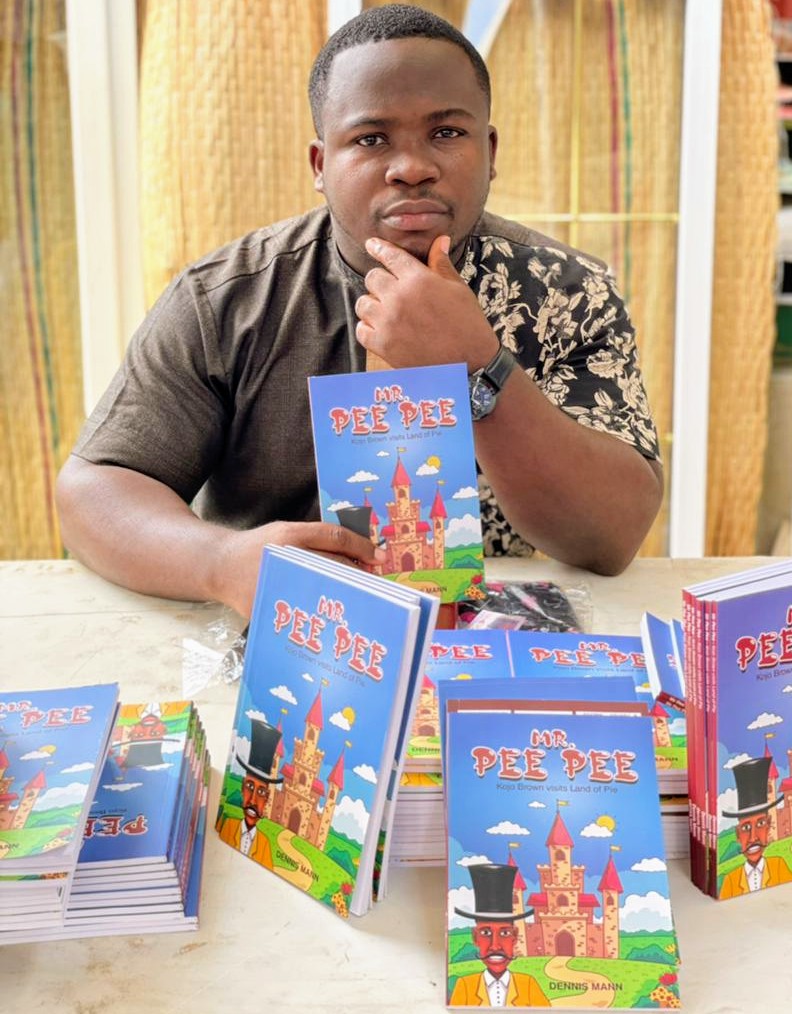
Let me take you on a roller coaster ride through the memory lane of BRR journey. Thus, some weeks ago I re-established communication contact with Mr. DennisAgyeman, popularly known by his professional pen-name Dennis Mann. Apart from his career as an author, he’s a reputable Banker with in-depth knowledge about the financial sector coupled with the world of Forex Trading and the Crypto-System spheres across the globe. Undoubtedly, he’s been described and identified as a man of compassion with heart of generosity as well as integrity. He’s such a brilliant devoted and committed Christian man with Godly character in most of his inter-personal business dealings in both the creative writing and money-making financial sectors, be it local or global.
My first time phone conversation with him commenced when I was in Takoradi, Western Region of Ghana, thus a couple of years ago whilst the Manager of Amanful Digital Library & Learning Arena which is abbreviated ADLLA. If my memory serves me right, someone came to study and research at ADLLA then upon conversation his name came into equation so I had his phone contact number. Indeed, it about six years ago! Aside, thankfully going through a note-book I found his contact number and discerned right away to get in touch with him. Of course, his invitation to Prayer Breakfast and Business Networking program organized at Pleasant Place Church in Spintex, Accra brought about positive thoughtful, insightful and delightful conversation on the aftermath. It’s heart-warming and welcoming moment bring with his better-half and kid onboard his car. Oh, once again, am so grateful and thankful for the lunch which subsequently became my dinner! LOL, I can’t forget the book club reading and speed-dating event we attended over the weekend at seemingly garden-like venue of Dzorwulu in Accra, Ghana (West Africa). It’s a whole new experience for me, as a couple of Vlog 233 and other interactive video was recorded whilst there and onboard his car to and fro the event place.
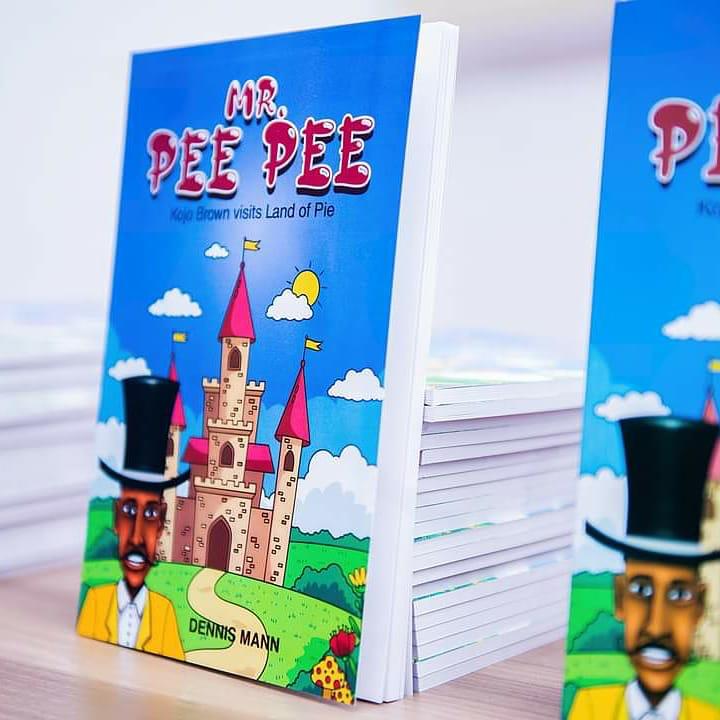
Quite significantly, in this writing as Arti-Blog I bring you the Book Review Revelations – BRR which I spent about two weeks reading and recording his maiden kid’s book titled Mr. Pee Pee even by posting and promoting on our People OfExtraordinary Talent – P.O.E.T Africa Whats-App group-platform. Factually, it one of the best kids book I’ve ever done Read Aloud Session – RAS on. The following happens to be three (3) reasonable personal professional observations in relation to Mr. Pee Pee and characters he out-lined in the chapters of its contents. I. Easy-To-Read (ETR), II. Easy-To-Understand (ETU), III. Easy-To-Buy (ETB).
Easy-To-Read (ETR): Factually, it’s in clear simple every-day English sentence and easy to read in terms of word pronunciation. Beside, soft diction for kids growing their vocabulary to the mind’s absorption. Of course, pages and chapters to make the whole book easy to read by children.
Easy-To-Understand (ETR): Definitely, it’s so lovely to fathom in terms of understandability. Thus, in view of how characters and images show in the pages to bring about it understanding being prime purpose of author Dennis Mann. Come to think of reading suspense, it’s equally easy to capture and picture with imaginative thought processing revelations to understand.
Easy-To-Buy (ETB): Affordably, it’s not expensive to get in terms of purchasing price being such a beautiful kid oriented book with nice pictorial chapters. I recommend and suggest that you get a copy or copies to your child, friend and families. Kindly, use the following Amazon web-link to buy online: https://www.amazon.com/Mr-Pee-Kojo-Brown-visits-ebook/dp/B096HNK4N3
It’s worthy to state in this Arti-Blog that Dennis Mann has good vision and purposeful mission for kids in Ghana and across the globe. Hence, he’s the Founder, President and CEO of Wide Reading Among Kids – WRAK non-governmental organization which seek to inculcate the habit of reading among kids in various communities in Ghana as well as across the continent of Africa and beyond. It also hopes to have Patrons and Partners come aboard so as to carry-out its literary charitable functions, thus donation of books to rural kids of school going age.
Facebook Page: Wide Reading Among Kids
Kindly, get in touch with the Author via below contact details:
This Book Review Revelation as Arti-Blog written by Ike Boat (Synchronized Chaos International Magazine) Contributor & Promoter In Ghana, West Africa. Email: ikeboatofficial@gmail.com Whats-App Contact: +233 267 117 7700, Alternative Number: +233 55 247 7676
In her deftly constructed poetry chapbook Hikikomori, Virginia Aronson builds a house of mirrors reflecting our social isolation. Her interlocking poems and metaphors draw inspiration from a phenomenon the Japanese define as hikikomori, or “pulling inward,” the impulse to withdraw from the pressures of modern life, which resonates with our current experience of the Covid-19 pandemic.
Told from the point of view of a person afflicted with hikikomori, the poems are succinct in their impact. In the title poem, for example, the narrator inhabits a small room, which is both his world and his inner landscape. He describes himself like a specimen: “alone / in your own world / alone / with yourself / your swirling thoughts.” His urge to confine himself indoors is further outlined in the poem “Brave New World” and echoes Aldous Huxley in reverse. The victim of hikikomori does not experience the evolution of society but its denial.
Cultural pressure and lack of respect for the individual inform the poem “It Can’t Be Helped,” where is the reader is haunted by images of ultimate isolation: “Japan is a suicide forest / the people wandering / in the ancient woods / … / to gut the emptiness.” Sadly, young people are most vulnerable to social oppression and parental pressure as described in “Anime Me.” The child in the poem succumbs to the lure of online entertainment, including video games and binge watching as a means of relaxing and evading social interaction, which sound familiar but frightening in this context as symptoms of deeper withdrawal.
Aronson shows how self-isolation can evolve into a psychological or medical condition. In extreme examples of hikikomori, adult children continue to live with their parents and depend on them for support well into their own middle age: “over forty / lacked self-esteem / locked in my childhood / bedroom / dreamless / alone.” In the poem “Homosocial” while thinking of women in society, the poet writes: “I sit in my dark / womblike room / thinking of them / living in the / present / no future for us.” The tragedy of the hikikomori is characterized by the victims who are no longer able to live or participate in society, excluding them from such essential endeavors as holding employment, having relationships, and raising a family. The individuals and society both suffer.
I found Aronson’s description of hikidashiya, or “those who pull people out,” to be quite chilling. In “Spirited Away,” the narrator endures an extraction reminiscent of attempts to force people to change sexual identity or religion. These violent attacks, often undertaken by one’s family members, are justified as necessary or well meaning, but they are painful to all involved.
One of the most beautiful images in the chapbook is also one of the most haunting. Given the Japanese sense of society and how those excluded tend not to exist, the victim describes his view of the hierarchical culture: “the pyramid leaving / me: / a grain of sand / at the very bottom.” We see the traditions of college, hiring, and corporate meetings evolving into drinking marathons from the eyes of one who has bound himself to nonconformity by retreating to his room.
This sense of loss and rationalization informs many other historical traditions of religious and philosophical inquiry from ancient hermits and monks to modern attempts to achieve enlightenment and insight through meditation or nature. But here the withdrawal feels tragic because of its permanence and emotional toll. The poem “Day #3652,” for example, finds the poet describing “my life floating past / on a dark thundercloud / … / And if the Earth stops spinning / I’m sure / I won’t notice.” Not only is the victim removed from society and the world, but he experiences a sense of timelessness and eternity in his condition.
My enjoyment of the collection was enhanced by the notes following each poem explaining the aspects of hikikomori in Japanese and English terms. The phenomenon of hikikomori has a rich history in Japanese culture, and I came away with a deeper understanding of hikikomori and its resonance with modern society. Hikikomori is an appropriate metaphor for the lure of staying home and withdrawing into binge watching and gaming despite its potential impact on the individual and society, even before the pandemic. This is the final epiphany of Aronson’s chapbook, that we are all reflected in her house of mirrors.
It is my wedding day! And I am sitting in the inner sanctum of the wedding tent worshipping goddesses I feel no affinity with. It is 1973 now and I am studying for a Ph.D. in Physics. Why then am I following such antiquated rituals?
Through the wooden grill, I watch the activity in the wedding canopy.
Dressed in a dhoti and Nehru shirt, my father Dada rushes to the entrance. Behind him, aunts line up to sprinkle guests with rosewater. My mother Aai stands in a corner, making no attempt to help in the preparations. Since her nervous breakdown over a decade ago, she has mostly been bedridden.
As I face the goddesses I strain to recall my fiancé’s face. I can only remember him as a blurry figure at the end of the parade of men I was exhibited to during the last year; the dressing up in my finest sari, the bringing of the tea tray to the in-laws, the visitors’ inquisitions about my education, but more importantly, about my housewifely skills.
Am I getting married just to avoid the humiliation?
Flanked by his brother Vasant and sister-in-law Savita, my fiancé Sharad walks into the wedding canopy. His parents, brothers, and sisters follow.
This is my husband, I tell myself. But he does not look like a man who could be my husband. My body does not stir at his sight.
A few months earlier, Sharad’s brother, Vasant, had arrived at our gate. “I asked for the smartest girl in the locality,” he said. “And everyone gave me your name.” He was an executive civil engineer in Bhopal, he told us, and had just returned from a sabbatical in the US. His aunt lived in our neighborhood. His younger brother, who worked as a textile engineer in Mumbai, wanted to marry an intelligent girl and go to America as soon as possible.
It all sounded so very exciting.
He asked about my Ph.D. and about my debating competitions. He did not talk of rolling chapattis for a hundred people or matching astrological signs.
A few days later, Dada and I traveled to Bhopal and stayed with a cousin. The following evening, we walked to Vasant’s flat and sank into a sofa, facing an American TV, which, in 1973, still awaited transmission.
Dressed in a nylon sari and a sleeveless blouse, Vasant’s wife Savita brought the tea tray in, bearing a Mona Lisa like smile.
The boy, Sharad, entered the room. He had a sharp nose, thin moustache, and trim figure. In a full-sleeve white shirt and brown slacks, he looked appealing. I could not gauge his physique but I was counting on meeting him again.
He talked of the textile research he was doing at an institute in Mumbai. I wondered why I was meeting him here under the watchful eyes of his relatives instead of in Mumbai where we could have gone on a date.
“Are you interested in going to America?” he asked.
What a silly question. Who would not want to go to America?
Sharad’s father was a humble man in white pajamas and a khadi shirt. “You should have a registered marriage,” he said to Dada. “No need to spend money on a wedding.”
Dada beamed.
“See what good people they are? They don’t even want a dowry,” Dada said as we walked back. “The boy has a company flat. You won’t have to bother with the in-laws. He might even go to America. But you shouldn’t count on it.”
But I was counting on it. Everything was falling into place, I thought.
Holding a chrysanthemum garland, I walk to the bohla -the wedding platform – and stand behind the saffron-colored wedding cloth two priests are holding up. I can sense Sharad’s presence on the other side of the fabric.
Aunt Shobha nudges me forward. I bow. Priests chant the mantras. I am about to link my destiny to the man standing on the other side of the cloth. I would be his, not only for this life, but for the next seven incarnations.
The trouble is, I can’t quite recall the exact moment when I agreed to the marriage.
After we returned from Bhopal, Sharad’s aunt, who lived in our neighborhood, arrived at our door. Circling an oil lamp around my face, she said, “You’re engaged,” and put a sari in my lap.
I was taken aback. I could not quite recall the exact moment when I had made the decision to marry. Rather, the decision seemed to have been made for me.
“You’re arranging Aruna’s marriage to a boy I haven’t even met?” Aai said to Dada after the woman had left. Aruna was my birth name.
“I want to see him again,” I said, wondering why Sharad hadn’t attended the engagement in person. I planned to go to Mumbai for my Ph.D. work in any case and could easily meet him there.
Dada wrote to Vasant. He replied that Sharad would be in Madras for a technical conference and would not be able to meet me.
Returning from Mumbai, I found the house buzzing with wedding preparations. “Didn’t they ask for a registered marriage?” I asked. Dada explained that his brothers had pressured him to have a formal wedding.
The next day, a letter from Sharad arrived, asking for the dowry of a scooter. Dada paced the yard, up and down, up and down, his cheeks hollow, his eyebrows furrowed. “Where am I to get a Vespa now? I will have to pay at least six thousand,” he said.
“I don’t want to marry a man who asks for a dowry,” I said.
“The boy’s family’s spending nothing,” Aai said, coming out of the kitchen and sitting on the divan. “They asked for first class train tickets for twenty people. They asked us to print two hundred invitations too. Who ever heard of the bride’s father printing invitations for the bridegroom?”
“Dada doesn’t know how to play the power game,” Prakash whispered in my ear.
“If we say no now, people will think the boy rejected you,” Dada said. “They will malign your character. No one will marry you.”
“I don’t want Aruna to marry into such a family,” Aai said.
“I have invited all of my relatives,” Dada said. “How can I back out now?”
“He is spending all his savings on the marriage and the scooter,” Aai said. “He will be retiring in February. What will we live on then? Prakash hasn’t even finished college.”
Dada raised his palm to indicate shut up.
Something snapped inside me at that familiar gesture. “Don’t ever do that again,” I said. “You repressed her all of her life. And now you are repressing me. You care more about what people think than what I think.”
Dada stared at me.
“You say you support women’s liberation. But you don’t. You like controlling women. You are controlling me. And you controlled your wife all her life. Which is why she went crazy.”
Dada crumpled into his chair. “You don’t know anything. You don’t know what struggle it was for me to keep you and Prakash alive after your mother’s breakdown. So many times I thought of leaving her. But I felt sorry for you kids.”
My arms and legs, my whole body, began to shake.
“And now you think of me as a dictator? You, whose tiffins I filled and uniforms I washed?”
Holding his face in his hands, he began to sob.
The universe seemed to crumble around me at the sight of his tears. I had never seen Dada cry. He had been the one person who had always stood by me, who had tended to my every need.
I reached out to take his hand. “I will marry whoever you want,” I said. “But please don’t cry.”
Kuryat Sada Mangalam, the priests sing the finale. People throw colored rice on our heads. The holy cloth is removed. I peer into two timid eyes. This is the stranger who asked my parents for a ransom. His downward gazing eyes and slack demeanor do not compute with the hostile act he has perpetrated. How do women surrender to husbands who have demanded dowries? I cannot. My heart and soul are rebelling against this man. Every cell in my body is asking me to run away, like Walmiki, the ancient sage, who, after being coerced into an arranged marriage, had fled the wedding tent, and after taking refuge in an Ashram, become a seer and a scribe.
The only flight I am capable of is a flight of the soul. It leaves my body now, and sitting on a wooden beam at the top of the canopy, watches the wedding rites.
Aunt Shobha nudges me forward. The shehnai breaks into a merry tune. I put the chrysanthemum garland around Sharad’s neck. He puts a garland around my neck. Everyone claps. Sharad takes my hand and we begin the saptapadi -the seven circles – around the holy fire.
The bridegroom’s palm, I note, is soft and clammy.
In Hindi films, the heroine circles the holy fire accompanied by the villain who has coerced her into the marriage. But just as the bride and the groom are about to take the seventh step, the hero appears, shouting, “Stop the wedding!”
Is there a precise moment at which a Hindu wedding becomes irrevocable, I want to ask the priest? Or is it a myth that Bombay filmdom has concocted in imitation of Hollywood, where the lover invariably makes an appearance before the bride says I do?
I take the seventh step. I gamble away my life. I am married, forever and ever. To a man I do not love.
Female cousins arrange banana leaves on the floor and draw colorful rice powder designs around them. Guests sit down. But no one eats. It is customary for the bride to initiate the feast by putting the first morsel of food into the groom’s mouth while rhyming his name in a lyric.
“Say it in English if you want,” Vasant says.
Sitting by Sharad’s side, I pick up a piece of jilebi from his plate. “Smashing the atom and unleashing the particle is no miracle compared to the marriage of Aruna to Sharad the oracle.” I thrust the sweet into his gaping mouth.
I have never felt more foolish in my entire life.
Sharad and I sit on a sofa, accepting gifts. “What a good looking boy you have found your daughter,” someone says to Dada. I look sideways at Sharad. With his sharp nose, pointed chin, curly dark hair, my husband is handsome I suppose. Why then does he stir nothing in me?
As evening approaches, I brace myself for the farewell ceremony. Brides throw their arms around their mothers and sob hysterically during this ritual. Weddings become funerals. Even men weep.
Aai stands catatonically in a corner, her lips moving silently to some inner voice. Dada hovers at the edge of the canopy. My parents have never embraced me. They would not begin now, in public. Prakash stands among a group of friends, staring at me with large sad eyes. He would have to cope with our fragile parents single-handedly from now on.
But I cannot react to his plight. I cannot afford the luxury of emotion.
I sit down to face a plate of rice grains. The bridegroom will now write the bride’s new name in the rice. In our community a bride is given, not only a new surname, but a new first name too. Like a Mafioso in the witness protection program – Mario Puzo’s Godfather has recently hit the bestseller lists – her identity is completely erased.
Sharad scribbles a word in the grains.
“Sarita,” the priest reads.
This morning, I woke up as Aruna but tonight I became a Sarita.
Rodney read the letter over and over. Though the letter remained resilient. No matter how many times he read it, the meaning stayed the same. He had been summoned for Jury Service.
He had dreaded doing Jury Service on account of his inability to moor his thoughts. He knew they would drift from him as they always did. He just couldn’t help it. His indecisiveness played upon his mind. He struggled to decide what to do with himself let alone somebody else’s fate.
The week that followed was as harrowing as he’d expected it to be. Rodney found himself sat bolt upright in court aiming to listen to both sides of the story. It wasn’t at all like the movies, but he found himself watching the proceedings as if it were. He never could guess the perpetrator. He’d always get it wrong. Even when he was watching if for a second time.
At times, his mind ran away with the evidence. Placing him at the scene of the crime. Throwing accusations at the accused as if they were complimentary peanuts for him to help himself.
The man was on trial for the murder of a woman named Anne Barlow. Her asphyxiated body had been discovered under the third arch of the nearby aqueduct by a seven-year-old brother and sister out for a picnic with their parents.
The accused, Richard Templeton, worked in the same office as Anne. He was a quiet, introverted man. But he was committed to his job. Always punctual. Never missed a day of work. Kept himself to himself. Some of the witnesses who’d been called up said that he’d been obsessed with Anne. But they also confessed to not knowing anything about him. The more Rodney heard about the man, the more he identified with him. The more he heard the evidence against him, the more he identified him to the crime.
Rodney sat perplexed at the table listening to the other jurors. Nodding at one opinion, then at the other. He felt imprisoned. His eyes kept wandering to the window, leaping outside to freedom, where he saw lawyers wigs dripping ink upon the grazed verges. The humidity of the summer caused the room to contract. The sweat congealed within him.
“So, what do you think Rodney?” asked Lena looking hard at him.
Because they were all weary due to their confinement, the words felt more restricted, making it all the more difficult to determine. Rodney cleared the congestion from his throat. “I agree with Frank.” he replied, unsure if he agreed with what he’d just said himself.
As the days became a week, he knew he didn’t agree with Frank anymore.
In the end he really couldn’t make up his mind, but he knew he had to say something, and following the majority numbed his responsibility.
After his decision had been released, Rodney felt free. But as the judge delivered the verdict, he became more and more incarcerated by an abiding sense of guilt.