
Don't Wait Up


I'm off to Hawaii,
Hold my hat!


He Needs More Outside World


He never did poisons
Like absinthe,
But a corner view
Gets Dickensian
By a prison-brick
Fireplace his keepers
Don't let him use.
He orbits the town green
Three times a day,
Dislikes the crow stares,
Would like a go-free-pass
To the library stacks.
His single visitor
Most days, who brings
The fire to his belly,
Isn't the Mistress Lovelace,
But an anonymous mailman.


Vanity


The best practice after sixty
Is to pass by mirrors with a shrug;
As mirrors punish viewers
Who expect someone younger.


The Jesuit Priest


He lived a double life
As a clergyman
And gay-nudist-activist.
He was disloyal
By carefree lifestyle, detested
Misogynist scripture
And the afterlife angel hierarchy.
He paid for an Irish wake,
Then had drunken friends
Bury his ashes at sea.


2020, a Quatrain, After e.e. cummings


Nature is kind
When graves
Mount the stairs
And heroes die.
Category Archives: CHAOS
Essay from Zara Miller
Destined Love Is a Flawed Premise
by Zara Miller

“I chose the name Hollywood simply because It sounds nice and because I’m superstitious and holly brings good luck.”
If I could laugh through tears, I would, but alas I´m not that cynical. The afore-mentioned quote is attributed to Daeida Wilcox, a wife of Harvey H. Wilcox, a man who purchased 120 acres of land from the original 480-acre ranch, sometime in 1887 – a land on which the green, indestructible vines of show business sprung from.
I know what you´re thinking, and no, this is not that kind of article.
(Not that there isn´t enough source material to pull from.)
I want to focus on one particular aspect of storytelling that Hollywood has deep-rooted into our subconscious – that love is supposed to be a rollercoaster drama, and that you are genetically (?) and fatefully (?) pre-dispositioned to fall in love with one specific person.
The illusion of “the one”.
And no movie has done more damage to perpetuate that than the 2004 movie adaptation of Nicholas Spark´s novel – The Notebook.
Yes, there have been plenty of toxic movies before the Notebook portraying romantic love affairs like a pre-ode to the horror that was awaiting us in a form of the Twilight series but as a nineties´ baby, this one laid down the foundations for a distorted trend in writing for me noticeably.
Instead of portraying fatalistic love woven drama as a form or one way to tell a romance story, it became so prevalent I see it in every other book/movie.
So yes, there I was in 2005, watching Ryan Gosling and Rachel McAdams jumping through proverbial hoops, making up and breaking up in the rain a million times shown as the most romantic thing in history, while my grandparents were just chilling over there on the couch, happily married with almost no drama for 40 years.
Being a sucker for romance, and having written a book with a heavy romantic subplot, building a healthy image of love without depriving the readers of the drama, has been challenging to say the least, but incredibly rewarding in the end.
Let´s dive in.
Cause and Effect
The debate on the differences between infatuation and love has existed since the beginning of a recorded word but that isn´t quite the quarrel here. The variety of storytelling that explores physical attraction evolving into an emotional connection or vice versa, or even never surpassing the superficiality of the former, is all valid and artful.
There absolutely are abusive, toxic, superficial, will they won´t they, we break up we make up scenarios, and giving them air time is completely fine.
What isn´t remotely artful or fine, not to mention believable, is the idea that two people fall in love just because.
And there is a quick test to reveal whether the love story you´re looking for has any merit: Ask yourself whether you´d want to be friends with either or both of the protagonists who are supposedly in love.
But Why Is It so Toxic?
You´re probably asking yourself what´s wrong with losing yourself in a fantasy – isn´t that the whole point of fiction?
It is, but there are more impactful results of fiction to be considered. Through stories we teach, we learn, we deal with personal dramas, we inherit, we get inspired, we share. And the more we pretend that the illogical storytelling is completely fine, the more books like Twilight, Fifty Shades of Grey, After, and It Ends With Us will emerge.
We project onto stories, we let them enter our system, and if a projection is toxic, it makes us not want to try. Try to be better.
And trying to be a better person every day, even if just by a little, is the whole point of living.
But if we read about super bland heroes, like a white canvas and the protagonist falls in love with them just because it´s meant to be, and we not only let it slide but copycat the narrative and continue the pattern, we´ll end up stuck in a fantasy world full of self-obsessed maniacs who don´t need to try because someone will come along and love them.
They don´t need to love and respect themselves, or to be upstanding, to lead by the example, it´s fine, isn´t it? Being a passive existence of nothingness?
It´s fine possibly losing all friends because – to drive home my original point – who would want to be friends with a living-breathing personification of an empty bucket of vague colors that is the likes of Bella Swan?
Does I am Cecilia Do Better Than That?
Since you clicked on this article, you might be aware that I am in the final stages of the publishing process with the New Degree Press for my Young Adult Novel I am Cecilia.
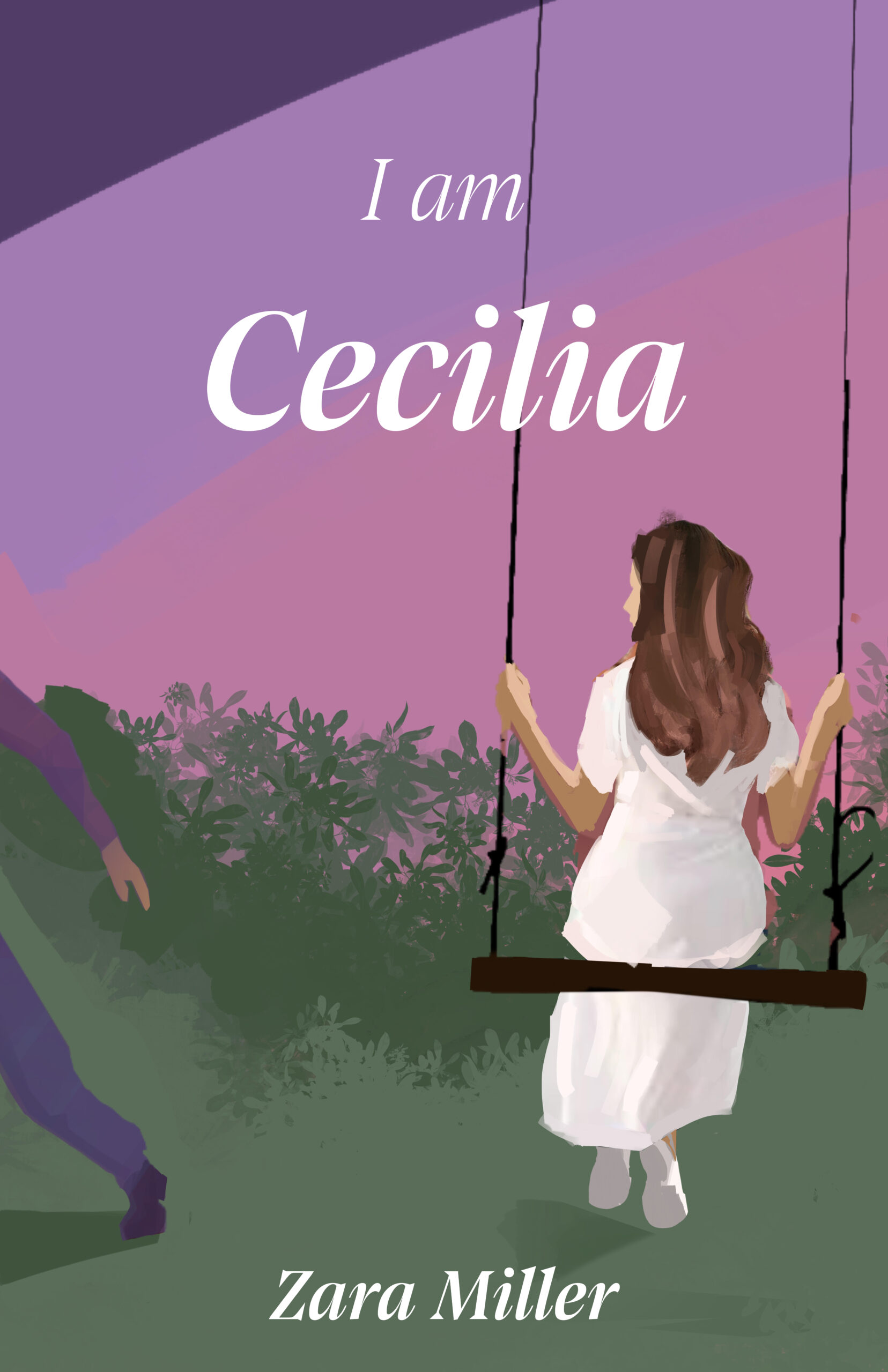
(If not, you are welcome to join the fandom! I´ve been preparing my readers for the good stuff in the book like exploring the gypsy culture, studying the dysfunctional families, falling in love at a young age for months now…Sounds delish?)
When you´ve been writing since a young age, and reading has been a central core of your identity as it was in my case, you pick up so many stylistic choices from your favorite authors, you sometimes forget to ask yourself – Are all of them healthy and worthy of an homage?
I am Cecilia might be a piece of fiction but it´s not fantasy, so I couldn´t justify my protagonists falling in love because *magic*, or *destiny*, or *whatever*.
Not that the fantasy genre isn´t accountable when it comes to making a romance make sense.
(Remember when Jon Snow and Daenerys fell in love just because and it felt like drinking spoilt milk anytime they kissed or said I love you to each other? Now compare that to the emotional impact of Jon falling in love with Ygritte.)
But the scope of writing a realistic relationship blossoming between two teenagers who are not that interested in falling in love, to begin with, is challenging to say the least.
The titular character Cecilia, our heroine, has one goal and one goal only – to get the hell out of a small town in Slovakia and go to college where her superb intelligence wouldn´t be perceived as strange.
Her love interest, Dany, is a professional hockey player, groomed to enter the NHL as soon as he comes of age.
How do you reconcile a relationship like that? Would just because of work?
Well, no. Although they are both perceived as being attractive by their peers, I thought finding an angle to justify the process of falling in love was the best approach.
Both the missing link and the key to it was the single-mindedness of their thinking. Focused solely on one goal – as teenagers often are – they find a little something to their liking in each other.
So, to answer the question of whether I am Cecilia does better than the stories coming before it, I´ll leave it to your better judgment as a reader and a perceiver.
I am Cecilia will be available on Amazon, Kobo, Ingramspark, and Barnes&Noble in the upcoming weeks. You can follow me on Instagram @zaramiller_author, or on LinkedIn under Zara Mille for more news and swoon-worthy fiction content. Looking forward to meeting you all.
Poetry from Giovanni Mangiante
chronicles
some people fall apart alone in their rooms
with a bottle of rum and a photograph
while others looking for coins in their pockets
as people begin to pile up behind them
and the bus driver’s face
twists slowly into a smeared painting
of boredom and rage.
some people fall apart looking out the window
and scraping the bottom of a can of tuna.
sorrow isn’t blue.
sorrow is the orange late afternoon sun
and the warm breeze of dusk
in 1978, in 1982, in 1999, in 2008,
in a yesterday that left us all behind
a long time ago.
mental patient
in the hotel of my mind,
every hallway is covered in missed-opportunity doors,
and in every turn there’s a shadow of unsolicited pain
creeping from its splintered walls.
I am a vagabond in my own home
unsuccessfully trying to smash open doors to the past,
running up and down broken stairs
while some cosmic creature watches from the outside,
and places a new shadow in the next hall.
11/15/2020
somber tones
for my drought-stricken heart,
40 days away from
Christmas,
I think I smelled my childhood
for a second there,
but it went away with Lima’s
lung-breaking twilight smog.
I need to go out for cigarettes,
I need to go out for wine.
I need to go out for the sake of going out.
something is telling me
tonight I might need to reach
inside the back of my head,
speak again
to the angels from the past,
and see
if we can finally
come to an agreement.
sooner or later,
one of us will have to be
let go.
ripped apart by silence
these quiet nights are nails
being pushed down through my temple
by the hands of loneliness:
friday is again just friday,
tuesday is again just tuesday,
christmas is coming soon,
new year is coming soon,
she is not.
in these quiet nights:
I need the factories to roar, every dog to bark,
every cat to hiss.
I need window-breaking winds,
every human to scream, plates & glasses
smashing against the floor.
I need an epicenter in my bedroom.
in these quiet nights:
I need to silence the sound of trickling water—
the sound of the shower being shut off
as she steps out of it
in someone else’s bathroom.
demon
the first sting would set the whole room on fire
and make everything come alive at once;
and if
the chairs
the doors
the shoes
the clothes
the lightbulb
the curtains
the windows
the walls
had a mouth,
they would all have screamed at once
as I tore myself to pieces, dead-eyed and silent,
searching under my skin for the sleeping newborn
in his mother’s arms, sometime in 1996.
Giovanni Mangiante is a poet from Lima, Peru. He has work published in Newington Blue Press, Rusty Truck, The Daily Drunk, Anti-Heroin Chic, Heroin Love Songs, Rat’s Ass Review, Three Rooms Press, and more. He has upcoming poems in The Piker Press. In writing, he found a way to cope with BPD.
Essay from actor and humanitarian Federico Wardal
The Pharaohs’ Golden Parade event : new splendor after 3500 years
by Federico Wardal
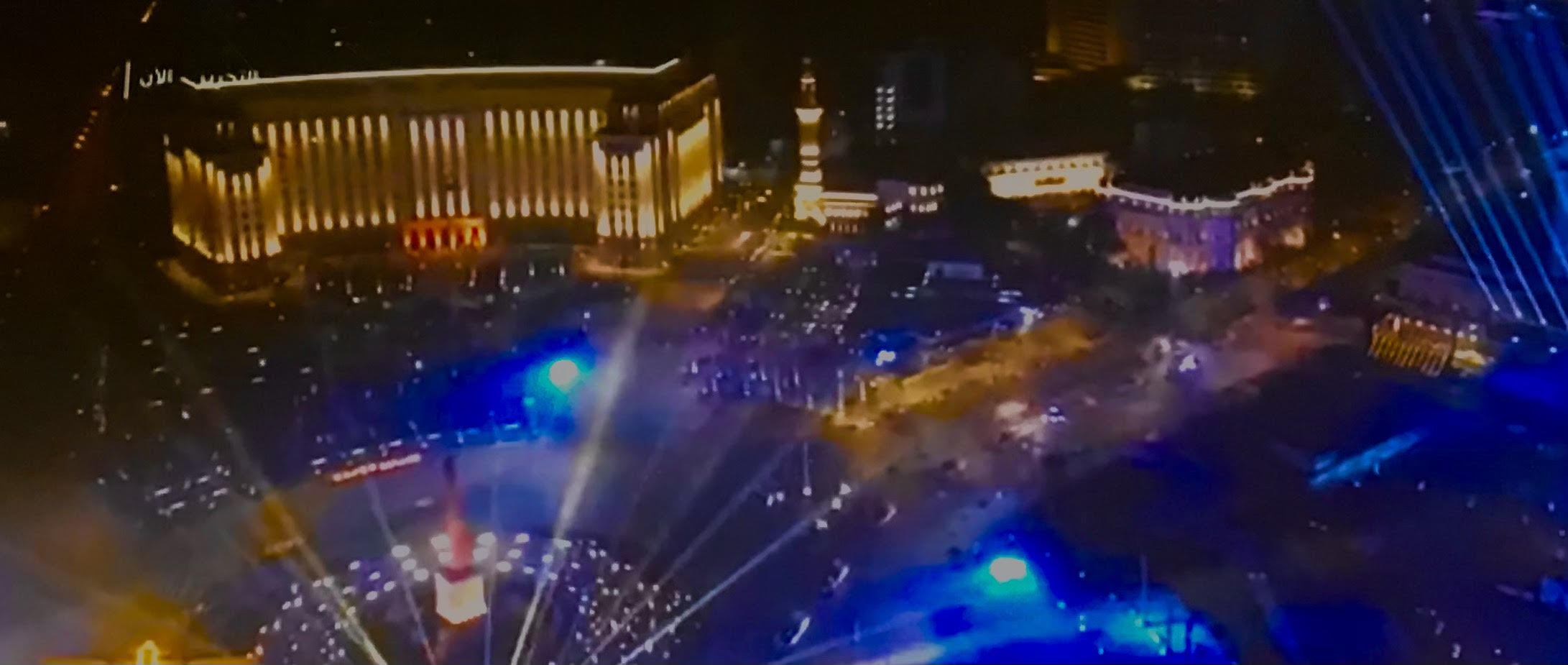
Cairo. The Pharaohs’ Golden Parade event, which I had the luck to see, is the most spectacular event at least of this millennium, even visible from space. Powerful beacons of light projected into space and illuminated the center of a crowd of 20 million people in Cairo for five miles.
This accompanied the passage of the mummies of 18 pharaohs and four queens from 3500 years ago (18th, 19th, 20th dynasty era) placed in spectacular hearses with immense beautiful processions with people in period clothes and singers who sang ancient songs.
The glittering golden parade was channeled over a five-mile path, guarded left and right by guards in ancient uniforms, from the Egyptian Museum in the immense Taharir square to the National Museum of Egyptian Civilization, located in Old Cairo.
At the entrance to the museum, the Egyptian president H. E. Abdel Fattah Al-Sisi gave a welcome from modern Egypt to kings and queens who brought Egyptian civilization to the world. A very touching magical moment. The news caught the attention of the media and so it spread all over the planet, as the lighthouses of Cairo have reached the world. Everyone knows how the ancient Egyptian civilization, one of the most spectacular and advanced of the ancient world, was fascinated by the skies and galaxies and their scientific discoveries were amazing for their time.
I find ancient Egyptian art beautiful and reflective of a culture with a high degree of wisdom and insight. The cult of the beyond, of life both before and after death, is predominant. Souls are based in eternity and find themselves in an endless circle of death and resurrection.
This is the profound meaning of the event: to pay homage to everything that the immense Egyptian civilization has created and continues to create. And this is certainly how this spectacular parade arrived, thanks to the strength of the love and respect with which it was made. It was a worthy tribute to the energy of the 22 royals, whose mummies, now, finally, have a home equipped with today’s most sophisticated means of preservation.
Prof. Zahi Hawass, legendary archaeologist and friend of mine, said in his major media appearances that this is an event that Egypt gives to the entire world and that calls the world to visit Egypt. But another fascinating event will occur soon: the inauguration of the Great Museum of Giza, the largest and most grandiose museum in the world. This museum, with its sophisticated and spectacular structure, will remain as one of the wonders of our planet, even as archaeological research continually advances, to offer us all beauty for our eyes.
Poetry from John Thomas Allen
Quote
A Dying Angel


Timing is insufferable puppetry.

            Her cellular transmogrification
in Tron stars and winding chutes of richoceting snowfall
in hourglasses of disco moons and drooling easels,
Soaked with the spider’s mandala.

The filigree’s weathervane neon above
  a deserted cemetery-these
  are lattice, roomy and singes
      Rembrandt black and green
      from one flipping coordinate


In a symphonic

magnetite trance, her mandala’s

vegetating jingo code


under the duneflower’s tongue


      t h e s o l e s e n s a t e s p l e n d o r

t h e p l a s m a d e w’s t o u c h

  in a crisp noon

 That film in the desert with
   her at a distance, broken in clown makeup
  these mirrored digital sifts
  reflect back
 a mis en abyme angle, cracked
  in lunar symmetry.

The crude moon’s communion
             jackal pale, sphinx eyed
  mercurial black spinning
a chrome silhouette cinching


Time’s ether gases these cufflink
            reveries, green stones, the glass
 porch angels, cross legged
 on the choral villas


The straw sun sounding
; the arrival, the moving yard sale
 her reflection the bought mirror’s whole


           The cube dreamt porch shingles
           splinter and wet
           these diamond tattoo tears
           of  a djinn belly dancer, her stare
the mosaic of how voodoo
              suffer in these pixie sandstorms


           in  leveled chambers

of oceanic catcalls
       These free digits and running
in that hushed, aromatic shade


           Her rolling eyes
 green and yellow
  planetary eyes,
            narcotic stars
in dust, transit as Grecian peaches
  centering in a dizzy star scab
             Her voice a score a planisphere between
shredded Euclidean angel tongue
 The smoked mirror’s unsung
The fractal singing sand dunes

           Krenek’s flute guns


     I dreamt I traced you
Your simile a head in the Magic 8 ball
On the alien bouquet of rose water UV shade
On crumpled silkscreens, a faded Japanese smile
Eyes cinders in the windmills of diadem fortunes
The crypts of serrated light tombs


Insomnia moons
Rotten marquee lights spilling
The pegged lights lit like Judy Garland’s
black primrose trail
 from her lap


She is chewing her movie jewels
in revolving chambers of yoga silk
Her yard line a ghost factory
An echo and Hindu arms winding

Her hair gone up in ringlets

                            seaweed silk


of combed astral smoke


Sounding in a black box,


Sky marble and glass
John Thomas Allen is from New York. His latest book entitled Lumière was published by NightBallet Press in 2014. His poems have appeared in Veil: a Journal of Dark Musings, Arsenic Lobster Magazine, Sulfur, Mad Verse, The Cimarron Review, etc., and he has a story in the anthology titled Narrow Doors in Wide Green Fields edited by R.W. Spryszak. In 2019, he won James Tate Prize for his chapbook entitled Rolling in the Third Eye, which was subsequently published by SurVision Books in 2020
Screenplay from Chimezie Ihekuna
Title: The Broken Mirror
Adapted from a book by Chimezie Ihekuna (Mr. Ben)
Screenwriter: Robert Sacchi

Genre: Drama
For reviews, production consideration and other publicity, please contact us through the email addresses below:
– rsacchi@rsacchi.20m.com
Synopsis/Details:
As the title suggests, The Broken Mirror is a story that reflects on the aftermath of a couple’s marital failure. Like a mirror’s reflection, it makes obvious the consequences of divorce on children. The Broken Mirror is a family drama with unique twists as a bedrock to its plot. The tragic story follows the family as the children grow into adulthood.
Raheem, friends with Joke, twin sister to Shade, narrates the story. The title comes from Raheem’s diary. The relationship struggles of Bode and Cynthia, parents to Shade and Joke, get mirrored in the lives of their two daughters.
After incessant quarrels became the order of the day in the family, Cynthia hired legal luminary Ken and filed for divorce from Bode. Cynthia and Ken later married, and Joke lived with them in Calabar while Shade lived with her father, who was devoted to her and also chose not to remarry.
Heartbroken and enraged after the divorce, Bode lied to Shade, telling her that her mother and sister had died and that no one should ever mention their names again. Joke also grew up hating her father and twin sister, feeling that they had abandoned her.
Bode also lost his job and livelihood due to the divorce and a nasty smear campaign.
Ken abandoned Cynthia and Joke and was never seen again after that. After a rough childhood due to her father’s joblessness, Shade fell in love with a young man, Emeka, and got engaged. Joke grew up angry, looking forward to the day she would get back at Shade, whom she believed had stolen away their father’s affection.
Bode passed away after a lingering battle with leukemia and Cynthia died of cancer.
One day, Joke realized that Shade was still alive, about to marry Emeka. This set a tragic chain of events in motion that took the lives of both Emeka and Joke.
After Emeka’s violent death, Joke’s friend Raheem found Emeka’s diary and was able to piece together this twisted tale of family relations.
Poetry from Michael O’Brien
you won’t hear a friend out of me. the earth is flat.
Summer ends. You buy a bag of carrots. You take the bag of carrots home. You open a bag of carrots..
‘Hey, is anyone one in there?’
Nothing. Nothing n the bag of carrots but the quietness of carrots.
You ask again but louder.
easter hymnal
how to poison eggs:
pacific ocean. joaquin phoenix. tulips. rimbaud. fish. dead editors. birds of sudan. soldiers playing with beetles. when they make a movie about you, you disappear. baking competitions. a river with no name. things that bother you. alphabet spaghetti. the sound of an approaching train. rivers that begin with the letter q. kurt cobain’s last dream. too long in the sun. mary magdalene’s 1991 donruss rookie card. jay feathers. virtue signaling. cool breeze. napoli. scuffed knees. paint factory. street signs facing the wrong way.
you googled banana bread recipe
and now it is baseball season again.
your hair is still your hair.
you trimmed it yesterday.
but it is still yours.
like the banana bread you baked yesterday.
the snow has started to shift.
and the roads are wet from melting ice
not rain
you found the recipe
after you googled banana bread recipe
and now it is baseball season again.