Announcements: I will be away during September so in lieu of putting together the normal October issue we will post writing and book reviews from our literary colleagues Desiree Duffy (Black Chateau Publicity), Gini Scott, Kristina Marie Darling (Penelope Productions) and others.
Also, in January 2020 we will have a special issue with the theme of ‘Philosophy,’ curated by our guest Editor and Synch Chaos colleague/thought leader Kahlil Crawford. So please begin thinking of work that you might like to submit for that issue!
Now, for September 2019’s issue, True Character Revealed. It’s been said that crises don’t develop our character so much as reveal it. And often, long stretches of ordinary life can do the same.
The ‘Eye of God’ Nebula
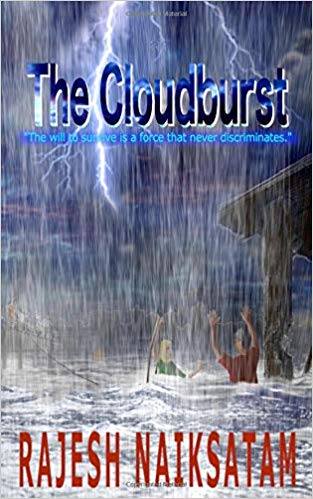
In her monthly Book Periscope column, Elizabeth Hughes reviews one title, Rajesh Naiksatam’s The Cloudburst, that focuses on teens from varying backgrounds surviving a flood together. The other books in her column illustrate another way that we show who we really are: in the day-to-day choices that we make. Vasvi Pande’s Krista the Superhero and The Girl with the Pink Crayon and Paul Trittin’s Jacobus: A Eunuch’s Faith present protagonists who build and reveal character throughout lifetimes of decisions and experiences.
Some protagonists need to see themselves more realistically, or at least take themselves less seriously. Daniel De Culla humorously posits a ‘spitting poet’ who believes he’s known for his wonderful verse recitations when in fact, it’s his habit of expectoration that gets people’s attention.
Ernest Hilbert, whose latest collection Last One Out gets reviewed here by Christopher Bernard, uses form and elegance of language to recollect and consider moments he spent with his father and grandfather, and now his wife and young son. As with many great poets, the way Hilbert describes these moments, the language used, reflects the subjects’ character.
Actor Federico Wardal lends insight into the process of how an actor embodies a character and how a director and scriptwriter envision and create one. His collaboration with Federico Fellini continues to inspire him to this day.
Mahbub writes of various positions where we find ourselves in life: victory and defeat, joy and grief. Yet, a true love can remain constant throughout our journeying. He also reviews Rajesh Naiksatam’s novel The Cloudburst, pointing out the social injustice exposed when different classes of society are forced to interact and see each other’s experiences. The novel illuminates how, no matter what groups and classes we belong to, we all share a common impetus towards survival.
Indian Navy flood relief efforts during 2015’s floods in Chennai
Enjoy Synchronized Chaos’ September issue, and we hope that it reveals a plethora of insights.
“Boy,16, arrested in gangland killing, gang member condemned to life in prison, South African gang film “Four Corners”, the Northern Areas of the Eastern Cape Province in South Africa, and the Numbers Gang: South Africa’s biggest gang” by Abigail George
We are being erased into the background as if we are extras on a film
set. We must begin to communicate the threads of the entire rape of a
near wasted generation. Wasted by tik and marijuana. If they are not
wise (where do they get the wisdom from), if they do not have the
courage to pray and to change the circumstances that they are living
in (if they were not taught those values) what will happen to the
mulatto a century from now?
Coloured street gangs do believe in cultural unity. They call the gang
a brotherhood. They call the brotherhood a family. Blood is thicker
than water. These are dangerous life studies. There is a life science
but little literature on what the promulgation of the Group Areas Act,
the history of apartheid and post-apartheid South Africa has had on
stories, on investment in, on the self-discovery of the mulatto. He is
not White. He is not Black. It is too late to develop positive
Coloured youth because they are so far removed from the fabric that
makes up the modern world, and that marks them with the psychological
framework of the experiment of a pilgrim because in a way we are all
pilgrims. We are all searching for something that will intoxicate us
with life.
We want to see all living things, all animals with their own intuition
and sensibility. Not crime or criminal tendencies. Not addictions.
Addictions to sex, pornography, drugs and alcoholism. The girls are
sex machines bringing children into the world when they are hardly
equipped to deal with family life or raising children with echoes of
values and norms. Belief systems.
Not only do they exhibit psychopathic tendencies, but they also
display a racial tendency towards Black youth and Black women. Black
people in general. It is really destruction amongst these
self-saboteurs at its most basic level. The grassroots level. The only
people who will survive are the middle classes. The elite. The
educated. If you fit into any one of those classes then you are home
free in a sense. Home is a dirty secret but it makes the gangster
saintly amongst his peers. Coloured youth are on a mission to destroy
themselves, their families, the people that they love, admire,
worship. They are even on a mission to kill, to maim to murder. This
is no ghost story.
There have always been gangs. That is simply nothing new.
Heartbreaking stories of utter abuse at the hands of adults who in
retrospect had to devote themselves to family life and their children
but there have also been Coloured men and woman, great thinkers,
leading intellectuals who are now fostering innovative theories about
families who live in poverty. Theories about sexuality. Spiritual
poverty.
In the end, at some point in our lives we all experienced racism. We
were all on the receiving end of it or we gave it out. If you are an
educated mulatto you have got it made in a sense. You can be
philanthropic in your endeavours. You can help those who cannot help
themselves. If we lived in a perfect world everybody would have the
same opportunities, the same choices, challenges, obstacles facing
them, decisions to be made no matter what the colour of their skin
was, the same education (does this mean that everyone would be
educated and brilliant. Intelligent and lucky.)
Opening up the Pandora’s Box of the drug addict and all you will come
to witness is nothing but a skeleton fused with self-portraits of
self-hatred, selfishness and ego wasting away. Looking nothing at all
like their real age. Unfortunately, we live in a permissive society.
It is a society that gives us the go ahead or the permission if you
will to go ahead and do anything with your life.
The world will never get sick of prettiness. Men will never get tired
of it like they get tired of gender and class taking over the world or
being lectured on it. Men never get tired of taking the inexperienced
virgin to bed. That love-affair. I say this again. That there is an
invisible press out there. An invisible propaganda. Visionaries who
have and will always show us the right way. Entertainment has and will
always show us the wrong way.
I do not understand the sexuality of young girls. How they promote
themselves in the workplace. The relationships they have with older
male figures, father figures. It is as if they draw up a sacred
contract. The man has all the common sense. The girl dreams and
meditates of her prince. In the end everything is outweighed,
destroyed and the girl returns to her mother in the heartland of the
city she found herself in months before. If there is a baby in the
works, she will give birth to the baby and fall in love with the child
to the extent that she will keep it, raise it. But does she have the
oomph? Does she have the will and the drive to raise a child on her
own or will she succumb to silence, to isolation and to rejection from
her peers? Despair, hardship, loneliness?
She was not the wise one in the relationship but it will be months
before she realises this. It was the man with all of his common sense
who was the wise one and who knew how things in the end would
naturally turn out. The mulatto girl has a disembodied frame but she
will with an intensity raise her child. Her problems will become part
of the child’s consciousness and something usually will be deformed.
Mannerisms will be abnormal as the child grows older if there is no
father figure. Etiquette will be a castle in the sky. The boy will
grow up to be a rough through no fault of his own. It once again
depends on the mothering, on the family structure. If there is a
close-knit family structure. A nuclear family or a blended family of
half-brothers and half-sisters and a stepfamily perhaps the child will
be saved. Perhaps.
After the uprising of the riots in the Northern Areas where shops were
looted and badly damaged. When people lost their lives, family
members, businesses nobody was discriminated against in the Coloured
sub-economic areas. Was there a Third Force involved as people would
like us to be inclined to be believed? Was the special branch
involved? These are facts that ordinary people will never know.
The Democratic Alliance has a foothold in the Eastern Cape now which is
now one of the worst off provinces in South Africa. If you want to
believe that violence and murder was the order of the day those days
of the riots then violence and murder, looting was the order of the
day. I see the territory on the fringe that is before me. The
districts. The suburbs. The life and times of the elite who live
behind their high walls, their electric fences, their security fences
and dogs in White suburbia. It comes to me in heightened frequencies.
Violence is reality in post-apartheid South Africa but it is also
surreal. It is also a hallucination in Technicolor.
Otherwise violence is an excellent metamorphosis when studied
alongside individuals who committed themselves against fighting in the
struggle against apartheid. I cannot give it all up to my imagination
anymore. I must believe like Anne Frank that there is some good in
people and some bad but that there is good in them also. There was a
death, many deaths and bodies lying in the street. I cannot account
for the names and the faces that have crossed over to the hereafter.
We cannot all be monks and nuns. Violence tends to disrupt the order
in society, cause maladjusted behaviour, in the end what is its
purpose, what meaning does it give life?
In this world, like I have said before we cannot all be monks and nuns
but we can write. We can write poetry about the horrors of life, how
terrifying it still is to live in a racist post-apartheid South
Africa. If we write we can diminish and erase somewhat of the melody
and the blankness of the ultra-violence of the minor earth and the
major sky. We will never forget about burying the bodies of the men
and women who lost their lives in the riots like we can never forget
the struggle. The camps in Tanzania. Conversations and moods are
spiritual and bipolar in a sense when people talk about old-fashioned
days. We are haunted by those days. We want to relive them because for
us there was some vitality at flying solo before marrying, before the
school lessons and homework of children, the milk of human kindness
and tenderness.
Now I am reminded of Leo Tolstoy finding the kingdom of God within
himself, writing his letters to Ghandi, writing his confessions and
finally finding peace within himself. I am also reminded of Hemingway,
the writer driving ambulances during the war. River Phoenix, the actor
stumbling out of a club in the early hours of the morning, blinded by
alcohol, his veins pumped full of barbiturates. He later died of a
drug overdose. F. Scot Fitzgerald’s Jay Gatsby drinking bourbon.
Virginia Woolf’s waves, Lily Briscoe, and Mrs Ramsay. You may ask
yourself what does Barbra Streisand, Robert Redford, Venus and Serena
Williams, T.S. Eliot, Ezra Pound, Jean Rhys, Ford Maddox Ford have to
do with gangs and gangsters. Ganglands and guns going off in the
middle of the night. They make me forget. They make me forget about
the children I will never have, that I have not picked up a racket in
over ten summers.
They remind me that there is truth and beauty and in the final
analysis that there will always be room for psychoanalysis in the
world.
Michael Robinson (right) and fellow contributor Joan Beebe
Holding you in my arms, keeping you close.
The sky always a trusted place for my spirit,
Always reaching to touch the angel’s wings,
Holding you close to me forever.
Sadness
Sadness there is no sadness between the two of us,
Tears remind me of your smile and warm heart.
There is no sadness between you and me today,
Sadness is our way to hold one another close,
Watering our souls.
Sweetness of Life
Like the flowers that sprout up,
So is our love for one another.
Ever-changing, forever growing,
Forever blowing in the wind.
Bitterness
No bitterness as you move on with your life,
There is a sense of resolution between us.
No bitterness between me and the stars,
Angels rejoice while the stars sparkle.
Time
Heaven has no time,
Time passes only in the now.
Heaven does not need time,
We will always have time to love.
Empty Room
The folded sheets were neat across the bed.
Everything was as I remembered in your room.
The nightstand with a vase of flowers,
Holding each heart.
Words II
It was a warm summer evening,
Having what was to be our last conversation.
It was no words nor holding hands,
Just the look in our eyes.
The conversation is still with me,
What story our eyes tell.
Seldom
Seldom did I realize my care for you. Thinking back over the years, it was an unsaid understanding between us. Years passed, and now while you are in a nursing home, suddenly I miss you. My visits remind me of the years we spent sitting at the same table, unable to tell the story of our love. It was seldom that I did not shower you with my feelings. Now when I visit you. I cry all alone in the house.
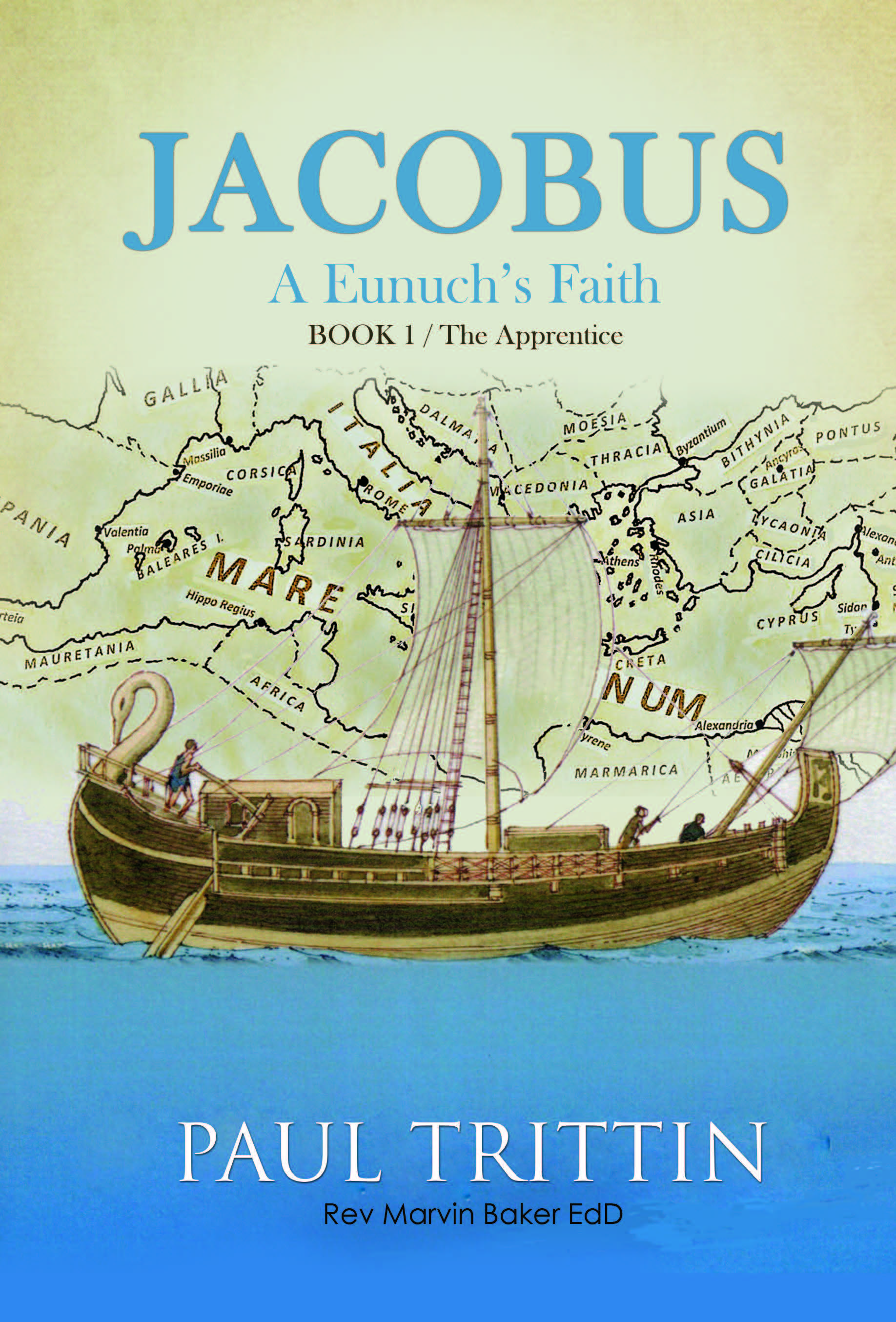
Paul Trittin’s historical novel Jacobus: A Eunuch’s Faith
This is the tale of a pair of twins, Jacobus and Josephus, born to Abraham Bar Jacob and his wife. Their mother passed away shortly after their birth. As the twins became older it became apparent they were both natural eunuchs. When they reached the age of manhood, 14, their father took Jacobus to work on his cargo ship, the Dolphin. The Captain took him under his wing and trained him well. The captain then introduced him to his extended family, who took him in and adopted him as one of their own. From this he learned of the prophet Jesus, who was said to love everyone including eunuchs, and wanted people to hear how to give their lives to His Father, God. This book is very intriguing and will hold your interest all the way through. This is Part One. I know Part Two will be just as exciting as the first.
In the first century Roman Empire at fourteen, the legal age of manhood, Jacobus’ father contracted him to relatives in Sicily as an apprentice learning his Jewish family’s shipping business. Being what the Greeks called a “natural eunuch,” he found himself living with two “cut eunuch” Carthaginian slaves who eventually became his lovers. As his apprenticeship progressed, the family recognized his natural leadership abilities surpassed his age. By sixteen he developed a strategy to enter the India trade which succeeded beyond expectations. He also become the second “spouse” of his cousin, the director of Aetna Shipping. Everything in his life changed when his brother-in-law, Simon from Cyrene, was awoken one night by a frightening vision causing some of the family, with their Judeo-Indian partners to take Simon to Jerusalem for Passover.
About the author:
Southern California native now in Carson Valley, Nevada * Attended Vanguard University in Costa Mesa, California * Served US Army in Congressional Liason during Vietnam era * Vice President of three family held corporations, approx. 100 employees * Recruited to join three colleagues in Brussels to found what is now Global University Director textbook publications * First non-Flemish artist to participate in National Flemish Art Exhibition in Belgium * Director of Operations, Life Publishers International in Miami, Member Editorial Board * Primary Partner, YangTri Trading International, Kansas City * Partner, MIR House Publishing, Kansas City * Partner, BT Concepts, Grand Haven, Michigan * President, Baker Trittin Press, Publisher of Adventure Books for boys * Chairman Tweener Ministries, Sponsor of International Competitions for high school students to write children’s books, university scholarships were awarded * Commissioned Artist * Co-founder, Gay Christian Fellowship * International Foreign Missionary for a US-based Protestant Denomination, 16 years * A CLOSETED gay Christian from pre-puberty to 2009 Book 1 / The Apprentice
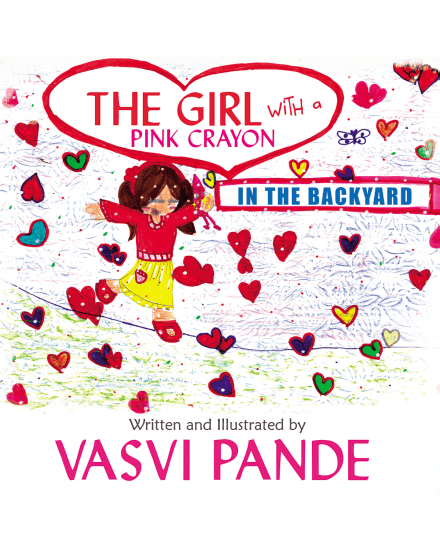
The Girl With A Pink Crayon In The Back Yard by Vasvi Pande
The Girl With a Pink Crayon In the Backyard is the first delightfully cute book. The author is a very talented now, 8 year old girl. She wrote the book when she was a mere 7 years old. Miss Vasvi Pande also did the illustrations for her books. It is about a little girl who is sad and lonely. When she spots a very sparkly pink crayon in her backyard. She picks it up and takes it to her room where she talks to it and takes care of it. She is very excited to take it to school with her the next day. This children’s book will be an absolute delight from toddlers to the second or third grade. Miss Pande is a very talented young author and artist. I think she will have a promising career in children’s books. I very highly recommend this book.
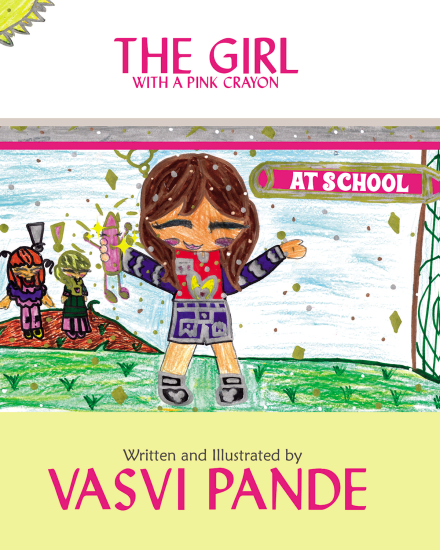
The Girl With a Pink Crayon at School by Vasvi Pande
The Girl with a Pink Crayon at School is an absolutely adorable book. Vasvi Pande wrote and illustrated it when she was 7 years old, she is now 8 years old. It is about a little girl who is very lonely and wants to play with two other little girls. She tells her magical pink crayon, then the other two girls notice her and want to play. This is a delightful children’s book that toddlers to second or third graders will enjoy. The illustrations are bright and colorful and will hold the attention of toddlers. I completely enjoyed this very cute book. What an inspiration to other children Vasvi is to write and illustrate such a delightful book at the age of seven. I believe Miss Pande has quite the career of a children’s author ahead of her.
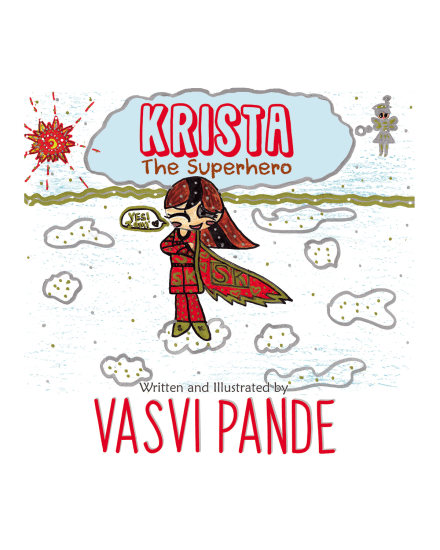
Krista the Superhero is another very cute book by Vasvi Pande. In this book, Krista wants to be a superhero. On her first day of kindergarten she sees a classmate who is about to get hurt and she helps him. This delightful book teaches children how helping others and always being nice to others makes not only other people but themselves feel good. This book has a story that toddlers to second or third graders will enjoy. The illustrations are bright and will capture the attention of a very young audience. I highly recommend this book. Miss Vasvi Pande has a bright future ahead of her as a children’s author and illustrator.
The Cloudburst by Rajesh Naiksatam is a novel perfect for the tween and teen age group. It is the story of Ganpu Aapla a !5 yr old boy who works with his parents in their dilapidated old house build on stilts. Above a window that says Takloo Chai Shop. The house is next to a bus stop. They used to live in Dabhol India until the government sold them out to foreigners, then they lost everything. While a teacher is waiting for her friend at the bus stop a tour bus with several privileged spoiled rich children breaks down. They all wait at the bus stop until the rain gets much worse. The teacher leads them up the stairs to Ganpu’s place and they all go in there. Then the rain gets so bad a flash flood starts and is about to wash the house away. Ganpu gets all of them to work together to build a sturdy raft. They all get on the raft and go to safety. Cloudburst has plenty of adventure on every page. Even teens will enjoy this book. It is definitely a real page turner. I enjoyed it very much and know it will make the perfect gift for a tween or teen.
Miles found ways to utilize time and space, inventing. We just exist as if that were ever enough, then Coltrane touches on the cosmic ineffable fixing your motorcycle by the side of the road, explaining why we should live in color, not sepia tones, sour milk and perpetual emergency room, exercising our freedom of choice, passing out lottery tickets of inequality our waking ritual, breakfast of mediocrity, self-satisfied drones of monotheistic endless plastic empires, empires of plastic surgery, the toast of the town, depraved money changers and emotional arbitrage, trading on hope, dope and celebrity everlasting, in whose god we trust, absolutely worshipping false American Idols, the slaves of freedom, because it is there, an excuse that covers up everything a red carpet death ward simplification, making life tidy, the suburban nightmare ordering chaos, a tombstone complacent pastime the rhythmic on-air male menopausal chatter, attempting to comfort the big guy football jock itch scoreboard burn rubber peel out gear grinding groaning peasantry for all that noise you solve life’s mystery bloodlust streetlights echo war, love and democracy for sale there will be no peace in our lifetime, Rome wasn’t built in a day and it didn’t fall overnight either, you can have it your way, you’re a lucky winner, shut up and play your guitar, you are doing your part for the war effort, keeping it going because you believe in yourself.
J.J. Campbell (1976 – ?) is stuck in the suburbs, wondering where the lonely housewives are hiding. He’s been widely published over the years, most recently at Horror Sleaze Trash, The Rye Whiskey Review, Misfit Magazine, Live Nude Poems and Yellow Mama. You can find him most days perched upon his soapbox on his mildly entertaining blog, evil delights. (https://evildelights.blogspot.com)