~after a photo of frozen monarch butterflies taken in Michoacan, Mexico by Jamie Rojo
Once in Santa Cruz
hundreds of monarchs swirled
around me
flirted
with eyelashesfingers
then flew to Mexico.
Clutter of paper tigers
spread across a canvas of snow.
Wings fanned in all directions frozen
in flight.
Sometimes we fail to see the signs—
don’tnot nowmaybe never
drive when you’re tired
walk alone at night
marry that man.
We fly into cold weather
wings of persimmon
goldflash.
Travel Advisory for Turkey
~A suicide bomber killed five including two Americans, and injured 36 others in a busy tourist area in Istanbul, March 19, 2016
I will not snake the Spice Bazaar maze in Istanbul,
past the sacks of psychedelic colored baharat and herbs.
I won’t inhale cumin, sumac, saffron and mint.
I will not bring home tuzlu nuts and Turkish Delight
or know the bolt of Arabica coffee sipped from a demitasse
with a bite of beyaz peynir cheese.
I will not heed the imam call to prayers,
look to the minarets to guide me to the Sultanamhet mosque,
wrap my Pashmina over my head, shoulders, slip off my shoes
find my place among the women,
stand, kneel, touch my head to carpet, stand.
The prayers a requiem for the dead, the dying.
I will not haggle with the rug dealer as he and his cousins
roll open another hand-knotted Anatolian carpet, blood
red, starred with indigo and gold blossoms.
“This one. Ma’am, this one best for you.”
It will not arrive on my doorstep months later
wrapped in burlap, unfurling a scent of shisha smoke.
I will not see girls, braids bouncing as they skip
to the jump rope’s beat, the sing-song song.
Boys dribbling, rising to layup, block an imaginary basket.
The ball tapping from outstretched hand to hand,
skittering off down the dirt alley, mothers pulling
aside curtain doorways to scold.
I will not eat charred sheep kebaps
or drink rati and pick lüfer off the bone by the Bosphorus
imagining Ottoman trading ships navigating its length.
I will not journey to the Hattusas
as the sun illuminates history, stories, what remains
from thieves, Pergamon’s curators, ancient battles
like this war: the remnant of an Imperial tapestry,
a lost province, gaming foreign powers, the Euphrates
knotted near the border, its mouth burned dry.
Beyond
~Krabi, Thailand 2013
Our bed smells of coconut milk. Outside
the tide washes through splay-fingered
mangrove roots, leaving a lacy stitch
with each wave
as a fisherman heaves
his longboat onto the beach.
An acacia tree shades
the gardenia bush beside
this pink house on stilts,
salt air.
A boy riding a lemon-colored motorbike,
drops boxes of peppers
at the kitchen door.
Across the road,
the sign stabbed
into the grass warns
Entering Tsunami
Hazard Zone
Edging the jungle,
a golden girl
nests in the pungent
branches of a mango tree.
She sees beyond
the ocean’s edge,
the earth curving away,
pulling the tide like a blanket.
Bearing Fruit
At first I wanted to keep you
like a sweet yellow plum
I picked on a New Hampshire back road
at the slick start of day
blackberries slipping brambles, tar sticky
as you were at birth
baby boy
tucking your little wings
against the sweat
and seep of my milky body
I held you till morning
to see you in the light that bled
through the window
when it came time to name you
cotton-swaddled boy
I scrawled your name
hesitated
gave you a father
gave myself away
like the bride I wasn’t/was
mother so happy
mother to a boy
plucked from the ashes of a fire
forgotten
with the thought of you angel
wind-spirited
lifting
youribbon-tailed kite
flightflightflight
over fruited lands.
A Girl’s Guide to the Galaxy
I hadn’t seen stars in agessky tarred with winter’s brush
tonight they turn onone by one as if stirred to life by motion
lighting a path home I could follow it build a house in the galaxy
its milky wonder my milky tea
would I stand on my porch at night look for Earth—
for the girl discovering sea stars in tidal pools
the woman lying in a field in Bourgogne inhaling stars
before hitchhiking on to Florencelove waiting counting on stars
to guide her up into a Himalayan nightas the moon
summits Everestslips into China.
time backbendsstretches
a yogi centering to nothingness
before exploding—
a burning starry universe
from my celestial perch
I see myself raise my son’s finger
to trace the big dipperlittle dipper
drizzling
honey onto this
and every night.
A Clean Kitchen
Sometimes I worry that the world’s got a cold heart. Will it ice over like food left too long in my freezer, little crusts of frost growing fungus under the Tupperware lids? My freezer needs to be cleaned & by that I mean the refrigerator must be cleaned, everything pulled out, shelves wiped & by that I mean the kitchen too, oven, range, cabinets & by that I mean the whole fucking house & the raised beds in the garden need to be planted & the house & the garden where I write at my desk with the dog’s dirt & fur curled around my bare toes & the hum of the refrigerator reminding me it wants to be cleaned. I just read a poem from a poet that wants a clean heart, but I want a clean kitchen & a clean poem & frost-free heart.
Because it’s not too far to the Walnut Street Bridge, Shannon’s cousin and prom date Jeremy insists on driving with the top down. Even though it’s chilly for early May, Shannon doesn’t stop him, nor does the girl sitting behind her in Jeremy’s Mustang convertible.
Julie, her name is. David’s date. Of course Shannon knows. Julie’s one of the popular girls, pretty in a way that is not extraordi- nary, because who in high school wants to be extraordinary? Julie’s beauty, the thick shell of hair she’ll cut after she marries ten years from now, the long gangly legs that will eventually thicken and soft- en, the pale dewy face that will also succumb to early wrinkles, is at its peak, but Julie, Shannon thinks, at least has this. Shannon is not a beauty nor will she ever be one, especially on this night, with the red chicken pox spots and scabs dotting her body as if she were some crazed pointillist painting. She’ll not be even almost-pretty the way her older sister Claire is, her features uniformly bland and non- confrontational, nor will she be striking, the way her younger sister Paige will be someday, though for now she just looks strange with her broad face and wide cheekbones. Shannon knows she will have to rely on other things, boring things like perseverance and commit- ment and ambition to get ahead, to maybe find love. But for now, there is no love, no success; there is just getting through one of these
final, awful moments that is high school so she can start life over as the new, improved Shannon when she begins college in the fall.
She’d not even wanted to go to the senior prom, but Jeremy had talked her into it, said he’d make all of her friends jealous, and be- sides he’d always wanted to go to a public school dance. Like being in a John Hughes movie, he said. He was darkly handsome, from one of the old Chattanooga families, and attended the city’s most prestigious boys’ school. A veritable Prince Charming, except for the being gay part, which most people didn’t know about. She believed him when he told her he was doing this for her out of kindness and not pity, as her cousin and best friend for as far back as she can remember. He’s her cousin on her mother’s side, the side with inheritances and trust funds. The side that started forgetting her and her sisters after Jeremy’s father had died thirteen years ago and their mother, his sister, had followed three years later. Now Shannon’s father works a nice white-collar job as an engineer, and she is graduating from a magnet public school and going to college, but this is not enough for Shannon, who envies Jeremy’s world, envies what she might have had.
Because he means well, she’s agreed to let him take her to the prom, but then she’d contracted chicken pox and even though she would no longer be contagious, she refused to go. Her face was puffy, her skin mottled and angry looking. She would not endure the humiliation. But Jeremy would not have it and showed up one afternoon with a dress that she would have never bought for herself, even if she could have afforded it, even if her mother had been alive to choose one with her. He was stereotypically gay in that sense, with a flair for fashion she didn’t have or care about. The dress was a sleek violet Thai silk, and there was nothing public school about it. She tried the dress on for him, her face and arms covered in red bumps, her skin tender as a bruised plum.
“You’ve lost a few pounds,” Jeremy had said.
“The chicken pox diet.” The dress had a mandarin collar and capped sleeves, covering much of her pocked and swollen skin. “This is not me.”
“It is now,” Jeremy said. “I’ll pick you up at seven.”
He’d arrived in his new convertible, the first time Shannon had seen it, a slightly early graduation present (a thank-God-he-graduat- ed-and-made-it-into-college present, he said), as darkly handsome as he always was, but more so in the suit, Brooks Brothers, for although he had an eye for women’s fashion, his own sartorial choices tended toward his family’s traditional Southern prep. Her corsage was an or- chid, an expensive but scentless variety that would look diminished instead of elegant next to the other girls’ outsized corsages smelling of honey and violets. He took her to a fancy restaurant overlooking the river, where they ate flesh from exotic animals and shared a bot- tle of wine, even though they were both underage, a feat only Jeremy could get away with. Her face, barely camouflaged under layers of thick foundation, flamed like a recently struck match. Shannon, who felt like a red popsicle on a purple stick, reminded herself this too would pass.
She self-righteously suffered through the humiliation of the
prom with a modicum of grace, for she knew that soon she’d be away from all this, at college, becoming a journalist, never looking back. And Jeremy, well, was Jeremy. Charming and smart and good-look- ing, from the right family, from the right school. Except for the gay thing, he was an ideal Southern boy. He was doing what he thought was a favor for Shannon, who had on more than one occasion suf- fered through his own school’s dances because he didn’t want to bring a date who might want more from him. Suffered his friends’ date’s appraisals that found her lacking, the slight head shakes, eyes wide with surprise: you’re with him? Suffered the questions in the bathroom as she tried to revive her wilted corsage in a spotted sink. Why is he taking you? Why won’t he take a real girl out? What’s he hiding? And now here she was suffering again, where she was sure the girls were just like the ones at Jeremy’s dances, thinking the same things. Why would he think her classmates would envy her, when they knew that he was, after all, her cousin and she was the pity date?
But now, as Jeremy idles the car in front of the bridge, ignor- ing the blasts of cars passing around them, she catches him look-ing in the rearview mirror. David, with his sun-streaked shaggy hair touching his collarbone, sinewed skinniness, doe-like eyes, tie- and coat-less, barefoot, smoking endlessly into the night: Jeremy’s type. She punches Jeremy hard in the arm, angry more at herself than him for being so slow on the uptake. The real reason he wanted to go to her prom is now smoking in his car. He smiles more than grimaces, winks as he rubs where she punched him.
“You can’t stop here in the middle of the road,” Julie says. “You’ll get a DUI.”
“I’m idling,” Jeremy says. “Because I want y’all to appreciate our lovely pedestrian bridge, saved from dissipation and destruction, thanks to the efforts of Chattanooga’s citizens. Our pride and joy. ’Course y’all know this bridge is not just famous, but notorious.”
“The lynching of Ed Johnson,” David says. “I read Shannon’s piece about it in our paper.”
“You and Dad were the only ones,” Shannon says. But she smiles. Her face cracks from what’s left of her caked-on makeup.
“I don’t remember any lynching,” Julie says.
Jeremy gestures for one of David’s cigarettes, and he passes his lit one to the front seat. “It was in 1906.”
“Oh. Doesn’t really count then.”
“Well, it kind of does,” Shannon says. “Ed Johnson’s lynching resulted in the only Supreme Court criminal trial in history. Not that his was the only lynching on the bridge.”
“Blah blah school blah,” Julie says. “So that’s why the river smells so foul.”
“That and all the chemicals dumped in it. Remember, we were once the most polluted city in America.”
“But not anymore. Why dwell on the past?” Julie reaches into David’s jacket pocket and pulls out a flask. She unscrews the top, takes a swig, and then passes it to David. “Let’s have some fun.”
“You know who the ringleader of that mob that lynched poor old Ed Johnson was?” Jeremy asks. “My great-great-great-grandfa- ther on my mother’s side. That’s who. A black man falsely accused of raping a white woman, and they shot him and hung him.”
“You related to this guy too, Shannon?” Julie says.
In the rearview mirror, Shannon watches Julie scoot closer to David. Shannon’s convinced: Julie thinks she’s winning now, that she’s putting Shannon in her place by reminding everyone that Jer- emy’s her cousin. She actually believes, Shannon thinks, that she’ll have sex with David later. She wants to tell her to give up now, but she knows Julie won’t listen. “It’s the South. We’re all related one way or another, aren’t we?” Shannon says.
Jeremy laughs, and a few seconds later, David joins in. A siren wails, coming closer.
“Let’s go,” Julie says. “Not yet.”
Shannon closes her eyes, flutters her hands over her face. Her skin feels hot and bare, tender, the makeup smeared and sweated off. She hears Jeremy’s door open, the shift in his seat. She reaches out to touch his thigh, to stop him, even though it’s futile, even though he’s gone. She hears Julie’s voice, anxious, terrified. Shannon could tell her not to worry, that the emergency brake is on, they are safe for now, but doesn’t. She opens her eyes, watches Jeremy at the rails of the bridge, climbing them. It’s a pale darkness, one grainy from the diffused light of late sunset. The mornings are dark here almost year- round, but those nights in summer, it’s like the sun will never set.
He’s on the rails now, screaming like a god or condemned man; it’s hard to tell. Below, the water sparkles; above, the sky ab- sorbs the light. He’s done this before, drunk and sober, and she’s always there to pull him back, talk him down from jumping. Just as she’s held him, wracked and sobbing, smoothed his curly hair, her steady voice convincing him that even in the most painful moments of being Jeremy Hamilton, it is still worthwhile being alive.
But this show is not for her. David gets out of the car, jogs down the middle of the bridge. She watches him gesture to Jeremy. He takes a small camera from his jacket pocket. Jeremy laughs, poses for David, arm and leg stretched toward sky and water. She knows Jer- emy is smiling for David, who holds his hand out, helps Jeremy down.
“He’s crazy,” Julie says. “Maybe.”
“We got a room at the Read House,” Julie says. “They say it’s haunted.”
“Well, a woman’s head was severed there. And Civil War sol- diers were murdered. And there were the suicides. Just because that stuff happened doesn’t mean it’s haunted more than anyplace else.” “I don’t want to think about it,” Julie says. She leans toward Shannon, cupping her hands over her mouth as if they are in a crowd-
ed room. “Momma thinks I’m spending the night at Abbie’s house.”
Shannon pantomimes locking her mouth, tossing the key out the window.
The boys are back in the car, breathless, slightly sweaty from the excitement. Jeremy releases the brake and shifts the car into gear. “One more place, then I’ll let you two get back to the night
of your lives.”
David snorts as Jeremy turns and drives up Third Street, to- ward the worn-down neighborhoods at the foot of Missionary Ridge. With each block, the houses become tinier and neater, as if darkened curtains and well-kept gardens strain to maintain order against the neighborhood’s slide into ruin. The air, heavy with wild honeysuck- les and uncollected trash, rushes past them.
“Can you put the top up?” Julie whispers. “I’m scared.” She leans into David.
“We’re all right,” Jeremy says slowly. “For now.” A smile creeps up his face.
He parks the car in a gravel space overlooking an overgrown cemetery. “This is where we buried the black people, ’cause we didn’t want them next to us even in death.” By now the darkness has seeped into the sky, the ground, the air around them. Jeremy and Shannon get out of the car, and David opens his door. Julie whim- pers and then steps out, last. They walk past the worn grave markers, many still unidentified, through the ghosts they can all feel, up and down faded paths to the gravesite of Ed Johnson. Jeremy sits next
to the headstone and pats the ground for the others to join him. The moon is half full, the stars dimmed by the city lights. Shannon can feel Julie’s shoulders shaking. David drapes an arm around her, and her body stills. The flask of whisky is ceremoniously passed around. Shannon takes the smallest of sips. Jeremy whispers the words on the gravestone, but loud enough that they all can hear.
“God Bless You All. I Am An Innocent Man.” Jeremy’s voice breaks at the end. He touches the top of the grave. “On behalf of my country, my family, I’m sorry, Ed.”
The thing is, even though she’s seen him do this before, this routine, this ploy, Shannon knows he’s not exactly faking either. Jer- emy rises and disappears into the woods.
“Is he coming back?” Julie asks.
“He’ll be okay.” Shannon waits for David to stand. Finally he does. “I better go check on him. Y’all go on back to the car,” he
says. Then he too disappears into the dark.
Back in the car, the two are silent for a long time. Finally Julie speaks. “I don’t know why Jeremy’s so upset about something he didn’t do.”
“You ever read Faulkner?” Shannon says. “Why?”
Shannon closes her eyes. Nothing lasts forever, she reminds her- self, and then the other voice, her little girl voice, adds: except death.
“I just want him to take us to our hotel,” Julie finally says. “He will.”
“He seems a little crazy.” “Just emotional.”
“David’s going to Virginia Tech. ROTC.” “So I heard.”
“Real marriage material.” Julie snaps open her clutch, removes a compact, dusts her face even though it’s too dark for anyone to see her. Shannon thinks of her own mother, and the other dead people lying in the ground around them. “What about Jeremy?” Julie says. “He’s going to Sewanee, right? You’re not hooking up with him?”
“Jeremy? God, no.”
“I mean y’all are cousins and all, but,” she giggles, “it is the South. Ha ha.”
“Not going to happen. Ever.”
“It’s the first time for me and David. That’s why I want to get out of here. He’s so hot.”
“Mmhm.” Right now, she guesses, David and Jeremy are making out, fumbling under shirts, tugging pants down. Perhaps a blowjob—or two—is in the equation. “Jeremy’s not my type.”
“Who is your type?” “My type is John Reed.”
“He go to school around here?” “He died in 1920 of typhus.”
“Oh.” Julie plucks the pins out of her hair one by one, leaving them on the seat beside her. “That’s creepy.” Hair clumps shoot wildly in all kinds of directions. She runs her hands over the sections, finger combs through the hairspray. “That’s pretty brave for you to go to prom with your face like that. I could never do that.”
“Don’t worry,” Shannon says. “It’s not contagious.” Just a while longer. Soon Jeremy will be back and she can go home and she will graduate and leave the Julies of Chattanooga behind. She lays the back of her hand on her forehead, bumpy like a rough road of gravel. She imagines herself witnessing revolutions and writing about them, accepting the Pulitzer Prize.
Then she hears their voices, low and conspiratorial, approaching. Even though her eyes are still closed, Shannon knows Jeremy’s shirt is untucked, the tails of white fabric almost glowing under his suit coat.
“The good thing is,” she can hear Jeremy say as he gets into the car, “I’ll never be as bad as my great-great-great-grandfather, no matter what my mother says.”
Shannon opens her eyes, watches David slide into the back and Julie wrap her arms around him. “Everything okay?”
“Dandy,” David says. “You two want to stop by our room for a drink?”
“No, thanks.” Shannon hates that she’s taken Julie’s side on this one. If she had the energy, if she cared enough, she and Jeremy would go with them to the hotel room, and Julie would never get what she wants.
“David,” Julie says, dragging his name out. “I have to pee.” “Can’t it wait?” David sinks a bit in the seat.
“I’ve been holding it for-ev-er.” She opens the door, swings her legs out. “Just walk with me down the hill. I’m not walking by myself. I might get raped or knifed or something.”
“Go on, Davey,” Jeremy says, waving his hand. “We won’t leave you.”
After the two disappear, Jeremy reclines his seat, massages his forehead. “So, I got some news.”
“You moving to New York?”
“Not without you.” This is their plan. Right after college. He takes a breath. “The big news is I told Mother I’m gay.”
Shannon sits up, turns so she faces him. Since her mother died ten years ago, Shannon has avoided talking about the things that hurt. She touches his shoulder, thin and bony even under the suit coat. “When?”
“Last week. After I got the car, of course.” His hands trace the steering wheel, in smooth, even circles. “You know what she said?”
Shannon is afraid to fill in the blank. None of the answers are good ones.
“That I was adopted.” “She’s lying.”
He turns to her, scrunches his face. “Did you know about it?” Shannon shakes her head. “You know I didn’t.”
“She said I must have inherited being gay from my biological parents, so it’s not her fault. I told her I’d rather have the gay gene than the lynch mob KKK gene.”
“Hah,” Shannon says. “Sure that went over well.”
“She said she can just as easily leave her money to some charity.” “She’ll get over it.” But they both know she won’t. Shannon
wants to say more, to comfort him properly, but her throat feels clotted. Closed. She reaches for him and he folds into her as he’s done before. Ever since she can remember she’s been terrified of losing Jeremy, to love or despair or both. “I’m sorry,” she says.
“Break it up, you two.”
Jeremy pulls away. She’s glad he hasn’t been crying; at least he’s spared that. And she’s grateful now for David, barefoot and rumpled, his hand momentarily on Jeremy’s shoulder as he climbs in. After everyone’s in the car, the wheels crunch out of the park-
ing spot and they’re back on Third Street again. At the stoplight on Third and Market, Julie taps Jeremy’s shoulder. “Shannon says you’re not her type.”
“Don’t worry, Jules. Me and Shannon are still kissing cous- ins.” Jeremy pulls Shannon close to him so suddenly she doesn’t resist and kisses her hard on the mouth, a flick of tongue even.
“Oh my God, she’s diseased.”
Jeremy laughs, but it sounds more like a bark than a human laugh.
Shannon turns around and sticks her balloon-face over the seat. “It’s not contagious.” She rakes her nails over the fading pox bumps. She’s been good about not scratching, not leaving scars, but this is worth it. She rubs her hand on Julie’s exposed thigh.
“You freak.”
“You know what, Julie? Me and you, we’re going to remember this day for the rest of our lives. For you, it’s because you went to the prom with big man David here and, if he can get it up for you, you get to fuck him. It’s going to be the best day of your life—after this it’s a boring husband or two and screaming children and a dead-end job and bad haircuts for you.” Shannon turns and faces the front as the light turns green. “But for me, this is the last day of life sucking. It only gets better from here.”
“You wish, loser bitch.”
“Shannon’s right,” Jeremy says, pulling up in front of the ho- tel. “In the words of Ol’ Blue Eyes himself, the best is yet to come.” The car idles. He reaches his hand back to David, pats his knee. “Go on. I won’t miss you.”
After David and Julie disappear into the lobby of the hotel downtown, Jeremy leans back in his seat and closes his eyes. “You got a present for your dad’s birthday?”
Shannon hits the dashboard with her hand. “Shit, I forgot.” “The party’s not till dinner, right? We’ve still got time. I’ll pick
you up for lunch and we can go shopping then.”
Shannon reaches over and squeezes his hand. “I swear I didn’t know you were adopted,” she says.
“I know.” He opens his eyes, pulls the top up so that it blocks the night stars, shifts into gear. “God, will I ever love anyone as much as him?”
Soon, Shannon thinks, soon she’ll be happy. She can feel it. “If we only knew, Jeremy. If we only knew.”
I wear my father so he shows.
I wear him like a crime scene, a Christmas sweater. A dead skin, scored and
perforated. I wear him (only) at high tide, wary of mucking in the shallows. I wear him
like a felled tree: a used sports section: a tired mug. Like the striped thrift store shirt
(too big) I wore too long (believer).
I am the carpetbagger in the basement; an unschooled kid with a rug-burned
eye, a soiled face. I stayed until I could read the score in the ink on my fingers.
(The dog crawled into my lap and died. I’ve never been clearer on what a being wanted.)
My phantom sister treats me to tea she pours from her handless arm. Her skin
smooth where it burned. We have dinner on Tuesdays: she roasts meat and root
vegetables. We sit close at her too-small table and disagree about the past. Rutabaga.
Parsnips.
My phantom sister fixes flat tires free of charge. She smells of rubber, glue, and
ash. Lives with a set of identical twins who don’t get along. This doesn’t trouble her.
“They’ve never gotten along,” she says.
My phantom sister carries a canned ham in a cloth bag. She says the only faith
worth having is one that’s impossible to articulate. She says: sometimes the waves
knock you over. (What then? Get back up: walk wet.)
My father sits in a recliner in the corner. Wallpapered-over. Mummified. His
presence delicate: if bumped, it could crumble uncontained. I hover with a flashlight,
tired of this teasing husk. My shirt, shorts, shoes drip water. The flashlight too big. Its
beam bounces – off musty flocking, rug remnants, exposed pipe. For half a second, I
steady it:
Hello?
The cellar abounds with beets (luminous, magnificent) that no one – not even my
sister – will claim. We walk, hand in handless. The ham in the bag bangs against her leg.
Slosh. Accept the weight of wet. The way you feel – adjust for – a limb no longer there.
I got it from her, this habit of clenching my feet into a fist. I may not be the
sharpest knife in the jar, but I understand this: a marriage is built of bones and teeth.
We take care of ours: we brush, we floss, we see our dentist. Even so, I’m holed up in
a Florida hotel writing this eulogy while she’s at a shoot-‘em-up flick.
She doesn’t understand why we’re here. Thinks it’s some self-inflicted
wound. Some alligators are always trying to skate uphill, she’d say if she were here
now. You practically sawed off a limb to free yourself. Why come back? Her kindness
slays me. I’d know enough to not say, It’s my family. For her, the boundaries are
clear. She came for me – doesn’t even like crossing the Sunshine State line. Can’t
understand why I have to go into the teeth of it. She wants to keep me from pain.
Knows that’s not always possible.
The bed is too hard, the pillows too soft, it’s too cold to swim, and we can’t
afford room service. Every sentence I scribble I cross out, erase. The persistent hum
of HVAC. Low voices in the wall. Scraps of memory – a dish rack with two coffee
mugs, a transistor radio playing Percy Faith. The terrifying calm after each tempest.
The way, with enough conditioning, a crackle of static can make you flinch. Family, I
scratch out, is what hurts you.
I ordered dinner anyway. When it arrives, I will bounce it on my knee like a
baby.
I’ve tried to live by one simple rule: never microwave anything you care
about. It’s an inhospitable frequency, prone to shoot sparks or suck the life from
things. I’m the last one standing on this particular branch. She’d say all my family
ever cared about was getting the pool cleaned. What pool, I’d ask her. She’d make
that exasperated grunt. She won’t come to the funeral. Won’t cross that line.
Forty-three degrees. People think Florida is warm. Some of us know it takes a
second skin. But it must be beautiful in Berlin this time of year. The tulips at
Mauerpark, the former death strip between east and west. To walk hand in hand
where the wall came down – mauerfall – a place now alive with gardens and ponds,
jugglers and buskers, young love heedless of tooth decay. To see a city once divided,
now thriving. We can still get there.
Silence comes in so many forms. Companionable. Caustic. Cancerous. I cross
out. I write. I cross out.
Once a month or so I have this dream where my teeth fall out. Pour from my
mouth like water and glisten on the ground. I wake up caressing my molars. I don’t
tell her this. Where is your backyard pool then, she’d want to know – your pet parrot
squawking for sunscreen? Someday you’ll be soiling your trousers and wishing you
could chew solid food. I wouldn’t know what to say.
I once held a chunk of it – Berliner Mauer – at a college talk, the day I met her.
This woman – the speaker, a former East German – told how she chipped it out and
kept it, first to remind her the wall was down, then, over time, to remind her that
what’s built inside you doesn’t fall so fast just because you can move around freely.
Some nights a burger and a cold beer can set anything right. Here’s hoping. I
don’t want to paper over problems as I eulogize. Don’t want to let her down. The
room’s not helping. This polyester bedspread of autumn leaves. This broken bedside
table. How what we do to each other is the best we can. How we know in our bodies
silence can cut quick as any other blade. Somewhere there’s a minibar with my
name on it.
We got as close as Frankfurt. A stopover on a work trip to Denmark. Sat in
oversized rockers awaiting a connection. Failed to consider how singular the
opportunity could be. It wasn’t the best time for us. She on the phone with her sister.
I overheard: “To save that man, you’ll need a sharper knife.”
Do I wish she was here now, taunting and teasing, crumpling each inadequate
attempt into a ball and missing the wastebasket as only she can? Of course I do.
Instead of these scratched-out hotel pages, to bring a chunk of my own wall,
softened and smoothed with time, pass it from hand to hand: Here’s your eulogy.
Even the strongest signals aren’t always clear. We have our troubles. She
talks and talks. I shave my head, and still I can’t quite hear.
We’ve had a good ride, though. And we’re not done. I remind her almost
daily. She’ll come back adrenalized from the movie; she’ll chastise me for ordering
room service and for caring so damn much about this. You can’t toss a donut to keep
a duck from drowning, she’ll say. I’ll beseech her, I have no idea what you’re talking
about. She’ll hug my head. Family, she’ll say, are the ones who love you. We’ll take out
our teeth and put them in plastic cups ‘til morning. So we don’t hurt ourselves, or
each other, any more than is necessary.
The Last of Will – Book Excerpts That Will Take You on the Ride of Your Life
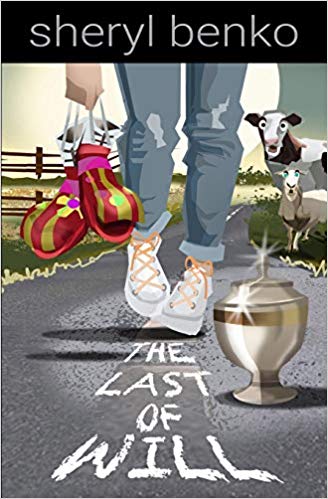
Sheryl Benko’s The Last of Will
If you need some comedic relief, look no further. The Last of Will by Sheryl Benko is full of hilarious antics, witty comebacks and snide remarks. Greer is an eye-rolling, sarcastic teenager that always has something to say. Her family is going through a rough patch. Her Dad lost his job, her mom is trying to keep her floral business afloat, and her sister, well, she has a big secret that she’s keeping from her parents. Greer wants desperately to get her driver’s license, but how far will she go to practice? Her parents are insistent that that Greer take a road trip with her father. On the plus side, Greer gets to drive. On the downside – EVERYTHING.
Read these book excerpts to get a glimpse into the chaos that is Greer’s road trip in The Last of Will:
(Greer calling her sister, Liv, from a Wal-Mart in farm country)
“He’s looking at fishing poles,” I report.
“Why?” Liv squawks. “Dad doesn’t fish. Does he?”
“I don’t think so. But I’m not, like, joined at the hip with him twenty-four hours a day. He may have hobbies.”
Now he’s studying the archery bows. What? Is he planning to go off the grid and hunt his own food?
“That’s probably how the ‘Unabomber’ started,” Liv presumes, having no idea if that’s even remotely true. “He had a meltdown and lived in the woods, which Dad could be planning if he’s looking at survival gear, which means Mom’s gonna flip if you abandon him.”
Abandon? Does she have to use such a harsh word? It’s not like I’m never gonna see him again. I mean, he’ll come home eventually, right? They might sell maps here. I could get him a pocket version. Besides, I don’t think people “plan” meltdowns. That sounds like a more spontaneous thing. Case in point …
“And don’t even get me started on Mom,” Liv drones on, “who’s in such a tizzy with this whole wedding thing, I can barely deal. So you should be glad you’re with the less crazy parent, since Mom’s ready to lose it on that bride, who’s beyond lucky I’m not there, since I would have clocked that bitch by now.”
(Greer trying to convince her dad that they are being followed)
“Dad, I’m not kidding! He’s a psycho midget Eskimo! I saw him, like, three times!”
“All right, calm down,” Dad insists. “First of all, the appropriate term is ‘little person.’”
“Oh come on! We’re gonna do this now?? Our lives are in danger and you want to be politically correct?”
“Indulge me, like I indulge you,” Dad implores. “And if you want to get technical, was he a midget? Or a dwarf?”
“There’s a difference?”
“Yes. Were his limbs proportional?”
“I don’t know,” I admit. “I couldn’t tell, with his parka.”
“He wore a parka?”
“He wears it all the time.”
“Ah,” Dad catches on. “Which is why he must be an Eskimo, right?”
“Ex-actly.”
Greer Sarazen is like any teenager. All she wants is to get her driver’s license, to not be bugged by annoying people, and to NOT have her spring break interrupted. Yet, when her dad, Will – who has been unemployed due to downsizing – finally gets a job at the local cemetery, Greer is forced to tag along on a road trip to deliver a stranger’s ashes out of state. A stranded van, a clown, a rodeo, a disco-dancing nerd and a belligerent dwarf threaten to throw off the itinerary, while the departed “passenger” becomes an unexpected friend … proving that, sometimes, the things we truly need are the last things we would ever expect.
Growing Up Hollywood – A Snapshot of One Family’s Life
Growing Up Hollywood by Tara Botel Doherty is a collection of short stories based on the life of two young girls. The novel begins with a glimpse into the birth of a new family as we follow their mother Mia’s hopes and dreams. She meets their father and a whirlwind romance ensues. Soon, however, the rose-colored glasses come off and the reality of the family’s life is revealed.
Take a look at this book excerpt from Growing Up Hollywood:
“Once upon a time in Hollywood, I’m going to have a husband who loves me more than anything and a bunch of children who will be as graceful and beautiful as I am. We will live so high up in the Hollywood Hills that the palm trees will look like dandelions from our Olympus. My Prince will work in the studios and I will bring his cocktail out to the kidney shaped pool in our sprawling ranch style house where the growing Los Angeles skyline will appear to be just beyond our backyard. It will be that rare day when the smog has not attached itself to the civic center and the offshore winds are blowing. The perfect picture. We will be the white-boarded frame of perfection in our 1960’s snapshot. Post war. Post troubles. Post post.”
“Union Station ten minutes,” The conductor announced through the loudspeaker. She had finally arrived. The perfection of a downtown Los Angeles afternoon left Mia in the style of excitement that was reminiscent of innocent children on Christmas morning.
If you want to continue the story, you can find this novel on Amazon.
About Growing Up Hollywood:
Hollywood is the land of hopes, dreams, and make-believe. Anything can happen on its tarnished and run-down streets, especially on the Boulevard in the 1970’s. Annie and Gracie, sisters aged 7 and 10, live near the Boulevard in the Hollywood Hills. As their mother and father edge toward divorce, these two young girls try to make sense of their lives amid their domestic chaos. From the outside on their unfriendly, dead end street, the picture may look perfect, but pictures are often deceiving. Follow these two sisters’ adventures as they grow up among the famous Hollywood landmarks and learn about life and people.
Visit the Boulevard with its tacky and sometimes shady establishments, and the patrons who inhabit them. Meet the eccentrics looking for fame and fortune among the stars on the Hollywood Walk of Fame. This collection of short stories offers a picture of what it was like to grow up in legendary make-believe Hollywood. The snapshots are short vignettes recalling businesses that existed for decades along Hollywood Boulevard where its connection to its past glory still existed. This is Hollywood before gentrification and big business development.