I’ve never loved out of guilt. Don’t care
what people say or think about me. Don’t care that I live on an island.
Let’s start with what makes me happy
before I get to the unhappiness. This
is the location of the bones. They’re
found below. Underground this body
of flesh. The garden marks the road out.
Despair always created a tight feeling
in my chest. Showed a vision a Rilke
in my hands. Pictures of an unsmiling
Rilke. I’ve imagined Rilke in Austria,
France, Russia. As a pupil at a military
academy. The writer, the poet unleashed.
Rilke as the husband, the lover, the
father. For me, it was an exercise. Thinking
could he invent when inventing was
needed, dig, make repairs to. I think of seawalls, modern catastrophes, the
maths and science of distance, of
paradise, of what lies ahead, the stigma
of substance abuse and illness. Taking
care of elderly parents, pride and ego,
insecurity and finding the motivation to write daily. This is
the age of women, so they say. Equality.
Men must stand up for the women.
Women have the vote but we must also have human rights.
People feel free to make comments
about my life. They’re like doves to
me, little earthquakes in the blood but
I keep them in the distance like the
journalists that have come to the house.
I keep them away like I keep my family away.
I think to myself that painters were kind to Mary. Jesus’ mother never
looked more beautiful or holy. I’m attentive in conversation with aunts and uncles.
I pay attention. Look closely at the mouths
of women. Their exquisite lips that enchant.
The men in my family are largely silent.
They only want to teach me. Lecture me.
In prayer, I am on my knees. When I ask
for forgiveness, I beg. When I love, there
are parts of my identity that simply fade away.
Decay is a hymn. Kissing is a hymn. Drowning is a
hymn. The asphalt jungle in which I
find myself in. It sucks the life out of me.
So, instead of hating, I cook rice. Eat
honey. Swim. Think of intimacy. Think that depression
is romantic. That it is all part of the process of becoming a writer. Thinking,
death to squalor. Death to poverty. Death to the man with the gun.
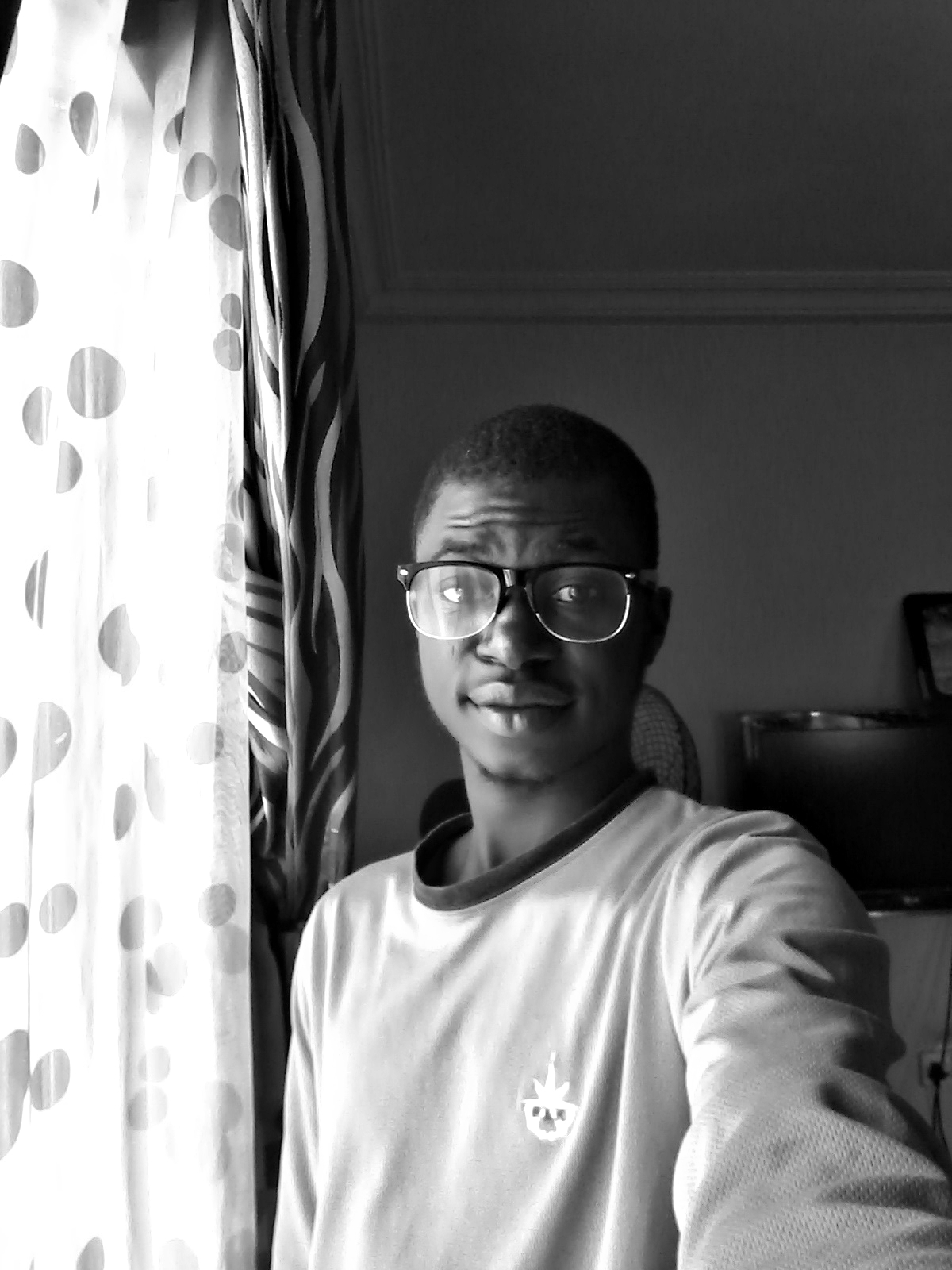
Yusuf BM is a Nigerian teen author and a photographer. He’s the author of Brittle Songs (Book of Poetry), he writes short stories, poems, essays and literary reports. He is a member of the Hilltop Creative Art Foundation (HCAF).
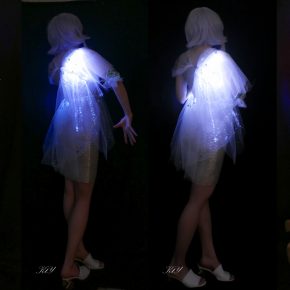
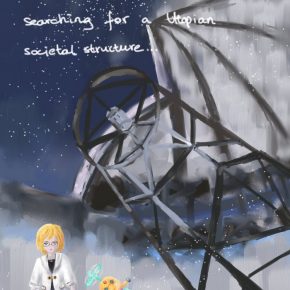
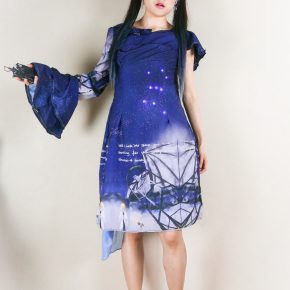
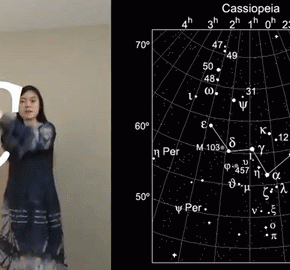
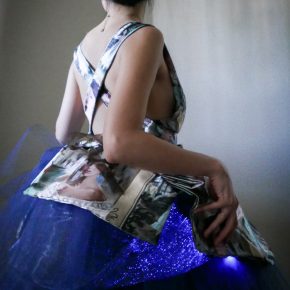
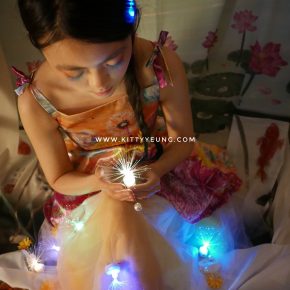
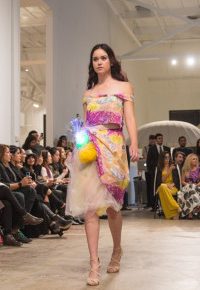
Meet KtY - a creative technologist and hardware prototyper focused on programmable clothing, computational textiles and wearable devices. As a former journalist, I had the privilege of interviewing her for Synchronized Chaos Magazine about her work combining fashion with electronics.

CD: You mention that you're a Renaissance woman, with knowledge of and interest in different fields. What sorts of combinations of areas of interest do you think stimulate the interest of today's Renaissance people? Where do you see fruitful collaborations among different lines of research, where these different areas inform each other?
KtY: Renaissancemasterspursued many intellectual avenues. They developed culturally, socially and politically through their endeavors in art, music, literature, science, history, etc., and people in different fields inspired each other. Today, although the society has changed drastically, the same types of intellectual pursuit are still there. Through technology, many of the fields can further collaborate and advance together. Those could be tech-enhanced performances, digital arts, online communications, faster and broader distribution of knowledge. Those could also be advanced scientific research that influences other industries such as medicine, agriculture, transportation, garment, real estate, hospitality, etc., which impact people’s everyday lives. Today’s renaissance people still look at how their work benefits the wider society and intellectually influences humanity.
CD: How do people feel about wearing computational textiles, programmable clothing and other such innovations? Does technology in our clothes seem fascinating or invasive or some mixture of both? (Personally I see many more avenues for personal expression and consider it exciting!)
KtY: This is indeed an exciting emerging area of study, because of all the possibilities new technologies can bring. Everyone can imagine a bright future when their clothes or accessories can constantly monitor their health, adjust to comfort, communicate, perhaps also cure diseases, or give more degrees of freedom for design and personal expression. However, there are many challenges that need to be addressed before that bright future is reachable. In order for people to accept such wearables, the items must not be invasive, shouldn’t make people change their normal behaviors, and be secure with the data they collect and transfer, and should protect privacy.
Today’s technologies are not quite ready. Much effort has to be made to invent electronics that are small and flexible enough to be seamlessly embedded into textiles, new materials that can themselves be functional, batteries or other methods of energy supply that have more versatile form factors, long-distance wireless charging, computation and communication capabilities, and much more. There are also deficiencies and disconnects in the current traditional industries and ecosystems. I’ll discuss them in later questions.
Christopher Bernard’s Amor i Kaos: Fifth installment
I see the following:
The interior of a west coast café, with seismic support beams making a graceful right-angled triangle in the middle of the room.
Numerous café chairs, a dozen tables of various shapes and sizes, most of them occupied by leisurely eating and chatting lunchers (most are in couples, with a few small groups, and several loners seriously addressing their plates; there is a common table with several loners exaggeratedly ignoring each other behind their open lap tops); two iron railings lead up to the café’s glass door through a wall of glass looking out onto the street.
Passing cars, a truck, bus, males and females bustling, pacing, stalking by at businesslike gaits (mostly adults, a few adolescents, no children), two small, abandoned-looking trees across the street, the entrance to a parking garage with a sign flashing in red (“CAR COMING”), a cat sleeping on a backpack near the curb (no sign of the owner), three, no four, pigeons pecking in the gutter a few feet from the sleeping cat, the entrance to a 7-11, the aggressively hip windows of a Banana Republic, two narrow green doors in a wall, shut except for one that seems invitingly ajar, several open laptops, three smartphones being swiped or tapped by anxious-looking teenagers, three ballpoint pens held by two students and a tourist (the pen in my hand is the fourth), a V-neck sweater and two turtlenecks, two white quilt parkas, a business suit holding a briefcase in swift passage across the view, shadowy reflections across the street, sun, clouds, sky (just barely visible if I stretch forward and look up).
I smell: coffee, cloves, cinnamon, pastry custard, bread.
I feel: the press of corduroy against my legs. The squeeze of a vest against my torso. The rub against my wrist of my new watchband.