Harold Picked a Winner
Standing in line at a Starbucks with you
after a night of uncharacteristically heavy drinking ––
scotch on the rocks and Jägerbomb-dessert.
Your friends are with us and keep talking about
how your one sorority-sister has a big nose
and looks a bit like Squidward from SpongeBob SquarePants.
But with you by my side, I don’t mind the gossip.
I don’t even mind that the cashier is openly picking his nose;
I don’t imagine brownish-green boogers, floating in my latté.
So long as you’re laughing, I feel just fine.
There’s just something about you, sweetheart.
I saw it last night, and even now, when I’m sober.
It’s like your smile has a sound
that fills my inner-demons’ ears ––
and they can’t even hear when the summoner calls.
While standing in this line, I don’t mind it’s slow pace.
I’ll stand here all day long, listening to you laugh
at your friends’ cheesy jokes (stolen from Twitter
or some popular movie about college partygoers).
The line moves up; it’s almost our turn.
And the cashier –– “Harold,” according to his nametag ––
is still digging for gold (or maybe itching his brain).
I look back at your face ––
such little makeup, such natural charm ––
and I take out my wallet, happy to pay
(despite my usual reluctance to spending).
For someone who enjoys a great story, is there anything better than a narrative that engages you from the very start? Imagine a world so rich you can almost smell the scents in the air, a delivery so clever it forces you to think in a way you never thought you would. I’m Ryan J. Hodge, author, and I’d like to talk to you about…Video Games.
Yes, Video Games. Those series of ‘bloops’ and blinking lights that –at least a while ago- society had seemed to convince itself had no redeeming qualities whatsoever. In this article series, I’m going to discuss how Donkey Kong, Grand Theft Auto, Call of Duty and even Candy Crush can change the way we tell stories forever.
What videogames teach us about heroism
Understanding what makes a hero and what makes a villain is something that’s been impressed upon us since childhood. The hero does ‘good’, the villain does ‘evil’. The hero will save the princess where the villain will lock her up.
Tale as old as time…
While you may see the narrative waters muddied a bit by having a hero with a checkered past, or a villain with a tragic backstory that led him on the path to what he became; it’s usually very clear who the author hopes the audience will root for. However, this can create its own set of problems. At times, characters can be presented as so infallibly good or so irredeemably evil, that the audience cannot even relate to them.
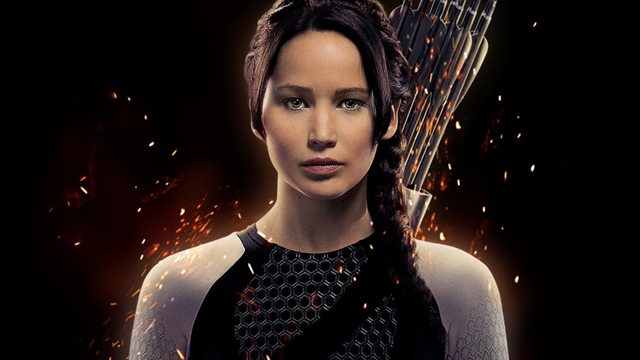
In TheHunger Games(Suzanne Collins, 2008), ‘proper’ society has found it acceptable to pit children against each other in annual death matches and, for some reason, does not view it as a despicable thing to do. Now this is, perhaps, somewhat explicable (the ancient world hosted similar events, after all); but what is more troubling is the fact that many of the ‘participants’ (whom are chosen at random) are not only adept but eager to be thrust into mortal combat –going so far as to mock those who plead for mercy.
This creates a situation where the animosity surrounding the circumstances of the Hunger Games so bogglingly unrelatable, that we as the audience are forced to immediately seize upon the only character who isn’t cackling at all the bloodshed. However; what we find in Katniss (as well as a large amount of ‘Young Adult’ genre heroes) is, despite her ‘hero’ status, situations are more likely to happentoher rather thanbecause ofher. She never truly embraces the culture of the Hunger Games (she fights defensively, she allies with weaker participants, and does not even consider winning the way she’s ‘supposed’ to), yet she still emerges the victor in this violent, decades-old tradition. In effect, she is able to emerge from this harrowing experience wiser, nearly unchanged as a character from the point we, as the audience, met her.
And she wasn’t exactly an ocean of complexity to start either
In the Hindu religion, the god Brahma is the creator, the god Shiva the destroyer. One must know this to begin to understand Brahma’s Maze, a novel by Immanual Joseph. The main character, Tarun, begins the story as a creator, having seemingly found a cure for cancer while earning his PhD in the USA. Unspeakable horrors, however, on a return visit to India, weigh on his mind until he begins calling himself Shiva, and launching a mission to destroy those who have harmed himself and his family.
This is a book of strong black and white emotions. Gray areas do not exist.
When things are bad, they’re very bad. His family is not just annoyed by bullies. They are raped, slaughtered, annihilated. Tarun, acting as Shiva, does the same to the bullies, only in incredibly worse ways. As a cancer researcher, his knowledge of drugs and medicines becomes a vengeful force, as those who destroyed his family are themselves destroyed by exotic chemicals that cause insane acts, splitting headaches, and their body parts literally falling off. And there’s nothing they can do about it.
The extreme measures of Tarun’s revenge show the depth of his love for his family. He does nothing halfway, whether loving or hating. Similarly, Sangeetha, a young researcher at his university falls head over heels in love with him. But his love for his slain family is just as strong, and can’t be tempted by a beautiful young lady who loves him just as much. Again, love or hate, there is no in between.
Solar Wind and the Potential Dissolution of Mars’ Atmosphere and Habitability
— by Cristina Deptula
Gusts of solar wind regularly flow out of the sun at nearly a million miles per hour and permeate the solar system. Earth’s magnetic field protects us from most of this radiation, but other planets with less internal magnetism, such as Mars, are much more exposed.
In Chabot’s October enrichment talk, Dr. Matt Fillingim of UC Berkeley’s Space Science Lab discussed the interrelationships among magnetism, solar wind and the evolution of planetary climate over time. Convection within Earth’s inner molten core generates our internal magnetic field, which shields us from the solar wind and generates the aurora borealis near the north and south poles. Without this protection, solar radiation would likely prove destructive to our radio and television communications, GPS systems, power grids, satellites and aircraft, as well as our atmosphere.
Earth’s atmosphere generates enough pressure for water to remain liquid on our surface, which enables life as we know it to exist. Mars currently has an atmosphere only about one percent as dense as Earth’s, but the composition of some of the planet’s rocks suggests that liquid water once flowed there. So scientists speculate that Mars once had a thicker, more insulating atmosphere. In addition, while Mars does not have a planet-wide, global magnetic field the way Earth does, researchers sometimes observe small magnetic fields in the rock near the Martian south pole. This suggests the planet used to have a stronger field and likely a hotter core.
I will not apologize. My sorries and I didn’t-mean-tos have no place in your mind. I hope you will forget me. The tabloids and online press claim you have. I hope it’s true. Many say I am sad. Bitter, towards your new girl. But, the thing they have placed in the back of their minds, is that it was me, I, who kissed him. I took the risk. And sure, we were in love. Or maybe that was just an illusion. A mask we put on without even knowing. A way to get the tickets to sell faster. So that when all the teenage girls and their moms watched the movie, they would all think, “It’s not just a fantasy. They’re really dating.” And soon, fans believed that just like the movie, our love was eternal. But we are not immortal. And our love was never real. It was just an illusion, just a movie ticket, just something to occupy my thoughts. So I hope you have forgotten about me. Because I have forgotten about you.