“It’s magic,” the girl squealed with delight; the sunrise was amazing. It was the first one she’d seen this year, or even the year before, she said. Meghan had been sequestered away from her friends and family for what seemed like years but which in reality had been only four weeks. Her friend Darla stood near the window with Meghan and watched the sun peep over the horizon, the pinks and magentas giving way to the oranges and yellows of the fiery ball of unspent hydrogen. An azure sky provided the perfect backdrop to the palette of vivid rainbow hues.
While Meghan gazed, enraptured, Darla’s eyes were swimming with tears of sorrow. She couldn’t fathom what her friend, younger than her by one year, had gone through over the past month. Meghan had been abducted and kept hidden away at some horrible “camp,” the unwilling target of a conversion therapy engineered by her parents and her minister to make the fifteen-year-old cisgender. – – – Meghan awoke with a start. There were two strange men in her bedroom, plus one that she knew–Pastor Bob. Before she could speak, Pastor Bob said. “Get dressed, Meghan.” He tossed some garments onto her bed. “What…?” she began. “C’mon,” said the minister curtly, yanking the sheets down, revealing her nakedness.
Meghan grabbed for the sheets, but without effect. Before she knew what was happening, the two strangers seized her from her bed and began dressing her, like a child, in sweats. Where were her parents? she wondered wildly. She cast her eyes about the room and saw by her clock radio that it was only 3am.
“I’m not going anywhere with you,” she said, finding her voice at last. In response, one of the men turned her around, pushed her down against the mattress and bound her wrists with those plastic ties they affixed to the wrists of criminals when taking them into custody. As a final degradation, one of the men stuffed a thick cloth, smelling of alcohol or gasoline or something, into her mouth. Next, they pulled her to her feet and marched her from the room.
The trip to what Meghan came to regard as “The Camp” was a long one. Bound and on the floor of a van, she didn’t know in which direction they had set out. – – – “Dar’, look at the sky,” said Meghan, marveling at the rising sun. “It’s God’s work,” she insisted. “All good things come from the Almighty One.” She turned to regard her friend. “That’s right, Baby, it’s beautiful,” replied the older girl. “What is it, Dar’, what’s wrong? You’re crying.” “Tears of happiness,” lied Darla.
At this Meghan smiled widely. “I’ve got a date tonight with Timmy. Do you think he’s cute?” Then an awkward pause. “Oh, I’m sorry, Honey, for a moment I forgot that, well…” Tim Fisher was a member of the congregation to which Meghan and her family belonged. Darla held her breath. She was afraid she would receive the lecture about how “broken” and “dysfunctional” and “abnormal” non-binaries and other LGBTQs were. She’d already heard it twice before. For whatever reason, Meggie didn’t go on about it this time. Darla took this as a positive sign.
Darla grew wistful, remembering the almost one year during which the girls had existed as secret teenaged lovers. Whether it was lying close on the beach or in bed or innocently holding hands at a school event, the sweetness of the experiences remained fresh in Darla’s mind. Her thoughts returned to the present and the awful dilemma before her. Several days after Meghan had returned from the conversion camp, when she was finally allowed visitors, she had confided in her friend about what occurred during her 30-day hiatus. – – – Meghan leaned against the wall of the cold, windowless room into which she’d been deposited upon her arrival at The Camp. “Stand up straight!” bellowed a harsh voice from a speaker on the wall. She sprang erect again but, after shifting restlessly from one foot to the other, she leaned on the wall again and then finally, sat on the floor. Time and again the PA screamed for her to come to her feet but at length, she ignored it.
Into the room burst a matron, dressed in nurse’s white, but Meghan knew she was no nurse. “Get to your feet, Meghan!” she shrieked. But when Meghan refused to comply, the woman beat her viciously with a broomstick. “Ow, shit!” rasped Meghan, coming instantly to her feet. But still the beating continued, over her calves and thighs and arms. “Why are you doing this?” screamed the 15-year-old, whose parents had never so much as spanked her.
“You’ll learn,” snapped the matron, delivering a final blow to Meghan’s arm, drawing a thin trickle of blood. “You’ll learn to get your mind right!” she said. Darla also remembered how her friend told her that she had been subjected to perpetual indoctrination, endless talk, both one-on-one and in a kind of group setting.
A man in a doctor’s smock, who didn’t give his name, but who wore a stethoscope about his neck, as if for effect, addressed Meghan and two other “students” in another windowless room, this one with a sofa, on which they all sat. “Gays and lesbians are filthy,” he told them. “STDs, AIDS and other maladies of Biblical proportions, have decimated the ranks of young people over the last four decades.”
Meghan watched another girl, her age, nod in agreement with the doctor. She wondered if the girl were a plant. “I am so much happier now that I’m back on the hetero track,” said another young woman. “I was led astray for a while,” she went on, “but God saved me. God loves you, Meghan, and He won’t let you down. Just trust in Him, alright? Our whole lives are ahead of us. We can have many, many babies!” she gushed with a sort of dreamy look.
Meghan, after innumerable, endless such encounters, found herself nodding in agreement. She wanted to believe, to be a part of the prevailing culture, to forsake the life she’d left behind. Remembering these revelations, Darla touched Meghan tenderly on the arm, but the other girl recoiled as if stung. Darla let her hand fall to her side. “Thank you,” said Meghan stiffly, “for understanding,” and then turned away, stared at her reflection in her dresser mirror.
“What are you thinking, Meggie?” asked Darla, concern and love for her friend in her voice. Megan smiled shyly, replied, “Whether or not I’ll let Timmy kiss me tonight,” and she giggled. Darla forced a smile. The difference between Meggie when she first came home and this morning was much more than just night from day. – – – “They gave me shots,: she’d told Darla. “I don’t know what they were but they made me dopey, like I’d drunk a six-pack or smoked a joint. It’s weird, Dar’, but I started to look forward to them.” Darla had met another girl, who had also been a resident at one of the camps, who told her that they put a small bit of some addictive substance–morphine? heroin?–in with the psychoactive drugs which reduced the victim’s natural resistance to suasion. The stories had made Darla’s blood boil but even now she didn’t know what to do about it. She was only 16.
A final tale was the most harrowing of all. Meghan lay naked on a bed in yet another windowless room, her wrists bound behind her with metal handcuffs. Into the room came one of the camp’s other students, a boy Meghan’s age, who stood and stared down at the helpless girl. She heard him unbuckle his pants and soon he was brutally raping her. When she begged him to stop, he told her to tell him he loved it. When she refused, he pulled her hair violently, tearing some of it out by the roots until she complied.
“I love it,” she cried, weeping. “I knew you would. It’s all a matter of muscle memory,” he remarked, and chuckled. This trauma was replicated that evening, then the next day and the next. But now, Meggie didn’t seem to recall any of the abuse, torment and torture she had suffered at the hands of her inquisitors at the camp. That had bewildered Darla when she first stepped into the bedroom today. By observing Meggie closely she could reach only one conclusion: her closest friend was heavily medicated.
After their first meeting following the camp, Darla hadn’t been allowed back for several days. She wondered if there was a camera or a mic hidden in Meggie’s bedroom. Her eyes scanned the walls and ceiling inquisitively. Meggie was speaking. Darla looked back at her friend. “Ooh!” said Meggie, “I’ve got to get dressed, I’ve got a meeting with my pastor in just 30 minutes!” She looked a little harried. So that was it, thought Darla. She was attending “refresher courses” of supplemental brain-washing. Meggie, Darla decided, was in their eyes still but a work in progress. The last thing that Meghan had told Darla, just after returning the week before, was the identity of the teenaged rapist: it had been Tim Fisher, her date for the evening. The enormity of the situation left Darla stunned and afraid.
“You’d better go, Dar’.” murmured Meggie softly. “Mom said you shouldn’t stay too long today…” Darla turned and opened the door. “I love you, Darla,” said Meghan warmly. Darla turned and stared at her friend wistfully, hopefully, for a moment. Then Meggie blushed and added, “I mean, like a cousin, of course.” Easing into the hallway, Darla closed the door silently behind her.
A Poetic Review of the poem “I Wish” by Eva Petropoulou Lianou.
In the poem “I Wish”, Eva Petropoulou Lianou threads her longings into soft strands of silence—each line a whisper of absence, a sigh folded into the shape of hope. This is not merely a lament; it is a portrait of the soul reaching for the intangible: love without conditions, friendship that listens, understanding that needs no words. The poem blooms from a soil of longing, watered by what the world withholds.
It begins with:
“I wish I had a love / A love as it should be / No more take and take…”
—an aching simplicity that cuts deep. This is not just a plea for affection but a cry for reciprocity. Love, here, is not a garden tended together but one constantly harvested by one and ignored by the other. The repetition of “take and take” conjures a love that has turned into erosion—steadily wearing away the giver.
Then comes a yearning for companionship:
“I wish I had a friend / As friends should be / Be close to hard times / Listen to our wishes / Support us”
—these lines unveil the poet’s belief in friendship not as a social transaction but as a sanctuary. A friend is imagined here as a lamp in the storm, a listener in the age of noise, a presence that anchors the ship when the sea rages. These lines echo with the warmth of what is absent.
The poem deepens further with:
“I wish I had met a person / That could understand me / Only from my eyes / Or my mood”
—here lies the quiet desperation of the soul: to be seen, truly seen, without having to translate the heart. The poet dreams of a connection so intimate that even a glance or a silence is a complete sentence. The “eyes” and the “mood” become symbols of emotional language that words cannot reach.
And then, the turn:
“But if I had all that / Maybe I would never write poems”
—this is the fulcrum of the piece. It is the poet’s revelation that from the void, from absence and longing, poetry is born. Fulfillment may quiet the pen, but it is the ache that sharpens the ink. This is not resignation—it is recognition: the wound is the wellspring.
Finally, she declares:
“Poetry is my path / Poetry is my strength”
—these last lines are not just affirmations but a reclamation. Poetry, for Eva, is not a luxury—it is the scaffold of her being. In it, she finds her breath, her power, and her purpose. It is the road she walks when the roads of love and friendship remain closed. Poetry becomes her sanctuary, her mirror, her rebellion.
Meaning and Metaphor:
“I Wish” is a quiet but potent poem that reflects the emotional architecture of a soul that has learned to live in longing. Each stanza unveils a universal hunger: for love, connection, and understanding. But it is not sorrow that defines the poem—it is what the sorrow creates.
This poem suggests that beauty does not always arise from joy. Sometimes, it is the lack of what we seek that compels us to create. Absence becomes a muse, and poetry becomes the home we build when no one waits for us.
Eva Petropoulou Lianou doesn’t simply write poetry—she transforms solitude into song. In this piece, she offers not just a glimpse into her own heart, but into the shared human experience of yearning, and how that yearning gives birth to art.
In the end, “I Wish” is not a poem about what is missing, but about what emerges because something is missing. It reminds us that in the quiet corners of longing, poetry grows like wildflowers in forgotten fields.
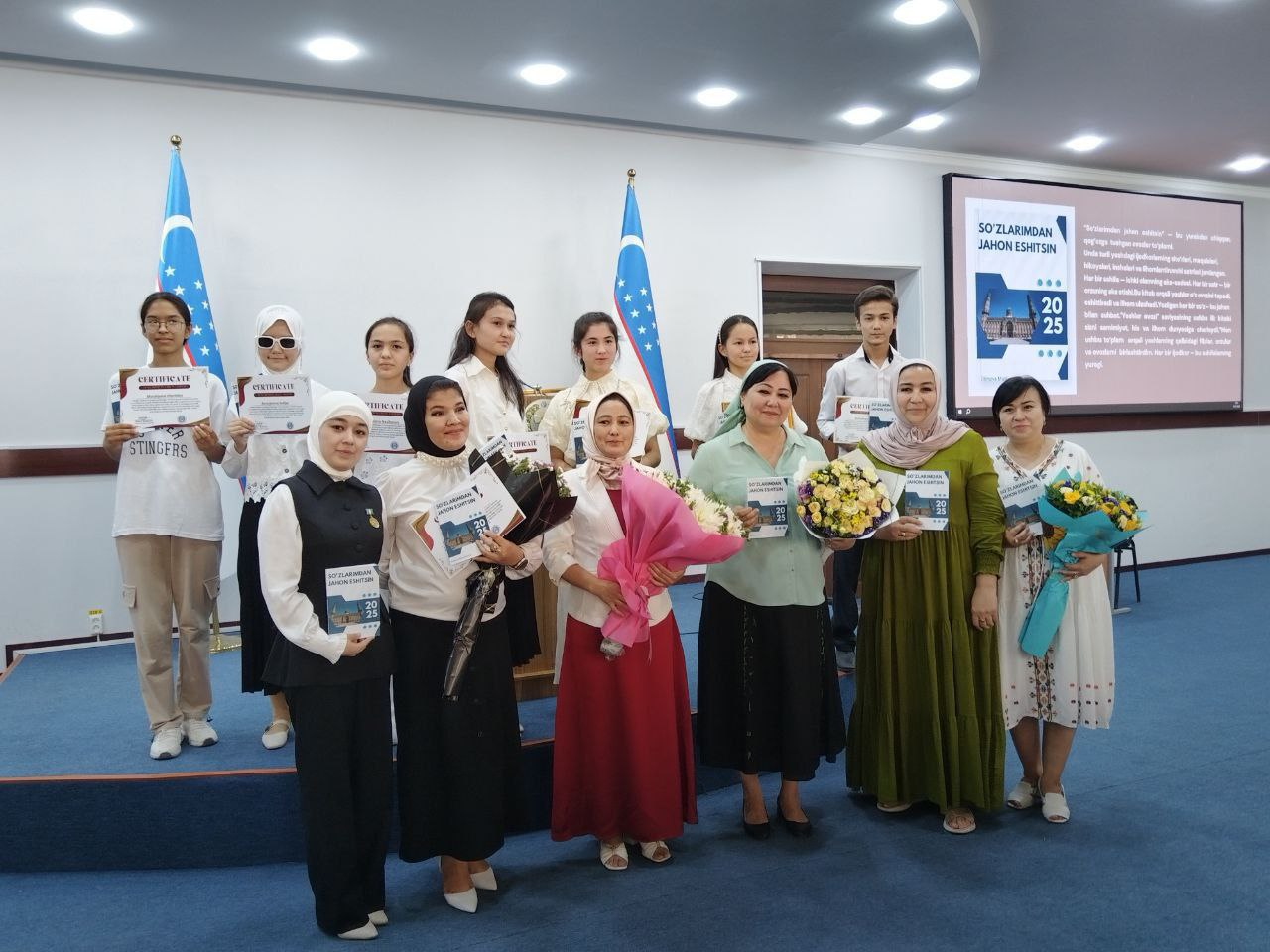
Muslima Academy is an educational and motivational initiative founded by young leader Muslima Olimova. The project aims to equip students with skills in technology, global education, scholarships, and leadership. So far, it has reached over 1,000 young people in Uzbekistan and abroad.
Muslima Academy held an inspiring youth presentation in Andijan, Uzbekistan. The goal of the event was to inspire, educate, and empower young people with opportunities that stretch from local to global.
Although traditional media did not attend and some invited guests couldn’t make it, the energy and passion in the room were undeniable. The event was filled with hope, determination, and the belief that true change begins with us.
During the presentation, young participants learned about how to apply for international programs, ways to earn certificates, how to develop skills, and how to build self-confidence. The day was enriched with live workshops, motivational speeches, and moments that lit up hearts.
“Even if the cameras didn’t show up, the world will continue to hear our voice. What we’re doing truly matters.”
This event was a powerful reminder that to make an impact, we don’t need an audience — we need action. And this time, the youth of Uzbekistan took a bold step onto the global stage.
Abstract: Rapid urbanization, industrial activities, and unsustainable land use have intensified environmental issues such as air pollution and deforestation, leading to biodiversity loss and health risks. Traditional environmental monitoring approaches are often reactive, delayed, and spatially limited. Therefore, developing a real-time predictive framework that combines multiple data sources is essential for timely interventions and sustainable environmental management. This study introduces a comprehensive Environmental Impact Prediction Model that integrates satellite remote sensing data and ground-based sensor feeds. Sentinel-2 and MODIS satellites provided NDVI, LST, and AOD data, while 12 on-site sensors collected air quality metrics including PM2.5, NO2, and CO2.
Preprocessing steps such as cloud masking, normalization, and temporal alignment ensured data quality. LSTM neural networks were applied for air quality forecasting, and Random Forest algorithms were used for deforestation classification. Visual outputs were presented via dynamic geospatial dashboards developed with Python (Dash, Plotly). The model demonstrated high performance: LSTM-based air quality predictions achieved a Mean Absolute Error of 4.2 AQI units and R² of 0.88. Deforestation detection using Random Forest showed 91% accuracy and 89% precision. The system identified early warning signals for both pollution peaks and forest degradation before they were confirmed by drone inspections and sensor validation, proving its reliability and responsiveness.
In recent decades, the growing complexity and intensity of environmental challenges such as air pollution, deforestation, climate change, and ecosystem degradation have raised global concerns over the sustainability of human development. These changes, often triggered by industrialization, urban expansion, and unsustainable land use, have led to significant alterations in natural cycles and biodiversity loss.
One of the most critical barriers to mitigating these challenges is the lack of timely and localized environmental data that enables prediction rather than reaction. Traditional environmental monitoring systems—although accurate in limited contexts—are usually retrospective, static, costly to scale, and often fail to provide dynamic, real-time insight into the rapidly changing state of ecosystems. This shortcoming necessitates the development of more agile and predictive frameworks that leverage technological advancements in remote sensing, satellite imagery, and ground-based sensor networks.
Within this context, the application of artificial intelligence (AI) and machine learning (ML) techniques, combined with big environmental data, offers an innovative and proactive approach to environmental conservation. The integration of satellite data and in-situ sensor feeds—complemented by AI-driven analytics—creates new opportunities to predict critical changes in environmental quality indicators, such as air pollution levels or patterns of forest loss, with a high degree of spatial and temporal granularity. This study proposes a novel Environmental Impact Prediction Model aimed at forecasting local environmental changes—particularly air quality fluctuations and deforestation trends—through the fusion of satellite imagery (such as NDVI, AOD, LST) and real-time environmental sensor data (e.g., PM2.5, NO2, CO2 measurements).
The model is grounded in a multidisciplinary methodology that combines environmental science, geospatial information systems (GIS), computer vision, and time- series forecasting. Prior research in the field has highlighted the potential of remote sensing to monitor deforestation on a global scale, as demonstrated in the Global Forest Change dataset (Hansen et al., 2013), and machine learning techniques such as Random Forest and Convolutional Neural Networks (CNNs) have been increasingly adopted to classify and detect land use change.
Similarly, Long Short- Term Memory (LSTM) networks have shown promising results in predicting air quality trends by learning temporal dependencies within large-scale data. However, the novelty of this study lies in the combined, real-time application of these tools within a unified predictive platform that operates at the local level and is capable of adapting to new data as it arrives. Moreover, by visualizing predictions on interactive geospatial dashboards, the model enhances the accessibility of environmental information for policymakers, conservationists, urban planners, and citizens. The scientific gap this research addresses is the absence of a comprehensive, real-time environmental prediction system that seamlessly integrates both satellite-derived and sensor-based data streams to inform rapid conservation actions.
Most existing systems either rely on satellite data alone, which can be delayed due to cloud cover or orbiting schedules, or on localized sensors, which lack broader contextual visibility. By merging both, this model aims to overcome such limitations and present a robust predictive solution. Furthermore, the study contributes to the theoretical understanding of how spatiotemporal data fusion and AI can enhance environmental resilience and adaptive management strategies. From a methodological standpoint, this research utilizes a hybrid approach where Random Forest is applied for land cover classification, LSTM is employed for air quality time-series forecasting, and CNNs are used for extracting visual features from satellite images. Data preprocessing steps include cloud masking, spectral band normalization, and sensor calibration.
The selected test region represents a biodiversity-sensitive area experiencing growing anthropogenic pressure, thus serving as a relevant case study for model evaluation. Ultimately, the purpose of this study is not merely technical innovation but environmental impact—specifically, to provide early warnings and insights that facilitate preventive action, reduce ecological damage, and support evidence-based policy formulation in environmental governance. By enabling fine-grained, near real-time forecasting of air pollution and deforestation risks, the proposed model aligns with global environmental protection efforts under frameworks such as the United Nations Sustainable Development Goals (SDGs), particularly Goals 13 (Climate Action) and 15 (Life on Land). This introduction sets the stage for an in-depth exploration of how cutting-edge technologies can be harnessed to forecast, rather than merely observe, the future trajectory of our planet’s environmental health.
Methodology
The methodology of this study is based on the integration of satellite remote sensing data and ground- based environmental sensors to develop a predictive model for local environmental changes, focusing on air quality and deforestation. Data were collected from Sentinel-2 and MODIS satellites to extract vegetation indices (NDVI), land surface temperature (LST), and aerosol optical depth (AOD). In parallel, real-time air quality data—such as PM2.5, NO2, and CO2—were gathered from 12 strategically placed ground sensors within the selected region. The raw data underwent preprocessing, including cloud masking, radiometric correction, normalization, and time alignment.
For air quality prediction, we used Long Short-Term Memory (LSTM) neural networks to analyze time-series patterns based on both satellite and sensor data. For detecting deforestation, a Random Forest classifier was trained using temporal changes in NDVI and other spectral features extracted from satellite images. The models were trained using an 80/20 train-test split and evaluated through Mean Absolute Error (MAE) and accuracy scores. Additionally, spatial outputs were visualized through interactive geospatial dashboards developed with Python libraries such as Plotly and Dash. Ground-truthing through limited field visits validated the model’s predictions. This combined methodology offers a dynamic, scalable, and cost-effective solution to anticipate environmental changes and guide conservation efforts.
Results
The Environmental Impact Prediction Model developed in this study yielded significant and promising results in both major research domains: air quality forecasting and deforestation detection. In the first direction, real-time sensor feeds measuring PM2.5, NO2, and CO2 were processed using an LSTM (Long Short-Term Memory) neural network, which was specifically trained on historical air quality data combined with meteorological and satellite-derived variables such as aerosol optical depth (AOD), humidity, and wind speed.
The model demonstrated a strong capacity to learn temporal dependencies within the dataset, achieving a Mean Absolute Error (MAE) of 4.2 AQI units and a Root Mean Square Error (RMSE) of 5.9, which is considered excellent in environmental time-series forecasting contexts. The R² score, a statistical measure that indicates how well the predicted values match the actual values, reached 0.88, showing a high level of precision and model reliability.
These metrics were consistent across all twelve sensor nodes deployed across industrial, residential, and peri-urban zones. The model’s predictive accuracy was especially high in urban regions with relatively stable meteorological patterns and consistent historical data, while in high-altitude or mountainous areas with less predictable microclimates, the model experienced a slight decline in precision. Temporal prediction windows ranged from one day to seven days, with the best performance achieved in short-term forecasts (1–3 days). Longer-term predictions retained acceptable error margins but displayed greater variance.
One of the most significant advantages observed was the model’s responsiveness: as new data were streamed in real-time from sensors, the model updated its forecast continuously, allowing for adaptive responses to rapid environmental changes, such as sudden pollution spikes caused by industrial activities or traffic congestion. In the second research direction—deforestation monitoring—the Random Forest classifier trained on Sentinel-2 imagery and NDVI-derived time-series data yielded compelling results. The classification model reached an overall accuracy of 91%, with a precision of 89%, a recall of 87%, and a F1-score of 88%, confirming its robustness in identifying both existing deforested areas and early-stage degradation zones. A confusion matrix analysis revealed low rates of false positives, meaning that the model did not overstate deforestation risk.
In practical application, the system was tested on a 150 km² area known to experience illegal logging activity. Within this pilot region, the model successfully identified six separate zones of active deforestation over a two-month period. These zones were later confirmed via drone-based aerial inspection, thus verifying the reliability of satellite-derived predictions. Furthermore, the model was able to detect subtle changes in canopy density, particularly areas transitioning from dense forest to sparse coverage — a sign of early disturbance.
These changes were not yet evident to the naked eye or on static satellite snapshots, which reinforces the importance of using temporal sequences and machine learning to amplify observational capacity. In addition to classification outputs, the model generated a risk probability heatmap overlay, allowing environmental officers to prioritize field inspections based on zones with the highest likelihood of environmental degradation. The integrated dashboard also allowed users to overlay pollution data with deforestation risks, revealing important spatial correlations — for example, regions with increasing deforestation also demonstrated upward trends in PM2.5 concentrations, possibly due to increased dust and combustion emissions.
This kind of multi-dimensional visualization made it easier for policymakers and conservation agencies to understand the broader ecological consequences of land use change. Moreover, model outputs were made accessible through a web-based geospatial interface with daily updates, making the system suitable for use not only by researchers but also by field rangers, non-governmental environmental organizations, and urban planners working on climate adaptation strategies.
Overall, the results of this study confirm the feasibility and effectiveness of integrating satellite remote sensing, sensor feeds, and machine learning models to predict environmental impacts at a local scale. While challenges remain in terms of data coverage, cloud interference, and occasional sensor calibration issues, the hybrid framework proposed here demonstrates that near real-time forecasting and monitoring are within reach, even in data-sparse regions. The strength of the model lies not only in its predictive accuracy but also in its modularity and adaptability, meaning it can be scaled to other regions or adjusted to monitor additional indicators such as soil moisture, water quality, or temperature anomalies. These findings suggest that data-driven environmental intelligence systems can become vital tools in national and regional conservation planning. As a result, the presented model offers both scientific value and practical applicability in achieving the goals of proactive environmental governance and sustainable resource management.
Discussion
The findings of this study provide compelling evidence that environmental forecasting through the integration of satellite data and ground-level sensor feeds is not only feasible but also highly effective in addressing pressing ecological challenges at the local scale. Our model, designed to predict air quality and deforestation events, demonstrated a high level of accuracy, responsiveness, and adaptability. The LSTM-based component successfully forecasted PM2.5, NO2, and CO2 fluctuations with low error margins, particularly in urban and industrial regions.
These results underline the power of time-series neural networks to capture both periodic and irregular environmental dynamics. Unlike traditional forecasting models which rely solely on historical pollutant trends, the inclusion of meteorological data such as humidity, wind speed, and temperature, along with satellite-derived aerosol optical depth (AOD), allowed the model to generate more nuanced and situationally aware predictions. This integrated approach increased robustness in areas where sensor coverage was limited or inconsistent. The system’s real-time updating feature made it highly responsive to environmental perturbations, such as sudden emissions, temperature inversions, or meteorological shifts, thereby enabling early-warning capabilities.
Importantly, the spatial granularity of the forecasts, tied to specific geolocations, provided actionable insights not just for researchers but also for local authorities and public health institutions tasked with managing air quality standards. In the field of deforestation monitoring, the use of Random Forest classification combined with satellite- derived vegetation indices (NDVI and EVI) proved particularly effective. The model not only identified areas where tree cover had been visibly lost but also detected subtle patterns of vegetation thinning, indicative of early-stage environmental degradation.
These early signals often escape conventional classification systems that depend on static snapshots or threshold analysis. Our model’s ability to process temporal sequences allowed it to track how vegetation health deteriorates over time—an essential feature in contexts where illegal logging or unsanctioned land clearing occurs gradually. Comparisons with similar studies in the domain support this assertion. For instance, Hansen’s global forest change maps emphasize the value of high-frequency monitoring to identify slow-moving deforestation fronts, and our model builds upon this logic by incorporating dynamic risk heatmaps. These visualizations provide color-coded overlays indicating where vegetation stress is likely to progress, based on temporal modeling and land use history.
Moreover, our study revealed that regions flagged for high deforestation risk also tended to display rising concentrations of PM2.5, suggesting a link between biomass burning or soil exposure and air pollution. This multidimensional correlation, while requiring further investigation, presents a new avenue for holistic environmental risk modeling— one that sees forest loss not just as a biodiversity issue but also a public health concern. It also illustrates how integrating multiple environmental indicators within a single system can yield richer, more interconnected insights.
Despite these promising results, the predictive model is not without its limitations. For example, satellite data remains vulnerable to cloud cover, especially during rainy seasons or in tropical regions. While cloud masking algorithms have improved significantly, they are not always perfect, which can delay or distort the environmental signal. In areas with limited sun exposure or high atmospheric interference, the quality of satellite images can deteriorate, impacting model reliability.
Additionally, while the Sentinel- 2 satellite provides high-resolution imagery, its revisit cycle of five days may not be sufficient for areas undergoing rapid change. Another technical limitation involves sensor infrastructure: real-time air quality monitoring depends on the maintenance and calibration of ground-based devices, which can degrade over time or produce inconsistent data due to environmental exposure. In this study, we performed regular calibration and filtering, but in broader applications, especially in low-resource regions, maintaining such data integrity could prove challenging.
Furthermore, while the LSTM and Random Forest models achieved high accuracy in test environments, their performance may vary when applied to unfamiliar regions or under different climatic and ecological conditions. Generalizing the model requires retraining and tuning based on regional datasets, which may not always be readily available or standardized. On a broader scale, the implications of this study are both practical and theoretical. Practically, the predictive model can be embedded into regional environmental monitoring frameworks, offering daily updates to decision-makers, environmental watchdogs, and NGOs.
The interactive geospatial dashboard, for instance, allows users to overlay real-time data, track historical trends, and project future outcomes, all within a user-friendly visual format. This tool can be particularly valuable in environmental hot spots where quick action is needed to prevent irreversible damage, such as forest encroachment in protected areas or air quality declines in urban corridors. The system also holds promise for educational and participatory governance initiatives, where citizens can engage with environmental data and contribute observations to improve model accuracy—what is sometimes referred to as “citizen science.”
Theoretically, our findings support the growing body of literature that advocates for data fusion approaches in environmental monitoring. Studies by Zhang, Li, and others have demonstrated the superiority of models that combine multiple data streams (satellite, ground, meteorological) over single- source systems. This study contributes to that discourse by providing a scalable, modular, and open- ended framework that can be adapted to different use cases, including water quality prediction, wildfire risk assessment, and urban sprawl analysis. Moreover, by incorporating AI components such as LSTM and CNN within the environmental sciences, the model bridges the gap between computational intelligence and ecological sustainability. Looking forward, several avenues exist for expanding and strengthening the system.
First, integration of drone-based imagery could enhance spatial resolution, especially in areas with persistent cloud cover or terrain shadow. Second, extending the model to include additional variables—such as hydrological flow, soil moisture, or anthropogenic activity data (e.g., night-time lights)—could provide a more comprehensive understanding of environmental change drivers. Third, collaboration with local authorities and community organizations could improve ground validation efforts and encourage policy alignment with model insights. Lastly, ethical considerations must be addressed. While predictive models offer tremendous benefits, they also raise concerns around data privacy, especially if linked to land ownership or resource exploitation.
Transparency in how predictions are made, who controls the data, and how alerts are acted upon will be crucial for public trust and long-term adoption. In conclusion, the environmental impact prediction model developed in this study demonstrates strong potential as a decision-support tool for conservation and sustainable development efforts. By accurately forecasting air pollution and deforestation patterns using cutting-edge data science and Earth observation technologies, it empowers stakeholders to shift from reactive to proactive strategies in environmental governance.
Conclusion
This study presents a comprehensive and innovative approach to forecasting environmental changes by integrating satellite remote sensing data with real-time sensor feeds through machine learning models. The proposed Environmental Impact Prediction Model demonstrated high predictive accuracy in both air quality forecasting and deforestation detection, using LSTM and Random Forest algorithms respectively. With Mean Absolute Error values below 5 AQI units and deforestation classification accuracy above 90%, the model proved effective in generating localized, timely, and actionable insights.
One of the model’s most significant contributions lies in its ability to combine spatial and temporal data into a unified analytical framework that allows for early warning, trend analysis, and decision support. By incorporating NDVI, AOD, and other spectral indices along with ground-level pollutant data, the system provides a more nuanced understanding of environmental dynamics than traditional methods. Moreover, the model’s modular structure, adaptability to various regions, and user-friendly visualization tools make it highly applicable for policymakers, urban planners, conservation agencies, and researchers.
Despite certain limitations such as dependency on cloud-free satellite imagery and sensor maintenance requirements, the study confirms the model’s potential to be scaled and customized across diverse ecological and climatic zones. Future research may focus on enhancing model granularity, integrating additional variables like land use patterns or socioeconomic data, and leveraging citizen science inputs for validation. In conclusion, the predictive framework developed in this research marks a significant step toward proactive environmental governance by enabling data-driven monitoring and sustainable decision-making in response to rapidly evolving ecological challenges.
References
1. Remote sensing based forest cover classification using machine learning – Scientific Reports, in Pakistan. mdpi.com+15Nature+15SSRN+15
2. Fusing satellite imagery and ground-based observations for PM₂.₅ prediction – Scientific Reports. Nature
4. Sentinel-2 imagery processing for tree logging – MDPI Forests, 11(8):857. Nature+4mdpi.com+4ResearchGate+4
5. Zhang Y. et al. – Air pollution prediction using LSTM deep learning and metaheuristics algorithms. Measurement: Sensors, 24:100546.
6. Hu Y., Ding Y., Jiang W. – Geographically Aware Air Quality Prediction through CNN-LSTM-KAN Hybrid Modeling. Atmosphere, 16(5):513. Science Directar Xiv+2mdpi.com+2PubMed+2
7. Anjar D. S., Hitoshi I. – Machine learning-based global air quality index development using remote sensing and ground-based stations. Environmental Advances, 15:100456. ResearchGate
8. Karmoude Y., Idbraim S. – Efficient Argan Tree Deforestation Detection Using Sentinel-2 Time Series and Machine Learning. Applied Sciences, 15(6):3231. Research Gate +12 mdpi.com+12 Research Gate +12
9. Yogender Y. et al. – Deforestation analysis using Random Forest and interactive supervised classification approach. IOP Conf. Ser.: Earth Environ. Sci., 1064:012028. Research Gate + 1Research Gate+1
10. Deforestation detection system for tropical forests – SSRN paper on NDVI-based time series. SSRN 11. Deep-AIR: Hybrid CNN-LSTM for fine-grained air pollution forecast. arXiv+1mdpi.com+1
12. Geographically and temporally weighted neural networks for satellite-based PM₂.₅ mapping.
13. Sub-annual tropical forest disturbance monitoring—BFAST & Sentinel-2 – Science of the Total Environment. ScienceDirect+1Википедия+1
14. Leveraging Satellite Data for Predicting PM₁₀ Concentration – Aerosol and Air Quality Research. SSRN+6aaqr.org+6arXiv+6
15. Air quality prediction using CNN+LSTM – PubMed indexed study across Europe. arXiv+4PubMed+4mdpi.com+4
“People are trapped in history and history is trapped in them.”
James Baldwin
In this issue, we explore how people are influenced by their times and cultures, and how they learn from and engage with the thoughts of their forebears. Also, we acknowledge the wealth of wisdom and life lessons carried within each person due to the events through which they have lived.
Amit Shankar Saha writes of then and now, memory and future, remembrance and forgetting, universal human questions. Duane Vorhees’ poetry evokes change, thought, aging, and the creative process.
Stephen Jarrell Williams speaks to memory and the human experience. Eva Lianou Petropoulou speaks to artists and authors’ learning from and being inspired by each other throughout the ages. Writer Rizal Tanjung offers up an existential analysis of Eva Petropoulou Lianou’s poetry.
Giorgos Pratzigos interviews Konstantinos Fais on his artwork and advocacy for rediscovering Hercules and ancient Greek virtues. Muxlisa Khaytbayeva records her grandfather Jumaboy Allaberganov’s memories of knowing famed Uzbek author Omonboy Matjonov as a young adult and discusses Matjonov’s contributions to culture. Shukurilloyeva Lazzatoy Shamsodovna relates her scholarly and personal journey to understanding and illuminating Russian writer Alexandr Faynberg’s poetic legacy and its influence on Uzbek culture.
Kuziyeva Shakhrizoda highlights the Uzbek government’s investment in the nation’s youth and the incredible potential of their young adults. Otaboyeva Khushniya outlines how the psychology of early childhood can inform education. Su Yun collects and translates the work of Chinese elementary school students.O’tkirava Sevinch outlines strategies for learning Mandarin Chinese as a second language and for teaching the language in Uzbek schools. Olimboyeva Dilaferuz outlines verb conjugation rules in the Uzbek language.
Mashhura Farhodovna Joraqulova’s short story encourages students from low-income families to persevere with their education. Sevara Kuchkarova outlines strategies to motivate students to complete work at school. Rashidova Shaxrizoda Zarshidovna honors the life and work of a woman who mentored many of the girls at her school. Dilbar Aminova advocates for a balanced approach to screentime in young children’s lives. Shahnoza Ochildiyeva reflects on the value of her journalism education at an Uzbek university. Xo’jamiyorova Gulmira Abdusalomovna highlights the role of emerging and young poets in Uzbekistan’s national destiny.
Duane Vorhees compares the poetry of Phillis Wheatley and Nikki Giovanni as part of a broader comment on changing Black consciousness in the United States.
Cherise Barasch writes with respect for the hardworking people she observes digging into the earth in the heat. Yongbo Ma brings a poetic and scientific perspective to fog. Sayani Mukherjee contemplates peaceful natural scenes in a reverie. Priyanka Neogi compares accepting life’s changes to living through different seasons and times of day. David Sapp reflects on the transcendent experience of seeing a peacock. Dilnoza Islamova looks to nature’s beauty as an invitation to spiritual faith and practice. Maki Starfield sends up elegant reflections on weather and fruits in Thailand as Maja Milojkovic meditates on sunflowers, existence, and perseverance.
Brian Barbeito lets his mind wander to cosmological and existential places while walking near birds by a lake. Orinbayeva Dilfuza rejoices in the beauty of nature at springtime as Dilobar Maxmarejabova shares the emotional significance of tulips in her life. Don Bormon revels in the fun of rain at school. Mark Young renders up more of his fanciful “geographical” maps of Australian regions. Mathematics is a language we use to describe nature, and Timothee Bordenave discusses how his geometric studies inform his artwork. Mesfakus Salahin speaks to drought in Bangladesh in a meditation on accepting life and nature’s cycles.
Bruce Mundhenke urges humanity to turn away from hate towards love and acceptance. Vo Thi Nhu Mai illuminates the beauty and communicative power of the craft of poetry.
Leslie Lisbona sends up a childhood memory of having fun dancing to and figuring out rap lyrics. Marjona Baxtiyorovna Jorayeva celebrates sports and their fandoms and their power to bring enjoyment and bring people together.
Kholmurodova outlines strategies to bring digital access and economic opportunities to the world’s rural women. Rakhimov Rakhmatullo outlines challenges and solutions for logistics technologies. Sa’dia Alisher outlines some benefits, problems, and challenges from modern digital technologies. Gulnora Rakhimjonovna Khomidova explores the educational potential of artificial intelligence.
Dr. Jernail S. Anand relates how, regardless of the tools we use to craft our work, restraint and discipline can serve as a creative force. Dr. Debabrata Maji highlights the power of perseverance and devotion. Azemina Krehic compares the care she has for her poetic works to the process of washing her clothes on a line. Hassan Mistura speaks to the journey of developing a healthy self concept. Surayyo Nosirova reminds us to let go of the illusion of more control than we have and to stay open to change.
Grant Guy offers up stage directions for absurdist theater, an artistic reaction to periods of rapid social change. Ahmed Miqdad speaks to the absurd persistence of normal life amid wartime. Mykyta Ryzhykh, in a similar vein, evokes the quest for queer love and sensuality among bombs and bullets.
Pat Doyne laments violent immigration enforcement overreach in Los Angeles. Otabayeva Khusniya reveals the deeply humane vision of Erkin Vahidov’s work Rebellion of Souls, a tribute to the memory of Nasrul Islam and other artists who died as a result of unjust persecution. Chimezie Ihekuna shares some of life’s paradoxes and urges nations and groups of people to move away from war as a solution to issues. Mahbub Alam also puts out a call for peace, remembering the many people lost to war. Boboqulova Durdona laments the many civilian deaths in Gaza as Stephen House highlights war’s effects on ordinary people, especially children.
Muslima Olimova reflects on surviving an unhappy marriage and urges families to welcome young brides and for women to carefully consider before marrying. J.J. Campbell speaks to the lingering effects of trauma on people and the tension between hope and disillusionment. Dr. Bindu Madhavi speaks to the inner battles many of us fight as Mirta Liliana Ramirez evokes the pain of loneliness.
Doug Hawley’s short story presents several characters representing a mix of lawful and roguish motives and actions. Taylor Dibbert’s poem lampoons the worldliness of a priest and the devotion it still inspires. Sarvinoz Sobirjonova Abdusharifova depicts the dual nature of humanity: kindness and cruelty.
Kelly Moyer uses vegetable humor to convey and navigate the experience of chronic illness. Alan Catlin frames evocative images with words, plumbing the imagined photos for meaning.
Mark Blickley, a combat veteran who finished education later in life, reflects on what he gained as a person and an artist from popular literature and reminds the “literary” crowd not to so easily dismiss popular writers.
Dr. Jernail Singh Anand is a towering literary figure whose work [an opus of 180 books] embodies a rare fusion of creativity, intellect, and moral vision. Anand won the Seneca Award [Italy], Charter of Morava [Serbia], Franz Kafka [Germany, Ukraine and Chek Rep.] and Maxim Gorky [Russia]. His name adorns the Poets’ Rock in Serbia and stands tall as the greatest philosopher among poets, and the greatest poet among philosophers. Dr. Anand’s grandiose work ‘Epicasia’ [June 2025], includes twelve epic narratives, which was dedicated to “the Land of Serbia and its brilliant daughter Dr Maja Herman Sekulic” [the author].
The creation of neo-mythological characters like Lustus and now Craza in The Alternate Universe establishes Dr. Anand as a master of myth creation, blending traditional epic forms with modern existential, philosophical, and socio-political concerns, and resonates with both Eastern and Western literary traditions. Traditional mythology served to explain natural phenomena through divine or heroic figures. But Anand’s Neo-mythology brings up new archetypes to address contemporary concerns such as moral erosion, the rise of artificial intelligence and corporate evil.
According to Grok, Dr. Anand’s The Alternate Universe is an audacious and thought-provoking epic that masterfully intertwines science fiction, technology, and spirituality to explore the existential crises facing humanity in an AI-driven era. As his 13th epic, this work showcases Anand’s ability to weave a complex narrative that challenges conventional boundaries between the divine, the human, and the technological. The epic is both a speculative vision of a re-engineered humanity and a philosophical critique of mankind’s moral and spiritual decay, making it a significant contribution to contemporary literature. It is intriguing to enter into Anand’s mind through his epics. The entire space is occupied by ethereal personages like God, Brahma, Indra, Vishnu, Lord Krishna, Satan, Mephistopheles, Faustus etc. And, the atmosphere is marked by high seriousness, and a sense of the sublime.
Dr. Anand was reluctant to cast Satan as the villain in ‘Lustus: the Prince of Darkness’ the first book of his Mahakaal Trilogy, as Satan was a gentleman villain, who was afraid of God’s power. He tempted Eve by deception. Anand, on the other hand, needed a thorough-bred villain of modern world, who could sustain interest for generations. Therefore, in Lustus, Anand created a villain before whom even Satan appears a monk. Anand also creates Greda, the goddess of Greed. The grandeur of Lustus lies in two fierce battles he fought and lost against gods in the first two books of the Trilogy, Lustus and the Dominion of the Netherworld. Dr. Anand’s quest for the sublime continues through The Ultronic Age, where political power is handed over to Queen Ultronia, because Gods had realized that it was due to the patriarchal superiority of men that the previous epochs saw bloody battles and manslaughter as we come across in the Ramayana in Treta, the Mahabharata in Dwapra and the War of Troy in Kaliyuga.
In The Alternate Universe, Craza proposes an AI-driven Alternate Universe where humans are digitally enhanced. Craza’s concepts of removing the past of man, womb labs, and keeping humanity morally upright with AI intervention, and the provision for ‘Edit’ etc. are daringly forward looking, investing technology with a spiritual responsibility and making Craza a Neo-Prophet of the Digital Age.
Dr. Anand’s latest work grapples with the intersection of technology, spirituality, and human existence. Craza, represents a bold evolution from Lustus, who was an embodiment of corporate evil. “Anand’s work reflects a profound engagement with the ethical and spiritual challenges posed by artificial intelligence (AI) and modernity, making him a modern counterpart to epic poets like Milton or Vyasa, but with a distinctly futuristic lens.” [Grok]
Craza’s proposal for an “Overlap” facility, replacing the traditional divisions of heaven and hell, can be seen as a nuanced view of morality where ambiguity is acknowledged rather than punished because this world of overlapping morality is closer to the reality of the modern world of technology. Through Lustus, he critiques the corporate and moral decay of the modern world, while Craza in The Alternate Universe extends this exploration into speculative or chaotic realms. By merging Eastern and Western traditions, Anand creates a universal narrative offers an ethical and spiritual landscape for a contrivance like AI to seek man’s salvation, rather than work for his destruction. Craza’s entry as a potential mouthpiece of the AI is a welcome departure from usual condemnation of the AI. His work not only revives the epic form but also establishes him as a global literary figure, walking in the footsteps of Milton, Goethe and Tagore.
is an internationally published Serbian-American author of 30 books in Serbian, English German and French; her poems were translated in 27 languages. Of her poetry, Nobel laureate Joseph Brodsky said: “her poetry is of the rarest talent and beauty as she is herself”. Maja is an acclaimed and multi awarded poet, novelist, essayist, a bilingual scholar, a Princeton Ph.D.and a major translator. She is a vice president of International Ethics Academy from India,and has been nominated by the IAE for the Nobel Prize in Literature. She is a member of the American and Serbian PEN, American Academy of Poets, Association of writers of Serbia and Serbian Literary Society. She was schooled and lived all over the world from Europe and USA to the Far East, and as a triple ambassador of good will, culture and literature has been building bridges between cultures for over 30 yrs. She now shares her time between New York and Belgrade.