Synchronized Chaos Mid-December 2024 Issue: A Literary Snow Globe

Evergreen trees within a stylized painting of a snow globe.
Image c/o Circe Denyer

Contributing poet Howard Debs’ work has been included in Chameleon Chimera: An Anthology of Florida Poets, which has just been released by Purple Ink Press, including work by U.S. inaugural poet Richard Blanco and notables such as Geoffrey Philp, Jen Karetnick, David Kirby and many others.

Also, contributor Peter J. Dellolio’s new novel The Confession has just been released from Cyberwit.

The Confession is the first-person account of a serial killer on the evening before his execution.  It is literary fiction, and somewhat similar to Naked Lunch by William Burroughs.  There is suspense in the narrative, as there is some speculation as to whether or not the narrator is really guilty.

Now for this issue: A Literary Snow Globe. As with a real snow globe, we watch delicate bits and pieces of creative thought descend and fall wherever they may on the landscape of our world. Each time we shake the globe and let it settle, each time we read these works, we take away something different and view a unique scene.

Daniel De Culla’s poem glories in the exuberance and diversity of human creative expression.

Salihu Muhammad describes stages in his development as a creative writer.

Ilhomova Mohichehra’s poetry probes the creative potential of liminal dream-states, how emotions and imagination can be strengthened when we approach sleep. Mark Young incorporates color, texture, and text into subconscious, surreal images he calls “geographies.”

Jim Leftwich’s poem incorporates vivid imagery and wordplay, referencing animals, landscapes, and celestial bodies. It also includes philosophical reflections on time, thought, and human experience. Catherine Zickgraf’s work explores time, mercy and judgment, spirituality, and gender. Maja Milojkovic revels in the beauty of the world while acknowledging everything’s impermanence.

Duane Vorhees’ poems explore themes of love, loss, sexual intimacy, nature, and self-discovery. Cheryl Snell’s fictional drabbles look at moments of connection, humor, and tenderness, between humans and each other and other species. Lilian Dipasupil Kunimasa affirms her acceptance of her entire life journey and her acknowledgement of the different parts of her personality and character. Linda Gunther’s short story depicts a woman who finds her identity by finding her calling in life.

Ilhomova Mohichehra ponders the dreary sufferings of life as she stares out at a rainstorm.

Dramatic painting of dark clouds and lightning and black birds over a storm whitecapped sea. A lighthouse on the right beacons with light.
Image c/o George Hodan

Mykyta Ryzhykh’s work offers a glimpse into a complex and troubled inner world through images of childhood, animals, fear, and death. Texas Fontanella’s poem expresses feelings of financial instability, frustration with societal expectations, and a desire for creative and personal freedom. He includes references to pop culture, politics, and literature, often in a fragmented and surreal manner. Mahbub Alam addresses humanity’s potential for great good or great evil and the need to make choices. Sayani Mukherjee speaks to the inner wilds: the vision, beauty, and danger we all carry within us.

Chuck Taylor’s poetry speculates on the nature of chaos, how it does not operate according to a holy book or an algorithm.

Nilufar Anvarova urges everyone to expand their horizons by reading. Kucharova Ugiloy celebrates the power of books and learning to expand one’s worldview.

Numonjonova Shahnozakhon reflects on how wonder and curiosity add color to life. David Sapp approaches outer and inner landscapes as a tourist and explorer, probing an office firing and the idea of his death with the same curiosity as he brings to Rome’s Trevi Fountain. Lawrence Winkler brings a sense of wonder to his trip to the Micronesian island of Pohnpei, exploring the history and culture of the place while witnessing his friends’ mishaps in international business. Santiago Burdon sketches a time and place in his Christmas tale from a rough Italian-American childhood.

Zarshid Qurbonov reads a book out in the grass on a sunny day and reflects on Uzbekistan’s literary heritage.

Farangiz Abduvohidova illuminates the work and life of Uzbek poet and magazine publisher Zulfiyakhanim, highlighting her qualities as a kind human being as well as her writing skill. Murodova Muslima Kadyrovna also honors the legacy of Uzbek woman poet Zulfiyakhanim.
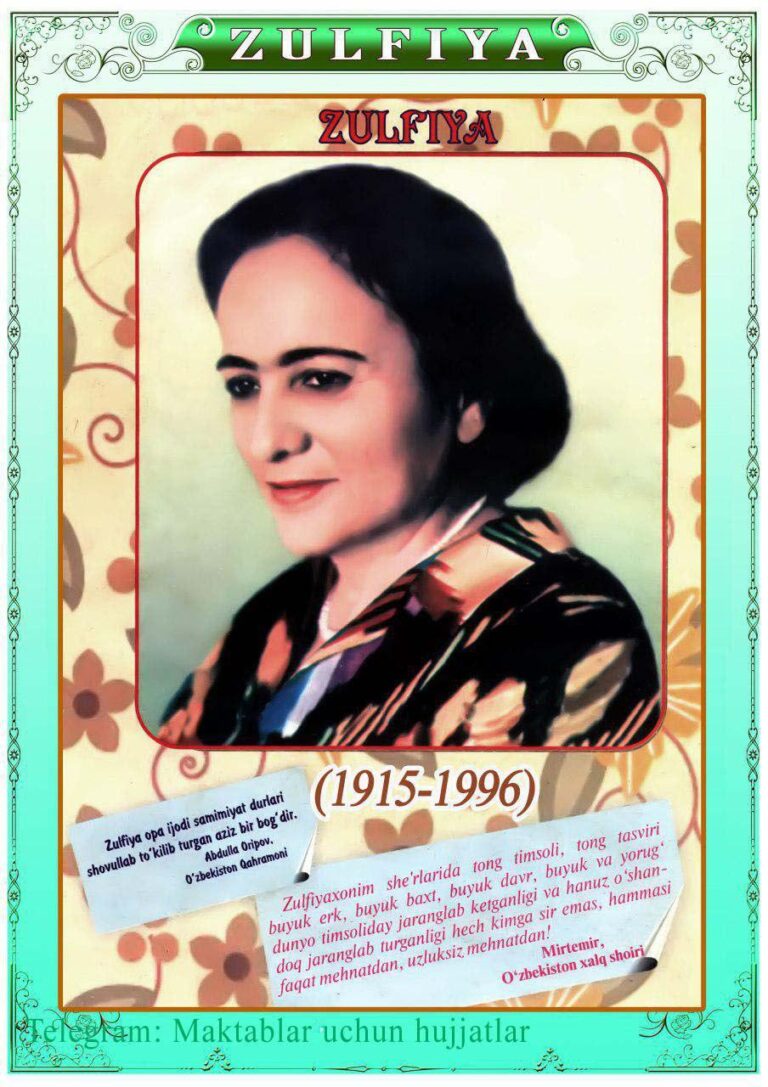
Poster of a Central Asian woman in a colorful blouse with short dark hair. Words underneath her photo in Uzbek discuss her legacy and the years of her life are listed, 1915-1996.
Image c/o Savol Javob

Dilbar Koldoshova Nuraliyevna dreams of becoming a teacher or journalist so as to shape the minds of her fellow Uzbeks towards good. Gulsevar Xojamova highlights the Uzbek Youth Academy’s role in developing the creative potential of many young people.

Ibragimova Rushana outlines various techniques for teaching languages. Aziza Umurzoqova highlights the role of student-directed technology for language learning. Jonpolat Turgunov elucidates the history and value of the Ibrat Farzandlari Project, an online resource for learning foreign languages. Durdona Ibrahimova suggests possible innovative roles for technology and online apps and games in language instruction.

Abdumalikova Mushtariybegim celebrates the Internet but encourages balanced and moderate use of technology.

Fayzullayeva Gulasal outlines technical and financial problems within Uzbekistan’s industrial chemical industry.

Sarvinoz Quramboyeva conveys the daily determination of the Uzbek people to move their society forward. Shodiyeva Mexribon celebrates the hard work, hospitality, and honor of the Uzbek people. Ilhomova Mohichehra praises the kind and hardworking villagers of Uzbekistan. Sitora Otajonova honors the rule of law and social progress and community spirit of her native Uzbekistan. Mahzuna Habibova speaks to her native Uzbekistan as a friend, urging the land to hold onto its freedom and glory.

Farangiz Abduvohidova elucidates the history and culture of Uzbekistan’s Azim Bukhara region as Tuliyeva Sarvinoz describes the Uzbek historical castle monument of Tuproqkala. Ismailov Sanjar describes in detail the shrine of Sa’d Ibn Abu Waqqas in Uzbekistan. Through his photographs of an Afro-Caribbean festival in Boston, Jacques Fleury celebrates the region’s vibrant cultural diaspora while outlining the historical and psychological significance of the Caribbean rara celebrations.

Young Black woman in a sequined costume with a yellow mask and headdress dances in a city street.
Photo c/o Jacques Fleury

Sarvinoz Tuliyeva recollects her Uzbek childhood: fragrant trees on her street, parents baking bread in the oven, her father crying as she grows up too fast.

Alimbayeva Diana reflects on the constant care and provision of her father for her whole family. Zabuna Abduhakim writes a succinct verse of gratitude for her caring parents. Makhmasalayeva Parizoda Makhmashukurovna praises her father’s selfless love and sacrifice. Sobirjonova Rayhona honors her kind-hearted sister. Diyorbek Maxmudov praises her father’s tender love. Azimjon Toshpulatov’s verse honors the warmth and love of her mother. Ilhomova Mohichehra reflects on how blessed and lucky she is to have loyal and caring family members. Akmalova Zilolakhan Akobirkhan speaks to the consistent love and practical care most people receive from their parents. Faleeha Hassan speaks of children in the winter, nourished and warmed by caring parents. Muhammed Sinan offers up a tribute to the love, dedication, and integrity of his father.

Audrija Paul’s poetry reflects the determined patience of a lover as Jonborieva Muxlisa Rahmon reflects on the value of friendship and what you gain by being a good friend. Norova Zulfizar reflects on a love so joyful and nurturing it reminds her of spring’s flowering and her parents’ care. Mesfakus Salahin employs a variety of poetic images to convey a gentle and kind romance. Sobirjonova Rayhona urges her fellow young people to live happy lives and treat their parents with gratitude and respect.
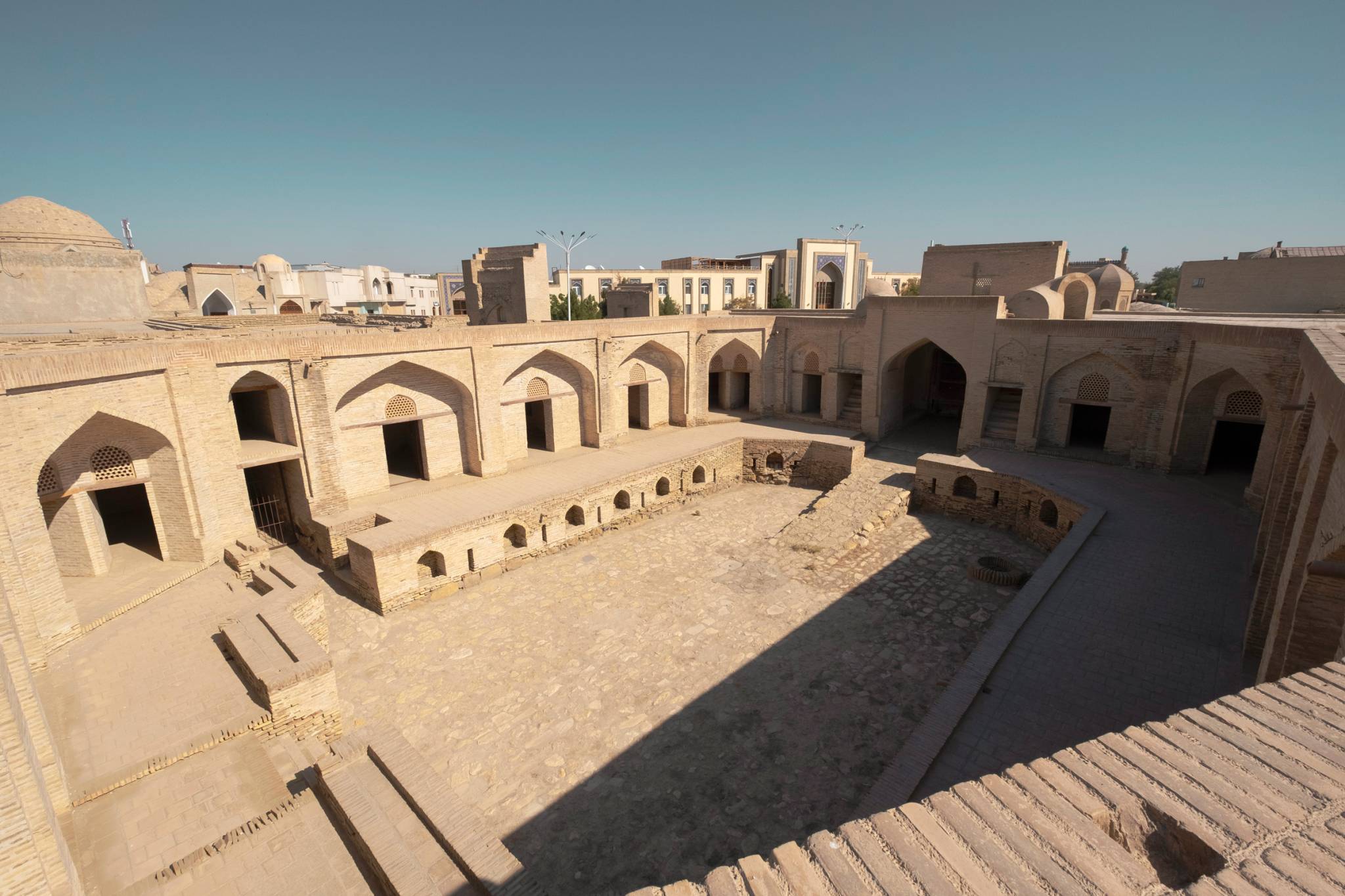
Uzbek historical monument of Bukhara. Stone city plaza with doorways and stairs and a skyline.

Nurullayeva Mushtariy illustrates the heartache that comes when the younger generation does not have compassion for their parents. Shahnoza Ochildiyeva remembers how she began to empathize with and befriended some children who were originally annoying bullies, because she realized they lacked the care of loving parents.

J.J. Campbell reflects on having survived decades of broken dreams, troubled relationships, and abandonment. Yet, as he acknowledges, he has survived. Abigail George reflects on love, loss, mental health, family relationships, spirituality, and her artistic dreams in a prose poem formulated as a letter to her niece. Graciela Noemi Villaverde grieves the death of a husband with whom she shared a tender love.

Z.I. Mahmud explores masculinity and romance in D.H. Lawrence’s Sons and Lovers and how various social and psychological pressures drive the protagonist away from his fiancees. Eva Lianou Petropoulou’s poem, reviewed by Williamsji Maveli, explains how both psychological issues and societal problems such as discrimination and violence against women can interfere with loving relationships.

Somber closeup photo of a man in the shadows resting his head on his hand. He's of indeterminate race, we see him from the side.
Image c/o George Hodan

Kass’ piece explores themes of heartbreak, regret, and the lasting impact of a past relationship. Grant Guy’s poetry reflects on daily routine, loneliness, the lack of intimacy, and loss of identity within some relationships.

Chimezie Ihekuna elucidates the struggles of men in his native Nigeria and elsewhere in the world: being disrespected and viewed only as a source of money in an economy where decent jobs are hard to come by. Maftuna Rustamova also reflects on materialism and the tragedy of reducing human value to money. Don Bormon laments the suffering of the poor out in the cold during winter, while acknowledging the beauty and the harshness of nature during winter months.

Sandro Piedrahita’s short story dramatizes another tragedy, the Pinochet regime’s murder of singer and guitarist Victor Jara. Odera Chidume highlights the effects of war in Nigeria on everyday people through his story of remarkably resilient teenagers.

Vernon Frazer’s poems explore themes of wealth disparity, societal decay, and existentialism, often using vivid imagery and unconventional language. Howard Debs reflects on the human and ecological losses of 2024 and the changes many societies are experiencing.

Before we can fully take stock of 2024, though, there are the December holidays.

Pink, blue, yellow and green outlines of stars on a black background.
Image c/o Andrea Stockel

Taylor Dibbert recollects an awkward encounter with a stranger as Doug Hawley’s memorable anecdote recounts a Christmas filled with physical and relational peril.

Brian Barbeito’s poem illuminates the beauty of our world and highlights the importance of appreciating nature and loved ones, at the holidays and any time.

Bill Tope’s short story explores human compassion, connection, and perception. Another of his pieces depicts a kindly Jewish shopkeeper whose gift makes some young girls’ Hanukkah very special.

We hope that this issue will be a gift to you, and that as you read, the particles of snow in our literary globe will land in interesting ways that resonate with you.

Poetry from Numonjonova Shahnozakhon

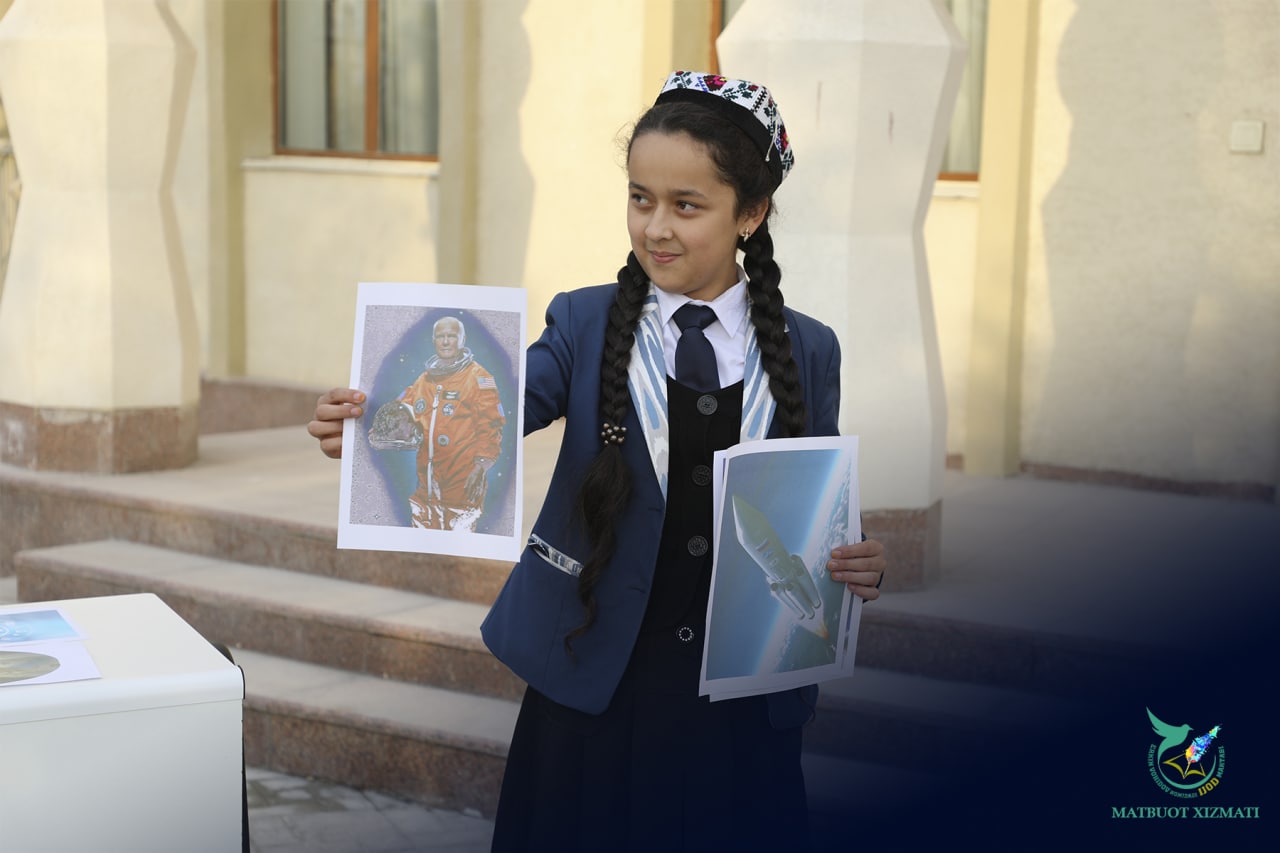
Uzbek schoolgirl stands in front of a large white building in a headdress and long black braids and a blue coat over a white collared shirt and tie and black skirt. She's holding up photos of astronauts and spacecraft.
Colorless world

Who were we in a black and white world,
He saw black and white with his colored eyes.
We said that this whole being is unchanging,
Accustomed to the view stored in his mind.

Even if it is a thousand stars, this is a mortal world,
A brave man comes out to the big square.
As if trying to make a difference,
But the people have no business, they can't obey the decree.

He tried to be like them,
The opportunity he found paid off.
There was astonishment among the people,
Very nice, chosen side.

A thought suddenly came to his little mind,
"This world must remain like this."
In the eyes of the black and white world,
He returned to himself, day by day.

The world is filled with color and paint,
Everything changed immediately.
Every bit seems more beautiful to him,
There is nothing left in the black and white world.

Numonjonova Shahnozakhon. She was born on June 7, 2009 in Fergana region. Currently, she is studying at the creative school named after Erkin Vahidov organized by PIIMA. Her creative works have been published in several international magazines and has various international certificates. The creator's future goal is to become an international ambassador and receive a state award named after Zulfiya.

Story from Diyorbek Maxmudov

Central Asian teen girl with long dark hair, brown eyes, and a black, gray and pink floral top.

Dad, he is such a person who is an indescribable sun, an elusive diamond…

What more can I say!? 

Actually, I can say a lot, but when it comes to the point, sometimes my tongue starts rolling and my eyes start to tear…. I can hardly control myself even now.

A father is kind to his daughter in a different way, and so are girls

“Do you know what this is…!?

– When I returned home, my father’s shoes were in front of the door.

I agree with this opinion with all my heart, the reason is that you come home tired from studying, and when you come home, you see your father’s shoes, and you feel as if you forget all your fatigue for a moment, I don’t think that I am the only one who has this feeling… )

Fathers are ready for everything for their child  

“Thirty sons cannot be one father!

Fathers as humble as the earth, as huge as the blue

#From the poem

If this Mother is the one who will pick you up and put ointment on your wound when you fall…

And your father will fight with his whole body so that you do not fall

If you don’t love your father, who will you love…!?

Is it possible not to love such a person?

• Father, be there every moment for my happiness

Essay from Fayzullayeva Gulasal

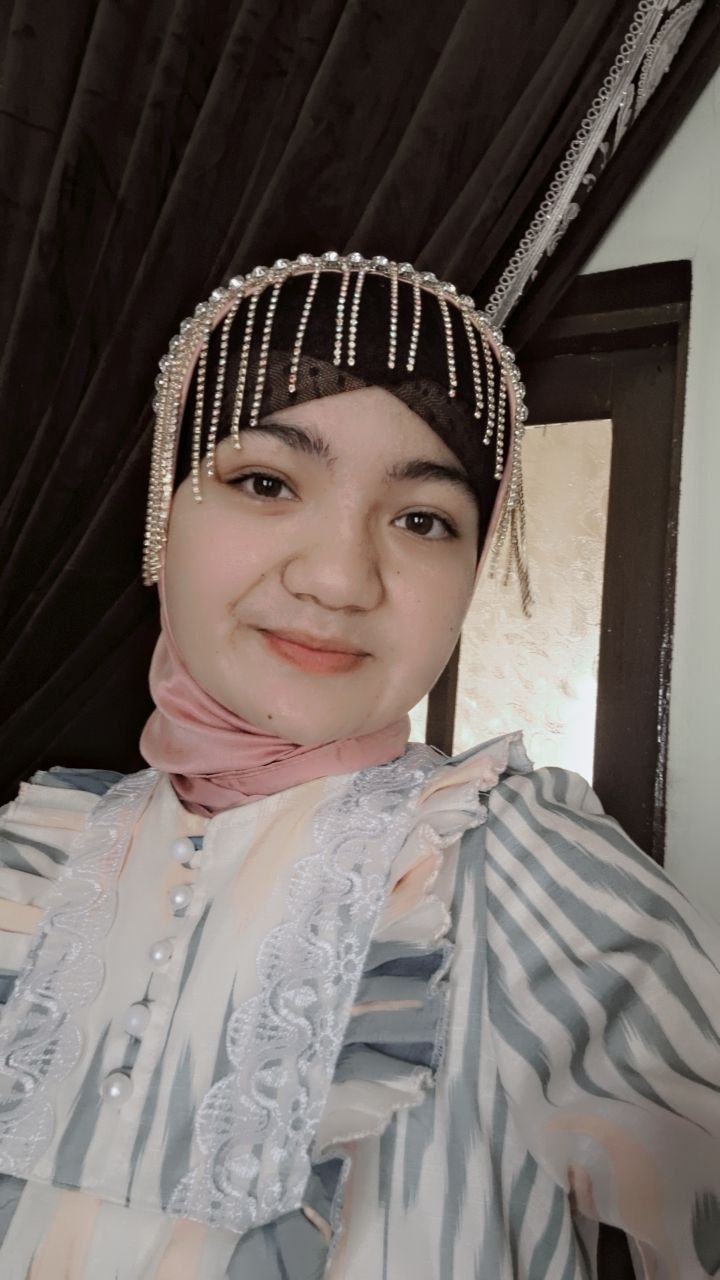
Central Asian woman with a beaded headdress, pink scarf, and ruffled gray and white blouse.
Problems and reforms in the chemical industry 
                          Faizullayeva Gulasal
                            School 32, 8th grade
                           Student

  Abstract: This article provides detailed information about the chemical industry and its development problems and shortcomings, as well as reforms aimed at eliminating them. 


 Annotation: V dannoy state predstavlena podrobnaya information about chemical industry, problems and shortcomings in development, as well as reform, improvement and elimination.
  Keywords: chemical industry, planned projects and modern reforms, chemical research

     If we talk about the reforms of the chemical industry in our country;  On September 21, President Shavkat Mirziyoyev got acquainted with the presentation of the main indicators achieved in the chemical industry and the planned projects and made the necessary proposals.

    As a result of the reforms, the type of products in the chemical industry increased and profitability increased. More than 1 million tons of mineral fertilizers were produced in 8 months of this year. Exports increased almost twice and reached 330 million dollars. 

Speaking of the chemical industry, the chemical industry is one of the heavy industries, which produces a variety of chemical products.  types of mining and chemical raw materials, basic chemical products (NH 3 -ammonia, inorganic acids, alkalis, mineral fertilizers, simple chlorine and chlorine products, liquefied gases, etc.), plastic and synthetic resins, including caprolactam, cellulose acetates, chemical fibers and threads.  It produces plastic and glass-plastic materials and products, lacquer materials, synthetic paints, chemical reagents, photochemical products, household chemical goods, etc. 

The transformation of the chemical industry into an independent industrial network is connected with the industrial revolution.  Samarkand superphosphate factories were launched in 1963 and these factories served to meet the needs of the republic's agriculture for phosphorus fertilizers. With the launch of the gas field in the Bukhara region, the Fergana Nitrogen Fertilizer Plant was founded in 1963, and the Navoi chemical plant in 1964 started to work. 

Problems: the costs related to mineral fertilizers used in agriculture are not covered.  is going  Therefore, starting from 2018, the supply of mineral fertilizers to consumers is planned to be carried out through stock exchanges through the mediation of "YAGONA AGENT" organized under "ÕZKIMYO" JSC. These and many similar problems are causing great damage. These damages are being considered by our president.  and managed to find a solution. 

What measures have been taken or are being taken in this situation?  The ability of enterprises to form small working capital is completely limited, and they are solving the problem by attracting loans at 16-18%. Another problem that should be paid attention to is the obsolescence of the main technological equipment.  the equipment is not undergoing current and capital repairs. 

The head of state is also finding a solution for this and he emphasized the need to develop a network plan for the implementation of current and capital repair works, and this is very true.  we say thank you and we cannot help but recognize the high knowledge and potential of that person. Let's conclude by saying that each of us should contribute to our country, let's be thankful that we live in a bright country, in a beautiful life.
 
 References: 
 1 President's reforms
 2 Planned projects 
 3 Google sites 
 4. Decision of the President of the Republic of Uzbekistan on measures to further reform the chemical industry and increase its investment attractiveness

Fayzullayeva Gulasal was born in 2009 28th of January in Bukhara region Gijduvan district in ordinary family. Now, she is 9th class and she has succeeded lots of achievements. She is author of "Dadajonim orzusi" -" Dad's wish"and "Onajonim jannatim" My mother is my paradise". Additionally she has achieved many prizes in biology and chemistry subjects. English, mother tongue and literature are her favourite subjects too. Gulasal has attended in "Kitobxonlar festivali " - Literati festival " and won three day tour to Tashkent.
Three are 6 people in her family. Her father has passed away. She is very talented , intellectual and sussed girl. She has lots of plans and dreams in future so now Gulasal is trying to do her best for achieving them by learning biology and chemistry subjects. Her big dream is to study in abroad.

Essay from Norova Zulfizar

Every time it crosses my mind sharply,

Like the love of my mother and father.

Every time it passes through my heart slowly,

Like the first buds of spring.

My heart screams,

Noza says trees from spring.

Buds open and write letters,

My beautiful spring!

you are my word

You have such a beautiful heart. 

The earth always blooms,

I love your voice.

I’m eager for you to come

I miss you always.

If not, it’s spring in my country.

Young Uzbek teen girl with short black hair, brown eyes, and a short red and black floral ruffled top.

Norova is the daughter of Zulfizar Sanjar.

She was born in 2007. She studies in the 11th grade. She is in the 11th grade at a secondary school. Lives in Bukhara. Hobbies, learning foreign languages, reading psychological and artistic books, traveling. She knows English, Turkish, Uzbek languages perfectly.

Poetry from Ilhomova Mohichehra

Uzbek teen girl with long dark hair, a black ruffled blouse, and a single red flower.
Village people 

In the village, people only work,
They say: "The one who works, the one who bites."
That's why they don't stop working.
They are happy when they are happy.

Day and night never stops,
They do not know the feeling of fatigue.
People are always upset,
He does not wish to say bad words.

Ilhomova Mohichehra is a student of the 8th grade of the 9th general secondary school of Zarafshan city, Navoi region.

Essay from Ismailov Sanjar

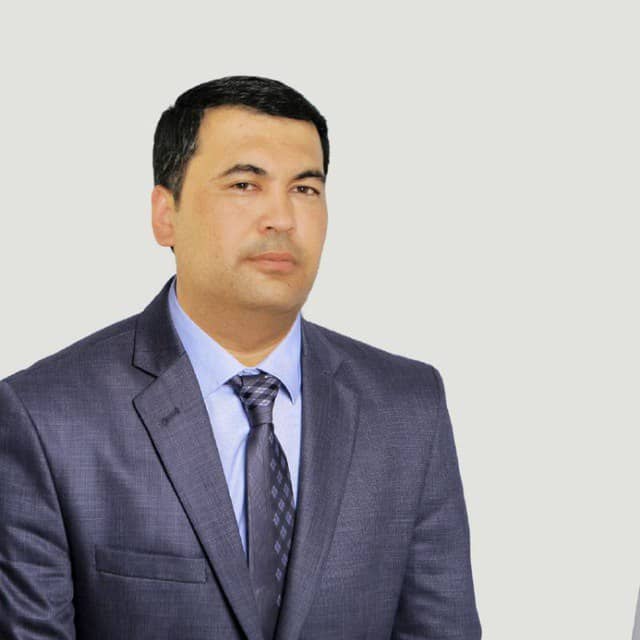
Middle aged Central Asian man with short dark hair, clean shaven, and in a gray suit and tie with a blue shirt.

Shrine of Sa’d Ibn Abu Waqqas

This pilgrimage site, which took place in the history of the Jizzakh oasis, is located in the village of Avliya, Gallaorol district, and is divided into two parts. The upper part of the shrine – the area along the lake, with its healing and holy springs, different beautiful and charming corners, its own charming nature, and unique landscapes will delight anyone’s tongue. The lower part of Kadamjoni is notable for its old mosque and mosque.

The building of the mosque was built in the 19th century by master builders from Jizzakh – master Kamil, master Qabil, master Zuhur and master Mirziyo. It attracts the attention of any pilgrim due to its oriental style. The carpentry work in the building was done very skillfully. The colorful patterns on its ceiling testify to the fact that Mirzo Zaid and master Bobojan, who were once known as skilled painters, were really masters of their profession. Patterns, which are the product of great work and high skill, have not lost their charm even to our days.

Sa’d Ibn Waqqas was the son of one of the nobles of Makkah, and when the revelation of prophethood came to our prophet Muhammad, he was a young man, he converted to Islam and showed the qualities of a leader.

In the sixteenth year of the Hijra, he was appointed as the leader of the army sent by Caliph Umar ibn Khattab to Iran and Movaroonnahr. blood is shed instead. Sarkarda’s son-in-law is buried in the cemetery on the north side of the village (there is a small room here), and a room was also built near the lake where the blood of the Blessed One fell.

The incident did not affect the health of Sa’d ibn Abu Waqqas (may Allah be pleased with him) much, he later returned to Arabia and lived a long life. During the Enlightenment period, he lived as a davandist. But in the years before his death, he asks them to bring him a woolen turban. When he brought his chakman, he said: “Shroud me with this, because I fought with this chakman against the polytheists in the Battle of Badr.” I want to go to the presence of Mr. Haq in this bag…” (from the books “Munjid” and “Life of the Companions”).

The holy spring here is also called “Sa’d ibn Waqqas spring”. At present, these places have acquired a beautiful and charming landscape. Thanks to the constant care and attention of the Jizzakh regional administration, as well as thanks to the donations and efforts of generous people who have a generous heart and respect for historical values, the buildings of the shrine were built. it was settled, put in order, and the place of pilgrimage was extremely improved.

You can also see “holy fish” in the lake – blackfish included in the “Red Book” of Uzbekistan.

The territory of the shrine is 14.2 hectares.

Ismailov Sanjar was born in 1986 in Gallaorol district of Jizzakh region and is the head of press service in Gallaorol district’s administration.