
1) Plot Hole


The light at the end
of the tunnel turned out to
be a gaping plot
hole in my argument,

     so, I was forced to freestyle.


2) Psychic Warfare


I’m still convinced that
someone in their employ was
waging psychic war-
fare upon me in order
     to gain access to all my
     family’s secret recipes.


3) Places of Residence


Is there a name for
the frequent dreaming of one’s
     former places of
     residence, specifically
     dreams of still living there-in?


4) Daffodils, Sweat Bees, Helicopters


Daffodils in an
old salsa jar half-full of
well water, sitting
     on an old deck table in
     the sun, while sweat bees circle
     around like helicopters.


5) Progress, If Not Victory, So Much


A
          mile
     or two
                    of sun-cracked
           two-lane blacktop with
                            about three feet of a gravel
shoulder, sloping off to a ditch by the side of the
                    road, an old mailbox full of bullet holes,
    over-flowing with who knows how many days?
weeks? months? of mail; and there’s something
                              about the smell of
                newly laid tarmac first thing in
        the morning that for
                             some reason
                       always
                                    makes
                                                me
                                         think
                                                   of
                                                   progress.


Jason Ryberg is the author of eighteen books of poetry,
six screenplays, a few short stories, a box full of folders,
notebooks and scraps of paper that could one day be
(loosely) construed as a novel, and countless
love letters, never sent. He is currently an artist-in-
residence at both The Prospero Institute of Disquieted
P/o/e/t/i/c/s and the Osage Arts Community, and is an
editor and designer at Spartan Books. His latest collection
of poems is “Fence Post Blues (River Dog Press, 2023).”
He lives part-time in Kansas City, MO with a rooster
named Little Red and a Billy-goat named Giuseppe,
and part-time somewhere in the Ozarks, near the
Gasconade River, where there are also many strange
and wonderful woodland critters.
Category Archives: CHAOS
Poetry from Mark Young
Dictum

It is when words fall
that they lose their im-

pact. Must remain in
the air for more than

a second or two, cling-
ing to clothing or twist-

ing upwards in the way
that cigarette smoke does.


Articles

I like using articles to end a
line. Sometimes an article
of faith, sometimes of clothing. &

occasionally a particle of speech
to give the space between lines
that extra bit of frisson. It is a

continuity, the way forward, not
the end of the line that some
flat-earthers seem to think it is.


The Clearing

Not how I re-
remembered or
would have left
it. Too much

foliage, as if no
one has been here
to tidy up since I
last came by.

Tradition always
suffers when the
oracles move into
the marketplaces.


A kind of census

The mind’s mosaic has
been taken in for intro-
spection. Why learn for
the sake of learning? Un-
necessary facts might just
as well be fiction for all
the use we get from them.

The fragments are taken
out for sensual inspection.
Left so the air can breathe
on them. Those that acquire
color are kept to form new
pathways of the mind. The
bland are used to pebble
pathways in the garden.


Another Sunflower Sutra

In sunflower I find
pistil & stamen, their

output arranged in
a Fibonacci spiral.


& following on

As the sun sets, the
credits start to roll.

This day was brought
to you by the seven

ayem garbage col-
lectors, a poem that

glistened just beyond
the edges of the trawl-

ing net, Sketches of Spain
with Miles Davis & Gil

Evans, four coldcall
intrusions, all declined,

The Last Samurai on
cable, washing off the

line. No special effects
were provided by either

Industrial Light & Ma-
gic or Marvel Studios.
Poetry from Abdul Razzaq Al-Amiri
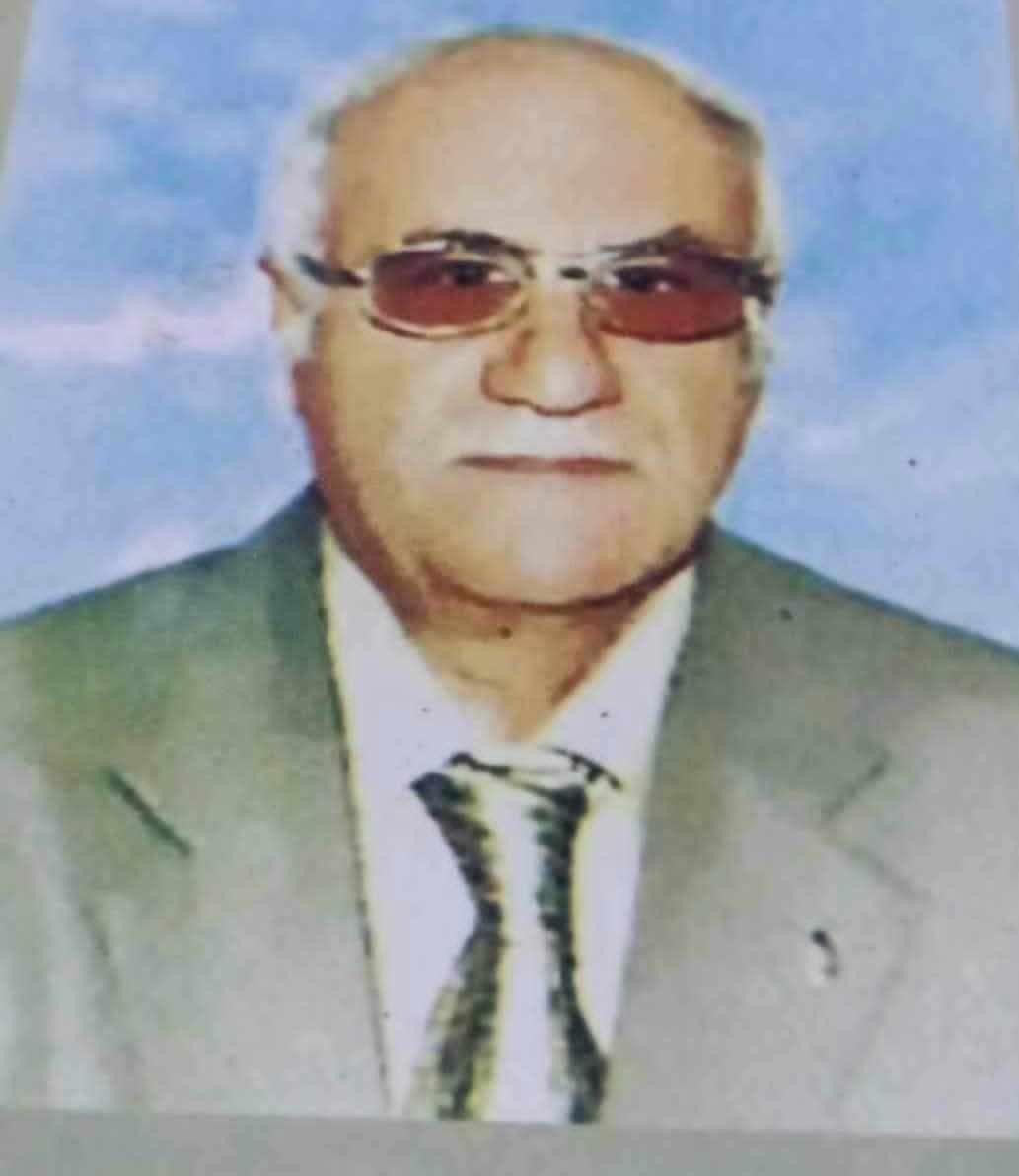
Older Middle Eastern man with sunglasses, thinning hair, and a white collared shirt, silver tie, and gray coat.
The Game and the Deluge

O, lady!
Your face is a word
Hidden under the feathers of a peacock,
A lady in a large hall .. alone
Whose secret is wrapped in nothingness.
O, lady!
I avoid crying
Beyond my occult voice
While repeating the words of a sentence.
My fear cancels off all things
To keep you a lady of the absolute
Reducing this paper cosmos
To an idol on a banquet of the earth
Announcing the death of Man.
The game could not stop the deluge.

(2)
The River of a Knife Poetry is ritualistic
O, you, my wish
Be goddesses and amulets
Or keep silent for ever.
And turn off as a dream
In the head of a castaway,
A banquet of fruits for the spirit,
Crows 're hiding the oblation love
In a river of a knife.

(3)
All are a Chatter
Bag All are a bag of cackles,
All travel throughout words
Drawing the circle of death.
Black magic
Declares the world as my grave.
Death is the road of gnostics.
So be steps and follow my steps
The path of God passes through
The sins of the exiles.

Abdul Razzaq Al-Amiri 1947-2010, a poet from Najaf, started writing poetry at an early age and published his poems in Iraqi newspapers and magazines at that time. His poetry was characterized by philosophical contemplation, emotional and intellectual alienation, and a preference for solitude and staying away from the public eye. In 1969, he published his first poetry collection titled "Qurban Al-Ishreen" (Sacrifice of the Twenties), and among his other poetry collections is "Diaries of the Eternal Question”. Translated into English By Hussein Nasser Jabr.
Essay from Gulsevar Xojamova

NEW WAYS TO USE INTERNATIONAL TECHNOLOGIES IN PRIMARY EDUCATION
It is known from the historical development of any country that the rapid development of the country, the achievement of certain achievements, and the well-being of the people depend on the level of attention paid to the education and future of the youth in that country. In this sense, the issue of youth in Uzbekistan is one of the most priority directions of the state policy. “Education gives creative activity to the spirituality of the people of Uzbekistan. All the best opportunities of the growing young generations are manifested in it, they constantly improve their profession and skills, the wise advice and experiences of the older generations are highly understood and passed on to the young, mature generation.” [1,78] To all of us. It is well known that many years ago, the concept of education was defined from a national-democratic point of view. In order to realize this stated goal, new models of education are being created, the theoretical foundations of which are being proven scientifically and practically by leading specialists. This scientific-practical proof is closely related to high-level technologicalization of educational processes. In the Republic of Uzbekistan, special attention is paid to the education of a mature generation as the main criterion of development.
Improved versions of the Law on Education and the “National Program of Personnel Training” have been created, which correspond to world standards, and are recognized by the education staff of many countries. These laws and programs are gradually being implemented in our country. The introduction of personal computers into school life shows that it should be used in all educational subjects and school activities.” In today’s advanced age, modern technology tools are used effectively in schools. Computers are widely used not only for teaching the course “Basics of Informatics and Computer Science”, but also in almost all areas of school education. Adaptation of primary school students to the modern environment, making them more interested in lessons through multimedia, video and audio lessons is giving sufficient results today. Today, almost all spheres of society’s life, including the development of education, cannot be imagined without the media.
Due to the globalization of the information space and its “openness”, the flow of new knowledge, views, facts, and concepts is increasing rapidly, and the use of information spread through the media is growing at high rates. Therefore, as new innovative technologies occupy a worthy place in the education of the young generation, the further involvement of our youth in the innovations of the technological age will make a significant contribution to the development of our country. Nowadays, one of the leading factors of achieving efficiency in the educational system is the use of innovative technologies. It would not be wrong to say that the creation and use of modern innovative technologies in educational institutions in the “National Personnel Training Program” has become the demand of the times. The introduction of technical tools into the educational system made it possible to present information in the form of audio, text, photo and video images. Such tools are often considered multimedia tools due to their complex technical and technological aspects. The introduction of computers into the field of education is considered a universal means of information processing. Multimedia technology provides integration of various types of information with content and harmony. It allows to present various forms of information with the help of computer.
Khojamova Gulsevar Abdullajanovna
Uzbekistan, independent scientific researcher
Poetry from Noah Berlatsky
Mock Poet


Out of the blue of the internet

someone

asked me, as a non-poet,

to recommend a poem

for a special issue on non-poets

recommending poets.


Okay! I said. But!

There is a problem!

(Drumroll.)


I am a poet!

(Imagine a fanfare here.)

(You can find one on the internet.)


Out of the blue of the internet

someone

responded. “That’s okay,” they said.

They added, for encouragement:

“I play tennis sometimes.

But it’s not like I’m a tennis player.

Hobbyists are fine.”


Hey! I said.

(Imagine a sad fanfare here.)

(Imagine a weeping emoji.)


I have a book!

I am a real poet!


The internet shimmered.

The fanfare died.

I recommended

someone.

And sat down to write

whatever this is.


Not a poem.
Essay from Sarvinoz Tuliyeva
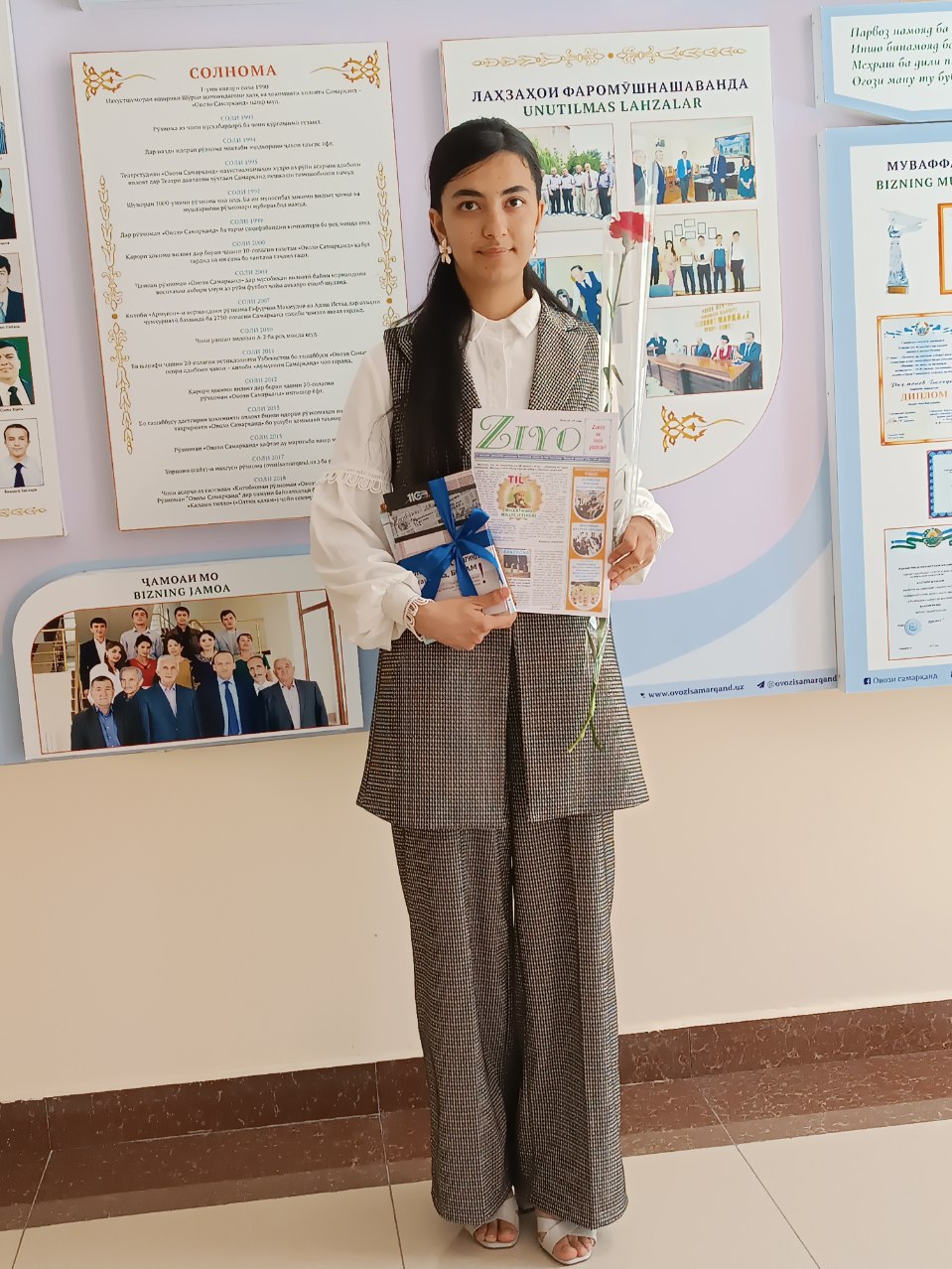
Artistic analysis of the story "Yanga" written by O'tkir Hashimov.

Abstract: the article provides information about the life and work of O'tkir Hashimov and analyzes his story "Yanga". Analytical approach to the characters and situations in it.

Key words: new, story writer, mother, magazine, translation

O'tkir Hoshimov, a well-known writer, storyteller, publicist and playwright, was born in the Dombirabad district of Tashkent at the beginning of the Second World War (1941). He had a difficult childhood and had to study and work during school. He continues his studies at the part-time department of the Faculty of Journalism of Tashkent State University. In addition, he worked in such newspapers as "Temiryolchi", "Tashkent Haqikat" and "Kyzil Uzbekistan".

During his career, he worked as a department head in the newspaper "Tashkent Aqshomi", deputy editor-in-chief at the publishing house named after Gafur Ghulam, and editor-in-chief of the "Sharq ytyzni" magazine. He also worked as a deputy of the Oliy Majlis of the Republic of Uzbekistan and the chairman of the Press and Information Committee. The writer began his work in journalism and entered the creative world in 1962 with his first book "Steel Rider".  In particular, his works such as "Love", "A Farmer's Day", "The Last Victim of War", "Uzbek Work" made a significant contribution to the development of Uzbek storytelling.

He began his prose work by writing stories, his first story "Tort Maktub" was published in 1963. Later, he begins to write short stories, a genre larger than the story. The stories "Desert Air", "What Do People Say", "The Wind Blows" were released. The story that brought great fame to the writer is "Listen to your heart". received the Republic Youth Award for this work. In the course of highlighting the evils in the social life of the society, the period of stagnation, he fully reflected the important spiritual and moral issues of the time in the novel "There is light, there is shadow". In the novel "Between Two Doors", the author skillfully embodies the historical fate of his people, covering a period of almost forty years and a series of complicated and complex destinies. And this novel brings the author the Republican State Prize named after Hamza.

His articles such as "The White Book of the Heart", "Those Who Break the Sacred Oath", "What Will We Say to the Generations", "Where is the Logic?", "The Secret of the State" are among the achievements of Uzbek journalism in recent years.

As a dramatist, he influenced the development of modern literature. His dramas and comedies "Hazon's Spring", "Happy Weddings", "Medicine of Conscience", "Human Loyalty", "Repression" took a worthy place on the stages of the Republican theaters. The book "Inscriptions on the edge of the notebook" (2001) left a certain mark on social and spiritual life.

 As a translator, O'tkir Hashimov translated the works of O. Bergholtz, S. Sveig, Mustay Karim, V. Shukshin into Uzbek. His best works have been translated into Russian and other languages. The total number of published works of the writer is more than fifty, and their total circulation is more than two million. Oh. Hoshimov was awarded the honorary title of "People's Writer of Uzbekistan" in 1991 for his creative work. He was awarded with the orders "Labour Fame" (1996), "For Great Services" (2001). He died on May 24, 2013 in Tashkent.

Let's pay attention to the writer's story "Yanga". This story mentions people like Yanga, Akmal, Clara, Lola, Akmal's brother and mother. The story begins with the scene where the bride comes to the house of the Akmal Khans and Akmal Khan comes home from work to meet the bride.   When he wakes up, he hears a familiar voice and this person opens the door. This character was new to him. After meeting with Akmal Khan, he leaves the house. Then he asks his wife Clara what the new one is for. Then his wife rudely says that maybe she came to get money. Then he quarreled with his wife. Akmal Khan is in love with his wife Clara and started a family, they have a little girl named Lola. Clara had never quarreled with her husband. But today they argue with Akmal Khan.

The reason was that he didn't give it to the new one when he had money. At that time, Akmal Khan's brother's affairs were not going well. He thinks that he wanted to get clothes for his nieces because winter is coming. When he receives the money, his wife says, "Don't touch the money, I will buy a coat for our daughter with that money." But he takes the money and goes to his brother's yard. Her mother was alive when she became a new bride.  He always ironed his clothes to go to school. Even after the death of his mother, this situation did not change. As always, she would put her clothes on the throne and put a little money in there, just in case she needed them.

However, seeing that his financial situation worsened and he was unable to earn money on his own, he decided to drop out of school. Even then, the new one persuades him and helps him to study. He came to his father's house. The house is still the same, has not changed and is as tidy as ever. The young one sees him and invites him to bed. They are talking and Akmal Khan says that he just received money from work and that he didn't know about it. He gives the money and says that he will buy winter clothes for my nephews. Then the new one said, "This week was the day my mother died. We wanted to gather relatives and do maraka. "It was not enough." Then Akmal Khan will be ashamed. This concludes the story. Plots and composition are very well chosen in the story.

In this story, you can see the love for mother, the love of the bride for her mother-in-law, and the respect of the bride for her brother-in-law. It is no exaggeration to say that the story is written in Uzbek spirit.

LIST OF REFERENCES:

1) 5th grade literature. Editor-in-Chief of "Sharq" publishing-printing joint-stock company. Tashkent - 2020

2) uzsmart.ru

3) z.m.wikipedia.org

4) thinking.net


Abduvahidova is the daughter of Farangiz Wahab 2nd stage student of Samarkand State University named after Sharof Rashidov.

Abdukhalilboyev is the son of Alisher Abdugani 3rd year student of Tashkent University of Information Technologies named after Muhammad Al-Khorazmi
Poetry from Echezonachi Daniel
NOT FOR PLEASURE

In the sun-lit beauty of the evening
I watch as a flock of birds travel across
And it hit my mind, like a sort of knowledge previously unknown
That birds do not fly just for pleasure.

These birds may, like man, have hustled the whole day
In their own type of office and school
And are returning to rest their aching feathers.
They fly to get home, not for pleasure.

Sometimes they fly to escape threatening danger
To save their lives and slip away from death
At this point they fly for safety
Not for pleasure.

They fly to find sustenance for their little ones
Like man they too need something for their belly
So as I watch them now fly past
I know for certain that they do not fly for pleasure