
An Outcast In My Own Life

A white peach, a slice of green melon,
and a peeled mango!
They all have a delicate pleasantness,
but the taste of you
lingers.
That taste has sweetened
the bitterness
around my heart.

I cherish those moments
when you are near.
The shadows
of apathy and uncertainty
disappear
and though
I feel vulnerable
I love
the flavor.

I once
devoured the night
and its consequences
now I lay next to you,


welcoming the morning light.
You dissolved that feeling
I’d be forever lost.
I am no longer
an outcast in my life.
Category Archives: CHAOS
Poetry from J.J. Campbell
------------------------------------------------------------------------------
life as a cynical soul


when you

see a young

child smile


you wonder

how long

until that

smile goes

away


as the world

will surely

fuck him

over


or at least

you hope

you weren't

the only one
----------------------------------------------
constant hate


only a child

can believe

love can

sprout from

constant hate


with experience

that child will

learn any love

that comes from

hate is not the

kind of love

you can build

any fucking

thing with


no matter how

many times you

lie to yourself


it never works
-------------------------------------------
a little wooden cross


my mother

has a little

wooden cross

that has

24 7 365

on the back

of it


i believe i

know what

those numbers

imply


but the older i

get the more it

seems those

numbers are

actually how

long you are

up on that

cross


your sentence

handed down

by a faceless

judge and not

a jury of your

peers


i laugh


knowing damn

well that my

peers would

have suggested

the firing squad
--------------------------------------------------------
a country song


i used to lick tears off your face


tell you old stories about

rainbows and machine guns


promised you all the good parts

of my heart and my endless love


i remember the day you told me

to fuck off and left with my best

friend


i drank myself to sleep that night


laughing that my fucking life

was now a country song


a few years later the spanish

princess invited me over to

watch some hockey


we traded horror stories about

old flames and harrowing times


she tried her best to save my soul

that night


i snuck her panties out with me


with a little luck


that woman will want to spend

the rest of her life with me


and whatever little i have left

as well
------------------------------------------------------
all of his failures


my father went

to vietnam to die


that was a few years

before i was born


i never knew about that

until i was eight years old


i was sadly well aware

of all of his failures

by then


i was around 13 when he

tried to choke me to death


i was 17 when he told the

sheriff i was driving when

he got into a car accident


i mention all these things

as a reminder why i refuse

to have any children of

my own


the last thing this world needs

is that dna to keep living on


when i die it goes with me


as someone who understands

the cycles of abuse and god

knows what else


this is the most responsible

decision i can make


other than i should have

taken him out when i had

the chance


imagine those poems


J.J. Campbell (1976 - ?) was raised by wolves yet managed to graduate high school with honors. He's been widely published over the years, most recently at Horror Sleaze Trash, The Asylum Floor, The Rye Whiskey Review, Cajun Mutt Press and Disturb the Universe Magazine. You can find him most days on his mildly entertaining blog, evil delights.
Poetry from Lilian Dipasupil Kunimasa
Tiger Stripes

knowledge gained in school
books read besides the pool
experience thorns and wool
stripes worn survive all cool

character from times abhor
soft heart born times adore
conviction in times of lore
hear a lone tiger as it roar

wisdom from complexity
serenity born of adversity
perseverance in severity
feel a lone tiger's flexibility

life is a jungle full of mystery
yet a circle of unending story
tiger needs its stripes to survive,
but it is his roar and flexibility that keeps him alive.


To Arms

More often than not,
It is those who have not seen war
That would shout in his top voice
To Arms! To Arms! To War's Glory!

For a true soldier,
Who has crawled in bloody field
Who has kissed Death's cold lips
Knows of Hell and all it is about

Call not a scarred veteran coward,
When he fears to raise up his gun
When he seeks for a compromise
When he would hold down his pride

To Arms! To Arms!
Guts and brains to nourish farms
Fool's gold the paupers charms
Arrogant Alpha the pack harms

Yet when storm comes
Iron thunders and acid fogs
Who faces Death with sad smile
Who hides in metal room down?

Woe to soldiers true
Who fights so cowards may live
Whose children are orphaned poor
To Arms! To Arms!

Lilian Dipasupil Kunimasa was born January 14, 1965, in Manila Philippines. She has worked as a retired Language Instructor, interpreter, caregiver, secretary, product promotion employee, and private therapeutic masseur. Her works have been published as poems and short story anthologies in several language translations for e-magazines, monthly magazines, and books; poems for cause anthologies in a Zimbabwean newspaper; a feature article in a Philippine newspaper; and had her works posted on different poetry web and blog sites. She has been writing poems since childhood but started on Facebook only in 2014. For her, Poetry is life and life is poetry.

Lilian Kunimasa considers herself a student/teacher with the duty to learn, inspire, guide, and motivate others to contribute to changing what is seen as normal into a better world than when she steps into it. She has always considered life as an endless journey, searching for new goals, and challenges and how she can in small ways make a difference in every path she takes. She sees humanity as one family where each one must support the other and considers poets as a voice for Truth in pursuit of Equality and proper Stewardship of nature despite the hindrances of distorted information and traditions.
Essay from Shokhida Jurayeva
Give the child a book….
A book statue has been erected in one of the small Norwegian towns. Amazing! “We will remember you, we will not forget you, book” is written on the statue. It’s almost like a memory. This is how they expressed their attitude to the book, what did we do? Like a young child, we are still arguing about whether it is a book or a phone. Although we don’t give children books… we don’t write as many books as before…
Today, “My child looks at the phone a lot, does not read books. There were no current books, is this a book?” there are more people who scold him. There are many parents who say, “Son, read a book.” Many people don’t like me writing about a book when the phone is in fashion. Because they don’t read books themselves.
The girl next door made me write this article. Once when I asked him what book he was reading, he laughed at me strangely, and I will never forget that laugh. The representative of this generation, who has never opened a book other than a textbook, made me uneasy. I’m not feeling well now. In the book… I will not write about the value of the book, how much it is food for human spirituality. After all, a lot has been written about it. I agree with Jorge Luis Borges that heaven must be a place like a book. Because books that most people consider lifeless can prove to them how illiterate they are. There are many such examples today…
“A book should be given to a child at school. If he grows up with a book, he will be a friend even when he grows up. I lead the Kitosevarlar circle. Most of the young people who attend my club read the book for a purpose, not for spiritual pleasure. Someone wants to win a Spark, another wants to study. I am afraid of the need for books for this materiality… I am surprised that some countries still do not give up books. Italians stop watching television for their children after the age of five. In Japan, a seven-year-old child must know at least 10 fairy tales. The use of these methods by the countries that make it possible to read books will be effective if they are introduced to us as well.
Essay from Uljaboeva Hilolaposhsho
My mother tongue
The great importance of the mother tongue
Abstract: In this article, scientific proposals and recommendations based on scientific basis and formulated by the author on this issue are expressed
Key words: mother tongue, Uzbek language, education, state language
Introduction:
All created living beings in the world have their own mother tongue from the womb. The mother tongue is ingrained in the human mind from the time it was in the mother’s womb. When a mother talks to a child for the first time, he learns his mother tongue through the fairy tales told to him by his grandmother. He learns his mother tongue. He knows the world through his mother tongue.
Language is a legacy from our ancestors. Language is our identity, our today, our tomorrow, our national pride. There are countries in the world that still do not have their mother tongue as a state language. They have to learn other languages in order to work and live. We also once had our own language, but there were times when we could not do business in our native language. Thankfully, our country has developed further, and on October 21, 1989, our native language was given the status of a state language. Our Uzbek language is also taught in the educational institutions of some countries. Let’s respect our mother tongue. All countries in the world strive to preserve their native languages.
In conclusion, we should say that the language is the heritage of the state, the main distinguishing feature of nations is language. The prestige and prestige of the country that respects its language will increase. This is in the hands of the people. We, the Uzbek people, should know our own language and honor it based on our Uzbekism. Since the Uzbek language has received the status of a sovereign language along with all official languages in the world, every citizen of Uzbekistan must know the state language.
Uljaboeva Hilolaposhsho was born on April 24, 2001 in Baghdad district of Fergana region. She is currently a part-time student of Kokan State Pedagogical Institute.
Poetry from J.D. Nelson
gleem toothpaste pepper yogurt purple


—


alert owlet the wrong orange


—


icicle painted silver lord oh lord


—


head of the larks nightly news epaulet


—


o’dell of the forest namely nothing


—


forked doorknob the proof of prawns


—


bio/graf

J. D. Nelson’s poems have appeared in many publications, worldwide, since 2002. He is the author of ten print chapbooks and e-books of poetry, including *purgatorio* (wlovolw, 2024). Nelson’s first full-length collection is *in ghostly onehead* (Post-Asemic Press, 2022). Visit his website, MadVerse.com, for more information and links to his published work. His haiku blog is at JDNelson.net. Nelson lives in Boulder, Colorado, USA.
Essay from Jacques Fleury
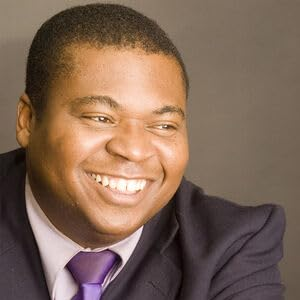
“I think Haiti is a place that suffers so much from neglect that people only want to hear about it when it’s at its extreme. And that’s what they end up knowing about it.” --Edwidge Danticat

Haiti Also Rises: The History of Haiti’s Resiliency against International Cruelty and Its Pivotal Role in the American Revolution and the Abolition of Slavery
By Jacques Fleury

[Originally published in Spare Change News & Jacques Fleury’s book You Are Enough: The Journey to Accepting Your Authentic Self]

“‘History is the memory of states’, wrote Henry Kissinger in his book A World Restored in which he proceeded to tell the history of 19th century Europe from the point of view of the leaders of Austria and England, ignoring the millions who suffered from those state men’s
policies.”

The aforementioned is from Howard Zinn’s revolutionary book: A People’s History of the United States. It depicts U.S. history from the point of view of the common man. His method of operation is in direct correlation to what I’m about to do: tell you Haiti’s history from my point of view.

History is not necessarily or essentially “the memory of states” as Kissinger puts it. It is the narrative of the people whose lives were impacted, fragmented or altogether destroyed by intransigent politics and capricious foreign policies of dominant powers.

First and foremost, I want to outline Haiti’s historical chronology; thus giving you a theoretical basis from which you can begin to undergo a more comprehensive understanding of the country’s history and its present state of political and environmental instability.

In 1492, Christopher Columbus landed on the island and named it Hispaniola. Taino-Arawak Indians, who referred to their homeland as “Hayti” or “Mountainous Land”, originally inhabited the island. In 1697 slaves were sent to Haiti. The island was cherished by European powers for its natural resources, including cocoa, cotton and sugar cane. And so the French shipped in thousands of slaves mainly from West Africa to harvest the crops.

In 1804 after a slave rebellion led by a man named Boukman in 1791, Haiti became the first black independent state under General Jean-Jacques Dessalines, who declared himself Emperor. America feared that the slave rebellion in Haiti would ignite anti-slavery insurgents in the southern U.S. states. Perhaps this is one of the reasons America’s relationship with Haiti is strained to this day even though it was money from the then richest island in the Americas that France used to supplement the American Revolutionary War against Britain; a fact that was omitted in most history books. Haitians also
left Haiti to fight in the American Revolution.

In 1844, after decades of strife and multiple rulers, the island was split into two nations: Haiti and the Dominican Republic. In 1915, U.S. marines occupied Haiti to [supposedly] calm a state of anarchy. The Americans improved the infrastructure while helping to create the Haitian armed forces. In 1957 a reign of terror began when Francois “Papa Doc” Duvalier seizes power. His son, Jean-Claude “Baby Doc” Duvalier then just 18 years old, took over in 1971, continuing his father’s legacy of tyranny. In 1986, a rebellion ignited.

As protests gathered steam, the U.S. arranged exile in France for Baby Doc and his family. In 1990, after decades of dictatorship, former Roman Catholic Priest Jean-Bernard Aristide, becomes Haiti’s first freely elected leader. In 1991, after a military incursion, Aristide is ousted and is forced to seek exile in the U.S. The coup ignited a
mass exodus with more than 40, 000 Haitians rescued by the U.S. coast guard during a twelve-month period. In 1996 Rene Preval becomes president.

In 2000 Aristide is elected once again. In 2004 political violence plagues the Haitian capital, with accusations of a fraudulent election looming, a few weeks after Haiti celebrates its 200th anniversary, a rebel movement usurps control and Aristide is forced into exile again. Deadly floods leave 2,000 dead and causing deforestation.

In 2006 Preval was elected in the first election since Aristide was overthrown in 2004. In 2008 food prices in Haiti aggrandized as they have elsewhere in the world but the situation on the island was exacerbated since most Haitians only live on $2.00 dollars per day.

Also deadly hurricanes left 23, 000 homes destroyed, many dead
and 70 percent of the nation’s crops wiped out. In 2010, an earthquake with a magnitude of 7.0 ambushed Port-au-Prince, collapsing buildings with 100,000 thousand estimated dead. World
Vision—an organization that has worked in Haiti for thirty years—made an expedited trip to the island rushing emergency supplies to the survivors.

A great man once said, “Life’s most important question is: What are you doing for somebody else?” Dr. Paul Farmer, a Harvard Professor and anthropologist, is an avid supporter of Haiti. He became involved with the country when he went on a school trip as an undergraduate student.

Today, he has spearheaded the ubiquitous Boston based organization Partners in Health (P.I.H), devoted to aiding third world countries like Haiti. Farmer is known for his support of a Preferential Option for the Poor, a central precept of Liberation Theology. His approach to practice in Haiti, Peru and Russia has its basis in ethnographic analysis—the science that studies and compares human cultures—and real world practicality. Mountains Beyond Mountains: The Quest of Dr. Paul Farmer, A Man Who Could Cure the World by Tracy Kidder details Farmer’s work in Haiti and abroad.

I have been a part of P.I.H. since I was bestowed with the honor of
being the Official Poet and Publicity Coordinator for the Annual Urban Walk for Haiti, which raises monies for P.I.H.

In Haiti, it was common knowledge that one’s own friends could be bribed as spies and government informants. Their jobs were to safeguard the brutal reigning regime by turning in anyone whom they considered subversive. Under the Haitian weather, the wind in the trees often swirled about all the fetid feeling of death and despair.

However, contrary to what the American news media has imprinted as fact in the heads of people across the world, Haiti has more
dimensions than the poor, the poorer and the poorest. There are three classes of people: the bourgeoisie, the middle class and then the poor.

I was part of the middle class. Both my parents owned property in Port-au-Prince and my father was a clothes designer, retail storeowner and mercantile entrepreneur. He was also a land and multiple homeowner, which he rented as part of his entrepreneurial endeavors. My mother was a house wife, socialite and landlord with degrees in cosmetology and the culinary arts. I attended an
exclusive private school near the Haitian palace called Frere Andre (Brother Andre).

It was there that I leaned how not to think for myself through blatant memorization of pedantic texts and taking dictations to prepare me for the dictatorship of the ruling class. But Haiti is more than just
doom and gloom. I remember staring in stupor at the dance of the Caribbean wind over the azure sea, the deep green elegance of the palms, picnic by moonlight and sweet memories of mangoes. Purple
butterflies, a visual feast of dancing loveliness, under the flowery spring sun. The joyous sounds of laughter resounding from the young as they run about playing hide and seek during blackouts.

But unfortunately, there also lied in the sea a maelstrom of fear, violence, misery and poverty, which most can barely swim out of, while the orchestrating powers that ensnare them stand by cross armed and snarling. But one day, it is my fervent hope that Haitian children will wake up to shiny silver mornings and hummingbirds singing, promising freedom, serenity and prosperity.

We lived in a world dominated by the hetero sexist macho male culture. However, my mother who bears the same name as Haitian rebel fighter Toussaint L’ouverture, was and still is iconoclastic in that she dared to be a leader for her family when most women were subjected to being simply subservient to the men. Since we were considered middle class, she became caught up in the gaudy accoutrements of upward mobility, so when Haiti’s political and economic crises began to converge, threatening our lifestyle, we all came to America.

She related to me that under the Duvalier dictatorship, tourism in Haiti flourished from the 1950’s all the way up to 1986, practically ending with the Baby Doc mutiny. Foreign groups like Arabs, Lebanese, and even Chinese exiled from their respective countries lived and built businesses in Haiti. Also Haiti’s number one tourist attraction, La Citadelle Laferriere, built on mountains overlooking Port-au-Prince 17 miles south of the city of Cap Haitien by Henry
Christopher—a general in the Haitian army—has walls 130 feet high is the largest fortress in the Americas and was designated by the United Nations Educational, Scientific and Cultural Organization (UNESCO) as a world history site in 1982. It was built to keep the newly independent nation from French incursions, which never materialized.

Haitians in American are for the most part hard working honest and joyous intelligent people. Most of the women work as Certified Nursing Assistants in nursing home facilities, caring for America’s elderly population and a plethora of men work as cab drivers. Large majorities also attend college to become doctors, lawyers, engineers and nurses. Both the men and women pursue the American Dream by buying cars and houses, sometimes working two to three jobs.

I too am living my version of the American dream by graduating from college with honors (Phi Beta Kappa) and publishing my first autobiography of prose and poetry aptly titled Sparks in the Dark, which was featured in the Boston Globe. Yet still, there seems to be an undercurrent of fear and hatred towards the Haitian population here in the States.

Maybe it’s because the conscientious and resultant collaboration of the “Have Nots” that often instigate the principal fears and resistance of the “Haves”, since the rich want to remain rich and in control. Robert Lawless, quoted in Farmer’s book The Uses, asserts Haitians are the immigrants Americans love to fear and hate.”

But why, I ask of you? Which leads me to ponder, is hate and prejudice ever truly justified?

“Why should we care about Haiti?” writes politico and M.I.T professor Noam Chomsky in the introduction to Farmer’s book The Uses. “…We are the richest and most powerful country in the world, while Haiti is at the opposite extreme of human existence: miserable, horrifying,
black, ugly. We may pity Haitians and other backwards people who have, unaccountably, failed to achieve our nobility and wealth, and we may even try to lend a hand, out of humanitarian impulse. But responsibility stops there.” I once heard the adage “If your neighbor’s house is on fire, wet yours.”

As we know tragedy affects all of us, having experienced hurricane Katrina, and 9/11. In relation to American occupation of Haiti, Chomsky goes on to say, “In a situation of domination and occupation, the occupier… has to justify what it’s doing. There is only once way to do it—become a racist. You have to blame the victim. Once you’ve become a raving racist in self-defense, you’ve lost your capacity to understand what’s [really] happening.” In other words,
it’s like putting someone’s eyes out and then accusing them of being blind.

America’s exploitation of Haiti, its support of the Duvaliers and the military for the repression of the Haitian people and expedient U.S. foreign policies and an ongoing debate about Haitian asylum
seekers, are all impediments to the progression of the Haitian nation.

It seems like light skinned immigrants like Cubans and Mexicans get asylum, why not Haitians?
