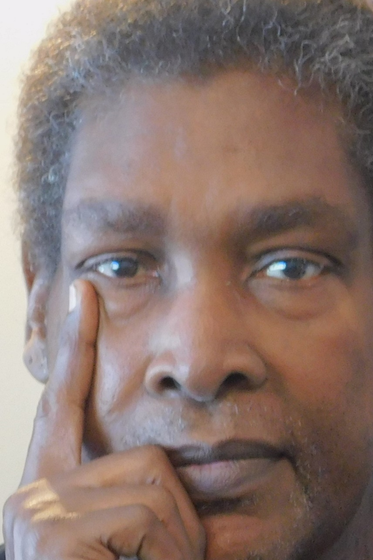
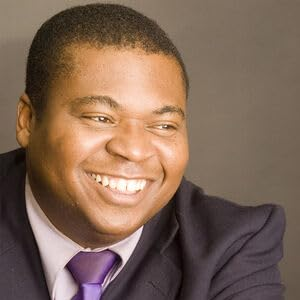
Hope and assurance is the foundation of Mr. Fleury's writing.  It is literally a place to guide you to not only find that place of hope within but to explore the truth about who you are to be transformed into a whole being.

Mr. Fleury touches on what stereotypes of Black manhood cost us as black males when we need to express our emotions when we are sensitive to any given situation.  One thing these stereotypes lead to is the need for us as black males to display our strength through violence, which leads to self implosion.

Exploring your gender identity as a black male: Mr. Fleury encourages us to find ourselves by looking inside ourselves without relying on social norms. He points out the need to accept one's identity beyond stereotypes of race, gender or social background.  He has again given directions to find your authentic self.

Mr. Fleury's book picks up for me in the chapters related to mental health for the black male. The chapters tell of the impact of being isolated by self-inducement.  Now, I can relate to despair and hopelessness, but it is a spiritual ladder that brings salvation.  Mr. Fleury speaks strongly in the opening about spiritual disorder in his Catholic school.  He has, throughout his book, given us examples of his inner journey to find that his essence is within. He does speak of social and political and economic conditions. However, it's the words of "YOU ARE ENOUGH: A journey to self-acceptance" that ring out the loudest.

Yes indeed, Mr. Fleury gave us a foundation to discover our own self-acceptance and unconditional self-love.
When a person comes into the world, he will face a lot of love during her life. But there is a love in her heart that is eternal! This is love for the Motherland! For everyone, the place where they were born such as their home, their district, their country – everything is their Motherland!
We always compare the motherland to mothers and call it Motherland! I also consider it my duty and pride to tell the story of my hometown, to introduce it to the world! I am a girl from Uzbekistan. Uzbekistan has 12 regions located in different regions and connected to each other. I was born and grew up in Denov district of Surkhandarya region, which is located in the south of Uzbekistan. I can proudly say that Denov is one of the most famous and developed districts of Surkhandarya region!
Denov district has a very old and unique history. It was called Dehinav in ancient times. But in 1958 it was officially founded as Denov district. The population of Denov consists of representatives of various nationalities. You can meet Uzbeks, Tajiks, Turkmens, Russians and even Arabics in my city. The most gratifying thing is that these people always live there together as a family. I love these people of my city. Because among them I never feel alone. Even every street, every house and family feels like mine.
The climate and nature of my city is unique. It is a tropical region that is located between Surkhandarya and Sangardak rivers. There are fields and hills, apple, pomegranate, cherry, apricot orchards and vineyards, cotton and wheat fields. People who want to see the most beautiful example of my hometown’s nature can visit the Sangardak waterfall located between Denov and Saraasia districts. Because this waterfall captivates any person with its purity, enthusiasm and beauty. Especially in the summer months, the number of visitors increases. That is why many people think of Sangardak firstly when they talk about Denov city.
It is necessary to mention the achievements in the field of education in my town. Because there are currently more than 100 general secondary schools and specialized schools are operating . The magnificent university in the center of our city provides great comfort for youth. Also, sports school and music and art schools are always lovely for talented youth and children.
I would not be mistaken if I say that my district is currently in the period of rapid development. Because renewal, development and creativity in all regions of my district! I hope that in the next 5-10 years, Denov will become one of the most famous and most developed places not only in the Surkhandarya region, but also in the whole of Uzbekistan! Maybe one day when you visit Denov, you might say “Denov is unique Denov”!
Ochildiyeva Shahnoza Abdivohid qizi was born on July 17, 2006 in the republik of Uzbekistan, Surkhandarya region , Denov district. Presently, she studies at school number 49 in 11th grade. She is a member of international organizations such as “Asih sasami Indonesiya Global Writers”,”Juntos por las letras”,”Iqra” and so on and a head captain of Youth Union Organization!
Her poems have been published in several international newspapers and magazines. Apart from, her books which called “Yurakdagi orzularim”, “She’riyat o’ziga ayladi asir” were published. Her new book which is “Happiness” is selling in 26 countries of the world.
New Constitution-development encyclopedia

Zulayho Sultonaliyeva, daughter of Sultanaliyeva Zulayho Sherzod
Jizzakh branch of the National University of Uzbekistan named after
The direction of economy (networks and sectors),
131-23 group student

Abstract. The new Constitution is a symbol of development. Because the Constitution is not a frozen law, but it should be constantly updated according to the economic, social and political changes.
Key words: Constitution, development, state, laws, strategy, Renaissance, referendum.

Changing the constitution was the solution, because today everything is developing. As our economic, social and political views are changing in turn, therefore our laws had to change as well.
If in any country human value is glorified, if human interests are put above all else, the development of that country will accelerate and at the same time there will be development. Under the consistent
laws implemented in the new Constitution, a person, his rights and freedoms, and all his legal interests are embodied.

It is also important that norms aimed at the formation of an active civil society and the further development of the institution of public control are introduced into our updated Constitution. In addition, the issue of public control over the formation of the state budget and its execution is specifically reflected in the new article 122. From this we can see how much importance is attached to our development today and great efforts are being made for the development of our development.

In his speech, the head of state noted that the interests of all strata were taken into account in the updated constitution, that the population actively participated in its development, and that it was
adopted through a referendum, which is proof that this document is a truly people's constitution.

Millions of our compatriots took an active part in the public debates held from the discussion of the draft of our constitution to its adoption. From this point of view, we have every reason to say that the real author of our new Constitution was our people. The most important thing is that we will never turn back from the path of our reforms, we will only move forward based on the new system of "man
- society - state", - said President Shavkat Mirziyoyev.

In our new constitution, the value of human being is put first, of course, development will improve in such a country. The future of our country, its future, development and the prosperous life of our
people directly depend on the newly adopted Constitution of the Republic of Uzbekistan.

The successful results of large-scale reforms that have taken place in our republic over the past six years are widely recognized by official circles abroad. A well-thought-out long-term program of reform, democratization, liberalization and modernization of our society is attracting the attention of statesmen and politicians.

The new Constitution created the political and legal basis for the implementation of the strategy of New Uzbekistan and determined the priority directions for the further development of the state and
society at the historically important stage of the development of national statehood. The fact that Uzbekistan is a sovereign, democratic, legal, social and secular state in the first article of our
updated Constitution has become historically significant. In our updated Constitution, we can see that every article is clearly and concisely explained and elaborated. These changes and additions are aimed at the more stable development of Uzbekistan, strengthening its potential to resist various threats.

The main goal of the systematic reforms implemented in our country is to glorify human dignity, establish a people-friendly social state, and ensure justice and the rule of law. It is good that New Uzbekistan, which is creating the foundations of the Third Renaissance, has made great progress in this way in a short period of time. We are seeing the results of all these reforms. This also shows the rise of our development. The most important thing is that everyone sees and feels such changes in their daily life. In the future reforms, it is aimed to further improve these achieved results and create additional conditions for people.

It is worth noting that the strong legal foundations of the reforms at the new stage of our development, founded by our President, are in full compliance with the priority principles and rules laid down in our Constitution. many priority principles, such as loyalty to established human rights, high responsibility to current and future generations, commitment to democracy and social justice, ensuring that citizens live a decent life, are manifested today as an example of changes in the life of every person.

The results of the reforms covering all sectors and industries are visible in any region of our country, including in the villages and hamlets of the most remote districts. Today, no one can deny that
people are actually enjoying the rights and freedoms guaranteed by the Constitution. The decisive factor for this is the fact that the head of our state, who is the author of vital initiatives and noble ideas, who sets the priorities, takes great responsibility for their implementation, devotes his whole existence to the interests of the nation and the country. is doing.

Effective, people-oriented state administration and a strong parliament are necessary for people to live comfortably and for the stable development of the country. Another important aspect of our
updated Constitution is that our General Assembly aims to establish a strong parliament, a compact and responsible government, and an independent and fair judicial system in order to build a people-
friendly state. According to him, the powers of the Legislative Chamber and the Senate have been significantly expanded, duplications in the work of the two chambers have been eliminated, and the sphere of responsibility of each has been clearly defined.

As a result of establishing a direct dialogue between the people and the state authorities, the attitude towards the changes implemented by the initiative of the state authorities and management
bodies has fundamentally changed. The policy of transparency has led to the prompt response of public bodies to the public opinion and the prompt resolution of existing socio-economic problems.

If we don't change our constitution today, if we don't adapt it to the norms that meet the requirements of the time, we will not be able to get rid of the "rust" that has corroded our society, besides, it will take many years for us to become a competitive, modern, most advanced country. The goal is to become a competitive, modern, most advanced country, this is not a myth, we must strive for this reality.

The human factor plays an important role in the society we are building, which is based on the priority of human interests. The Constitution is a huge historical success of the Uzbek people during the years of national independence. The Constitution of the Republic of Uzbekistan formed the legal basis of our independent statehood, ensured the country's inclusion in the ranks of sovereign states, laid the main foundation of our freedom, the cornerstone that gave each of us the pleasure of living in a legal, democratic and open civil society.

Summary: It should be noted that the updated Constitution will be a solid legal basis and a reliable guarantee for the long-term development strategy of our country, the prosperous life of our country and people tomorrow. The new Constitution will help our development. The fact that the legal norms related to the social protection of the population are clearly disclosed in the new Constitution is a proof of the greatness of the human value. Where human dignity is glorified, there will surely be an ascension.

References:
1. https:// daryo.uz
2. https://kknews.uz
3. https://religion.uz
4. https://buxdu.uz
She is responsible
She is insane
You think she is your cup of tea
But she is the main
Do not call her useless
She is productive in her own lane
(OPto Dr. Raafia Shaheen)
{PAKISTAN}...
Permanent Lover

Let me walk around you
I shall be the sky above your head
And give you the shade of love
I shall be the ground under your feet
And make your way comfortable
I shall be the air of dream
And give you a dreamland.

Let me walk with you
And hold your hand
I shall be your eternal companion
Leading you from hell to heaven
We shall fly to our destination together
All the butterflies will carry us
The flowers will adorn us.

Let me walk with your soul
And carry it in my heart
I shall follow your footprints
Remembering the shadow of the spring
The fountain will whisper with the sea
The hills will guard your memories
And the rivers will dance to well come us.

Let me walk in your memories
 Without you I am alone
Like an empty vessel of time
The moon is like a barren field
Where nobody can plough love
I hear the sound of dream
It seems that you are always in my heart.

Let me walk with you
And paint the colour of art
Life is an endless Gallery
Where everything is transitory
But nothing is meaningless and lost
Give me a soft permission
To be a permanent lover.
WAR IS HELL!
Egyptians, Canaanites, Israelites, Rome!
Persians, Byzantines, Jews, Christians,
Muslims—all have called Jerusalem HOME!
The Islamic Caliphates and Crusaders
Kept war alive!
Ottomans held peace for centuries,
So all believers could thrive.
But then the British came, and WW1.
Ottomans faded, League of Nations survived.
Meanwhile anti-Semitism ranged far and wide.
Russia slaughtered Jews,
Nazis slaughtered Jews,
And Jews—hundreds of thousands—escaped
To Israel to hide.
Now, at last, they had a state—
Except it was imposed on Palestinians
Who had NO STATE.
So Palestinian Hamas brought incredible death--
Atrocity unbelievable--
And Israel—in self-defense—
Has slaughtered thousands and thousands,
Causing protests—ignorant of history—
Around the world!
Offense or defense,
WAR IS HELL!
(And where were the protests
when Russia invaded Ukraine?)
“When I looked again, he was still at it. He was still raping her after he had slaughtered her.” Quote from Raz Cohen, who witnessed Hamas atrocities during the October 7 attack.Ukraina
This poem is about a Ukrainian immigrant couple to California who's memorialized with a plaque in a park on a hiking trail in Hayward.
Weekends,
Early 20th Century,
My grandfather hiked
The Hayward Hills-
Grassy meadows,
Wooded Creekbeds,
Sometimes aiming
For a huge pine,
Visible from afar,
The needled tower
OF UKRAINA RANCH,
Home to Agapius
And Albina
Honcharenko.
A new name
To protect his family,
Ukranian Honcharenko
Had lived his life.
As a man of God,
As a man of honor,
Defying the Tsar
For the rights
Of Russia's serfs,
Writer and publisher
For HUMAN RIGHTS
No matter where he lived,
But always under threat
From the long
And dangerous fingers
Of the Tsar.
1865-ARRESTED
by Russian agents
in Constantinople.
He escaped-in disguise-
To London, New York,
San Francisco,
Hayward,
Escaping a land
Where he was
"stabbed, drugged,
shot,
clubbed like a dog."
1873-PEACE-
And refuge
Developed
In the pastoral beauty
Of Hayward's hills,
Where Agapius and Albina
Could live and farm—
Holding church services
In a cave--
Away
From world evil.
Yet published defiance
Still smuggled to Russia:
Gentle, persistent,
Holy Man,
Humanitarian!
UKRAINA
a California Historic Landmark
HAYWARD HISTORY!
The moments that I was walking on the dusty street, my livers that I have away. My heart is pure, innocent, there are no sorrows, My beautiful face, my beautiful flowers-tulip, Where have you been, my childhood ! My playful days are closed, I miss This moment but . Enough of my bad moments, goodbye.
My beautiful flowers-tulip, Where have you gone, my childhood! We grew up, the value of those moments was known, I gave my tunes, every line, Today a different perfume spread, My beautiful face, my beautiful flower – tulip, Where did you go, my childhood!..
Mahzuna Habibova was born in Jondor district of Bukhara region.Currently, he is a 3nd-year student at the Faculty of Pedagogical Psychology of Gulistan State University. His poetry collection ” Longing Line” has been published.