
Cosmos

Then Cosmos spoke:
“I have no end.
I have no beginning.
Nothing gave birth to me.
Nothing will bring an end to me.
I am everywhere.
I am all that was, that is,
all that will be.
I am Eternal Being
and Perpetual Becoming.
I am peace and I am war.
I am hate and love.

There are two roads to find me:
withdraw to the depths of your mind,
the darkness where nothing outside you enters,
and there we shall meet
and be One.
For you and I are One,
and have been for eternity.”

“But, Lord, you say there is a second road?”

“Yes. Look at a stone,
a flower, a leaf, a cloud,
and let it fill your mind
until your self has disappeared,
and stone and flower and cloud
fill you as though you were not there.
And there you will find Me,
and you shall know peace.”

“And when I am weary of peace,
and hunger for thrill and deed?”

And Cosmos smiled his deepest smile:
“Then you will find Me
in flexing body, ingenious mind,
in conquering will.
I am the god of tenderness,
and I am the god of power.
I am changeless stillness
and endless transformation.
Nothing is lost where I am,
nor is there any death:
there is only sleep
in dream’s eternal city.
All things I am.
Everything am I.”

Then the voice vanished in darkness
and silence of the night,
and I listened and wrote down
these words lest I forget.

_____

Christopher Bernard is a co-editor of Caveat Lector. His collection The Socialist’s Garden of Verses won a PEN Oakland Josephine Miles Award and was named one of “The Top Indie Books of 2021” by Kirkus Reviews. His two books for children – If You Ride A Crooked Trolley . . . and The Judgment Of Biestia, from the series “Otherwise” – are now available.
Category Archives: CHAOS
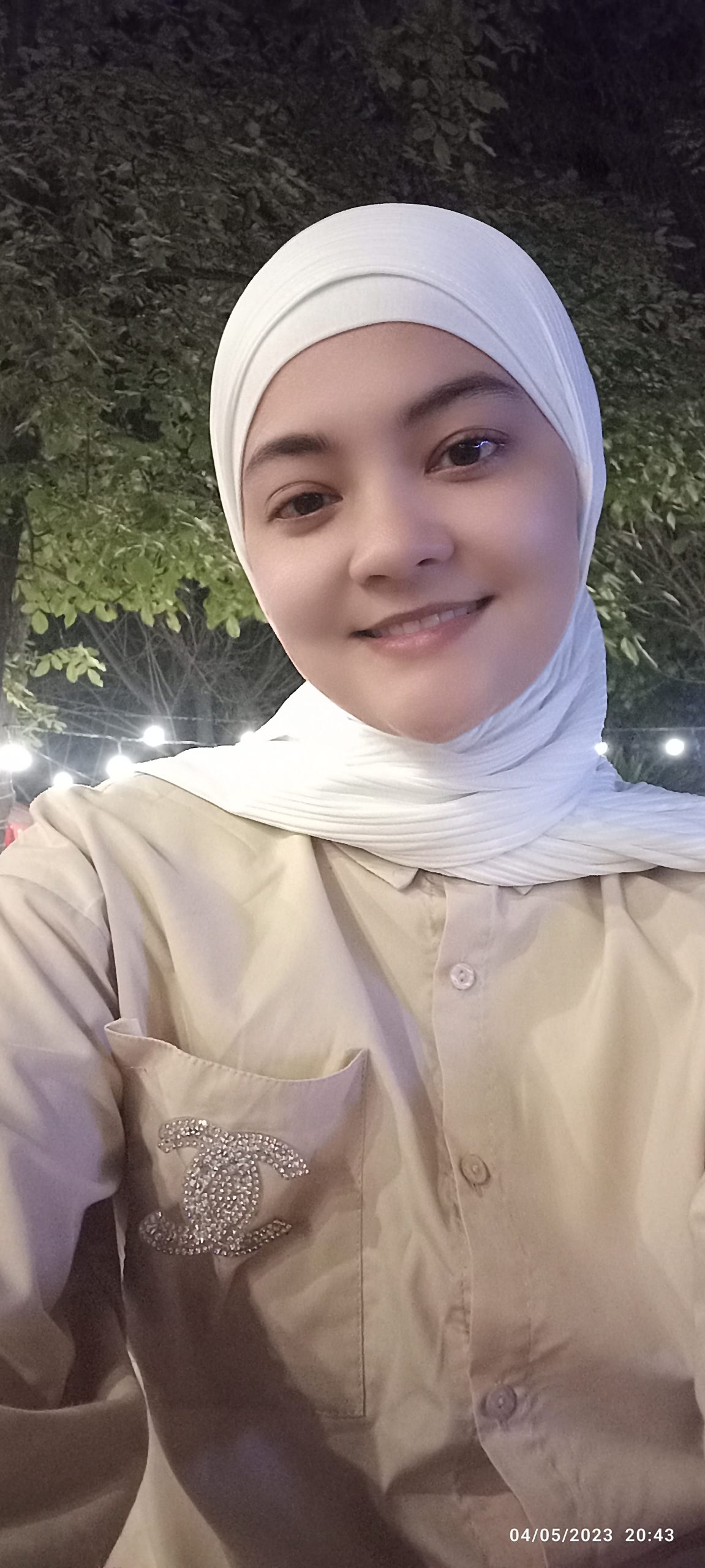
Essay from Akhmadjanova Muslimakhon
WE ARE AGAINST CORRUPTION
AHMADJONOVA MUSLIM
Student of the Faculty of Philology
Abstract: This article discusses the fact that corruption is a powerful force that threatens the future of society and the nation and its history.
Key words: corrumpo, “Unbiased gifts”, Holy Qur’an, Hadith-Sharif, HEMS program,
Being is created so that it always keeps two contradictions in its bosom. For example, qualities such as good and bad, goodness and writing, justice and injustice are always alive in people. They cannot be completely destroyed, indeed, but we have the ability to prevent their occurrence.
Corruption is a powerful force that threatens the future of society and nation. It did not appear today or a few years ago. Its roots go back to the scenes of history. First of all, if we focus on the meaning of this word, Corruption – (Latin: corrumpo – bribery) is the practice of directly abusing the rights granted by an official for the purposes of personal enrichment. . It is completely wrong to think that there was no corruption in the past centuries, because we can see various forms and traces of corruption. Although it was not formed as paper money, since ancient times, jewelry, gold and silver, or animals were “gifted” to high-ranking people in order to gain power in the tribe or to occupy a certain position in the state system. If we look at the past of ancient Rome, even people were among these gifts. “Impartial gifts” destroyed not only human dignity, but also the entire society.
Although it was not called corruption in those times, historical sources testify that this process has existed since ancient times When a person commits to this cruel and terrible vice, he destroys not only himself, but also all the people around him. An example of corruption is like a spider’s web. Any insect caught in its web becomes food for the spider, and it is impossible to get rid of it. It should be noted that this harmful phenomenon occurs in all countries, regardless of whether they are big or small, rich or poor. It does not choose space or time.
There is no turning back for a person who steps into corruption, so who doesn’t like gifts and money that come without hard work? Only a person with faith and education can know that such things are forbidden. This phenomenon is turning into a vice as time goes by. This vice is the cause of impoverishment of a person not only materially, but also spiritually. What will be the future of young people who grew up eating the dirty food!? Aren’t these young people the future of society and nation? So, we are really ruining our future with our own hands!! A true Muslim who adheres to the duties and sunnahs of his religion, who has acquired manners and education, does not step into bribery, the so-called corruption. It was also revealed in the Holy Qur’an, which was the word of God: “Do not take other people’s property unjustly and do not bribe your governors from your property to take what belongs to others.” Even the Bible says: “Do not accept gifts, because a gift makes the blind see and changes the truth.” In the Hadith-Sharifat, it is mentioned that the bribe giver and those who receive it are cursed, and even the person who acts as an intermediary in the bribe will be cursed by God.
Corruption destroys the nation’s destiny and national identity. It prevents young people from being confident about the future. People’s trust in the state will die. A person who has been wronged somewhere, affected by corruption, may not return to this place at all, or he may return to this place intentionally to establish justice.
Prevention and fight against corruption today a lot of work is being done. In particular, on October 14, 2016, President Shavkat Mirziyoyev approved the bill “Combating Corruption” by the Oliy Majlis and entered into force on January 4, 2017. A lot of work has been done in the education system, which is close to us and not far away. For example, a new system has been devised in this field to prevent bribery and embezzlement of grades in the educational process. All higher education institutions were gradually transferred to the credit-module system, and today in schools the daily.com program, and in higher education institutions, the HEMS program continues to work and provides transparency in the educational processes of many of our young people. It is no exaggeration to say that these programs, which also ensure the effectiveness of teaching, have established justice in this field. Such and many other effective works are spreading throughout our society and entering the soul of the people and the nation. All methods are being used to fight corruption, as if it is not an area where corruption has not penetrated, and effective results are being obtained.
If the movement is done from two sides, not from one side, the finish line will be reached faster. In other words, we cannot fight corruption only through state bodies and effective laws. Implementation of these laws is not only the responsibility of the state, but also of us. It is the duty of every educated and moral person to eliminate corruption where we see it, not to touch it and not to step on this path, and by developing legal awareness throughout the society and acquainting each person with his personal rights. we will have eliminated the initial stage of corruption.
We young people are against corruption. We will create a just and great future, and on this way, the President’s trust in us young people, as well as every action they take for our people, the decisions they make, and our Constitution, which is the source of our happiness, will be the guide. Let’s fight corruption together. Together we will become an invincible force!
Akhmadjanova Muslimakhon Anvarjon’s daughter was born on April 19, 2003 in Torakorgan district, Namangan region, Uzbekistan.
Essay from Sitora Mamatqosimova
One day in class…
As Allah bestows great miracles on our hearts, we need to live with a sense of gratitude for this blessing. gives…
I still remember the first day I came to work at the great dargah called the school… As I entered the door of this dargah, whose threshold is the paths of the paradise of knowledge, I was very proud to be a student of my grandmother, whose places are from heaven in my heart, and my kind teacher mother.
From the door of the classroom, I heard the excited shouts of the students: “Here, a new teacher has arrived.” I was happy with this call… We started the lesson with the young generation who always honors their homeland and discovers new aspects of creativity in themselves. First of all, I got to know the students.
During the lesson, only one student caught my attention. Congratulations, as you can see, there are always students who are not interested in class and do not complete their homework on time. And, I have come to a decision. As I got to know him better, I made sure that he also has interests and dreams. My student is interested in mother tongue, science, English. In his free time, he likes to draw and read art books. While he was talking to me, sweat covered his forehead, I felt that he was thinking about his words and talking shyly.
So, I found out that my student is shy and shy, he doesn’t even have a close friend. My classmates also confirmed my opinion. From that day on, I started helping my student with his homework, under the pretext of trying to get to know him better. And I always told him that he is not inferior to his friends, that he should always strive forward, believe in his own strength and knowledge. I dealt with the student. If you believe now, this student has become the most active student of the school. In particular, I was able to awaken in his heart a feeling of interest in special creativity. Nowadays, this student does not like to write wonderful poems and stories from each other. These are the words…
Mamatgosimova Sitora Bakhtiyor is a promoter of creative and cultural issues of the 34th general education school of Boyovut district, Sirdarya region.
Essay from Kadyrova Arofat Abdukarimovna

PROSPECTS OF USING GEOTHERMAL ENERGY SOURCES IN UZBEKISTAN

Student of Tashkent State Agrarian University
Kadyrova Arofat Abdukarimovna

This article talks about the importance of using geothermal energy sources in the conditions of Uzbekistan. Information is given about the basis of the widespread use of alternative energy sources, not traditional energy sources, their current state, and the reforms and news that are being carried out in this regard in our country.Today, we are living in a time where modern new age generations and innovative and digital technologies that require almost no manual labor are progressing and growing. It can be seen from this that the machines that make our heavy work light, our complex work easy and even our long journey closer now require energy. They now run on electricity instead of gasoline.

First of all, one thing should be emphasized: "We cannot imagine our life without electricity."

Today, no matter what the field is, electricity is needed. Due to the many actions being carried out now, our development is developing day by day, and the lifestyle of our people is improving more and more. It is worth noting that the adoption of the strategy of supplying the country with electricity until 2030 in our Republic is of great importance for further development, efficient use of alternative energy sources and development of technologies. According to the strategy, it is planned to increase the production capacity of electricity from 5900MW to 29200MW by 2030 and to reduce the consumption of natural gas and reduce the losses in electricity transmission as much as possible.

According to the concept, the consumption of natural gas in the production of electricity will be reduced from 16.5 billion cubic meters to 12.1 billion cubic meters. This plan includes reduction of losses in electricity transmission by 2.35% and in distribution by 6.5%.
Now we will talk about where and how we get electricity.

We know that we receive electricity in a traditional way, that is, through TPPs. TPP stands for Thermal Power Plant. In thermal power plants, thermal energy is converted into electrical energy and transmitted to us through power transformers. And this borad will suffer many losses until it reaches our home. In particular, this happens in a large unit at the station itself. Thermal power plants operate mainly by burning coal, natural gas and fuel oil. These fuels are sources of energy that are running out. One of the harmful aspects of thermal power plants is large energy losses, and another is a very negative impact on the environment. The toxic gases emitted from it go up into the sky and poison our ecology, harming the natural air, and there is also the problem of disposal of the waste from it.

However, its advantage is that it is much cheaper than other types of energy production, which is why we have electricity at the expense of TPPs. However, by now, traditional methods are being abandoned in the developed countries of the world. Therefore, the use of renewable energy sources remains very effective.
The use of alternative energy sources can be a little expensive, but it is not harmful. That is, it can be obtained without harming the environment. In this regard, many innovations and reforms are being carried out in this regard in our country. In particular, the verdict of our honorable president Shavkat Miromonovich Mirziyoyev "On measures to accelerate the introduction of renewable energy sources and energy-saving technologies in 2023" can be cited.

The effect of the words said in the verdict can be seen in the example of Bukhara region.

In accordance with the verdict, the first turbine with a height of 100 meters and a blade length of 84 meters was erected in Bukhara region this year as part of the construction of a wind power plant. There are 157 more installations from this device. The first capacities of the stations are expected to be put into operation in 2024.

Now, let's talk about geothermal energy. This type of energy is an alternative and renewable energy. Geothermal energy is heat energy in the earth's crust, which comes from the earth's crust and radioactive decay. That is, simply put, artesian water or hot spring. We know that from somewhere in the mountainous regions of our republic, when water comes out, it turns into a sanatorium and it is said that there is a hot spring.

So, how promising is the use of geothermal energy sources in our country? Of course, it is promising, because Uzbekistan is a country with huge reserves of water, which is a source of geothermal energy. It has been determined that there are geothermal waters in every part of its regions. Scientific research shows that the average gradient of geothermal waters in our country is 40C/km. The heat vapor flow is equal to 0.06 W/m2. Compared to annual indicators, the gross potential of geothermal waters in our country is estimated at 160.8 thousand tons of oil energy.

Of course, we cannot get electricity directly through this energy, but it is being done in other countries, why can't we do it now? Our exact location may not be rich in active volcanic zones, but that doesn't mean it's just accessible. After all, it is possible to find a solution if you do as much research as possible. If water at a certain depth, i.e. 300 or more depth, is brought to the surface of the earth and heated through specially insulated turbines, it will certainly be possible to obtain electricity from it, and this will certainly become one of the major changes in the field of green energy in our country.

Of course, environmentally safe and most importantly clean renewable energy.

In conclusion, it can be said that in the current developing period, I think we should not get tired of working on new scientific researches and new discoveries. Because no matter what we do, we find easy ways and implement them in order to satisfy our needs and our own comfortable life and safety, and all this is only for ourselves, for the comfortable and healthy lifestyle of the new generation. Therefore, we should not stop searching.
Poetry from Michael Joseph
THE LONG SIDEWALK
The sidewalk is long.
You can’t see to the end of it.
At first, you figure it’s just perspective,
but as you move along it,
the sidewalk physically narrows.
Soon you find there is no room
for you to turn around.
So you keep walking forward,
the only way you can go.
The sidewalk borders
a dark woods to one side;
a swift river to the other.
A misstep could plunge you helplessly into either.
The narrowing continues until
you have to take your steps single file,
one foot directly in front of the other.
Further on, the sidewalk turns sideways,
merging into the horizon,
a line you must tread like a tightrope,
lest you plunge helplessly
into the future or the past.
Poetry from Sterling Warner
Campus Silk
Cynthia’s form-fitting silk dresses
struck to her body like plastic wrap as she
pirouetted across campus in pointe shoes
intentionally faced against wind gusts
pushing auburn strands of hair over cheeks
attracting an audience both men & women
lounging on the quad’s turf, eating fast food
lunches, listening to transistor radios, preparing
for exams, or writing to significant others—
past and present—in leather bound journals
filled with narrative poetry, whimsical sketches,
detailed shopping lists & occasional birthdays;
night & day, twelve months each year
she carried a collapsible umbrella, ready
to spread & protect her gorgeous locks
from rain & snow, trading silk summer
dresses for diva scarves that showcased her
face like a multi-colored picture frame.
Cascadia
Whitewater frothing
like hydrogen peroxide
foam sliding between rocks
boulders gurgling, gushing,
below natural bridges
linking embankments
on unstable shores where
wooden piles driven 42 feet
into mud, sand, bedrock and silt
once stood tall and defiant
yet remain like ragged stumps
torn off below kneecaps
where grubs burrow between spikes
as bright yellow birch leaves
float overhead then settle
like a golden patchwork quilt
upon stones in a dry ice waterway
swirling at the base of a ghost pier.
Dharavi Wall Reclaimed
Rickety realism centered
a rainbow fire escape
between two gigantic heads
Mother Theresa calls out
habit covering snowy egret hair
left hand cupped over her cheek
knotted veins and wrinkled skin
accentuated by a decaying hotel’s
brick buttresses and drippy motor—
the graffiti virtuoso’s preferred canvas.
Facing the Calcutta nun on the right
Mahatma Gandhi calmly listens
to her whisper litanies and preach
about merits of suffering and her
“call within a call” as cars below burn rubber
do doughnuts, and emit smoke, delighting
penniless pedestrians with inner city theatre
sans Chelsea Square nosebleed seats;
pervasive, sustaining, his presence
outshines all street thespians and saints.
Cosmos Conductors
Stratosphere lights glimmer
dying amid comets & meteors
racing for eternal magnificence;
Saturn’s rings appear as ridged
as steel-hooped cage crinolines
relentlessly orbiting the planet.
Stargazing eyes wander, locate
ices, silicates, rocks & gasses
winking & twinkling the heavens
like angry sparks between wheels
& tracks from lost stellar railroads
barely even flickering at dawn.
Time elapses & spectacles dim
we embrace falling stars, suck on
helium balloons & talk like high
wire munchkins anxious to fly
on any trapeze without net, certain
as Galileo, optimistic as Carl Sagan.
Like fresh water washing filth & grime
off coal miner bodies, sunbeams splash
onto alley ways & trash cans, illuminate
abandoned train depots; foreboding shadows
ground nocturnal astronomers, provide a hiatus
telescopes at rest & celestial secrets on hold.
French Doors
We slipped behind Raylene’s
family room French doors
backs to the wall, she embraced
my inexperience like a prize fly-ball
caught at Yankee Stadium, repositioned
my shoulders, easing them into her own,
kissing my neck, leaving a hickey
I wore like a badge of courage
provoking classmates’ consternation who
confined young love to dreams & imagination.
From French doors to French kissing
we advanced without rules, ignored
norms, believed our world would endure
more than an evening; Raylene pressed
her face to mine, lost both pearl earrings
in throes of passion, found days later
when her mother vacuumed the carpet,
stroking shag pile, uncovering secrets
that had become common knowledge:
Raylene’s door evolved & swung both ways.
****************************************************************************************
Sterling Warner’s Brief Biography
An award-winning author, poet, and former Evergreen Valley College English Professor, Sterling Warner’s works have appeared many literary magazines, journals, and anthologies including Danse Macabre, Trouvaille Review, Lothlórien Poetry Journal,Ekphrastic Review, andSparks of Calliope. Warner’s collections of poetry/fiction include Rags and Feathers, Without Wheels, ShadowCat, Edges, Memento Mori: A Chapbook Redux, Serpent’s Tooth, Flytraps, Cracks of Light: Pandemic Poetry & Fiction 2019-2022, Halcyon Days: Collected Fibonacci, Abraxas: Poems (2024), and Masques: Flash Fiction & Short Stories. Presently, Warner writes, hosts/participates in “virtual” poetry readings, turns wood, and enjoys retirement in Washington.
Poetry from Jerry Langdon
Salute My Heroes

The blood of my heroes will never dry;
Their memory will never die.
The fallen shall stand again in me.
I will carry the ghost of tragedy.
The blood of my brethren is that of mine.
Their memory is my daily wine.
I raise my glass without dispute;
In those valor halls I do salute.
My brethren, My heroes; the life I owe.
The respect they deserve; The love I show.
A monument of honor lives in me.
Looking at my hands it's their blood I see.
I owe them more than I can give.
They will be remembered as long as I live.


Hey Santa

Hey Santa, out there in your sleigh
Ho Ho Hoing all the way
Will you drop by?
Hey Santa, riding through the snow
With your list so you know;
Will you drop by?
Hey Santa, don't forget me tonight,
Don't forget to turn off the light.
Hey Santa, out there all alone
With everyone safe at home;
Could you come by?
Hey Santa, with you finger on your nose
Waiting for young eyes to close;
Could you come by?
Hey Santa, would you bring peace to this house?
I promise to be still as a mouse.
But it is only a fantasy
The night was too dreary
He just couldn't see
Hearts were too weary
He couldn't help me
And the world filled with pain.
Hey Santa, out there in the sky
With that gleam in your eye;
Do you remember me?
Hey Santa, out there on your sleigh
Laughing all the way;
Do you remember me?
Hey Santa, don't tell me peace has gone away;
There has to be hope for a better day.

(Based on and inspired by Pink Floyd "Hey You")

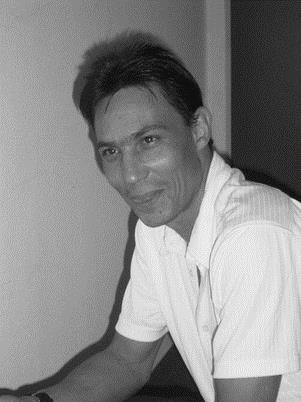
From South-Western Michigan, Jerry Langdon lives in Germany since the early 90's. He is an artist and ooet. His works bathe in a darker side of emotion and fantasy. He has released five books of Poetry titled "Temperate Darkness an Behind the Twilight Veil", “Death and other cold things” “Rollercoaster Heart” and “Frosted Dreams” Jerry is also the editor and publisher of the literary magazine Raven Cage Zine poetry and prose. His poetic inspirations are derived from poets such as Edgar Allen Poe, Robert Frost and Henry Wadsworth Longfellow. As well as from various rock bands. His apparently twisted mind, twists and intertwines fantasy with reality.