FOUR SEASONS WITH DEAD LEAVES…

Passed four seasons with the dead leaves,
Which season we have expected other than this,
Why haven’t we bloomed in any season?
Why have all of them hated us,
What bad evil have we done to them while,
We were busy with ourselves and the world?…

Shamsiya Khudoynazarova Turumovna (February 15, 1973) was born in Uzbekistan. Studied at the Faculty of Journalism of Tashkent State University (1992-1998). She took first place in the competition of young republican poets (1999). Four collections of poems have been published in Uzbekistan: “Leaf of the Heart” (1998), “Roads to You” (1998), “The Sky in My Chest” (2007), “Lovely Melodies” (2013). She wrote poetry in more than ten genres. She translated some Russian and Turkish poets into Uzbek, as well as a book by Yunus Emro. She lived as a political immigrant with her family for five years in Turkey and five years in Ukraine. Currently lives in Switzerland. Married, mother of five children. It was not possible to publish poems and translations written by the poet in the next ten years.
*The Lost Balloons*

In this year's Canvass
Balloons embark on an ethereal plane
Above the sky, balloons soar in farewell weather
With each gentle breeze, their spirits take flight
Escaping gravity's hold.
A doctor's healing touch
A neighbors nod
An Aunt's counsel
A friend's embrace disappears.
As they ride neutral balloon in the sky of departure
Balloons which left colors of pains and grief's heavy veil
Carrying stories of dreams like frayed nylon
A symphony of farewell under the same sun.
As their eyes close *Almaut* '' they whisper.
Guided by *Manrobbuka* call
A question asked as souls commence their dance
In whispered prayers their name etched my tongue.
As my eyes curse this silent stranger's bitter sting,
How do I say this?
the courageous ''Moremi'' has lost her courage as every passing time, it shrinks like the sand of
time.
In my talk to the Almighty '' Let their nostrils perceive the sweet fragrance of paradise''


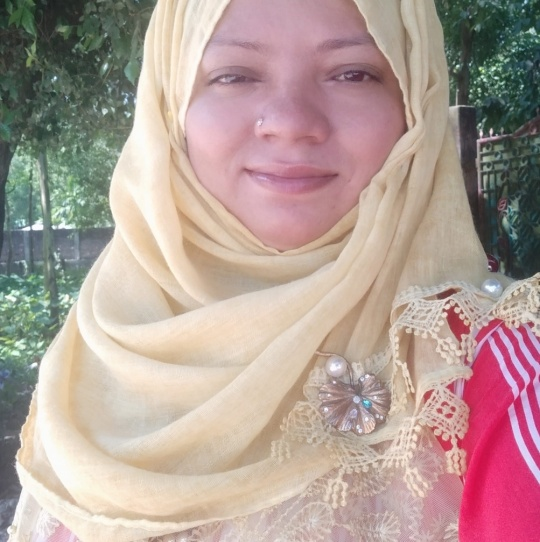
Muhammad Habibat Sani (Ummuyasmeen) is a 300-level law student at Usmanu Danfodiyo University Sokoto. As a poet and story writer, she uses words to explore themes of loss, courage, and spirituality.
Stupid Elevators

That morning without you again... does it have to be bright?" says my lightless gaze. I come to the window with my forehead straining... it's as if the world from the upper floor falls under your feet. If only dreams would fall like this under my feet, I would immediately take you, the most elegant wish among them, and hold it in my arms.

I sat on the windowsill and rested my head on the frame, observing the world. When I fall asleep, I still miss you. The morning is breaking, the swallows are so lonely, huh? He flew deep. Calling the roosters, as if we are the wakers of the clear morning, as if we are bringing the sun...
Heh, you're just like my naive gullible swallows...
In fact, you don't know about the rains.. Just like my faith...
Morning thoughts...

Hot coffee likes to give my sad thoughts a little light... Its aroma is comforting... it's so bitter... coffee without sugar.
Just like my grief. It's bitter and it doesn't need false comforting sugar. However, just as sugar cannot suppress the taste and aroma of coffee, so my simple consolations cannot suppress my sorrows.
Filthy Game of Sun and Water

Filthy game between Sun and Water,
Has sharply started severely;
The conspiracy of witch Air
Who is the protagonist by blowing madly.
Innocent Earth shivering with fear.
Water trying to sink the Sun into his strong current with his wet hand
Trying to extinguish sunshine.
For Water raging earth's heart turns into flood land; blacken the whole world with thick darkness.
Rising up high, Sun attacks mercilessly -
Like a thirsty bitch quaffed water as wine.
By sipping with greedy lips;
Soaked the heart of Ocean-
Aridity grasped the whole Earth's throat.
Cracking sound of breaking World is heard.
Ah! lovely mother Earth misusing as a center of a battle ground
Filthy game of Sun and Water.

Aklima Ankhi, poet, storyteller and translator from Cox'sbazar, Bangladesh. Born in Mymensingh, Bangladesh. She has a published poetry named "Guptokothar Shobdochabi" written in Bangla. She is a post graduate in English Literature. As a profession she is a Lecturer in English.
Welcome to a fresh month of Synchronized Chaos! We’re exploring reality from different perspectives, experimenting with different takes and different frames.
Mark Young’s poetry evokes reframing, repurposing, contrast, and juxtaposition.
Ellie Ness contributes a sketch of cultural exploration by contrast: an Englishwoman abroad in Iraq under under Saddam Hussein. We see a sketch of domestic life, the different spheres of influence of men and women, the power relationships and norms.
Caleb Ishaya Oseshi’s black and white photography illustrates ordinary people of Nigeria. We see them living everyday life, walking, bicycling, carrying children and other objects in vibrant street scenes.
Isabel Gomes de Diego photographs a barbecue, inviting us to imagine the people who will gather to enjoy the feast.
Ahmad Al-Khatat speaks to romantic love, grief, and the desire to connect across cultural and physical differences.
Sa’ada Isa Yahaya conveys the physicality of grief, the pain of a nation stored in a person’s body. Fortune Simeon illustrates how grief transforms and colors our everyday perceptions. Ogwuche Bella’s speaker attempts to love despite overwhelming personal and societal grief.
Mykyta Ryzhykh writes with the feeling of a cold winter’s barren landscape, addressing death and our search for meaning. Christopher Bernard references the whole cycle of life with his piece on a fallen tree in someone’s backyard. Azemina Krehic evokes a history of wartime loss in her piece on a fruit that never ripens. Jerry Durick explores how we cope with different types of global or local disasters.
Duane Vorhees probes how our minds seek purpose and consciousness behind random and arbitrary forces in society and nature. J.D. Nelson confronts us with sets of words that seem haphazard, inviting us to co-create potential meaning.
Texas Fontanella describes an uneasy peace among roommates in different states of sanity. Lauren McBride’s structured poems highlight confusion and chaos of various kinds, mental and horticultural.
Aklina Ankhi expresses union with nature, even as it’s being crushed by the growth of civilization. Rezauddin Stalin joins in with nature’s other creatures in individual expression through his poetry.
Channie Greenberg photographs various kinds of colorful fish while Sayani Mukherjee revels in the intoxicating sight and scent of white roses in summer.
For Don Bormon, the wind inspires thoughts of freedom and adventure. John Culp references snowmelt on a glacier to convey his joy at opening up emotionally to love and personal growth.
Mahbub Alam talks about love in the age of climate change and extreme weather while Kristy Raines explores how love can help us see and appreciate different sides of people and Lilian Dipasupil Kunimasa relates her quest to live to the fullest, to find and understand true love.
Annie Johnson reverently speaks of long-term love and stillness under the moonlight while Jerry Langdon sends up cleverly crafted and structured poems about life and love.
Texas Fontanella’s offbeat love poem concerns falling for someone and not being able to explain why.
Anna Ferriero gives a poetic take on love and creativity, drawing on fairy tales. Kristy Raines shows how love can help us see and appreciate different sides of people.
Tanvir Islam describes a deep love and intimate connection with another person while Shakhriyo Kurbanova regales us with a lyrical paean to her Uzbek homeland and Borna Kekic raises a verbal flag and shows his pride in and affection for his Zagreb hometown.
Mantri Pragada Markandeyulu sings exuberantly about the joy of love and life while Daniel De Culla’s funky photographs reflect humor, observation, and a bit of social commentary.
Noah Berlatsky offers up a funny take on poetry that isn’t up to par.
Ian Copestick’s humorous poetic speaker faces mortality with ambivalence while J.J. Campbell reflects on getting old and feeling upstaged and left behind by modern society. Meanwhile, in another piece, Copestick presents some people who celebrate life in the golden years, standing proudly outside with a Bentley.
Mirta Liliana Ramirez writes of the comfort and pleasure of nostalgia in our later years. Mesfakus Salahin urges people to go forth and live with gusto at any age.
John Grey looks at how people from various generations perceive each other.
Bahora Bakhtiyorova points to how men who embrace traditional male gender roles can live them out in a positive way as protectors and providers and role models for their sons.
Gustavo M. Galliano illustrates the progress of dementia through a first-person tale where a man remembers emotions but not the names or categories for relationships.
Sabohat Saidova’s story concerns the importance of caring for and remembering family while Dilfuza Dilmurodova offers up love and respect for her mom and Wazed Abdullah crafts poems of tribute to his mom and his dad.
In Chimezie Ihekuna’s story, parents’ sharing their own former failings and becoming vulnerable encourages their son to get back on the right path. Meanwhile, Toshmatova Madinaxon Kodirovna highlights ways young people are changing the world.
Shoshura Husaynova compares international educational systems and suggests ways the Uzbeks could learn from the Finnish. Xudayberganova Mehriniso sends up pieces on school and the value of education while Ravshanova Gulnoza Shamsiddinovna surveys technology for learning and teaching foreign languages and Dildorakhon Eshmurodova gives thoughtful consideration to the debate between paper books and e-books.
Z.I. Mahmud explores Western literary criticism through a piece examining the story structures employed by British author E.M. Forster in contrast to those of other novelists.
Doug Holder satirizes the now-problematic figure of Archie Bunker, reviving an old caricature for comic effect.
Muhammed Aamir’s story illustrates how people cannot ultimately free themselves by abusing or denying the humanity of others. It is in resisting that temptation that we can reclaim personal agency.
Slavica Petrovic reminds us of how we can find ourselves in different stories as we grow.
Maja Milojkovic celebrates the power of change and renewal while Emina Delilovic-Kevric speaks to creating a joyful home amidst the scariness of the world. Eva Lianou Petropoulou conveys her wishes for hope, peace, and comfort and Elmaya Jabbarova’s strident piece urges us to get busy making a kinder and more peaceful planet.
We hope the diverse palette of work showcased in this issue inspires you to reach out and view the world from a new perspective.
The advantages and disadvantages of the rising electronic books and the decline in paper books.
Coming a decrease in the number of paper books with increasing the number of e-books is believed to be a beneficial step forward by some people while this is not thought by others. Having more e-books would certainly be a good way of receiving information but there will also be some drawbacks.
Having more e-books than paper books is advantageous in some certain aspects. First and foremost, we will have great amount of convenience. To wit, we would be able to carry a number of e-books in a simple gadget. For instance, books could be placed in our little phones or computers that gives us much opportunity to use them wherever we need. Secondly, majority of people, especially students could afford more e-books than paper books because of their cost. Another fact is that, the more book production is, the more forest trees are being destroyed which makes e-books to be eco-friendly. The reason is that trees are used for making paper as well as book. Also, 153 billion gallons of water is consumed in order to produce books every year.
From an opposite angle, notwithstanding the advantages of the rise in the number of e-books there are some disadvantages too. The main demerit is that we might come across health problems. For instance, too much reading e-books has bad impact on our eye-sight which may lead to eye diseases such as Presbyopia, short-sighted disease. Also, by using small screen sizes there may appear headaches and problems with sleep. Another fact is that, while reading books from gadgets, readers may have digital distributions like notifications or alerts which can disrupt the attention of a reader. Paper books offer a unique reading experience which varies from reading on a screen.
Taking everything into consideration, although there are plenty of benefits in the rise of e-books, it does not mean that this decrease of paper books is apart from benefits, it’s all about preference. If people prefer convenience, unlimited options and ease the best choice is e-books. And if the feeling of holding books or the smell of books and the thrill of manually turning the pages of books then, there is no reason to avoid from traditional books.
Dildorakhon Eshmurodova was born in 2000 July 21, in Syrdarya region, Uzbekistan. She is a third-year student of Tashkent university of information technologies named after Mukhammad al-Khwarizmi, in the faculty of Economics and management in the field of ICT.
Dildorakhon is one of the talented students at her university. She is a participant of several international conferences and her creative and scientific articles were published in foreign journals and magazines such as “Galaxy international interdisciplinary research journal”, “American Journal of Social and Humanitarian Research” and etc. She knows English and Russian languages and is engaged in literally translations as well as takes apart in different competitions. For instance, she is a winner of the competition of “Student of the year – 2022”, “The best essay – 2022”, “Olympiad from English language” and etc.
Dildorakhon’s first creative work is published in the American Anthology named “Talented Voices Of Uzbekistan” with the title “Relationship between personnel management and production”. Also, her creative article named “History of economic development in Uzbekistan” was printed in the Anthology of “Rising Flowers Of Uzbekistan”. Her first personal book, a collection of Uzbek folk-tales translated into English, was issued in America by Amazon.com under the name “Uzbek Folk-Tales” and reached over 26 countries of the world. All of these international books are on sale on the 26 countries of the world. Recently, she has published her creative works in the Turkish Anthology named “Çiçekler”(“Flowers”) as well as American Anthology named “New page”.
Moreover, Dildorakhon is accepted as an active member of “Juntos por Las Letras” organization of Argentina, “Iqra foundation” organization of India, “Аsih Sasami” organization of Indonesia and international organization of “National human rights and humanitarian federation”. Also, she is a successful participant of “Digital Internship Program”(DIP).
In addition, Dildorakhon has successfully completed courses and certificated by international companies such as “The Fundamentals of Digital Marketing” organized by Google Digital Garage and “Software Testing” held by international “EPAM” company also certified course “Foundations of Project Management” offered by “Coursera”.