MOMENTS

For those who leave us too soon.


At that moment, when the cup is full of warm tears that flow.

Flowing from my heart in that moment it is the tears that keep me.

Moments when the tears flow into my cup of sadness at night.


It is in that moment when the world falls away and there are tears.

Tears keep me company into the night into the morning sun warms.

These are the moments when there makes no sense to my senses.


Listening to your voice come to me you fall asleep in my arms.

Tears are for that moment, and you are not gone for a moment.

You are not gone from me more than a moment in my life.


FAITH THROUGH THE SNOW


Heavenly Father through Jesus your son.

Faith has not ceased in the winter snows.

Snows of disappointment of life’s bitterness.


Through the loss of hope in the world of man.

During confusing times of doubt, he came.

Carrying me to El Shaddai your mountain.


Your mountain in which lies above the clouds.

Above the mighty seas that would cover me.

Jesus comes to carry my soul gently into eternity.


Sorrows would swallow me without thy mercy.

Thru thy mighty breath life shall return to me.

Your light shines upon me by your love and grace.


Grace giving thru your tender mercy for my soul


ALONE with GOD one AFTERNOON

For Olga Shearer


My heart rest sitting in the Sanctuary alone.

A cross reminder of Jesus’ Resurrection.

An afternoon when there is contentment to live.


It is the solitude of devotion to the Heavenly Father.

Quietly smelling the sweetness of life come to me.

This sweetness has touched me many times.


“Heavenly Father, alone with you there is peace within.

A fragrance of Heaven in the air this afternoon with you.

An aroma that humbles me in solitude only found with you.

A reminder of your grace and mercy have given for my soul.”


LIGHT FROM A DISTINCT STAR


For Ms. Sherly, you have given me comfort.


My merciful Father has given me grace since the beginning.

A soul gave contrition for life which was grace seen or unseen.

This penance is given by me for gratitude in Jesus’s name.


My pleas were heard by you and deliverance came upon me.

Heavenly Father there is silence in my whole being for you.

Never did my soul forget your loving spirit imparted in me.


Your grace with mercy for a life-giving for me.

Silence to remember what it was like before time.

Connected to all that was of grace for me to live.


Now heaven has been restored and peace comes

A chapel in which Jesus comes giving me comfort.

Jesus’ resurrection allows me to be covered in eternity.
Asempa Hotel

Hello Special One,

		I welcome you to Asempa Hotel.
Well, as an Advertiser, Blogger and Promoter. I often connect local and global travelers to best hospitality brands. Besides, with years of expertise as Tour-Guide in the hospitality industry I always give appropriate hotel recommendation to guests both in Ghana and abroad.

		Asempa literally Good Story or Good Stuff, beside with such a beautiful magnificent hotel located at the heart of Takoradi, Western Region in Ghana.

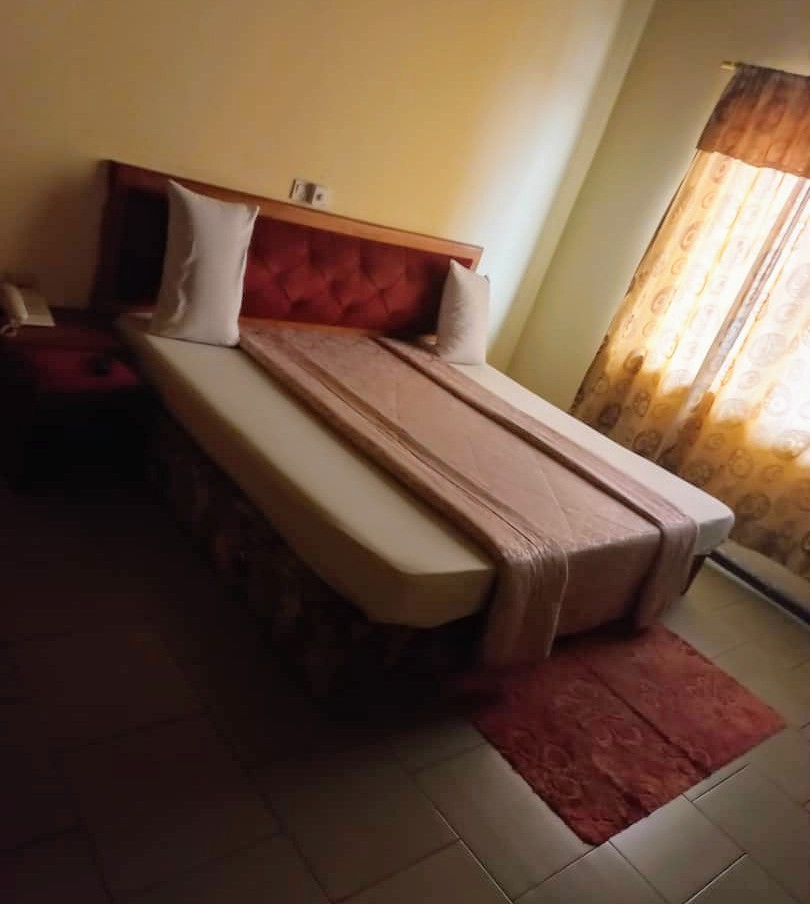
                 Asempa Hotel provides guests with both air-conditioned and fan-ventilation King-size, Queen-size as well as Standard-size rooms at affordable rates. There’s a spacious Car Park, Conference Hall and Visitor’s Hall to ensure convenience with respect to your comfortable nostalgic story to share. Remarkably, the Restaurant also serves guest with different rollicking dishes and assorted beverages to bring about satisfaction.

                  There’s Free Wi-Fi Internet, Breakfast and DSTV Channels to spice-up your stay. Its closeness to the Air-Port, Aqua-Port and Bus Stations your journey to the West with regard to relaxation of vacation is made quite easy and memorable indeed.  Comely and convivial customer service at the Reception will make you feel so welcome.

                   Asempa Hotel has highly credible staff and competent management with hospitable as well comfortable guest relations. Lo, not forgetting 24/7 security systems to make you safe and sound.

		   In the Akan’s Fante parlance, Asempa Yetsia literally Good Story is very brief or short. Thus, for your room Reservation Booking or Further Enquiry , Kindly Call: +233 312032766 or WhatsApp: +233 264072526

E-mail: asempahotelsgh@gmail.com , Digital Address Locale: WS - 290 - 6455 , Opposite Shell Fuel Station, Off Liberation Road, Takoradi - Western Region, Ghana.(West Africa). A warm welcome awaits you !

Asempa Hotel - Wake-Up In Elegance!

Written By: Ike Boat
Email Address: ikeboatofficial@gmail.com
YouTube Channel

Whats-App: +233 267117700
Direct-Calls: +233 552477676
Face-Book
Always In My Light

Do not mourn over
My body, my love

For now I am a dove
That takes flight

Like a crow is to the dark
I am to the light-

The essence of being
An energy that is unyielding -

It was maddening to see you
Lost, in a daze, always

Having been lucid like
My crutch when I leaned

On you, too heavy to topple
You were balanced, poised,

And lean. My rock, my love,
Keep your chin above your

Slender beautiful neck
I am now forever behind

You, where you stand
Ready to put up a fight.

I love you.
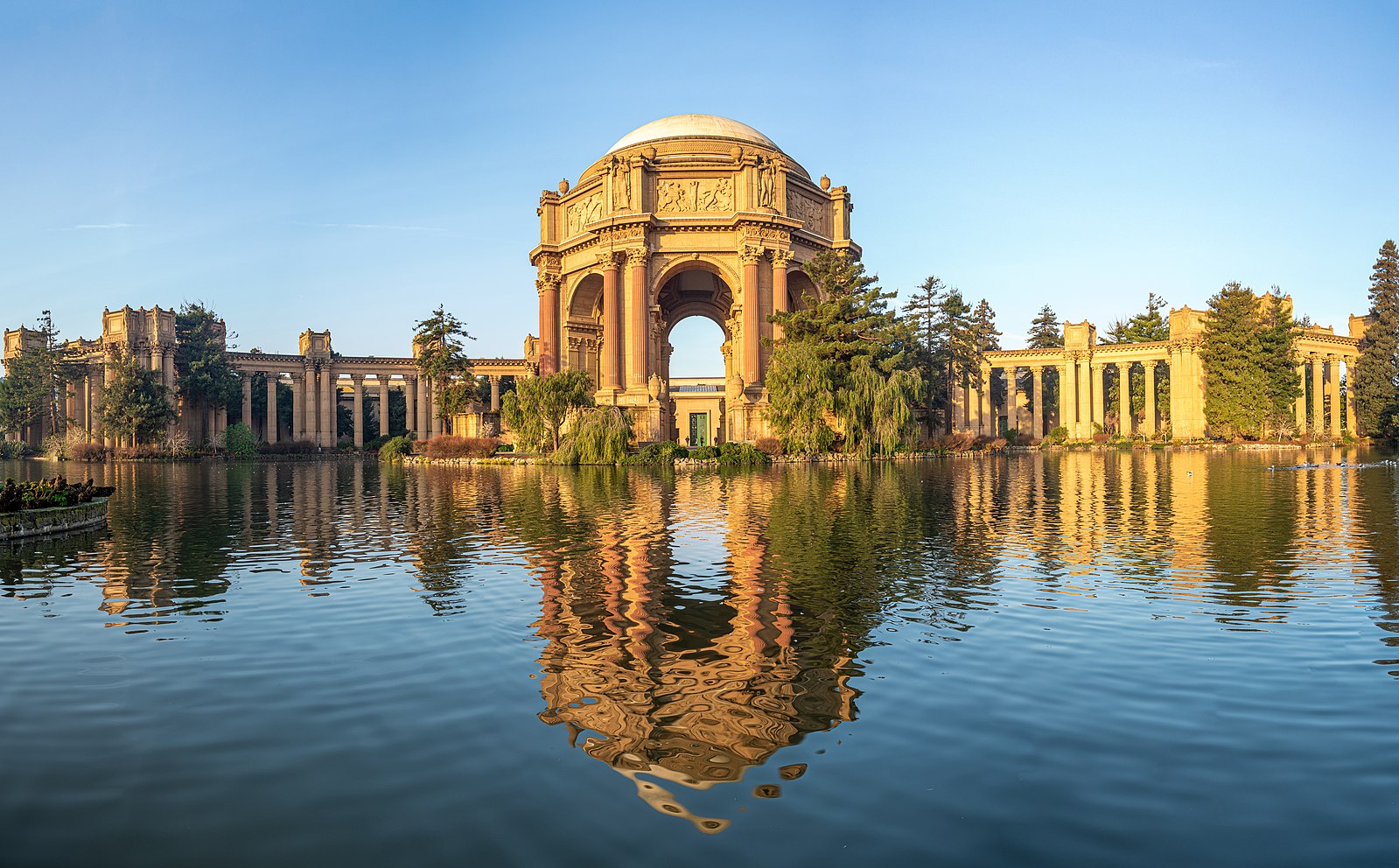
Wikimedia Commons, taken on an OLYMPUS DIGITAL CAMERA
Fabricated Ruins:
The Palace of Fine Arts and the Californian Dream


“No more land! We can't go any further
‘cause there ain't no more land!”
—Jack Kerouac, On the Road

	I am writing to determine what it is about the Palace of Fine Arts which led Reyner Banham to remark: “I went to see it more or less on a ‘duty’ list of San Francisco monuments and was staggered by an impact, comparable to that of the Basilica of Maxentius.” Bernard Maybeck begins his pamphlet, Palace of Fine Arts and Lagoon (1915): “In discussing a subject such as that of making plans for a World's Fair, it is necessary to assume that the hearers admit there are mental processes not to be expressed in language.”1 He omits the Palace’s construction, referring only to its effects upon the mind. Stone and wood relate to architecture as keys and strings to music. What compels an architect to say this? What crumbling testament to Californian endurance could he build, which led us for a century to preserve it?

	Maybeck spent his earliest years as a furniture-maker’s apprentice in Greenwich Village, then to the École des Beaux-Arts at nineteen. He went by Ben. There, in the atelier of Louis-Jules André, he learned the heft of form. He made a neat drawing on clean Whatman paper. “Beautiful,” André said; “Now study it.” Maybeck wondered what he meant. André worked over the lines with a soft pencil until the paper was black.3 T-squares, rulers and calipers practically disappear from Maybeck’s work thereafter. He planned according to a French principle: if the form “were reduced in scale to the size of a golden brooch…in Venetian cloisonné jewelry, that brooch thus made would pass as the regular thing in jewelry without causing the suspicion that it represented a plan for a World’s Fair.” It is a temple borne of space and mass rubbed, erased, and molded, a hand-hewn stage set in classical balance. Frank Morton Todd deemed this costume-jeweled manse “the most divinely beautiful building ever reared in America.”4 How could a vainer aim yield a nobler form?

	Predictably, Maybeck was excluded from the planning board and rejected from all competitions. He’d never so much as built a warehouse. He was fifty and destitute. At the pleading of his wife, his former student Willis Polk hired him as a draftsman. Polk chaired the board. Displeased with his design, he held an in-house competition for the most important building of the fair. He awarded Maybeck the job on the basis of a single charcoal drawing. His wife held, more realistically, that Polk was too busy to do the job himself. He set to cast Piranesi’s etchings of Roman ruin. From every angle men wither, worlds molder, outlines marred by sure hands. Beauty alone endures, time-stripped of its maker. He set the Palace behind a bog which Polk had planned to cover, and carved from the bog a lagoon. It gathers and reflects a light—at plum dusk and red dawn, in clearness and in haze—which moves “sadness to content.”5 It was, after all, a fair. Gloom would not serve its goers. Funds denied a bridge; you take an oblique and winding way around the shore, between hot columns and under cool trees. In his later years Maybeck would cite the absence of a straight path to the Palace as the reason for its success.

	It is among the last buildings erected for the 1915 Panama-Pacific International Exposition in San Francisco and the only one which survives. The fair celebrated the opening of the Panama Canal and the city’s recovery from the earthquake and fire nine years prior. It saw 19,000,000 people in ten months, among them Teddy Roosevelt and Woodrow Wilson, Charlie Chaplin and the Liberty Bell. Funds comprised six million dollars in donations, five million in state bonds, and five million in city taxes. Engineers lay a 635-acre site from bay mud flats where the posh Marina now stands; if not for the fair, the district would not exist. The Palace was a transient space of transient stuff, plaster and burlap on a frame of laths intended as respite from the strain of galleries and popcorn barkers. Upon seeing it, Thomas Edison declared that “The man that designed that building is a genius.”6 It is as popular now as it then was: it is always a strenuous and usually an impossible task to contemplate the most divinely beautiful building ever reared in America without appearing in the background of a wedding or family photo. People walk through this staid suspension of boom and waste as they have done for a century, wondering at the folly of men and the brevity of life with ice cream in hand.

	It is a Greek temple in the Roman style: a 100-foot rotunda (never mind that the Greeks did not have domes) held by eight Corinthian columns and framed by colonnades arcing toward a 1100-foot pergola. Planter boxes mount them. Weeping women mount each corner. Maybeck wanted vines watered by their tears and ringed by redwoods; funds allowed for neither. At each corner of the attic stands a large and largely nude woman peering inward with arms akimbo and offering a sotto in sù of her buttocks. Broken pediments cap the niches, with clay urns above and behind. Beneath and around the dome, battle friezes in Greek relief by Bruno Zimm. Behind it a crescent-shaped gallery of 114 concrete rooms, from Renaissance to (to public horror) Futurist. The trash cans and fire alarms were painted ochre.

	Cypress, acacia, and willow line and shroud the temple. It is a dignity overgrown and gone in the teeth, a Versailles half-marble and half-shrub. A brief bright smell of lilies and a mute play of swans about the lagoon strays the senses from children and cars. Plaster allowed for any finish, hewn stucco or smooth marble, but doomed the whole to rot. Signatures were gathered (33,000) and money solicited ($350,000) to preserve it before the Exposition closed in December. The original demand was its duplication in Golden Gate Park. Phoebe Hearst—William’s mother—led the effort. When the fair cleared, the Palace alone was spared. A visitor remarked that it was impossible not to see it aright:7 even as it cracks, placid blues above and wavering shades about relieve the form from its tautness. The city sent armed guards to prevent demolition. Maybeck insisted that it was the most he could have done to build something that wouldn’t get in the way of the water and trees; all else “the public was bribed to like.”8 Once, in Paris, mounting a white sheet, André stopped his pen: “You will never do better.”9

	Professional criticism was as unanimous as public support. Architects used a two-slide technique to expose the influence of one building upon another. The whole begged the very origin of European architecture but reflected no particulars: the columns are squat and piers lanky, the proportions are nearly Greek and the forms nearly Roman, the radius is not the rotunda but the lagoon, so that the Palace seems to widen into water. The stage-set classicism was tawdry enough to belie Maybeck’s Beaux-Arts training and eclectic enough to resist recognition. However sound the Palace seemed “on the ground,” there was “nothing to show on the other screen.”12 Form did not follow form. Others, with better intention and worse consequence, argued that precisely because the form was meant to spoil, it should not be judged by permanent standards. But despite its brevity, the form is as sound as any classical or modern ideal: what led Banham to proclaim the Palace, on the basis of these corpulent ladies, crafted friezes and curving colonnades, “the truest ancestor on American soil of Mies van der Rohe's essential buildings of the 1950s”? Only “the discipline of their use and location”:10 as Mies structures form around its negative details, so Maybeck builds a ruin that he may center the land around.

	He wrote, in a 1957 telegram to Governor Knight, that “The Palace of Fine Arts is probably the last of the traditional pieces of architecture to survive the modern age.”11 He died that year. Public opinion held that the ruin should remain one permanently. Maybeck held that “the main building should be torn down and redwoods planted around—completely around—the rotunda. Redwoods grow fast, you know. And as they grow, the columns of the rotunda would slowly crumble, at approximately the same speed. Then I would like to design an altar, with the figure of a maiden praying, to install in that grove of redwoods. I should like my Palace to die behind those great trees of its own accord, and become its own cemetery.”12

The San Francisco Art Association maintained the Palace. It was a city park after World War One. It became a Park Department warehouse, then a phone book distribution center, then a flag and tent depot, then a fire station. Statues fell and murals faded; the W.P.A. commissioned artists to repair it. Vines grew to cover the planters left bare. The weeping women were meant to represent the subjection of Art to materialism. Vandals beheaded them. The gallery held eighteen lighted tennis courts from 1934 to 1942. The Army used it as a motor pool during World War Two. It crumbled. The city fenced it off as a public hazard. In 1959, the state offered $2 million for restoration if San Francisco would match it. The city faltered. A philanthropist, Walter Johnson, donated and did not stop donating until his death in 1978. He wed his wife Mabel the year before the exposition; the Palace was their favorite spot. The contract was signed in 1964.

	Molds were made of every detail, concrete casts of every form. Steel l-beams held the Palace. It cost ten times the original. It opened with several days of “concerts, folk dances, organ recitals, films, lectures, and sound-and-light shows” in 1967,13 ten years after Maybeck’s death. A theatre was built behind it, an echo of the gallery. It has hosted everyone from Timothy Leary to Henry Kissinger and Akira Kurosawa to the Clancy Brothers, everything from the 1976 Presidential Debate to the Cerebral Palsy Telethon. It was a slated homeless quarantine during the shelter-in-place orders of 2020; after a few too many press releases with thread-and-tape floor mats and nary a bathroom in sight, the city reneged. It is a monument to 107 years of industry misnamed, pragmatism misplaced, and fortune misspent.

	Maybeck concludes his pamphlet with his belief that the Palace expresses “the life of the people of California” and has California as “its geographic reason for being.” The form could not have held “in Boston or in India”14 because it echoes what holds it. But this seems odd. The prior twelve pages describe it as a sad lone ruin, deliberately excluding mention of place or time. Why the abrupt transition from ephemeral gloom to permanent glory? One has only to see the Palace to know that ruin is as much the limit of its survival as its condition. No wonder Maybeck wanted redwoods planted around the columns, which would grow at the same rate that they crumbled. The frontispiece is a marble Muse finding the head of Orpheus, who charmed stones with his music and coaxed cannibals to live on fruit. Art in its purest form was for him abstinence from murder. For all the dreams which Maybeck sets in stone, above the facts of life which help and hinder mere survival, this dream is survival. This is indeed a very a Californian belief: that survival lay in one’s doomed commitments, in one’s attempt, like Orpheus, to retrieve the dead, which slip inasmuch as we try to seize them. It is a wagon-trail pathos, with removal the only panacea one has to employ against time. A four-panel mural depicted the birth of Art on the dome’s underside. It begins with the four golds of California: wheat, citrus, poppies, and gold. Each has seen its crisis. The panels end with a Ming legend of earth wresting visions from air. The dream endures; the forms by which we hold it do not.

	It is not these—not “the object or the likeness to the object” which Maybeck sought—but “a portrayal of the life that is behind the visible.”15 It is a specious stubbornness which takes as much stock in the dream as it denies the forms by which one holds it, a deliberate doggedness which sets its sights to the far and wide for fear that basements would burn and skyscrapers fall about one's ears. All cures and no disease to belie them. The colonnade bears nothing, the rotunda shelters no one. Todd could not see the Palace “without feeling an onrush, an assault, of ideas. And they were not orthodox ideas, no conventional, parlor ideas, but rough, brutal, Darwinian, evolutionary ones.”16 The men fight and muse, the women hold and mourn. It is a peculiarly Western incapability of sundering design from dream. In the rest of the country people know that if yours doesn’t grow where it’s planted, it begs a new frontier. Precisely because California is the culmination of that perpetual clean slate, people stay because nowhere else remains. When there is no more land to cross, you settle or go backward.

Many a Californian has explained to me something about the will to move on and endure. I had always taken it as a will to flee and forgo, and still cannot distinguish between the two. Louis Mullgardt, a member of the planning commission, recalled as many San Franciscans who foresaw a renaissance of the city on the eve of its destruction as those who “hastily bade farewell to the still smoking ruins of the City That Was, firmly believing that it should remain forever buried in its own ashes.”17 It is a frontier ethic which resorts to optimism in the trails and cannibalism in the passes, bearing children and planting wheat in the troughs with no time and space apart for rest and remembrance. While one forgets the nearness of everyday things amid these urns and yews, they stand only that the everyday may hold.

	Maybeck knew that “the artist began his work a long time ago in a nebulous haze of whys”18 and he must work a long time before he realizes that he does not seize the object at all but the reason he wrought it. An architect finds beauty as readily in the face of wood as a painter does the face of man. He confessed that he had never been an architect, that he had only liked one line better than another. The Palace was borne of lines smudged, smeared, and sculpted; like the Basilica of Maxentius it betrays the clean of the chisel only from afar, and even then blurred in fog. Todd writes that if we could “stand there a hundred years while swamp growth swathed its piers and plinths, while willows and acacias choked its portals, grasses dug into its urns and ivy over-ran its cornices and dimmed its lines,” the beauty would hold “above all other physical possessions.”19 None would see it now and think him wrong. It bears the worlds of fact and dream alike, elevating brute survival above the forces which would threaten it. But it is as much a dream that one can endure only in decay as that one can endure apart from decay. It is by its ruin that this monument to Californian survival still stands.

This is the reason for its hold, and is itself the dream, and as a dream an illusion. The real causes of Californian survival—eastern commerce, federal subsidies, native genocides—were clean absent from the Palace and subsequent accounts. Although it commanded the most support of the fair, no artwork garnered more applause than James Earle Fraser’s The End of the Trail. It depicts an Indian with endurance worn and bowed; he, on a horse as weary as he, searches in vain for a clear path. No wonder that a monument to Western self-reliance should evoke the ruins of Rome. Where else remains to go?


Endnotes

1 Reyner Banham, “The Plot against Bernard Maybeck,” Journal of the Society of Architectural Historians 43, no. 1 (1984): 37.
2 Bernard Maybeck, Palace of Fine Arts and Lagoon, introduction by Frank Morton Todd (San
Francisco: Paul Elder and Company, 1915), 4.
3 Peterson, Charles E. “A Visit with Bernard Maybeck,” Journal of the Society of Architectural Historians 11, no. 3 (1952): 31.
4 Maybeck, vii.
5 Sara Denise Shreve, “A History Worth Saving: The Palace of Fine Arts and the Interpretation of History on a Reconstructed Site,” MA diss. Cornell University, 2006, 7.
6 Keith L. Eggener, “Maybeck’s Melancholy: Architecture, Empathy, Empire and Mental Illness at the 1915 Panama-Pacific International Exposition,” Winterthur Portfolio 29, 4 (1994): 218.
7 Banham, 36.
8 Richard Reinhardt, “Bernard Maybeck,” American Heritage 32, no. 5 (1981).
9 Ben Macomber, “The Palace of Fine Arts and its Exhibit, with Awards” in The Jewel City, San Francisco: John J. Newbegin, 1915.
10 Ibid., 37.
11 Shreve, 76.
12 Ibid., 75.
13 Reinhardt.
14 Maybeck, 13.
15 Eggener, 217.
16 Ibid., 221.
17 Alexander Ortenberg, “Joy in the Act of Drawing: Maybeck’s Palace of Fine Arts,” Journal of the Society of Architectural Historians 70, no. 1 (2011): 42.
18 Maybeck, 6.
19 Ortenberg, 40.


Works Cited

Banham, Reyner. “The Plot against Bernard Maybeck.” Journal of the Society of Architectural
Historians 43, no. 1 (1984): 33-37.

Eggener, Keith L. Maybeck’s Melancholy: Architecture, Empathy, Empire and Mental Illness at
the 1915 Panama-Pacific International Exposition.” Winterthur Portfolio 29, 4 (1994):
211-226.

Peterson, Charles E. “A Visit with Bernard Maybeck.” Journal of the Society of Architectural
Historians 11, no. 3 (1952): 30-31.

Macomber, Ben. “The Palace of Fine Arts and its Exhibit, with Awards” in The Jewel City. San
Francisco: John J. Newbegin, 1915. http://www.books-about-california.com/Pages/
The_Jewel_City/The_Jewel_City_Chap_12.html.

Maybeck, Bernard. Palace of Fine Arts and Lagoon, introduction by Frank Morton Todd. San
Francisco: Paul Elder and Company, 1915.

Ortenberg, Alexander. “Joy in the Act of Drawing: Maybeck’s Palace of Fine Arts.” Journal of
the Society of Architectural Historians 70, no. 1 (2011): 38-63.

Reinhardt, Richard. “Bernard Maybeck.” American Heritage 32, no. 5 (1981).
https://www.americanheritage.com/bernard-maybeck.

Shreve, Sara Denise. “A History Worth Saving: The Palace of Fine Arts and the Interpretation of
History on a Reconstructed Site.” MA diss. Cornell University, 2006.
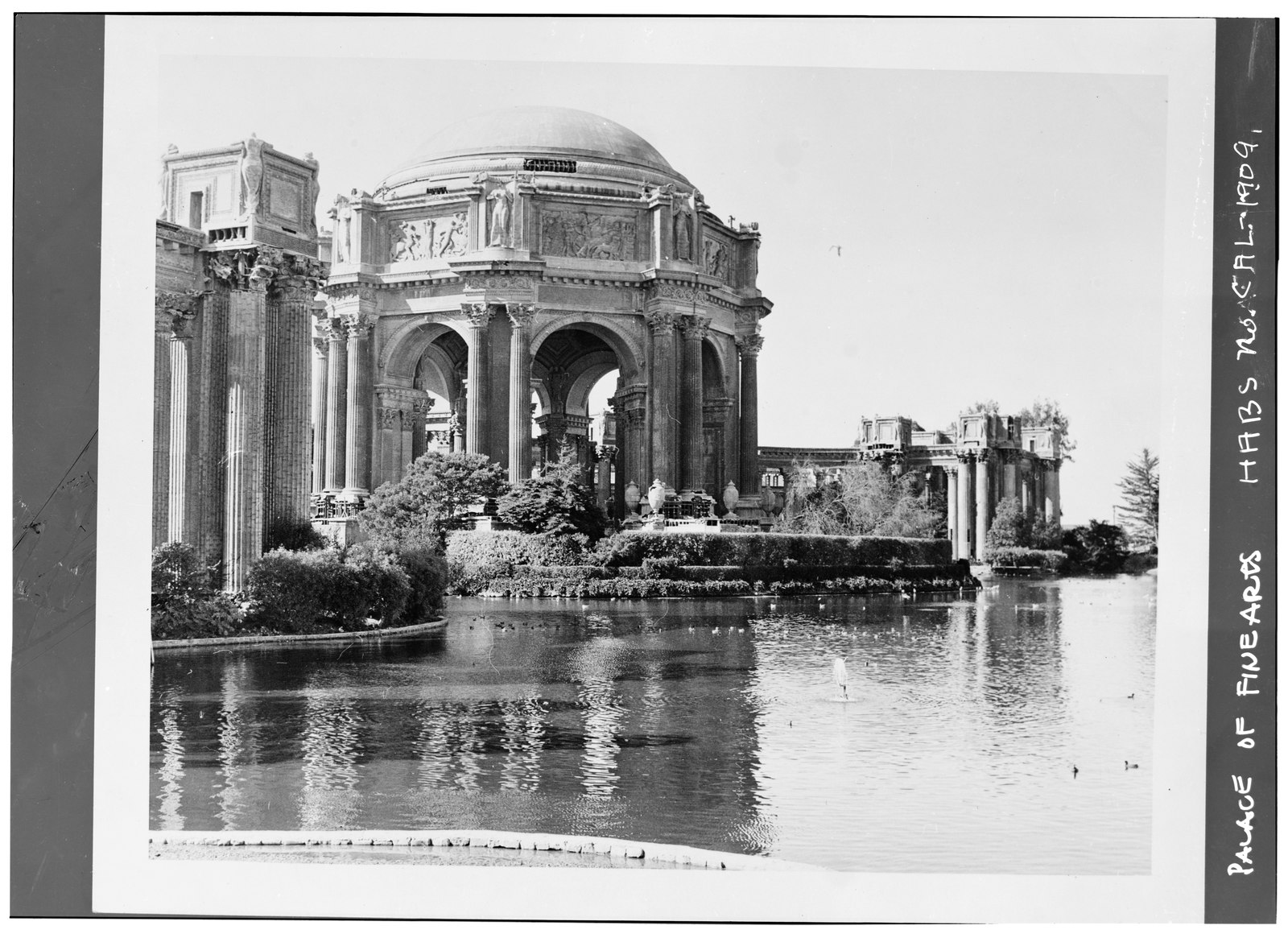
Palace of Fine Arts, photographed by Joseph A. Baird Jr., Historic American Buildings Survey, 1956.
Previously published in 2020 in Cleaning Up Glitter.

High on the Hogback


	Ben had lived in Bhutan for almost two years, when a Kuiper Belt object changed the course of history.  Astronomers monitored the solar system’s asteroid belt and understood pretty well what objects could pose a threat to earth, but none expected a massive object from the edge of the solar system.  NASA and its counterparts around the world noticed the object and began plotting the trajectory less than five weeks before it reached earth.  Those agencies warned their governments of what they called an “impact scenario” three weeks before the calculated impact.  The world’s governments warned their citizens three days later.

	For the first few days, most people greeted the news with a shrug and talk of “ho hum, another close approach by an asteroid”.  Ben was not one of those.  His two-decade-old practice of checking the news on-line every morning meant he maintained a good grasp of world events.  To him, the announcements sounded like a massive catastrophe, and he responded accordingly.  He immediately began stocking up on—some might say “hoarding”—necessities, such as non-perishable foods, matches and lighters, wet- and cold-weather clothing, and other survival-oriented goods and urged Sonam, his not-exactly-girlfriend, and other friends to do the same.

	Sonam argued a little at first.  “Why, though?” she asked.  “The water can’t get this high.  You said so yourself.”
	“I didn’t say ‘can’t’, but I don’t think it’s likely to.  Ask yourself this, though: where does our food come from?”
	Sonam managed a mini-supermarket jointly owned by her mother and her aunt so possessed more than average familiarity with the supply chain.  She pondered but a moment before replying, “India and Thailand mostly.”

	“Exactly!  Bangkok and Kolkata are at sea level, and even Delhi couldn’t be higher than 250 metres.  Jaigaon is less than two hundred, for goodness’ sake.  There isn’t going to be anything coming in through Phuntsholing.”
	Sonam recognized the sense in that and immediately set to work.  Without seeking authorization from her mother or her aunt, she ordered massive amounts of canned goods for immediate delivery.  Within the hour, she had nine truckloads of non-perishable food items and other crucial supplies on their way from Siliguri, Kolkata, and Bangkok.  She filled her own apartment and took several pickup-loads up to Ben’s larger apartment.  “If this disaster does not happen,” she told Ben, “I will be in big trouble.”
	“At least it’s non-perishable, so you can sell it eventually,” Ben replied, “and I can help pay the distributors, if necessary.”

	Living  above 7,700 feet elevation, Ben assumed anything other than a direct or nearby hit would not immediately or directly affect him or Sonam or their neighbors.  Knowing Bhutan imported the majority of its food, he saw widespread starvation as a possibility.  Instead of his usual weekly shopping trip to town, Ben went twice a day and came home in taxis laden with rice, beans of many kinds, lentils, boxes of canned vegetables and fruit, and all the other items on his list of supplies for surviving a prolonged disruption of both food supply and normal weather.

	That, in addition to the loads Sonam brought, filled Ben’s roomy apartment.  The first day, Ben seemed to be the only person in the valley stocking up on necessities.  Once Sonam began, however, she equalled or exceeded her friend’s zeal.  That, coupled with her job and the opportunities it afforded, left Sonam with what she calculated could support her for two years.  When she visited Ben’s hilltop home, she found boxes stacked to the ceiling and filled with useful supplies.

	The hoard she and her not-exactly-boyfriend had accumulated there occupied so much space, not one spot remained where she could stand with her arms outstretched and rotate a quarter-turn in either direction.  Sonam felt amazed by the stockpile—which she estimated might support him for almost ten years.  “I wonder if the Druk Gyalpo even has as much stored as you do.”
	“I expect the royal family has a warehouse full of supplies, maybe several of ’em.”
	“Do you think you’ll need all that?” she asked him.
	“It isn’t just for me,” he replied.  “It’s for you, too.”
	“But I have my own cache.  My flat is almost as full as yours.”

	“That’s good.  But this is for both of us.”
	Sonam liked Ben a great deal and consistently enjoyed his company.  Even though he was more than three times her age, she found him attractive and often thought about entering into a more intense and intimate relationship with him.  Ben had revealed his desire for a more intimate relationship eight months ago.  He also said he cherished their friendship and could accept being just her friend if she preferred that.  Through those months, Sonam didn’t feel confident she knew what she preferred.

	She had avoided intimate relationships with other men, since she and Ben had become friends.  Why? she sometimes asked herself, but she knew the answer.  She felt extremely fond of Ben and, like him, cherished the relationship they already enjoyed.  Now, here they were, making plans to support each other.  Thinking about that made Sonam feel good, made her feel all warm and cuddly.
	Why aren’t we living together? she asked herself.  With no real pause, her thoughts continued, Because he’s being a gentleman and I’m being silly.  Sonam had made a point of sounding non-committal in all their considerable talk about relationships, but she never lacked sensitivity—enough to recognize Ben said nothing because he didn’t want to offend her.  Maybe I should suggest it myself, she thought.

	When less than a week remained before the predicted impact, people seemed to get the message and everyone who could stockpile began hoarding whatever they could get.  Ben and Sonam continued securing supplies but many products became unavailable.  They found adding to their stockpiles increasingly difficult but felt comforted by the enormous amount of provender almost filling Ben’s hilltop apartment.

	Sonam didn’t like her apartment in town.  She found the town noises and noise level annoying and a source of stress.  “Cities and big towns are stressful,” Ben said, and Sonam had begun to agree.  Living in town had its advantages, though, especially because she worked in town.  Everything lay near at hand.  Town living provided convenience, but at a price.  Ben raised another question.  “Now, it’s just annoying,” he said, “but how safe will it be to live surrounded by a few thousand starving people?”
	“So, you’re thinking what?”
	“That you can move in with me.  We’ll be safer up on that hogback ridge.  Even though it’s only a couple miles from town, most people wouldn’t ever bother to climb up there.”

	Sonam had half-expected or maybe even hoped for that suggestion or invitation or whatever it was, and recognized she wanted exactly that.  “What…ummmm…,” she began, and trailed off.
	“You wouldn’t have to sleep with me,” Ben said.  “I mean, of course I’d like that but it isn’t the point.  It isn’t a requirement.”
	“What is the point?”
	“The point is that I want to make sure you’re OK.  I want to take care of you.”

	Sonam recognized she liked the idea of being in a relationship in which Ben took care of her—and she took care of him sometimes.  The  thought of Ben sleeping beside her excited Sonam.  She was about to say so, when Ben continued, “Of course, I want to sleep with you—all the time.  I told you, though, that I feel very happy and privileged to be your friend.  If you don’t want to sleep with me, I still care about you and I’m still your friend.”
	“I do want to sleep with you, dammit,” she blurted out.  “I don’t know why I’ve waited so long.”

	That caught Ben by surprise, and he stood and looked at her for several moments.  Finally, he said, “Wow!  Oh, Sonam, that’s great.  When shall we begin that new phase of our lives, of our life together?”  He looked at his wrist as if checking a watch, which he didn’t wear, and said, “I’d be inclined to say, ‘How ’bout in five minutes?’ but maybe you’d rather wait until things settle down some?”
	“We might not be alive, when things settle down—if they ever do.  I’ve waited too long already, and I’ve made you wait too long.  I’d usually be at the shop until seven-thirty or eight, but I could get my amin to close up and go with you in an hour.  Almost everything on those nine trucks has sold out, so we don’t have much stock left anyway.  Amin won’t have an awful lot to do.  Is that OK?”

	Ben hugged his friend—not the first time he’d hugged her in the store, but almost—and said, “Oh, Sonam!  It’s much more that OK.  It’s wonderful.  Because you’re wonderful.”
	“I hope you’ll still say that tomorrow.”
	“Tomorrow!” Ben exclaimed.
	“I guess I haven’t said it out loud, not to you at least,” Sonam continued, “but I think you’re wonderful.”
	“Tomorrow!?” Ben repeated.  “I hope you’ll still be saying that in twenty or thirty years.”

	That took Sonam by surprise, and she tilted her head to look up at Ben’s face.  He surprised her again—with a kiss, their first.  His lips felt soft and gentle and strong at the same time.  They seemed to caress hers without actually moving, seemed to emit an affectionate energy that spread out and enveloped her like a cloud, like a protective cloak.
	They had just surfaced from their kiss, when Sonam’s mother walked into the shop.  She looked at them and quickly turned her head away, but not fast enough to hide her smile, as she made her way to the back room.

	Sonam pulled Ben’s head down and whispered, “Ama smiled,” in his ear.
	“I saw that,” he replied.  “That’s so neat.  I was afraid she’d be mad at me.”
	“I thought she’d be mad at me.”

	They relinquished their hug, shared one quick peck on the lips, and Sonam went to talk with her mother while Ben ran errands in town.  An hour later, he paid a taxi driver two hundred Ngultrum to take them and several boxes up to his home.  “Our home,” Ben said to Sonam, as the taxi departed and headed back down the hill.
	That phrase or the way Ben said it filled Sonam’s heart with joy.  The evening and night proceeded as one would expect.  Sonam’s previous experience meant Ben gave her only pleasure and caused her no pain.  That experience also supplied perspective, and in the morning, she rewarded her lover with, “You are both bigger and better than any other man I’ve ever known.”

	Ben felt tempted to say, “In the Biblical sense?” but figured that expression would mean nothing to someone who had never seen a Bible in her life.  Instead, he thanked her, praised her, and initiated another round of conjugal sharing.  Sonam’s mother had given her daughter the day off, saying she could run the shop herself but wouldn’t have much to do anyway, because they had so little inventory.  As a result, the two new lovers enjoyed intimate sharing right through that day and into the next night.
	Sonam shared a couple of ’phone calls with her mother and learned her mother didn’t plan to open the shop the next day, so the idyll continued.  The lovebirds wouldn’t have known the asteroid-like comet-strike had occurred, if Sonam hadn’t rung her mother on the third day.  That call informed them the object struck in the mid-Atlantic and tsunamis had destroyed virtually all of the U.S. east of Colorado and New Mexico and most of Europe.  After hearing that news, the two returned to their previous activity for the rest of the day.

	When the two did venture out of bed, they noticed two things: extremely dark clouds covered the sky and discharged a heavy rain, and they still enjoyed the modern convenience of electric power, something they hadn’t expected.  In addition to an enormous amount of sensual pleasure, both discovered they derived tremendous enjoyment from sharing long conversations without either of them having to depart to go home or to work.  For several days, their enormous stockpile of food went almost untouched, because the two took almost no time to do anything other than enjoy their propinquity.

	In moments between coition, Sonam rang her ama once each day.  Those calls reassured the lovebirds that Sonam’s mom was OK and also brought the news that little had changed in town.  The older woman—older than Sonam, of course, although younger than Ben—told her daughter most people were still going to work.  As expected, though, no shipments of any kind arrived from outside the country.
	The honeymoon, in the sense of paying almost no attention at all to anything except each other, lasted through a few days short of two cycles of the moon, continuously invisible above the heavy overcast that made the days almost as dark as a clear, moonless night.  In that seventh week, Sonam began feeling ill.  She said nothing at first, not wanting to worry Ben and thinking maybe her irregular diet had caused some gastro-intestinal problem.  When she did mention her nausea four days later, he said, “Omigosh!  Just in the mornings?”


	“Yes, and it always goes away immediately, as soon as you start caressing me.”  She saw the worried look on her darling’s face but at the same time recognized the implications of what she had just said.  She felt ecstatic but worried that Ben might be upset.
	“I’m glad that helps,” he said, as he caressed her and proceeded to dispel her nausea in the nicest possible way.  As they clung to each other in the afterglow, Ben said, “Probably not the best possible time to have kids, but how do you feel about it.”

	“Happy—no, “happy” doesn’t do it.  Happier than I’ve ever been in my life.  Thrilled.  But you look so worried.  Do you not w—”
	“I just worry that it might be too soon for you.  As long as you’re OK with it, I’m delighted.  I can’t imagine anything nicer than adding that new kind of sharing to our relationship.”
	With that, Sonam relaxed and cuddled as close as she could to Ben, hugging him as if she wanted to eliminate the boundaries of skin between them and merge into a single organism.  While their lovemaking didn’t taper off dramatically, they did both begin to spend more time working to ensure they would have everything they needed for the well being of their child.  Ben amassed a huge collection of baby- and child-size clothing, including a good deal of foul weather gear.

Because no new supplies of anything were coming into the town—or the country—prices for the dwindling stock of goods of all kinds rose dramatically.  Ben insisted high prices presented no difficulty for them, both “because I made sure we have a substantial quantity of cash on hand, and because the banks are still open and functioning and I have money in both BoB and PNB.”  He said he couldn’t imagine the dark and precipitation and cold lasting even five years, but he bought foul weather gear and other clothes to fit all ages from infancy up to eight or nine, saying “Better safe than sorry.”
	The week before Ben began his baby-and-child-clothing buying spree, Sonam went to step outside, and he stopped her.  “Please don’t go out without a slicker, dear, and rubber gloves.”


        “Why?”
	“Because the rain is likely to be very acidic.”
	“Acidic!?”
	“Yeah, wait, I’ll show you.”
	He spent half an hour searching and came up with a small plastic object that looked a great deal like a tape dispenser.  He set it on the kitchen counter, donned a slicker and rubber gloves, and took a glass tumbler out onto the balcony.  There, he thrust the glass out into the falling rain until it was half full.  After bringing the glass back to the kitchen area, he doffed his rain gear and took a small strip of salmon colored paper from the dispenser.  When he dipped that into the glass, it turned bright red.  He showed Sonam the color chart.
	Sonam had achieved well in all the sciences at school but still said, “OK, less than four.  That’s pretty acid, isn’t it?  I forget.”

        “About like lemon juice maybe.”
	“So, not like a car battery.”
	“No, but not something you want to have in contact with your skin for more than a few seconds.”
	After that, they both exercised caution when going outside.  They went outside rarely, mainly to walk down to visit Sonam’s mother and to buy or scavenge items on their various lists.  Ben dispensed Vitamin C tablets morning and evening, once fresh fruit became impossible to procure.  The family’s indoor existence coupled with the continuing darkness prompted him to begin dispensing from his hoard of Vitamin D tablets as well.

	Several members of the country’s legislature succumbed in the initial disaster or the first few weeks of dark and rain.  Many others left the capital to return to their home villages, some intending to help in recovery efforts, others intending to die with their families.  As a result, governance returned to the not-so-distant old days, with the Druk Gyalpo, the king, making all decisions with the help of a few trusted advisors.  Most of the country’s surviving population cheered that as a good thing.

	The king and what remained of the government made a valiant joint effort to enforce the long-standing national ban on slaughtering animals, but history opposed them.  With people starving and thousands of cattle wandering freely throughout the country, slaughtering livestock became routine.  That state of affairs lasted only about six months, after which no cattle, goats, sheep, or pigs remained.  A few zealously guarded chickens survived and continued producing eggs, but hungry humans had wiped out other livestock except perhaps a few individual animals that might have escaped into the forests.  Even the huge population of stray dogs throughout Bhutan soon vanished to feed starving humans.  A very few carefully sequestered pets survived.

	The population didn’t descend into cannibalism but adopted a grudging vegetarianism with what meager supplies they could find.  The darkness and rain continued as intense as ever, although Ben and Sonam confirmed the rain’s pH had risen to above four, a reassuring sign.  The continuing Cimmerian murk caused Ben and therefore Sonam to worry about the survival of plants—not individual plants but whole germ lines.  “So, we need to do something about that,” she said, “but what can we do?”
	“With electric power still available, surely it’d be possible to hang huge arrays of lights in big buildings, warehouses and the like, and create an artificial growing environment.  Even just keeping a few examples of each useful plant alive would enable people to propagate them, once more favorable conditions return.”

	“That would be a huge job.”
	“Yes, someone would have to convince the Druk Gyalpo to do it as a matter of national security—world security, really.”
	“Someone?”
	“Yeah, it doesn’t matter who does it, as long as the king gets the system set up.  He’d be a hero all around the world in years to come.”
	“Then you’d better talk to him.”
	“Me!?  I’ve never met the Druk Gyalpo, probably couldn’t get an audience with him.  It needs to b—”
	“The person who speaks to His Royal Highness has to be someone intelligent who understands the science—both the science of the asteroid and weather and the biology of the plants.  And the technology of the building and lighting and stuff.”

	“Yeah, maybe, but—”
	“I don’t know anyone else who could cover all that.  Do you?  And the person needs to be…what’s that word…”  Sonam paused and thought a moment, then said, “I think it’s ‘chair-is-matic’ or something like that.”
	“’Charismatic’?” Ben corrected her pronunciation.
	“Yes!  Charismatic, the person has to be charismatic—and that’s you for sure.”
	“I don’t know about that.  I—”
	“Ben, dear, now is not the time to be modest.  You are a charmer.  You must know that.  You have more chair—I mean, charisma than anyone else I’ve ever met.  You’re the man for the job.”

	“But I would never get an audience with the Druk Gyalpo.  I don’t know anybody in the royal family or anything.”
	“But you know people who know them or at least who have contact with them.  That’s probably enough.”
	“Who?”
	“Your friend, that lawyer, Rajiv Prakash.  He’s had dealings with the royal family.”

	“But he isn’t even Bhutanese, he’s In—”
	“Doesn’t matter.  He has contacts with them.  Also, your old boss—well, sort of boss—Dorji Dawa.  His wife is related to the queen.  He’s close to the royal family.”
	“Oh, yeah, I’d heard that—but maybe not so much on good terms with me, since I left his employ.  I s’pose we always got along well, though.”

	“Exactly.  And my ama and my amin know Ugyen Danzin, and he’s on very good terms with His Royal Highness.  I think you can get an audience.  You have something to give him.  You have knowledge that, like you said—”
	“As you said.”
	“Thank you.  As you said, you will make him a world-wide hero and savior.  He will grant you an audience, and he will listen.”

	The discussion continued longer than most without an interruption for carnal activities, an indication that both considered the topic important.  Another indication could be gleaned from their returning to the topic repeatedly in the following days, and yet another from Sonam’s contacts with her mother and aunt.  Both women put social wheels in motion.
	Benson Johns, Junior, remained blissfully unaware of his parents’ concern at his birth into a crepuscular world.  He and his mother—and, indeed, all three—bonded well and enjoyed each other’s company.

	Sonam felt severely deprived in the last couple of weeks of her pregnancy and advocated early resumption of conjugal activities despite Ben Senior’s concerns about possible adverse impacts on her health or possibly causing her pain or both.  She insisted, he worried; she continued to insist and began actively working at seducing her partner; he continued to worry.  Ben’s resistance crumbled after three days, and Sonam declared then and for long afterward that the pleasure was well worth the little bit of discomfort.
	Young Ben had long since mastered crawling and sitting up by the day the rain paused.  The rain-free interlude lasted less than half an hour, but it gave everyone some reassurance that at least the rain could stop.  By then, Sonam’s large belly proclaimed the imminent arrival of the little guy’s brother, an event that occurred without the benefit of any sunshine in Bhutan.

	Ben Junior was walking and his brother two months old, by the time the second pause occurred, and that pause lasted more than half an hour but less than an hour.  At eighteen and eight-and-a-half months respectively, the boys enjoyed an afternoon with a break of two hours.  In the meantime, their parents took them for frequent walks in a couple of the big grow-houses, as the indoor orchards and gardens became known.  The boys couldn’t yet have understood that was a privilege accorded only a few very special visitors.

	At the ages of twenty-six months and seventeen months, the toddlers experienced sunshine for the first time.  Ben Senior told his sons, “Don’t look at it—it can hurt your eyes very badly.  It can seriously damage them.”
	Both the boys said,. “It’s very bright.”
	“It is,” their father agreed.  “Look at the hills and the people and the buildings.”

	The sun cast hard shadows for about twenty minutes that day but returned three months later for twice as long.  Meanwhile, the not-quite-but-still-almost-incessant rain’s pH had risen to almost five.  As if to honor young Ben’s third birthday, the sun appeared that day for a full hour for the first time post-impact, before the cloud and rain returned.
	In accord with Ben Senior’s now famous suggestions, many of the grow houses preserved valuable fruit and nut trees against the day when they could again grow in a natural environment.  Other grow houses preserved germ lines of garden vegetables while producing substantial crops in a successful effort to improve the diet of the surviving population.

	That population amounted to about fifty per cent of the country’s pre-impact numbers.  India, with far more surviving individuals, contained much less than one per cent of its former population.  The intermontane West of the United States preserved almost one per cent of that country’s former population.  In the new conditions, the U.S. and India supported about the same population, about three times that of Bhutan.  In both of those large countries, as also elsewhere, people had begun re-occupying the drowned lands and attempting to reëstablish agriculture.  The total human population of the planet amounted to fewer than fifty million, and global warming no longer posed a threat.

	Sonam felt glad to be one of the survivors but even more glad to be Ben’s partner and the mother of their sons.  After four years, when rain-free daytime hours made regular appearances, she enjoyed Ben Senior’s company and love-making more than ever.  Another year, and the birth of their daughter Tenzin occurred on a day with no rain at all from an invisible sunrise to a visible sunset.
	In countries around the world, people began using whatever resources they could find in attempts to re-introduce agriculture and horticulture to land that had lain fallow and sodden for half a decade.  Some succeeded; many did not, and starvation remained a constant threat everywhere.  As the rain lessened, however, and the sunny hours increased, more and more areas began producing food crops.

	Coastal peoples fared somewhat better, because the absence of fishing pressure for more than four years allowed fish stocks to rebound.  The lack of sunlight to provide energy for the growth of algae and other base-of-the-food-chain organisms hampered the recovery by limiting the food available to crustaceans and fish.  Even so, those who managed to fish in the dark supplied protein to their families and communities.
Educated as a scientist and graduated by M.I.T. as a mathematician, Cora Tate has earned her living as a full-time professional entertainer most of her life, including a stint as a regular performer on the prestigious Grand Ole Opry in Nashville, Tennessee. Cora’s repeated attempts to escape the entertainment industry have brought work as a librarian, physics teacher, syndicated newspaper columnist, and city planner, among other occupations. Cora lives and writes in Bhutan. In previous decades she has lived, performed, and taught in the U.S., Australia, New Zealand, and Denmark. She has written five novels, three novellas (two of which have been published), and three novelettes (two published, one forthcoming). Although she considers herself primarily a novelist, she has written eighty-some short stories, some of which have appeared in the Galway Review, Quail Bell, Overland, Indiana Voice Journal, Red Fez, Page & Spine, Scarlet Leaf Review, Green Hills Literary Lantern, and other literary journals. Cora’s short story “While The Iron Is Hot” won the Fair Australia Prize.
The City Holds My Heart

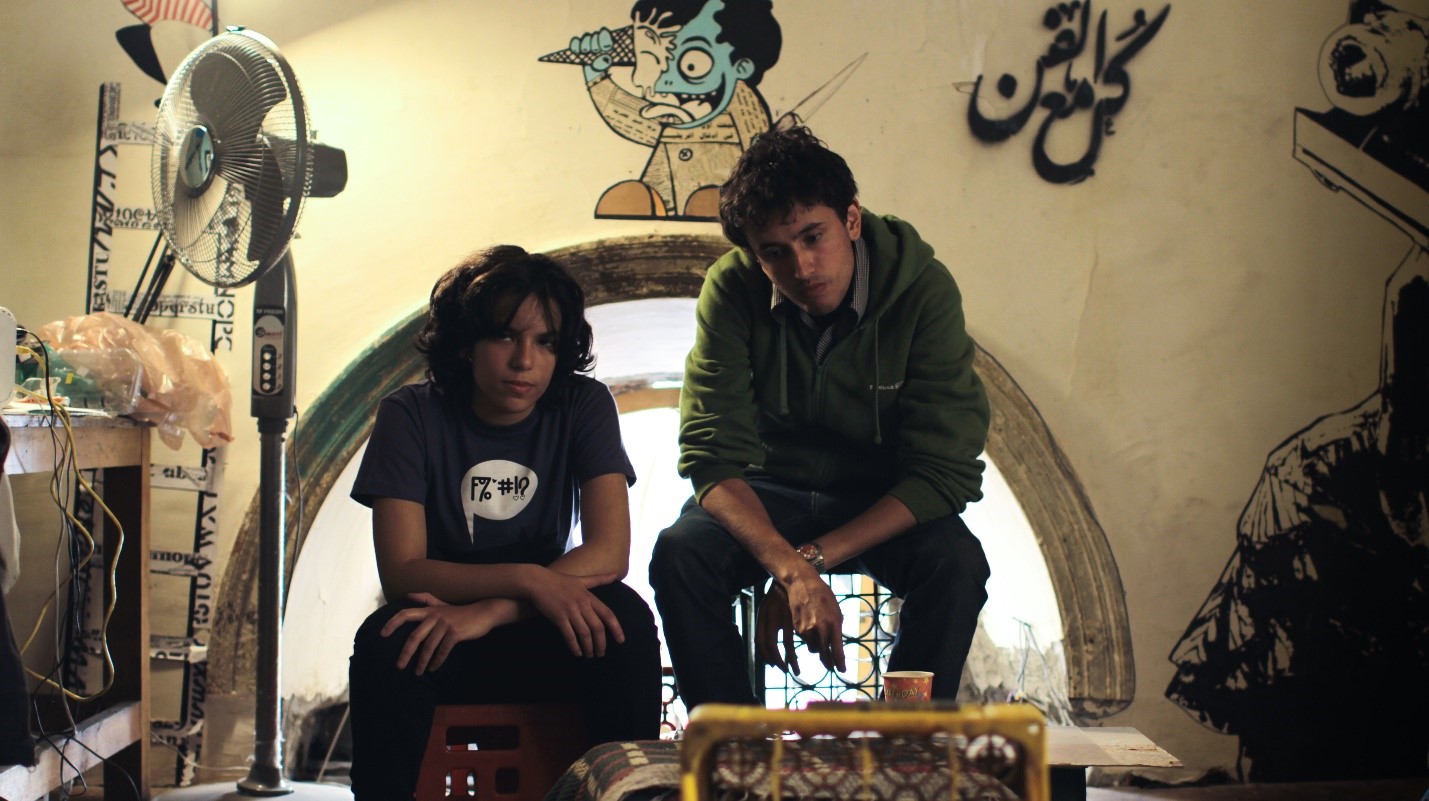
Conversations with Independent Filmmaker Ahmad Abdalla

There are films about cities and cities that need to be archived in films. Ahmad Abdalla’s filmography is a long tale about lost cities and their citizens trying to gather their broken pieces among the ruins. Whether it’s simply a suburb in Heliopolis, a decaying art scene in Microphone, a journey on the outskirts of a politically torn Cairo in Rags and Tatters, or the harsh, unnerving Cairo nightlife in Exterior/Night, Ahmad’s heroes and heroines are on a personal conquest to search the self and the city. The only time he made an intrinsic journey, escaping the vastness of cities to the intricate details of one’s inner-city a.k.a home and identity was in Décor. I had the pleasure of interviewing Ahmad Abdalla, whose films fascinated me, I saw two of them in the movie theater, one with my family and the other with a man I loved, both films still resonate within, not just because of the quality and the distinct style with which he makes movies, but because he knows how to dig deep into the subject at hand without getting too sentimental about it.

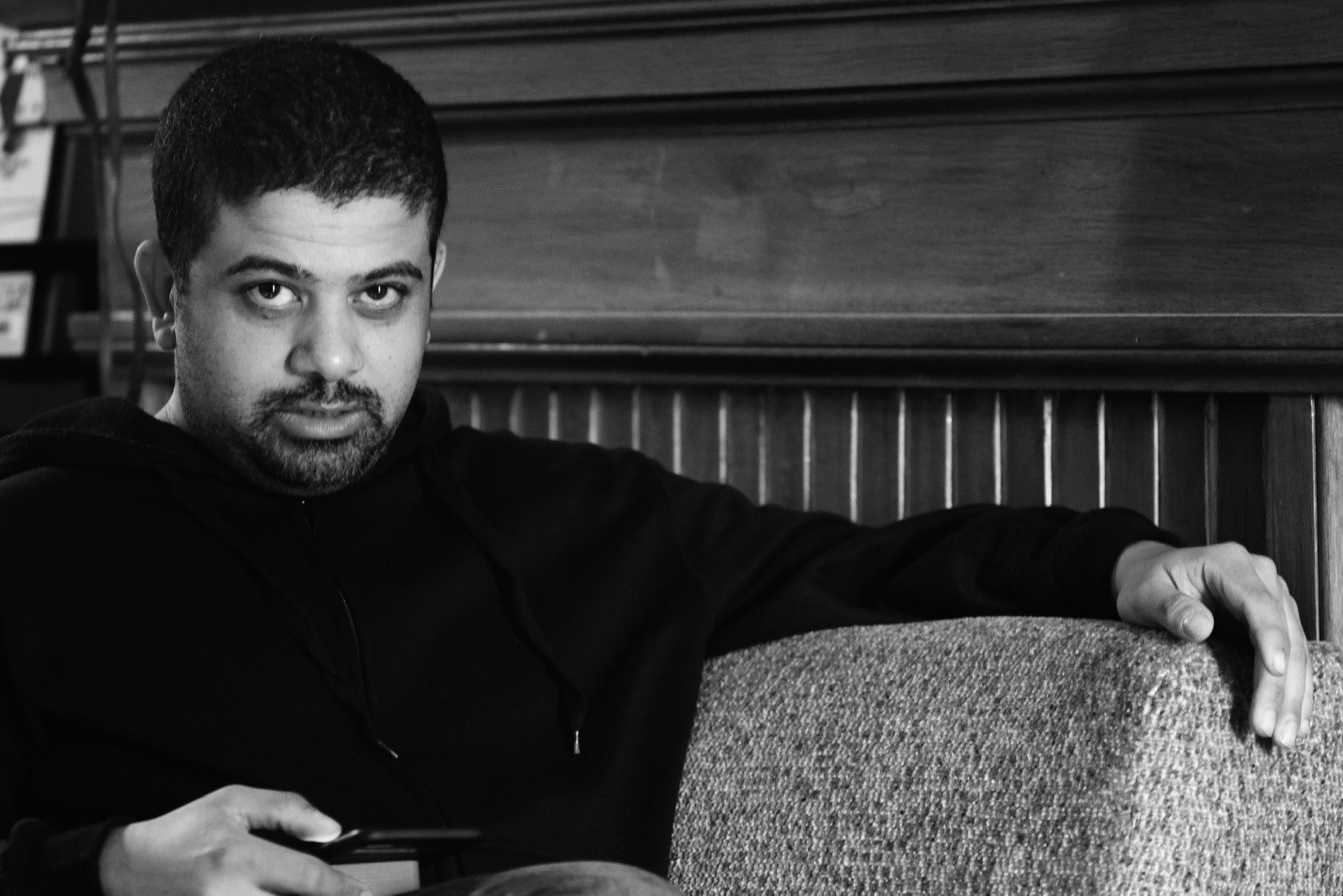
Ahmad Abdalla is an Egyptian filmmaker who originally studied music and was a pioneer in non-linear editing which he taught himself as part of his passion to become a director someday. He was a key player in the so-called Egyptian independent cinema wave which uses limited resources, outside a major studio, defies traditional storytelling and directorial techniques, relies on personal stories and -mostly- unknown actors or regular actors, although many movie stars opt for an independent film if they believe in the key message or the theme. Many cinephiles and Egyptian film critics have argued against the modern Egyptian independent cinema as a wave of sorts, partly because it lacks vision or it relies on funds and script development programs that align films in similar directions and themes.

I chatted with Ahmad via Zoom, during a world still railing under the ambiguity of the COVID pandemic in 2021. His voice was friendly and tactical, carrying his inquisitive methodology as seen in his movie, yet laced with the sympathetic lens through which he views his subjects,
“Even a freelance artist struggles, they are left to the whims of whatever is going on in the world. Like a candle in the wind, they are left to the chances and the global socioeconomic implications of a constantly changing world.”
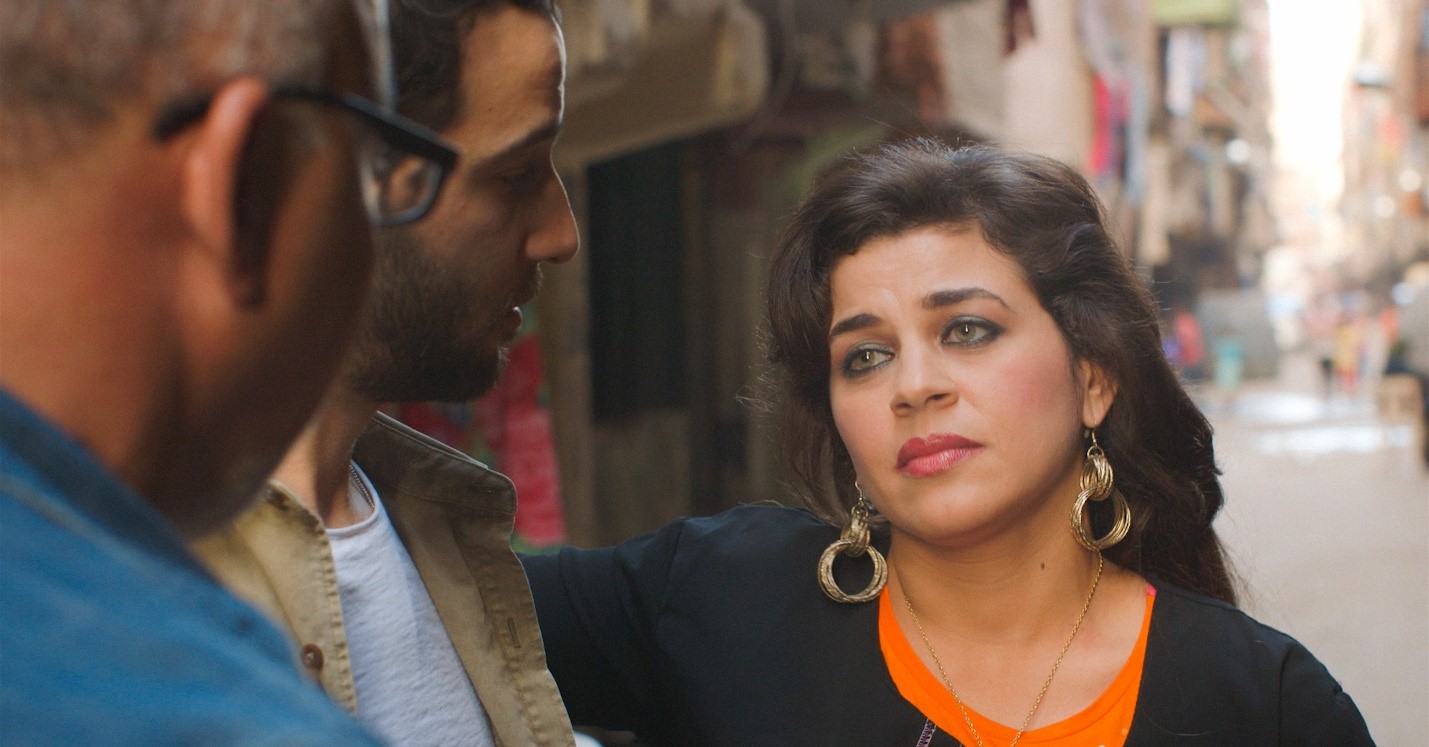
Egyptian actress Mona Hala from the movie Exterior/Night
Watching Ahmad’s movies up until Exterior/Night has been a throwback experience, a view-from-the-top, bird’s eye style of Egypt we have known and impeccably misunderstood. He archived a critical state in post-2011 Egypt to create a mesh of ideological, religious, and social chaotic visions from individuals who found themselves at the mercy of a world between vigor and decay.

Ahmad Abdalla has been introduced to the Egyptian film scene as an indie filmmaker, whose films are more niche than mainstream. His films were never box office hits, but they gradually blossomed into cult classics which increased in popularity as they aged, like a fine bottle of Château de Granville. Microphone and Heliopolis became these quotable, shareable internet content. Songs from Microphone despite their success back in the ravishing post-2011 days, have seen even more recent success as youths started witnessing the dying days of the Alexandria underground art scene. Was it because the state of the city itself was lost? Alexandria and Cairo now are two different entities from when they were back then, what does Ahmad think of this,

“Change is part of the game, the graffiti that appears in Microphone is all about the concept of graffiti as an art form itself. Graffiti is there to be subconsciously removed and then redrawn again. This is part of the identity of the city. Change is the only constant. When I made Microphone back in 2010, many films were shot in Alexandria at the same time and were more concerned with the nostalgic aspect of the city and its cosmopolitan past, but this was the last thing on our mind. We were more interested in the people who lived there at the time and where they were headed. Films are supposed to look beyond the current condition of the city. However, if people look back at the city through Microphone and feel nostalgic, this is something I could understand. It resembles people now watching Darbet Shams [by Mohamed Khan] and feeling nostalgic as Nour El Sherif -the main lead- drives his motorcycle across Abdel Monem Riyadh Square and witnesses the All-Saints’ Cathedral before it was demolished. Visuals change but what remains at the heart of the film is the story. Are people able to resonate with it or not? Are the vibes of what the city was similar to the vibes that are buzzing in its recent form? In my case, I believe I have retained those vibes.”

The short movie The Subconscious Art of Graffiti Removal by Matt McCormick came to mind after Ahmad’s speech, but also his view on cities and whether they retain their souls despite all the interchangeable energies and shifts. One main topic that I wanted to discuss with him was the vibrant Alexandria rap scene which in Microphone was infantile, slowly testing the waters and attracting young listeners and now it’s become a solid genre with constant followers, rabid fans, and emerging sub-genres,

“Yes, the rap scene has changed completely in Alexandria but it’s still there. Not much graffiti is being produced but a lot of visual artists emerged and are currently starting their exhibitions whether virtual or in more spacious, welcoming art galleries. The art remains but it took a different form and shape from what it was before, and that’s the nature of things. Had we shot Microphone in the 60s for example, we would have captured the Greek and Western music scene that was active in Alexandria in San Stefano Casino. In 2010, those Greek bands were replaced by alternative music bands such as Soot Fel Zahma and Massar Egbari. Had we shot the movie these days, it would have introduced us to rappers such as Wegz and Marwan Pablo. Our modern times are defined by the agile transformation phase. If you watch a movie shot in the 60s-70s you would barely notice how the city evolved, probably only through the evolution of vehicles. However, if I showed you how the Alexandrian corniche looked like four years ago, it would shock you how much has changed.”

Ahmad created three distinct and divergent journeys in Heliopolis and Exterior/Night. While the first was a personal ode, an individual journey of a certain habitant of the elegant Cairo self-titled suburb, the second was a requiem for the Egyptian intellectual middle class, a journey where they burst out of their existential bubbles into the dark side of the city. On the other hand, Rags and Tatters exhibited a minimalist, semi-documentary style using minimum resources and harsh lighting, telling the story of an escaped convict on the outskirts of a Cairo boiling with rage and political unrest in 2011,

“I consider every film a journey. All my films are about people trying to find their place in the world; specifically in the city, whether to have a voice, to be an artist, or as simple as finding a roof over their head to stay after coming out of prison, like in Rags and Tatters. I try to see it [the city] through their eyes. And it is usually a reflection of how I saw the city at a particular moment in time. I made Heliopolis with an approach similar to how I lived my life at the time. This was the narrative that intrigued me back then, and it’s a very personal film for me, made about people I’ve known in real life and issues that concerned me as an artist and individual. I made it to retell stories that had been told to me as a way of archiving these tales. When films are made they become a mesh of my vision and how I saw what happened at the time, not necessarily how it happened exactly. And [you] as a viewer, the films become a mesh of your vision as well. Your narrative is intertwined with mine, and as we talk about the film right after its release the conversation would be different from talking about it ten years later. In the end [my heroes] are people trying to find where they fit in the city, during their journey we see the city from a lens within the moment that the filmmaker decided to capture it. That’s not just me, I think. Every serious filmmaker trying to make a movie and deciding to shoot in the street and not in a closed location would have similar hauntings and views about cities. Take Land of Dreams by Daoud Abdel Sayed for example which was also shot in Heliopolis -by the way, Daoud lives there- and how it reflected the filmmaker’s vision about the city at the time through the tale itself.”

In Ahmad’s films, cities are haunted by ghosts of past relationships and exes. It could be almost found in every movie he made. In Exterior/Night, there’s the ghost of Mo’s ex Mai; a recurring presence throughout the film whether in the dialogue, like a low-res photo or through their WhatsApp chats. Khaled’s ex Hadeer shows up in Microphone as part of the non-linear narrative in scenes from Khaled’s past that juxtapose back and forth with his present, cementing her haunting existence in his psyche as an insurmountable memory that does not go away with time. In Heliopolis, Naglaa -Ibrahim’s ex- is a dominant presence in his conversations with friends, his interview subjects, and through her haunting voice message at the end of the film.
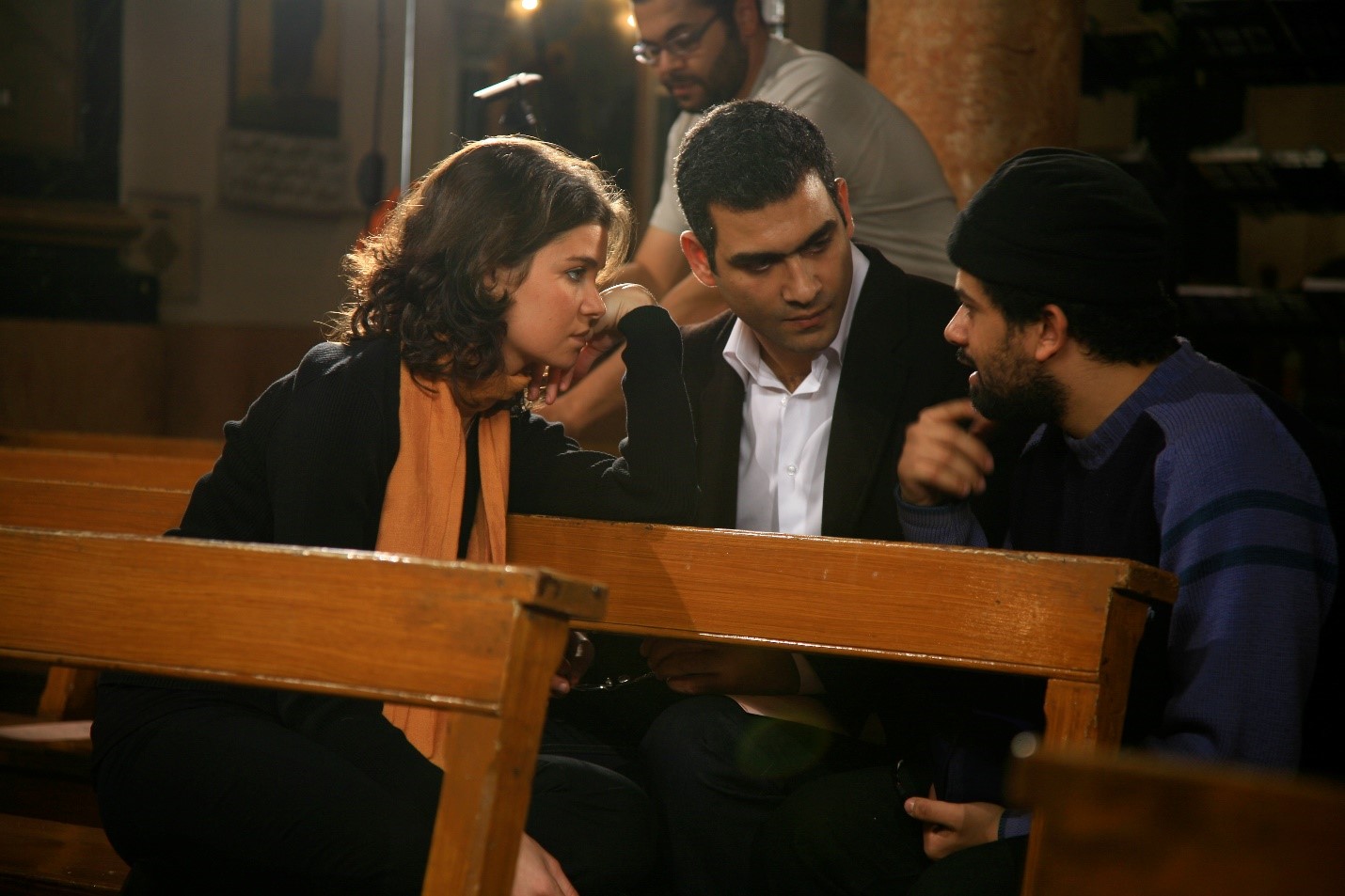
Yosra El-Lozy and Hany Adel getting directions from Ahmad Abdalla on the set of “Heliopolis”
This makes Ahmad’s movies an interwoven narrative of the Adult-Child trope, which makes adulthood so different and unattainable from when it was a decade before. Films like The Worst Person in the World, Frances Ha, and tick,
tick...BOOM! show what it’s like for adults to go through their 30s without accomplishing anything, where resolutions and settling down are parts of the big ol’ mystery that their parents and generations before had. Ahmad joins the clubs with his haunted cities, hesitant characters, forced heroes, and love stories that don’t die,

“I firmly believe that romantic relationships are the things that reveal us the most, and the most accurate way to see the world. Relationships with all their bittersweet memories, brutalities, and wonders open doors inside us more than anything else in the world. On a personal level, each long feature that I created was inspired by the post-breakup phase in my life. These are where my creative levels soar. At the time when the breakup washes off, I find myself looking back at it, wanting to revel in the details, and see where I am in the aftermath. In the middle of this discovery stage, I find myself learning more about the reality of things, and how the world works. Relationships resemble a cave where you have been spending days on end and suddenly the door opens and you find yourself out there in the world. Many critics have written that in my movies there’s an obsession with unfulfilled love or unresolved relationships. I believe that we are all obsessed with that. It’s just that we are not used to writing or expressing it. Our hunger to seek these romantic urges, and fulfilling what might have appeared as a fulfilled love story is what drives us to change our lives ultimately.”

Art is a strange being, it hits you in the sorest spots, at the time when you least expect it. When I first watched Exterior/Night it felt like I couldn’t relate to any of the characters. That was one year ago, and now, it feels like I’m the female version of Mo, an artist so consumed with his ego and inner world that he retreats into it further and further as the years go by. Mo has become the mold of the intellectual unable to mingle with the masses, yet so thrown off the art scene that his existence became subconsciously attached to his characters. As he dozes off or daydreams, he becomes the poor peasant hero of his film, for which he might never find a producer or an actor. Ahmad is a realistic dreamer, an artist who sees the world for what it is, he doesn’t fool himself but also cannot sacrifice his artistic vision for the sake of earning his dime as an artist.

The same artistic obsession could be found in Décor, a fairytale in reverse of an independent woman who dreams of domesticity and a simpler life. Again Ahmad returns to artists who are forced to seek a less than glamorous, rebellious artistic path but this time the heroine, Maha, yearns for a life that has been completely rejected by a woman of her path and craft. She is an art director on the set of a commercial film who struggles against doing her job and making a living as an artist. Yet deep-rooted in her psyche is a traditional Egyptian woman pining for the safety of a normal, apple-pie life. It’s the first actual female protagonist that Ahmad pushes to the front to lead his film narrative,

“Let me tell you why I make films in the first place. Only my last two films were written by someone other than myself. I’m not interested in piling up films in my filmography, although it has a financial significance for me since making films is my main source of income and I have no other monetary source for my living. I don’t do advertisements or direct TV series but I still make movies only because at this particular stage in my life there’s an issue that haunts me and I want to express it. At the time of making Heliopolis [as I told you], I was so emotionally charged and I wanted to insert it into this tale with all my power. The same goes for Microphone, the first time I met Aya Tarek [Alexandrian painter, street artist, and illustrator] and the musicians I was dazzled by their world of artistry as if I entered a different portal. I never thought I would be able to meet these people and make a movie about them. Microphone was supposed to be a documentary at first which is why I consider it a docufiction with scenes from the initial documentary inserted within the fiction film format.
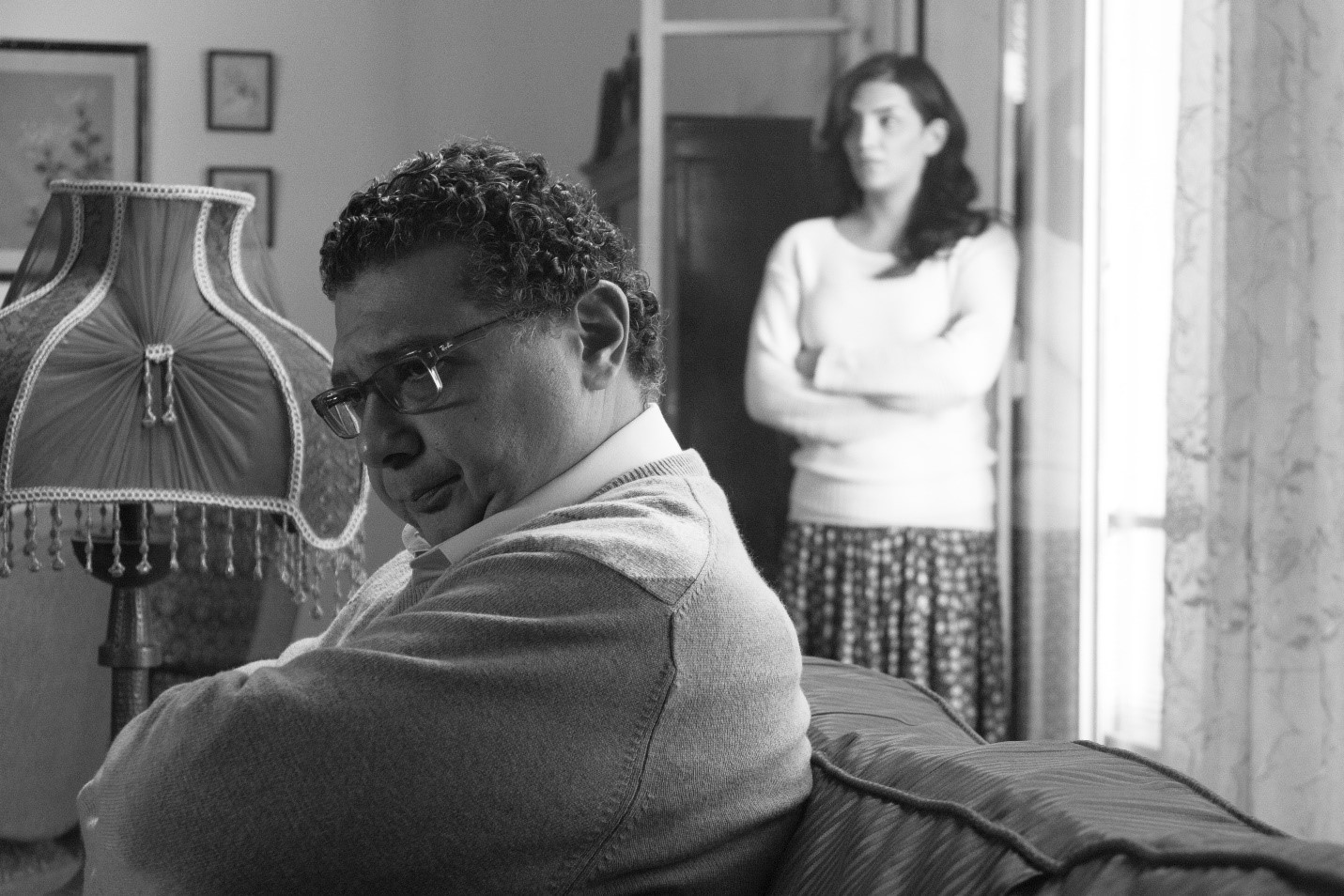
Still from “Décor” featuring Horreya Farghaly and Majid Al-Kidwany
Décor is not much different from my other films, but it came at a certain stage in my life where I questioned the concept of choices; whether choosing between two things meant that we were free to make those kinds of decisions? For me choosing between two things was a fragile and very limiting concept. So when I read Sherine and Mohamed Diab’s script it piqued my interest, in addition to my passion to make a movie that paid homage to Egyptian classic noir films [e.g. those directed by Kamal El-Sheikh]. This question coincided with one that hovered over my psyche at the time so I knew I had to make this film. There’s also a quote by Yousry Nasrallah [famed Egyptian director] that I love: Egyptian cinema died when it stopped telling women’s stories and this also made me more compelled to make a film where the narrative was female-centric since it didn’t happen a lot these days. I was amazed by the script when it got passed to me and had to sink my teeth in it.”

The Egyptian cinema died when it stopped telling women’s stories. Ahmad’s -in that case Yousry’s quote- stopped me midsentence and I asked Ahmed to elaborate,

“I believe that has to do with how conceiving the female box office star changed in Egypt in the last decade. In the past, moviegoers paid to watch Nabila Ebied and Nadia Elguindy on the big screen. Nabila and Nadia’s audiences were predominantly women, if you looked closely at photos of movie theaters from that era you would find women flooding to see their films. However, the New Comedy wave which started at the beginning of the 2000s and rocked Egyptian cinemas like a hurricane was purely male-dominated. Female characters only resorted to secondary roles, filling plot holes that boosted the male character’s narrative. It started shyly at the beginning until it became a staple as the New Comedy wave progressed.”

Ahmad’s heroes are people struggling with their identities. It’s them against, not just the world, but their obsessions and fears. Their unfulfilled creative paths and their unsteady steps echo a generation of millennials who have not yet achieved their societal or economic successes. Ahmad is not interested in showing the lives of artists who made it, since he believes in the journey and not the destination, and as all of his heroes have not done anything special with their lives, they are eternal lost souls in the great Labyrinth of modern Egypt,

“With Exterior/Night, my friend Sherif ElAlfy [the scriptwriter] told me about an idea based on his personal experience and together we sat down and discovered many questions that tackled deep into both our worlds such as the modern world of the intellectual burgeois as reflected in our main protagonist, Mo. But as the film progressed it became about Toto, the prostitute. However, to be more loyal to the story I had to tell it from Mo’s POV. Exterior/Night was what I saw happening in Cairo at the time and how I wanted to show it. I wanted to make it a commentary on the nature of relationships between men and women in Egypt which was mainly governed by class, religion, and cultural background.”
Still from “Microphone”
It's strange how Ahmad saw the world. People who never thought they would grow into the lives they saw their parents live. Adults who resist the life of adults, and try to rebel against it only to realize they are not teenagers anymore and get sucked back into the adult life. In one scene in Heliopolis, Ali watches as his fiancé Maha contemplates buying another fridge, and in an unexpected move attempts to flee and abandon her, probably calling the whole marriage off, only to change his mind and join her reluctantly. A subtle scene that captures the spirit of a generation; the lost kids of the late 80s/90s after they got handed responsibilities and became adults despite their infatuation with the Peter Pans they once were. On his familiarity with the stories he tells and the worlds he creates, Ahmad states,

“I don’t make movies about worlds I am not familiar with. Many people pass on scripts to me and the plot alienates me so I decline to do that. Even the crew behind the camera, at least in my first three films have been in my life for as long as I can remember. As for actors’ choices, most of them are my friends in real life. Throughout this safe zone of mutual understanding, we can play together and try as many approaches as we can to the scenes or the acting. Décor is a different story, it was the first time that I worked on a script that I didn’t write while being backed up by a major production company with a big budget. That’s why I wanted to work outside my comfort zone and work with artists from the world of the mainstream movie market. That’s what happened with Horreya [former beauty queen and high-profile Egyptian actress] whom I loved before our artistic collaboration. She studied her role faithfully and we were able to communicate perfectly during shooting. I think she was great and she brought a freshness to the role that I don’t think anybody else could have done better. In Exterior/Night I paid great attention to picking the actor who would play Mo. He had to look the part of an Upper Middle-Class Egyptian intellectual bourgeois.

There was no one better than Karim Kassem whose francophone and family background made him the perfect match. Karim is a great actor, and his subtle acting method could be one of the reasons he is not getting well-deserved attention.”

During our conversation, I made a point to wonder about the craft of acting itself. How some promising young actors are sometimes cast aside, living their whole creative lives in the shadows. I mentioned a specific Egyptian actor, Amr Abed who played a minor role in Exterior/Night showing unmistakable buried talent yet never getting the exposure that he was worthy of,

“Unfortunately our industry [cinema] depends on luck, specifically for actors. You have to be in the right place at the right time. You have to get the right exposure. Some actors are not that lucky to get that kind of exposure, regardless of their talent, and there is a sort of sticking to safe casting choices. However, talent usually conquers, especially if there are filmmakers who are open to searching for these specific talents and seeking them in person without resorting to the easy options.”

Ahmad’s main purpose as an artist was self-expression, whether the medium was writing, photography, or filmmaking. It didn’t come as a surprise that he was not keen on watching as many films as he could. From what I saw, Ahmad tamed the medium to fit his narrative, filmmaking was one of many methods by which he could exist through stories that he was telling,

“People who are close to me know that I’m not a major movie buff in the sense of the word. I go to the movie theater to enjoy a blockbuster and my taste in terms of movie favoritism is purely commercial, believe it or not. I’m not concerned with cinema as an art form, but more with the art of self-expression and using filmmaking as a means to convey that.”
Ahmad was born to create whether through the lens of a handheld camera or in the air-conditioned corners of a photography exhibition in Zamalek. The world will see more of his creativity through the terms he dictates as a self-immersed independent artist truly representative of our modern times.
That Boys Are Flowers Too


Say, earth has become too busy
tending to sister's scars
 that my cries are only gifted
 to the cicatrix and night skies.
You see, father's father had
encrypted on our tongues—
the constitutions on how a boy
 could camouflage his agony with
 the mask of a lion's heart that
he had forgotten how petals
 had already been sewn into flesh
 and ichor for our hearts instead.
He says a boy must recycle his grief
 into boxes of peaches and fondle
them as though he were a deity—
without sin.
But i tell you, if you choose to
unwrap this flesh you'd see
 the anatomy of pain from a boy's body.
And when you swallow my grief
 you could find its definition in
a thousand and one languages.
You see, the scars on mother's body
teaches girls how to love
but father's burnt limbs whispers to us,
Man shall always be man.
And the night I sang to dad
 how i dreamed of becoming a fire lily,
the old man asked that I exorcise my tongue.

Boy— you are vine.
You are a ghost orchid too.
Your petals have blended into
the satin of crooked minors,
'home' might  weed off your bloom.


In this poem, my body lives without a tongue

when i fall into the darkness of reality
i see,
a girl's portrait on the altar of helplessness.
This portrait is pleading, this portrait is me.
But an old man pulls my tongue
 from my mouth.
he says that girls my age must lock
their voices inside their father/lover/husband's lips.
then i try to pull my pale body
out of this vulnerable realm
and write to mother how i lost my voice to a strange man.
she stares at me with so much to say but
mother's tongue has been taken too.
listen,
in this polity where every woman
 is believed to possess a disabled gene,
i do not know the difference between a nightmare and reality
for as long as i carry this body i remain
that girl child without red.